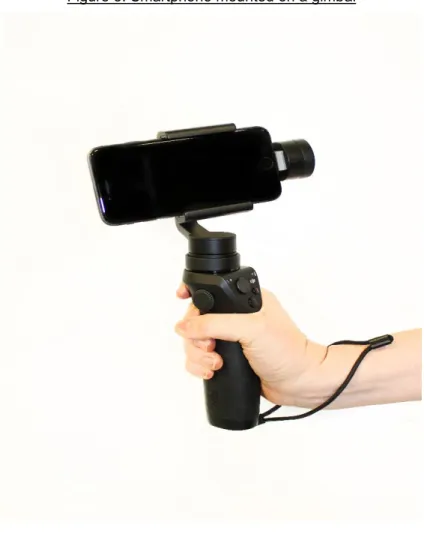
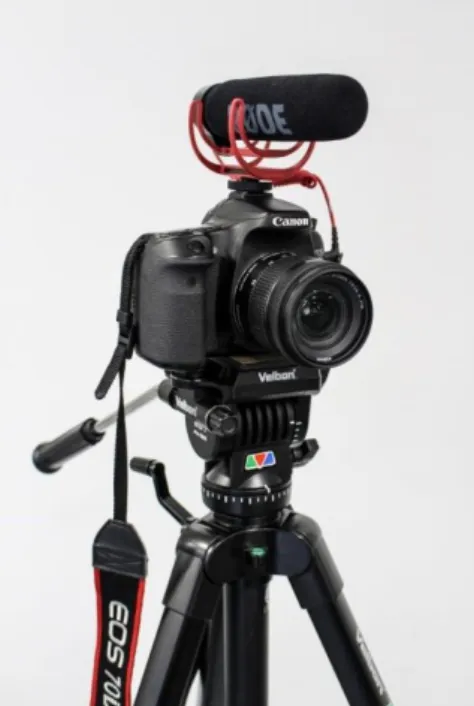
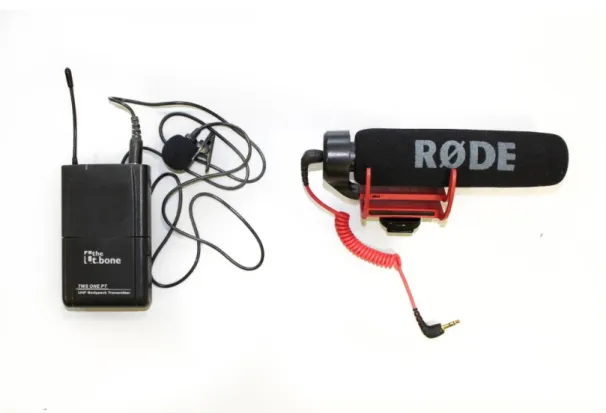
This can be reduced by adjusting the camera settings while shooting or while editing the footage. The tripod comes with a removable plate that screws onto the bottom of the camera to securely attach the camera (Figure 4). Boom microphones can either be attached to the camera (Figure 4) or held overhead and out of sight on a pole.
They are a good investment if the plan is to record a lot of interviews or if the camera needs to be more than a few meters away from the subject. A practical starting point is to buy two cards for the camera to be used, each with the most memory the budget allows.
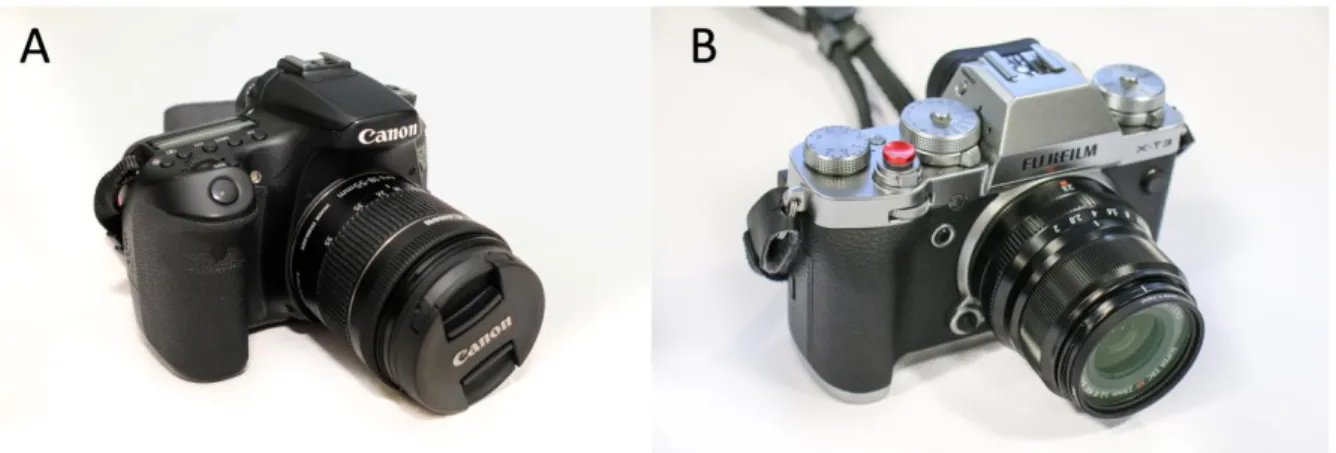
Production (Filming)
Filming Location
After the footage has been downloaded from the card to a computer or storage device, the card must be formatted. Unlike simply deleting images from the card, formatting ensures that all old data is removed and reduces the risk of data corruption and card reading errors (Carucci, 2013). It should be large enough to comfortably hold the camera plus spare lenses, batteries, chargers, etc.
Make a list of the contents and stick it to the box so that all equipment can be checked before you leave the shooting location.
Camera Settings
Filming the Task
If very dark shadows are cast on the area of interest (such as in bright sunlight or under intense artificial lighting), placing a white or reflective surface (improvise with a large sheet of paper or a white sheet, etc.) on the edge of the image can cast light in the shadows to soften them. Avoid filming on reflective surfaces such as medical trolleys or stainless steel surfaces as glare is likely and it will be challenging to get clear footage. It is important to ensure that the viewer of a training video gets an unobstructed view of the procedure.
Review the footage as it is being recorded to ensure that the task is clearly captured in its entirety. It is extremely helpful to take a few minutes once things are set up to record some additional footage of the equipment being demonstrated and the environment in which the task is being performed. For example, if the video narrator refers to a specific piece of equipment, some footage or a still image of that item can be inserted into the video at that point to clearly illustrate it.
By adding shots like this, the video is also more attractive to the viewer, as it can break the monotony of videos shot from a single viewing angle. Before shooting, take some time to familiarize yourself with the person operating the camera and tripod, etc. It is also very useful if she is familiar with the task being filmed, as she will be able to anticipate the sequence of steps and predict the movement of the operator.
Finally, before packing away the equipment, check the footage for quality and ensure that all necessary steps have been accurately captured to fully demonstrate the task.
Postproduction (Editing)
Software Selection
Editing process
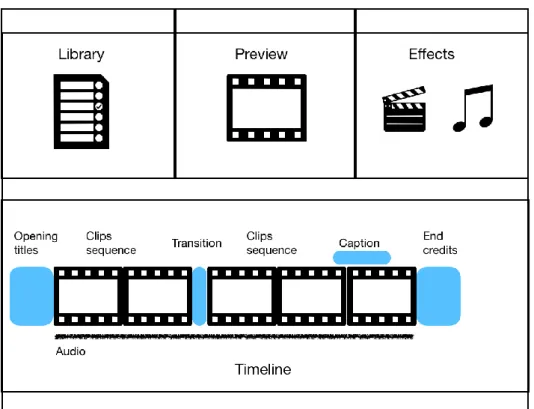
The preview or canvas window (top center or right) plays what is currently selected in the timeline. The effects window is also usually displayed as a pop-out menu(s) on the right side of the screen, from which effects such as titles or transitions can be applied to the footage. These are searchable and are a handy way to quickly find the footage you want, especially if there are a large number of clips.
Begin assembling the initial "rough cut" of your video by placing clips from your library onto the timeline in the order you want. Once the clips are sorted into the desired sequence, they can be refined into the final version. Editing software will display audio meters and as a general rule of thumb any dialogue or narration in a video should be around -10dB most of the time (Mannion, 2018).
Fading the audio at the beginning and end of the video creates a more polished "feel" to the finished work. For example, YouTube has a free auto-captioning service available in the Video Manager section of the site. The final cut of the video should be evaluated to ensure that it meets the objectives set out in the planning phase and that a concise and useful clip has been produced.
Once completed, the video should be shown to the course instructors for feedback on the production and content quality before being exported for sharing and streaming online.
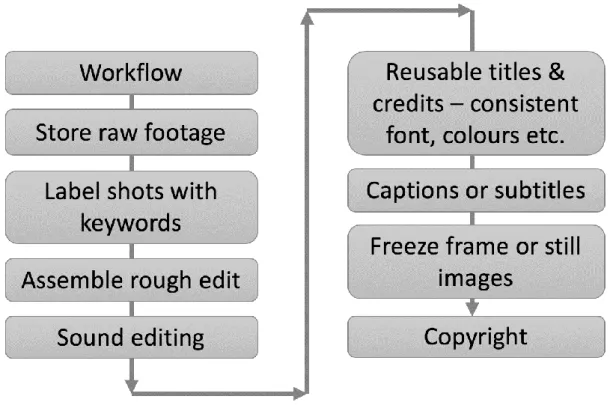
Exporting the video
Access and Sharing
Once the final video edit is completed and exported, the mechanism for sharing it with the target audience should be considered. Video sharing sites typically have a number of options; [1] Public/Everyone – the video is free for anyone to watch and can be found with a simple online search, [2] Unlisted/Only people I choose – the video is on the creator's channel but not publicly available. People can only watch the video if they are provided with the direct link (note though that viewers may be able to share the link with others if they wish) and [3], Private/Only Me; the video can only be viewed by direct invitation.
Some sites also allow groups to be created where selected videos are shared with the group members. It is recommended to pilot the video with a small number of users at first and ask them for feedback on ease of access. This makes it possible to identify and correct any delays or errors in the process before the work is shared with the entire target group.
When uploading a video, the creator can enable or disable the commenting feature, allow or prevent video sharing or embedding on other websites, and add keywords to allow online users to find the work. Consider turning off the setting that allows some streaming sites to automatically play suggestions of similar content after a video. Another option is to create and use QR barcodes for video sharing (Bright et al., 2015).
This can add an extra dimension to any handout/manual, as students will be able to scan the code with their smartphone camera or a dedicated app and see the video they are interested in at the appropriate point instead of having to navigate through emails, hyperlinks or pages VLE to find the right video (Bree, 2017a).
Video Metrics
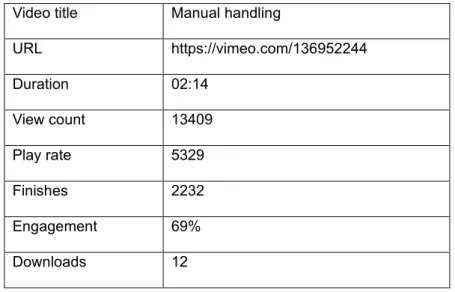
Institutional IT departments may also have relevant policies and can be a useful source of advice and guidance. In certain cases, password protecting videos should be considered, such as in case of sensitive recordings, e.g. The view count refers to how many times the web page with the video has been viewed.
However, this value can be misleading, as there are differences in how views are counted across platforms. Play rate is the percentage of site visitors who clicked play and actually started watching the video. It shows how important video is to her location and her success in engaging visitors.
The engagement value indicates how much of the video each viewer viewed, expressed as a percentage. This is very useful information as it helps gauge the usefulness of the video(s) to viewers. Social sharing metrics only apply if users can share or like videos on social media feeds.
It is useful to keep track of both digital and in-person comments received, which may require the aggregation of feedback from student evaluations, VLE forums or the comments section on the video sharing site (if enabled).
Conclusions
Effects of a Skill Demonstration Video Delivered by Smartphone on Facilitating Nursing Students' Skill Competencies and Confidence: A Randomized Controlled Pilot Study. Integrating custom video clips into the veterinary nursing curriculum to enhance practical skills training and student development. Students' views on the impact of two pedagogical tools for teaching breast and pelvic examination techniques (video clip and training model): a comparative study.
A randomized controlled pilot trial comparing the impact of access to clinical endocrinology video demonstrations with access to regular review resources on medical students' performance of clinical endocrinology skills. Online video in clinical skills education of oral medication administration for undergraduate student nurses: a mixed methods, prospective cohort study. Development and evaluation of online video teaching resources to improve students' knowledge of livestock handling.
First year midwifery students' experience with self-recorded and assessed video of selected midwifery practice skills at Otago. An exploration of student nurses' thoughts and experiences with using a video recording to assess their cardiopulmonary resuscitation (CPR) performance during a mock objective structured clinical examination (OSCE). Multimedia applications in the nursing curriculum: The process of producing streaming videos for medication administration skills.
Face-to-face teaching combined with online resources improves retention of clinical skills among nursing students.
Appendix: Glossary of terms used in this article
Digital camera: A camera that records images or video footage on an electronic light sensor (instead of photographic film). Frame : The scene as visualized when viewed by the camera or a single image component of film material (some time). A digital camera lens collects and focuses light onto the camera sensor to capture an image.
Levels : The sound volume of the recording, measured in decibels (dB) from infinity dB to 0 dB. Optical Zoom : A "real" zoom that allows you to zoom in or out on a subject in the camera's viewfinder without moving the camera. Point of View (POV): The location of the camera in a shot that shows what the subject is looking at.
Post-production: Editing footage from the end of recording to the production of the finished version. Screen resolution: The measure of the number of pixels a screen can display, measured as width by height. Trimming: Removing part of the beginning and/or end of a video clip during non-destructive editing.
Video RAM (VRAM): A type of RAM (Random Access Memory) used to store image data for a.