Analysis of mitigation and adaptation strategies to the impacts of climate change in the agricultural sector in the northern Philippines. This study examines the effects of mitigation and adaptation strategies on the impacts of climate change in the agricultural sector of the northern Philippines and identifies where synergies or conflicts between the two approaches may arise.
Introduction and Objectives
The purpose of this study is to address the current strategies and policies applied to tackle climate change with a focus on agriculture in the Northern regions of the Philippines. Professor La Vina is an internationally respected expert on climate change and a delegate of the Philippines to international climate.
Background
The History, Science and Politics of Climate Change
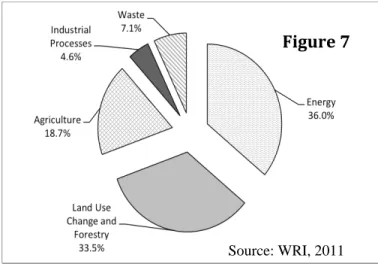
Global warming occurs as a result of the greenhouse effect, where infrared radiation emitted back into space by the earth is trapped by greenhouse gases (CO2, CH4, N2O, etc.) in the atmosphere. The rise in temperature has led to the melting of ice sheets and a decrease in snow cover by as much as 10% in the Northern Hemisphere.
The Challenge: North vs. South
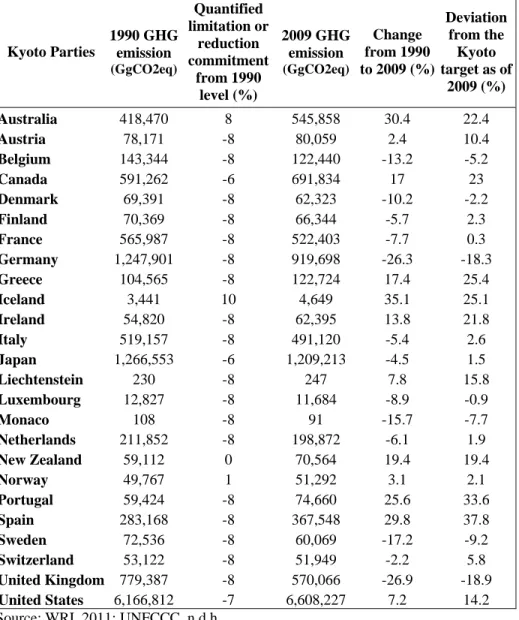
Initially proposed by World Bank Chief Economist Justin Lin, the proposed treaty states that industrialized countries owe an “emissions debt” to the countries of the Global South (Lin, 2012). /CMP17), many of the negotiators suggested that granting developing countries access to the UN Green Climate Fund (UNFCCC, n.d.i) could start to address 'climate debt'.
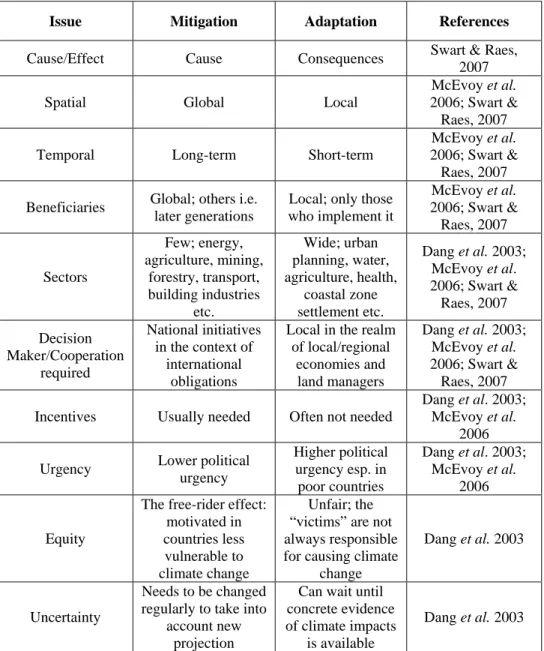
Solutions to Address Climate Change: Mitigation and/or Adaptation
Vulnerability is the extent to which a community or region is exposed to, and unable to cope with, the impacts of climate change and its variability. In contrast, although national per capita greenhouse gas emissions are much lower in the poorer countries of the developing world (except China and India), it is predicted that these regions will be most affected by the impacts of climate change and that adaptation may be the only solution will be available approach (Dang et al. 2003).
Study Area: The Philippines
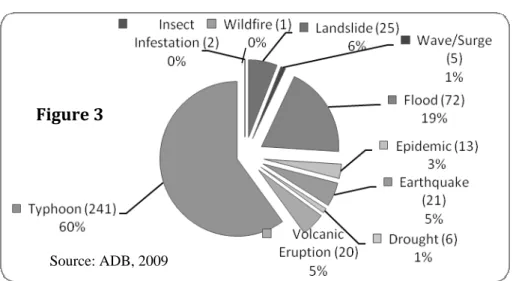
- Vulnerability to and Evidence of Climate Change in the Philippines
- Legislation and Policies on Climate Change
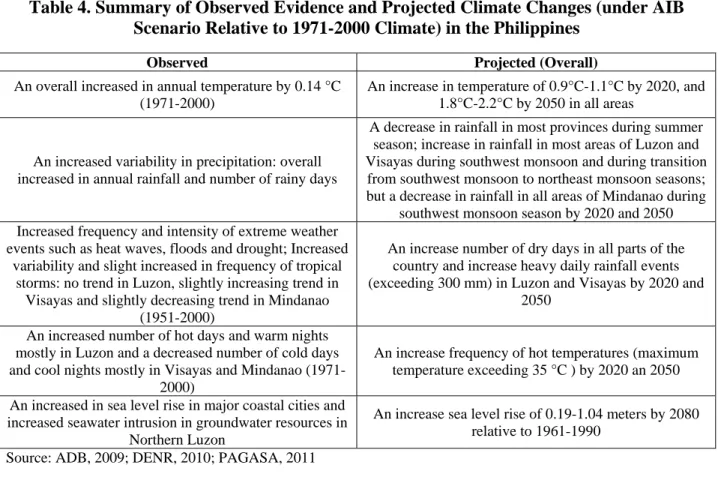
There is overwhelming evidence of climate change and variability in the country as summarized in Table 4. Summary of observed evidence and projected climate changes (under AIB Scenario Relative to 1971-2000 Climate) in the Philippines.
Statement of the Problem
The Relationship between Agriculture and Climate Change
Despite the impact of climate change on agriculture, it is interesting to know that agriculture is one of the largest contributors, second only to the energy sector, of GHGs in the atmosphere. A recent report from the IPCC suggests that the agricultural sector was responsible for an estimated 10-12% of total global anthropogenic GHG emissions in 2005 (IPCC, 2007e). The agricultural sector is responsible for approximately 50% of the methane (CH4) and 60% of the nitrogen oxide (N2O) composition of global GHG emissions (IPCC, 2007e).
For example, intensive land cultivation for agriculture can lead to deforestation and land degradation by reducing the ability of vegetation and soil to sequester carbon (Smith et al. 2008). Some of the factors that result in the release of CO2 into the atmosphere from agriculture include the consumption of fuel used for tractors and irrigation systems and from the burning or decay of crop residues (Smith et al. 2008). These practices will increase the soil's ability to sequester carbon from the atmosphere; and. iii) Avoiding or displacing emissions through the development of renewable energy such as biogas and biofuels.
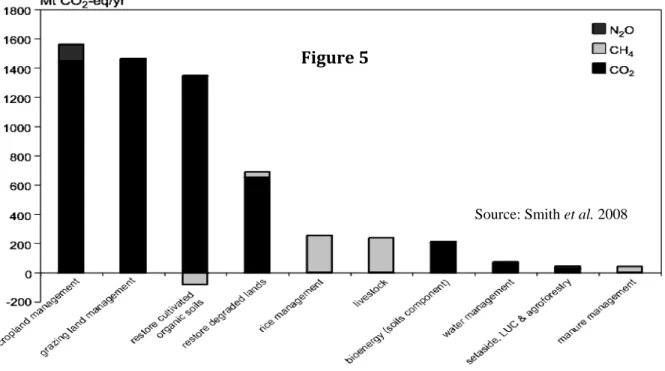
The Philippines Agricultural Contribution to the Atmospheric Greenhouse Gas Emissions
For example, a reduction in N2O emissions to the atmosphere will be achieved through the efficient use of fertilizers and animal feed. ii) Improving removal from the atmosphere through the practice of agroforestry and improving the agro-ecosystem. In the Philippines, rice is a very important commodity and a staple food for the survival of almost all Filipinos, accounting for about 47% of total caloric intake (IRRI, 2011). Each person consumes more than 110 kg per year; however, the country's rice production cannot sustain the demand of the population, making the Philippines one of the largest importers of rice in the world (IRRI, 2011).

Research Questions
Or do they just make the situation worse, making them even more vulnerable to the effects of climate change. Because resources are limited, adaptation may be the only approach available in the Philippines. So what would be the most ideal adaptation strategy in the Philippines that is most likely to yield the optimal benefits for both the Filipinos and the environment.
Research Methodologies
Focus Area: The Northern Philippines
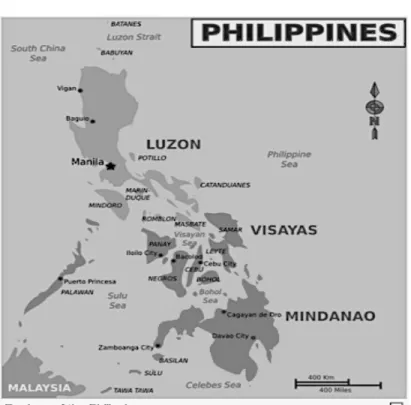
The northern part of the Philippines is chosen as the focus area in this study. The Northern Philippines accounts for approximately 15% of the total national agricultural areas (BAS, 2012) and includes the Ilocos Region (Region 1), Cagayan Valley (Region II), Central Luzon (Region III), and the Cordillera Administrative Region (CAR Region) as shown in Figure 9. These regions produced on average approximately 42%, 27% and 8% of the national rice, maize and banana production, respectively (BAS, 2012).
These crops are important in driving the agricultural growth, although recently their overall share in the national agriculture. Second, the Northern Philippines is chosen because the agricultural practices in these areas are widely studied and documented compared to the other areas in the. In addition, due to the importance of the region to the national economy and food security, the government has invested and implemented a number of strategies that will help farmers adapt to the impacts of climate change.
Objectives
Research Methods
- Potential Synergies and Conflicts across Different Strategies in the Agriculture Sector in Northern
- Prioritization of Adaptation Options in Northern Philippines
As mentioned earlier, the Philippines is a developing country with limited resources. financial and technological, which is most likely to be affected by climate change, especially in the agricultural sector. This was done by adding up the number of times each strategy identified from the first objective was documented in the literature. ii) The most common strategies identified from step 1 were then compared according to their performance against different criteria to achieve the common goal: to reduce the vulnerability of agriculture to the impacts of climate change. 2001) uses six criteria to assess the effectiveness of adaptation options to address climate change in agriculture.
Effectiveness refers to the ability of the adaptation strategy to reduce losses and increase productivity in the event of extreme weather events. Economic efficiency refers to the economic benefits compared to the economic costs of implementing the adaptation option to address climate change. Independent benefits refer to the ability of an adaptation option to provide benefits such as environmental and socio-economic benefits, other than reducing the risk of loss due to climate change. iii).
Results and Discussion
Potential Synergies and Conflicts across Different Strategies in the Agriculture Sector in Northern Philippines
- Cropland Management
- Soil Management
- Water Use and Management
- Energy Use
- Institutional Measures
- Conclusions
Can contribute to greenhouse gas emissions due to land conversion (in the case of vegetable cultivation). However, legumes can also be a source of nitrous oxide in the air (Smith et al. 2008). This results in a reduction in pesticide use, which reduces production costs (Lasco et al. 2011).
Mulching is also used in the area to increase crop yield, manage disease and reduce soil erosion (O'Sullivan et al. The Northern Philippines accounts for about 47% of total irrigated rice production in the Philippines in 2011 (BAS, 2012) Besides to use water more efficiently, these sheds can serve other purposes such as flood control, recreation and inland fisheries, increasing resilience to climate change and biodiversity in the area (Dayo, n.d.; Lasco et al. 2011).
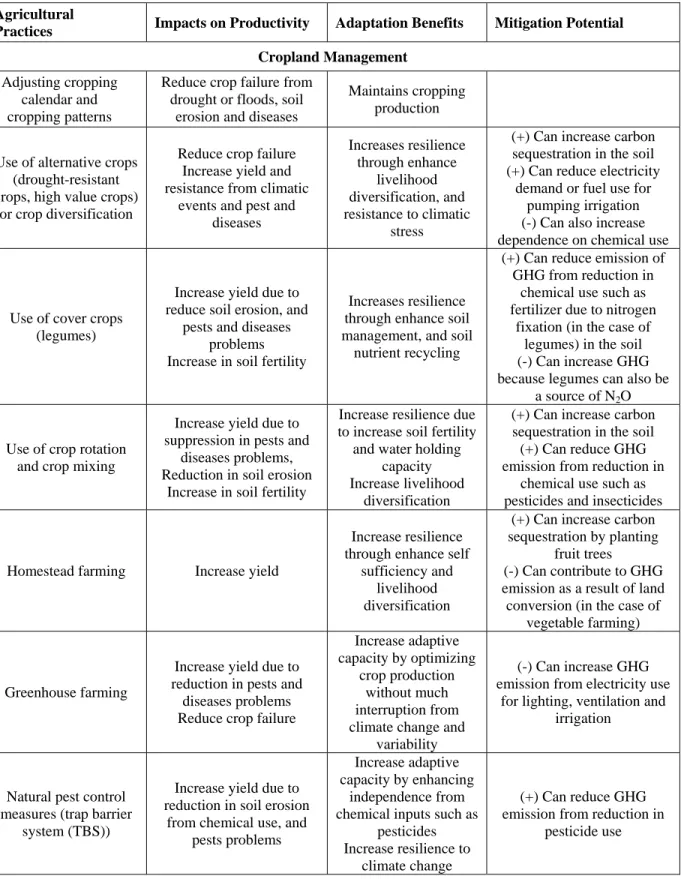
Prioritization of Adaptation Options in Northern Philippines
- Effectiveness
- Economic Efficiency
- Flexibility
- Institutional Compatibility
- Farmer Implementability
- Independent Benefits
- Conclusions
An adaptation option that significantly reduces losses and increases agricultural productivity under climate change, compared to other adaptation alternatives, would have high effectiveness. This means that under climate change, water-efficient irrigation techniques can potentially be economically beneficial, especially in addressing increased drought events due to increased rainfall variability. This could include new hybrid crop varieties that can better tolerate changes in rainfall variability, such as drought and flood-resistant crops.
Part of the success of this project is gaining direct involvement of local communities and farmers in the decision-making process (Wallace, 2009). In response to projected climate change, the Philippines has a number of ongoing projects that will ensure that the planning, design and implementation of new irrigation projects will be minimized. Other studies in the Philippines have found a 15% to 25% potential in soil conservation through agroforestry (Pattanayak & Mercer, 2002).

Conclusions and Recommendations
General Conclusions
Environmental groups have expressed concern in the said private discussions that while the Philippines is particularly vulnerable to the effects of climate change, the Philippines' per capita greenhouse gas emissions are low, about one-twentieth that of the US. There have been many cases of unusual, severe weather events that have severely affected different sectors in the Philippines. Because it is highly dependent on agriculture, the impact in the agricultural sector could potentially threaten economic development in the Philippines.
With a growing population that already exceeds the carrying capacity of the Philippines and a high level of poverty, it can only be assumed that the impacts of climate change will cause significant loss and damage in the country. The Philippines is one of the largest importers of rice in the world, but it also produces most of its rice locally to meet the high demand of its population. There is also an opportunity to reduce greenhouse gas emissions from the agricultural sector in the Philippines.
Major Findings
For example, water-efficient irrigation technologies show contradictory effects, whereby a reduction in irrigation will reduce the demand for water and electricity consumption for pumping and thus increase the mitigation potential, but at the same time may also result in a reduction in productivity, such as the case for AWD or SSC. In the second objective, the performance of the selected adaptation strategies was further evaluated across six criteria: efficiency, economic efficiency, flexibility, institutional compatibility, farmer implementability and independent benefits. Agroforestry can be easily implemented by local farmers and is strongly promoted in the Philippines.
Agroforestry may not only promote greater food security, but may also contribute to economic development in the Philippines as one of the options for climate change mitigation under CDM projects. For example, the adoption of organic farming in combination with agro-forestry can also be an ideal choice to address climate change and can also be important if the government wants to increase the import of organic production due to its increasing popularity in the market worldwide. This study found that the linkage between adaptation and mitigation strategies in the agricultural sector in the northern Philippines may not always yield synergistic effects, but may also lead to conflicts between them.
Future Directions
Retrieved from http://www.grida.no/graphicslib/detail/projected-agriculture-in-2080-due-to-climate-change_141b. Retrieved from http://www.ipcc.ch/ipccreports/tar/wg1/029.htm Intergovernmental Panel on Climate Change (IPCC). Retrieved from the Intergovernmental Panel on Climate Change (IPCC) website: http://www.ipcc-data.org/ddc_co2.html.