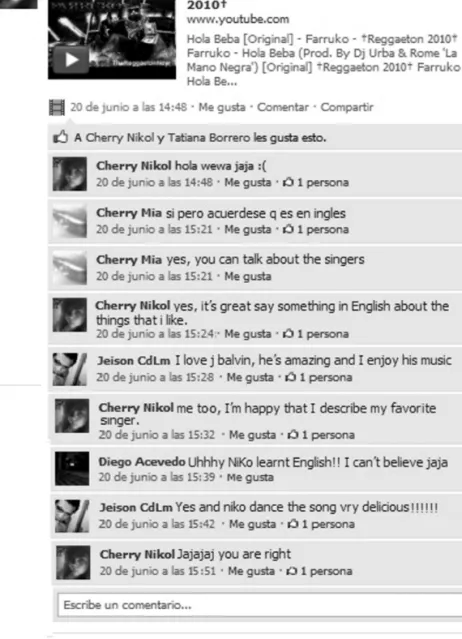
Therefore, this article describes the educational intervention carried out in the research project "Exploring communications Practices through Facebook as a Mediatic Device". This qualitative and phenomenological study sought to examine the function of Facebook as a media tool in the process of reshaping ninth graders' communication practices. This is because other sets of experiences and interactional manners are suggested or embedded in the technological tools.
As a result, students must “make connections with the world outside school” (Education Queensland, 2005, p. 3) to develop the skills that will enable them to manage their knowledge effectively and efficiently in the information society. According to Willis (1996, p. 183), a task is "an activity in which the target language is used by the learner for a communicative purpose (goal) to achieve an outcome." In other words, this is a product of a planned process or a completed piece of work which is carried out as a result of processing or understanding the language more communicatively. Language focus. In this part of the class, an inductive approach to English grammar teaching was followed.
In this sense, complementary academic activities were held outside the classroom to stimulate what was learned in class. Activities in the form of main tasks necessary to allow outcomes resulting from interaction. Essentially, activities carried out in this intervention were sequenced in a scaffolding manner in each lesson by linking in and out of class work.
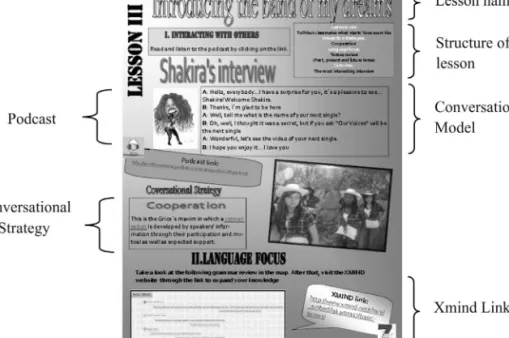
Afterwards, conversation models were presented to the class for the students to achieve their language goal.
Results
Consensus and exchange of thoughts or perceptions among students were other essential aspects involved in the tasks, so it was suggested that the results of the activities be shared or socialized with the whole class. The activities required asking questions and using visual cues to stimulate student responses. At this point, teachers pre-loaded flash cards (videos) online and students could familiarize themselves with the general topic of the class before starting the lesson.
In this regard, the former was composed of the agenda or students' record of the class, class tasks, book activities, homework, Face-home tasks and participation, while the results had to do with students' scores on quizzes and final tests (see Appendix 3 ). Despite the fact that diverse songs were chosen due to students' interest in this type of music, some of them seemed apathetic to their classmates' tastes during the pilot phase. After designing the different components of the didactic unit, we created a unit from the digital book: Diverface.
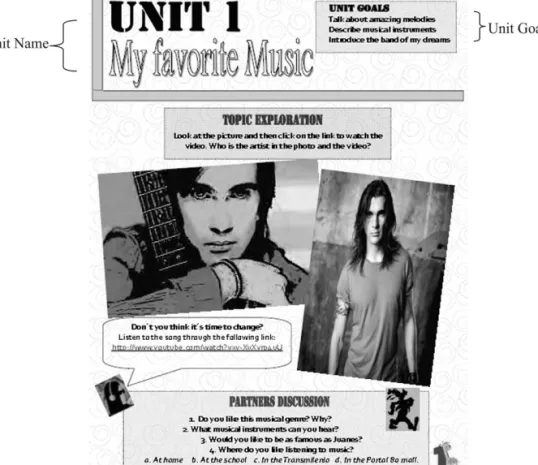
Moreover, the goals of the digital unit were very meaningful because of their communicative dimension, which can be perceived along the structure of the book. As a result, some students discussed their performance while considering one of the unit objectives, Introduce the band of my dreams, (see Figure 2). Subject exploration. This introductory section first addressed a specific and familiar topic for students, namely Juanes as a recognized and common singer among the target audience for the unit.
This was followed by an exploration of the theme using photographs depicting the above-mentioned artist; in addition, the students were asked some questions that were discussed in groups. Similarly, the second part of this introduction corresponded to a famous musical event and included written and audio versions of the text and other questions to be addressed together (see Figure 5). Therefore, conclusions about the function and meaning of expressions were derived from the relationship established between them through lines, images and other extra-linguistic multimodal components.
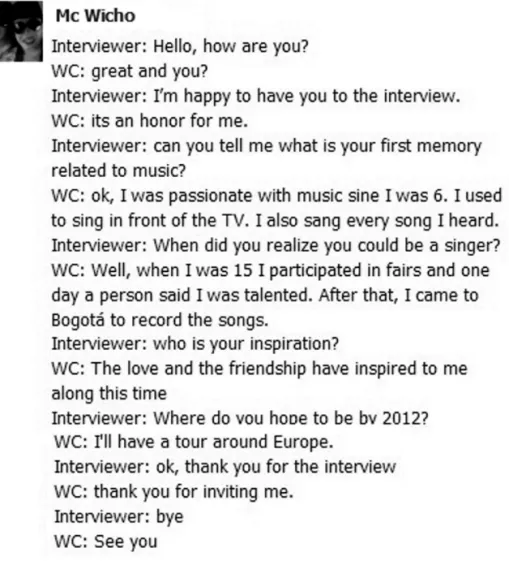
Additionally, the conversation model helped students both develop a controlled communicative practice and construct the Facebook unit project. They are taken from the maxims of conversational analysis (Schegloff, 2007) to achieve the communicative goals of the unit. The second was intended to provide the teacher with instructional ideas such as activities to be carried out at the beginning of the lesson in addition to the didactic unit of the book.
Thus, Diverface proposed a self-assessment to students, in which six aspects were taken into account; namely My Skills, My Duties, My Motivation, My Confidence, My Cooperation and the last one for students' opinion (see Appendix 2). In addition to acting as a complement to classroom evaluation, these aspects considered students' design processes and behaviors in continuous evaluation to improve teaching and learning effectiveness.
Pedagogical Implications
Closing and closed task. Considering the fact that we promoted English learning practices inside and outside the class, the Didactic Unit proposed both a closing activity and a closed task. As Websites 2.0 allow students and teachers to read, produce and handle multimodal hyperdiscourses, which strengthens their knowledge related to the design and management of these kinds of texts, a multimodal literacy appears (Van Leeuwen, 2005). This means these participants can and should learn how to interpret the multimodal arrangement of information while browsing hypertexts on the web and specifically social networks such as Facebook.
In light of this, students and teachers need to transform the learning and teaching processes into a multimodal literacy. As communication becomes faster, the learning process begins to take place as quickly as possible in the multimodal literacy. Then students' acquisition and development of knowledge seems to appropriate a different amount of time they spend.
Cognitive development and dynamics therefore require rapid and effective information management and exchange, making the multimodal aspects of those idea systems meaningful. Moreover, teachers also face innovative challenges in English teaching due to the need to create and unfold original lessons based on multimodal texts. Thus, the learning process proposed by teachers should focus on combining meaningful non-virtual and virtual experiences for students, taking into account the assigned content.
Under this perspective, teachers must follow and define appropriate scaffolds to develop meta-cognitive strategies in students' reading and writing of multimodal texts. For example, teachers are able to apply some workshops on how students can effectively express themselves through computer-mediated language by involving keyboard commands that facilitate the said process. Also, teachers are able to plan their classes in the same way; participate in, for example, writing assignments and podcast assignments or paper format (non-virtual) assignments and computer-based material (virtual) assignments.
Conclusions
Diverface encourages authentic communication within a trusted environment, Facebook, which allows students to monitor themselves through these virtual connections. Ultimately, despite the fact that this process involved a dynamic way to encourage teachers and students to work outside the academic environment, we realized that the criteria by which students were assessed had a traditional perspective. In other words, assessment and evaluation must take into account the varied characteristics of the multimodal texts.
Therefore, it is expected that teacher researchers will continue to implement multimodal tasks in order to inquire about evaluation criteria from the perspective of multimodal literacy and the limitless possibilities of the digital world.
The Authors
Internauts Survey 1
Frequency of Facebook Use
- Schedule of Instructional Implementation
- Criteria for Evaluation Inside the Classroom
- Self-Assessment
- Sample from the Scope and Sequence
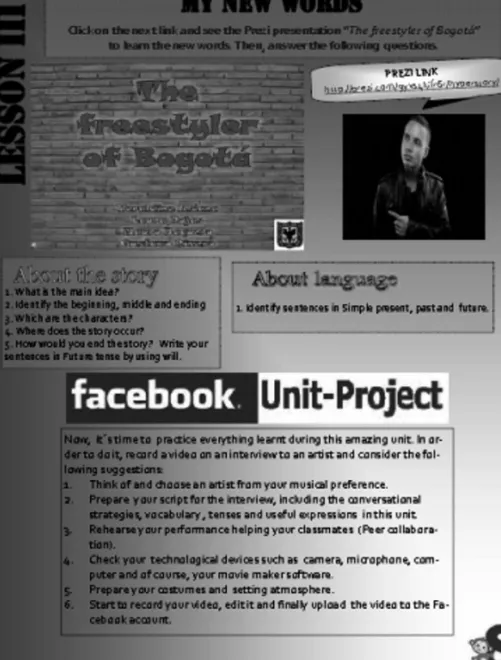
Students will take notes about the class objectives and explanation, examples or any relevant information throughout the class. Tests Students will demonstrate their complete process by taking a test consistent with their classroom experience. Prepare your script for the interview, including the conversation strategies, vocabulary, tenses and expressions useful in this unit.
Start recording your video, edit it and finally upload the video to Facebook account. Students watch the video "El odio por amor" by Juanes and by matching it with the pictures, they identify the singer. Materials and media: XMIND link: . http://www.xmind .net/share/_embe d/lakarosa17/simp le-present-1/) - Students go to our MoriscoEnglishclas ses website and follow this path to practice the simple present tense on the pages of suggested websites.
Eenheid Þ les I Þ Taalfokus (Materiale en media: webs.com- http://moriscoengl ishclasses.webs.co m/index.htm.