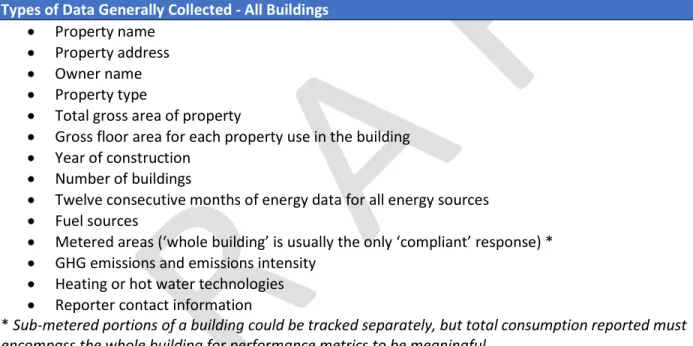
Subject: Initial commitment to develop an approach to managing greenhouse gas emissions from large buildings in Metro Vancouver. Initial involvement in the development of an approach to manage greenhouse gas emissions from large buildings in Metro Vancouver Regular Climate Action Committee meeting: May 13, 2022 Page 4 of 5. Initial involvement in the development of an approach to manage emissions of greenhouse gases from large buildings in Metro Vancouver Climate Action Committee regular meeting date: May 13, 2022 Page 5 of 5.
Draft Engagement Approach: “Commitment to develop an approach to managing greenhouse gas emissions from major buildings in Metro Vancouver.”
POTENTIAL APPROACHES T
Encourage feedback from affected and interested parties on possible approaches to managing GHG emissions from large buildings in Metro Vancouver. Reductions in GHG emissions from large buildings can be achieved through a number of policies and requirements. There is currently a gap in the BC policy landscape to manage GHG emissions from existing buildings in the region (outside the City of Vancouver).
Metro Vancouver would ensure that requirements to limit greenhouse gas emissions from large buildings are efficiently integrated with other provincial codes and programs.
Exemptions Flexibilityand
The proposed approach to managing GHG emissions would require building owners to report GHG emissions from their buildings on an annual basis to ensure that emissions fall below limits set by the Metro Vancouver Regional District for certain types and sizes of buildings. Building types and sizes that may be within the scope of potential claims are commercial, institutional and residential buildings over 2,322 m2 (25,000 ft2). While accounting for only 2% of the total number of buildings in the region, large buildings account for 35% of the total building floor area of all buildings and will contribute a significant amount of the GHG emission reductions required to meet the climate objectives of the region. .
Determination and gradual introduction of greenhouse gas emission limits: initial greenhouse gas emission limits based on research and analysis, future interim limits based on analysis of reported data from different types of buildings. Restrictions would be phased in for different types of buildings, depending on their ability to implement the changes. Compliance Pathways: The ways in which a building owner can achieve compliance with emission limits.
Cost: Technical support would be available to help building owners plan cost-effective transitions to zero-emission technology. Program costs would be intended to support and promote the achievement of health and environmental benefits from emissions reductions.
Cost and Support
Specific constraints related to the operations of a building
Some building types house specialized processes and activities that increase energy use and associated GHG emissions, complicating GHG comparisons. There are some types of buildings that may need a longer timeframe to make improvements or renovations, regardless of the size of the building, due to affordability risks. There may also be financial difficulties that may delay a building's ability to meet the proposed requirements.
The proposed requirements will need to consider the financial and logistical challenges for a recently completed building to implement changes to reduce GHG emissions immediately after the building is constructed. This shows the critical need to ensure that new buildings today are designed and built to zero or zero emission ready standards to avoid future retrofit costs for building owners. Another consideration is the transfer of building ownership and how to provide flexibility for new building owners to meet the requirements.
District energy connected buildings
Metro Vancouver is considering how Real Estate Investment Trusts (REITs), institutional organizations and other large building portfolio owners can achieve portfolio-scale compliance for buildings located in the Metro Vancouver region. Metro Vancouver recognizes the significant investment required to upgrade or retrofit buildings to reduce greenhouse gas emissions. Technical support will be available to help building owners identify the most cost-effective pathways to transition to zero emissions.
Metro Vancouver has initiated a three-year project to develop a major building renovation accelerator and envisions working closely with the Metro Vancouver Zero Emissions Innovation Center and other organizations supporting the transition to a low-carbon future. For example, the City of Los Angeles charges an annual fee per building, while other jurisdictions have used tax revenue or energy efficiency funding to support program delivery. Metro Vancouver is exploring options that will align with the principles of discharge pay, equity and fairness.
There will be further engagement with affected audiences on proposed mechanisms for program cost recovery, if supported by Council. Metro Vancouver staff and contractors will treat comments received with confidentiality; however, note that comments you provide and information identifying you as the source of those comments may be publicly available if a freedom of information (FOI) request is made in terms of the Freedom of Information and Protection of Privacy Act. If you have any questions or comments about this initiative, please call or email us at [email protected].
Glossary
Tentative agreement on managing GHG emissions from large buildings will be coordinated with deliberation on proposed amendments to Metro Vancouver's boilers and process heaters Emissions Regulation By-law No. described in the report entitled “Involvement on Proposed Amendments to GVRD Boilers and Process Heaters Emissions Regulation By-law No.
Under the current By-law 1087, Metro Vancouver regulates the discharge of air pollutants from boilers and process heaters. This report seeks council approval to join proposed amendments to GVRD Boilers and Process Heaters Emissions Regulation By-law No. Engagement on proposed amendments to GVRD boilers and Process Heaters Emissions Regulation By-law No Climate Action Committee Regular Meeting: 13 May 2022 Page 2 of 4 .
Cooperation in the proposed amendments to the regulation on emissions of boilers and process heaters GVRD. Regular meeting of the Climate Action Committee: May 13, 2022 Page 3 of 4. Cooperation regarding the proposed amendments to the regulation on emissions of boilers and process heaters GVRD. Climate Action Committee Regular Meeting: May 13, 2022 Page 4 of 4 Under Option 1, staff would continue to engage with the proposed amendments to GVRD Boiler and Process Heater Emissions Regulation No.
Cooperation plan for the proposed amendments to the Regulation on emissions of boilers and process heaters no. NO2 is one of the key air pollutants associated with emissions from boilers and process heaters. Metro Vancouver seeks input on proposed amendments to Ordinance no.
The discussion paper entitled "Proposed changes to GVRD boilers and process heaters emissions regulation no.
ATTACHMENT
MVRD Concrete and Concrete Products Industries Emission Regulation Amendment to Bylaw No. MVRD Air Quality Management Fees Regulation Bylaw No. Debate Paper - Proposed Amendments to Air Quality Permit and Regulatory Fees in Metro Vancouver. A bylaw to amend "Greater Vancouver Regional District Concrete and Concrete Products Industries Emission Regulation Bylaw No. Metro Vancouver Regional District has adopted "Metro Vancouver Regional District Air Quality Management Fees Regulation Bylaw No.
The Metro Vancouver Regional District has adopted Regulation no. Metro Vancouver Regional District Regulation of the Concrete and Concrete Products Industry. Regulation of the Emission Regulation of the Regional Industries of Concrete and Concrete Products No. NOW THEREFORE the Metro Vancouver Regional District Board enacts as follows:. The Metro Vancouver Regional District has adopted “Act no.
That ordinance contemplates that the Metro Vancouver Regional District board may establish emissions regulations and fees; The Metro Vancouver Regional District has adopted the “Metro Vancouver Regional District Air Quality Management Fees Regulation Bylaw No. The Metro Vancouver Regional District has adopted the “Greater Vancouver Regional District Gasoline Distribution Emission Regulation Bylaw No. and.
The Council of the Metro Vancouver Regional District wishes to amend the "Greater Vancouver Regional District Gasoline Distribution Emission Regulation Bylaw No. The official citation of this bylaw is "Metro Vancouver Regional District Gasoline Distribution Emission Regulation Amending Bylaw No.
Schedule A
RECOMMENDATION That the MVRD board: .. a) give first, second and third reading to the Metro Vancouver regional district boilers and process heaters emissions ordinance amending bylaw no. and .. b) adopt and finally adopt the Metro Vancouver regional district boilers and process heaters emissions ordinance Amending bylaw no. E-mails were sent to all facilities regulated under GVRD boilers and process heaters Emissions Ordinance no. To seek the MVRD board's adoption of changes to fees in GVRD boilers and process heaters Emissions Ordinance no.
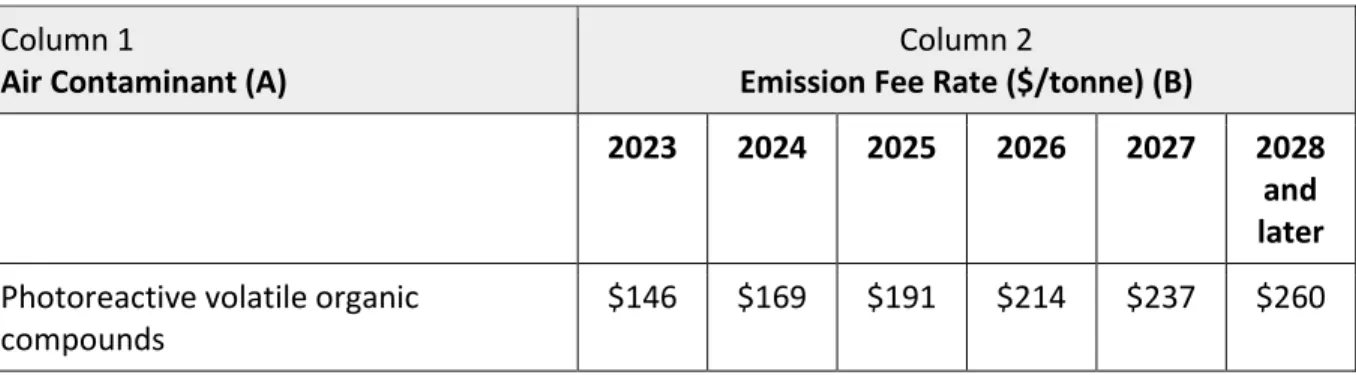
The updated rates will come into effect on January 1, 2023.. a) give first, second and third reading to the Metro Vancouver Regional Boiler and Heater District Emission Bylaw Amending Bylaw no. and Heating Regulation for the Amendment of Regulation No. MVRD Emission Regulation of Boilers and Process Heaters For the amendment of Regulation No. Regulation of Air Quality Management Tariff Regulation of MVRD No. A by-law to amend "Regulation Regulation No.
The Metro Vancouver Regional District has issued the “Greater Vancouver Regional District Air Quality Management Bylaw No.” That ordinance contemplates that the Metro Vancouver Regional District board may establish emissions regulations and rates; The Metro Vancouver Regional District has adopted the “Greater Vancouver Regional District Boilers and Process Heaters Emission Regulation Bylaw.” The Metro Vancouver Regional District board wants to amend the “Greater Vancouver Regional District Boilers and Process Heaters Emission Regulation Bylaw.”
The official citation of this by-law is “Metro Vancouver District Regional Boiler and Process Heater Emission Regulation Amending Regulation No. The Greater Vancouver District Boiler and District Heater Emission Regulation, as amended, is amended as follows:.