First, I would like to thank my supervisor for his steadfast commitment to my Master's journey. Much of what I have done in my supervisor's lab has been part of a team effort and I owe my success in my Masters to them.
Introduction
Problem Statement
Specifically, for technologies that support SBME, validity is the degree to which they accurately achieve the intended purpose of the training (Gallagher et al., 2003). Typically, validity tests are conducted when SBME-supporting technologies are developed and implemented in an educational setting (Hollensteiner et al., 2018).
Theoretical Underpinnings
Design Thinking
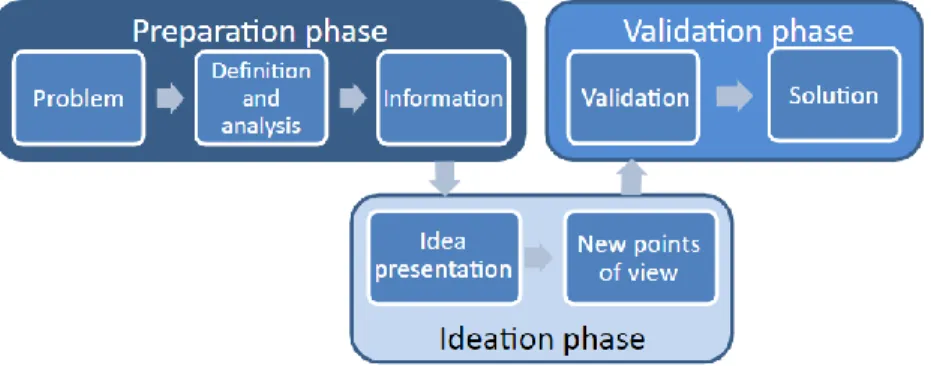
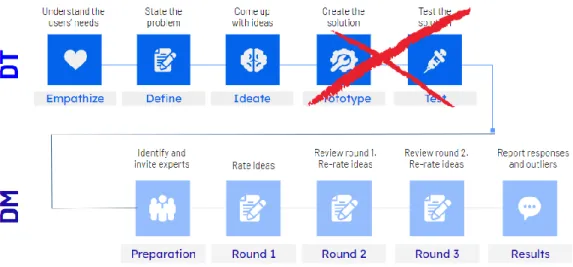
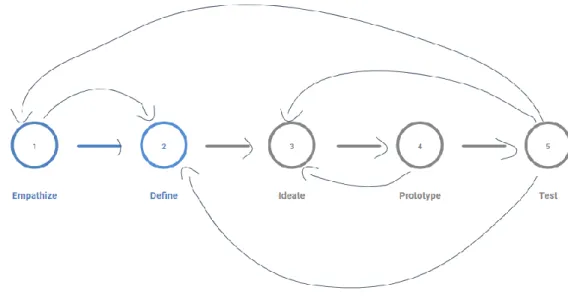
Content validity is measured by gathering the knowledge of experts in the field about what an appropriate construct is in a given context (Andreatta & .. In design thinking, validation occurs in the 1) prototype phase, where ideas are transformed into tangible representations of the solution. and passed internally to the design team for feedback, and 2) a testing phase where prototypes are tested by endpoint. We suggest that during the prototyping and testing phase of design thinking, where ideas are synthesized into a solution, it is important to gather feedback from content experts to achieve content validity in a solution that would satisfy the field of medical sciences.
Delphi Method
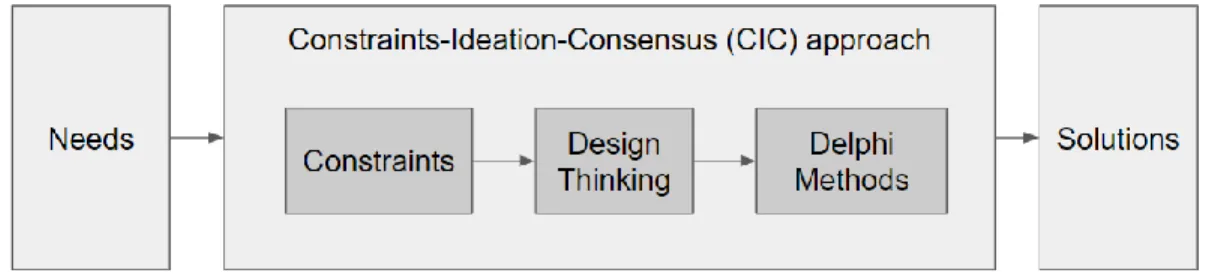
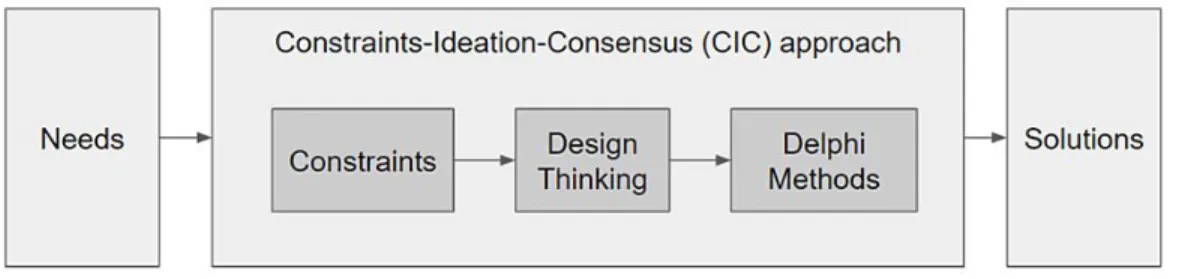
To address this, we propose to replace these two stages of design thinking with a well-defined method that can provide content validation to the solution, and this will be a Delphi method (Figure 3). The questions in each round are structured based on the results of the previous round (Barrett & Heale, 2020).
General Research Methods
The testing phase involves testing the learning tool by placing them in the classroom environment to see how they would perform in the real-life environment. The evaluation phase involves evaluating the effectiveness of the learning tool using evidence of learning.
Thesis Objectives
To answer the main research question and sub-questions, we used two test cases for the planning phase of DBR using the CIC approach: Test case 1 deals with the acquisition of psychomotor skills, which consists of cognitive and motor skills (Schmidt, R. A. & Lee, T., 2011) and Test Case 2, which focuses on the development of cognitive and emotional skills. The hypothesis is that Test Case 1 and Test Case 2 using the CIC approach, when they go through the DBR design phase, will yield valid SBME-supporting technologies, and the co-developers will judge the process as practical and sustainable. technologies that support SBME.
Test Cases
Test Case 1…
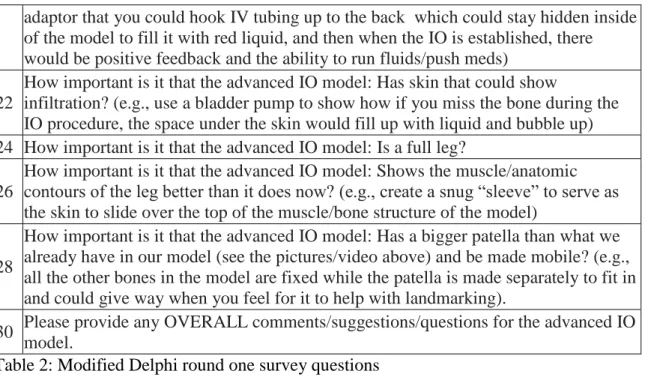
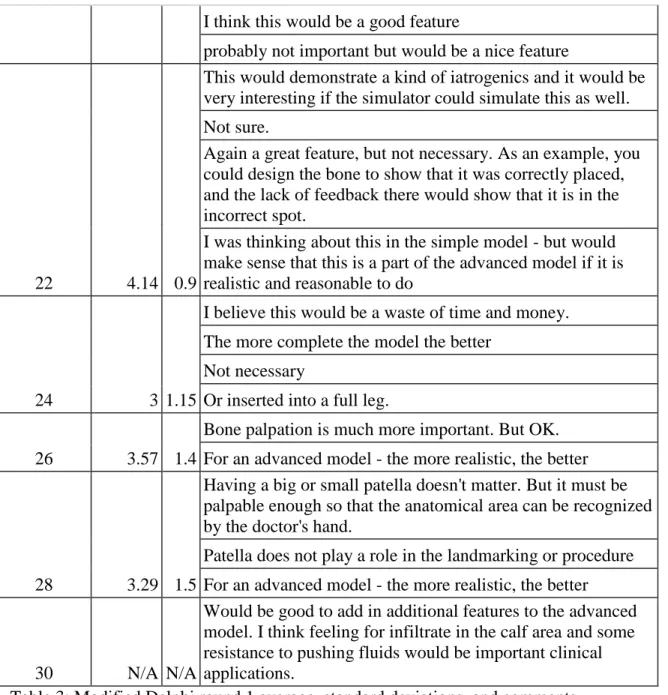
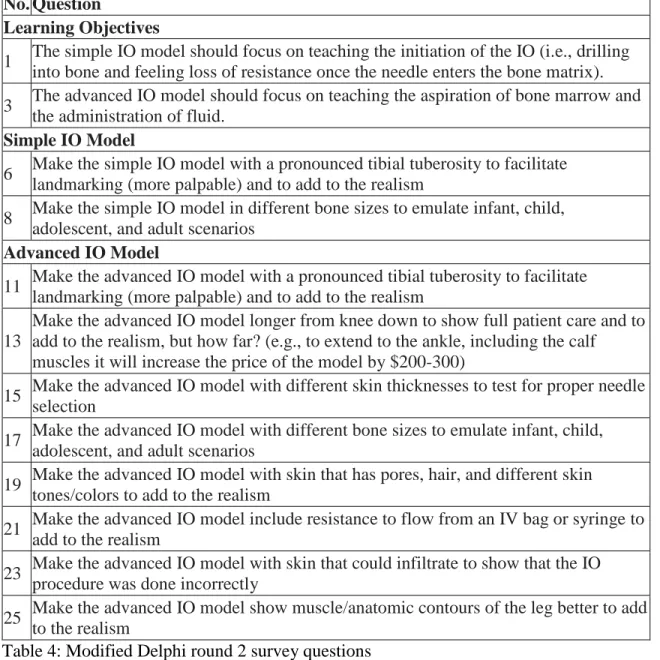
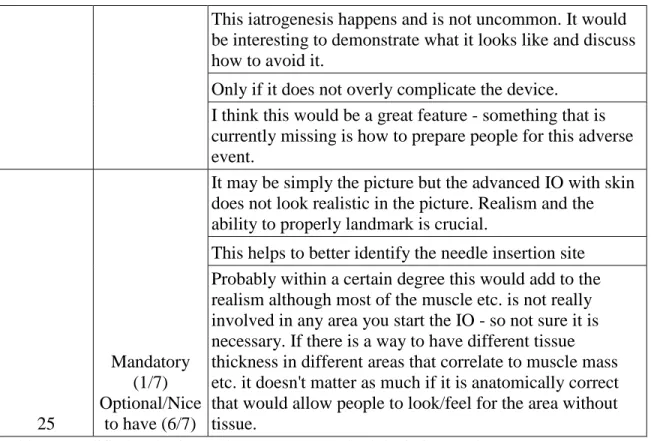
25 Allow the advanced IO model to better represent the muscular/anatomical contours of the leg to increase realism. Two questions, questions 1 and 3, in the modified Delphi round two aimed to clarify the learning objectives of the simple and advanced ID simulators (Table 5). The described test case of the development of the simple and advanced IO simulators required a design-to-cost approach.
Test Case 2
Using this data, a VR simulation prototype was developed by the project team together with the VR designers. The output from DM round 3 was then used to map out the content in the form of a script for the VR simulation scenario and a slide deck for in-VR. In summary, the content creation process for the VR simulation underwent the following steps: (1) identifying constraints, (2) generating ideas through DT, (3) a DM using DT ideas for expert consensus, and (4) a focus group interview to clarify the DM result.
These elements were recorded as elements to be included in the final content of the VR simulation and were not revisited in subsequent rounds of modified DM. These elements were marked as elements that did not need to be included in the final content of the VR simulation and were not revisited in subsequent DM rounds. This is probably one of the main issues facing HCWs on the frontline and should definitely be included in the VR scenario planning process.
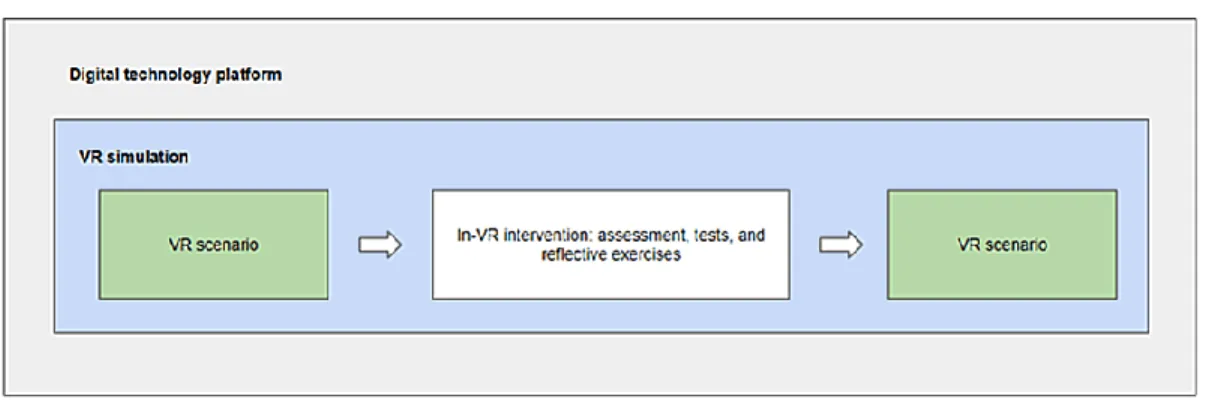
The participant puts himself in the shoes of the person in the scenario and reflects on the process. Introduce tribe #2. I can't comment, not being an expert on moral distress. The intensity of the scenario could be increased by. The output of the DM was used to create a scenario and intervention that could be embedded into the VR simulation.
He prepared the participants to be able to offer suggestions on possible "stems" for the VR simulation in the final phase of the CIC approach.
Results
Test Case 1 Results
Mastery-based learning theory and the optimal challenge point framework were identified as learning theories to support the design of the learning tool, the physical simulator. This theory was considered appropriate for the development of simulators because in the decentralized SBME environment, students would be left to their own devices to train and therefore would tend to spend time on skill areas that they feel have been absent in an effort to perform better. This theory was also considered suitable for simulator development because the goal was to create simulators that would appropriately challenge the physician-in-training, who could appear as two types of trainees—or juniors (ie, not having skill knowledge ) or high (ie, having some skill knowledge).
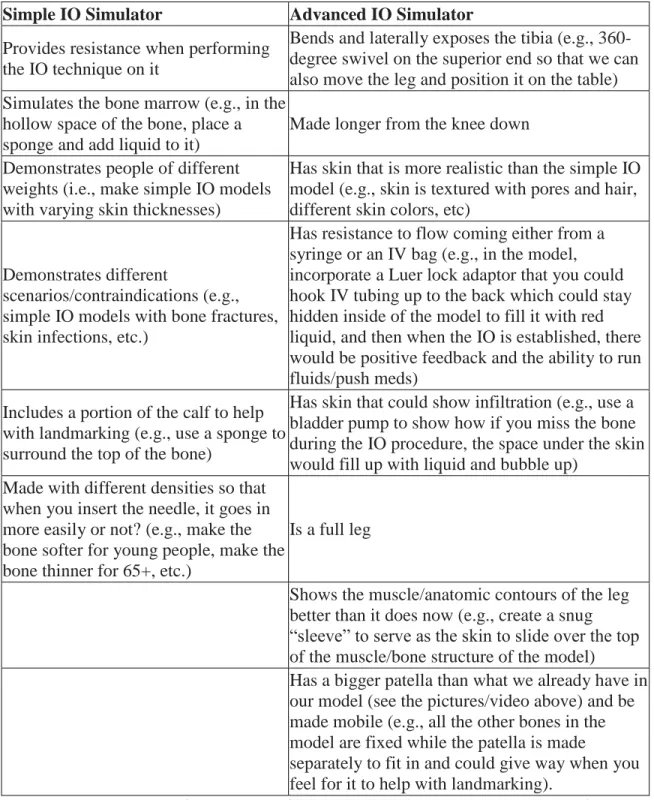
Ideation and consensus phases occurred with six paramedics and one physician as participants, who provided content validation for the final design of the simulators. For the simple IO simulator, ideas include: provides resistance during drilling, simulates bone marrow, demonstrates different weights, demonstrates different scenarios/contraindications, includes a calf section, and is made of different densities. For the advanced IO simulator, ideas include: flex and expose the tibia to the side, made longer from the knee down, have more realistic skin than plain IO, provide resistance to flow, make the skin appear infiltration, done on a full leg , anatomically better shows the contours of the leg and makes the patella bigger.
An area for improvement for logistics would be to consider allocating more time to the design thinking part of the ideation part of the CIC so that a greater volume of ideas can be collected and flowed through the validation process, leading to simulators that could be better fulfilled. learning objectives defined during Delphi rounds by experts (ie, simple IO simulators would teach the access part of the skill while advanced IO simulators would teach the skill infusion part). Finally, regarding the future use of the CIC approach, it was noted that the process could yield additional features that could be applied to future models, such as those optional features seen in this particular test case that were not used.
Test Case 2 Results
Finally, regarding the future use of the CIC approach, it was noted that the process could yield additional features that could be applied to future models, such as those optional features seen in this particular test case that were not used. adjustments to the CIC approach, participants felt it was a useful process to produce physical simulators to teach and advance access and infusion skills during training.. trainees 1) be exposed to real-life events, 2) observe and reflect on that experience, 3) form abstract concepts and generalizations, and 4) test a hypothesis by applying what they have learned to future situations, resulting in new experiences (Kolb, 1984). Next, research tools/methods, being the CIC approach, were identified to design the simulation. Then, the research tools/methods, being design thinking and Delphi methodology, were identified and structured in a way to design the simulation.
The ideation and consensus phases occurred with five psychiatrists, three psychologists, three nurses, one game developer, and one health simulator as participants to ensure content validity for the final design of the VR simulation. The general themes of these ideas revolved around virtual actors acting negatively (e.g., making mistakes, not getting enough sleep, getting angry), virtual actors being exposed to something negative (e.g., poor leadership, staffing issues), creating a moral conversation between participants and virtual players, teaching the participant about moral distress and collecting data about the participants via biometrics at various control points of the simulation and assessing feelings and knowledge about moral distress during and after the simulation. The ideas were then moved to a Delphi methodology where, after three rounds, the participants collectively divided the ideas into 16 items and assembled them together to create potential stems for scenarios and interventions for the simulation.
This foundation provided the project team with a set of parameters for the team to work with, but not the storyline needed to create the VR simulation design. With the VR platform and timing constraint in mind, a 20-minute VR simulation prototype was created using the CIC approach that content experts believe can induce and teach moral distress.
Discussion…
Finally, the SWOT analysis only asked about the strengths, weaknesses, opportunities and strengths of the CIC approach. The preparation leading to putting Test Case 1 and Test Case 2 through the CIC approach took approximately five months, and the execution of the CIC approach with endpoint users spanned one month. Using the output from the CIC approach (i.e. list of criteria for developing Test Case 1 and Test Case 2),
The CIC approach described in this thesis consists of design thinking and Delphi as research methods that make up most of its structure and decided to be placed in the design phase of the DBR framework. However, since the simulation is being designed to teach students as end users of the simulation, it would be useful to invite them to participate in the CIC approach. As described earlier, future directions for the CIC approach would be to have steps for stakeholder selection and research methods prior to the constraints phase of the CIC approach.
This activity corresponds to the description of the reflection phase of the DBR framework and precedes the planning phase in which we place the CIC approach. Both the results of Test Case 1 and Test Case 2 demonstrated the feasibility and acceptability of the CIC approach.