Thank you for not giving up on this project at a time when I was ready, the final push along with the ongoing support was needed. Your sage advice helped guide me in ways that are greatly appreciated, a simple thank you does not cover the value of your contribution to this work. A warm thank you to Dr. Diane Buchanan most recently with Queens University, as my external reviewer, your thoughts and support have been invaluable.
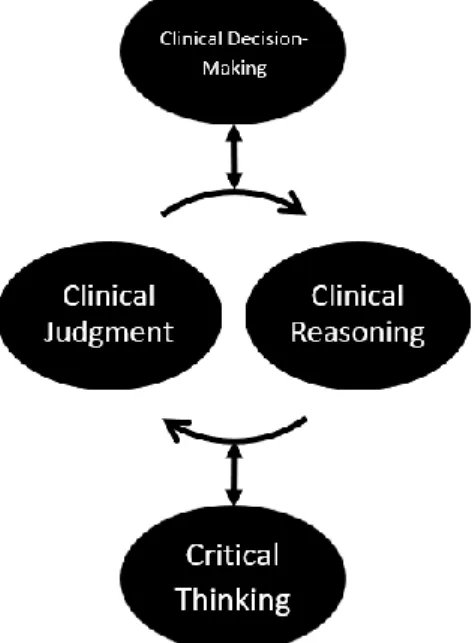
Clinical judgment is often used interchangeably with clinical reasoning, critical thinking, and clinical decision making. This study was undertaken to explore clinical nursing instructors' experiences of these.
Introduction
Clinical judgment is considered an invaluable requirement for registered nursing (RN), but research has shown that new nursing graduates lack the judgment skills expected by their employers (Wilber, 2014). Clinical experience has been found to play an important role in the development of clinical judgment (Pouralizadeh, Khankeh, & Dalvandi, 2017). According to Benner et al. 2009), another challenge facing the development of clinical judgment is the generalization that professional clinical judgment is.
Additional difficulties in facilitating the development of clinical judgment arise from the clinical setting itself. There were two central questions, namely: How do experienced clinical nurse instructors understand clinical judgement.
Literature Review
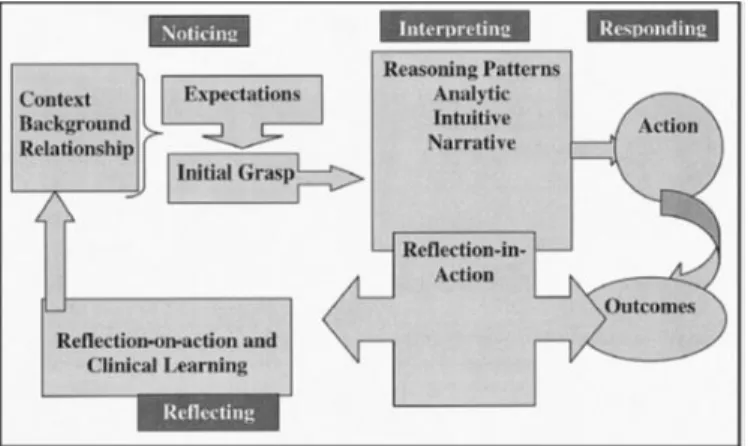
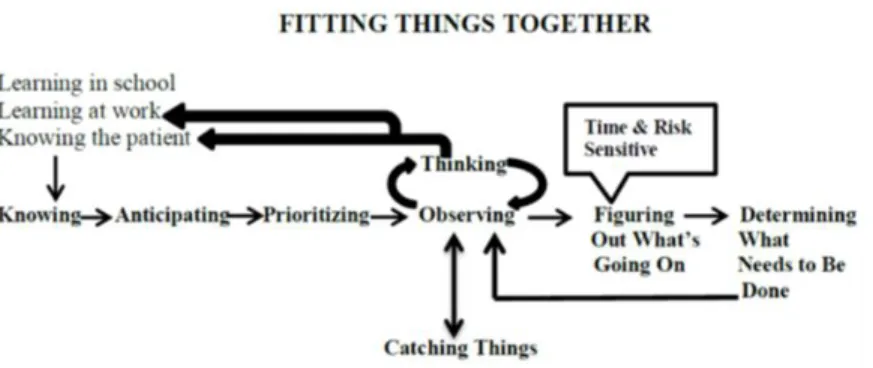
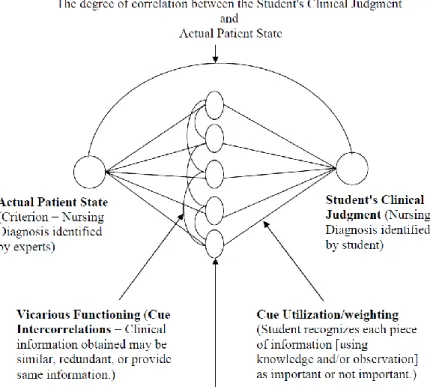
Clinical judgment requires critical thinking and involves weighing the alternatives (clinical reasoning) before making a decision (clinical decision making) (Burruss & Popkess, 2012; Standing, 2014). The development of clinical judgment is also complicated by the difficulties in capturing/understanding the role of emotion; and this can greatly influence the judgment of practitioners (Benner et al., 2009). This model was instrumental in the development of an evaluation tool, the Lasater Clinical Judgment Rubric (Lasater, 2011).
The development of clinical judgment requires active learning while interacting with patients in a real-world context (Herron et al., 2016). The clinical learning experience during nursing education provides nursing students with the opportunity to explore clinical judgment in an environment that includes real patients and real situations (Herron et al., 2016).
Methodology
First, it is important to recognize the influence of the researcher and the likely potential to introduce bias during the study (Caelli et al., 2003). The position of the researcher can influence: the responsiveness of the participants (through trust and empathy), the relationship between participants and researcher, but also on elements of the research itself (such as design, research question, data collection, data analysis and findings) (Berger, 2013). First, I believe that clinical judgment can be facilitated (or hindered) within the context of...
Ethical information about participating in the study was discussed prior to the interview, along with completing a signed consent form. Saturation is also related to the researcher's ability to move between data collection and data analysis, as well as their familiarity with the topic and ability to make meaning of the findings (Morse, 2015b). Creating a graphical representation of the data (such as matrices, maps, and Venn diagrams) can help researchers reduce and compare data, provide an overview of it, and can aid in investigating causality (Dey, 2007).
Transferability is the extent to which the findings of a study can be extended beyond the context of the study itself (Morse, 2015a; Ryan-Nicholls & Will, 2009). Reliability refers to the repeatability of a study's findings; if the study were repeated, another researcher would come. In this study, the raw data consists of audio recordings and transcripts of these interviews.
Unfortunately, during the data analysis phase, due to computer malfunction, much of the coding information was lost along with NVivo software. The findings section consists of narrative and diagrams driven from the second part of the audit trail (Wolf, 2003). Reflexivity began in the early stages of the study and continued until the completion of the study.
Results
Morgan described clinical judgment as including "the different ways we know and think as nurses." Participants described the importance of clinical judgment in patient-centered outcomes, humanistic approaches, promotion of optimal outcome, care planning, and how nurses/students interact with the patient. They also felt that when there is no strong student leader, there can be difficulties within the student body. Study participants felt that because students' interpersonal conflict skills are usually not well developed, they tend to avoid meaningful conversations.
Participants reflected that students may feel that their opinions are not valued, and that they may feel overwhelmed by the significant distance between where they are now as students and where they see experienced nurses; they feel like it's too far away ("And they feel like they're starting 30 meters from the starting line. They feel like they'll never catch up, they'll never be in that spot." - Alex) . They felt that students should know that it is okay to be afraid, that it is a temporary reaction and that it will pass. Participants also felt that passing/failing clinical courses reduced students' anxiety about working with instructors.
The participants felt that the first step is to recognize that something is having a negative impact on the student. They also believed that it was important for students to thrive in the learning environment; enough that they feel they can say "I don't know" or even say something and be wrong. It was felt that this is a missed opportunity for students to develop their clinical judgement.
These include: being closer to where the students are coming from and having fresh experience providing direct care (“So, new . instructors, I think they have a lot to offer and they're often closer to where their students are coming from … they have that direct a first-hand experience of care that is really fresh.” - Jordan). They felt that clinical staff can be a valuable resource and role model for students and can relieve some of the pressure. Participants felt that being aware of these differences can help the instructor tailor the learning experience.
They felt that they had to trust the students and their abilities and help them gain confidence. They also felt that students should sometimes be able to vent when they are having a hard time.
Discussion
Clinical judgment has been described in the literature as the process by which data is collected, analyzed and used to influence patient outcomes (Benner et al., 2009; Burruss & Popkess, 2012; Lasater, 2011; Standing, 2014). The importance of the role of nursing instructors is reflected in the literature, which states that instructors have significant influence on the practice and the success of nursing students (Borhani et al., 2010; Esmaeili et al., 2014; Okoronkwo et al., 2013) . This sharing of thoughts between students, staff, and instructors can help students explore other perspectives on the clinical situation (Huang et al., 2016).
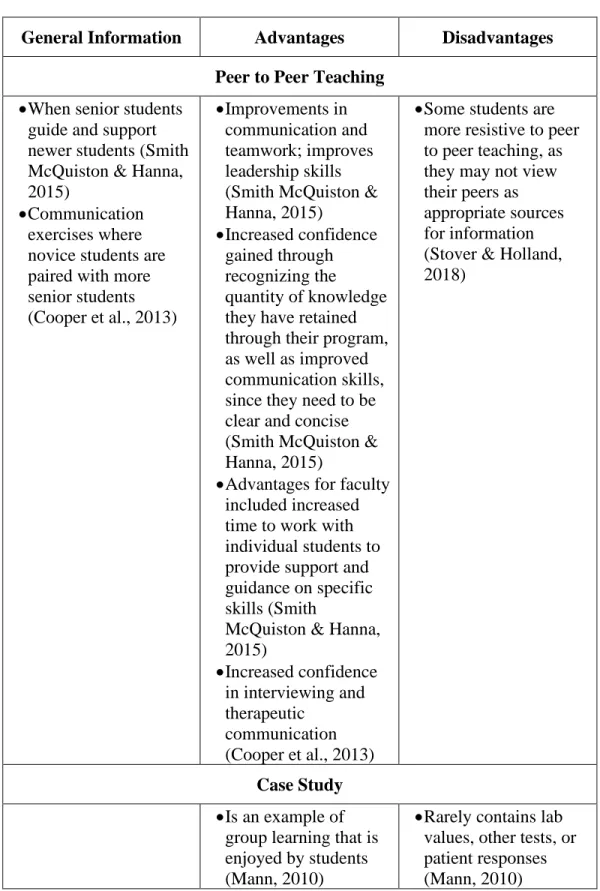
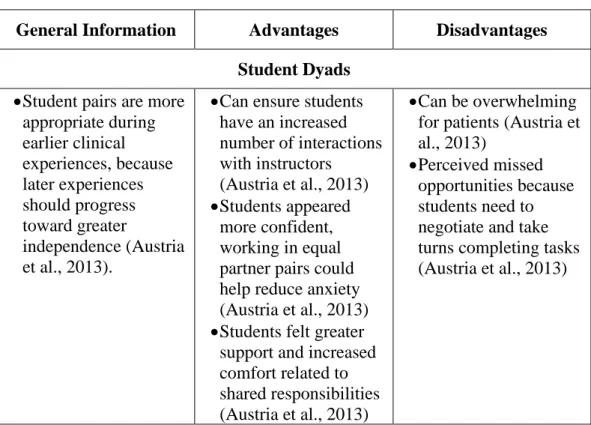
The participants believed that the students need to take ownership of their learning experience in the clinical environment. In the literature, it was reported that effective clinical instructors have time to interact with the students and at the same time create opportunities for the students to practice (Austria et al., 2013). Yet, students have reported that they feel that they do not get enough of the instructor's time while in the clinical setting (Kol & İnce, 2018).
Both students and instructors have the potential to create an unsafe clinical environment (Montgomery et al., 2014). When students enter clinical practice unprepared or lack proactivity in their education, they put themselves and the patient at risk (Montgomery et al., 2014). Another consideration found in the literature is that when a group is particularly competitive, tension within the group can increase (Arkan et al., 2018).
Nursing students are part of this professional culture, as much as they are influenced by it (Strouse et al., 2018). The relationship with staff nurses has a significant impact on student learning in the clinical setting (Lee et al., 2018). Emotional reactions in the clinical setting can be a barrier to awareness, which improves awareness of thought processes (Huang et al., 2016).
The literature attributes poor performance to: poor preparation, inadequate knowledge, poor decision-making and not taking responsibility (Montgomery et al., 2014). Premature intervention robs them of this and can hinder their development of self-efficacy (students' perceptions of their ability to function effectively in a clinical setting) (Jahanpour et al., 2010).
Conclusion
Using the qualitative methodology of interpretive description, this study aimed to explore experienced clinical educators' understanding of clinical judgment and how they facilitate the development of clinical judgment in students. Five experienced clinical instructors (average 10.4 years of teaching experience) were asked to describe how they perceive clinical judgment, how they facilitate clinical judgment, what supports the development of clinical judgment, what hinders clinical judgment (and how they deal with hurdles), and what advice they have for new clinical instructors. The first question asked to participants was: From your perspective, what is your understanding of clinical judgment and how would you define it?
Participants also emphasized that clinical judgment can vary from one practitioner to another, and that their understanding of it has evolved over time. The importance of the clinical instructor role was consistently highlighted in the responses to this question. Awareness of the learning environment, along with the student and instructor factors can help both instructors and students take advantage of what is within their control to improve the overall experience.
The fifth question posed to the participants was: What advice would you give to new clinical instructors in terms of supporting the development of clinical judgment in their students. Many of the participants indicated that their understanding of clinical judgment has developed over their many years of teaching practice. Ongoing research into effective assessment tools that are user-friendly for both instructors and students would be helpful to help them work together to build student clinical judgment.
Transcription close to the time of the interview helped with this issue, as well as helping with the interpretive description. I believe that the results of this study increase the presence of clinical nursing instructors' voices regarding the topic of clinical judgment. Interpretive description of clinical judgment in reflective journals of nursing students participating [sic] in high-fidelity simulation.