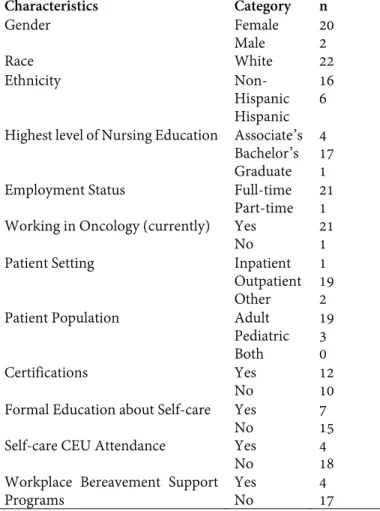
Timos Papatzikis provides an overview of the 7th International Association for Music and Medicine conference. Much of the literature examining how oncology nurses deal with work-related emotions suggests that they deal with these issues in isolation [9-11]. Some participants described that writing reminded them of the meaning they derive from their work.
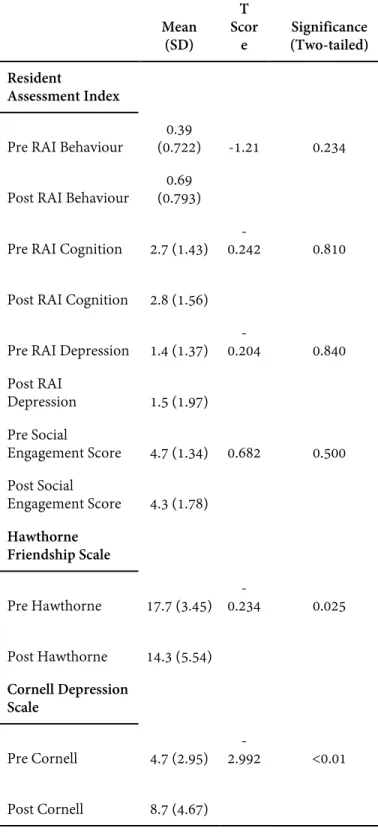
Understanding the impact of the “Fountains of Uke” intergenerational music program on long-term care residents.
Understanding the impact of the “Fountains of Uke” intergenerational music program on long- term care residents
Care, compassion and controversy: Supporting children in a Covid-19 vaccine cohort through music therapy and child life. Pediatric care at MSBI is steeped in a family-centered philosophy, valuing the psychosocial care of children informed by the integration of music therapy and child life services. 4-9] Vaccine provision for children was newly adopted, resulting in several layers of needs that were met and addressed through the integration of music therapy and children's lives oscillating between interdisciplinary and transdisciplinary care delivery.
This Music Therapy/Child Life Training Tool is included as an appendix to introduce the mechanism that became an ongoing source of supervision and training during the second author's internship, which aligned with the Covid-19 vaccine pod trajectory . The role of providing procedural support during the vaccination process was essential from both music therapy and child life perspectives. Music therapy practiced with a therapeutic focus on inclusion of the child and family in a process that values authenticity, accurate language, agency, control, involvement and feedback of the child has contributed to the culture of the Covid-19 vaccine pod .
Interdisciplinary support provided through collaboration of music therapy and child life emerged from the professions. The child's choice of interventions across both child life and music therapy presentations provided children with a sense of control during stress-inducing environments. Music therapy and child life integration as a channel for procedural support have proven to be both effective and efficient in meeting the needs of children receiving their Covid-19 vaccine.
Music therapy as procedural support for invasive medical procedures: Toward the development of music therapy theory. John is licensed as a creative arts therapist and holds dual certification in music therapy and child life practice.
Perspectives on dementia from a speech-language pathologist: An interdisciplinary focus
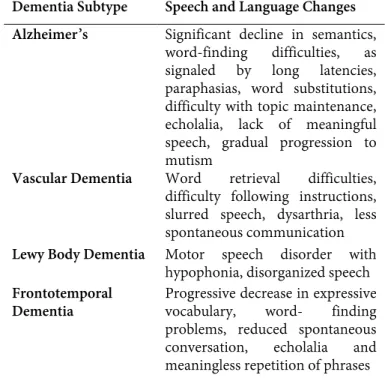
Therefore, it is the role of professionals such as speech pathologists to assess patterns of communication decline that contribute to predictive medical diagnoses and planning. Therefore, WHO has created a world dementia plan.4 The plan marks an attempt to analyze and anticipate the needs of dementia sufferers worldwide and includes regions such as Africa, the Americas, Southeast Asia, Europe, the Eastern Mediterranean and the West. . Pacific in an effort to share and expand dementia care for all. This downward deterioration is a hallmark of the disease and is directly related to the worsening of the disease from the central nervous system, which contributes to the final morbidity.7 Most patients will first lose meaningful propositional nominal language, then may have preserved the functions of the language by heart for a period. .
The following is a brief overview of some of the best practices recommended in the current literature, although this overview is not exhaustive. The careful identification of dementia and its variants through clinical and instrumental efforts is a global research effort that can increase the quality of life of millions of people and their loved ones now and in the future. The purpose of the RBANS is to assess the neuropsychological status of adults aged 20-89 with neurological injury or disease, such as dementia.
Proposed specialized neural networks may underlie performance maintained in certain test populations, which could be useful in both diagnosis and development of treatment strategies. The predictive power of music-based cognitive assessment is a valuable contribution to the dementia assessment armamentarium, especially as early detection is essential for appropriate referral and treatment. The effectiveness of music interventions for people with dementia was tested during a randomized cluster in Australian residential aged care facilities (RACF). The study highlighted the disadvantage of delays in initiating baseline assessments and delivering interventions due to the COVID-19 pandemic on the effectiveness of music interventions.

Neglect, virtual reality and music therapy: A clinical report
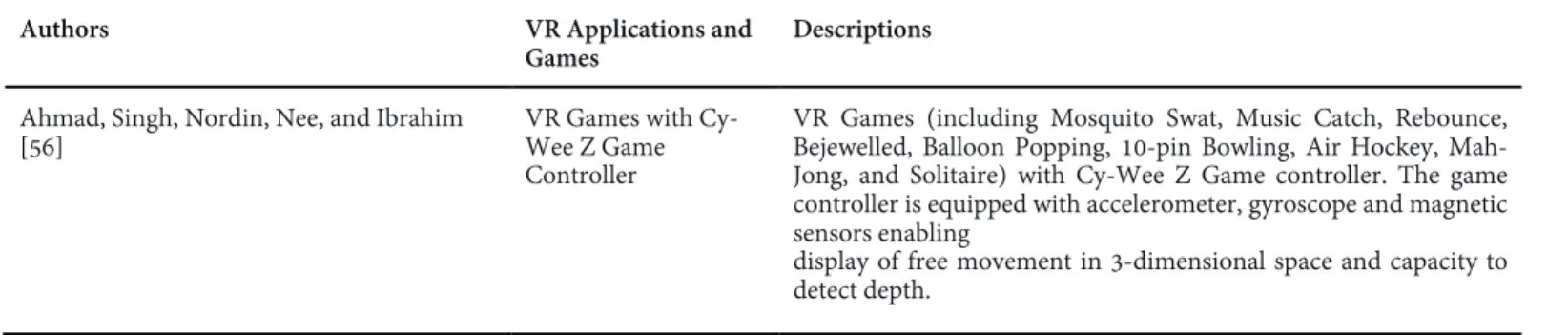
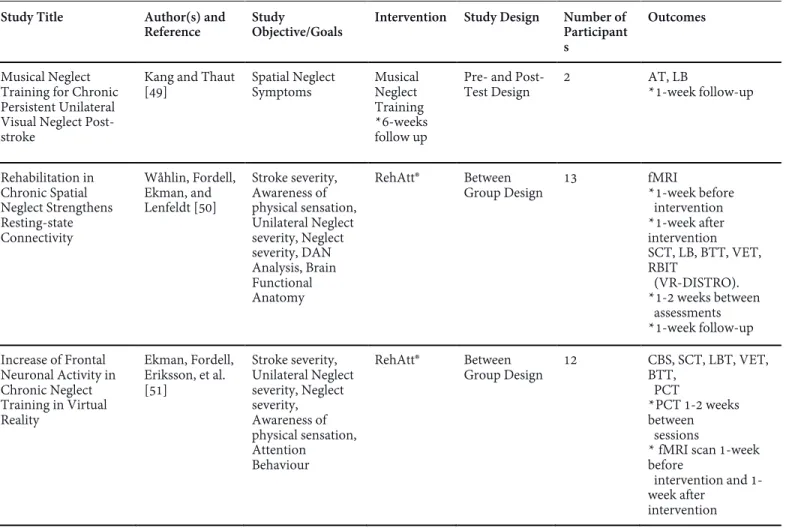
VR interventions for neglect rehabilitation have been developed, with studies tracking the patient's upper limbs using motion capture technology associated with task-following stimuli [44]. All of the reviewed studies use different scores to assess a patient's presence or severity of stroke and neglect symptoms. Throughout the literature reviewed, the two primary types of interventions used are VR and music therapy (specifically, the MNT method of neurological music therapy).
Some interventions are used as a primary form of rehabilitation, for example MNT in [49], VR in [55], VR in [52], and some interventions are used in combination with other forms of rehabilitation, such as physiotherapy [57]. , 56] and standard cognitive therapy [54]. The table reads horizontally from the authors (researchers who applied the VR applications) to the VR applications and games used in the studies, to descriptions of the studies. 51] RehAtt® RehAtt® requires the patient to perform intensive scanning activities, with game levels adjusted to the patient's difficulty level.
A hi-hat cymbal was placed in the final position to provide a powerful sound to complete the pattern. In addition to small sample sizes, most study designs pose challenges to the integrity of the findings. Thus, the efficacy of the VR application is not promising when associated with daily life outcomes.
Evidence that was not considered in the results of this review includes the cross-cutting purposes between VR and music therapy interventions related to restoring the function of stroke-damaged brain regions through task-based motivational activity. This psychosocial aspect of patient adherence and motivation for rehabilitation is regularly discussed in the primary literature of the reviewed articles, but is not considered in the study results.
An International Discourse on ‘Music and Medicine’
The mix of optional live or virtual participation apparently allowed inclusion provisions that many more delegates could access and enjoy the conference content, in the way they chose, amid a still-slow fallout from pandemic concerns. The wide participation and worldwide involvement certainly brought a sense of contentment even after the online part of the scientific meeting, realizing that even the most difficult part of the conference – the artistic activities – was successfully delivered both on the ground and online. , respectively. These shows, within the schedule, strategically seemed to connect the past with the present, the divine with the orthological, the wishful with the fact-based knowledge, thus bringing together the worlds of music and medicine in the best possible interdisciplinary and frame.
Thus, as expected, the profound contribution of music therapy as a primary professional pathway in the field that successfully brings music into medical practice was communicated. It should also be mentioned that in the general presentations and discussions, the need for constant vigilance and attention was emphasized in terms of introducing the most basic methodological and technical knowledge in the framework of music and medicine in professional practice. In this regard, the practical support of official educational institutions and states is growing in readiness, agreeing to be a fundamental factor of advancement and stability in the field of music and medicine.
The international conference helped to consolidate the presented topics, as it captured experiences, concerns, new trends and knowledge that appear in the clinical, academic and social context of the interdisciplinary framework of music and medicine. As a result, a new weight was given to the useful oeuvre of the conference, which followed what was widely known for the contribution of a specific scientific field around the world even during the COVID-19 pandemic. In the meantime, the entire music and medical community looks forward with great optimism and dedication to the next official meeting in the next few years to continue to enjoy and publicize the progress in this field.
Relationship completion in palliative care music therapy Edit ors: Amy Cleme
The authors inform readers of the importance of community engagement in palliative care, stressing that bringing people together in hospices can create a place for "comfort and reflection" (p. 19) and thus support fulfilling relationships. They point out the added challenge of patients' movement between settings, which can both aid and detract from the completion process of the relationship. The authors describe research on both adults and children in end-of-life care and point to the potential of these interventions "to transform the environment and people's experience [...] and improve people's sense of connection and their engagement in relational completion work" (p. 29) .
In general, there is less literature on palliative care music therapy with children, including for the purpose of relationship completion. An emphasis on holding "a unique place for possibility in its ability to keep burning the human spirit and the love we all share" (p. 70) and that most meaningfully before and after the passing of doing the death for all people involved is highlighted in her use of music therapy for relationship consummation. The authors suggest "an in-depth exploration of spirituality and its relationship to people's experiences of relationship fulfillment" (p. 78), which should go hand in hand with students' exploration of their spirituality around their own beliefs and comfort and discomfort zones. to know.
Another necessary change suggested by the authors is to focus not on the "effectiveness" of music therapy for clients (p. 80), but its impact on families and organizational systems, as music therapy methods can facilitate the completion of relationships and grief processing by anyone who has experienced loss . of patients/clients. The authors explain who should do it, how and when it should happen, and they also provide a list of questions to explain that are relevant to introducing completion of a relationship and what it should look and sound like. The following four chapters, written by Pearson and Klinck (11), contain detailed guidelines for completing relationships in palliative care for adults.