
Budd Hall, University of Victoria, Canada Mary Beckie, University of Alberta, Canada Keith Carlson, University of Saskatchewan, Canada Sara Dorow, University of Alberta. The journal invites original reflective essays and previously unpublished research articles, review articles, field reports, testimonials, multimedia contributions, and book reviews focusing on community-engaged scholarship. We welcome contributions from community and academic partners, educators, researchers and researchers pursuing their work in collaboration with diverse communities in Canada and the world.
Women and gender-based violence in Canada: An intersectional approach by Chris Bruckert and Tuulia Law. The quality of our journal depends on the scientific collaboration between two groups of researchers, authors and anonymous reviewers of their work. We are especially grateful to the reviewers listed below, who reviewed the submissions for the current issue (Volume 5 Issue 3), for their time and dedication to excellent scholarship.
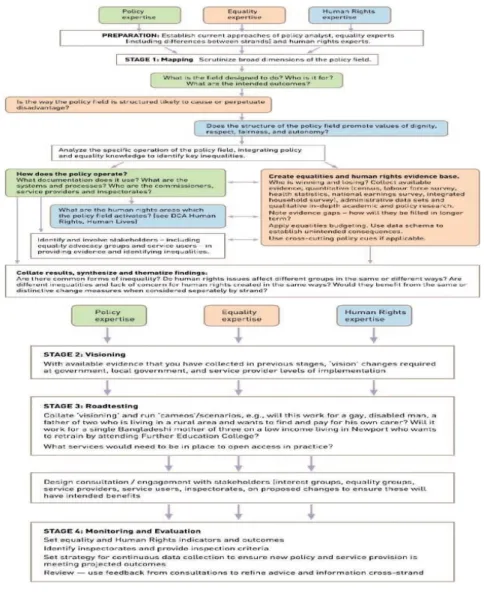
Community-Based Intersectionality: The Changing Public Services Project
All four CPS network groups identified questions that were relevant to the region and to regional partners. Chun, Lipsitz, and Shin (2013) refer to “social movement disruption” to highlight “intersectionality action imperatives” (pp and Cho, Crenshaw, and McCall (2013) use “political disruption.” They explain that, government had to accept some form of multi-union bargaining association – the same idea the unions proposed last summer.
These groups included 73 women from a variety of backgrounds, communities and organizations.2 Interviews included those who identified as: Indigenous, non-Indigenous/settler, Canadian citizen, permanent immigrant, from a racial group, from a non-racial group, heterosexual, LGBT, female, transgender, disabled and non-disabled. The day's activities are summarized in a CPS Women's Research and Action Forum Report prepared by Student Project Assistant Jennifer O'Keefe and posted on our project website.4 The research is further analyzed and presented in a final project report written by her Mary-Dan Johnston, CPS coordinator, also posted on the website. For a more comprehensive overview of the questions and themes from the study, see the summary report at: https://www.criaw-icref.ca/en/page/changing-public-services--nova-scotia-.
The project, Community First: Impacts of Community Engagement, aimed to strengthen community-campus partnerships and highlight "the needs, priorities and expertise of the communities and community-based organizations involved" (Andrée, Findlay & Peacock 2018). Intersectionality deals with the policy-making process that ensures that “the voices of vulnerable and marginalized individuals and groups are represented” and prevents “policies that are crafted for rather than with politically excluded constituencies (Hankivsky & Cormier, 2011, p. 219) . 222).
Beyond Employability: Defamiliarizing Work-Integrated Learning with Community-Engaged Learning
In the first half of the essay, we provide background for the conversation, first in the Canadian context and then in the broader science of CEL. Yet CEL itself is also often heavily engaged in the neoliberal project of "academic capitalism", to borrow Slaughter and Rhoades' (2004) term. Much of the literature interrogates the value of SEL pedagogy itself, while at the same time tracing how tensions in pedagogy and practice can be linked to broader structural forces.
An element of this critical reimagining of relationships with community partners is an accompanying reimagining of the role of the student in the partnership. Much of the recent theory in the field addresses the complexity of how to understand what students provide and acquire in CEL. We suggest that whether CEL is classified as a form of WIL or not, it can serve to reveal many of WIL's assumptions and to invite self-reflection in the field as a whole through application of CEL's reflexive practice of self-criticism ;.
The course is offered as a 12-week seminar for fourth-year undergraduate students in the Criminology and Sociolegal Studies program at the University of Toronto. Course students apply for a 25-hour volunteer internship with a community organization in the greater Toronto area. For example, internships provide an opportunity to observe the changing conception of the state and the provision of social services in the neoliberal era, which is discussed in the course reading.
Students on the course are encouraged to examine their motivations for participating in a CEL course in this context. Both tendencies are well illustrated in the discussion of the course "Neighborhood and Crime" above, where the content of the course directly involves issues of stigmatization, the subject positions of students in their internships, and the neoliberal economy. In the context of the humanities, both the rhetoric of commodification and the particular concerns raised by community engagement shift in subtle ways.
As far as possible, students in the program were encouraged to consider themselves reflexively, as objects of critical reflection, but also as reflective subjects. The recruitment of student participants highlighted the potential for transformative experiences: potential candidates were encouraged, in the language of our NGO partner, to “discover the world with the eyes of the heart”. Honor Brabazon is an assistant professor at the Center for Criminology and Sociolegal Studies at the University of Toronto.
Tenets of Community-Engaged Scholarship Applied to Delta Ways Remembered
states by members of the Community-Campus Partnerships for Health (CCPH) as far back as 2007, with the development of the Community-Engaged Scholarship Review, Promotion and Tenure Package (“the package”; Jordan, 2007). To shed some light on the nature of scholarship behind non-peer-reviewed community-engaged scholarly work, in the context of the academic promotion and tenure process, this essay will reflect on a non-traditional piece of scholarly work. Jordan goes on to describe that the evidence of clear objectives involves, among other things, stating the purpose of the work, its value to society, and identifying significant questions within the research area.
The goal of the SWEEP program was to co-develop a community-based cumulative effects monitoring program incorporating Western Science (WS) and Traditional Ecological Knowledge (TEK) indicators for assessing cumulative impacts on the Slave River and Delta over time. time. In the fall of 2011, an initial introductory meeting was held in Yellowknife with CWN program directors, SRDP members, and several university faculty from various institutions. Participation in a variety of community events outside of research activities, as well as workshops planned in SRDP member communities, also informed the scholarly work.
Jordan goes on to further explain, "Community involvement results in scholarship that is meaningful in the real world or community setting and leads to the production of better results or the reformulation of research questions for a study" (p. 78). The development of the research framework, the traditional ecological knowledge (TEK) indicators of the monitoring program, and the Delta Ways Remembered video could not have been envisioned or developed without the valued input of community members in the delta region. The TEK indicators that were developed and illustrated in the video were a critical requirement of the overall monitoring program as articulated by the community, and they were a key output of this program.
As always, the success of the scholarship required community involvement in the fiscal control and accountability aspects of the research. At each meeting, community members shared their perspectives on program directions, as well as outcomes and opportunities for application and dissemination of findings. With SRDP's approval, the video was shared with Saskatchewan's Indigenous communities at several workshops, community events and meetings.
A key attribute of good community-engaged scholarship is the recognition of interrelated disciplines and the application of creative (co-created) approaches needed to address diverse community research priorities. I would like to acknowledge and thank the people of the Slavic River Delta who have shared their expertise, experience and knowledge. Lori Bradford for her valuable contributions to Delta Ways Remembered, as well as members of the SWEEP team.
Exchanges
Conversation with Jayne Malenfant, McGill University
We look not only at schools, but also at child welfare, criminal justice, wellbeing and mental health, and how all these systems interrelate in young people's lives. So, in my master's thesis, I ended up writing about anarchist punks living outside the city in Canada and how they created radical networks - across a huge geographical space - to share knowledge about survival in the forest or the city. In addition, most of our youth in the team are already quite anarchist-oriented, which was not intentional when we hired them.
There are things we imagine today and in the future, but there are also things that young people already do every day. Penelope Sanz has conducted extensive research and fieldwork on the effects of Canadian mining among the indigenous Subanon peoples of the Zamboanga Peninsula in the southern Philippines. Sacagawea was a skilled guide and expert in the lands Lewis and Clark were charged with "discovering."
In the pre-contact period, their merits brought Malinche, Pocahontas, and Sacagawea to the forefront of the "foreign relations" scene of their communities, long before any outsider recognized their value in this sphere. She was the Mexican Eve, instigator of the original sin of miscegenation and a traitor, not to mention an unvirtuous "whore" in the virgin-princess/. Meanwhile, Jager argues that Pocahontas and Sacagawea are remembered in a more positive light because of the different nature of the conquest in the United States.
By giving them a role to play in the grand narrative of the colonial enterprise, the depictions worked to ease the colonial conscience. The authors explain their positionality in the introductory chapter and describe how this has shaped their approach to the book. Women and Gender-Based Violence in Canada is intended as a textbook for use in the university classroom.
Unlike other textbooks on the topic, Bruckert and Law have expanded the scope of what needs to be considered when discussing gender-based violence in the classroom beyond the traditional focus on interpersonal (or domestic) violence and sexual assault.
Community-Engaged Research, Teaching, and Learning