My second essay, entitled "A Trade-Environment Coalition Come", deals with interconnections between international environmental problems and trade blocs in a multilateral context. A special attention is drawn in my essays to the three aforementioned axes, which emphasize the context of international environmental management.
Introduction
4 In a framework closer to ours, finally, Chakravorty et al. 1995) introduced a water transport model where water is delivered by a regulator to spatially differentiated users along a channel. This variant explicitly takes into account local features such as soil productivity and the contribution of a given field to erosion.
The model
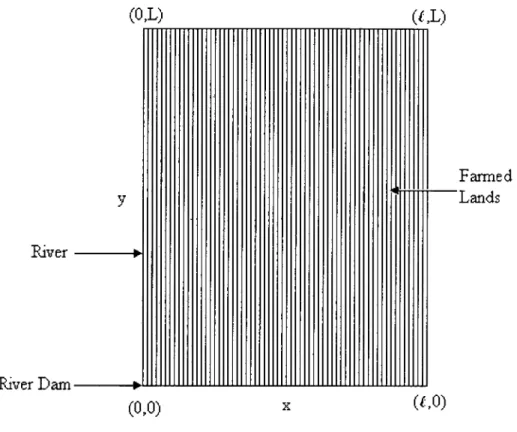
The total length of the river is L and y is the vertical distance from the dam. Total sediments and silt generated by farms located at distance y from the river dam.
An optimal erosion tax
According to this rule, a farm faces a lower tax per unit of eroded land if its vertical distance to the river dam is greater. Proposition 1. A farmer located at (x, y) should face a tax per unit of eroded soul l equal to the marginal social impairment adjusted by the fraction of sediment reaching the dam, which varies with spatial coordinate y.
Coping with an agricultural cooperative
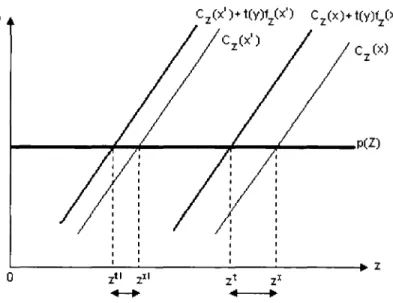
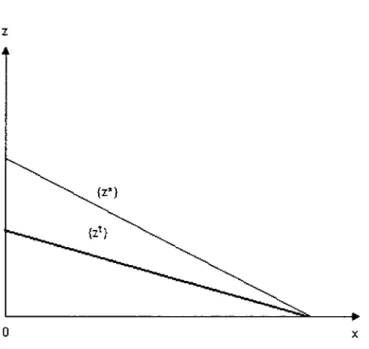
In the high range where rj > 1, the marginal contribution to river sedimentation is very responsive to output. If output z(x, y) falls by a greater amount than the marginal contribution to sedimentation for a given increase in the distance x from the river, then the optimal erosion load is set to increase by x.
Concluding remarks
34; The Effects of Pollution Taxation on the Pattern of Resource Allocation: The Downstream Diffusion Case". For example, they may contain measures that prohibit trade in certain species or products, or that allow countries to restrict trade in certain circumstances." 1. This opens a new door for the use of trade restrictions against free riders on the environment.
A standard stability concept used to study IEAs is based on the cartel stability literature. In 2006, he noted that: "Globalization has its costs, but it also bases its benefits, and among them is an international treaty framework that can be used to enforce emissions reductions." The first phase is an environmental game, where countries first decide on membership and then simultaneously choose the reduction levels.
This agreement assumes that a signatory country decides on its optimal level of reduction by maximizing the collective welfare of the coalition and sets zero tariffs on goods imported from all other signatories, but maintains them against non-member countries 4. As such, on the one hand, the trade coalition creates negative externalities on non-signatories. On the other hand, members enjoy positive spillover effects resulting from cost reductions in terms of tariffs.
Related literature
However, our approach in this paper will focus on the concept of linking issues to achieve stability. Here, as noted by Finus (2003), a distinction must be made between linking issues within repeated game compliance models and linking issues within membership models a la Cournot or Stackelberg, which is the framework adopted in our paper. Membership models with issue linkage include Hoel and Schneider (1997) and Cabon-Dhersin and Ramani (2006), who attempt to model issue linkage by introducing exogenous reputation effects.
Both of these proposals rely on the idea of linking the environmental game to a stable club good game. This strand of literature is based on the observation (Carraro and Siniscalco, 1997) that the inherent instability of the emissions game can be neutralized by linking it to an inherently stable game such as a club good game where R&D collaboration is a prime example 5. Botteon and Carraro (1998) consider R&D linkage with 5 heterogeneous players/countries to study the impact of R&D linkage on the stability of IEAs and on profitability of participants when linkage is used as a strategy.
And because of heterogeneity, countries may not agree on the coalition they see as optimal, since such an equilibrium cannot exist. We also consider a more general framework without full trade bans, which is suggested by stylized facts on the current state of reflection on how the IEA and the trade agreement should be linked. Finus and Rundshagen (2000) use a different framework, that of endogenous coalition formation, to examine the pollution-shelter-hypothesis and issue nexus.
The trade-environment coalition
The firms' equilibrium
In summary, regardless of the tariff structure, as the size of the coalition is increased, global output will eventually increase. This is the case when only the commercial part of the agreement is implemented, not respecting the environmental part at all. Since CS„, 7r s and TR, do not depend on the level of reduction, it is easy to obtain the optimal level of reduction.
Once both games are solved by backward induction, the optimal reduction levels of both signers and non-signers are known and given by (25) and (26). We substitute the optimal abatement level of a signatory country given by (25) into the equilibrium profit given by (16). Similarly, We substitute the optimal reduction level of a non-signatory country given by (26) into the equilibrium profit given by (17).
We substitute the optimal abatement level of a non-signatory country given by (26) into the equilibrium emissions function of all non-signatories given by (23). The optimal environmental damage22 is obtained by rewriting (24). 31) As we noted in (24), even though global output/unadjusted pollution X*(s) is increasing in s (trade game effect), we also have that the abatement effort q: is increasing in s. Once the optimal outputs, emissions and damages are known, we can determine the optimal welfare levels.
![Figure 4: Signatory output, [N = 100, b = 1, A = 1000, r = 1%]](https://thumb-us.123doks.com/thumbv2/9docorg/12351561.0/46.900.313.644.142.426/figure-4-signatory-output-n-100-b-1000.webp)
Stability Study
We derive numerically the signs of the partial derivatives of 4b,(s), not all of which are possible to derive analytically due to the complex form of the stability function. As such, our numerical analysis amounts to doing comparative statics, which indicates the effect of each parameter on the stability function and thus indirectly the effects on the stable size of the coalition. Indeed, coalition members enjoy economies of scale in reduction by virtue of being members of the union.
However, our sensitivity analysis shows that a change in the ratio of emissions to production that reflects the efficiency of pollution, i.e. high marginal environmental damage, increases the incentives to break free in the minimization game, which puts downward pressure on the stable coalition size. . Furthermore, an increase in the coalition's punitive power (increasing the tariff set by the Ts coalition) has large positive effects on the stable size of the coalition.
The trading game creates negative externalities that affect coalition complementarity through the club's good effect, reducing incentives to free ride in the environment game. Furthermore, trade-environment disputes, and generally any form of bilateral negotiation, play out in one of the following two scenarios. On the theoretical side, Nash (1950) was the first to formalize the concept of axiomatic negotiation, which lays the foundations of the cooperative approach.
2See Harrison and Rutstrôni (1991) for a discussion of the importance of point of contention in trade wars and trade negotiations in the pre-NAFTA context. Both Peters (1986) and Ponsatf and Watson (1997) are concerned with finding an axiomatic explanation of the simultaneous implementation of sequential negotiation on several issues, ie.
The 2 x 2 bargaining model
Axioms
- The bargaining framework
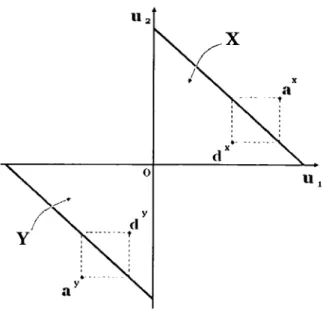
67 of the bargaining sets, any solution located on the Pareto frontier maximizes the sum of players' utilities in issues X and Y and is thus Pareto efficient. The stylized facts suggest that any improvement in a player's bargaining power will increase his overall post-negotiation welfare. Given a tied bilateral negotiation situation, the effects of an improvement in a player's bargaining power on an issue will depend on the degree of complementarity between negotiated issues X and Y .
Linked bargaining without concessions means that any improvement in player i's bargaining power over any issue will increase his utility over both issues. In this context, it is relevant to focus on the actors' negotiating positions, which are summarized by their negotiating power, which they bring to the negotiating table. Axiom-1 states that overall payoffs are proportional to each player's total bargaining power.
Given the definition of bargaining power, we can generalize this axiom and call it Monotonicity of Bound Bargaining Power, which is defined as follows: V (Z, d) E B 2 , vdeex R2+ , if di" > d and. Concession-related bargaining means that any improvement in player i's bargaining power on any issue will increase his utility on that issue, lower it over the other, there will be a net increase in overall utility. Also, this axiom shows that player Fi's total payoff is increasing at his total bargaining power Di and decreasing at D.
Solutions
When matters are put on the bargaining table in a connected manner, any improvement in player i's bargaining power with respect to issue a will increase his utility with respect to both issues a and 0. Improving player i's bargaining power with respect to issue a is simply an increase in the value of e, where everything else remains constant. Axiom-1 and Axiom-2, denoting the solution of connected d, account for the existence of positive spillover effects between issues when connection is considered.
Gains in bargaining power (di'x — c/T) resulting from shifting the disagreement point dx in favor of player j lead to positive spillover effects in the other case (Y). When the issues are put on the bargaining table in a connected manner, any improvement in player i's bargaining power with respect to issue a will increase his utility with respect to issues a, while above 0 it will decrease it by a smaller amount. Axiom-3 and Axiom-4, which denote a coupled solution, account for the existence of negative spillover effects between issues when coupling is considered.
Gains in bargaining power (di — result from a shift in the dispute point d' in favor of the player. 14 The US that had invested in trade sanctions against Mexico was able to reduce concessions made to Mexico on marine environmental protection life in the pacific Opening the "black boxes" of connections between environmental and trade issues is an effort that helps clarify the constraints and opportunities that emerge in global environmental policymaking.

![Figure 5: Non-signatory output, [N = 100, b = 1, A = 1000, 7 = 1%]](https://thumb-us.123doks.com/thumbv2/9docorg/12351561.0/47.898.287.565.170.424/figure-5-non-signatory-output-n-100-1000.webp)