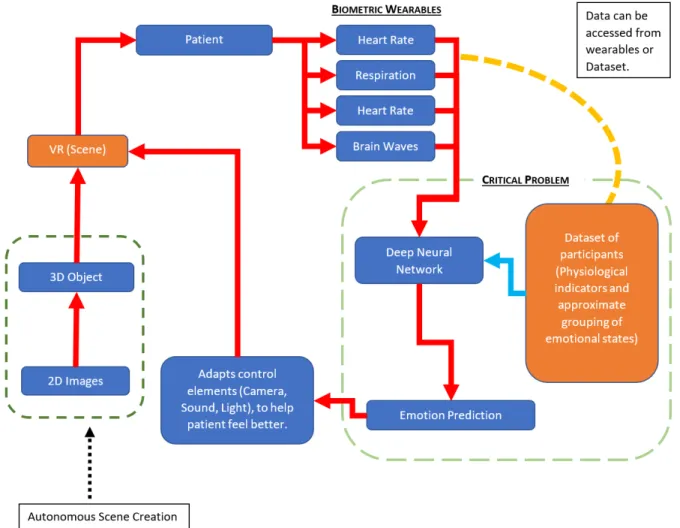
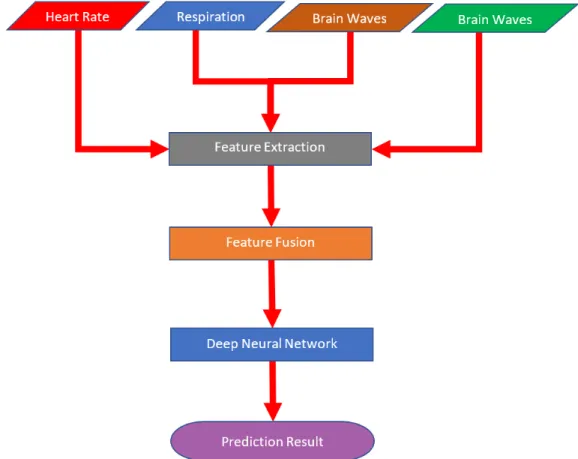
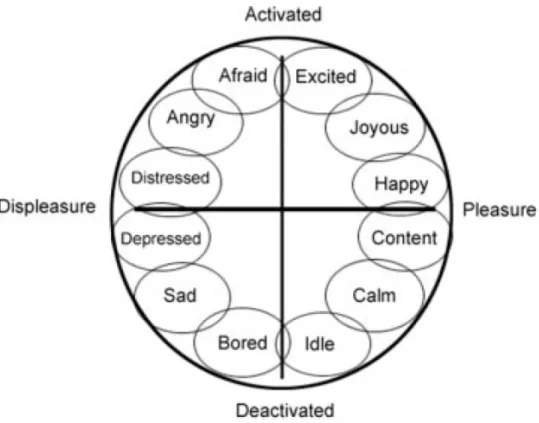
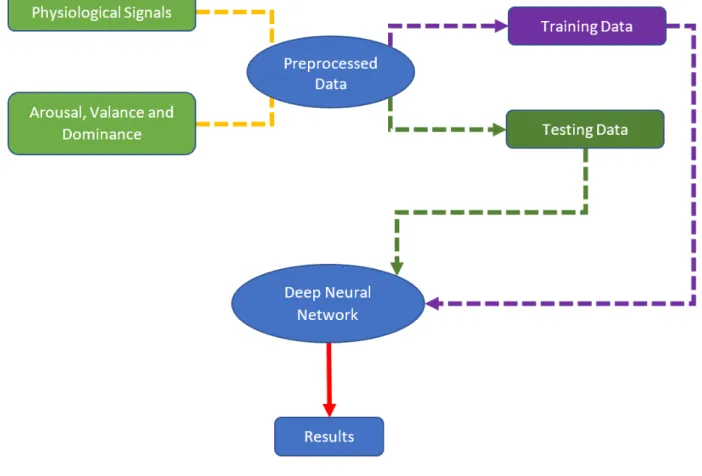
According to (Jerdan, et. al., 2018), the authors describe this as an illusion of reality. Another key part of this study discussed by (Eskofier, et. al., 2016) is the limitation that the research faced. Physiological indicators determine the emotions that an individual expresses, which is consistent with studies (Verma & Tiwary, 2014) and (Vijayan, et. al., 2015) and 2.
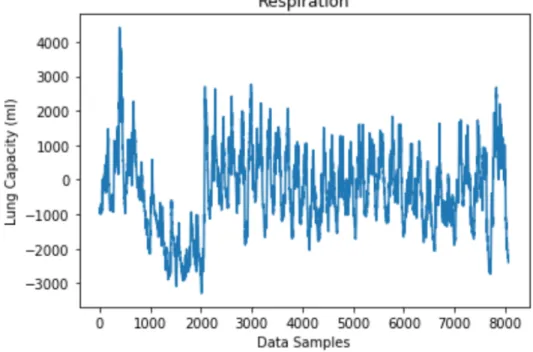
Research presented by (Shi, et. al., 2017), discusses heart rate variability (HRV) on two emotional states;. According to (Shi et. al., 2017), heart rate variability refers to small variations between intervals in the sinus heartbeat. Like other physiological indicators discussed in this review, respiration can be used for emotion recognition (Zhang, et. al., 2017).
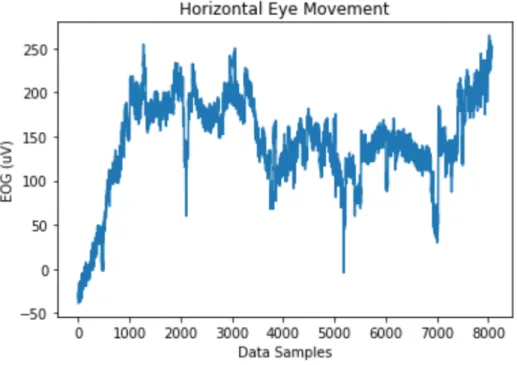
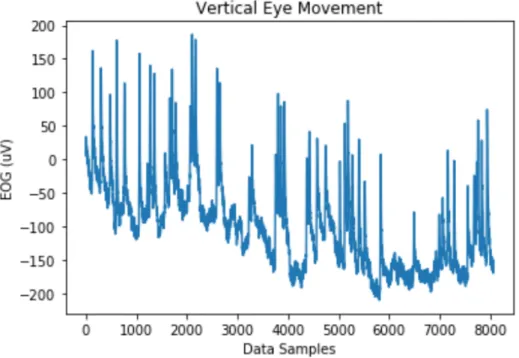
These results are similar to a study by (Zheng, et. al., 2019), which uses a Deep Neural Network (DNN) to classify emotion using EEG and Eye Movement. According to (Wu, et. al., 2012), the proposed method focuses on extracting Emotion Elicited Segments (EES) from the respiration signal. To correct this, (Wu, et. al., 2012) focuses on separating the respiration signal into quasi-homogeneous segments.
Once this is done, (Wu, et. al., 2012) are able to use emotion recognition on non-distorted segments. In contrast, (Wu, et. al., 2012) observe that when emotion-induced segments (EES) are not applied, both K-Nearest Neighbor (KNN) and Probabilistic Neural Network (PNN) perform slightly better low. In a study by (Zheng, et. al., 2019), the authors investigate a multimodal framework to predict human emotions using EEG and eye movement.
Liu, etc. al., 2018) claim that the use of the above models depends on the number of emotions explored, as well as the level of difference between emotions. Furthermore, (Liu, et. al., 2018) improves the classification algorithm by creating three levels of classification. The process of the new approach described by (Vijayan, et. al., 2015), starts with pre-processing the data to remove the distortion.
To further understand the use of machine learning algorithms in emotion recognition, (Shin, et. al., 2017) develops a complex biological emotion recognition system. Furthermore, (Shin, et. al., 2017) explains that a weight is attached to a specific channel to improve the classification accuracy. According to (Shin, et. al., 2017) this process repeats, improving the accuracy of the classification.
The types of machine learning algorithms (Shin, et. al., 2017) used to evaluate their emotion recognition system consist of multilayer perceptron (MLP), support vector machines (SVM), and Bayesian networks (BN).
CNN & DNN Training – 25 Epochs
This section presents the findings of compiling the deep neural network and the convolutional neural network. In comparison, the deep neural network indicates an instantaneous convergence between the loss and validation loss functions at approximately 3 epochs, as seen in Figure 16. Similar to the convolutional neural network, more data and training at 25 epochs would reduce the overfitting, as seen in the deep neural network. .
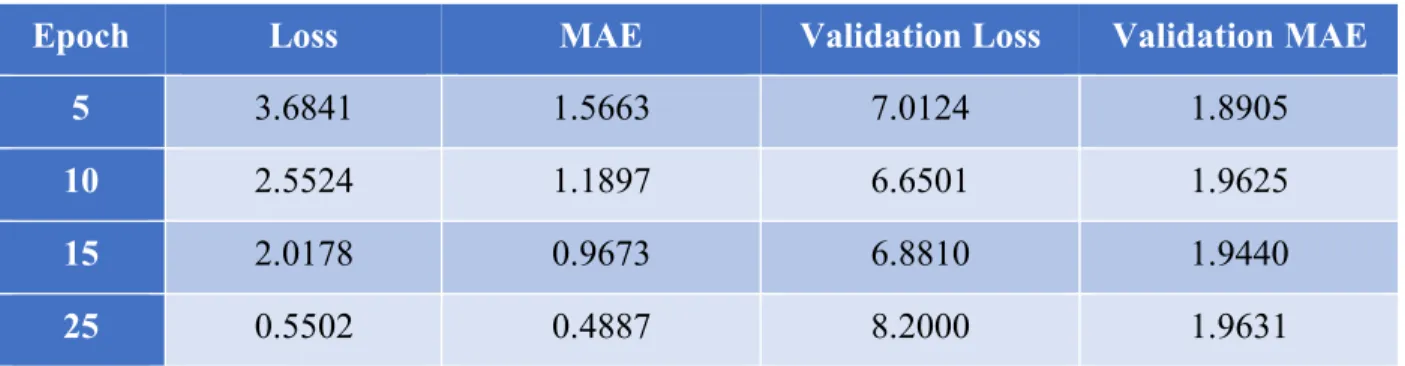
In the convolutional neural network at 25 epochs, the average accuracy of constrained regression for arousal and valence dominance is 76.96%. The performance metric values for the convolutional neural network trained for 50 epochs are seen in Table 7. However, these values are relatively lower than the loss values for the convolutional neural network trained for 25 epochs.
This represents a slight increase in performance when compared to training the convolutional neural network for 25 epochs. The deep neural network trained for 50 epochs shows that its first convergence of the loss and validity functions occurs approximately 25 epochs after the convolutional neural network seen in Fig 20. Unlike the convolutional neural network trained for 50 epochs, the loss and validation functions in a deep neural network trained for 50 epochs converge again in approximately 30 epochs.
Although overfitting exists, the variance between the loss and validation loss functions is significantly smaller than that of the convolutional neural network trained for 50 epochs. The overall average bounded regression accuracy for the deep neural network trained for 50 epochs is 77.12%. In comparison, the bounded regression accuracy for valance, arousal, and dominance for the convolutional neural network trained for 50 epochs is.
Dominance is the only category that performed slightly better in the convolutional neural network trained over 50 epochs. The overall average bounded regression accuracy for the convolutional neural network is 76.51%, which does not perform as well on the deep neural network. For these reasons, the deep neural network outperforms the convolutional neural network trained for 50 epochs.
CNN & DNN Training – 100 Epochs
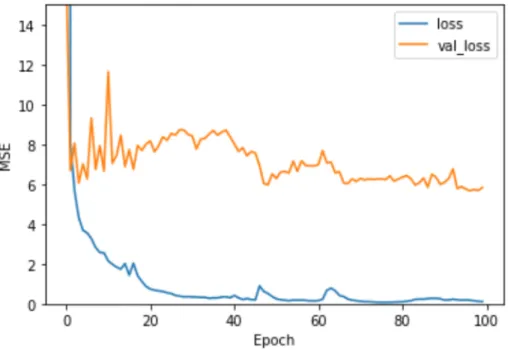
While the mean absolute values are lower, the variance between the loss and validation loss functions is still significant. The prediction performance for the convolutional neural network trained for 100 epochs is seen in Fig 23. This also supports the explanation that an increase in training epochs from 50 to 100 does not improve the convolutional neural network.
In comparison, overfitting in the convolutional neural network trained for 100 epochs is significantly more and does not improve with each new training epoch. While the average absolute error values are higher in the deep neural network, the deep neural network performs better in prediction accuracy. The average bounded regression accuracy for valance, arousal, and dominance for the deep neural network trained in 100 epochs is 79.22%, respectively.
In comparison, the average bounded regression accuracy for valence, arousal, and dominance for the convolutional neural network is 77.89%, which does not perform as well as the deep neural network. This is supported by the higher overall average bounded regression accuracy for the deep neural network (78.64%) compared to the convolutional neural network (76.53%). With an overall average bounded regression accuracy of 78.64%, the deep neural network has the highest prediction accuracy at 100 epochs over all other scenarios discussed.
In comparison, the best prediction accuracy rate for the convolutional neural network over epochs 25, 50, and 100 is 76.53%. The mean absolute error is lower in the convolutional neural network at 0.2315, compared to 1.7076 in the deep neural network when both models are trained for 100 epochs. This suggests that the deep neural network is unable to accurately predict an emotion when encountering new data with 1.7076.
Based on the DEAP dataset (Koelstra, S., et al., 2012), the absolute mean error of the deep neural network is 1.7076 at the lower end of the range for valance, arousal. In addition, the deep neural network has minimal overfitting and underfitting compared to the convolutional neural network.
Computational Time
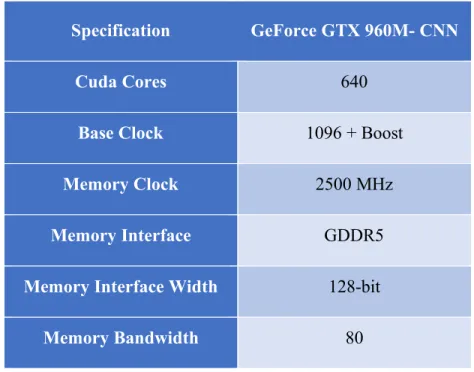
Based on the hardware specifications in Table 11, machine 1 has the capacity to perform better than machine 2. The convolutional neural network took approximately 1 hour and 25 minutes to train 100 epochs (45 seconds on average to process each epoch). If CUDA were not enabled on machine 1, the computation time to process the convolutional neural network for 100 epochs would increase significantly.
In comparison, the computation time for the deep neural network was approximately 13 minutes for 100 epochs (8 seconds on average to process each epoch) on machine 3, which did not use CUDA. In terms of computational time, the deep neural network performs better as a model for prediction compared to the deep convolutional neural network.
Mapping DNN & CNN Model Predictions to PTSD Patients
Conclusion
Limitations
The use of wearable devices to extract physiological signals or an alternative data source can also be investigated, such as the MAHNOB HCI-Tagging database, to improve the performance accuracy of both the deep neural network and convolutional neural network discussed in this research is to be determined. Virtual reality exposure-based therapy for the treatment of post-traumatic stress disorder: A review of its efficacy, the adequacy of the treatment protocol, and its acceptability. Recent Machine Learning Advances in Sensor-Based Mobility Analysis: Deep Learning for Parkinson's Disease Assessment.
38. årlige internationale konference for IEEE Engineering in Medicine and Biology Society (EMBC), Orlando, FL, s. 2016 International Conference on Global Trends in Signal Processing, Information Computing and Communication (ICGTSPICC), Jalgaon, pp. Medical & Biological Engineering & Computing, 42(3), s. 2012) DEAP: A Database for Emotion Analysis; ved hjælp af fysiologiske signaler.
A Randomized, Double-Blind Evaluation of D-Cycloserine or Alprazolam Combined with Virtual Reality Exposure Therapy for Posttraumatic Stress Disorder in Iraq and Afghanistan War Veterans. 12th International Conference on Computer Science and Education (ICCSE), p. 2014) Multimodal Fusion Framework: A Resolution Approach for Emotion Classification and Recognition from Physiological Signals. Using virtual reality to mobilize healthcare: Mobile virtual reality technology for alleviating anxiety and pain.