
I dedicate this article to my late husband, Neil MacRae, who did everything he could to help and motivate me throughout the program. The study was conducted to investigate the following problem statement: What are student perceptions of the factors that contribute to successful course completion within the OLA Career Practitioner Certificate Program. Five themes were developed to form a series of questions that served as discussion points during participant interviews: alignment of course objectives with career goals; course design and delivery features; personal characteristics and supports; instructor support and effectiveness of administration systems and processes.
Fourteen students were interviewed in a qualitative study that involved exploration and discussion of the five themes. These participants identified the students' personal characteristics and the most important success factor in their course completion(s). The study concluded that when combined with program design and course content that had direct relevance to the students' career goals, were personal.
The thesis is dedicated to the people who helped me, supported me and encouraged me to continue and finish. Susan Moisey, who took me from confusion through the thesis and defense process in a very short amount of time and with very detailed and supportive feedback.
Gatz (1985) suggested that the alignment of the course objectives with career goals is crucial to student completion. Successful student completion is operationally defined as the successful completion of the course or program. The majority of the students were already working in the field, or looking for work in this field, but the majority of students were employed.
Some of the courses were blended delivery and these included a face-to-face component. Participants were given a copy of the interview topics as described in the participant interview guide (Appendix C) prior to the scheduled telephone interview. There was some diversity in the responses to the discussion topic on long-term professional development goals, primarily based on the respondents' educational background.
Students appreciated the flexibility of distance learning combined with face-to-face meetings at the beginning of courses. In the field of career development, as in other sectors, frequent adaptation of curricula is necessary. Participants stated that they appreciated the opportunity to experience the classroom portion of the course.
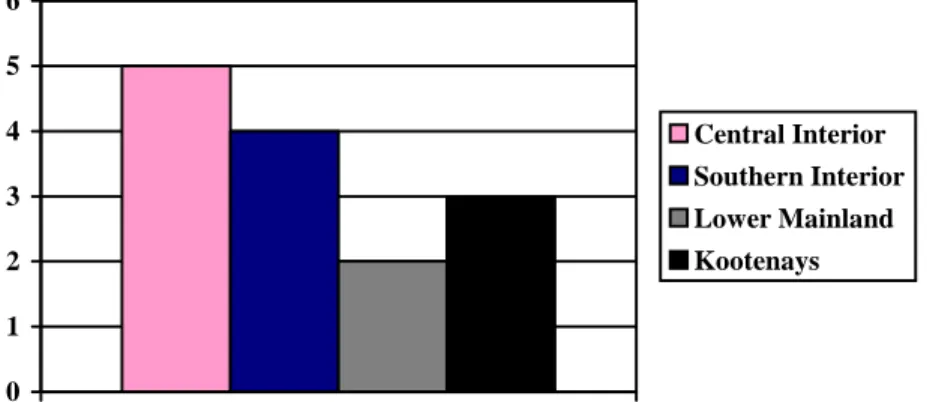
The study involved 14 students who were selected from the population of 174 students enrolled in one or more courses in the CPCP program. Gender representation, which profiled the gender profile of the education's student profile, and,. In addition, three students were selected who had withdrawn or failed to complete a course, but who had completed one assignment in the course.
Once the pool of potential subjects was selected, the process began to assess students' interest in participating in the interviews. Due to difficulties in contacting students and the reluctance of some to participate in the study, the list of subjects was expanded several times. She had completed a course in the program and was working in resident care rather than career development.
Participant no. 4 was female, lived in a rural community, was between 55 and 64 years of age, and had completed a degree program. She completed a hairdressing program at Community College and two courses in the CPCP program. The survey questions were taken from the topic areas identified in the literature search.
An initial telephone interview was conducted to determine whether the students were interested in participating in the study. Potential participants were given timescales regarding the duration of the interview and expected outcomes and results. The second interview was used to authenticate and validate the reliability and accuracy of the interview recording.
The Participant Interview Guide and discussion with respondents were intended to be inductive in nature, but during the individual interviews and in coding the results, the process naturally became deductive as the research progressed. Chosen from a range of selection criteria, 44 students were approached to gauge their interest in participating in the study. Extensive notes were taken of the interviews and coded in the analysis phase using manual and open coding techniques.
In interviews, participants unequivocally stated that these factors were rated as very important in their reasons for completing. The results of this study indicate a strong similarity in the reasons for the successful completion of these students. There was surprising consistency in responses to questions about short-term and long-term professional development goals.
Most respondents wanted to take additional courses in the certificate, complete the certificate, or continue professional development. This connection was further demonstrated in responses to questions and discussions about the relationship between course content and current work commitments. Ten of the 14 participants said that a credential was important to them and that they needed a credential to find and keep work in the field.
One student has not yet found work in the field, but has found the courses useful in her volunteer work and her personal life. In all but one interview, the respondents worked in the field, volunteered, or aspired to work in the field. One respondent said that the credentials were not important and she only needed the courses to get a job in the field.
Other interviewees stated that the courses and the program would contribute to their upward mobility in the sector. Several suggested that they were interested in the applicability of the course content to their current work and the instructors' expert knowledge to help them relate the course content to current practice. Many participants said that they would have preferred a full classroom-based learning experience, but that having some face-to-face sessions added to their sense of interactivity in the online portion of the course.
This underlying theme in the interviews can be an important reminder to institutions that offer distance education. Students indicated that it was important that the instructors' knowledge and experience reflected current practice in the field. Many interviewees reiterated that the instructors' ability to link theory to current issues and events in the field was particularly important.
Some students felt that the support they received from classmates, employers or colleagues was worth mentioning in the. There was some suggestion that the students who found the orientation sessions most meaningful were those with the least experience in the field.
Participants cited their own personal characteristics as one of the most important factors in successfully completing the course. Many indicated that they felt the content was reflective of current issues and practice in the field, and that the teachers were also aware of the many challenges facing these sectors.' They also suggested that in many of the courses could use new skills.
If students in academic courses were able to see the relevance of the subject and program to their career goals, would we see higher success rates. The results of the interviews regarding credentials and career-related training were very surprising. However, the results suggested that the relationship of courses and program to job performance were more important than academic credentials.
Continuous involvement with employers in the sector combined with eliciting feedback from employers and students helped to maintain the currency of the curriculum and its relevance to the market. The Career Practitioner sector is relatively new, and since most of the career and employment. Students in more remote and rural communities also found the program accessible due to the significant online component.
Without this support, the program can neither be successful nor serve the needs of the sector and its customers. In distance education courses where most of the content is delivered in a formal and prepared manner, adaptation is critical. Institutions may wish to review distance education programs offered and consider whether a classroom-based delivery is possible as part of the program.
The role of the Indiana Commission for Higher Education in promoting effective use of information technology resources. This project will fulfill my thesis requirements for completing the Masters in Distance Education at Athabasca University. I lead the design, implementation and evaluation of the Career Practitioner Certificate Program in which you participated.
The main factors that contributed to the completion or withdrawal of the course. I also have a few demographic questions at the end of the interview. I will also give you time at the end of the discussion to add to our conversation.