Budd Hall, University of Victoria, Canada Mary Beckie, University of Alberta, Canada Keith Carlson, University of Saskatchewan, Canada Sara Dorow, University of Alberta. The outbreak of Ebola virus disease had devastated communities and caused more than 10,000 deaths (World Health Organization, 2016). Anthropologists are once again working with communities of all kinds to combat the spread of the virus and support those affected by it (e.g., Manderson & Levine, 2020; Sangaramoorthy & Benton, 2020).
They assert that archaeological understandings of plant use by indigenous peoples of the past, including the deep past, have been enhanced through community-based studies with descendants of ancestral peoples. As many of the authors note, the history of Anthropology (and all its subfields) is one of colonial exploitation, ontological and epistemological hegemony, extractive methods, and disrespectful actions towards Indigenous Peoples around the globe. Sylvia Abonyi is Associate Professor in the Department of Community Health and Epidemiology at the University of Saskatchewan and Research Faculty in the Saskatchewan Population Health Research and Evaluation Unit (SPHERU).
Essays
Cultivating Wellbeing
Young People and Food Gardens on Tanna, Vanuatu
Lesbet Niefeu and Joan Niras were two of the young researchers who became deeply interested in the research project and the video documentation of customary (kastomary) gardening practices. The rapid increase of NCDs in the Pacific Islands has drawn attention to food production and the impact of food imports on health. The authors believe that these issues are at the heart of food-body relationships (Hayes-Conroy & Hayes-Conroy, 2013).
This is the case in the South Pacific Islands and in many other parts of the world that experience the. To engage young people in the ecological and customary knowledge associated with gardening, it was necessary to understand smallholder food garden production and the specific opportunities and constraints they face. We would also like to thank the many young people and their communities who took part in the project.
Engaged Palaeoethnobotany on the Northern Plains: A Compelling Future for Medicinal Plant Research
To truly collaborate, the research must be useful for all members of the collaboration. Unfortunately, no detailed investigation into the importance or specific use of these plants has been done. Their works also seem to have formed the basis for much of the subsequent ethnobotanical literature on the Northwest Plains.
The sacred nature of much of the knowledge about the use of medicinal plants on the Northern Plains is certainly a factor here. Archaeobotanical evidence of prehistoric maize (Zea mays) consumption on the northern edge of the Great Plains. Paleoenvironmental interpretation of the paleosols and sediments at the Stampede site (DjOn-26), Cypress Hills, Alberta.
Perspectives on Health: Working with Communities as Cultural Anthropologists and Bioarchaeologists
As with other anthropological studies, nationalism has affected much of the work of physical anthropologists. Physical anthropologists who were concerned with the study of past human culture through human remains, and now call themselves bioarchaeologists in America (Blakely, 1977; Buikstra, 1977) and osteoarchaeologists in Britain and Europe (Møller-Christensen, 1973) , believed that the context of mortuaries reflected the ideologies of the cultures that produced them (Binford, 1971; O'Shea, 1984). No single source (called a skeletal population or assemblage) provides an unbiased or complete representation of the broader population.
Using mathematics, it is possible to roughly calculate the degree to which certain types of skeletal populations (depleted or infectious) are representative of the wider living population (eg Wood et al., 2002). Bioarchaeologists, like cultural anthropologists, work from the level of the individual to the community, to culture. My MA research involved investigating the morbidity of hunter-gatherer communities living in the Baikal region of Siberia in the Russian Federation on both sides of the mid-Holocene climate shift (Purchase, 2016; Purchase et al., 2019).
In this way, I was able to compare the health status of skeletal populations and think about the risk factors that influenced their morbidity. In doing so, I formed generalizations about the health of wider communities of hunters, fishers and gatherers, their relationships with the environment and their adaptive abilities. After all, the anthropological study of the past is still actively concerned with the present.
By moving from a study of the individual to community and culture, both cultural anthropology and bioarchaeology naturalize the study of health and become the "missing link" that Scheper-Hughes (1994, p. 239) desires in the opening quote. An introduction to the study of southwestern archeology with a preliminary description of the Pecos excavations. Coral Gardens and Their Magic: A Study of Tillage Methods and Agricultural Rituals in the Trobriand Islands.
Human bones from the Hemenway Collection at the United States Army Medical Museum in Washington.
Using Boundary Objects to Co-Create Community Health and Water Knowledge with Community-Based Medical
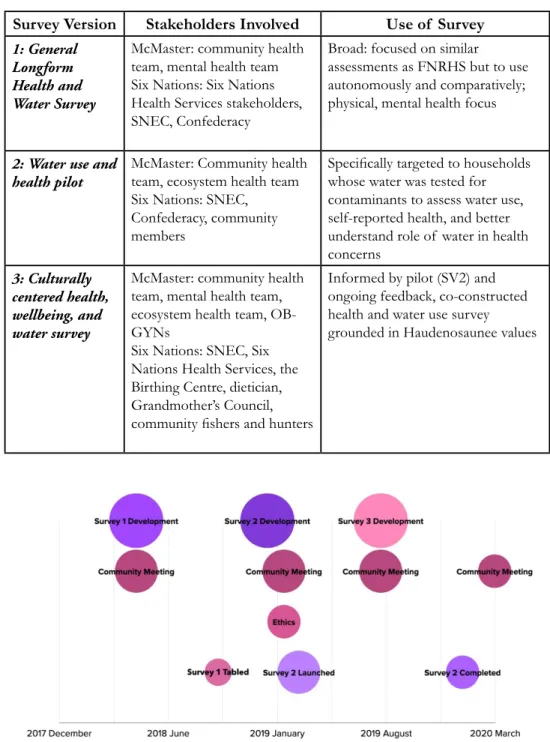
We draw on a case study from our community-based health research with stakeholders from the Six Nations of the Grand River First Nation community and researchers from McMaster University. Our transdisciplinary research project partners with Six Nations of the Grand River Peoples in the lands known as Ontario to explore a range of water challenges by co-creating knowledge and tools. Community health team members worked with Six Nations community stakeholders and research partners to co-develop the community health assessments.
Six Nations of the Grand River First Nation reserve is Canada's most populous First Nation community and geographically located in the densely developed Greater Horseshoe region of Ontario (Baird et al., 2013). The direct impacts of water quality and access to health care in the community are less documented for Six Nations, but remain a priority for many in the community. Understanding who makes up the community for Six Nations is best explored through the historical and current governance of the reserve.
This band council, Six Nations Elected Council (or SNEC), was established by the Canadian federal government in 1924 (Hill, 2017). Six Nations Elected Council (SNEC) represents the Band Council as defined by the Indian Act (Indian and Northern Affairs Canada, 2002). The community's water treatment plant falls under Public Works, which falls under SNEC's jurisdiction, as does Six Nations Health Services.
The health dimension of the Co-Creation team began discussions about community needs and concerns in January 2018 with Six Nations Health Services (Director Lori Davis Hill and portfolio team members). McMaster: community health team, mental health team Six Nations: Six Nations Health Services stakeholders, SNEC, Confederacy. The health survey version 1 (SV1) was developed over the summer of 2018 in collaboration with Six Nations Health Centre.
Each phase included more common learning in the research partnership, and more space for Six Nations community members to participate in the research process. Importantly, this allowed conversations to decenter colonial perspectives and settler needs in favor of the concerns and priorities of Six Nations Health Services and community stakeholders about the project. We Share Our Business: Two Centuries of Writing and Resistance at Six Nations of the Grand River.

Participatory Ethnographic Film: Video Advocacy and Engagement with Q’eqchi’ Maya Medical Practitioners
Ethnographic film on that grand scale is invariably expensive, and the end product is largely out of reach for many of the people it portrays. But what if the standards for evaluating the film are those of the subject participants themselves. However, in the southern district of Toledo they make up almost two-thirds of the population, with the Q'eqchi' in particular the largest Maya group with roughly half of the district's population.
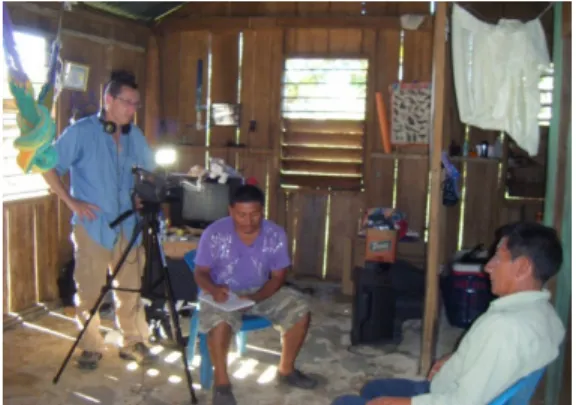
Members of the Maya Healers Association of Belize, (l-r): Francisco Caal, Manuel Baki, Lorenzo Choc, Emilio Kal, Victor Cal, Manuel. There was a significant exodus of Q'eqchi' from Guatemala to the Toledo district during the violence of the Guatemalan civil conflicts in the 1970s and 1980s. The overall goal of the research is to understand the Q'eqchi' medical system and explain it to others.
This is a pragmatic reading of the power-laden post-colonial context in which they live. We tried to have iloneleb dramatize some aspects of the treatment process that we could not otherwise easily capture. They had trouble faking it and kept bursting into laughter in between scenes.
They were concerned about the accuracy of the presentation and whether or not the film would help them achieve their goals. It wouldn't be an understatement to say that none of us involved in making the film had a clue at first how to make it. The film is linear, with clear episodes that follow (for me) a logical unfolding of issues.
The film may not meet the production standards of major international ethnographic film festivals, but it meets the standards of the participants, and those standards come first in participatory work.

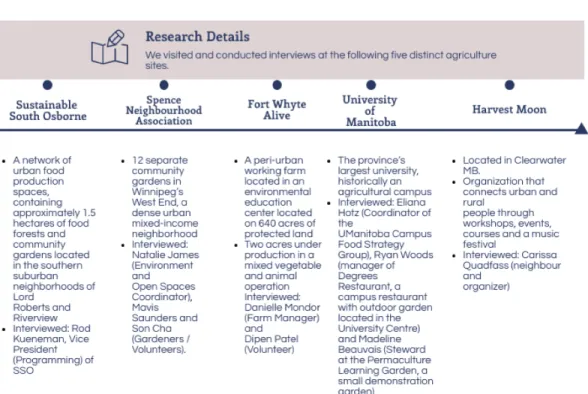
Reconnecting through Urban Agriculture: A Community Engaged Video Ethnography in Winnipeg
Ethnographers are tasked with telling “the story of how people create the enduring character of particular social places and practices through collaborative and indirectly interdependent behavior” (Katz, 1997, cited in Shrum & Scott, 2016). The first type of intensity in short-term ethnography arises from the nature of data collection in the field, that is, from the processes or methods that help researchers record essential details. The last type of intensity in short-term ethnography concerns the interaction between concrete field observations and abstract ideas.
Avery Hallberg is a Métis woman from Winnipeg in the Master of Arts program in the Department of Sociology at the University of Manitoba. Pauktuuti's health projects have addressed the need for relevant bilingual health information and resources in communities. Today, there is a lack of human resource capacity in communities across the spectrum of health and welfare services.
The Inuit Cancer Project was initially a two-year initiative to develop culturally appropriate cancer awareness tools to promote increased screening and early cancer diagnosis among Inuit living in the Inuvialuit, Nunavut, Nunavik and Nunatsiavut settlement region. Some found that there was a lot of information at cancer clinics in the South, but much less in the North. The second e-learning module will be aimed at health care providers in the communities where patients live and in the cities where they go for treatment.
In George Compound in Lusaka, Zambia, Hunleth centers her ethnographic research on "the continuing quest for universal treatment for TB and HIV" (p. 3) on the experiences and voices of children with sick family members. Marcus defines the word transduction: "the action or process of converting something, and especially energy or a message, into another form" (Webster's Third New International Dictionary). While much of the story is told in the dialogue between Layla and Anna, much is also told through the graphics themselves.
Many in the discipline are pushing for approaches that are more accessible and appealing to the public.
Community-Engaged Research, Teaching, and Learning
COMMUNITY ENGAGEMENT AND THE ANTHROPOLOGIES OF HEALTH