A theoretical framework for examining empirical examples 19 Chapter 3: The Securitization of Migration in the Western World 21. In the future, migration will continue and will most likely increase, driven by factors such as economic migration, and especially climate change. Taking this approach will mitigate the risks of securitization in the future, preventing a collision between national security and human security concerns in Canadian society.
Overall, then, Canada is likely to see increasing securitization efforts around migration in the future, with possible divisive effects on government policy and the general public. In the first part, human security and national security are discussed and defined, and the. The third section will discuss future global migration trends and apply them to securitization in the future.
SECURITY AND SECURITIZATION
This is the position often implicitly taken when actors discuss the security needs of “Canada,” making the state itself the “referential object” of security.9 This is true in classical realism. A potential complication with human security issues is that, because the state is de-emphasized, the role of the state in providing security may be unclear. The nature of security issues can be further complicated by the fact that there can be overlap between the national and human security arenas.
Copenhagen School” for security studies, based on the fact that the early scholars were all members of the Copenhagen Peace Research Institute.34. Migration can be seen as a matter of national security, or a matter of human security, depending on what the reference object of security is and what goals are pursued in the name of security. National security reflects a view of security in which the state, nation, or society is the referent object of security, while human security instead emphasizes human freedom from want and fear as the referent.
THE SECURITIZATION OF MIGRATION IN THE WESTERN WORLD
66 Vicki Squire, “The Securitization of Migration: An Absent Presence?”, in The Securitization of Migration in the EU: Debates Since 9/11, ed. 74 Gabriella Lazaridis and Anna-Maria Konsta, “Identary Populism: Securitization of Migration and the Far Right in Times of Economic Crisis in Greece and the UK,” in The Securitization of Migration in the EU: Debates Since 9/11, ed. Grigoriadis and Esra Dilek, “Securitizing Migration in the European Union: Greece and the Evros Fence,” Journal of Balkan and Near Eastern Studies 21, no.
88 Emanuele Toscano, "The Rise of Italian Populism and 'Fascism in the Third Millennium' in the Age of Migration and Security," in The Securitization of Migration in the EU: Debates Since 9/11, ed. It is still important to note that the country has not been united in accepting the security movements, and internal divisions between Democrats and Republicans have been a recurring theme during the Trump presidency, and the securitization of migration has created divisions in the population . 104 Syed Nasser Qadri, "Framing Terrorism and Migration in the USA: The Role of the Media in Security Processes" (Ph.D.
In the United States, examples such as the travel ban, border wall and the Trump policy of family separation show that migration has been successfully securitized, albeit with significant divisions in the support of the population. Similar to Europe, and as theory predicts, physical, economic and societal factors all play a role in the securitization discourse. Instead, US securitization efforts are more closely tied to negative or xenophobic public sentiment and media portrayal, and the power of populist elements to control the securitization narrative.
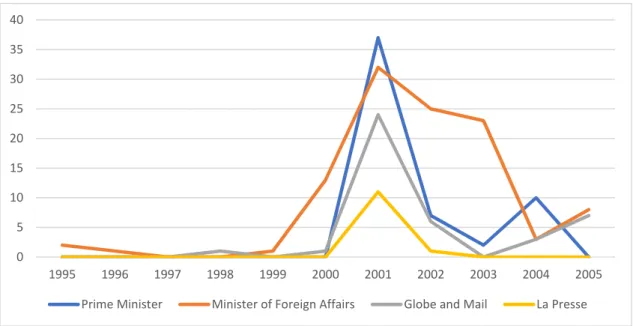
Similar to the other cases studied, the extent of illegal arrivals, nationalist or xenophobic sentiments and frequent messages in. Similar to other countries, the events of 9/11 influenced the securitization of migration in the early twenty-first century. Specifically, the overall volume of illegal migrant arrivals, the level of nationalistic or xenophobic sentiment in the audience and.
However, an increase in insurance movements is still possible even if there is no change in migration patterns, depending on other factors, as seen in the case of the United States. Moreover, these examples showed that the volume of immigrant arrivals, xenophobic and populist sentiments in the population, and unified messages from security actors all promote the success of security movements. Referring to the theory, these three factors correspond well with the three notional roles in the insurance process (insurance actors, audience and external factors).
21 ST CENTURY MIGRATION CHALLENGES
However, there are common themes in the factors that are analyzed, such as examining economic or demographic factors versus social and political environments. However, since the 1994 report, global population growth and its impact on migration has become more ambiguous. Although the world's population will continue to grow in the short and medium term, the long-term population may stabilize.
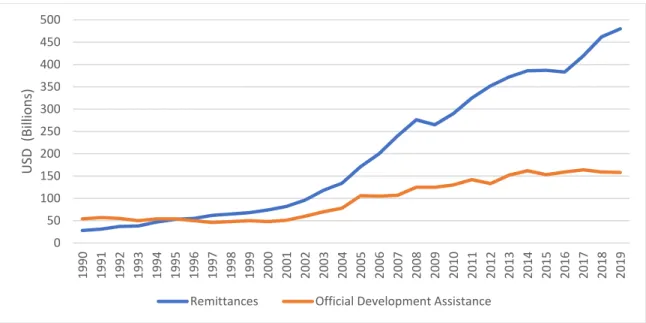
Remittances are the transfer of money from migrants in countries of destination to family or community members in the country of origin. Alongside economic migration and remittances, another area that could become a potential key driver of migration in the future is climate change. Although climate migration is not a new phenomenon, these predictions show that it is likely to increase dramatically in both scale and magnitude in the future.
Climate migration therefore poses a significant risk in the future of leading to increased securitization of migration. However, the future prospects for the population in the destination countries is also an important factor that will determine the likelihood of securing efforts on migration in the future. While this trend may be reversed in the long term, it is likely to continue to play a role for the foreseeable future.
Because the future is uncertain, it is impossible to know exactly what migration will look like in the coming years. Climate migration will also become increasingly important in the future, and the number of both regular and irregular climate migrants can be expected to increase in the future. Finally, the role of the public in destination nations will also be important in the future.
Here, at least in the short to medium term, populist and nationalist sentiments that have developed in Western democracies are likely to persist in at least parts of the country.
IMPLICATIONS FOR THE FUTURE OF MIGRATION SECURITIZATION IN CANADA
First, Canada risks appearing hypocritical on the international stage and undermining its international human security efforts by prioritizing national security concerns at home. The Assistance Policy proclaims that "peace and prosperity are the birthright of every person" and that the importance of human dignity is paramount.177 Canada's defense policy also displays elements of human security. Therefore, providing protection to displaced persons "can be seen as an expression of R2P".188 If national security concerns are prioritized, however, raising support for human security-based interventions can become a challenge.
At home, the Safe Third Country Agreement (STCA) has become a major political issue regarding migration at the Canada-US border, highlighting the clash between human safety and national security issues. This would again highlight the tension between human security and national security between Canada's international and domestic policies. Even as it challenges judgments on migration-related policies, Canada emphasizes its commitment to human security and the general well-being of people.
This could be done by developing options that still align with current policies and promote the ideals of human security. If human security is indeed simply used as an excuse to advance a national security agenda, this will not reduce the tension between the two views, and actions taken would instead be seen merely as a response to national security, driven by securitization efforts. When options are developed with legitimate human security concerns in mind, in line with current policies.
For example, reducing the pressures on countries of origin that lead to forced migration is a valid human security concern, consistent with current international human security principles. In the past, there have been operations to support natural disasters, such as Operation Hestia in Haiti, which have addressed human security issues. This would increase resilience in the region, while simultaneously addressing future human security concerns, while minimizing factors that could lead to forced migration.
Furthermore, it would not be a veiled co-opting of human security concerns for national security goals.

CONCLUSION
Focusing on Western democracies, migration insurance has been seen in the EU, USA, Australia and Canada. In general, these three factors, taken together, can be used to see possible future migration trends, to assess the potential risk of future securitization. Climate change is also likely to be an important factor driving future migration, and potentially hundreds of millions of people could be forcibly displaced.
For example, increased support to the Latin American region in the face of increased threats from climate change can alleviate economic hardship and reduce potential drivers of climate-driven migration. Securitization of Search and Rescue at Sea: The Response to Boat Migration in the Mediterranean and Offshore Australia. The International and Comparative Law Quarterly 67, no. The Securitization of European Migration Policies: Threat Perceptions and Risk Management." In The Securitization of Migration in the EU: Debates Since 9/11, edited by Gabriella Lazaridis and Khursheed Wadia, 19-36.
Migration and the Right in Times of Economic Crisis in Greece and the UK.” In The Securitization of Migration in the EU: Debates Since 9/11, edited by Gabriella Lazaridis and Khursheed Wadia, 184–206. Framing Terrorism and Migration in the US: The Role of the Media in Security Processes.” Ph.D. The securitization of migration: an absent presence?” In The Securitization of Migration in the EU: Debates Since 9/11, edited by Gabriella Lazaridis and.
The Future of Migration in the European Union: Future Scenarios and Tools to Promote a Forward-Looking Debate.” European Commission – Joint Research Centre, 2018. The Rise of Italian Populism and “Third Millennium Fascism” in the Age of Migration and Security.” In The Securitization of Migration in the EU: debates since 9/11, edited by Gabriella Lazaridis and Khursheed Wadia, 167–183. General Legal Aspects Relevant to NATO's Participation in the Movement of Refugees and Migrants in the Aegean Sea,” March 8, 2016.
Securitization Theory and the Relationship between Discourse and Context: A Study of Securitized Migration in the Canadian Press Revue européenne des migrations internationales 35, no.