In this edition of the Journal of Teaching and Learning (JTL) there is a series of articles. The new model MCQ assessment was a mid-term summative assessment that accounted for 30% of the total module weight.
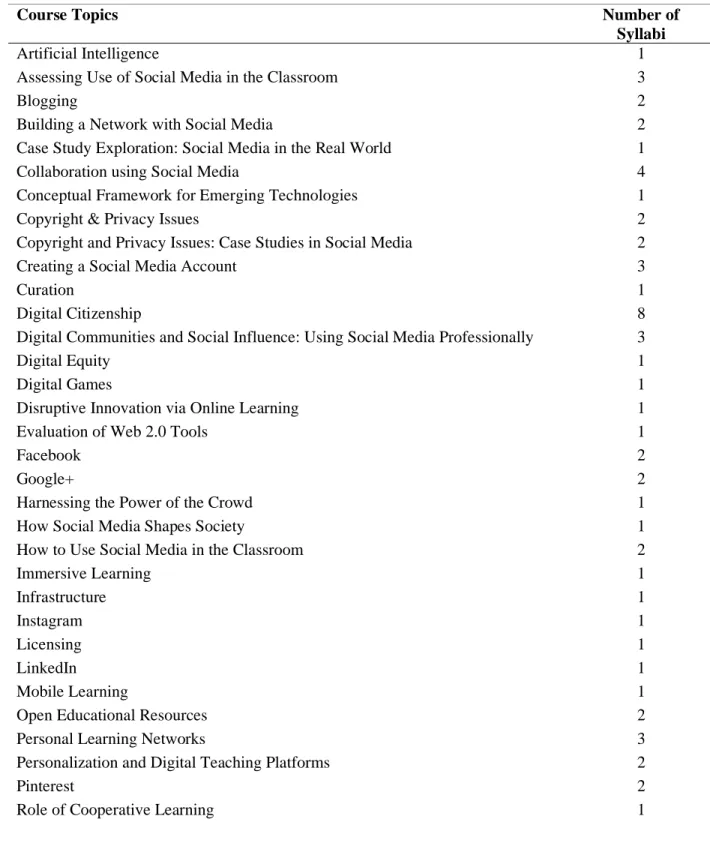
A Syllabi Analysis of Social Media for Teaching and Learning Courses
Abstract
Overall, this research serves to inform future course design and development related to the use of social media for teaching and learning. Exploring student perspectives of social media in higher education in the United Arab Emirates.
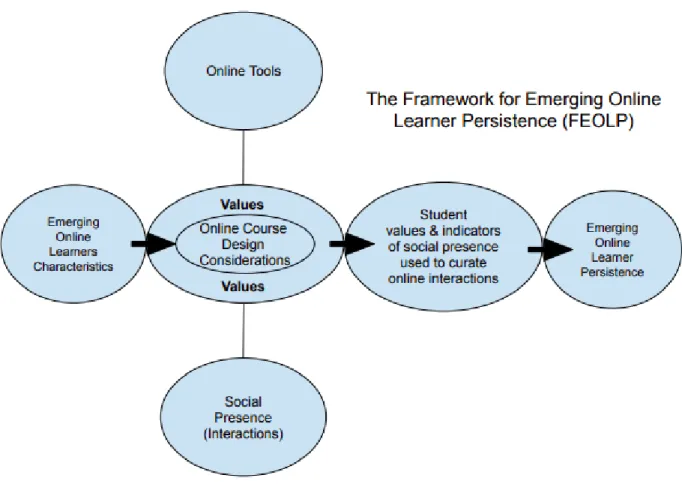
A Framework for Fostering Emerging Online Learner Persistence: The Role of Asynchronous and Synchronous
Their results indicate that students who participated in the online courses required a higher level of social presence than students who participated in face-to-face classes. Students' perceptions of teaching and social presence: A comparative analysis of face-to-face and online learning environments.
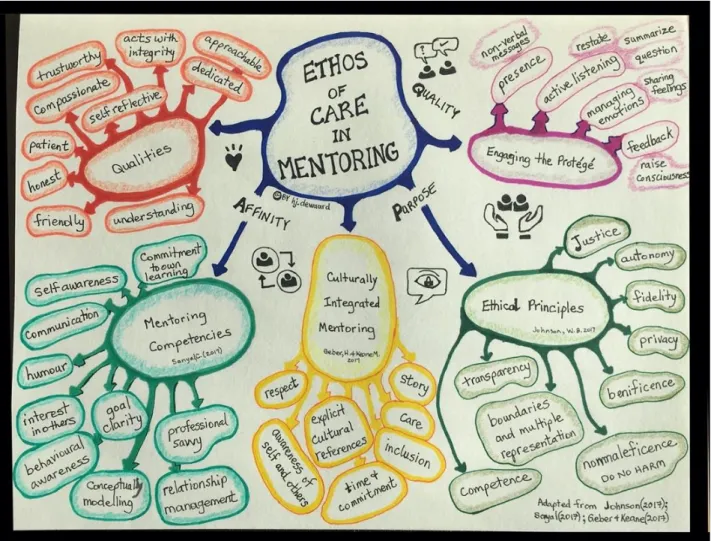
Cross-Cultural Mentoring: A Pathway to Building Professional Relationships and Professional Learning
Since the Cape Town Public Education Declaration in 2007 (Hodgkinson-Williams & Gray, 2009) and the 2012 Paris OER Declaration (n.d.), the United Nations and UNESCO have been advocating and promoting the use and creation of OER to support public education initiatives in support of the SDGs in education (UNESCO, 2012). The content and design of the DCID course is supported by theories of adult learning (Knowles et al., 2012), instructional design (Reigeluth & Carr-Chellman, 2009) and theories of online learning (Anderson, 2016). Collaborative Google Docs were used to share the outline and content for module development of the DCID course.
The DCID course delivery used a two-layer model (Crosslin et al., 2018) due to limitations experienced in the mooKIT LMS. I listened actively while asking open-ended and probing questions to build my awareness of the geographical, contextual and technological possibilities in the RC teaching and learning landscape. Modeling awareness of time zone differences and prioritizing the importance of scheduled hours for professional learning is one way to demonstrate caring for others.
Strategically supporting the development of mentors and protégés using digital technologies as they move through the stages of the mentoring experience, as suggested by Kram (Daniel et al., 2019), can further enhance professional learning.
The Open Page Project: Putting Digital Learning Principles Into Practice for Pre-Service Educators
This article alternates the personal reflections of the project's designer and principal investigator with comparative entry and exit reflections completed by the four student research assistants (RAs) hired for The Open Page Tool Parade. At the time the Open Page project launched, I was conducting research on teachers' data literacy (Raffaghelli & Stewart, 2020). I realized that a key digital learning goal that the project could support would be to increase educators' awareness of the data implications of educational technology. platforms. The service learning course used the RA's available early Tool Parade videos as core text, and encouraged contributions to The Open Page as the key learning outcome for year 1 of the course.
One of the requirements for the RAs' work on the project was that they would appear visibly in the videos and be credited in the credits of their work, in addition to being actively involved in professional development and academic dissemination related to the project. Although the four RAs were expected to be visibly identifiable as part of the project, the service learning students (a much larger group of over fifty) had significantly more options in terms of visibility and digital presence related to the project. In addition to being posted on The Open Page site itself, the results were all shared on Twitter and, in some cases, included in a local newspaper article about the project early in the pandemic.
In the DP sessions, we reviewed the data and digital literacy elements of the Open Page and showed the videos as quick support for educators.
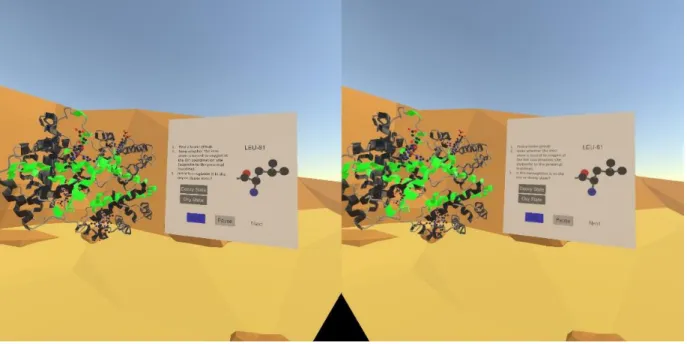
Teaching Biochemistry and Molecular Biology With Virtual Reality — Lesson Creation and Student Response
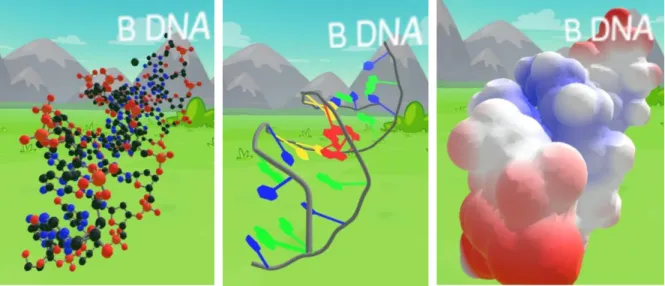
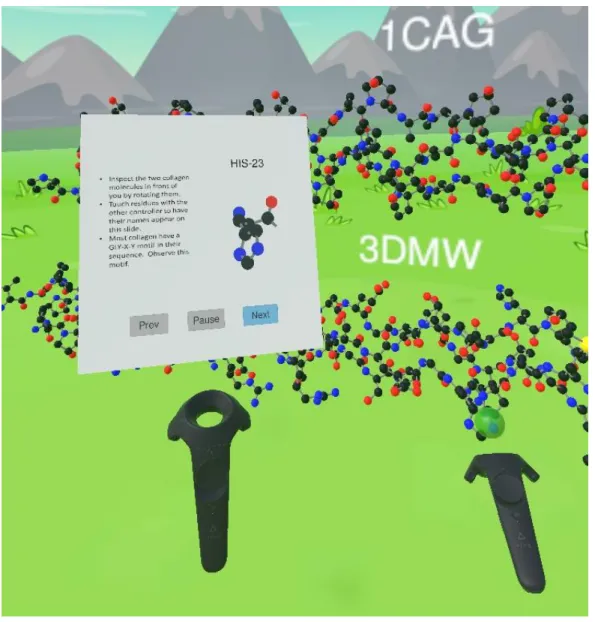
The surface is colored according to the electrical potential of the charged atoms in the molecule. There is a mutation in 1CAG that causes an unwinding in the center of the molecule (just below the name tag). Question 1, “The virtual reality (VR) lesson helped me learn the material,” was the same for both labs, and question 2 was the same in that it asked students if the virtual reality lesson helped the student understand the specific content of the lab .
None of the students who took Lab 1 had seen the material presented in the lab in class. On average, students at CMB achieved the educational objective of having a "moderate understanding of the structure and function of hemoglobin in relation to oxygen binding". The result is significant with a one-tailed p-test value of less than 0.00001 corresponding to the alternative hypothesis μ > 60%. On average, they achieved the educational objective of having a "deep understanding of the structure and function of hemoglobin in relation to oxygen binding". The result is significant with a one-tailed t-test p-value of 0.02 corresponding to the alternative hypothesis μ > 80%.
Furthermore, we did not test students' knowledge before they participated in the lab, so we cannot definitively say whether the VR lesson increased their understanding of the material.
Integrating User-Centred Design Approaches for a Course Design Framework for Interdisciplinary Studies in Teaching
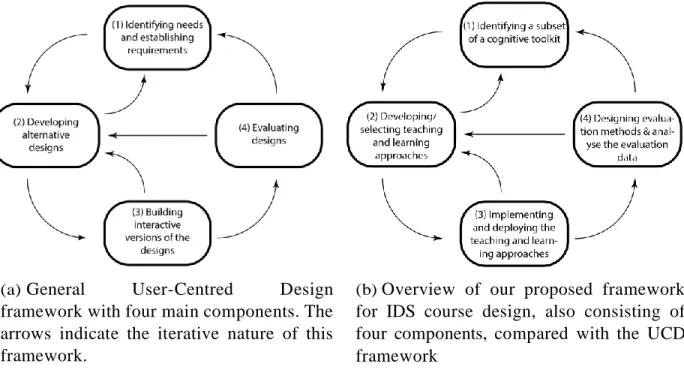
The research presented in this article is based on the fields of teaching and learning (SoTL), interdisciplinary studies (IDS) and user-centered design (UCD). The framework proposed here is also loosely based on the backward design model as it embraces the complexity of the IDS. The course development framework for IDS proposed here is motivated by the principles of UCD approaches that leverage the power of learning analytics.
With this foundation, the course developer's preliminary task is to determine which cognitive tools should be encouraged. The initial assessment activity template will be created during the broader research project and may be adapted by individual course developers/instructors. This real-time adjustment of course design based on assessment results is critical for instructors to maximize the learning effort of the current cohort of students.
This immediate feedback loop (as opposed to waiting until the end of a semester to make changes to the course design) allows the current group of students to benefit by taking advantage of the potential convergence of the course design in the most optimal way.
Transitioning University Courses Online in Response to COVID-19
It is similar to the corona virus family, which includes severe acute respiratory syndrome (SARS) and Middle East respiratory syndrome (MERS), which are infections primarily of the respiratory system. Much of the training previously provided to faculty members for WebCT was largely transferable to D2L. By using some of the technologies offered by the university, I was able to alleviate many of the problems I faced in the initial stages of online teaching.
Their suggestions for both preparing online content and increasing student engagement in the online portions of a flipped classroom proved invaluable. I have also expanded the use of Quizzes, part of the D2L Assessments feature, to allow for additional assessment that would have been completed in class. Which of these three types of data discriminates best depends on the detailed nature of the conspiracy” (p. 171).
2016) identifies impersonation and inducement as two main issues to address.
Quarantined-at-Home Teaching Experience
My E-Learning Plan and Implementation
I have already taught half of the semester in a formal classroom setting and have now engaged extensively in online teaching in home quarantine settings. I am presenting my experience regarding the progress of online teaching in meeting student expectations and university criteria for quality teaching in the social sciences. Adequate training in the use of online platforms, availability of a contact person in case of system breakdown, and use of learning resources are useful strategies (Crawford-Ferre & Wiest, 2012; Keengwe & Kidd, 2010).
Those who appreciated the decision thought it was wise to save time for the students in the current unpredictable circumstances. Fortunately, the university I am studying at is one of the highest ranked universities in Pakistan and meets the HEC's criteria for high-quality online education. Based on their assessment (before the middle year), the majority of students perform average and above average.
The university is a semi-government institute and most of the students belong to middle class families.
Levels
Now I want to present my experience with planning and implementing online teaching in home quarantine. The University is working for other alternatives (offline mode) for these students, such as traditional distance learning using postal services. In this section, I provide information about the formal settings where I taught for half of the semester and the home quarantine environments where I currently serve the purpose (probably until the end of the semester).
Quality Readiness
Connectivity
Showing video clips on the multimedia projector and asking them to write or speak their reflection was an interesting aspect of the F2F teaching in a class well facilitated with whiteboards, multimedia and comfortable seating for the students. Even passing on a relevant joke, sharing a personal experience and then paying attention to the facial expressions of the students was practical with F2F teaching. They were provided with books and related materials in PDF format at the beginning of the semester.
The challenge was to implement the e-learning plan for the remainder of the course (which we had to complete by teaching online). The main purpose of the lesson is to teach the selected topic and engage students in discussion about the video lecture they had already watched. For example, one of the students said about YouTube videos: “The YouTube videos are good.
Increasing access to higher education: A survey of the prevalence of online instruction among 913 college faculty.
Why Does Digital Learning Matter? Digital Competencies, Social Justice, and Critical Pedagogy in Initial Teacher
For student teachers, the digital is not only related to their professional skills, but also to what a large part of the profession would call the purpose of education. In the 2012 iteration of the Scottish teaching standards (General Teaching Council for Scotland [GTCS], 2012), social justice was positioned as a key value for the teaching profession. What does democracy, respect and global citizenship look like in the digital context of the 21st century.
Student teachers' awareness of equal access to digital spaces is important in a world that is becoming increasingly digitized. The concept of postdigital provides a frame of reference for the 21st century context where the digital is not separate or distinct from other aspects of life. Critical pedagogy is closely linked to the concept of the post-digital in seeking to engage critically with the world (Arndt et. al., 2019).
If initial teacher education is to address social justice, student teachers' awareness of the role of digital in society is important.