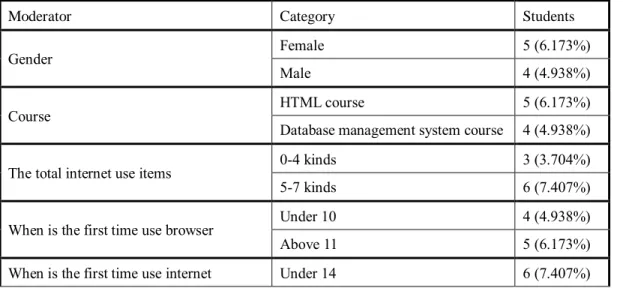
Independent t-test result for extract moderator and each factor (when . browser first used). ANOVA result for the moderator of the extract and each factor (when students are first familiar with the e-reader).
Introduction
Motivation
For example, when answering a question, Jack may forget to mention toxic chemicals that are released into the soil and water. If I had done this to prepare for the exam, I probably would have noticed the two missing annotated words, "water" and "earth," on my copy of the article and probably would have had a better answer to the question later when writing the exam.
Goal and contributions
The second contribution is the design of a method to reduce the complexity of student text with annotations in order to increase the accuracy of classifying students into appropriate groups and accepting annotation suggestions for students. Another contribution of this research is the design of a clustering method to classify students' notes based on their note-taking behaviors.
Thesis organization
Identifying students' note-taking functions and potential learning difficulties could help teachers adjust their teaching direction and understand which concepts in the material are those that most students do not understand, and teachers can highlight these concepts when reviewing the material in class.
Annotation systems and behaviour clustering approaches
Reading activities in digital materials
The above studies show that people's reading habits are changed by digital reading material and they feel comfortable reading on the screen. If people become accustomed to annotating on the paper-based reading material, they may also have the same habit when reading on the digital devices.
Annotation on digital material
In Pearson, Buchanan, and Thimbleby's research, they allow students to review other students' annotations only in small groups. I want to cluster students' annotations into groups based on their annotation behavior and give students annotation reminders based on the clustering results.
Behaviour grouping
Another issue will affect the clustering result is the default processor for the randomly chosen k at the beginning. The default method adds the exponential value assigned at the position of the difference in the chromosome (eg, the value of the i-position is 2i).
Bio-inspired adopting
- bit-string chromosome clustering methods in Ying’s research
- the bio-inspired methods applications
When this function receives a chromosome bank that includes the chromosomes of all students (as shown in line #2), this function gets the chromosome at the first position in the chromosome bank and. String standardChromosomesX, standardChromosomesY = get the chromosome at the first chromosome position in the chromosome bank - allChromosomes and use the cutChromosomeInHalf function to cut.
Objectives and research issues
This issue will be resolved in chapter 3.1) Issue 1-2: What data structure is used to store student records. The high performance in this research means that the clustering results are accurate and the clustering process is fast.
Bio-inspired clustering approach
Storing and representing student annotations
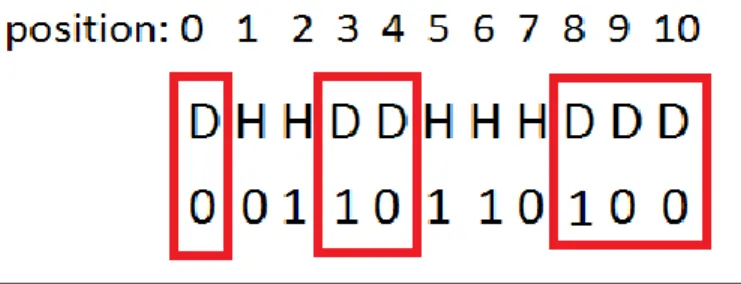
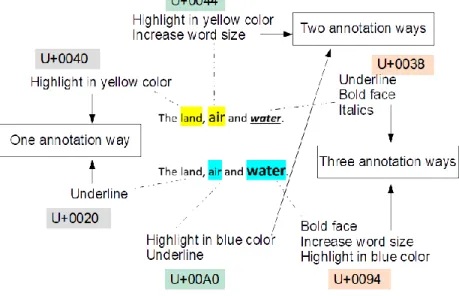
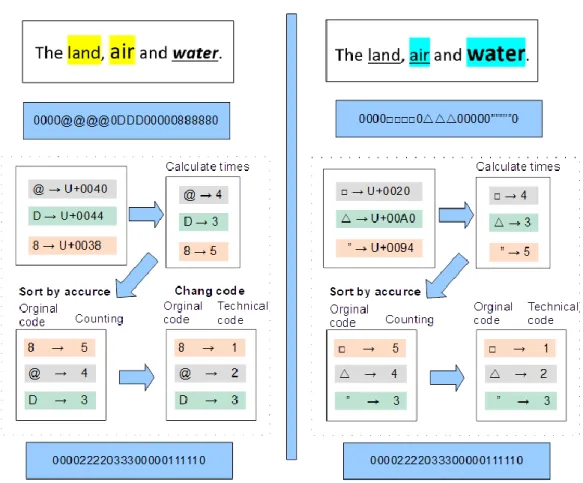
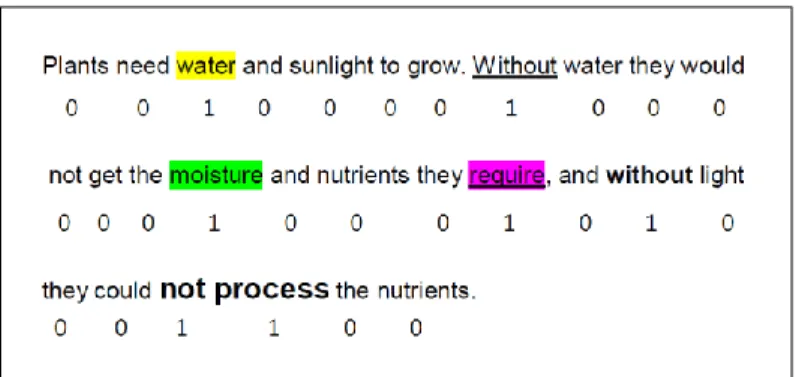
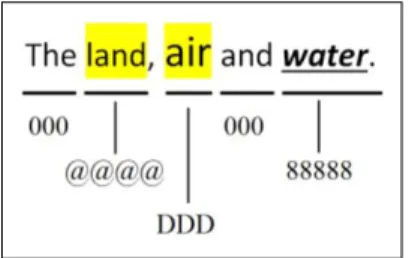
Using a UTF-8 character in terms of representing the different annotation modes used for the character, it is possible to use the DDD of a UTF-8 string to represent the annotations of a sentence in text; for example, a student marked three words in an article about pollution, as shown in Figure 4 (on page 34). In a regular expression, the usage indicates that the symbol in advance can be one or more.
Calculating a value for student annotations
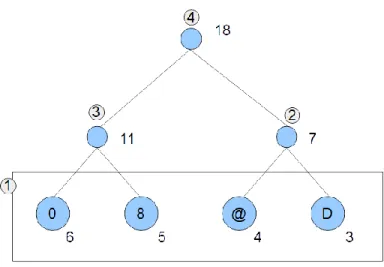
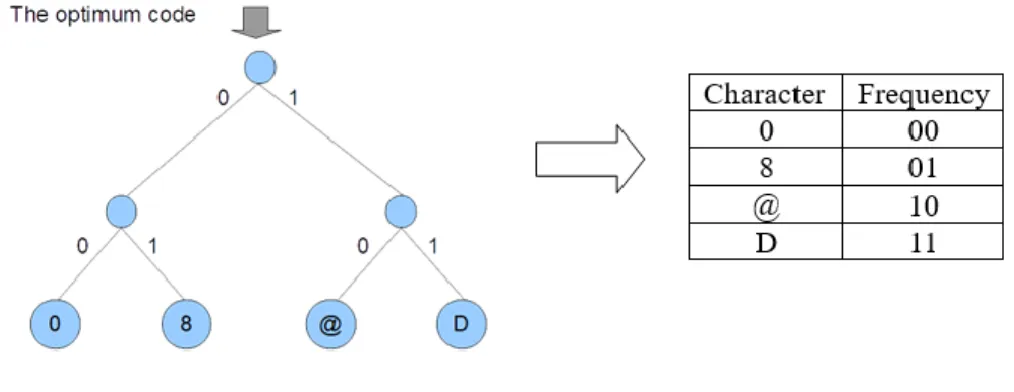
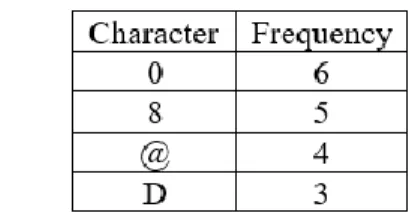
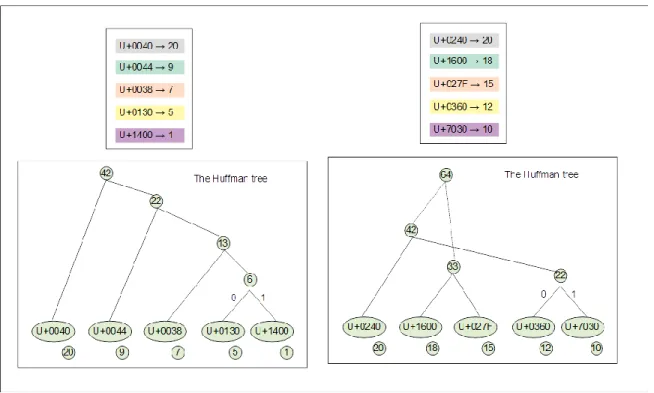
The next node follows the same rule - the last two leaves of the appearance are 0 and 8, and the algorithm will make these two leaves as a new node. If the position has the same value and the value is not equal to "0", the system will get the square value of the number and plus 1.
Clustering student annotations
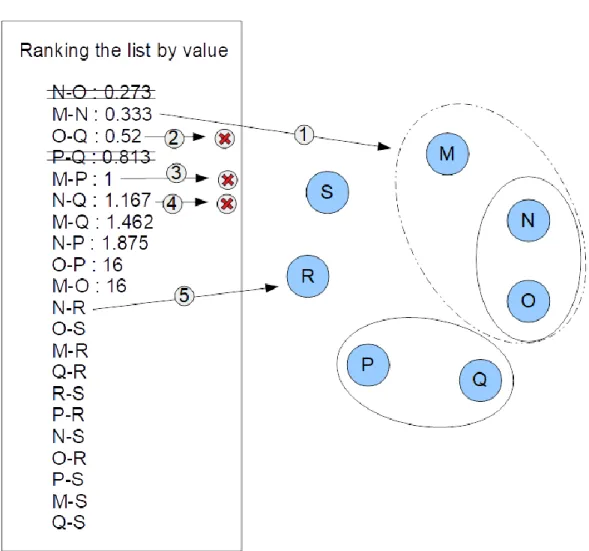
If you find the combination that has not been chosen before, place this combination in the groupMember and remove this combination from the. If one of these belongs to groupMember, place another combination at groupMember and remove the combination from the ValueBank.
Annotations suggestion provider bio-inspired algorithm
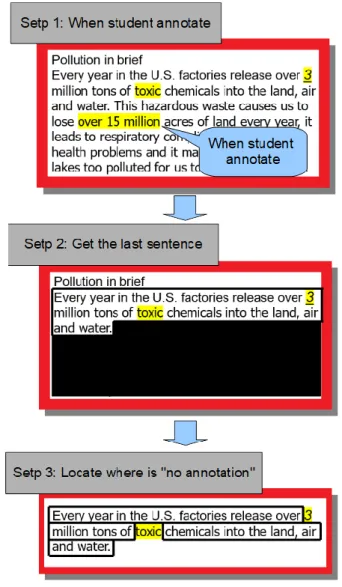
The data obtained from line #6 and line #7 will become the conditions when searching for a log record from the database. The system finds the last sentence as shown in step 2 and finds the place without a note as step 3. When the system finds where in a sentence there is an unannotated place, the suggestion algorithm will find the cluster the student belongs to and any logs of what other students comment on those places in that cluster.
Figure 15 shows an example followed, where a student annotates line #6 of code segment 11 and sees who is in the same cluster. If there are three other students in the same cluster, five annotations from the three students in the sentence are selected – the Student M uses the green marker on the “3 million”; student P uses blue accents on the “more than 3 million tons” and uses italics and red accents on the “land, air and water”; the student Q uses the underline on the “U.S.
Online annotation system
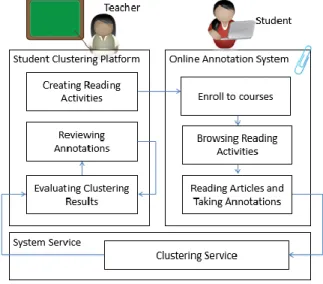
- Online annotation system architecture and working flow
- Teachers’ use cases
- Students’ use cases
- Clustering results and benchmark
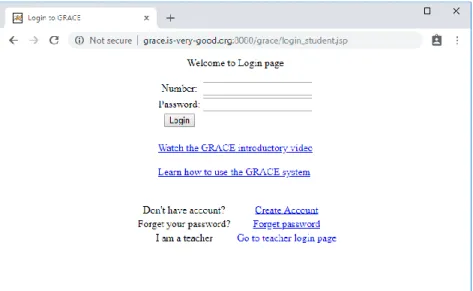
Anytime teachers want to check all the reading activities they've created for a course or edit a specific reading activity, they can click "Manage Reading Activities." When students log in to the platform, they can click the “Reading Activities” link in the menu, as shown in Figure 24, to check what reading activities they have. As Figure 25 shows, they can find all the reading activities from all the subjects they entered.
In the top panel of the screen, they can find out that they can use four different colors to highlight words in the reading material. On the other hand, if they don't want to annotate but read the material, they can check the "Reading Mode" checkbox to disable the annotation feature.
Experiment and discussion
Research model and hypotheses
- research model and questions
- hypotheses
- questionnaire design
- moderators
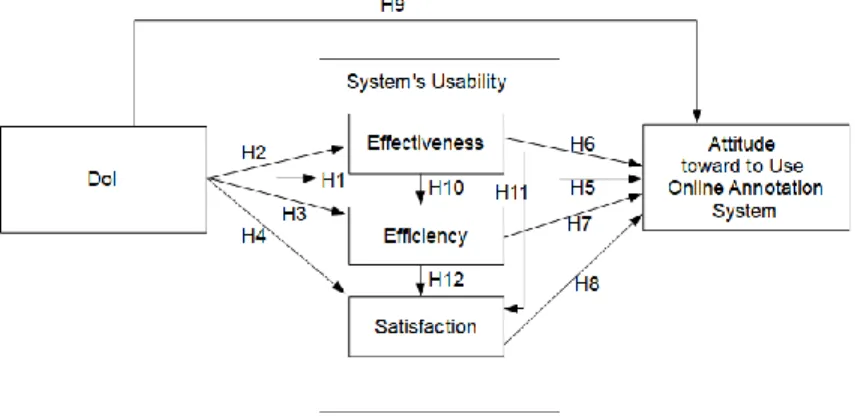
The perceived effectiveness will positively influence students' perceived attitude towards using the Online Annotation System. The perceived usefulness will positively influence the students' perceived attitude towards using the Online Annotation System. The perceived expectation will positively influence students' perceived attitude towards using the Online Annotation System.
The perceived complexity will positively influence students' perceived attitude towards using the Online Annotation System. The information (such as course list, reading activity list, activity start date and activity end date) provided by the online marking system is clear.
Experiment design
- experiment plan
- data collection
Therefore, I ask students when they first heard about the e-reader and when was the first time they used the e-reader. At the beginning of the experiment, the teacher will give all students a Diffusion of Innovation questionnaire to understand their e-reader using the student's experience and background information (eg, gender). Tutor-modified clustering results can be used to evaluate the accuracy of the clustering approaches used in the system.
The collected data will be used to evaluate the usability of the proposed system and the degree of student acceptance towards using the system. The subjects taught by the teachers include 85 students in the database management system (in French it is SGBD) and 20 students in the HTML course in the second year and the first year of the college student.
Students annotation data analysis
- precision and recall analysis
- kappa analysis
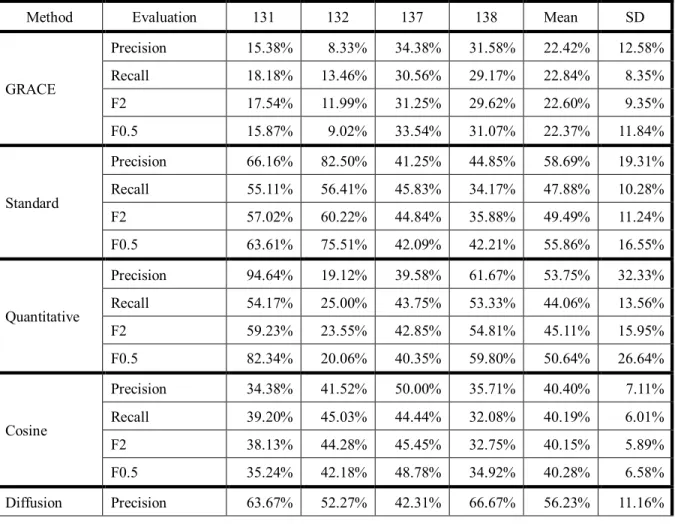
The cosine method takes 24.58 seconds in the Database Management Systems course and 20.031 seconds in the HTML course. GRACE scores 1,431 seconds in the Database Management Systems course and 1,467 seconds in the HTML course. Analysis of precision, recall, F0.5, and F2 in alphabet-based scores are presented in (Data Management Systems course) and Table 14 (HTML course).
In Group Z, there are two sets of chromosomes that can correspond to two different ones. Each similarity is contributed by different grouping methods and the number is added in the.
Data analysis
- reliability and validity analysis for questionnaires
- quantitative analysis
- moderator analysis
The results show that H6 – Perceived effectiveness will have a positive effect on students' perceived attitude towards using an online annotation system. The results show that H7 - Perceived effectiveness will have a positive effect on students' perceived attitude towards using an online annotation system. The results show that H8 – Perceived satisfaction will have a positive effect on students' perceived attitude towards using an online annotation system.
The results show that H21 – Perceived usefulness will positively influence students' perceived attitudes toward using the online annotation system. The results show that H22b – Perceived expectation will positively influence students' perceived attitudes toward using the online annotation system. The results show that H23 – Perceived complexity will positively influence students' perceived attitudes towards using the online annotation system.
The results show that H24 - Perceived testability will have a positive effect on students' perceived attitude towards using an online annotation system.
Findings and discussion
Findings and discussion
The results show that people who are more receptive to new technology believe that the online tag system is effective and are more satisfied with the system. Although the trial option also plays an important role in student satisfaction with the online annotation system, it has no significant relationship with students' attitudes toward using the online annotation system. I also examine the relationship of students' attitudes toward using an annotation system to their perceived behavioral intention to use an online annotation system and their expectations of how an online annotation system should work.
The possible reason is that students will have the same attitudes towards the new technology – such as the online note-taking system – when they use it for learning. Perhaps because all students major in computer, even they are in a different year of the collage, they still have the same acceptance for the Online Annotation System.
Conclusions
Summary
This platform wants to invite anyone, a study participant, who is willing to approve. The GRACE algorithm did not perform the best compared to the previous four clustering methods. For example, there are 10 student marking chromosomes, if there are four students who have similar marking behavior and their values are small in their combinations, according to the clustering algorithm, these four students will be divided into two groups, and each group will to be resolved. for combining the foundations of a group.
The experiment results show that the performance of GRACE algorithm has no difference in the two selected courses. Perhaps it is because the topics in the courses are close to procedural/strategy knowledge and students need more hands-on practice than reading in these courses.
Future works
Since there are not many groups, sometimes I can see a good route at a glance. This research did not require the teacher to provide long reading material and number of groups. In Proceedings of the 14th International Conference on Human-Computer Interaction with Mobile Devices and Services (pp. 413-416).
They make it possible to determine the height and width of the image, in pixels. Note that if we don't specify the size of the edges, there won't be any.