Abstract: Quantifying Party Wall Air Leakage in Toronto Semi-Detached and Row Homes, Austin Todd, Master of Building Science, Ryerson University, 2018. The purpose of the proposed test method, guarded fan door test, is to isolate air leakage through the party wall from the envelope.
Introduction
Consequences associated with sidewall air leakage are indoor air quality functions that affect health and comfort and have no directly related economic value, such as tobacco smoke, cooking odors and sound transmission (Finch et al., 2009). (Gadgil). et al., 2006) (Love & Sherman, 1990). This study focuses on quantifying air leakage through the side walls of Century semi-detached houses and modern semi-detached and terraced houses in order to understand the air leakage characteristics of residences and to quantify side wall air leakage using an experimental testing method.
Research Objectives
Research Questions
What are the air leakage characteristics of semi-detached and terraced modern houses in Toronto.
Background
Air Barrier System in the Ontario Building Code
The air barrier system is designed to restrict airflow from the conditioned to the unconditioned space, or from the outdoor and indoor environments. Because the partition wall is not part of the building envelope, it is not considered part of the air barrier system.
Current Industry Standards
All of the test standards listed above were developed for single-zone testing and are not applicable to understanding the airflow characteristics of a MURB. The impacts of air infiltration on the health and comfort of residents in single-family dwellings are subject to the condition of the external environment.
Literature Review
Methods of measuring airtightness in MURBs
The various of the fan door test performed without pressure neutralization and with represent the leakage through the party wall. In the rest of the literature review, the protected fan door method will be discussed.
Previous Case Studies
After the renovation process, air leakage in the exterior walls was reduced to an average of 409 CFM₅₀; 29%. Two of the studies reviewed suggest that monitored testing may not completely eliminate airflow through the party wall.
Literature Review Summary
Further research needs to be done in this area to quantify the airflow that occurs through these intersections and verify the validity of supervised testing. Furthermore, further research needs to be done to quantify airflow within the party wall assembly that vents through the top of the assembly to the attic space.
Methodology
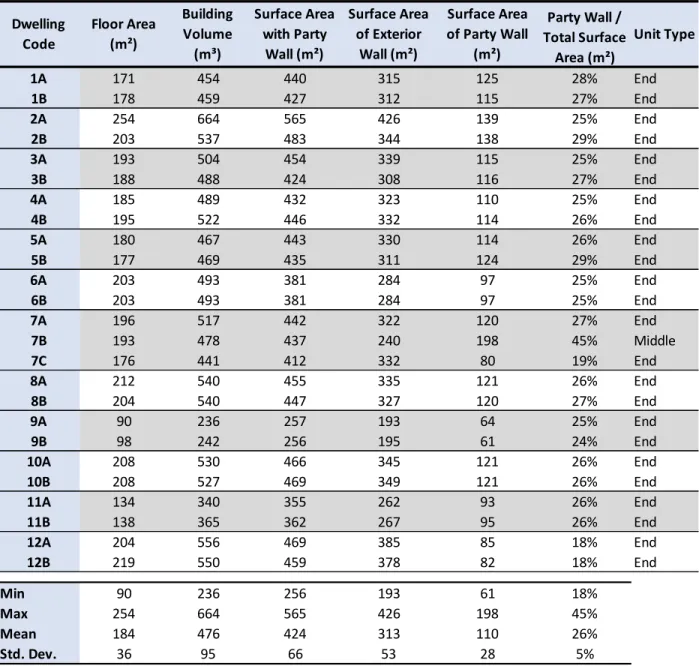
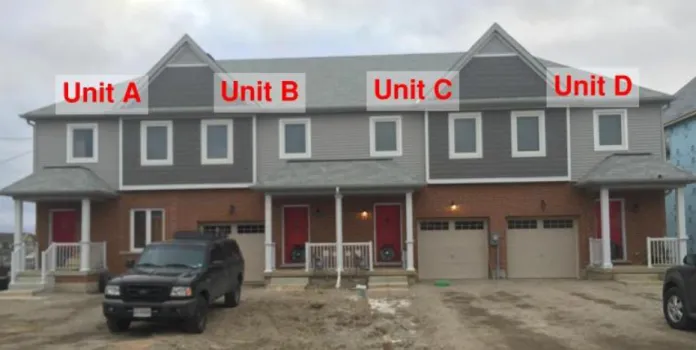
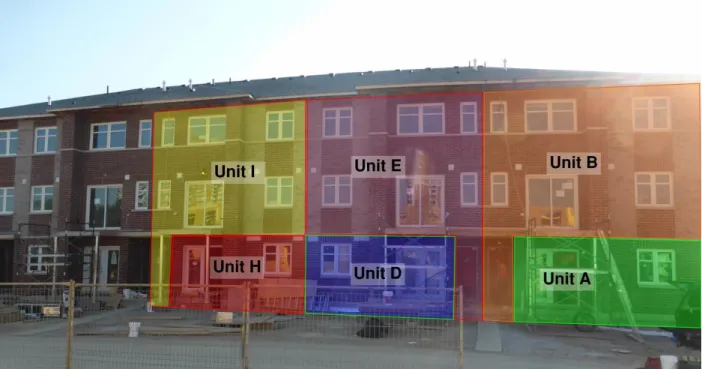
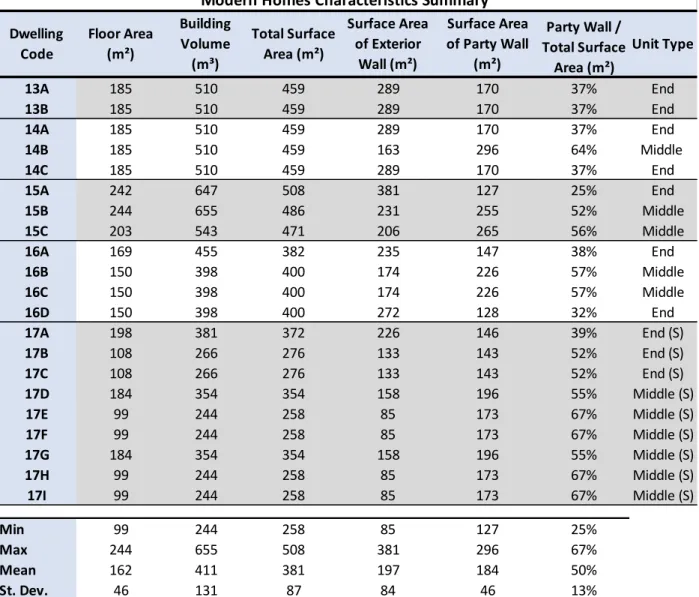
Modern houses were a combination of semi-detached houses, row houses, and stacked row houses, all built with light-weight wood framing. The details of the turn-of-the-century house party walls are not known because construction drawings were not available and destructive testing was not an option, but it is assumed that all party wall assemblies were the same.
Test Specimen Selection
Century Homes
Many of the units had additions to the rear of the house built with light weight timber construction. The percentage of total floor area that is party wall is relatively similar except for the middle triplex unit which has approximately twice the floor area of the party wall.
Modern Homes
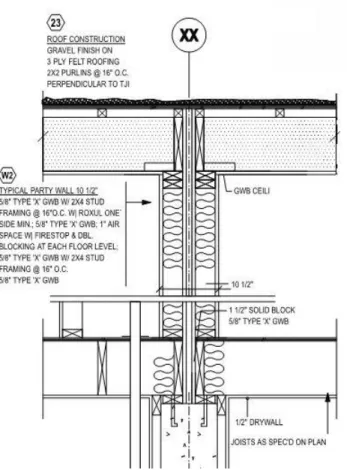
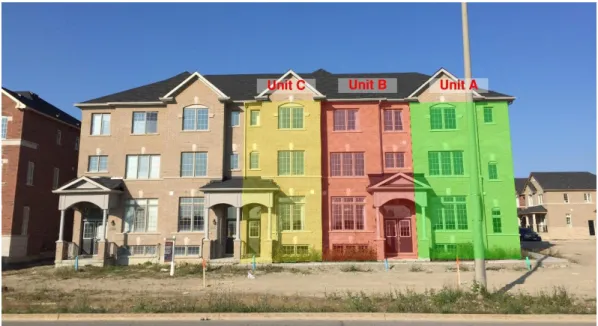
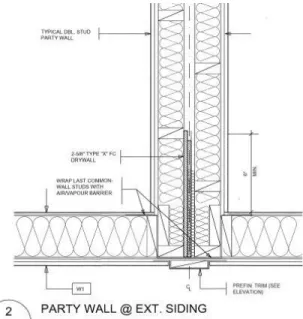
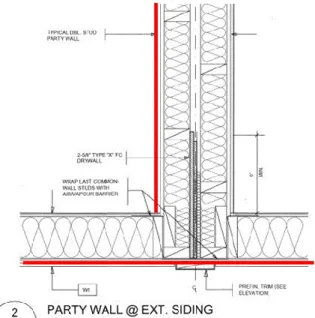
Data from the monitored test on unit C will continue to be analyzed to quantify the party wall air leakage through one of the two walls. The party wall section detail in Figure 10 shows that where the party wall is aligned with the roof trusses, there is no additional mineral wool or firestop installed at the top of the assembly.
Blower Door Testing
Procedure
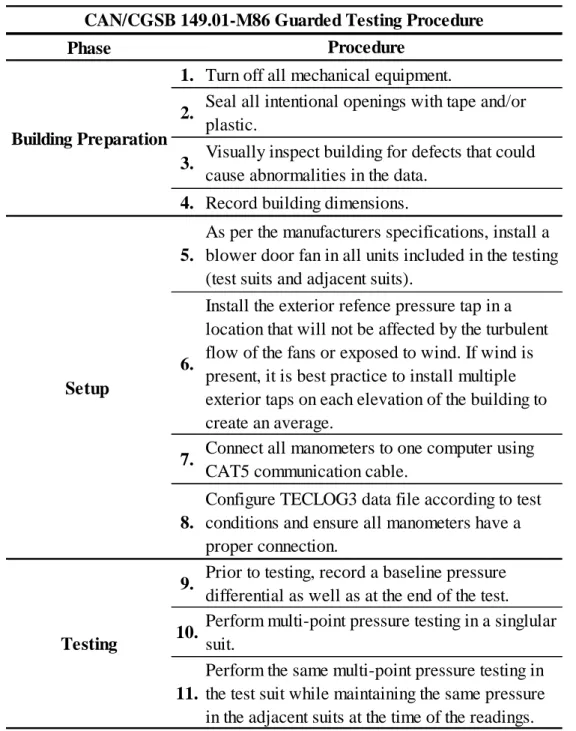
In testing done on century homes, fans were manually controlled by operators with fan controllers. Although CAN/CGSB 149.01-M86 does not explicitly state in the test procedures whether the induced pressure difference refers to pressure or pressure, the title quotes. According to the manufacturer's specifications, install a blower door fan on all units included in the test (test suits and adjacent suits).
Perform the same multipoint pressure test on the test suit while maintaining the same pressure on adjacent garments at the time of the readings. The intent was to depressurize and depressurize all units involved in the new building data collection process, but logistical issues allowed depressurization testing to be performed on only a few units.
Analysis
Reporting Metrics
- Airflow Rate
- Normalized Airflow Rate
- Air Change Rate per Hour (ACH)
- Leakage Area (EqLa)
- Normalized Leakage Area (NLA)
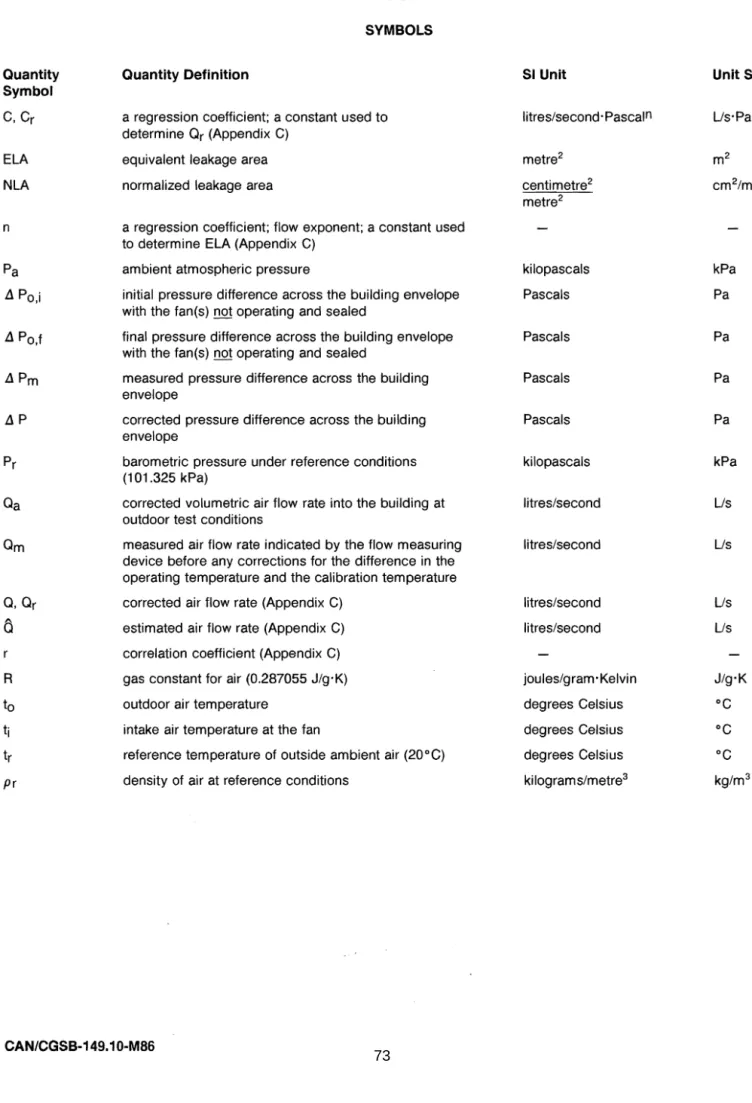
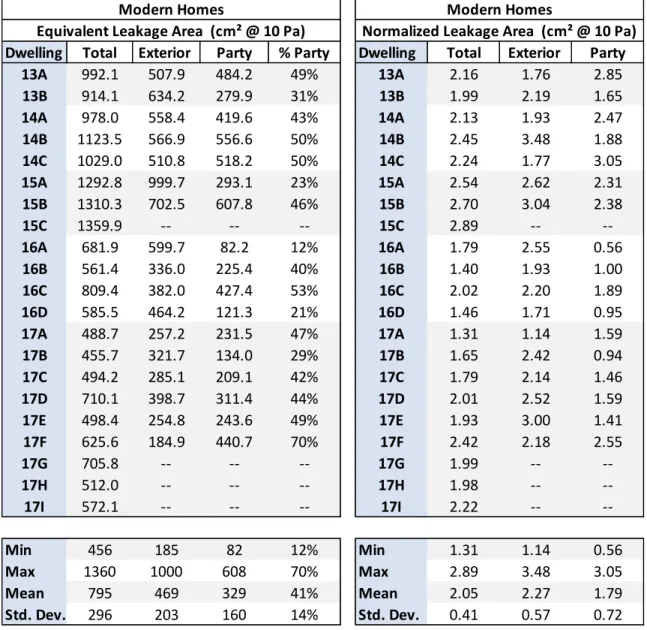
Equivalent leakage area represents the sum of all leakage areas in the building in a sharp-edged opening. From here, the n-value will help to understand if the leakage area is separated into many. Normalized leakage area (NLA) is the EqLA divided by the area of the building.
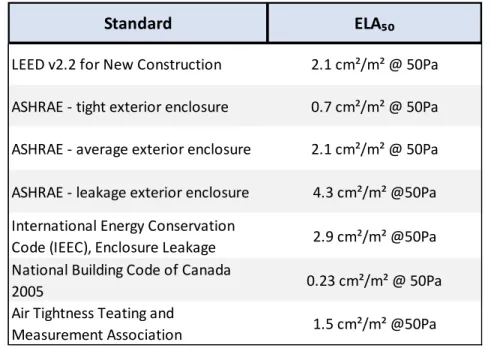
The concept with both equivalent leakage area and normalized leakage area is to separate and normalize the leakage areas to all six sides of the building, to the exterior enclosure and the interior wall, as done by Finch et al. By normalizing the leakage area, construction quality can be improved are compared to standards, such as ASHRAE.
Results
Air Flow Rate
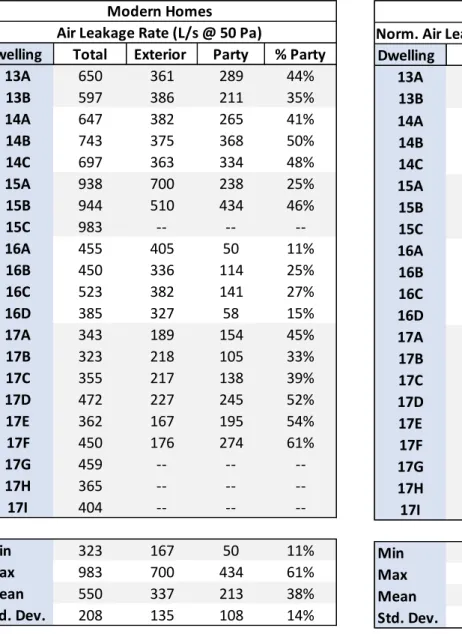
Similar to the data from the Century houses, the exterior data are the results of the guarded test and the interior data is extrapolated. The total values for these units are included as they provide insight into the leakage characteristics of the building typology.
Air Change Rate
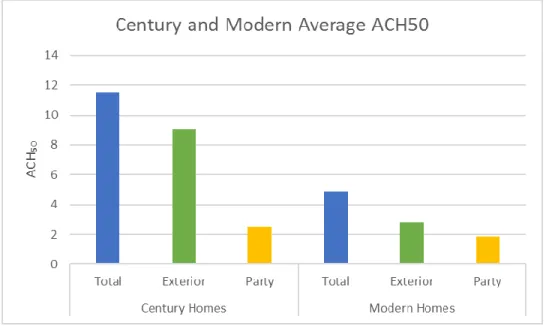
Data from the modern houses show that an average air change rate per house at 50 Pa is 4.8 ACH₅₀; a 58% reduction from the Century homes. Similar to the Century data, the exterior wall area is the result of supervised testing and the interior is extrapolated. An average of 38% of the total infiltrating air comes through the party wall(s); A 16% increase from the Century homes.
Leakage Area
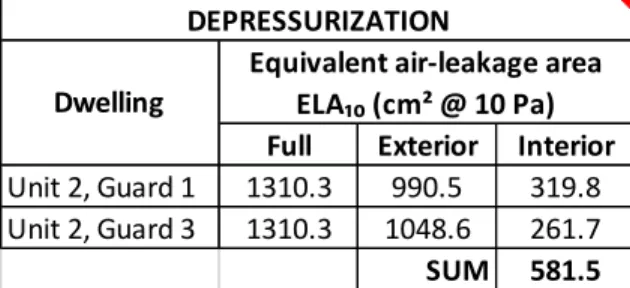
Unlike the data from the Century homes, there are no negative values representing the indoor leakage area. The ratio between indoor and outdoor leakage is closely related to the ratio between indoor and outdoor air leakage.
Discussion
Air Flow and Air Change Rate
The total air change end units average is 4.4 ACH50 with 2.9 ACH50 through the envelope and 1.4 ACH50 through the party wall. The average total point change for medium units is 5.2 ACH50 with 3.0 ACH50 through the envelope and 1.9 ACH50 through party walls. These results show that the leakage rate through the envelope is 21% greater than the leakage through the party wall.
In the modern home data, the party wall is 30% more leaky than the party wall. However, when renovating and restoring semi-detached houses from the century, leakage through the dividing wall should be a bigger problem.
Leakage Area
On average, there was a 41% difference in normalized internal leakage reported on either side of the wall. Century's review of data revealed that in some cases there are discrepancies in the data collected during protected testing, meaning that the pressures were not the same pressure on both sides of the assembly. Only two of the twenty-one test units were part of a semi-detached building, so % Int.
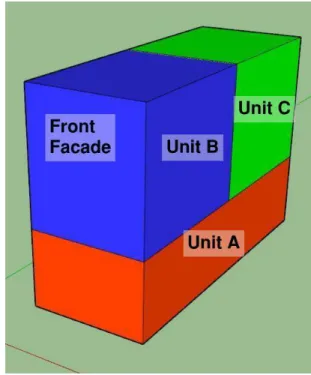
In Table 20, a unit B protected against A represents the leakage area of the partition wall separating the two dwellings; the same applies when unit B is shielded from C. The sum of the two leakage areas is 4% less than the total internal leakage area calculated by the fully guarded test.
Sources of Error
Probably as a function of the wind, the "n" value fell below the theoretical value of 0.5 during testing. A low 'n' value has been found on numerous occasions, both during single unit testing and guarded. The reason that the nature of shielded testing can cause errors in the data is that during a shielded test, the sidewall is theoretically neutralized, preventing airflow.
However, it is possible for small amounts of air to enter and be drawn through the other side of the shielded assembly, causing an unusual situation compared to standard single unit testing. This highlights the importance of maintaining equal pressure on both sides of the party wall assembly.
Recommendations
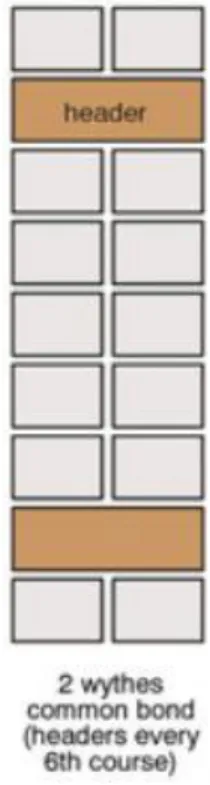
If an interior air barrier system is being implemented, the current location of the plaster in the party wall may be sufficient if treated as an air barrier system. 57 The details examined show that there are no regulations for installing seals at the headers in the dividing wall. This is a practice that should be standard in the construction of partitions to reduce airflow through the structure.
The final recommendation in party wall construction to reduce air leakage is to compartmentalize the party wall between floors. However, this detail is often not adequately air-sealed, creating a very high air void in the party wall assembly.
Conclusions
The Century twin apartments averaged 11.5 ACH₅₀, with 22% of the airflow through the side wall. Research shows that when the envelope is made to be more airtight, the overall percentage of airflow through the party wall increases; it is important that an airtightness strategy is used for the sidewalls if subsequent work is carried out on the envelope. Semi-detached and terraced houses Modern houses averaged 4.8 ACH₅₀, with 38% of the airflow through the side wall.
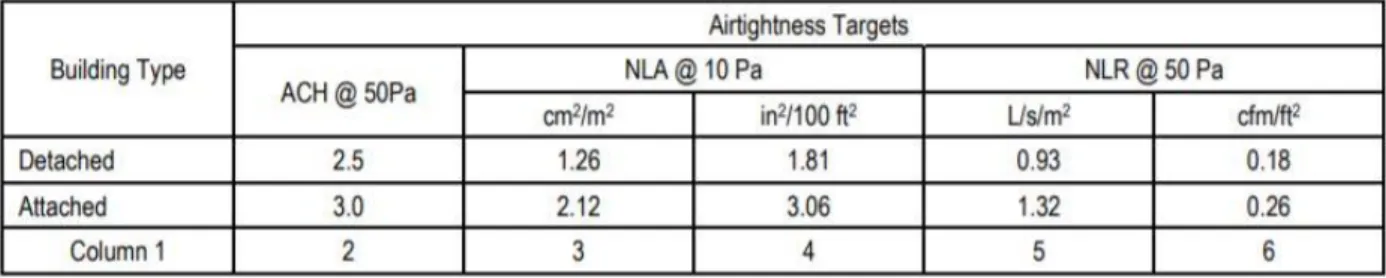
None of the units tested met the 2.5 air tightness target for twins set by the OBC SB-12. Modern homes will be more energy efficient by correlating energy savings with reductions in air infiltration, but occupants with a higher percentage of total airflow passing through side walls will be most susceptible to associated pollution.
Future Research
The relationship between flow rate and pressure difference is used to calculate the equivalent leakage area of the building envelope. The fan or fans must have a total airflow capacity capable of producing a pressure difference of at least 50 Pa between the inside and outside of the building envelope. A graph of the measured air flow rates versus the corresponding pressure differences on log-log paper d.
General arrangement of the device during the test showing a possible air flow measurement system. Measure and record the air temperature (tc) and atmospheric pressure (Pc) at the inlet of the device. Repeat steps 2 through 7 for at least three more flow rates including maximum fan flow rate.
Determine the leakage air flow rate of the test chamber, qt, according to the procedures described in pars.