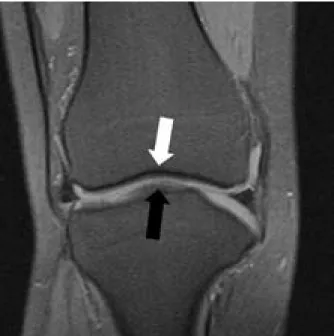
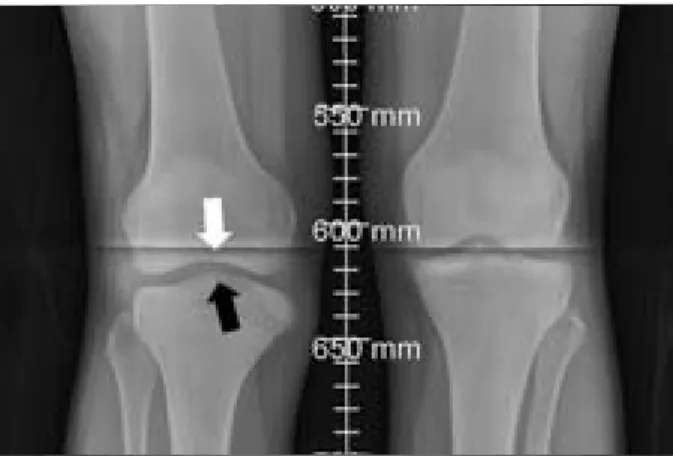
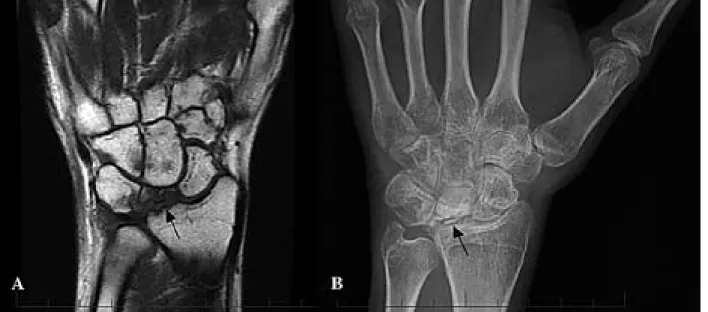
SUMMARY: Kienbock's disease, or osteonecrosis of the lunate, is a rare cause of wrist pain. Etiology of Kienbock's disease based on a case study in patients with cerebral palsy.
A Man with a Neck Mass, Pleural Effusion and Hypoechoic Masses
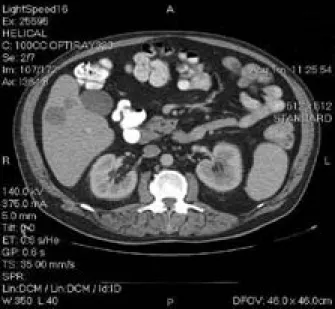
Examination revealed normal vital signs, an erythematous, firm but mobile mass on the left side of the neck, and signs of a right-sided pleural effusion. CT of the chest revealed an extensive bulky filling defect in the right atrium, right ventricle, and outflow tract at the level of the pulmonary valve.
ABSTRACT: The Poverty Reduction Strategy Papers (PRSP) represent the latest initiative by the World Bank and the International Monetary Fund (IMF) to reduce the plight of the poor. The Poverty Reduction Strategy Papers (PRSP) represent their latest initiative to reduce the plight of the poor.
Poverty Reduction Strategy Papers and their contribution
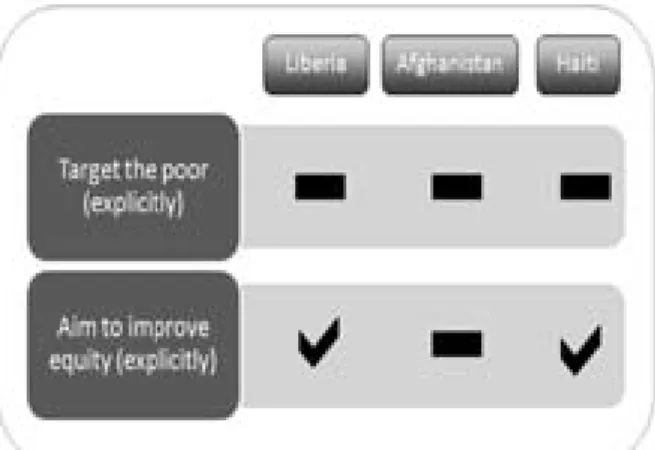
The health data, analyzes and strategy content of the three PRSPs are assessed against the 'Health, Nutrition and Population' chapter of the World Bank's PRSP Sourcebook. Specifically, the PRSPs are examined in relation to Chapter 18 of the World Bank Sourcebook entitled “Health, Nutrition and Population” (henceforth HNP Sourcebook) (2) on health data, data analysis and health strategies.
Countries
It is therefore possible that the World Bank and the IMF do not actually consider health to be a priority in PRSPs. Health and the right to health require further promotion in the PRSP process, and the World Bank's agenda must be challenged.

Salvage Resection for Isolated Local and/or Regional Failure of Head/Neck
The policies of the World Bank and the obligation of its members to respect, protect and realize the right to health. In patients with disease recurrence in the previously irradiated field, aggressive salvage surgical resection is the preferred intervention (4).
Cancer Following Definitive Concurrent Chemoradiotherapy
Locoregionally advanced head and neck cancer is optimally treated with definitive concurrent chemoradiotherapy or surgical resection followed by radiotherapy with or without chemo-. Despite aggressive local treatment, approx. 20-36% of patients experience locoregional recurrence within 3-5 years, which represents 50-67% of all recurrences (1-3).
Case Series and Review of the Literature
Boyd Gillespie, Anand K. Sharma
Estimation of disease control, estimation of survival, and univariate analyzes were performed using R version 2.6.1 (The R Core Development Team; http://www.r-project.org). Primary definitive chemoradiotherapy and salvage resection and reconstruction (if necessary) were performed in all cases at MUSC. The main outcome measure of this study was overall survival, measured from the date of salvage resection to last follow-up or death.
Fourteen patients at risk excluding two patients who died of treatment-related toxicity within two weeks of salvage resection.
Factor
Locoregional Control
Control Freedom From Failure
Failure Overall Survival Overall Survival Factor
Within the current study population, complications were similar regardless of graft tissue re-construction (4 of 11 reconstructed patients versus 2 of 6 primary closure patients). The current study showed an estimated 2-year overall survival of 58%, which is comparable to other single-institution series of post-. Within the RTOG concurrent chemo-radiotherapy group, the rate of fistula was somewhat higher than described in single-institution series (30% vs.
A single-institution series of post-chemoradiotherapy failure showed a trend towards poorer survival in patients with the specific.
The RTOG 91-11 study provides the best comparative data for salvage resection in the setting of radiotherapy alone versus sequential chemotherapy/. If only "large" fistulas are considered for the RTOG study, the rate (11%) is more consistent with the retrospective series. A single-institution analysis of salvage laryngectomy after radiotherapy or chemoradiotherapy demonstrated a reduced risk of fistula for free flap reconstruction compared to primary closure (18% versus 50%, p = 0.08) (16).
Although limited by small numbers, no association was identifiable within the current study population.
Control 2y Overall
Thus, the total risk of significant fistula formation after surgical salvage for simultaneous chemoradiotherapy failure is approx. 5-10%. Similarly, the risk of stricture and feeding tube dependence was reduced with free flap reconstruction. Within our own population, all 4 patients with long-term disease-free and overall survival (>2 years) were locoregional failures of laryngeal primary sites, despite locally advanced disease at recurrence (rp-T4aN0 in two patients, rpT3N0 in one, and rpTxN1 in one).
It is possible that the benefit may be limited to a specific "high-risk" subset of patients requiring salvage resection.
Major Complications
In patients whose disease recurs within a previously irradiated field, aggressive surgical resection is the intervention of choice, providing 55% local control and 32–39% 5-year survival (4,15) . These mainly included patients treated with radiotherapy alone or with sequential radiotherapy and chemotherapy, and who have shown inferior disease control compared with concurrent chemoradiotherapy (5-10). Few reports focus on the complications, disease control, and survival outcomes for concurrent chemoradiotherapy patients.
RTOG 91-11,
MDACC,
3/17) Flap Breakdown
Postoperative concurrent radiotherapy and chemotherapy for high-risk squamous cell carcinoma of the head and neck. Postoperative radiation with or without concurrent chemotherapy for locally advanced head and neck cancer. The effectiveness of salvage surgery after failure of primary concurrent chemoradiation for head and neck cancer.
Surgical wound complications after intensive chemoradiotherapy for advanced squamous cell carcinoma of the head and neck.
Evolutionary approaches to autism- an overview and
The vagus, i.e. the 10th cranial nerve, is an important component of the autonomic nervous system that plays an important role in the regulation of emotions and social behavior. They "disrupt" the market by changing the approach to a problem and by bypassing more complex alternative solutions. In Canada, the final report on the state of the health care system (1), published in 2004, is one of many sources that support the rigidity of health care structures and scope-of-practice rules—the rules that define what tasks are different. categories of healthcare professionals are allowed to perform—represents an ominous barrier to increasing productivity in healthcare.
Placing special emphasis on “collaborative teams and networks of healthcare providers,” the Romanow report suggests that “the traditional scope of practice needs to change [suggesting] new roles for nurses, general practitioners, pharmacists, case managers and…
In the same interview, Christensen outlines a third category of innovations—catalytic innovations—which he describes as even more beneficial than disruptive innovations in the context of contemporary health care. In the last few decades, with the progressive extension of life expectancies and a continuous "medicalization" of Western societies (10), health care practitioners - and especially doctors -. There seems to be a consensus in the medical literature that where physician attention is most important is in the treatment, diagnosis and management of complex medical issues (7).
Another important Canadian report published in 2002, the Romanow Report (2), also emphasizes the need for change in the way health care services are delivered.
Rhymes with Cost-Efficiency
In the US and in an increasing number of OECD countries, a new generation of health care professionals has recently made their entrance. Multidisciplinary approaches to health care can also have significant drawbacks, a large number of which have been reported on many occasions in the medical literature and the purpose of which is beyond the scope of this article. In the USA, a very popular example of how scope-of-practice rules have been changed to provide patients with more affordable and convenient health care services is the advent of so-called "Minute Clinics" (21).
Many factors can explain the booming success of this catalytic innovation, which successfully reshaped the scope-of-practice rules for nurses in the US.
The Canadian Space Agency Space Learning grants
Medical Education for Exploration Class Missions
Development of technical knowledge and experience in emergency medicine - The role of simulation in the acquisition of procedural skills. Stewart would not have been able to participate in the Aerospace Medicine elective without the dedication and hard work of the individuals at NASA's Kennedy Space Center and the Canadian Space Agency who made this incredible experience possible. Human factors engineering is the study of the interaction between people and their work environment (20,23).
With new developments in ultrasound technology and staff training, the use of ultrasound has expanded beyond these traditional boundaries and, for many, has become an extension of the physical examination.
The presentation of remote management of interventional procedures has been described and presented in the next section. In the late 1970s, Europeans began using ultrasound in the evaluation of critically ill trauma patients. In the case of an unstable patient, the use of ultrasound for rapid diagnostic evaluation is far superior to conventional CT or MRI modalities.
Possible evidence for the superiority of a sonography-based algorithm in the evaluation of blunt abdominal trauma.
Medical Care in the Arctic and on orbit
However, I have experience working as a family physician in northern Canada and, as I have grown to understand how medical care is delivered in orbit, it has been interesting for me to see the parallels with my previous practice. The first thing that comes to mind when discussing medical care "up north" is that, compared to their colleagues working in large centers, northern frontline doctors are more independent. As our Soyuz vehicle docked with the Station, we began an incredible space odyssey as members of the ISS Expedition 20/21 crew.
A well-trained astronaut exhibits many of the same knowledge, skills, and professional attributes as an exemplary physician.
Physicians as Astronauts
In the final stages of the selection process, a series of interviews are held with the selection committee. The structure of the basic astronaut training program has much in common with the medical school curriculum. Some believe that a future trip back to the Moon and onward to Mars may be delayed by the United States' current commitment to support the development of commercial, human-manned spacecraft.
This article provides an overview of past achievements in human spaceflight and discusses future missions over the next fifty years and the role space medicine will play in extending the time-distance constant of human space exploration.

Human Space Exploration The Next Fifty years
The decade culminated in the realization of President Kennedy's vision for human exploration of the lunar surface and a safe return to Earth. The future of human spaceflight will likely include greater accessibility and exploitation of low Earth orbit for commercial ventures and continued use of the ISS, eventually leading to a return to exploration missions that may include a return to the Moon or missions to Mars. Despite rigorous screening programs, the increased size of the ISS crew, coupled with the long duration of missions and the increasing frequency of flights by SFPs, indicates that the frequency of medical events in space may increase.
The development of commercial space travel in the coming decades will expand the scope of space medicine beyond the realm of government-sponsored human spaceflight to civilian spaceflight.
Exploring the Possibility for a Common System for
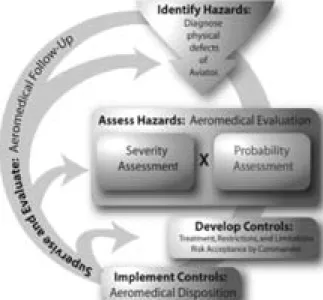
In today's operational environment, military flight surgeons increasingly practice in a joint military environment in which service members from different services must work together to accomplish the mission. In this joint military environment, flight surgeons are expected to be as well versed in the policies and procedures of their sister services as they provide. Despite commonalities in aeromedical concerns, each service's aeromedical policy has varied over time, resulting in an often confusing and unnecessarily complicated joint framework for aerophysical standards.
While these suggestions are not exhaustive in nature, they are presented to raise awareness and initiate dialogue among administrators in the aeromedical community, with the goal of moving closer to the authors' vision of a single, shared system of aeromedical administration. for.
Joint Aeromedical Standards
Most of these differences probably lie not in the medical value of the tests themselves, but in the differences in policy development as outlined earlier. The net effect of this one change would be a dramatic improvement in flight surgeon interoperability in the joint environment. An example of such efforts can be found in recent developments in the integration of the Aeromedical Electronic Resource Office (AERO) at Fort Rucker, Alabama.
Third, in the case of the Coast Guard, the air medical physical exam parameters (items required for physical exams) were already very similar.