That the MVRD Board approves and ultimately approves the Metro Vancouver Regional District Ticket Information Use Amendment to By-law No. That the MVRD Board adopt the Metro Vancouver Regional District 2021 to 2025 Financial Plan By-law No.
MOTIONS FOR WHICH NOTICE HAS BEEN GIVEN No items presented
OTHER BUSINESS
- MVRD Board Committee Information Items and Delegation Summaries It was MOVED and SECONDED
The minutes of the regular meeting of the Metro Vancouver Regional District (MVRD) Board were POSTPONED and SECONDED. That the MVRD Committee hold the first, second and third readings of Metro Vancouver Regional District Financial Plan 2021 to 2025 Bylaw No.
RESOLUTION TO CLOSE MEETING No items presented
RISE AND REPORT (Items Released from Closed Meeting) No items presented
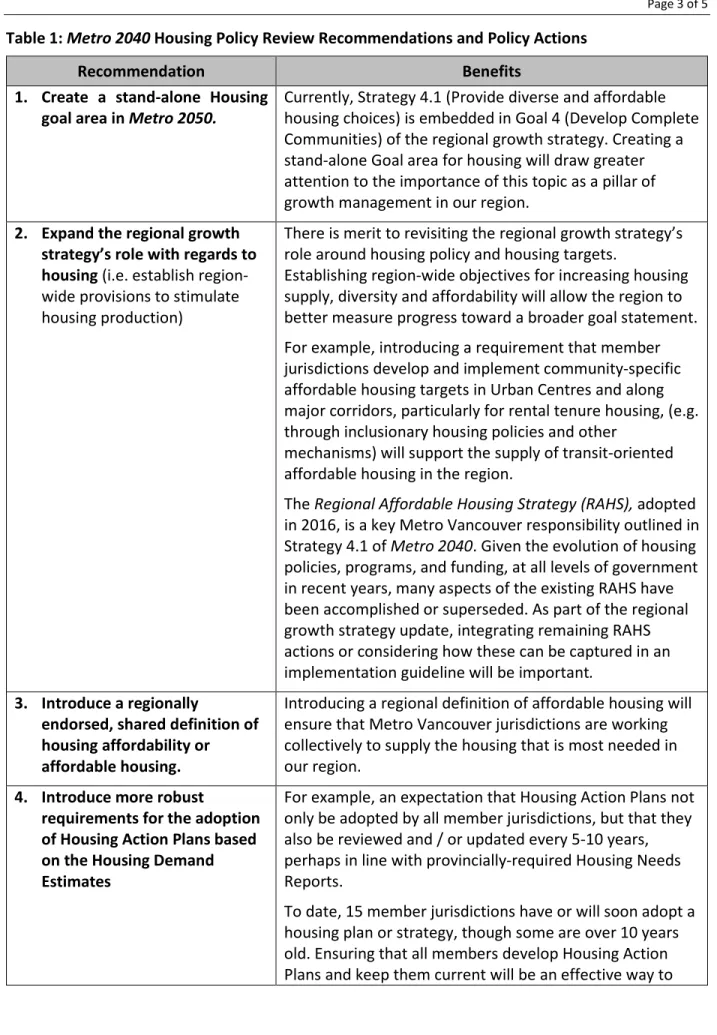
Seek Regional Planning Committee and MVRD Board approval of the recommendations of the Metro 2040 Housing Policy Review. The Metro 2040 Housing Policy Review was undertaken as part of the Metro Vancouver 2040 Review and Update: Forming the our future (Metro 2040), the regional growth strategy.
Section E 1.1
- Create a stand-alone Housing
- Expand the regional growth strategy’s role with regards to
- Introduce a regionally
- Introduce more robust
- Add housing performance measures and indicators with
- Reference the Metro Vancouver Housing 10-Year
- Apply a Social Equity lens to the housing policy framework
- Incorporate policy language to address the impacts of climate
Metro 2040 Housing Policy Review - Policy Recommendations Regional Planning Committee Regular Meeting Date: November 6, 2020 Page 2 of 5. Metro 2040 Housing Policy Review - Policy Recommendations Regional Planning Committee Regular Meeting Date: November 6, 2020 Page 3 of 5.
Section E 1.2
Metro 2040 Transportation Policy Review - Policy Options and Recommendations Regional Planning Committee Regular Meeting Date: November 6, 2020 Page 3 of 5 To request approval from the Regional Planning Committee and MVRD for the recommendations of the full Metro 2040 Policy Review.
Section E 1.3
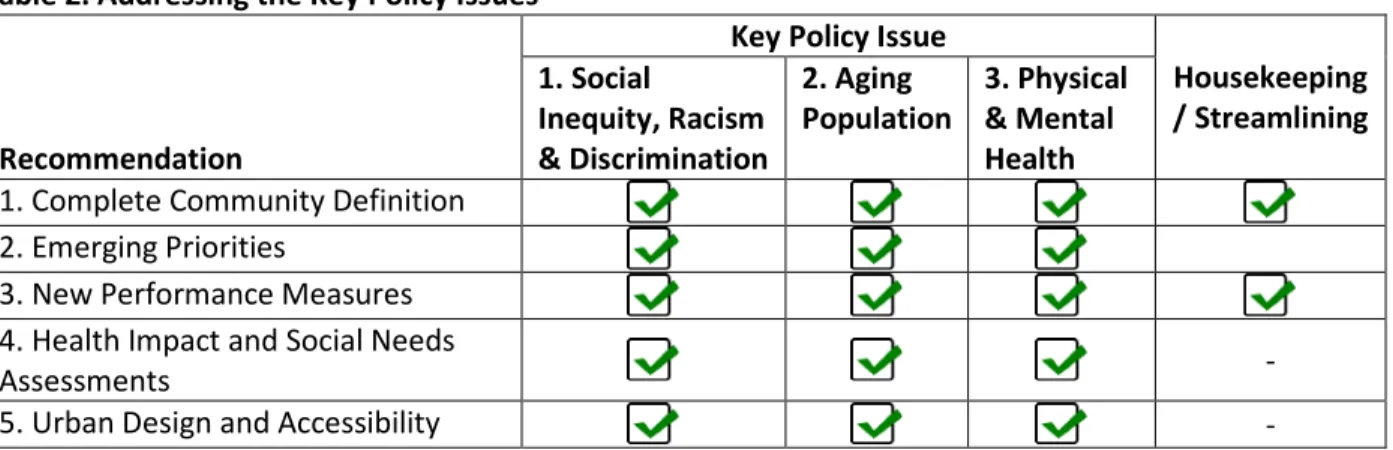
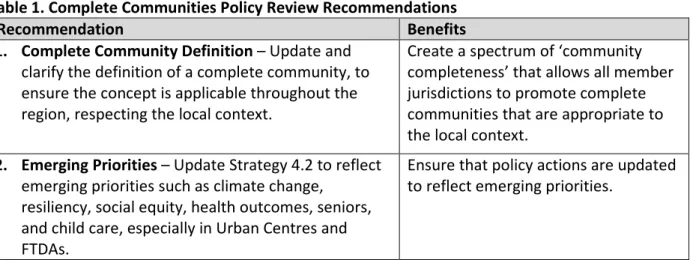
- Complete Community Definition – Update and clarify the definition of a complete community, to
- Emerging Priorities – Update Strategy 4.2 to reflect emerging priorities such as climate change,
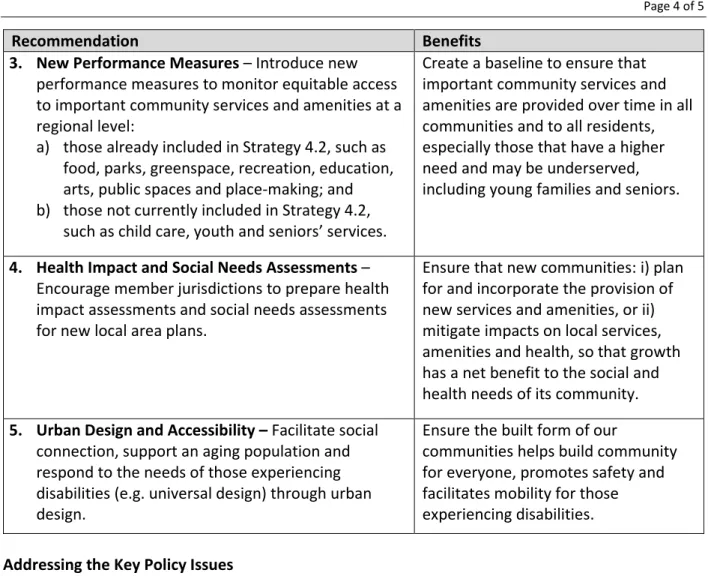
- New Performance Measures – Introduce new performance measures to monitor equitable access
- Health Impact and Social Needs Assessments – Encourage member jurisdictions to prepare health
- Urban Design and Accessibility – Facilitate social connection, support an aging population and
- Aging
- Population 3. Physical
Metro 2040 Full Community Policy Review – Recommendations Regional Planning Committee Regular Meeting Date: November 6, 2020 Page 2 of 5. Metro 2040 Full Community Policy Review – Recommendations Regional Planning Committee Regular Meeting Date: November 6, 2020 Page 5 of 5.
ATTACHMENT
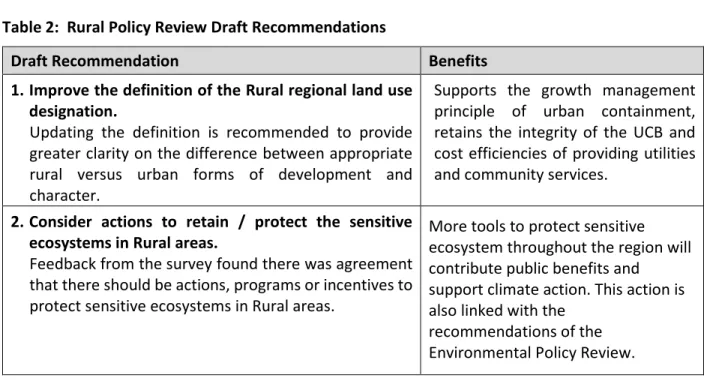
That the MVRD Board endorses the recommendations of the Rural Policy Review, as presented in the report dated October 26, 2020, entitled “Metro 2040 Rural Policy Review Recommendations”, including the principle of strengthening the Urban Containment Boundary, as a basis for updating of Strategy 1.3 of the regional growth strategy. At its November 6, 2020 meeting, the Regional Planning Commission discussed the attached report entitled “Metro 2040 Rural Policy Review Recommendations,” dated October 26, 2020.
Section E 1.4
Improve the definition of the Rural regional land use designation
Consider actions to retain / protect the sensitive ecosystems in Rural areas
Section E 1.5
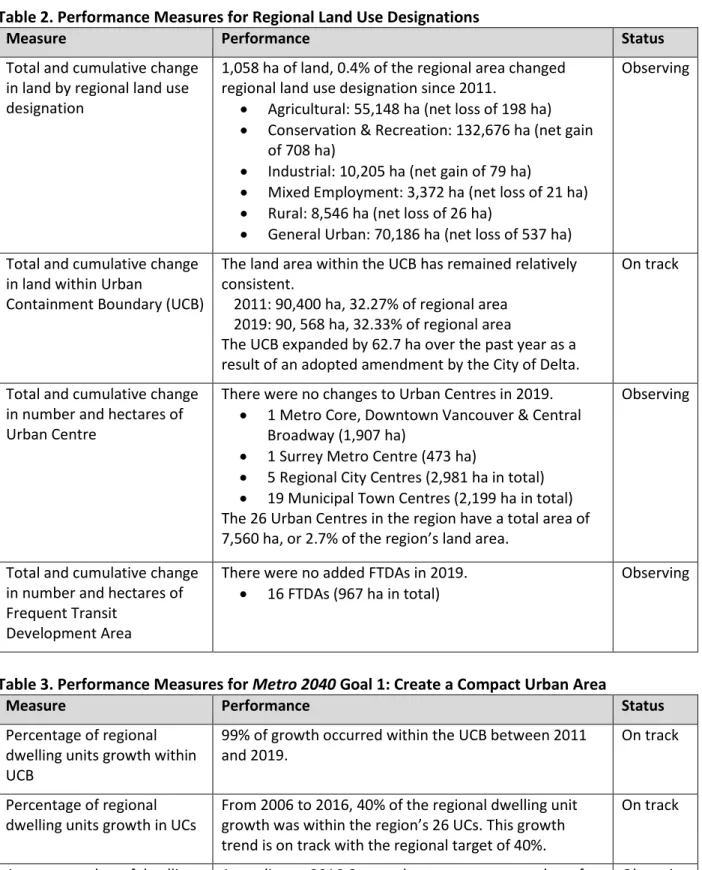
Metro Vancouver 2040: Shaping Our Future - 2019 Annual Performance Monitoring Report Regional Planning Committee Regular Meeting Date: November 6, 2020 Page 5 of 7 Metro Vancouver 2040: Shaping Our Future - 2019 Annual Performance Monitoring Report Date of the regular session of the Regional Planning Committee: November 6, 2020 Page 6 of 7.

Section E 2.1
PUBLIC OPINION RESEARCH
The primary purpose of the research was to determine how residents feel the air quality regulatory program should be financed. Businesses that emit pollutants must cover most or all of the costs for the air quality program that regulates industry in Metro Vancouver.
ENGAGEMENT ON PROPOSED CHANGES TO AIR QUALITY REGULATORY FEES
Consultation on Proposed Changes to Air Quality Permits and Regulatory Fees Climate Action Committee Regular Meeting Date: 13 November 2020 Page 3 of 5 Consultation on Proposed Changes to Air Quality Permits and Regulatory Fees Climate Action Committee Regular Meeting Date: 13 November 2020 Page 5 of 5.
Air Quality Fees Survey
Presented to
OCTOBER 2020
ATTACHMENT 1
Objectives
Businesses that emit pollutants should cover most of the cost for the Air Quality Program regulating industry in Metro Vancouver
Air quality in Metro Vancouver neighbourhoods is generally
Air Quality
Awareness of Metro Vancouver’s Air Quality Program
Air Quality Program Fees
KEY FINDINGS
Why do residents feel both property taxes and fees paid by businesses should fund the air quality program? What share of the air quality program costs do you think should be allocated to Metro Vancouver businesses that emit pollutants and residents. What share of the air quality program costs do you think should be allocated to Metro Vancouver businesses.
Base: Residents who are aware of the air quality program and feel it should be funded by fees and property taxes, n=267.
Thank you
JUSTASON MARKET INTELLIGENCE INC
Draft Discussion Paper - Consultation on a Review of Air Quality Permit and Regulatory Fees in Metro Vancouver. Bylaw 1083) was enacted to outline Metro Vancouver's fee structure for air quality permit and regulatory fees. There are a number of other important drivers to consider in amending Metro Vancouver's air quality permit and regulatory fees.
This discussion paper proposes changes to Metro Vancouver's air quality permit and statutory fees, including application fees, annual fees and air pollution fees.

Section E 3.1
- INTERPRETATION
- TERM
- OPERATING PLAN
- FUNDING AND PAYMENT
- REPORTING
- TAXES
- SEPARATE FUNDS AND FINANCIAL STATEMENTS
- RIGHT OF AUDIT
- INDEMNITY AND RELEASE
- TERMINATION
- NOTICE
- AUTHORIZATION
- TIME
- BINDING
- ASSIGNMENT
- ENUREMENT
- RELATIONSHIP OF PARTIES
- WAIVER
- AMENDMENTS
- WHOLE AGREEMENT
- LANGUAGE
- CUMULATIVE REMEDIES
- GOVERNING LAW AND JURISDICTION
- COUNTERPARTS
- Fish Production - deliver eggs and fish according to set targets and standards;
- Facility Upkeep and Operations - provide routine care and repair to the Hatchery structure, perimeter and equipment;
- Fish Production
- Facility Upkeep and Operations
- Public Education and Outreach
- Hatchery Administration
- General Agreements
The Beneficiary has requested to receive, and MVRD has agreed to provide funding to the Beneficiary for the purposes of the Project. Any GST and/or PST liability required in connection with this Agreement shall be the responsibility of the Beneficiary. The Beneficiary's books of accounts shall be maintained in accordance with Generally Accepted Accounting Practices.
KEEPS is responsible for the day-to-day operation of the hatchery as set forth in this operational plan.
Section E 3.2
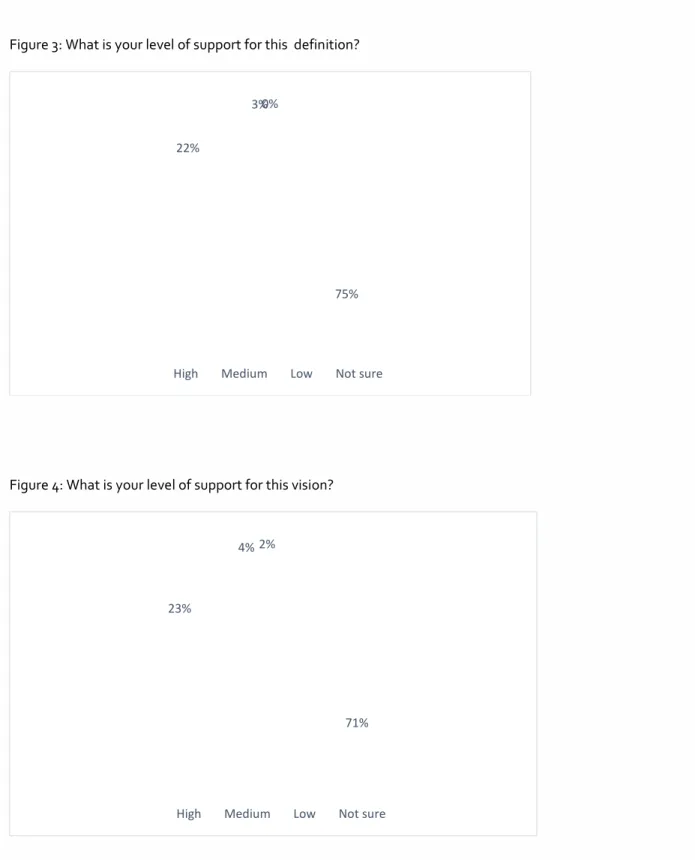
This report provides the MVRD Board with the Regional Greenways 2050 Plan (Appendix 1) and a summary of the results of the Phase 2 engagement process that informed the completion of the plan (Appendix 2). Metro Vancouver has implemented portions of five (5) of the regional greenways identified in the sector plans over the intervening years. -one percent of webinar participants indicated support for the Regional Greenways Network (55% strong, 36% moderate support).
Staff is seeking MVRD Board approval of the Regional Greenways 2050 plan and direction to incorporate the Regional Greenway Network map and supporting policies into Metro 2050.
Regional Greenways 2050
Contents
1 Summary
2 Building a Resilient Region
3 Introduction
- Greenways in Metro Vancouver
- Benefits & Opportunities
- Challenges
- Metro Vancouver Context
The following section outlines some of the key benefits and opportunities that regional greenways provide to the region. Implementation of Regional Greenways 2050 provides an opportunity to incrementally achieve the goals of the region's Clean Air Plan and Climate 2050 Strategy. Implementation of the regional greenway network provides an opportunity to develop more equitable access to regional greenways.
Regional Greenways 2050 provides the opportunity to secure increased capital funding resources through its implementation framework.
4 Inter-regional Trails & the Regional Cycling Network
- Major Bikeway Network
- Experience the Fraser
- The Great Trail
- Lochside Regional Trail
- International Trail Networks
The Great Trail crosses Metro Vancouver communities and parts of it are coordinated with regional greenways. This comfortable and scenic trail has a gentle gradient and is a popular destination for Metro Vancouver cyclists. Metro Vancouver borders Washington State along its southeastern edge, where three international border crossings with the United States are located.
The Peace Arch Crossing near Blaine, Washington offers Metro Vancouver riders opportunities to connect to the Whatcom County trail network.
5 Definition & Character
- Vision
- Plan Goals
- Regional Greenway Criteria
- Regional Greenway Network
- Existing Conditions – Greenway Operational Status Map
- Regional Greenway & Major Bikeway Network Destinations
This vision statement guides Metro Vancouver, its member jurisdictions and other key regional stakeholders in the collaborative implementation of the Regional Greenway Network. The Regional Greenway Network which forms the core of Regional Greenways 2050 has been identified using the. The Regional Greenway Network is a 30-year vision for recreational trails that support walking, cycling and, where appropriate, horseback riding (Map 1).
The operational status of trails in the Regional Greenway Network is classified using a three class system - Operational, Previously Planned and Identified Gap.
7 Site Planning & Design
8 Governance & Funding
Councils are developing parts of the Regional Greenway Network, the Major Bikeway Network as well as the neighborhood and community routes that connect to the wider. Reflecting the governance model described above, the allocation of capital and operating funds to the regional Greenway network is collaboratively allocated without formal coordination. Again, the operation of the regional Greenway Network is fully funded by the agencies directly responsible for providing greenway services for recreation and active transportation.
Since grant funding is not a factor in the operation of the Regional Greenway Network, each Regional Greenway Service Provider manages its funding through financial resources derived from their primary revenue streams, such as property or income taxes.
9 Implementation Strategies and 5 Year Action Plan
Collaborate with Metro Vancouver on implementation where the Regional Greenway Network and Major Bikeway Network overlap. Explore opportunities for grant funding from TransLink, the province and others to support the development of municipal portions of the regional Greenway network. Work with Metro Vancouver, TransLink and others to track and report on expansion of the Regional Greenway Network.
BC Ferries to support the connection of the Tsawwassen and Horseshoe Bay terminals to the Regional Greenway Network.
10 Tracking Performance
11 Appendix A: Definitions
Roads to prosperity; Economic Impacts of Investments in Bicycle Facilities: A Case Study of North Carolina's Northern Outer Banks.
Regional Greenways 2050
Engagement Results
List of Tables
List of Appendices
1 SUMMARY
2 ENGAGEMENT OPPORTUNITIES AND RESULTS
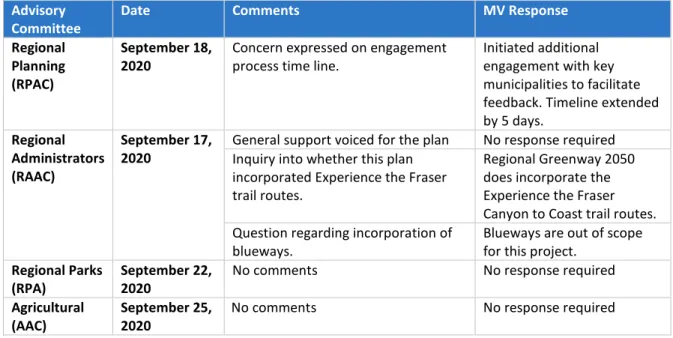
- Regional Advisory Committee Presentations
- Public Questionnaire & Interactive Map
- Municipal and Stakeholder Webinar
- Agency Feedback
- Social Media
- First Nations
Metro Vancouver hosted a public online survey on the Regional Greenways 2050 Plan to test public support. Regional Greenways 2050 Phase 2 Engagement Results | 4 For additional details on the results of the public Regional Greenways 2050 questionnaire, see Appendix B. During the Phase 2 engagement process, Metro Vancouver provided a copy of the draft Regional Greenways 2050 plan to 33 First Nations to solicit feedback on the plan.
During the meetings, staff presented the draft Regional Greenways 2050 plan and answered questions.
3 CONCLUSION
APPENDIX A: WEBINAR FEEDBACK SUMMARY
Results of cooperation in the 2nd phase of regional green routes 2050 | 10 Webinar Survey Results - Question 3 - What is your level of support for the implementation of the draft. This table lists, by topic, key questions raised by participants during question-and-answer sessions during the Regional Greenways 2050 webinar. How will Regional Greenways 2050 work to “protect some of these remaining natural areas and promote ecosystem connectivity.
How will Regional Greenway 2050 assess street amenity before greenway segments are included in the plan/map, to ensure streets are comfortable for most people and accommodate a variety of modes.
APPENDIX B: QUESTIONNAIRE RESULTS
Regional Greenways 2050 Questionnaire
That the MVRD Board approve the Campbell Valley Regional Park Management Plan as presented in the report dated October 5, 2020, entitled “Campbell Valley Regional Park – Engagement Results and Management Plan”. Detailed feedback regarding trail use resulted in improvements to the final Campbell Valley Regional Park Management Plan. The Campbell Valley Regional Park Management Plan (Attachment 1) was identified as a key action item in the 2020 Regional Parks Committee Work Plan.
That the MVRD Board approve the scope of the proposed draft management plan for the Campbell Valley Regional Park and authorize staff to proceed with the engagement process.
Section E 3.3
Campbell Valley Regional Park - Partnership Results and Management Plan Regular Park Committee Meeting Date: November 18, 2020 Page 2 of 4 Campbell Valley Regional Park - Partnership Results and Management Plan' and provide staff with alternate instructions. Campbell Valley Regional Park - Partnership Results and Management Plan Regular Park Board Meeting Date: November 18, 2020 Page 4 of 4
Staff recommends Option 1 that the MVRD Board approve the Campbell Valley Regional Park Management Plan.
Campbell Valley Regional Park
Executive Summary
Introduction
Process and Context
Management Plan Purpose
Planning Process
Metro Vancouver Policy Context
First Nations Context
Park Formation
Local Context
Landscape Context
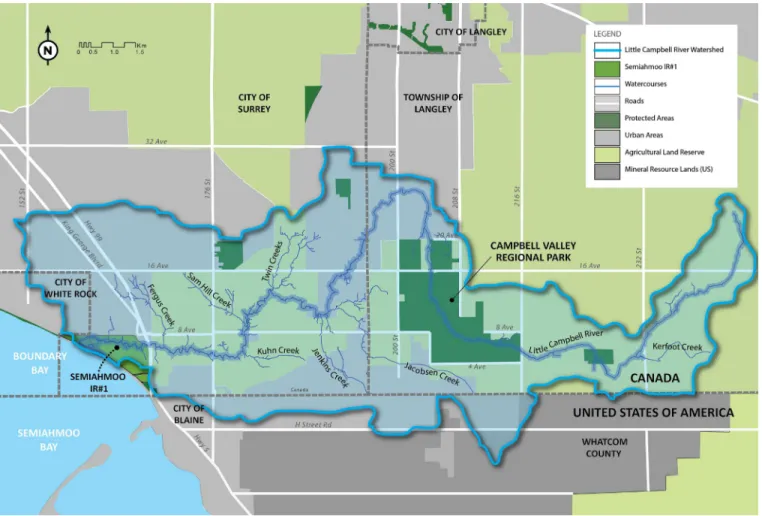
The waters of the Little Campbell River originate in wetlands near 240th Street between 0th and 8th Avenues and flow into the Boundary/Semiahmoo Bay area north of the Canada/US border. Relative to its size, the Little Campbell River is one of the most productive salmon rivers in the Lower Mainland. The Semiahmoo Fish and Game Club operates an impoundment in the lower part of the river and raises the salmonid population.
The center of the watershed, which includes riparian areas in Campbell Valley Regional Park, and the marine foreshore on Semiahmoo Bay are regionally important reservoirs for biodiversity.
Cultural Heritage
Park Access and Connectivity
Overview
Existing Conditions
Park Purpose
Ecosystems
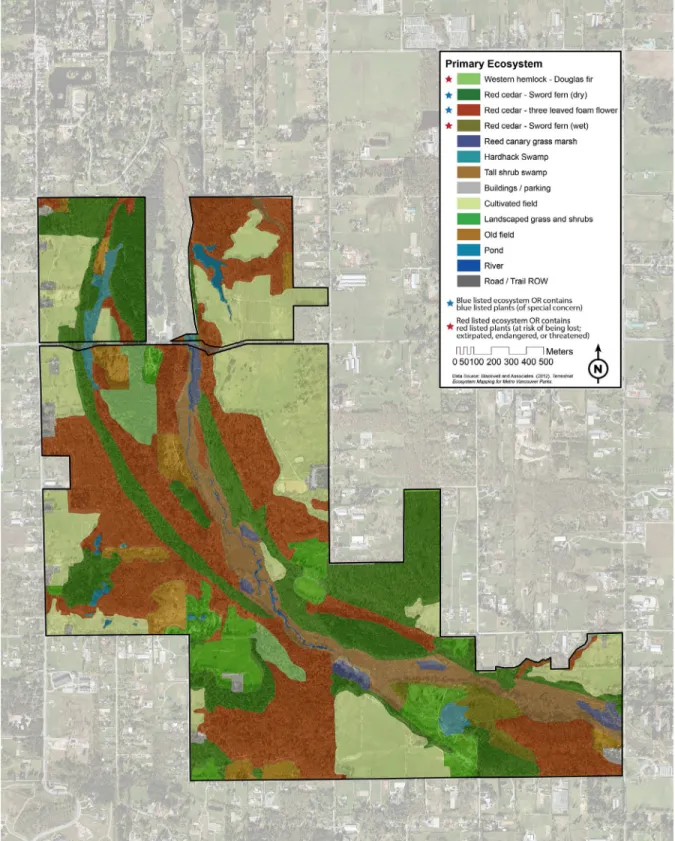
McLean Pond, the largest pond in the park, was formed by a former landowner who built an earth dam to impound water from a small tributary to the Little Campbell. Campbell Valley Regional Park lies within the Coastal Western Hemlock Very Dry Maritime (CWHxm1) biogeoclimatic zone. Historic logging and agricultural activities have resulted in young hardwood forests throughout most of the park with some pockets of mature conifers near Camp Coyote, the Ravine Trail, and the valley floor in the eastern part of the park.
Agricultural Fields, Old Fields and Open Spaces Campbell Valley Regional Park has thirty fields (Figure 5), mostly in the uplands around the perimeter of the park.
Biodiversity
Habitat Sensitivity Analysis
Climate Change
Warmer summers and droughts
Extreme weather events
Invasive species
Impacts on park visitors
- Existing Park Uses
- Cultural Heritage Resources
Hiking and nature viewing are the most popular activities in Campbell Valley Regional Park. The park has 11.5 km of pedestrian paths, 14 km of equestrian/pedestrian paths and 3.5 km of cycle and pedestrian paths. Cycling represents a relatively small use segment, due to a lack of cycle paths and destinations within the park.
The park is well suited for hosting large public events; large groups often book the Rowlatt Farmstead, Little River Bowl/Historic Langley Speedway, riding circuit and riding facilities.