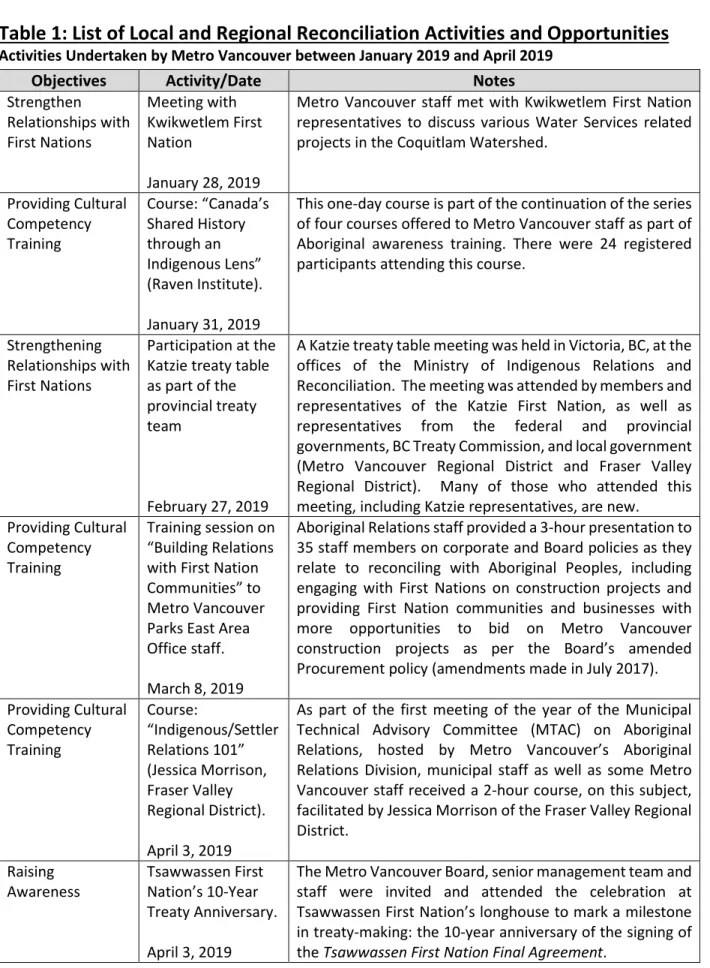
Various Metro Vancouver activities identified for 2019 have been included in the Aboriginal Relations budget. Aboriginal Relations staff will provide training to 25 Metro Vancouver staff as part of building cultural awareness.
Regional Planning Committee - On Table 3.1
That the Regional Planning Committee receive for information the report entitled "Expanded Consultation on a Potential Cannabis Production Emission Regulation for Metro Vancouver" dated April 18, 2019, addressed to the Climate Action Committee. Extended Consultation on a Potential Cannabis Production Emissions Regulation for Metro Vancouver Regional Planning Committee Regular Meeting: May 3, 2019 Page 2 of 2.
ATTACHMENT
Discussion paper on a potential emission regulation bylaw for cannabis production and processing
Bylaw development consultation paper on a potential emission regulation bylaw for cannabis production and processing
Presentations and feedback at Metro Vancouver Agricultural Advisory Committee and Municipal Agricultural Advisory Committee meetings in the region (approximately 6).
DRAFT
Cannabis Production and Processing Operations
The Metro Vancouver Regional District (MVRD, operating as Metro Vancouver) is responsible for managing and regulating air quality in the region under authority delegated from the provincial government in the BC Environmental Management Act. Metro Vancouver protects public health and the environment through a tiered approach to managing air pollutant emissions that utilizes the use of site-specific permits, sectoral emissions regulations, and Greater Vancouver Regional District (GVRD) Air regulations.
DRAFT DRAFT
Proposed Emissions Regulation for Cannabis Production and Processing in Metro Vancouver 5 Regional Planning Board. Proposed Emissions Regulation for Cannabis Production and Processing in Metro Vancouver 9Regional Planning Board.
Current Project Status
Environmental & Agricultural Benefits and Land Transfer
Since the 155-acre property at 7969 Highway 91 Connector is excluded from the Agricultural Land Reserve, Lot B, comprising 193 acres, is included in the Agricultural Land Reserve.
Industrial Land and the Economic Benefits of the Development
Conclusion
The preparation of the Annual Report is identified as a priority action in the 2019 Regional Parks Committee Work Plan. For the past 5 years, a report titled Metro Vancouver Regional Parks Visits, Visitor Services and Volunteering by the Numbers has been provided annually Regional Parks Committee and MVRD Board. The report summarized public use of Metro Vancouver's regional parks, including annual visitation counts and volunteer activities, as well as the achievements of Regional Parks Visitor Services.
For 2018, this report has evolved into an annual report, which provides a more comprehensive summary of Regional Parks' activities for the year. Regional parks' partners and park associations continue to play a strong role in program delivery and volunteering. It provides an overview of Regional Parks visitor and facility use, programming, volunteer work and activities in 2018.
Regional Parks Annual Report
Our regional park partners, along with more than 7,000 volunteers, have contributed nearly 26,000 hours of management, education and interpretation programs. 2018 brought significant changes to our system, with the transfer of parks outside the Metro Vancouver Regional District to the Fraser Valley Regional District and the City of Abbotsford: Sumas Mountain Interregional Park, Matsqui Trail Regional Park and the eastern portion of Glen Valley Regional Park – 7% of our system. Part of the Aldergrove Regional Park land base was also transferred, but remains managed by Metro Vancouver.
Despite smoky skies in the month of August 2018 due to provincial wildfires, total visits to regional parks and greenways (excluding those transferred) increased to 11.7 million. We have developed a bold regional park land acquisition strategy for 2050 to identify unprotected natural areas that have high conservation value and could become future parkland. With our advisors we won an award for the innovative design of Surrey Bend Regional Park.
What a year it was for
As we move forward beyond 50 years of regional parks, our aspirations and achievements of 2018 build on our vital role in protecting and connecting people to the region's important natural areas. Our relationships with our neighboring local First Nations continued to grow, with significant time spent in dialogue. The testimonials of our visitors and partners motivate us to continue to give everything in the work we do.
As we look ahead to new park lands to protect, innovative programs to connect visitors and partnerships to create and strengthen, it is important that we pause and mark our achievements in this annual report and express gratitude for the support we receive .
Metro Vancouver Regional Parks
The Necessity of Nature
The Sharing of Expertise StewardshipWellness
Our ValuesOur Role
Protecting Metro Vancouver’s natural areas and connecting people with them
Ecological Conservation Areas No public access LSCR (Lower Seymour Conservation Reserve) Regional Park Reserves Limited public access.
Growing our System
Regional Park Land
7.57 million
Our Foundation
2018 Accomplishments
Support from Pacific Parklands Foundation has
Regional Parks Provide Significant Value
Total 2018 Budget: $46.2 million
15.7 million
30.5 million
Building and Maintaining Park Facilities
Protecting Important Natural Areas
13,557 Hectares Protected Including 9,644 Hectares of
22 Regional Parks
5 Regional Greenways
3 Regional Park Reserves
2 Ecological Conservancy Areas
Regional Parks Ecosystems
Natural Resource Management
2018 Natural Resource
Management Accomplishments
Project Spotlight
Safe Regional Parks and Visitor Experiences
Managing Parks Today and into the Future
Grouse Mountain Regional Park
Connecting People with Nature
Visits
Park Visits in 2018*
Visitation was 3.2%
12% rise in Spring use from 2017
7 Regional Parks & 3 Regional Greenways Received Record Number of Visits
Record monthly use in March, May
Annual Trends
Visits by Month
Visits by Location
I feel this program motivated our group to connect more with nature
Programs and Events
Total Participants
Total Programs
Metro Vancouver Programs
2018 Highlights
49,857 Participants
Nature Houses
Group Programs
Public Programs
Events
905 Programs
Park Association Programs
10,762 Participants
152 Programs
128,322 guests
1,163 groups
We’ve been coming here for 40 plus years. They do a
Volunteering
Stewardship Volunteering
Total Volunteer Hours
Total Volunteer Instances
Stewardship Activities
28 tons of
11,922 Volunteer Hours 3,380 Volunteer Instances
Park Association Volunteering
3,102 Volunteer Hours 562 Volunteer Instances
Public Program Volunteering
1,332 hours to support the Campbell Valley Nature House and
Pacific Parklands Foundation – The registered charity dedicated to the preservation and enhancement of Metro Vancouver's regional parks. Catching the Spirit Youth Society - A non-profit organization dedicated to developing leadership and social responsibility in youth through environmental awareness, stewardship and outdoor recreation. 7 Park Associations - Non-profit groups that work with Regional Parks staff on projects and activities ranging from habitat restoration to nature education.
Partnering with Communities
I feel like [teaching kids about their local creek] is something
In 2018, Metro Vancouver Regional Parks
Protected 13,557 hectares of natural areas and
Connected nearly 12 million visitors with nature
To update the Committee on Metro Vancouver's involvement in Love Food Hate Waste Canada's behavior change campaign. Over three years, Metro Vancouver took the campaign to such a level that it became the basis for a national campaign – Love Food Hate Waste Canada – launched by the National Zero Waste Council in July 2018 (reference 1). The Love Food Hate Waste Canada Campaign (Reference 2) was launched in July 2018 by the National Zero Waste Council.
Update on Metro Vancouver's Involvement in the Love Food Hate Waste Canada Campaign Zero Waste Committee Regular Meeting Date: May 17, 2019 Page 2 of 3 Several Metro Vancouver members are using the campaign materials in their own communities, and the City of Vancouver is a partner in the national Love Food Hate Waste Canada campaign. Update on Metro Vancouver's involvement in the Love Food Hate Waste Canada campaign Zero Waste Committee Regular Meeting: May 17, 2019 Page 3 of 3.
Introducing Community Energy Association
Thank-you for Metro Vancouver’s Support
The Problem
However, according to Natural Resources Canada, in 2015, heat pumps made up just over 3% of heating systems in BC. This is despite the fact that heat pumps offer significant benefits over natural gas heat. Research the benefits of heat pumps and develop an understanding of how they work and what level of performance is expected.
You occasionally debate the value of a heat pump with service providers who don't know or aren't interested in selling, installing and servicing equipment they're unfamiliar with. Short-term provincial and federal retrofit incentives and the existing consumer-driven business model have not provided the sustained level of activity needed to reduce emissions from existing buildings.
Seeking a Solution
Liquid Waste Sustainable Development Fund Project Update 2019 Climate Action Committee Regular Meeting Date: May 17, 2019 Page 2 of 5 Liquid Waste Sustainable Development Fund Project Update 2019 Climate Action Committee Regular Meeting Date: May 17 2019 Page 3 of 5 2019 Update on Liquid Waste Sustainable Development Fund Projects Climate Action Committee Regular Meeting Date: 17 May 2019 Page 5 of 5
Update 2019 on Water Sustainability Innovation Fund Projects Climate Action Committee Regular Meeting Date: May 17, 2019 Page 2 of 4. Update 2019 on Water Sustainability Innovation Fund Projects Climate Action Committee Regular Meeting Date: May 17, 2019 Page 3 of 4. Update 2019 on Water Sustainability Innovation Fund Projects Climate Action Committee Regular meeting Date: May 17, 2019 Page 4 of 4.
IN THIS ISSUE
Caring for the Air
Successful air quality management requires effective cooperation with our neighbors and other levels of government, as well as the cooperation of businesses, public institutions, non-governmental organizations and residents. Actions taken by government organisations, businesses and residents derive in part from the direction outlined in the Comprehensive Air Quality and Greenhouse Gas Management Plan 2011. The development of the new management plan will be structured around a series of key questions: what is happening, where do we want to go , what we could do and what we should do.
Broader consideration of climate change mitigation and adaptation through Climate 2050, the regional climate strategic framework that sets out a 30-year vision for Metro Vancouver's climate policies and actions. The new management plan will build on Metro Vancouver's existing air quality management activities and outline strategies and actions that will continue to protect public health and the environment, improve visual air quality and reduce our contribution to global climate change. Metro Vancouver will consult with stakeholders and the public on the new management plan in 2019, and its adoption will be considered by the Metro Vancouver Board of Directors in 2020.
ROADMAPS CLIMATE 2050
To learn more about how Metro Vancouver is helping people transition to electric vehicles, see page 6. Industrial chemical processes, such as cement production, also produce significant amounts of greenhouse gas emissions. To learn more about Metro Vancouver's support for reducing emissions from industry, see page 5.
As Metro Vancouver develops its own Climate 2050 strategy, we will continue to work with the provincial government to support and accelerate actions that affect our region. By implementing these complementary strategies, we can look forward to cleaner industries, buildings, vehicles and a cleaner Metro Vancouver region. Metro Vancouver is constantly looking for new ways to reduce the waste and greenhouse gases produced in our region.
EV CONDO
EV WORKPLACE
The wildfire smoke we experience in Metro Vancouver originates primarily from fires far outside our region. Metro Vancouver Water Services and Regional Parks staff are actively working to prevent wildfires in our region. Metro Vancouver is working with health professionals to advise individuals to reduce activity and limit exposure to smoky air, especially young children, the elderly and anyone with heart or lung problems.
The Climate 2050 Strategy describes how we can reduce greenhouse gas emissions and improve our resilience to the future effects of climate change on forest fires. Every five years, Metro Vancouver estimates and forecasts emissions of smog-forming pollutants (SFPs) and greenhouse gases (GHGs) for the Lower Fraser Valley airspace. These forecasts provide insight into the key sources of air emissions and whether those emissions are increasing or decreasing, and help us assess measures to improve the region's air quality and combat climate change.
WHY?
However, Metro Vancouver's ability to manage its own air quality has resulted in some of the best air quality in the world. As the effects of the emergency spread, Metro Vancouver issued a region-wide air quality advisory containing important health messages. Metro Vancouver participated in emergency operations until the fire was extinguished and air quality.
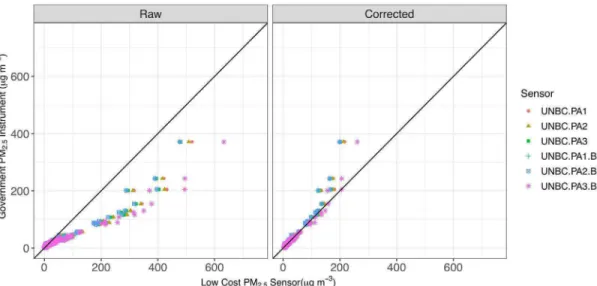
Nitrogen dioxide concentrations exceeded Metro Vancouver's long-term and short-term air quality goals throughout 2018. AirMap displays air quality and weather data from the Lower Fraser Valley Air Quality Monitoring Network. Click on "Air quality and weather in the region", and select an air pollutant, such as ozone.