Topical, systemic and intraocular delivery are the three main routes to deliver drugs to the back of the eye. Subconjunctival injection is a preferred route of drug delivery when topical drops cannot penetrate the anterior segment of the eye. Subconjunctival injection is a preferred route of drug delivery when topical drops cannot penetrate the anterior segment of the eye.
This figure shows an overview of the different routes by which drugs can be delivered to the eye. In addition to improving corneal penetration, nanomicelles are designed to deliver drugs to the posterior segments of the eye. In addition to improving corneal penetration, nanomicelles are designed to deliver drugs to the posterior segments of the eye.
Ideally, a drug delivery system should release the drug in response to the body's physiological needs.

Posterior Segment Diseases
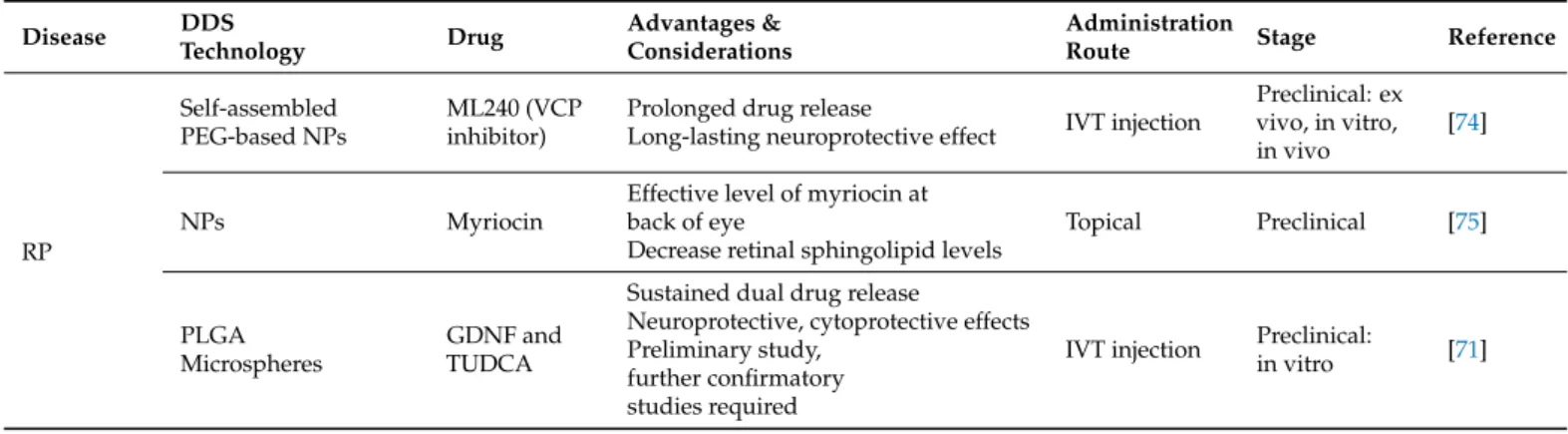
They observed that this system significantly reduced retinal sphingolipid levels in rabbit eyes, indicating potential in the treatment of RP by inhibiting ceramide synthesis. The researchers observed that the Myr-NLC formulation was well tolerated postnatally and demonstrated effective levels of myriocin in the hind eye. Due to the limited number of studies and the large heterogeneity in the type and formulation of DDSs and evaluated agents, it is currently unclear which nanobased DDSs are most effective for RP.
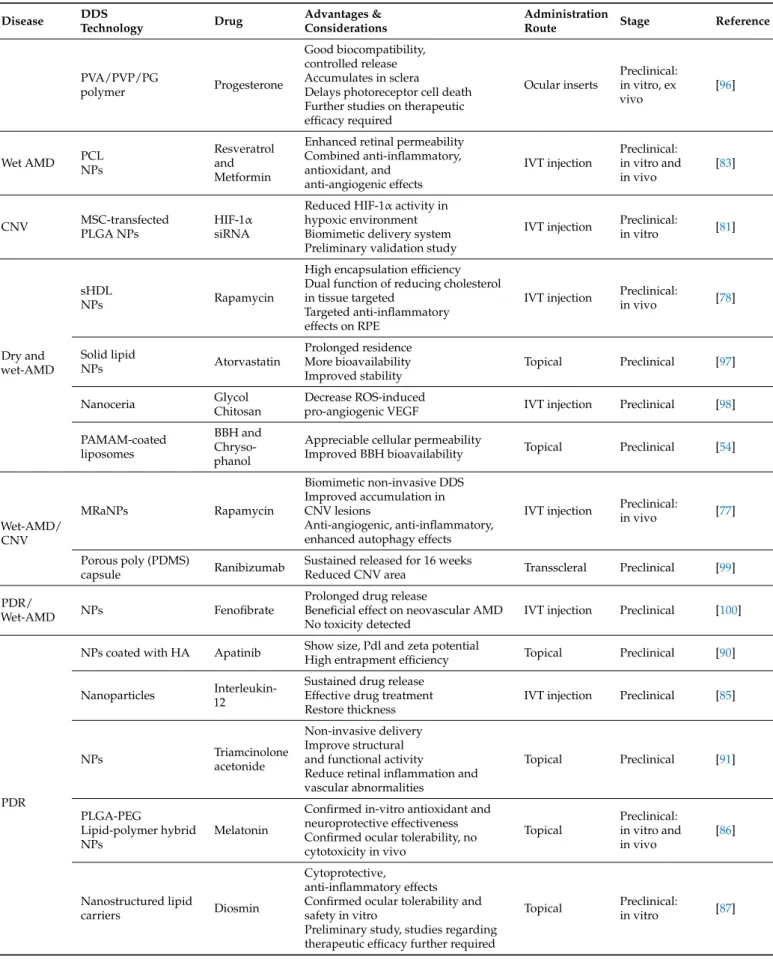
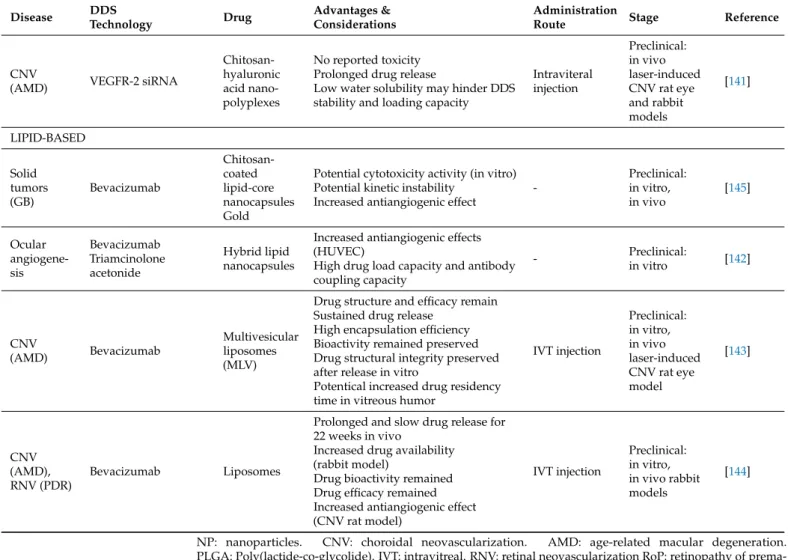
Anti-VEGF therapy has been one of the most common therapies for the treatment of wet AMD and CNV, and nano-based DDS systems to enhance its delivery will be reviewed in detail in the following sections. There have been efforts to create biomimetic nano-based DDSs to improve targeted delivery to CNV lesion sites in the eyes of AMD patients. However, it should be noted that none of the studies that investigated the effectiveness of rapamycin examined the longevity of their formulations and the effects of long-term delivery of rapamycin in the posterior segment of the eye.
Oxidative stress and the production of reactive oxidative species (ROS) have also been implicated in the pathophysiology and progression of AMD, thus targeting ROS production to initiate antioxidative effects. Oxidative stress and the production of reactive oxidative species (ROS) are also involved in the pathophysiology and progression of AMD. The advantages of PCL, including its biodegradability, are mentioned, where PCL is not only considered more biocompatible in the RPE regions, but its degraded by-products are less acidic compared to PLGA and PLA, leading to lactic acid build-up , avoiding unnecessary associated inflammation.
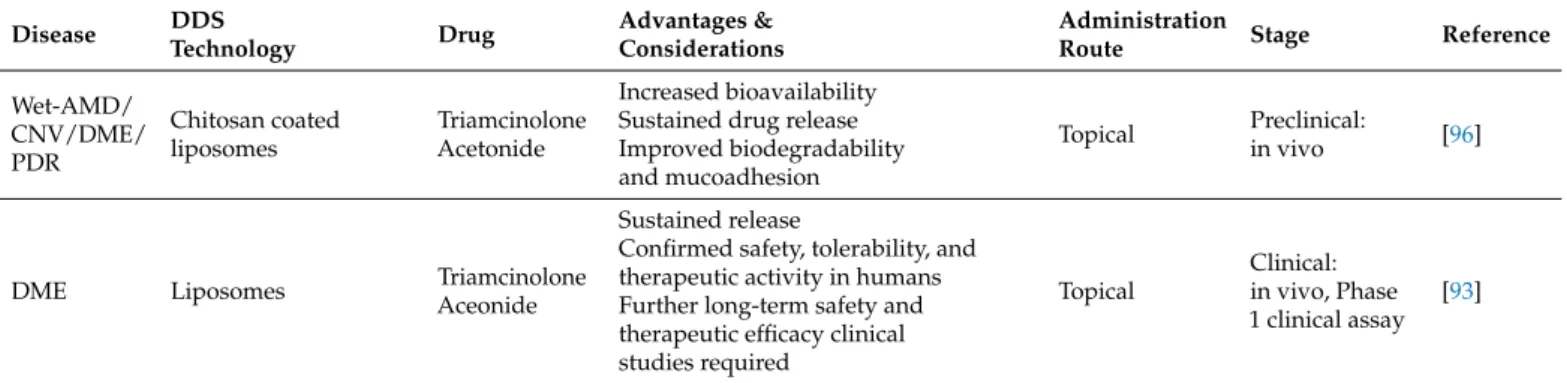
The condition is caused by damage to the blood vessels in the retina and can develop over time. These results demonstrate the potential of a triamcinolone acetonide-loaded nanoparticle delivery system in the treatment of diabetic retinopathy. Diabetic macular edema (DME) is a common complication of diabetic retinopathy in which fluid accumulates in the macula, causing a rapidly progressive decrease in visual acuity.
Anti-VEGF Agents
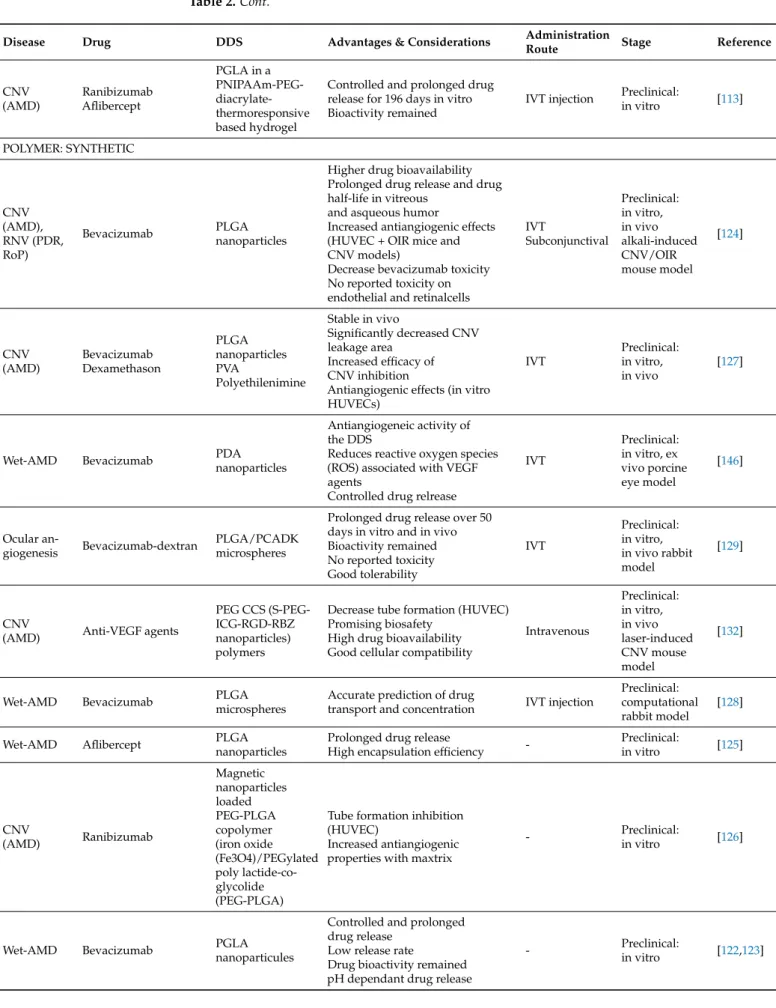
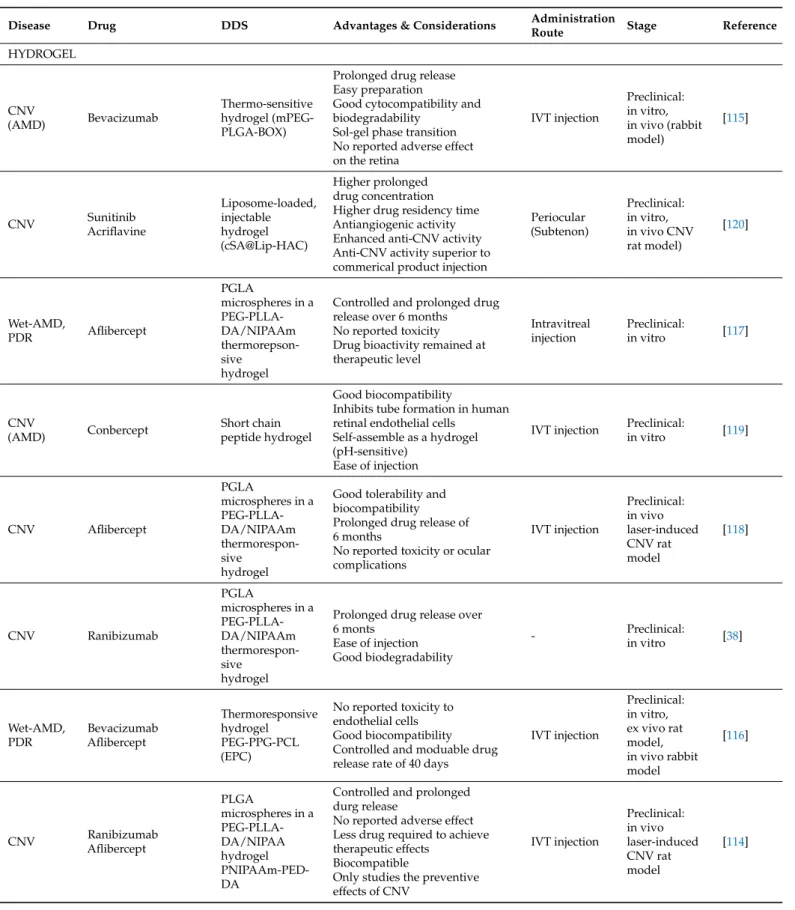
They found that suspending the microspheres in the hydrogel prolonged drug release by 27.2%. The hydrogel was refined by changing the hydrophilic/lipophilic ratio to extend the sustained drug release rate. After increasing the hydrogel concentration to 20 wt% with the optimized PEG/PPG ratio of 4:1, the longest drug release of 40 days in vitro and of at least 28 days in vivo was obtained.
The new DDS represents a potential bioactive drug carrier with an extended drug release rate that can be extended via polymer fine-tuning. 75% of the drug was released by day seven with DDS compared to 100% drug release at 24 hours after a standard aflibercept injection. They prepared the DDS with a solid-in-oil-in-water (S/O/W) emulsification, which limited the initial burst release to ensure sustained drug release that maintained the therapeutic level.
By prolonging drug release for more than one month in vivo, this nanocarrier could become a potential anti-VEGF therapy. CNV was suppressed in a mouse model of CNV type II during the drug release period. However, in vivo results decrease within one week despite better control and more gradual drug release from DDS (6 µg/mL for DDS and 4 µg/mL for bevacizumab).
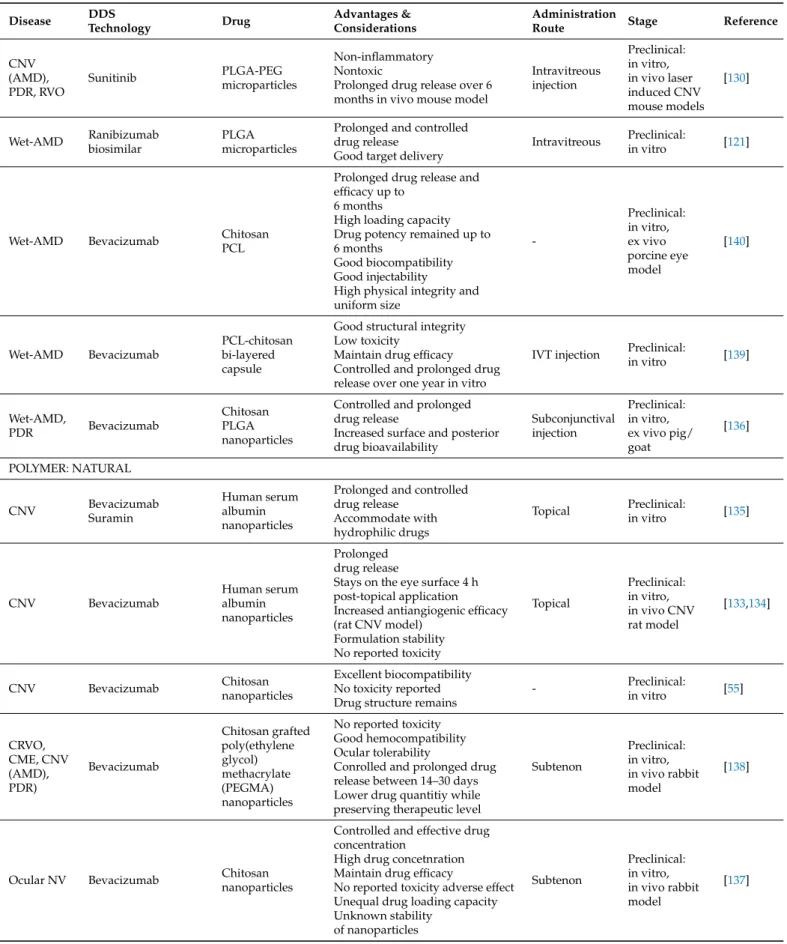
In vivo, DDS sustained drug release at therapeutic levels for 22 weeks compared to less than 6 weeks for bevacizumab solution. There are no reports of endothelial cell toxicity. Good biocompatibility. Controlled and variable drug release rate for 40 days. Sustained drug release over 50 days in vitro and in vivo. Bioactivity remained No toxicity reported. Good portability.
Pediatric Posterior Segment Diseases
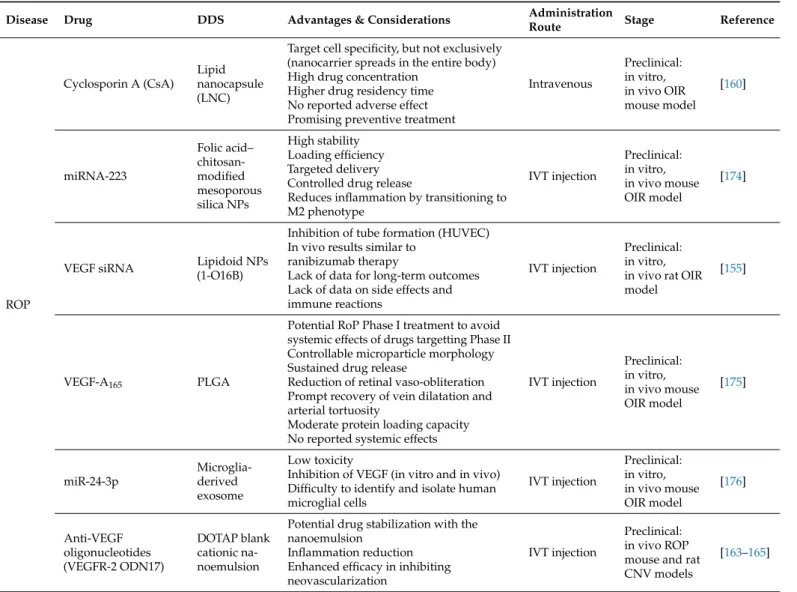
It is caused by the disruption of the normal growth of blood vessels in the retina, leading to abnormal vessel growth on the surface of the retina. The treatment of retinopathy of prematurity (ROP) depends on the severity (i.e., stages 1 through 5) and location (i.e., zones 1 through 3) of the affected retina, as well as the presence of “plus disease.” If indicated, treatment should be administered within 72 hours of diagnosis. As a result, one hour after the injection of the novel nanocarrier in healthy mouse models, 2% of the total drug-loaded dose of the nanocarrier had accumulated in the retina.
However, ODNs in vivo require protection from a nanocarrier to prevent rapid degradation in organs and by exonucleases. Previously, cationic nanoemulsion combined with DOTAP was found to protect ODNs against degradation in vitro and in vivo [164,165]. The subconjunctival injection inhibited 89% of corneal neovascularization, while the topical route inhibited 83% of corneal neovascularization.
This novel therapeutic agent significantly reduced VEGF and protein expressions in vitro on the HUVECs model and in vivo on an OIR rat model. Naked” siRNA is now known to have a propensity for nuclease degradation followed by immune system activation [173]. They introduced miRNA-223 into folic acid-chitosan-modified mesoporous silica nanoparticles (FA-CS-PMSN) in vitro and into oxygen-induced retinopathy (OIR) rat models [174].
These newly acquired pharmacological features enabled the nanocarrier to deliver bevacizumab and effectively reduce VEGF expression in vitro. Therefore, this novel VEGF-A165-loaded PLGA microparticle nanotherapeutic could potentially become a therapy that escapes the systemic adverse effects of phase II anti-VEGF drugs. Although research on DDS in pediatric ophthalmology is still in the preclinical phase, the field of nanotechnology in this area is relatively underdeveloped, as most research currently focuses on more common eye diseases in adults [148].
Clinical Advancements in Posterior Segment Diseases
Other biodegradable nano-based implants for posterior segment diseases are still in preclinical stages, including delivery of DEX through silicone or PLGA [121]. After IVT injection, the system swells due to hydration of the PLGA matrix, resulting in a rod-shaped implant. Another ocular nanomedicine, Visudyne® is an intravenous formulation for classic subfoveal CNV due to wet AMD.
However, the biodegradability of such formulations is compromised due to the non-biodegradable nature of the secondary therapeutic agents [182]. Preclinical studies with rodent models have shown promise in topically administered compounds for the treatment of retinal diseases, but clinical trials have shown the importance of choosing appropriate animal models. For example, despite showing efficacy in rodent models, compounds such as TG100801 and pazopanib failed to demonstrate efficacy in clinical trials for the treatment of AMD.
However, preclinical data from rabbit models should be interpreted with caution due to anatomical and physiological differences that may affect drug availability. In conclusion, preclinical pharmacokinetic and efficacy data generated in rodent models may not be translatable to humans due to anatomical and fluid dynamic differences. For example, most studies have used laser-induced CNV animal models, but these models are known to heal naturally over time [143].
Most studies did not evaluate their DDS in animal models with underlying diseases causing neovascularization (eg, wet-AMD, PDR). Therefore, before conducting clinical trials, data from animal models with underlying conditions leading to retinal neovascularization (rather than artificially induced neovascularization) will be crucial. Evaluation of DDS in these animal models will provide a more accurate representation of the potential benefits and limitations of DDS in the treatment of posterior segment disease.
Conclusions
Ocular barriers to drug delivery: the role of nanocarriers in the treatment of anterior segment ocular diseases. Pharmaceutics2018,10, 28. Contact lens-based drug delivery to the posterior segment via iontophoresis in cadaver rabbit eyes. Pharma. Characterization of biodegradable microsphere hydrogel ocular drug delivery system for controlled and extended release of ranibizumab.
An injectable alginate-collagen composite platform for cell encapsulation with an inducible termination switch for safer ocular drug delivery. Biomaterials. A transocular barrier PLGA nanoparticle platform to enhance drug delivery: a comparative study based on the use of oligosaccharides in the outer membrane of carriers. Int. A brief review of solid lipid nanoparticles: part and parcel of modern drug delivery systems. RSC Adv.
Controlled and sustained in vitro release of bioactive anti-vascular endothelial growth factors from a microsphere hydrogel drug delivery system.Curr. Thermo-responsive hydrogel as an anti-VEGF drug delivery system to inhibit retinal angiogenesis in Rex rabbits. Technol. Biodegradable Microsphere-Hydrogel Ocular Drug Delivery System for Controlled and Sustained Release of Bioactive aflibercept in Vitro.Curr.
Development of facile drug delivery platform from Ranibizumab-manufactured PLGA-PEGylated magnetic nanoparticles for age-related macular degeneration therapy.J. In Vitro Characterization of Novel Stabilizing Albumin Nanoparticles as a Potential Topical Drug Delivery System in the Treatment of Corneal Neovascularization (CNV).J. Rational Design of Liposomes for Sustained Release Drug Delivery of Bevacizumab to Treat Ocular Angiogenesis.J.
Sustained polymer-based drug delivery to the posterior segment of the eye: Barriers and future opportunities for the treatment of neovascular pathologies.Adv. Current drug delivery to the posterior segment of the eye: Addressing the challenge of preclinical to clinical translation.