
This document may not be published, quoted or copied without the express permission of the Canadian Department of National Defence. This paper will explore space deterrence in the Canadian context and highlight Canadian contributions to Space Situational Awareness (SSA), a strategic area of national interest led by National Defense Canada. It notes that the continued participation of the Canadian Armed Forces in SSA will positively contribute to Canada's space deterrent, thereby enabling continued access to critical space infrastructure.
It will demonstrate that CAF's continued involvement in SSA will positively contribute to Canada's space deterrence posture. Finally, Chapter 8 will present several arguments as to why investment in SSA would contribute positively to Canada's space deterrent.
Governance
7 United Nations General Assembly, Treaty on the Prohibition of Nuclear Weapons Tests in the Atmosphere, in Outer Space and Under Water, last visited 20 February 2014. 8 United Nations General Assembly, “Treaty on Principles Governing the Activities of States in the Exploration and Use of Outer space, including the Moon and other celestial bodies," in United Nations General Assembly, Treaties and Principles on Outer Space (New-York last accessed 5 June 2014. 10 United Nations General Assembly, "Agreement on the Rescue of Astronauts, the Return of Astronauts and the Return of Objects , that have been launched into outer space,” in UN General Assembly, Treaties and Principles on Outer Space (New -York last accessed 5 June 2014,.
11 United Nations General Assembly, "Convention on International Liability for Damage Caused by Space Objects," in United Nations General Assembly, Treaties and Principles on Outer Space (New York last accessed 5 June 2014, http:/ /www.oosa.unvienna .org/pdf/publications/STSPACE11E.pdf. 13 United Nations General Assembly, "Agreement Governing the Activities of States on the Moon and Other Celestial Bodies," in United Nations General Assembly, Treaties and Principles on Outer Space (New-York last accessed 5 June 2014, http://www.oosa.unvienna.org/pdf/publications/STSPACE11E.pdf.
Space Deterrence
The next question is whether the nuclear deterrence analogy can be extended to space deterrence. That being said, the space deterrent was still successful when looking at the same players. Space deterrence is further complicated by the fact that the scope of space actors with potentially hostile intent is no longer limited to national entities.
That brings us to the next question: is the possession of a kinetic ASAT capability essential for effective space deterrence. Many of the elements supporting space deterrence mentioned above are already part of the Canadian effort.
Canada and the US
63 Andrew Godefroy, "Inviolable Defence: The Militarization of Canada and the Weaponization of Space," In The Canadian Way of War: Serving the National Interest, ed. 69 Andrew Godefroy, “Intangible Defence: Canada's Militarization and Weaponization of Space Department of National Defence, National Defense Space Policy (Ottawa: Canada Communications Group, 1987). It would also draft an updated National Space Defense Policy and Space Strategy, both key documents in detailing Canada's commitment to space security.74.
89 Space sharing can be defined as: "The distribution of space-based missions, functions, or sensors across multiple systems involving one or more orbital planes, platforms, hosts, or domains." See Department of Defense, Resilience and Disaggregated Space Architecture, Air Force Space Command White Paper (Washington, DC: . 2013), last accessed June 5, 2014, http://www.afspc.af. mil/shared/media/document/ AFD pdf. It is different in the case of hostile threats, where Canada's close relationship with the US brings an added level of complexity as will be discussed in the next chapter.
Threats to Space Systems
SSA
19 Nancy Gallaguer, “International Cooperation and Space Governance Strategy,” in Space Strategy in the 21st Century: Theory and Policy, ed. With the proliferation of space players over the past few years, more aspects of the OST have emerged. Rendleman, “Space Assurance Strategy,” in Space Strategy in the 21st Century: Theory and Policy, ed.
Over the past four decades, the United States and Russia have developed a tacit understanding of their respective political strategies and red lines regarding nuclear weapons and space. Second, there is no history of negotiations and/or cooperation between Washington and Beijing on space, other than working through the UN CD. With so many space capabilities intertwined in the fabric of modern society, it would be nearly impossible to limit their use solely for the purpose of avoiding space warfare.52 However, there are still diplomatic ways to improve the space deterrent posture with the development of rules of the road and internationally acceptable behavior .
The CAF has invested in a constellation of Advanced Extremely High Frequency (AEHF) satellites to provide persistent and secure tactical communications to warfighters in areas of operations around the world. Since then, the United States and its allies have increasingly relied on space assets to achieve their national and international security missions. Belz, “Meeting National Security Space Needs in the Contested Cyberspace Domain,” Aerospace Crosslink Magazine, Spring 2012:1, last accessed 20 Feb 2014,.
Rendleman, “Strategy for Space Security,” in Space Strategy in the 21st Century: Theory and Policy…, 83. 105 Nancy Gallaguer, “International Cooperation and Space Governance Strategy,” in Space Strategy in the 21st Century: Theory and Policy… , 55-56; Ploushares Project, Space Security Index 2013…, 11. Belz, “Meeting National Security Space Needs in the Contested Cyberspace Domain”,…, 2; "German space research center under espionage attack," Space Daily, April 3, 2014, last accessed February 20, 2014.
As mentioned earlier, Western armed forces are highly dependent on space systems in conducting their operations. Rendleman, “Strategy for Space Security,” in Space Strategy in the 21st Century: Theory and Policy…, 83–84. Rendleman, “Strategy for Space Security,” in Space Strategy in the 21st Century: Theory and Policy…, 84.
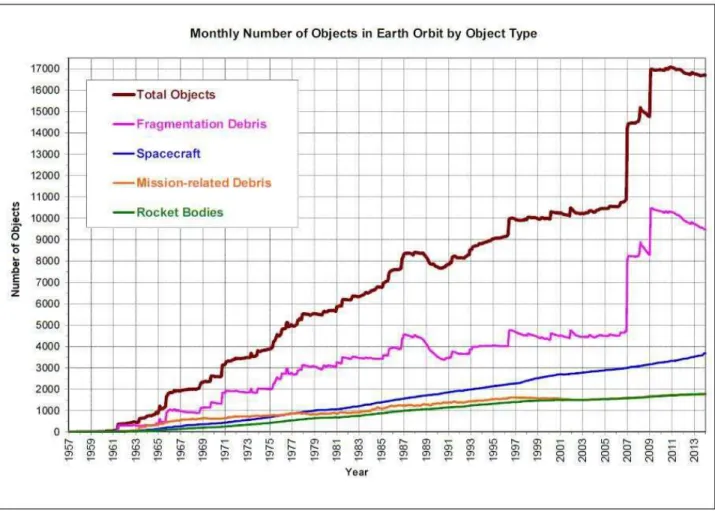
SSA is an area that has received increased international attention in the last decade as the space environment becomes increasingly congested, contested and competitive.
SSA and the CAF
The second is led by the Defense Research and Development Center-Ottawa (DRDC-O) and has as its main objective the detection of man-made objects in space to support SSA, called High Earth Orbit Space Surveillance (HEOSS).191 The latter mission is very similar to that of Sapphire, the difference is that it aims to demonstrate the utility of microsatellites to perform space-based surveillance of the space environment. It also seeks to further explore what can be done for SSA with a small space-based optical sensor and how it can help fill some of the current gaps. In parallel with the development of space-based SSA systems, Canada signed a bilateral SSA MOU with the US, which was followed in 2012 by an SSA Data Sharing Agreement, which intensified bilateral cooperation.
189 Department of Defense, “Space-Based Surveillance,” last updated March 26, 2013, http://www.afspc.af.mil/library/factsheets/factsheet.asp?id=20523. For example, the Surveillance of Space 2 project has recently completed the option analysis to continue the Canadian SSA contribution after Sapphire. After a thorough examination, the recommended option for the project is for a mix of ground and space-based systems.196 The continuation of Sapphire is not only important for Canada to continue its SSA contribution, but also because of the SSN gap. in space. - based sensors.
193 Brigadier General Rick Pitre, Director General Space Testimony in the House of Commons, Standing Senate Committee on National Security and Defence, Proceedings of the Standing Senate Committee on National Security and Defence. Ottawa, 2014; Brigadier General Rick Pitre, Director General Space Testimony in the House of Commons, Standing Senate Committee on National Security and Defence, Proceedings of the Standing Senate Committee on National Security and Defence. 195 Brigadier General Rick Pitre, Director General Space Testimony in the House of Commons, Standing Senate Committee on National Security and Defence, Proceedings of the Standing Senate Committee on National Security and Defence.
196 Paul Maskell, “Options Analysis for Space Surveillance Project 2,” Department of National Defense, April 16, 2014. The microsatellite will be a key asset to observe RSOs of interest, detect anomalies, and see aspects of SSA operational space-based sensors do not have time to focus. 197 House of Representatives, hearing on the National Defense Authorization Act for Fiscal Year 2014 and Oversight of Previously Authorized Programs before the Committee on Armed Services.
How Can SSA Support Space Deterrence?
In addition, SSA contributes to space stability and security by "preventing misunderstandings and false accusations of hostile action". Sharing the SSA data furthers its contribution to space sustainability as it becomes a type of CBM by increasing transparency.208 If it is not possible to accurately attribute disruption, potential adversaries may see it as an opportunity to allied space systems to kneel access without the risk of retaliation.
Canada, Space Deterrence and SSA
Therefore, reliable SSA and a better understanding of the space environment becomes essential for allied space deterrent forces.209. There are many other ways to establish a deterrence posture from space, such as through disaggregation and diplomatic means. Canada is already involved in most of these approaches and is believed to have an informal posture of deterrence from space.
SSA is a key element of space deterrence because it provides the ability to distinguish between natural or unintentional interference with valuable space assets and malicious intent. It is now time to return to the original question this research paper seeks to answer: will the CAF's continued involvement in SSA contribute positively to Canada's attitude toward the space deterrent. The first relates to the close link between effective space deterrence and SSA, the second focuses on the US-US relationship, and the final argument relates to the expansion of Canadian SSA involvement.
Because SSA is such a critical element to successful deterrence in space, the CAF's participation in SSA strengthens Canada's posture on space deterrence. While Ottawa's position on space deterrence has not yet been clearly articulated, it is believed that any serious interference or attack on space systems used for national security will not go unanswered. By continuing to invest in SSA and ensuring engagement is promoted, Canada will positively contribute to Canada's space deterrent position.
It was further determined that continued investment in the SSA realm will contribute positively to Canada's space deterrence posture. It would be in Ottawa's best interest to more seriously consider adopting a formal space deterrence position now that the threat to Canadian space assets, while real, can be considered low. As a Schriever Wargame clearly demonstrated, when hostilities appear imminent, it is extremely difficult to plan and establish an effective space deterrence position.213.
List of Kinetic ASAT Tests
79 http://www.spacedaily.com/reports/China_eyes_global_monitoring_network_of_surveilla nce_satellites_999.html.