The Potential Uses of Virus- Infected Symbionts to Improve Drought and Heat Stress in Trees for Improvement, Climate Change
Resilience, and Restoration
Wren Mangelli
Image Credit: Wren Mangelli, 2022
The Potential Uses of Virus-Infected Symbionts to Improve Drought and Heat Stress in Trees for Improvement, Climate Change Resilience, and Restoration
by
Wren Mangelli 0877928
An undergraduate thesis submitted in partial fulfilment of the requirements for the degree of
Honours Bachelor of Science in Forestry
Faculty of Natural Resources Management Lakehead University
Thunder Bay, Ontario
______________________________ ______________________
Major Advisor Second Reader
LIBRARY RIGHTS STATEMENT
In presenting this thesis in partial fulfilment of the requirements for the HBScF degree at Lakehead University in Thunder Bay, I agree that the University will make it freely available for inspection. This thesis is made available by my authority solely for the purpose of private study and research and may not be copied or reproduced in whole or in part (except as permitted by the Copyright Laws) without my written authority.
Date: April 16, 2023
A CAUTION TO THE READER
This HBScF thesis has been through a semi-formal process of review and comment by at least two faculty members. It is made available for loan by the Faculty of Natural Resources Management for the purpose of advancing the practice of professional and scientific forestry.
The reader should be aware that opinions and conclusions expressed in this document are those of the student and do not necessarily reflect the opinions of the thesis supervisor, the faculty, or Lakehead University.
ABSTRACT
Mangelli, W. 2023. The Potential Uses of Virus-Infected Symbionts to Improve Drought and Heat Stress in Trees for Improvement, Climate Change Resilience, and
Restoration. HBScF Thesis, Faculty of Natural Resources Management, Lakehead University. 35 + ix pp.
Key words: Antioxidants, Curvularia protuberata, Curvularia Thermal Tolerance Virus, dsRNA, ectomycorrhiza, endophyte, mycovirus, reactive oxygen species
With the rapid changes occurring to the climate of the boreal forest, many populations of trees are facing increased stresses and seeing lower productivity and survival. Conventional tree improvement programs take decades to come to fruition and may not provide extensive enough benefits to tackle changing conditions. Curvularia Thermal Tolerance Virus (CThTV) has the capacity to dramatically improve the heat stress resilience of its host by activating the basic stress response genes of a mutual endophytic fungus within the plant host. This novel system has the potential to be introduced into economically important trees using endophytic fungi and/or mycorrhizal species as vectors. If successful, this virus would confer significant relief from a large variety of environmental stressors, and be persistent across generations of plants on-site, without being a risk to the genetic diversity of the host population.
ACKNOWLEDGMENTS
I would like to thank firstly Dr. Leonard Hutchison, for being willing to take on this project when no one else would, and for inspiring me towards research in the first place. I would also like to thank Ryan Wilkie for his unflagging support in all stages of this project. Lastly, I’d like to thank Dr. Kate Sheldon for her invaluable insights.
CONTENTS
LIBRARY RIGHTS STATEMENT ... ii
A CAUTION TO THE READER... iii
ABSTRACT ... iv
ACKNOWLEDGMENTS ... v
CONTENTS ... vi
LIST OF FIGURES ... ix
INTRODUCTION ... 1
CURVULARIA THERMAL TOLERANCE VIRUS SYSTEM OVERVIEW ... 1
CLIMATE CHANGE INFLUENCES ... 2
EFFECTS OF STRESS ... 3
SCOPE OF INTEREST ... 4
LITERATURE REVIEW ... 6
CThTV LIFE HISTORY ... 6
Creating a Stress Resilient System ... 7
Trehalose ... 8
Glycine Betaine ... 8
Taurine ... 9
Melanin ... 9
Glutathione ... 10
Catalase/Peroxidase ... 11
Transmission and Spread ... 12
PLANT VIRUS GENOMICS ... 12
FUNGAL HOST CANDIDATES ... 14
Endophytes ... 15
Ectomycorrhiza ... 16
METHODS ... 18
PROPOSED STUDY DESIGN ... 18
CULTURE METHODS ... 19
MOLECULAR METHODS FOR FUNGI ... 19
MOLECULAR METHODS FOR dsRNA VIRUSES ... 22
DISCUSSION ... 25
CONCLUSION ... 27
LITERATURE CITED ... 28
LIST OF TABLES
Table 1. Outline of treatments for full scope study ____________________________ 18
LIST OF FIGURES
Figure 1. Effects of CThTV and C. protuberata colonisation of D. lanuginosum _____ 1 Figure 2. The dsRNA infection and replication process _________________________ 6 Figure 3. Functions of catalase in antioxidant reactions _________________________ 11
INTRODUCTION
CURVULARIA THERMAL TOLERANCE VIRUS SYSTEM OVERVIEW
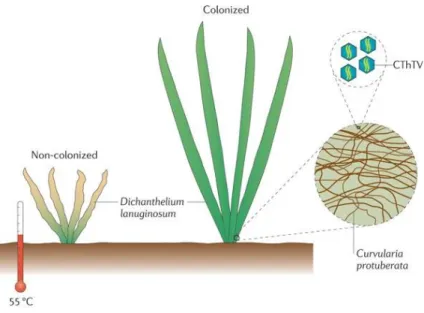
In 2002, Redman et al. discovered that the presence of an endophytic fungus, Curvularia protuberata Nelson, conferred significant heat tolerance to Dichanthelium lanuginosum (Elliott) Gould, a species of grass found at geothermal sites in Yellowstone National Park. Grasses that possessed this endophyte were able to survive in soil
temperatures up to 65°C. In 2007, Marquez et al. conducted a follow-up study, and found that the driving force behind the thermal tolerance was a virus infecting C.
protuberata, which they named Curvularia Thermal Tolerance Virus (CThTV). Figure 1 from Roossinck (2011) visualises the relationship and effects of CThTV and C.
protuberata on D. lanuginosum.
Figure 1. Effects of CThTV and C. protuberata colonisation of D. lanuginosum Source: Roossinck (2011).
Curvularia protuberata infected with CThTV has even been found to confer heat tolerance to more plant species than its original host species, including tomatoes
(Marquez et al. 2007), showing that neither CThTV nor C. protuberata are restricted to their current niches. The use of an infectious and symbiotic agent to induce improved resilience in trees would be a novel approach to tree improvement. One of the major benefits of this approach as compared with breeding or transgenic projects would be that the genetic code of the host is not being altered, only activated. This would make the system applicable to more subjects more efficiently, and would be free from many of the concerns tied with Genetically Modified Organisms and the long-run genetic diversity loss that can be seen in crop improvement programs.
CLIMATE CHANGE INFLUENCES
With increases to global average temperatures and resultant changes to climate and weather patterns, heat and drought stresses are going to become significant
challenges for forest tree species globally. The boreal forest is under significant threat from global climate changes, with 65% of the total area being rated as highly vulnerable (Gonzalez et al. 2010). Increased drought effects, in addition to causing tree mortality directly, also greatly reduce vigour and make trees more vulnerable to attacks by pests, pathogens, and parasites (Pichler and Oberhuber 2007). Each temperature increase of 1°C to the annual average shifts ecological zones in the Northern hemisphere northwards by 160km (Thuiller 2007). Increased temperatures are likely to cause regional shifts in the distribution of precipitation, which could result in greater drought and heat stresses for boreal species unable to migrate northwards or upwards in altitude to compensate for rapid temperature changes. Climate change models produced by the National Oceanic and Atmospheric Administration (NOAA) show the predicted alterations to average land
surface temperature, annual precipitation in winter and spring, for several different carbon emissions inputs. Crowe and Parker (2011) developed specific models to investigate the impacts of predicted climate change on the boreal forest in Ontario, and found that 41% of Ontario tree species will require assisted migration in order to survive the climate conditions predicted for 2050.
Tree improvement programs have largely been focused on improved yield and economic value, and there are comparatively few programs that focus on optimizing tree improvement to counter environmental stressors like global warming or drought. One commonly used tool for addressing stress response in trees is to overexpress genes within the tree that are activated during stress induction. However, this tactic can have tradeoffs with regards to growth and yield (Polle et al. 2019). With predicted increases to
temperature and changes to rainfall patterns, tree improvement that accounts for resilience in the face of environmental stress will become increasingly important for sustainable forestry.
EFFECTS OF STRESS
When trees experience drought, heat, or any environmental stress, due to their inability to leave a suboptimal site, they will alter their physiology to accommodate the new conditions in an effort to live sustainably on the site they inhabit. These tactics include decreasing resource use, slowing growth or stalling reproduction, increasing production of protective compounds, or recruiting microbial partners.
In heated soils, plants will alter their root exudates in both quantity and
composition as a method of acclimation to the altered conditions. These root exudates result in greater soil respiration overall (de Vries et al. 2019). Root exudates also
improve the recruitment of beneficial rhizobacteria, which help break down those same exudates into compounds that are beneficial for plant growth (Tiziani et al. 2022).
Under drought stress, plants will also host greater quantities of carbohydrates and free amino acids in their tissues to help maintain osmotic pressure. As a result, they will experience greater levels of oxidative stress from reactive oxygen species (ROSs), which can lead to the degradation of cellular signaling pathways. The capacity for converting ROSs into non-toxic compounds is a critical function of any aerobic organism. With these systems degraded or absent, cells cannot survive, as seen in anaerobic bacteria exposed to oxygen (Hentges 1996). Field studies on beech have shown that leaves cannot regain their ability to regulate the antioxidant pathways after they have been significantly drought or heat stressed (Polle et al. 2001). If antioxidant pathways cannot be restored after disturbance, the survival rates become exponentially lower during each subsequent stressor. Additionally, if these pathways cannot be restored by the tree itself, then external remediation is the one method to recover significantly stressed individuals.
SCOPE OF INTEREST
There would be significant value in testing whether CThTV could be inoculated into tree species. Trials to find compatible fungal hosts and to test viral integration and influence, have significant potential for benefits to forest trees. CThTV has the potential to greatly reduce the oxidative stress induced by drought and heat, and could help prevent the initial cellular damage and recover populations that have experienced significant and damaging stress. If paired with an ectomycorrhizal fungal host, the benefits of the virus and the longevity of the treatment could be further enhanced. Heat and drought resilient
trees have the potential to provide benefits in industrial forestry, site reclamation, greenbelts, and even in urban environments. According to the World Commission on Environment and Development (1987), sustainable resource management is grounded on three conceptual pillars: Ecological health restoration or preservation, social approval or acceptance, and economic growth or stability. This paradigm is reflected in almost all aspects of forest management today. Improved stress tolerance would help current forests survive in a rapidly changing climate and allow trees to grow where they might otherwise be incapable such as in desert greenbelts. There is potential for improved timber yields from forests that would otherwise fail as a result of heat stress or drought, and growth improvements in populations subjected to less stress. At a social level, the preservation of forests carries significant weight and is widely accepted as a crucial component of
mitigating the negative effects of climate change.
LITERATURE REVIEW
CThTV LIFE HISTORY
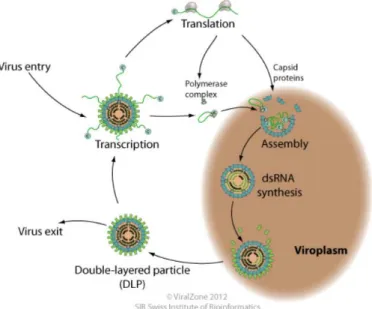
Viruses made of double stranded RNA (dsRNA) have a unique challenge during the infection and replication process, as dsRNA segments are not naturally produced in eukaryotic cells. This means that the virus cannot simply hijack its host cell's
infrastructure to reproduce. Eukaryotic host cells even have antiviral defences that can attack dsRNAs very effectively. In order to avoid detection, dsRNA viruses will transcribe their genome into single stranded, messenger RNA which can be read by the host cells and translated into functional proteins (Figure 2). This process includes the production of a capsid, where the newly produced proteins and mRNA can be assembled and replicated in a space separate from the host cytoplasm. Once assembled, the viruses and all their components, now encased in a double layered particle, can leave the cell without detection to infect further cells (Hulo et al. 2011).
Figure 2. The dsRNA infection and replication process. Source: Hulo et al. (2011)
Creating a Stress Resilient System
A key feature of viruses is their ability to manipulate the genetic and biochemical machinery of their host cells. CThTV cannot create novel defences against heat stress.
Instead it amplifies and optimises the existing defences of its fungal host. Additionally, because CThTV works on genes encoding for universal stress response factors like those for oxidative and osmotic stresses, there is significant potential for it to be able to
colonize a diverse array of hosts. Even if viral inoculation cannot provide the same degree of benefits in trees as in panic grasses, any improvement to stress response would improve growth and survival rates.
CThTV operates by inducing heat stress related genes in Curvularia protuberata.
These include genes for the production of trehalose, glycine betaine, taurine, melanin, glutathione, and various catalases and peroxidases, all responsible for critical
biosynthesis pathways and for degrading osmoprotectants. In addition, the genes for key enzymes in melanin production are also significantly induced by CThTV. Viral infection is capable of inducing significantly greater levels of peroxidase and catalase production during the early stages of heat stress (Morsy et al. 2010). This action by the virus grants the fungus the ability to scavenge ROSs from its host plant's tissues, helping to maintain osmotic pressure, reduce tissue damage from water loss, and overall reduce the impacts of oxidative stress.
Trehalose
Trehalose is a nonreducing disaccharide made up of glucose molecules that is stable at high temperatures (Iturriaga et al. 2009). Trehalose is found in high quantities in the resurrection plant, Selaginella lepidophylla (Hook. & Grev.) Spring, allowing the plant to restore function to its tissues after desiccation (Zentella et al. 1999). Trehalose protects molecules by replacing water molecules in the hydration layers of tissues, preventing them from being damaged when water is removed (Clegg 1985). Trehalose is structurally unique among sugars, having relatively flexible bonds, which allow for novel interactions with other molecules (Donnamaria 1994). Additionally, it has a glass
structure when solid, such that in its crystal form it remains amorphous, allowing it to remain intact even at very high temperatures (Crowe et al. 1998).
While trehalose has been seen as an important biomolecule for protecting tissues from desiccation, some studies have also disputed its influence. In yeasts, although the production of trehalose is correlated to greater osmotic stress protection, it has been seen that mutated strains unable to produce trehalose are still resistant to desiccation
(Ratnakumar and Tunnacliffe 2006). However, trehalose is just one tool among many that allow organisms to survive stress conditions.
Glycine Betaine
Glycine betaine is a type of osmolyte, and is found in a wide variety of aerobic organisms. An osmolyte is an organic molecule that helps maintain the physical integrity of cells by altering the composition of aqueous solutions (Yancy 2005). Glycine betaine is a particularly efficient osmolyte that, while almost always present to some degree, will
accumulate in the tissues of organisms during periods of stress (Muñoz-Clares et al.
2010). Within the first few hours of heat stress, levels of betaine aldehyde dehydrogenase were increased twice as quickly in CThTV infected cultures as compared with those lacking the virus (Morsy et al. 2010).
Taurine
Taurine is a type of osmoprotectant, a major component of the antioxidation process of many aerobic organisms, studied intensively in mammalian cells (Huxtable 1992). It has been found in notably high quantities in marine invertebrates living around hydrothermal vents (Rosenberg et al. 2006) and in the desert cactus Opuntia ficus-indica (L.) Mill. (Stintzing et al. 1999). Morsy et al. (2010) saw that there were different levels of the enzyme taurine catabolism dioxygenase between CThTV infected and non-infected cultures of C.protuberata. Taurine catabolism dioxygenase is the enzyme responsible for catalysing metabolic reactions involving taurine. Having higher levels of this enzyme means that an organism can more effectively process ROSs and reduce rates of oxidative stress. In other microbes, differential degradation of taurine has also been seen to help regulate nitrogen and sulphur availability, and it is hypothesised that taurine degradation is a method of controlling carbon use during times of stress.
Melanin
Melanin is a natural defence mechanism used by fungi to protect against enzymatic digestion by other antagonistic microbes (Rosas and Casadevall 2001).
Melanin also provides a viable defence against stresses ranging from simple UV exposure
(Gorbushina et al. 2003), to extreme radiation such as is found on space stations and Chernobyl's nuclear reactors (Dadachova and Casadevall 2008). Being able to produce melanin in response to changing conditions allows organisms to weather times of stress without needing to metabolically invest in enhanced melanin production all the time.
Fungal tissues infected with CThTV saw a 100-fold increase in the production of scytalone dehydratase within the first few hours of heat stress (Morsy et al. 2010).
Scytalone dehydratase is one of the key components of the melanin biosynthesis
pathway, and was seen to be amplified ten times more in infected cultures than in cultures lacking CThTV (Morsy et al. 2010). This reaction to infection by CThTV signifies that the production of melanin, via enhanced production of its precursors, is one of the components that helps host fungi remain resilient to environmental stressors.
Glutathione
Glutathione is an antioxidant found in all aerobic organisms and is part of the first level of defence against oxidative cellular damage. Glutathione S-transferases (GSTs) are enzymes that are found in all aerobically respiring organisms, and play a role in reducing oxidative stress. Glutathione S-transferases feature a wide variety of functions depending on the organism they're found in and the substrates or toxins that the organism is
periodically exposed to. Mammalian GSTs are the best studied due to their connections with cancer development and treatment (Ranson and Hemingway 2005). Five genes for glutathione S-transferase were amplified in the early stages of heat stress by CThTV in C.
protuberata (Morsy et al. 2010). Glutathione (GSH) is a chemical scavenger of ROSs during non-enzymatic reactions (Polle et al. 2001). During periods of stress occurring
from low water availability, plant tissues will accumulate ROSs due to the increased retention of carbohydrates. Higher levels of GSH in an endophyte of the plant tissue would allow the symbiont to decrease ROSs of both its own tissues and those of its host.
Catalase/Peroxidase
Catalase is found in all aerobic organisms and is a crucial part of preventing cellular damage from oxygen based metabolic reactions. Catalase works to catalyse the breakdown of hydrogen peroxide into water and oxygen, working in tandem with glutathione peroxidase during the second level of protection against ROSs (Figure 3).
Figure 3. Functions of catalase in antioxidant reactions. Source: Tehrani and Moosavi-Movahedi (2018)
In the early stages of heat stress, as with GST, higher levels of expression of both catalases and peroxidases were seen in C. protuberata infected with CThTV. This upfront production of enzymes helps prevent cellular damage from sudden condition changes (Morsey et al. 2010), and improves resilience and survival during periods of stress.
Transmission and Spread
CThTV can be transmitted vertically through conidial spores, and horizontally via anastomosis (Marquez et al. 2007). This means that the virus can be spread through ascomycetous asexual reproduction, or through sexual reproduction by ascomycetes or basidiomycetes, both of which would allow effective spread between hosts. Ascomycetes and Basidiomycetes are the two largest and most studied groups of fungi. Ascomycetes produce conidia which allow them to reproduce asexually through spore dispersal.
Basidiomycetes need to mate in order to produce spores. Members of both the Basidiomycota and the Ascomycota have potential as viral hosts.
PLANT VIRUS GENOMICS
The first plant virus to be studied was also the first virus to be discovered. The Tobacco Mosaic Virus (TMV), was identified by Dmitri Ivanovsky in 1892 asa filterable pathogen and identified by Martinus Beijerinck as a "virus", a novel term at the time, in 1898 (Beijerinck 1898). The first mycovirus was discovered by Gandy and Hollings in 1962, infecting cultivated Agaricus brunnescens Peck.
There is an important distinction to be made between plant viruses and mycoviruses in plants. Plant viruses infect plant cells directly and mycoviruses infect fungi that subsequently interact with the target plants. The majority of disease inducing plant viruses are single-stranded RNA (ssRNA) viruses, reverse transcribing viruses, or single stranded DNA (ssDNA) viruses (Koonin et al. 2020), whereas mycoviruses are almost always double-stranded RNA (dsRNA) viruses (Lemke and Nash 1974). Infection of fungi by mycoviruses usually causes alterations to host morphology, metabolite
production, or virulence, depending on the type of mycovirus and the type of host (Nuss and Koltin 1990), however, these symptoms would only be visible if the fungal host has distinct enough morphology for the alterations to be seen.
There exists a precedent for horizontal gene transfer from viruses to eukaryotes, especially amongst pararetroviruses. Pararetroviruses are circular DNA viruses that are unable to integrate into host genomes (Hohn et al. 2008) due to the lack of an integrase gene (Hohn and Rothnie 2013). However, evidence for genome integration amongst partitiviruses, which are double stranded RNA viruses has also been seen. The work of Mann et al. (2003) and Lindell et al. (2004) both display how viruses can act as
effective vectors for genetic material, either by transferring their own genetic code or by vectoring genetic materials across multiple hosts. The ability of viruses to induce genetic flow and introduce unique genetic elements to a wide range of disparate organisms increases the genetic plasticity of the hosts and can allow for unique interactions to occur (Stobbe and Roossinck 2014).
For the RNA-dependent RNA polymerase gene, there has been widespread
horizontal gene transfer from dsRNA viruses to their eukaryotic host cells, a phenomenon which had historically only been thought to occur from DNA based retroviruses, and very rarely in RNA viruses (Geuking et al. 2009). RNA-dependent RNA polymerase genes have homologs in nearly all kingdoms of Eukarya (Liu et al. 2010). This supports the idea that CThTV may have compatibility and effectiveness across multiple fungal hosts and ideally, within multiple plant species. In some cases, plant immune system functions can be linked to viral infections and subsequent genomic integration. Endogenous pararetroviral elements, viral components found within the host genome, have the
potential for providing viral resistance in plants through homology dependent gene silencing (Jakowitsch et al. 1999). This has also been observed for short interfering RNAs (siRNAs), one of the major components involved in host-pathogen interactions and defence against nucleic acids (Voinnet 2005). These siRNAs can either originate from endogenous dsRNAs, or from exogenous viruses (Chapman and Carrington 2007).
FUNGAL HOST CANDIDATES
Fungi have long been genetically manipulated and exploited for a wide range of reasons, notably in the industrial production of proteins (Mackenzie et al. 2004), antibiotics (Brakhage and Caruso 2004) and lipids (Sancholle et al. 2004). Members of the basidiomycota division have been demonstrated to be difficult to modify genetically with traditional methods involving protoplast production. Because basidiomycetous species do not produce conidia, it is more difficult to induce spore production in a laboratory setting, and thus more difficult to produce and regenerate protoplasts.
Additionally, ectomycorrhizal fungi and other obligate symbionts are difficult or
impossible to grow in culture because they are obligate biotrophs and can't easily survive outside of a host association. (Kemppainen et al. 2011). However, modification with CThTV does not require the use of protoplast production, and selective media are available for culturing ectomycorrhizal fungi.
CThTV cannot be directly inoculated into plants because as a dsRNA virus, it is largely incompatible with plant genomes. To have active effects at the genetic level, the virus needs to be inoculated into a fungal host first, then introduced into the target plant via fungal infection.
Endophytes
Endophytes are organisms that live symbiotically and /or asymptomatically within the tissues or cells of other organisms (Pimentel et al. 2011). Fungal endophytes are divided into 4 classes based on their distinct life cycles. Class 1 endophytes are largely host specific to the Poaceae grass family and are vertically transmitted (Rodriguez et al.
2009). Class 2 endophytes are highly diverse, can colonise all parts of the plant above and below ground, can be vertically or horizontally transmitted, and are the predominant endophytes for plants living in high stress environments (Rodriguez et al. 2009). Class 3 endophytes are composed of a diverse group of foliar endophytes, many in the
Basidiomycota division, that are horizontally transmitted (Rodriguez et al. 2009). Class 4 endophytes are a diverse group of root restricted endophytes, characterised by
melanized hyphae (Sieber and Grunig 2006).
Endophytes of multiple plant species have been shown to confer stress resistance in their hosts. For example, Beauveria bassiana (Bals.-Criv.) Vuill. is capable of
inducing drought resistance in red oak seedlings by stimulating root growth (Ferus et al.
2019).
Trichoderma harzianum Rifai, has been seen to improve seedling emergence and growth traits, and can be found within the roots of its host after soil inoculation (Klefield and Chet 1992), and is host to the curvulavirus Trichoderma harzianum bipartite
mycovirus 1. This species may also have the potential to act as a viral vector.
Ectomycorrhiza
Ectomycorrhizal (EcM) species have long been investigated for their ability to improve plant growth and reduce the impacts of various environmental stressors. Studies have shown that EcM fungi can improve resilience to drought (Parke et al. 1983;
Gehring et al. 2017), heat, and salinity (Yin et al. 2020). Viral infection of ectomycorrhizal fungi however, has been poorly studied. This is likely due to the difficulties with culturing obligate biotrophic species. However, a few instances of mycoviruses of mycorrhizal species have been observed and sequenced.
CThTV is part of the family Curvulaviridae, which includes viruses that infect Lactarius rufus (Scop.) Fr. and L. tabidus Fr. which are common in boreal ecosystems and ectomycorrhizal with pines (Sutela and Vainio 2020). While some species of Lactarius are host specific, there are several which function as host generalists. Most Lactarius members are late stage ectomycorrhizae formers and less suited for study in seedlings however (Hutchison 1999). A species of Lactarius, symbiotic with both conifers and hardwoods, and native to the Canadian boreal would be an ideal candidate for testing.
Thelephora terrestris Ehrh. (common fibre vase, earthfan fungus) is an ectomycorrhizal fungus most commonly associated with pines, but is able to form
mycorrhizae with a wide number of coniferous and hardwood tree species. It is a pioneer species and shows vigorous growth that easily outcompetes many other ectomycorrhizal species (Colpaert 1999). Petrzik et al. (2016) sequenced T. terrestris virus 1 from T.terrestris, where interestingly, the virus is capable of infecting and using mites as vectors. This ability to use mites as vectors is an excellent example of the host flexibility of dsRNA viruses across kingdoms. While there are no documented genetic relationships
between T. terrestris virus 1 and CThTV, it would still be worth investigating whether CThTV and T. terrestris would be compatible. Being a pioneer species, T. terrestris would possess a host of stress tolerant traits that would allow it to survive in uncolonized areas. As such, CThTV may be able to act on those pathways and produce the same effects seen in C. protuberata.
METHODS PROPOSED STUDY DESIGN
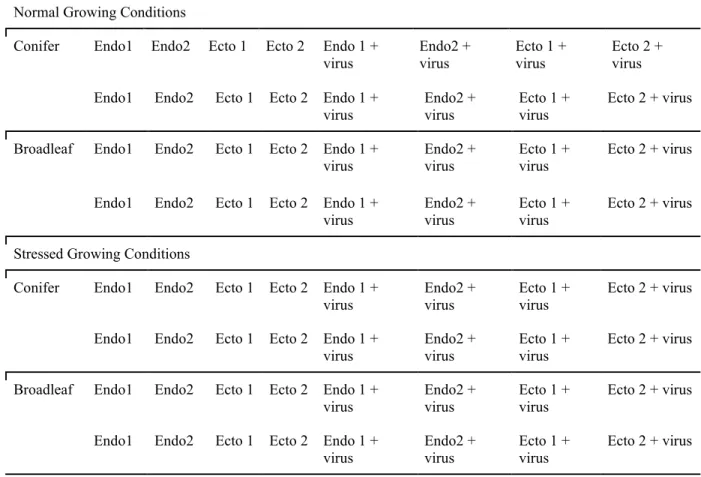
A proposed design for this study would involve greenhouse trials utilising at least one conifer species and broadleaf species, and for each tree species selected, at least one fungal endophyte and ectomycorrhizal species, with a virus free control for each trial, and a set of controls with neither fungal nor viral inoculation. This breakdown is shown in Table 1 below. The metric for determining efficacy of viral treatment would be seedling survival and growth rate under heated soil conditions and/or simulated drought, which would be compared to survival rates under normal growing conditions. Each test would be run for a span of several months to allow sufficient opportunity for symbionts to colonize and influence their hosts.
Table 1. Outline of treatments for full scope study.
Normal Growing Conditions
Conifer Endo1 Endo2 Ecto 1 Ecto 2 Endo 1 +
virus Endo2 +
virus Ecto 1 +
virus Ecto 2 +
virus Endo1 Endo2 Ecto 1 Ecto 2 Endo 1 +
virus Endo2 +
virus Ecto 1 +
virus Ecto 2 + virus
Broadleaf Endo1 Endo2 Ecto 1 Ecto 2 Endo 1 +
virus Endo2 +
virus Ecto 1 +
virus Ecto 2 + virus
Endo1 Endo2 Ecto 1 Ecto 2 Endo 1 +
virus Endo2 +
virus Ecto 1 +
virus Ecto 2 + virus
Stressed Growing Conditions
Conifer Endo1 Endo2 Ecto 1 Ecto 2 Endo 1 +
virus Endo2 +
virus Ecto 1 +
virus Ecto 2 + virus
Endo1 Endo2 Ecto 1 Ecto 2 Endo 1 +
virus Endo2 +
virus Ecto 1 +
virus Ecto 2 + virus
Broadleaf Endo1 Endo2 Ecto 1 Ecto 2 Endo 1 +
virus Endo2 +
virus Ecto 1 +
virus Ecto 2 + virus
Endo1 Endo2 Ecto 1 Ecto 2 Endo 1 +
virus Endo2 +
virus Ecto 1 +
virus Ecto 2 + virus
For each treatment, 10 replicates would be required to meet standards for determining statistical significance, resulting in a total seedling count of 640.
CULTURE METHODS
Marquez et al. (2007) used a liquid potato dextrose medium supplemented with the antibiotics ampicillin, streptomycin and tetracycline. Potato dextrose medium is a relatively universal medium that is also easy and affordable to prepare. The antibiotics are a standard procedure that help lower the rates of bacterial contamination of cultures.
This would be a viable medium to test for use with selected endophytes. There are a few different media routinely used with ectomycorrhizal fungi. Modified Melin-Norkrans medium agar has been used to grow late stage mycorrhizal formers like Boletus edulis Bull. (Marx 1969). Modified Pridham-Gottlieb medium has been used to culture Pisolithus tinctorius (Scop.) Rauschert and Thelephora terrestris Ehrh., and is very effective at biomass production (Litchfield and Lawhon 1981).
MOLECULAR METHODS FOR FUNGI
Identification of an introduced fungal endophyte at the genetic level is crucial, since many fungi, especially those that are not fruiting or producing conidia, can be exceptionally difficult to identify accurately from morphology. A host of symbiotic endophytes (Petrini 1996) and opportunistic wood decay fungi (Carroll 1988) are also frequently present in the plant tissue and need to be distinguished from each other and the introduced endophyte.
At the species level or finer, the Internal Transcribed Spacer (ITS) region, is widely regarded as the best method for genetic identification (Schoch et al. 2011). This region has been shown to have the highest levels of specificity in terms of identification as compared to other conventional barcoding methods. For fungi, amplification of the DNA that codes for ribosomal proteins is more effective for identification purposes than amplification of other genes (Schoch et al. 2011). The conserved mitochondrial region used for animal identification is not useful for fungi, due to large regions of interspecies homology and therefore insufficient variability. The genes that code for the large ribosomal subunit region has fairly good resolution for some groups like the
Basidiomycota, but loses effectiveness for early evolved lineages and ascomycetous yeasts. The small subunit ribosomal region showed poor resolution in fungi at all species level (Schoch et al. 2011).
Many commercial extraction kits for DNA use silica membranes built into
specialised microcentrifuge tubes, in tandem with guanidinium thiocyanate-based buffers as chaotropic agents. Post extraction, one of the most effective and frequently used methods for DNA purification is using a silica matrix in tandem with a chaotropic agent in order to bind DNA to the matrix to pull it out of the solution containing contaminants (Boom et al. 1990). Guanidinium thiocyanate extraction with a silica matrix is an efficient and effective method of extraction that would be ideal for use in this study.
The Polymerase Chain Reaction (PCR) is an enzymatic and molecular method used to amplify a specific section of primer defined DNA through specific cycles of heating and cooling. (Mullis et al. 1985, Saiki et al. 1988). Modern PCR is usually conducted with Taq polymerase, which is a DNA polymerase taken from the bacterium
Thermus aquaticus Brock & Freeze (Taq), which can be found in hot springs and
hydrothermal vents. Polymerase from T. aquaticus is effective for PCR reactions because due to the intense heat of its natural environment, its polymerase is resistant to heat denaturation, and doesn't need to be replaced between PCR cycles (Chien et al. 1976).
PCR amplifies a specific segment of DNA which can be identified with sequencing or viewed through gel electrophoresis. This makes PCR amplification an essential tool for identifying and evaluating extracted fungal DNA from plant tissue.
There are a variety of compounds that can inhibit downstream processing of genetic samples. DNA isolation from plant tissues can be challenging due to the presence of secondary metabolites like polysaccharides or phenols present in the tissues, which will inhibit Taq polymerase action during PCR (Friar 2005). Deposition of melanin in the cell walls also significantly reduces the efficiency of extraction. This commonly occurs in older cultures, but may also present issues with extraction from naturally melanized or otherwise protected hyphae (Karakousis et al. 2006), as is the case with Curvularia protuberata. Since melanin has been seen to be amplified in cultures containing CThTV, this could be a significant obstacle. The issues posed by these contaminants can often be solved with effective DNA purification after extraction.
PCR inhibition can be reduced in a few different ways. Sample dilution is a simple yet effective method of improving DNA yield pre-PCR. (Radstrom et al. 2004).
Betaine makes it easier to amplify sections of DNA with quantities of guanine and
cytosine, which are more resistant to heat denaturation. Betaine also improves the thermal stability of proteins, can reduce false PCR negatives, and can reduce the effects of some types of contaminants (Weissensteiner and Lanchbury 1996). Aluminum ammonium
sulphate (AlNH4(SO4)2) has been shown to be highly effective at removing PCR inhibitors from soil, without any significant DNA yield losses (Braid et al. 2003).
MOLECULAR METHODS FOR dsRNA VIRUSES
RNA extraction and subsequent PCR detection are one set of methods for detecting the presence of specific, non-symptom producing viruses like CThTV.
Detection of viruses is made more complicated by their RNA based genomes.
RNA requires a different methodology for extraction, and processing than does DNA. Firstly, RNA is more easily broken down or altered than DNA, and most cells contain very high quantities of RNase, which will rapidly degrade sample RNA if not accounted for properly (Farrel 2005). Double stranded RNA (dsRNA) however, is
resistant to endonucleases and can be expected to be reasonably well preserved during the extraction process (Diaz-ruiz and Kaper 1978).
There are 2 classes of RNA extraction methods. The first involves using a suite of chemicals to simultaneously disrupt the plasma membrane and organelles, while also neutralising the RNase released in the process of membrane lysis. The second technique works by solubilizing the plasma membrane while maintaining nuclear membrane integrity (Farrel 2005).
Barber (1966) was the first to extract dsRNA molecules, using chromatographic separation to pull out soluble RNA and leave ribosomal RNA behind. The addition of ethanol in specific concentrations relative to sodium chloride (NaCl) concentrations in the nucleic acid solution allows for non-ionic bonding to a cellulose column. Ribosomal RNA required lower ethanol concentrations for binding to the cellulose column.
Diaz-ruiz and Kaper (1978) used a simple salt fractionation method to extract dsRNA from plant tissue, but used lithium chloride (LiCl) instead of sodium chloride (NaCl). Viral nucleic acids and plant cellular nucleic acids have different solubilities in LiCl, which allows them to be separated even when extracted from the same tissue sample.
Krajacic et al. (2007) used a traditional phenol-chloroform extraction method, but followed up with a High-Performance Liquid Chromatography. The usage of 3-N,N- diethylamino-2-hydroxypropyl (DEAE) monoliths, a type of weak anion-exchange monolith produced by Convective Interaction Media, was shown to be a vast improvement upon the usage of cellulose columns for the purification process. The DEAE monolith method is faster, and doesn't require the use of gel electrophoresis to confirm the presence of dsRNA, nor does it require the use of DNAse.
Non-isotopic dot-blot hybridization with digoxigenin-labelled probes has also been shown to be an effective diagnostic method for viruses extracted from plant tissue (Olmos et al. 2007)
Standard PCR methods are only capable of amplifying segments of DNA, and will not work for RNA. However, extracted RNA can be amplified during PCR if it is converted into DNA first. This methodology is called RT-PCR, or Reverse Transcription PCR. Reverse transcriptases were discovered by Howard Temin, Satoshi Mizutani, David Baltimore in 1970 (Temin and Mizutani 1970; Baltimore 1970).
One methodology for amplifying dsRNA from viruses collected from tissues is to denature the dsRNA at 95℃ in mixture with primers, water, and mineral oil. After denaturation, standard PCR buffers can be added, along with RNase inhibitors and
Moloney Murine Leukemia Virus (MMLV) reverse transcriptase (Zhang et al. 1998).
Reverse transcriptase works by creating a strand of complementary DNA to the template RNA strands. From there, primers can be annealed to the newly synthesised DNA segments.
DISCUSSION
With an ideal outcome from these trials, and with widespread application, the effects of these inoculations would have dramatic effects on forest productivity,
restoration efforts, and survival rates under a changing climate. Because CThTV targets the basic units of the stress response, it can be applicable to a wide number of tree species given a tailored vector, and can provide benefits under a wide variety of conditions. Any growing condition that results in oxidative stress (heat, cold, drought, heavy metal toxicity) can have its impacts mitigated with the help of this virus. Additionally, because the virus is non-pathogenic and doesn't integrate with its host genome, there are minimal risks to genetic safety associated with its use in uncontrolled growing spaces.
There are particular benefits to improving the survival of newly planted seedlings.
The conditions of recently disturbed planting sites are harsh, with high sun exposure, unreliable water availability, and many seedlings also suffer from planting shock, which is a compound condition involving the physical stress of being transplanted in addition to the stress of adapting to an environment they were not grown in. As such, rates of
seedling mortality are very high, and this issue is currently accommodated by the planting of more seedlings. If inoculation with CThTV can improve the growing conditions of newly planted seedlings to a high enough degree, this would not only improve the success rate of replanting, but may also allow forest managers to confidently prescribe lower planting numbers, thereby saving money and resources on a broad scale.
The degree to which the virus may improve tree survival rates under stressed conditions will influence the potential range of uses that these inoculated seedlings can be
used for. Even modest improvements to stress tolerance would improve growth traits in natural forest settings. With significant improvements, these seedlings could see uses in heavily contaminated mine sites, desertified ecosystems, areas with significant salt buildup, or even in urban environments.
There are a number of policies in place that regulate seed and seedling distribution in industrial settings. To plant inoculated seedlings in the wild or in a
plantation, approval must be obtained from the Canadian Food Inspection Agency, under their legislation for "Plants with Novel Traits". This legislation outlines the application and approval process for both imported and native modified plants, in addition to procedures for managing non-compliance and other safety measures.
While the use of viruses in forestry would be a novel practice, there is significant research in other areas of biology, agriculture, and biotechnology that suggest that it is worthwhile to test these possibilities. A study like this would be valuable not just for expanding scientific knowledge on the nature of viruses, fungi, plant symbiosis and stress responses, but could have critical ecological and economic benefits.
CONCLUSION
The ability of CThTV to protect both its host and its host's host from baseline stress related damage makes it an exceptional tool in forestry. With adequate testing and success, this virus could provide much needed resilience for trees facing the effects of climate change. The success of this system would also allow for the expansion of regeneration projects in disturbed environments. The tools and knowledge are available to test this system, and with funding and support, answers could be found and advances made that would greatly improve forest resilience at large.
LITERATURE CITED
Baltimore, D. 1970. RNA-dependent DNA polymerase in virions of RNA tumour viruses. Nature 226: 1209–1211.
Barber, R., 1966. The chromatographic separation of ribonucleic acids. Biochimica et Biophysica Acta 114: 422–424.
Beijerinck, M. W. 1898. Concerning a contagium vivum fluidum as cause of the spot disease of tobacco leaves. American Phytopathological Society:
Phytopathological classics 7: 33-52.
Boom, R., Sol, C.J., Salimans, M.M., Jansen, C.L., Wertheim-van Dillen, P.M., Noordaa van der, J. 1990 Rapid and simple method for purification of nucleic acids. Journal of Clinical Microbiology 28: 495–503.
Braid, M. D., Daniels, L. M., Kitts, C. L. 2003. Removal of PCR inhibitors from soil DNA by chemical flocculation. Journal of Microbiological Methods 52: 389-393.
Brakhage, A.A. and Caruso, M.L. 2004. Biotechnical Genetics of Antibiotic
Biosynthesis. 317–353pp.In: Kück, U. Genetics and Biotechnology. The Mycota vol 2. Springer, Berlin, Heidelberg.
Carroll, G. 1988. Fungal endophytes in stems and leaves: from latent pathogen to mutualistic symbiont. Ecology 69: 2–9.
Chapman, E.J. and Carrington, J.C. 2007. Specialization and evolution of endogenous small RNA pathways. Nature Reviews Genetics 8(11): 884-896.
Chien, A., Edgar, D.B., Trela, J.M. 1976. Deoxyribonucleic acid polymerase from the extreme thermophile Thermus aquaticus. Journal of Bacteriology 127 (3): 1550–
7.
Clegg, J.S. 1985 The physical properties and metabolic status of Artemia cysts at low water contents: “The water replacement hypothesis”. In Membranes, Metabolism and Dry Organisms 169–187
Colpaert, J.V. 1999. Thelephora 325-345pp. In: Cairney, J. W.G and Chambers, S. M.
(Eds) Ectomycorrhizal Fungi: Key Genera in Profile.Spring-Verlag, Berlin.
Crowe, J.H., Carpenter, J.F., Crowe, L.M. 1998. The role of vitrification in anhydrobiosis. Annual Review of Physiology 60: 73–103.
Crowe, K. A. and Parker, W. H. 2011. Conserving the diversity of Ontario tree species under multiple uncertain climatic futures. Canadian Journal of Forest Research 41(3): 533-542
de Vries, F. T., Williams, A., Stringer, F., Willcocks, R., McEwing, R., Langridge, H., Straathof, A. L. 2019. Changes in root exudate induced respiration reveal a novel mechanism through which drought affects ecosystem carbon cycling. New Phytologist 224 (1): 132-145
Diaz-ruiz, J. R., & Kaper, J. M. (1978). Isolation of viral double-stranded RNAs using a LiCl fractionation procedure. Preparative Biochemistry 8(1): 1–17.
Donnamaria, M.C., Howard, E.I., Grigera, J.R. 1994. Interaction of water with α-α trehalose in solution: Molecular dynamics simulation approach. Journal of the Chemical Society, Faraday Transactions 90: 2731–2735.
Farrel, R. E. Jr. 2005. RNA Methodologies: A Laboratory Guide for Isolation and Characterization, 3rd Edition. Elsevier Academic Press. 767pp.
Ferus, P., Barta, M. & Konôpková, J. 2019. Endophytic fungus Beauveria bassiana can enhance drought tolerance in red oak seedlings. Trees 33: 1179–1186
Friar, E. 2005. Isolation of DNA from plants with large amounts of secondary metabolites. Methods in Enzymology 395: 1-12.
Gandy, D.G. and M. Hollings, 1962. Die-back of mushrooms. A disease associated with a virus. Glasshouse Crops Research Institute 1961:103–108.
Gehring, C. A., Sthultz, C. M., Flores-Rentería, L., Whipple, A. V., Whitham T. G.
2017. Tree genetics defines fungal partner communities that may confer drought tolerance. National Academy of Sciences 114(42): 11169 - 11174.
Geuking, M. B., Weber J., Dewannieux M., Gorelik, E.Heidmann T., Hengartner
H.,Zinkernagel R. M., Hangartner L. 2009. Recombination of retrotransposon and exogenous RNA virus results in nonretroviral cDNA integration. Science 323:
393–396.
Gonzalez, P., Neilson, R. P., Lenihan, J. M., Drapek, R. J. 2010. Global patterns in the vulnerability of ecosystems to vegetation shifts due to climate change. Global Ecology and Biogeography 19(6): 755–768.
Gorbushina, A. A., Whitehead, K., Dornieden, T., Niesse, A., Schulte, A., Hedges, J. I.
2003. Black fungal colonies as units of survival: hyphal mycosporines
synthesized by rock-dwelling microcolonial fungi. Canadian Journal of Botany 81(2): 131-138.
Hentges, D.J. 1996. Anaerobes: General Characteristics. Medical Microbiology 4(17).
Hohn, T., Richert-Pöggeler, K. R., Staginnus, C., Harper, G., Schwarzacher, T., Teo, C.
H., et al. 2008. Evolution of integrated plant viruses. Plant Virus Evolution 53–
81.
Hulo, C., de Castro, E., Masson, P., Bougueleret, L., Bairoch, A., Xenarios, I., Le
Mercier, P. 2011. ViralZone: a knowledge resource to understand virus diversity.
Nucleic Acids Research D576-82.
Hutchison, L.J. 1999. Lactarius. Pp. 269–285 in: Cairney, J. W.G and Chambers, S. M.
(Eds) Ectomycorrhizal Fungi Key: Genera in Profile. Springer-Verlag, Berlin.
Huxtable, R.J. Physiological actions of taurine, Physiology Review 72: 101–163.
Iturriaga, G., Suárez, R., Nova-Franco, B. 2009. Trehalose metabolism: from
osmoprotection to signaling. International Journal of Molecular Sciences 10:
3793-3810
Jakowitsch J., Mette, M.F., van der Winden, J., Matzke, M.A., Matzke, A.J.M.
1999. Integrated pararetroviral sequences define a unique class of dispersed repetitive DNA in plants. Proceedings of the National Academy of Science 96:
13241-13264.
Karakousis, A., Tan, L., Ellis, D., Alexiou, H., Wormald, P. J. 2006. An assessment of the efficiency of fungal DNA extraction methods for maximizing the detection of medically important fungi using PCR. Journal of Microbial Methods 65: 38-48.
Kemppainen, M. J., Alvarez Crespo, M. C., Pardo, A. J. 2011. Agrobacterium
tumefasciens-mediated transformation of ectomycorrhizal fungi. Diversity and Biotechnology of Ectomycorrhizae. Soil Biology 25 (6): 123-142
Klefield, O. and Chet, I. 1992 Trichoderma harzianum—interaction with plants and effect on growth response. Plant Soil 144: 267–272.
Koonin, E.V., Dolja, V.V., Krupovic, M., Varsani, A., Wolf, Y.I., et al. 2020. Global Organization and Proposed Megataxonomy of the Virus World. Micobiology Molecular Biology Reviews 84 (2): e00061-19
Krajačić, M., Ivancic-Jelecki, J., Forcic, D., Vrdoljak, A., & Škorić, D. 2007. Purification of plant viral and satellite double-stranded RNAs on DEAE monoliths. Journal of Chromatography A 1144(1): 111-119.
Lemke, P.A. and Nash, C.H. 1974. Fungal viruses. Microbiology Molecular Biology Review 38(1): 29-56.
Lindell, D., Sullivan, M. B., Johnson, Z. I., Tolonen, A. C., Rohwer, F., Chisholm, S. W.
2004. Transfer of photosynthesis genes to and from Prochlorococcus viruses.
Proceedings of the National Academy of Sciences 101(30): 11013–11018.
Litchfield, J. H. and Lawson, W. T. 1981. Liquid culturing of sporulating
ectomycorrhizal fungi. World Intellectual Property Organization 81/03338.
Liu, H., Fu, Y., Jiang, D., Li, G., Xie, J., Cheng, J., Peng, Y., Ghabrial, S.A., Yi, X. 2010.
Widespread horizontal gene transfer from double-stranded RNA viruses to eukaryotic nuclear genomes. Journal of Virology 84(22):11876-11887.
MacKenzie, D. A., Jeenes, D. J., Archer, D. B. 2004. Filamentous fungi and expression systems for heterologous proteins. 289-316pp. In: Kück, U (Ed). Genetics and Biotechnology. The Mycota, vol 2. Springer, Berlin, Heidelberg:
Mann, N.H., Cook, A., Millard, A., Bailey, S., Clokie, M. 2003. Bacterial photosynthesis genes in a virus. Marine Ecosystems 424 (6950): 741–741.
Marquez, L. M., Redman, R. S., Rodriguez, R. J., Roossinck, M. J. 2007. A virus in a fungus in a plant: Three-way symbiosis required for thermal tolerance. Science 315 (5811): 513-515.
Marx, D. 1969. The influence of ectotrophic mycorrhizal fungi on the resistance of pine roots to pathogenic infections. I. Antagonism of mycorrhizal fungi to root pathogenic fungi and soil bacteria. Phytopathology 59:153–163
Morsy, M.R., Oswald, J., He, J., Tang, Y., Roossinck, M.J. 2010. Teasing apart a three-way symbiosis: transcriptome analyses of Curvularia protuberata in
response to viral infection and heat stress. Biochemical and Biophysical Research Communications 401:225–230.
Mullis, K., Faloona, F., Scharf, S., Saiki, R., Horn, G., Erlich, H. 1985. Specific enzymatic amplification of DNA in vitro: The polymerase chain reaction. Cold Spring Harbor Symposia on Quantitative Biology: 263-273
Muñoz-Clares, R.A., Díaz-Sánchez, A.G., González-Segura, L., Montiel, C. 2010.
Kinetic and structural features of betaine aldehyde dehydrogenases: mechanistic and regulatory implications. Archives of Biochemistry and Biophysics 493(1):71- 81
Nuss, D. L. and Koltin, Y. 1990. Significance of dsRNA genetic elements in plant pathogenic fungi. Annual Review of Phytopathology 28:37-58.
Olmos, A., Capote, N., Bertolini, E., Cambra, M. 2007. Molecular diagnostic methods for plant viruses. Biotechnology and Plant Disease Management 227-250.
Parke, E. L., Linderman, R. G., Black, C. H. 1983. The role of ectomycorrhizas in drought tolerance of Douglas-fir seedlings. New Phytologist 95 (1): 3-174.
Petrini O. 1996. Ecological and physiological aspects of host-specificity in endophytic fungi. Endophytic Fungi in Grasses and Woody Plants 87–100.
Petrzik, K., Sarkisova, T., Starý, J., Koloniuk, I., Hrabáková, L., Kubešová, O., 2016.
Molecular characterization of a new monopartite dsRNA mycovirus from mycorrhizal Thelephora terrestris (Ehrh.) and its detection in soil oribatid mites (Acari: Oribatida). Virology 489: 12–19.
Pichler P. and Oberhuber W. 2007. Radial growth response of coniferous forest trees in an inner Alpine environment to heat-wave in 2003. Forest Ecology and
Management 242(2–3): 688-699.
Pimentel, M. R., Molina, G., Dionisio, A. P., Maróstica, M. R., and Pastore, G. M. 2011.
Use of endophytes to obtain bioactive compounds and their application in biotransformation process. Biotechnology Research International 576286.
Polle, A., Schwanz, P., Rudolf, C. 2001. Developmental and seasonal changes of stress responsiveness in beech leaves (Fagus sylvatica L.). Plant, Cell and Environment 24, 821 – 829.
Rådström, P., Knutsson, R., Wolffs, P., Lövenklev, M. and Löfström, C. 2004. Pre-PCR processing. Molecular Biotechnology 26(2): 133-146.
Ranson, H., and Hemingway, J. 2005. Glutathione Transferases. Comprehensive Molecular Insect Science 383–402.
Ratnakumar, S. and Tunnacliffe, A. 2006. Intracellular trehalose is neither necessary nor sufficient for desiccation tolerance in yeast. Federation of European Microbiological Societies: Yeast Research 6:902-913.
Redman, R. S., Sheehan, K. B., Stout, R. G., Rodrigues, R. J., Henson, J. M. 2002.
Thermotolerance generated by plant/fungal symbiosis. Science 98: 1581.
Rodriguez, R. J., White, J. F., Jr., Arnold, A. E., Redman, R. S. 2009. Fungal
endophytes: Diversity and functional roles. The New Phytologist 182: 314–330.
Rosas, A. L. and Casadevall, A. 2001. Melanization decreases the susceptibility of Cryptococcus neoformans to enzymatic degradation. Mycopathologia 151(2): 53- 56.
Rosenberg, N., Lee, R.W., Yancey, P.H. 2006. High contents of hypotaurine and thiotaurine in hydrothermal-vent gastropods without thiotrophic endosymbionts, Journal of Experimental Zoology 305A:655–662
Roossinck, M. 2011. The good viruses: viral mutualistic symbioses. Nature Reviews Microbiology 9: 99–108.
Saiki, R. K., Gelfand, D. H., Stoffel, S., Scharf, S. J. , Higuchi, R., Horn, G. T., Mullis, K. B., Erlich, H. A. 1988. Primer-Directed Enzymatic Amplification of DNA with a Thermostable DNA Polymerase. Science 239: 487-491.
Sancholle, M., Lösel, D. M., Laurelle, F. 2004. Lipids in fungal biotechnology. 391 424pp. In: Kück, U. (Ed.) Genetics and Biotechnology. The Mycota, vol 2.
Springer, Berlin, Heidelberg
Schoch, C.L., Seifert, K.A., Huhndorf, S., Robert, V., Spouge, J.L., Levesque, C.A., Chen, W., Fungal Barcoding Consortium. 2012. Nuclear Ribosomal Internal Transcribed Spacer (ITS) Region as a Universal DNA Barcode Marker for Fungi.
PNAS 109 (16): 6241–6246.
Sieber, T. N., & Grünig, C. R. (2006). Biodiversity of fungal root-endophyte communities and populations, in particular of the dark septate endophyte Phialocephala fortinii. Soil Biology 9: 107–132.
Stintzing, F.C., Schieber, A., Carle, R. 1999. Amino acid composition and betaxanthin formation in fruits from Opuntia ficus-indica. Planta Medica 65: 632–635.
Stobbe, A.H. and Roossinck, M.J. 2014. Plant virus metagenomics: what we know and why we need to know more. Frontiers in Plant Science 16(5):150.
Sutela, S. and Vainio, E. J. 2020. Virus population structure in the ectomycorrhizal fungi Lactarius rufus and L. tabidus at two forest sites in Southern Finland. Virus Research 285: 197993.
Tehrani, S. H., and Moosavi-Movahedi, A. A. 2018. Catalase and its mysteries. Progress in Biophysics and Molecular Biology 140: 5-12
Temin, H.M., Mizutani, S. 1970. RNA-dependent DNA polymerase in virions of Rous sarcoma virus. Nature 226:1211–1213.
Thuiller, W. 2007. Biodiversity: climate change and the ecologist. Nature 448: 550–552 Tiziani, R., Miras-Moreno, B., Malacrinò, A., Vescio, R., Lucini, L., Mimmo, T., Cesco,
S., Sorgonà, A. 2022. Drought, heat, and their combination impact the root exudation patterns and rhizosphere microbiome in maize roots. Environmental and Experimental Botany 20: 105071.
Voinnet, O. 2005. Induction and suppression of RNA silencing: insights from viral infections. Nature Review of Genetics 6(3): 206-220.
WCED World Commission on Environment and Development. 1987. Our common future. Brundtland Report.
Weissensteiner, T. and Lanchbury, J. S. .1996. Strategy for Controlling Preferential Amplification and Avoiding False Negatives in PCR Typing. BioTechniques 21:
1102-1108
Yancey, P. H. 2005. Organic osmolytes as compatible, metabolic and counteracting cytoprotectants in high osmolarity and other stresses. Journal of Experimental Biology 208 (15): 2819–2830
Yin, D., Halifu, S., Song, R., Qi, J., Deng, X., Deng, J. 2020. Effects of an
ectomycorrhizal fungus on the growth and physiology of Pinus sylvestris var.
mongolica seedlings subjected to saline–alkali stress. Journal of Forest Research 31: 781–788.
Zentella, R., Mascorro-Gallardo, J.O., Van Dijck, P., Folch-Mallol, J., Bonini, B., Van Vaeck, C., Gaxiola, R., Covarrubias, A.A., Nieto-Sotelo, J., Thevelein, J.M., Iturriaga, G. 1999. A Selaginella lepidophylla trehalose-6-phosphate synthase complements growth and stress-tolerance defects in a yeast tps1 mutant. Plant Physiology 119(4):1473-82.
Zhang, Y. P., Uyemoto, J. K., & Kirkpatrick, B. C. 1998. A small-scale procedure for extracting nucleic acids from woody plants infected with various phytopathogens for PCR assay. Journal of Virological Methods 71(1): 45-50.