That the Committee for Regional Parks receive for its information the report dated August 14, 2020, entitled "Regional Parks - Alternative Transportation Study, Part I Census". That the Committee for Regional Parks receives for its information the report dated August 18, 2020 entitled "Manager's Report - Regional Parks". That the MVRD Committee receive for its information the report dated June 12, 2020 entitled "Regional Parks - Building Funds Status Report".
That the Regional Parks Committee receive the report dated 8 July 2020, entitled "Manager's Report - Regional Parks" for information. Widgeon Marsh Regional Park – Grant Funding Application, Canada Infrastructure Program Regional Parks Committee Regular Meeting Date: September 16, 2020 Page 2 of 3. Widgeon Marsh Regional Park – Grant Funding Application, Canada Infrastructure Program Regional Parks Committee Regular Meeting Date: September 16, 2020 Page 3 of 3.
Regional Parks – Alternative Transportation Study, Part I Inventory Regional Parks Committee Regular Meeting Date: September 16, 2020 Page 2 of 3. Regional Parks – Alternative Transportation Study, Part I Inventory Parks Committee Regular Meeting Date Regional: September 16, 2020 Page 3 of 3.

Fair 4 Boundary Bay, Brae Island, Campbell Valley, Crippen
Alternative Transportation Study
Access Inventory
ATTACHMENT
- Executive Summary
- Introduction
- Cycling
- Excellent 5 Pacific Spirit, Tynehead Regional Park Brunette Fraser, Delta South Surrey, Pitt River
- Transit
- Good 6 Belcarra, Colony Farm, Deas Island,
- Conclusions
- Appendix A: Transportation Atlas
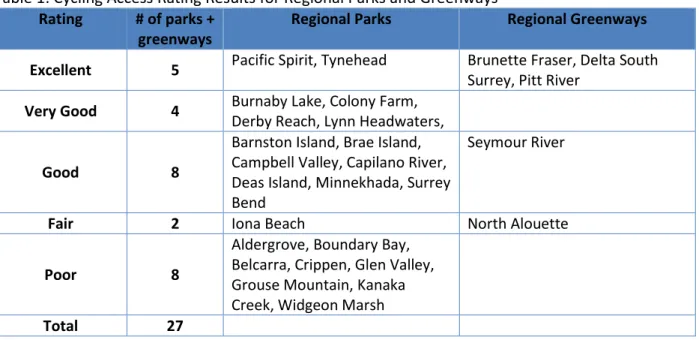
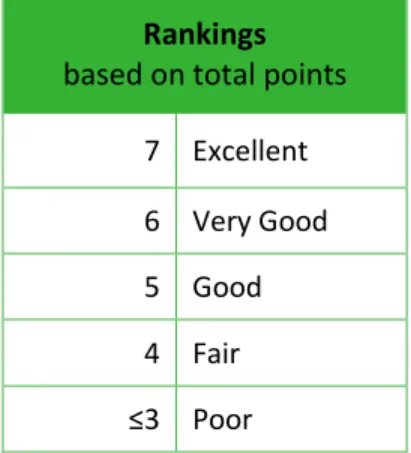
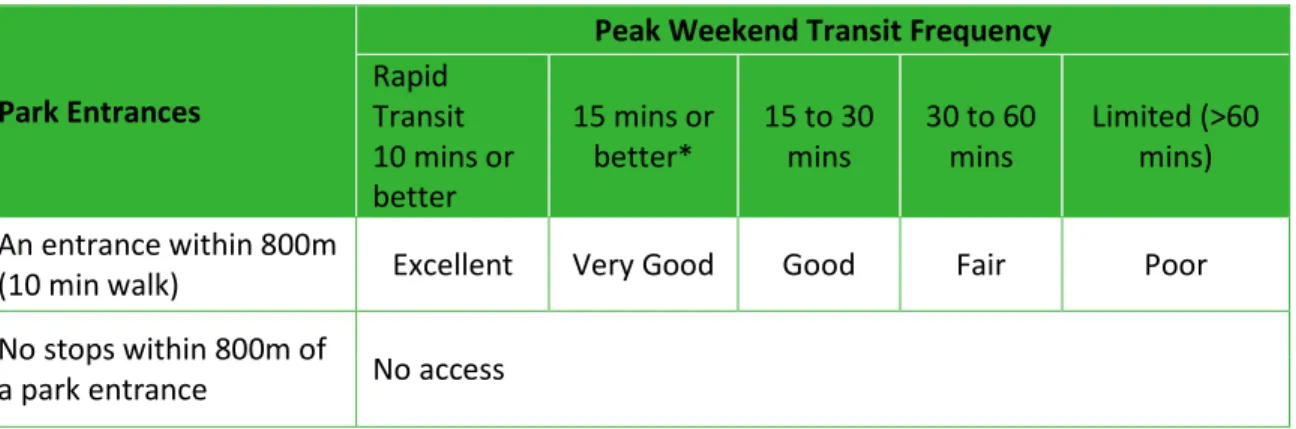
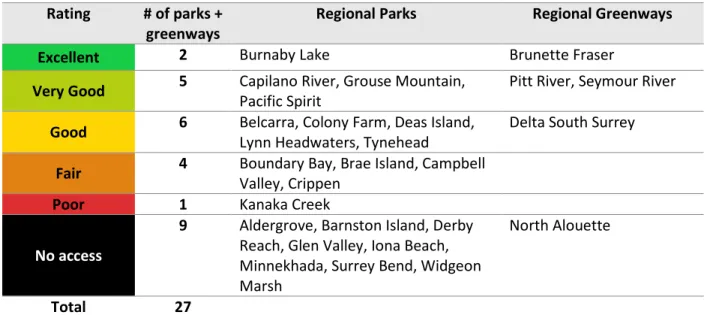
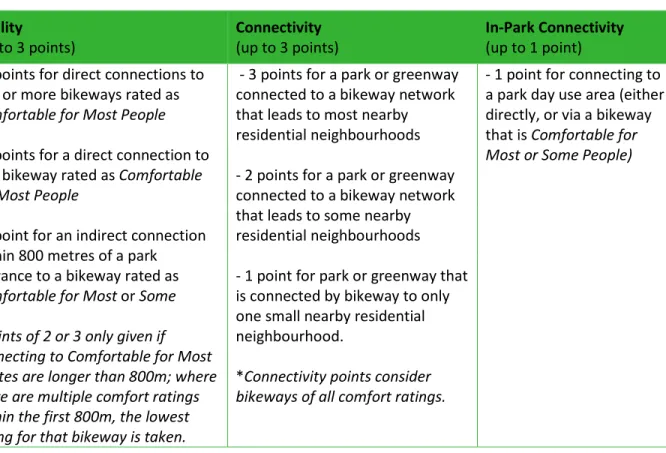
33% of parks and greenways were found to have excellent or very good access for cycling, while 30% were rated as poor access for cycling. To determine how well regional parks are served by transit and active transportation, staff created an atlas showing bike paths and nearby bus stops for each regional park and greenway. Metro Vancouver staff made minor adjustments to this GIS data within and adjacent to regional parks and greenways to better align with the Bikeway Comfort classification ratings (see figure 2) where appropriate.
As a result of this methodology, the Pacific Spirit and Tynehead Regional Parks and the Brunette Fraser, Delta South Surrey and Pitt River Greenways were rated as excellent cycling access, while four other regional parks and regional greenways were rated very good. Together, this is a third of regional parks and greenways that have very good or excellent access. The last thirty percent of regional parks and greenways were found to have poor access.
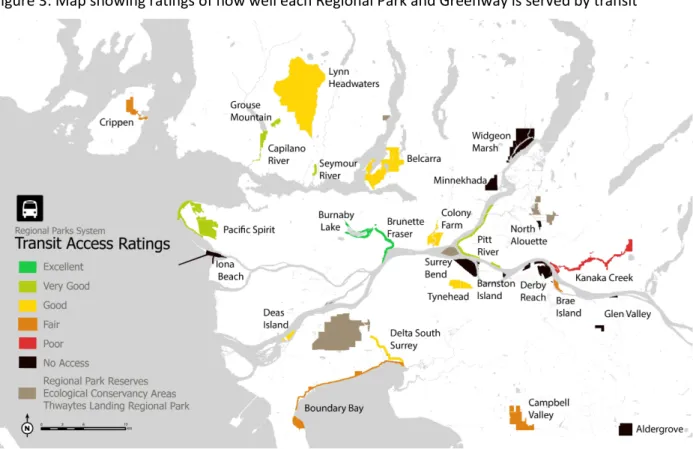
There is a wide variety of bicycle and transit access to regional parks and greenways, with some parks and greenways having excellent bicycle and transit accessibility, while others are more difficult to reach without a personal vehicle. There are also parks and greenways that have no transit access, as well as poor access for cycling, such as Aldergrove, Glen Valley and Widgeon Marsh Regional Parks.
Aldergrove Regional Park Transportation Atlas
CANADA U NI TED STATES
Barnston Island Regional Park Transportation Atlas
Surrey Bend Regional Park
Pitt River
Regional Greenway
CITY OF PITT MEADOWS
TOWNSHIP OF LANGLEY
ELECTORAL AREA A
Routes: 150, 182Route: 150
Route: 182
VILLAGE OF ANMORE
CITY OF PORT MOODY
CITY OF
VILLAGE OF BELCARRA
COQUITLAM
Burnaby Lake Regional Park
Route: 110
CITY OF NEW WESTMINISTER
Route: 101
CITY OF BURNABY
CITY OF SURREY
Route: 109
Boundary Bay Regional Park Transportation Atlas
TSAWWASSEN (CITY OF
DELTA)TSAWWASSEN
FIRST NATION
Route: 619Routes: 614, 619
Brae Island Regional Park Transportation Atlas
HIP OF LA
NGLEY
Route: 562
CITY OF MAPLE
RIDGE
Brunette Fraser Regional Greenway
Routes: 110, 144
Route: 563
Capilano River Regional Park Transportation Atlas
Regional ParkCapilano
DISTRICT OF NORTH
DISTRICT OF WEST
Routes: 232, 236Route: 254
Route: 254Routes: 251, 252,
Route: 256
Colony Farm Regional Park Transportation Atlas
Douglas Island
Regional Park Reserve)Route: 159
CITY OF COQUITLAM
Route: 169
CITY OF COQUITLAMPORT
Regional Greenway Bikeway Classification System
Crippen Regional Park Transportation Atlas
BOWEN ISLAND MUNICIPALITY
Routes to Horseshoe Bay
Route: 282
250, 257, 262 SoundHowe
Horseshoe Bay to Bowen Island Ferry frequency
70 minutes
Deas Island Regional Park Transportation Atlas
Burns Bog Ecological
Area
Route: 640
CITY OF DELTA
RICHMOND
Derby Reach Regional Park Transportation Atlas
Brae Island Regional Park
Kanaka Creek Regional Park
MAPLE RIDGE
TOWNSHIP OF
Delta South Surrey Regional Greenway Transportation Atlas
SURREY
Routes: 310, 322Watershed
Ladner Trun k Road
Route: 340
Boundary Bay Regional Park
Glen Valley Regional Park Transportation Atlas
CITY OF MAPLE RIDGE
Grouse Mountain Regional Park Transportation Atlas
Capilano RiverCapilano
DISTRICT OF NORTH VANCOUVER
Regional Park
Kanaka Creek Regional Park Transportation Atlas
Route: 748CITY OF
Route: 745
Route: 749
Lynn Headwaters Regional Park Transportation Atlas
Minnekhada Regional Park Transportation Atlas
Route: 174
CITY OF PITT MEADOWS
North Alouette Regional Greenway Transportation Atlas
Blaney Bog Regional Park
Reserve
Pacific Spirit Regional Park Transportation Atlas
Route: 14, 99
Route: 84
Routes: 4, 84
Route: 49
Pitt River Regional Greenway Transportation Atlas
Douglas Island (Regional Park
Reserve)
Derby Reach Regional Park
Route: 722CITY OF
PORT COQUITLAM
Barnston Island Regional Park
Route: 701
NORTH VANCOUVER
Routes: 245, 255
Surrey Bend Regional Park Transportation Atlas
Tynehead Regional Park
Tynehead Regional Park Transportation Atlas
Route: 335
Route: 337
Widgeon Marsh Regional Park Transportation Atlas
CITY OF COQUITLAM
Park in Development; Opening in 2023
Metro Vancouver Regional Parks have seen record numbers of visitors as people spend time in nature as a way to cope with the stress of the COVID-19 pandemic. Regional Parks has worked with its municipal partners to manage demand, both with existing tools and with some new approaches. In addition, Regional Parks made extensive use of existing communication tools, including on-site electronic message boards for all three parks, the Metro Vancouver website and social media channels, including the Metro Vancouver Regional Park Facebook page and Metro Vancouver's Instagram account.
Metro Vancouver Regional Parks and Solid Waste Services began collaborating on dog waste management solutions in 2011, developing waste plans and installing infrastructure from 2016 to 2019, including 157 dog waste bins. In February 2019, Regional Parks staff applied to the Infrastructure Investment Canada Program to fund the implementation of the Grouse Mountain Regional Park Management Plan. The event was attended by Federal Environment Minister the Honorable Jonathan Wilkinson, North Vancouver MLA Bowinn Ma, MVRD Board Chair Sav Dhaliwal and Regional Parks Committee Chair John McEwen.
Regional Parks staff is working with City of Coquitlam staff to confirm next steps regarding the rezoning application submitted in June 2020. Regional Parks staff continues to work with First Nations, exploring opportunities for input and collaboration through the planning process and beyond. The attached Iona Island Wastewater Treatment Plant Project Design Report is hereby presented to the Regional Parks Board for information.
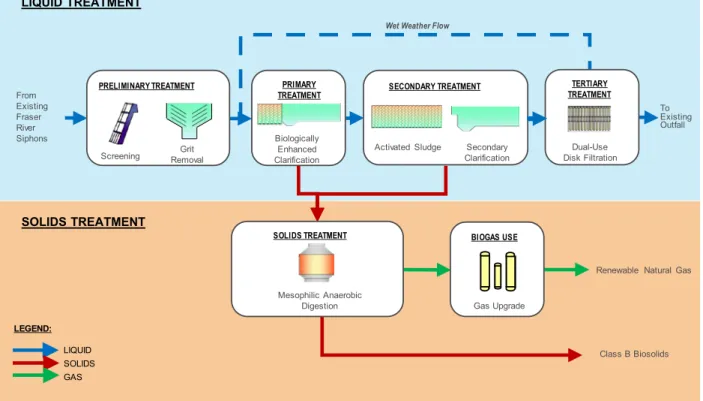
Metro Vancouver is advancing one of Canada's most dynamic and transformative urban sustainability projects: the Iona Island Wastewater Treatment Plant Project (Project).
Liquid Treatment
- Preliminary Treatment
- Secondary Treatment
- Tertiary Treatment
- Wet Weather Treatment
Metro Vancouver generally directs shows to the waste-to-energy (WTE) facility in Burnaby, and grit to the Vancouver Landfill. Mist waste generated by these processes is pumped to the sludge management system for co-treatment with sludge from primary treatment. Primary treatment is the next level of treatment where heavier solids and associated organic matter are separated from the liquid stream.
Primary treatment is designed to remove total suspended solids (TSS) and biological oxygen demand (BOD) and is generally performed by gravity sedimentation. The IIWWTP design includes an improved form of primary treatment called Biologically Enhanced Primary Treatment (phase A) that includes aeration to improve solids settling properties and achieve a degree of soluble organic absorption. The hydraulic and solid retention times used in this process do not lead to significant oxidation of the material.
Therefore, a high level of organic carbon (biomass) is used for solids treatment, while at the same time significantly reducing the size of the downstream secondary treatment process. The increased switch from carbon to solids treatment enables greater energy conversion than conventional primary treatment. The main purpose of secondary treatment is to convert soluble organic matter into biosolids that can be removed so that the treated wastewater has less impact on the receiving environment.
To achieve this goal, the environment in the secondary treatment reactor tanks is controlled by aeration to allow microorganisms to thrive and carry out the necessary biological transformations. Solids are directed to solids treatment, and the liquid phase can be further treated by tertiary treatment. Tertiary treatment refers to processes that remove a greater proportion of TSS and suspended colloidal material from secondary wastewater.
These filters can remove fine particles from the fluid stream, producing a highly polished effluent. The BC Municipal Wastewater Regulation (MWR) (2018) requires secondary treatment to be provided for all flows up to twice the average dry weather flow (2 x ADWF) and the equivalent of primary treatment for flows greater than 2 x ADWF. Disc filters used for tertiary treatment will serve a dual purpose and will be used for wet weather treatment during heavy rainfall events.
Solids Treatment
- Anaerobic Digestion
Fraser River
Cultural Pavilion
McDonald Slough
Sea IslandIona Island
North Arm Jetty
Treatment Plant
Iona Jetty
Design Concept ATTACHMENT 3
- Foreshore Restoration
- Riparian Forest Restoration7. North Lagoons
- North Pond
- South Lagoons
- Channel Tie-In5. South Pond
- Foreshore Restoration
- Tidal Marsh Creation
- Outfall Jetty Breach
- Tidal Marsh20.Coastal Sand
- Wave Breaks
Breasies Removal of fill to create openings for the movement of aquatic species, water and sediment.
ECOLOGICAL OPPORTUNITIES
METRO VANCOUVER REGIONAL PARKS Upcoming Events
September 2020