That the Regional Planning Committee receive for information the report dated February 19, 2021, entitled "Manager's Report". That the Regional Planning Committee receive for information the report dated January 29, 2021, entitled "Manager's Report".
Section D – Definitions
Regional Land Use Designations and Overlays (GOAL 1 / 2 CONTENT ONLY) (Metro 2040 p9/10)
ATTACHMENT 1
They aim to support local and regional economic activities, and complement the planned function of Urban Centers and Frequent Transit Development Areas. Frequent Transit Development Zones are intended to be additional priority locations to accommodate growth concentrated in higher density development forms.
Goal: 1 Create a Compact Urban Area PREAMBLE (p13)
ATTACHMENT 2
Goal: 1
- ATTACHMENT 3
- ATTACHMENT 4
- ATTACHMENT 5
- ATTACHMENT 6
- formerly Metro 2040 Strategy 4.2)
- ATTACHMENT 7
Frequent Transit Development Area (FTDA) - All (applies to Corridor FTDA and Station Area FTDA). New policy to support growth outside urban centers and FTDA with 'Equitable' transit and.
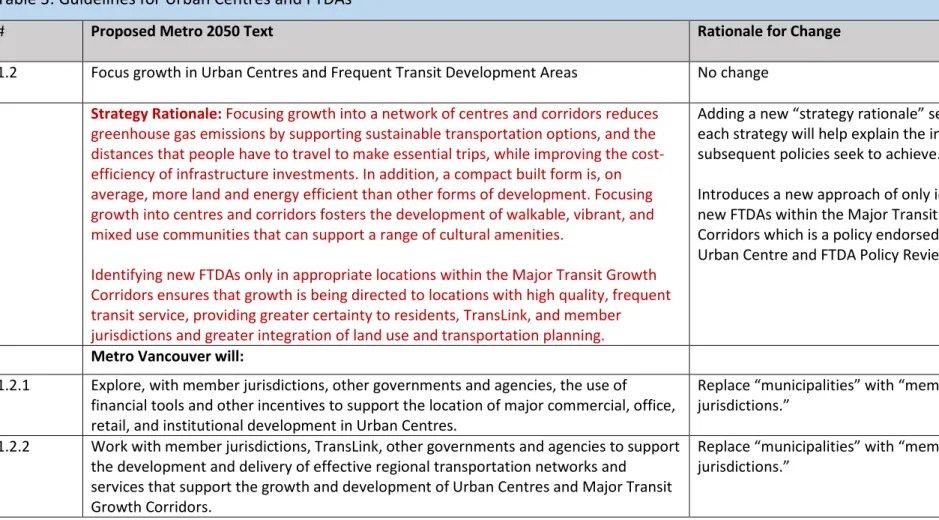
Goal: 1 Create a Compact Urban Area Strategy 1.4
Protect Rural areas from urban development
ATTACHMENT 8
Metro 2050 draft objective 1 content including IAC commentary | Part 8 of 8 | February 2021. a) identify the Rural areas and their boundaries on a map that generally corresponds to the Regional Land Use. with a Country designation' to be more accurate.
Support a Sustainable Economy
PREAMBLE (p25)
ATTACHMENT 9
Agriculture depends on the protection and availability of agricultural land for the production of food and other goods and services. This strategy also seeks to protect agricultural land for local production and support the economic viability of the agricultural sector.
Goal: 2 Support a Sustainable Economy
Promote land development patterns that support a diverse regional economy and employment opportunities close to where people live
ATTACHMENT 10
Content of draft Metro 2050 goal 2 awaiting IAC comments | February 2021. a) encourage the use of excess airport land for industrial activities and, where appropriate, discourage commercial development unrelated to the airport and any expansion beyond the industrial and employment zones specified on map 6;. Add reference to built form design.. b) support the development and expansion of large-scale office and retail uses in Urban Centers, and local-scale uses in frequent transit development areas through such policies such as: zoning reserving land for office uses, density bonus provisions to encourage office development, variable development cost charges and/or other financial incentives; and.
Goal: 2
- Strategy: Protect the supply, and enhance the efficient use, of industrial land Edit title in order to better profile the importance of industrial lands
- ATTACHMENT 11
- Protect the supply of agricultural land and strengthen agricultural viability The emphasis on food production was removed because it is beyond the ability
- ATTACHMENT 12
Research on Social Justice and Regional Growth Regular Meeting of the Regional Planning Committee Date: March 5, 2021 Page 4 of 7. Research on Research on Social Justice and Regional Growth Regular Meeting of the Regional Planning Committee Date: March 5, 2021 Page 7 of 7.
Social Equity &
Regional Growth Study
ATTACHMENT
And if we really talked about all the things that [inequality] created, I think it would melt people into the privileged. I don't think they should make a choice to go and see a friend or family member who is on their deathbed.
Executive Summary
Use the "Social Equity Analysis Tool" (SEAT), developed during this project, to evaluate policies under consideration. The study on social equity and regional growth also includes some suggested areas for future work, both. The study on social equity and regional growth should be seen as another useful step in the ongoing journey to make social equity a fundamental component of regional growth planning.
1.Introduction
Orientation
Terminology & Key Concepts
A black lesbian woman's experience will be different from that of other women who may not be black, may not be lesbian, or may not be both. White Body Supremacy: Specialist and trauma therapist Resmaa Menakem describes the concept of 'white body supremacy' as "perpetuating a false narrative that white people are better than people of other skin colors and backgrounds ethnic". Under equality, each figure receives a bike that addresses their specific need, thus creating a fair way to provide increased mobility for each individual.
2.Study Overview
Project Context
Finally, the Inequity Baseline Report used only one form of quantitative analysis: the spatial distribution of equity indicators. While mapping these indicators can be beneficial for planning, which largely exists as a spatial exercise, spatial distribution also has some limitations. Spatial distribution also does not indicate a disproportionate distribution of benefits and harms along other dimensions, which would be a useful exercise for future research.
Guiding Principles
The socio-political sphere and current pandemic further exacerbate challenges in engaging individual nations in meaningful ways. MVRD is working to build long-term relationships with First Nations in the region and this study is intended to complement but not replace that work. Namely, some causes of inequalities will not appear on a map, as not every form of oppression can be represented with a spatial proxy.
3.Inequity Baseline Data Report
Description
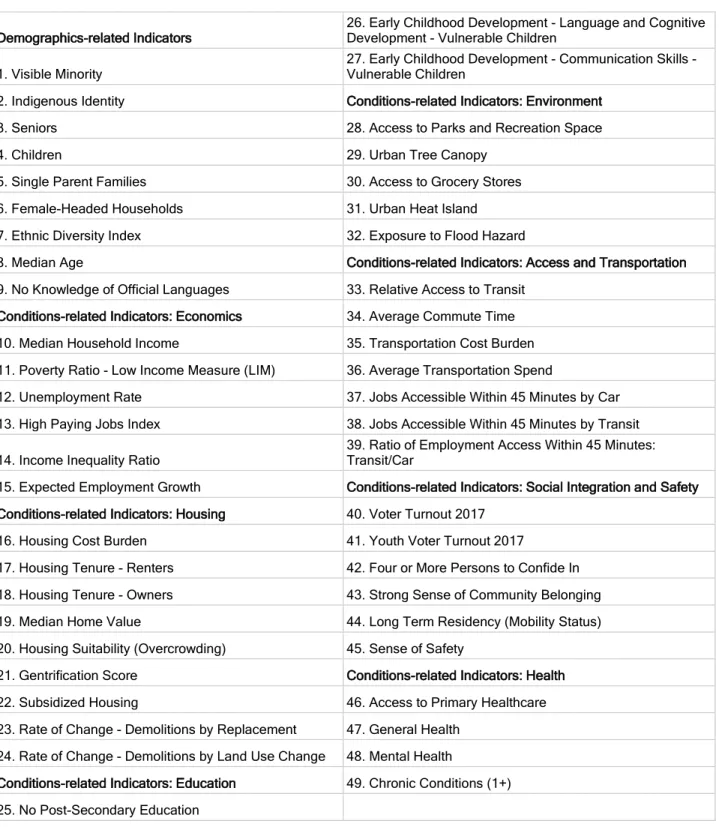
Inequity Baseline Indicators
Methods
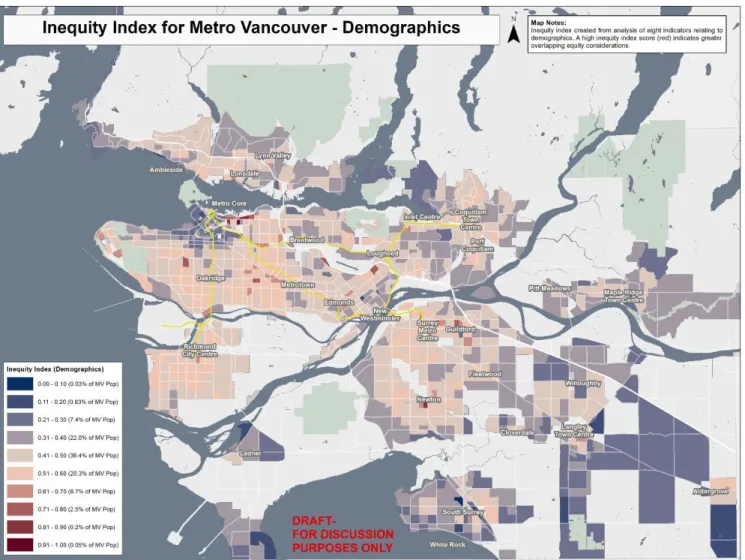
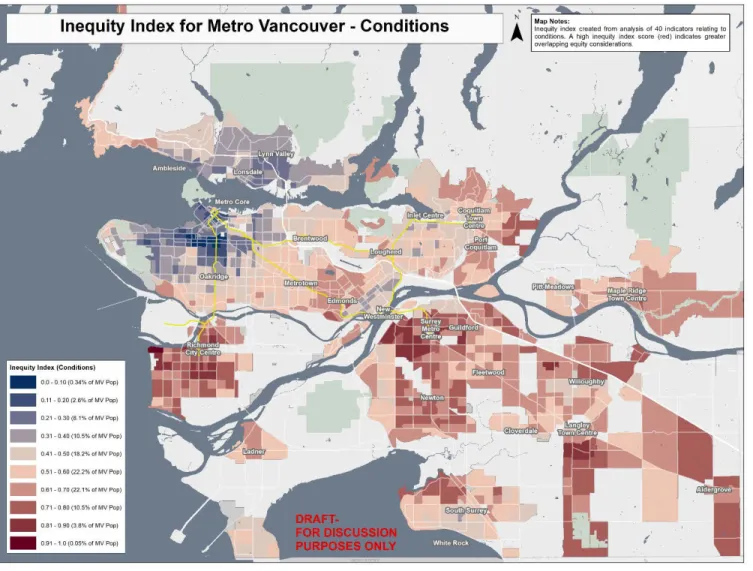
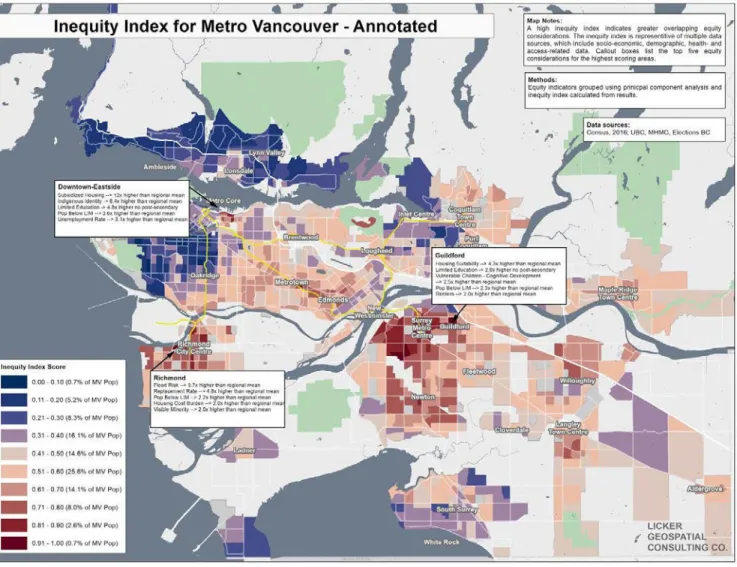
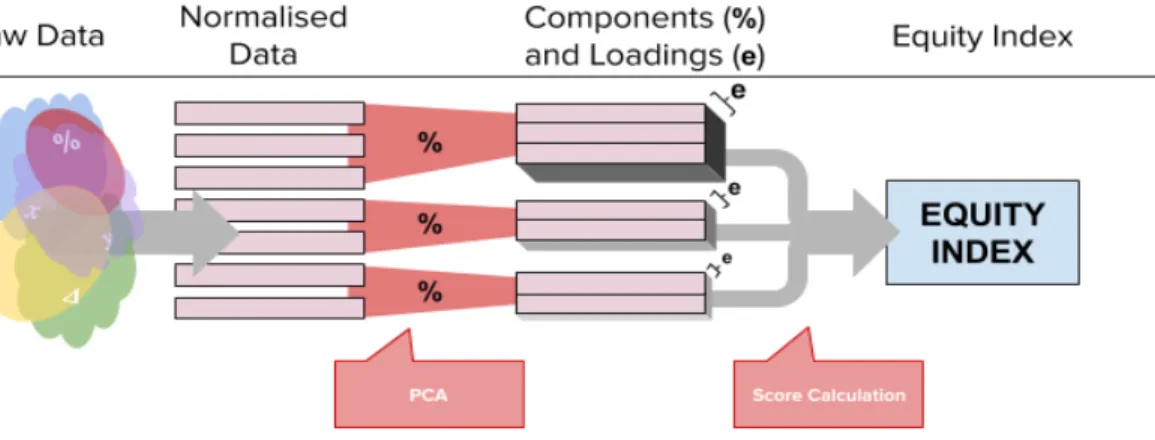
This is important because with such a large volume of data as present in this study, it would not be possible for the human eye to distill the data down to its major contributors to draw attention to areas with multiple, uniquely contributing indicators. A result of conducting the PCA is an Inequity Index Map that highlights multiple geographic areas. First, to highlight areas where, based on the data we measured, several unrelated factors exist.
Indicator Maps
- Demographics-related Indicators
- Conditions-related Indicators
Percentage of the population aged 65 years or older, calculated according to the 2016 Statistics Canada Census of Population. Percentage of the population aged 0 to 14 years, calculated according to the 2016 Statistics Canada Census of Population. This indicator refers to the percentage of the population living in subsidized housing, according to the 2016 Statistics Canada Census of Population.
Regional Inequity Index
- Demographics and Inequity Index regression
- Comparisons: Bivariate Analysis
This means that of all 49 indicators, those listed in Table 2 best represented the greatest variance in the data. Household expenses were more heavily weighted, as they were in the component group with the highest load. This was an exploratory exercise to investigate the relationship between the condition index (ie the prevalence of overlapping unequal conditions) and each demographic group measured in the study.
4.Listening & Learning Engagement Report
Description
Participants
Within these populations, it was important to hear from a mix of subject matter experts who work professionally in the fields of social equity, regional growth and transport (such as urban planners, decision makers and policy analysts), as well as members of the public. Participants were provided with a link to an optional, confidential demographic survey to help the consultant team better understand the diversity of participants. Five of the participants identified as indigenous, while the remaining 12 identified as people of various ethnic identities.
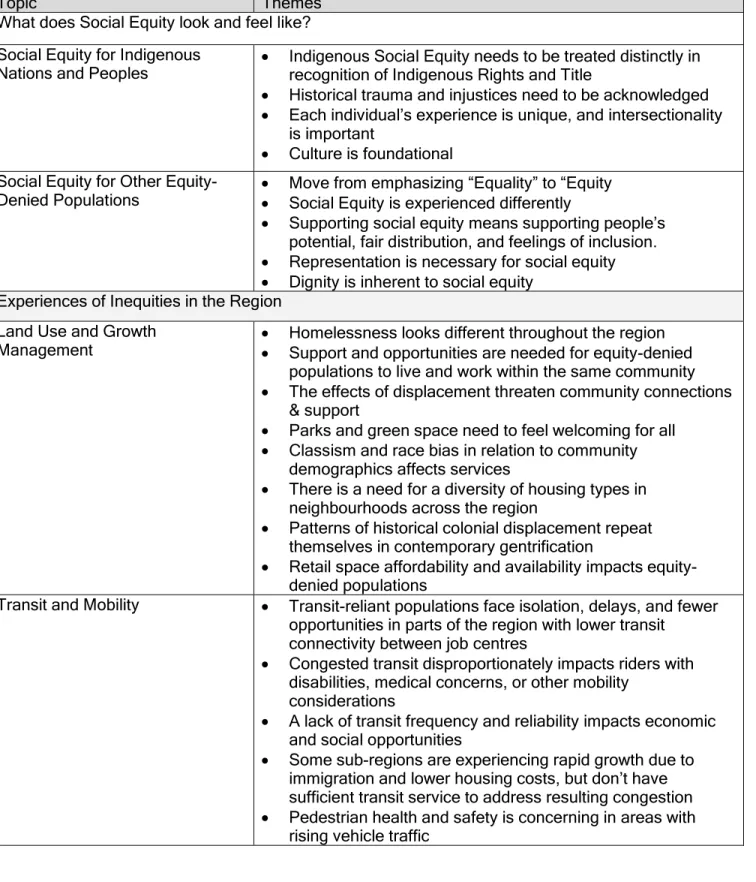
What We Heard
- Social Equity for Indigenous Nations and Peoples
- Social Equity for Other Equity-denied Populations
- Experiences of Inequities in the Region
So when governments engage with stakeholders, you're looking at “Who are the people who would be affected?” That's a different place than say, “rights holder” or “title holder,” and for Indigenous peoples, especially in Vancouver, there's 'title holders' a good 11 or 10 countries in whose territories the Metro Vancouver region is located. AUTOHOOD PARTICIPANT OF NISGA'A AND KWAKWAK'AWAKW HERITAGE LIVES IN SQUAMISH RESERVE HOUSING, CITY OF NORTH VANCOUVER. PARTICIPANT NISGA'A AND KWAKWAK'AWAKW FIRST NATIONS LIVE ON SKWXWÚ7MESH (SQUAMISH) LANDS (NORTH VANCOUVER DISTRICT).
5.Recommendations
- Social Equity Definition
- Proposed Metro Vancouver Social Equity Definition
- Priority Areas for Action
- Focus policy response on inequity indicators connected to regional growth and land use
- Create and monitor Equity Performance Measures
- Develop a corporate social equity plan
- Social Equity Analysis Tool
- Undertaking a SEAT Process
- Initial Policy Content Gaps
Corporate Social Equality Plan developed to help guide wider MVRD social equality practice and policy. Further guidance on developing a social equity plan can be found in Advancing Equity and Inclusion: A Guide for Municipalities. The review of Metro 2040 undertaken as part of the report Social Equity in Regional Growth Management (2019) can provide an initial starting point to focus the review of policy and practice and should be referred to in conjunction with this Social Equity study.
6.Opportunities for Future Work
Research
These changes can be used to predict social equity impacts which are discussed in the section below. However, a disaggregated data strategy (see below) can be instrumental in preparing a foundation for this type of analysis; and .. we must study the effects of the past and determine whether they will have an impact on the future. A good case example for developing a shared data strategy is the City of Toronto.
Engagement
There is also a need to be accountable to the public and community to show that we are following this. This sentiment is eloquently expressed in a statement from the Urban Indigenous Peoples Advisory Committee to the City of Vancouver, in a document titled “Call for Meaningful Action on Anti-Racism and Reconciliation by Mayor, Council and Municipal Departments” (July). more attention focused on consultation and dialogue, without the associated action commitments. From our perspective, the constant refrain of 'starting a conversation' and 'engaging a dialogue' feels disingenuous when we see so little impact coming from it.”
7.Conclusion
Appendices
Literature Review
Tamika Butler emphasizes the need to "take a step back and make it about people and say, 'This is what the data shows us about our community.' We need to focus not only on inequalities, but also on stories of strength and resilience. We must recognize the historical and interconnected relationship between public space, enforcement and racism.
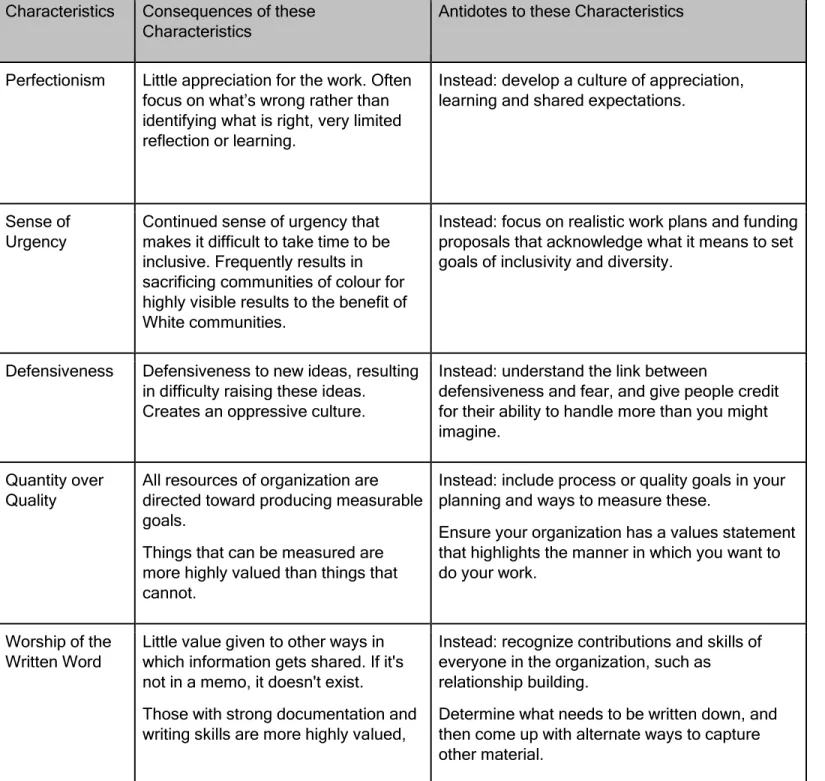
Developing the Inequity Baseline
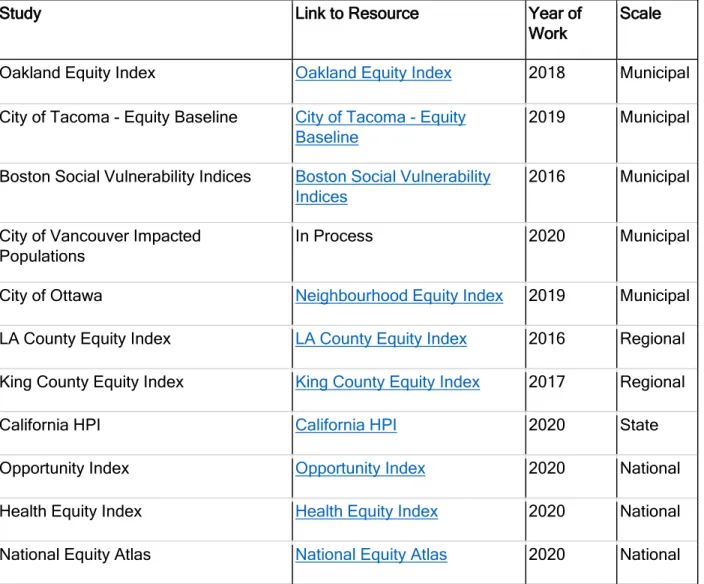
LA County Equity Index LA County Equity Index 2016 Regional King County Equity Index King County Equity Index 2017 Regional. While inequalities are experienced differently by each of the LGBTQIA2 communities, it is generally accepted that they are all experts in the context of social equality. Many of the data sources were available at different levels of detail, such as in the dissemination area (Census) or the neighborhood (My Health, My Community).
Data Dictionary for Inequity Indicators
Principal Component Analysis (PCA) Methodology
Data are grouped in PCA based on how much they contribute to each component. A component with a larger loading value means that the component strongly influenced the PCA and mainly characterized the data. Components with small loading values will have had less influence on the PCA and therefore characterize the data less.
Inequity Baseline Indicator Descriptive Statistics
Listening & Learning Session Detailed Agenda
Developing the Listening & Learning Engagement Sessions
The legacy of colonization, both in the planning of Metro Vancouver and at all levels of Canadian society, along with systemic racism (e.g. racial wage gap, rental and labor market discrimination) and increasing reports of racist violence in the region (verbal and physical incidents) ), makes it imperative that regional and transportation planning authorities prioritize engagement and relationship building with racialized communities. This data gap, coupled with the disproportionate discrimination, homelessness, health impacts and violence experienced by self-identified LGBTQ2S populations, makes it important to prioritize the engagement of this population.
High-Resolution Indicator Maps
The purpose of this report is to provide the MVRD Board with updated information on the implementation of the Metro 2050 Participation Plan. The Metro 2050 Project Team has developed a program of participation that fulfills the commitments in the Board-approved Metro 2050 Participation Plan (Reference 1). Staff continues to engage with First Nations regarding Metro 2050 development, including through the Metro 2050 Intergovernmental Advisory Committee.
Metro 2050 Intergovernmental Advisory Committee Members
ATTACHMENT 1
METRO 2050 Update Participation Highlights
Six newsletter articles
METRO 2050 webpage
METRO 2050
Sustainability Dialogues
METRO 2050 Webinar
4 meetings
10 presentations
Benefits of Planning videos viewed 800
Social Media promotion
Registration
ATTACHMENT 2
Committee (IAC) presentations with question and answer sessions January 17, 2020 January 22, 2021 Council of Councils presentations with question and answer sessions in progress. Committee Presentations (RPAC) with monthly Q&A sessions, Ongoing RPAC - Social Issues Subcommittee Presentations with Q&A sessions quarterly, Standing RPAC - Environment Subcommittee Presentations with ongoing Q&A sessions. Advisory Committee Presentation with Question and Answer Session February 20, 2020 City of Delta Presentation to Council with Question and Answer Session November 4, 2019 City of North Vancouver Presentation to Council with Question and Answer Session November 18, 2019 City of White Rock Presentation to Council with Question and Answer Session 2 .December 2019 City of New Westminster Presentation to Council with Question and Answer Session January 27, 2020 North Vancouver District Presentation to Council with Question and Answer Session February 3, 2020 City of Surrey Presentation to Council with Question and Answer Session February 10, 2020 City of Maple Ridge Presentation to Council with Q&A Session November 3, 2020 Tsawwassen First Nation Presentation to Council with Q&A Session February 4, 2020 Village of Lions Bay Presentation to Council with Q&A Session December 15, 2020 City of Burnaby Presentation to Council with Q&A Session February 8, 2021 Staff of all members of the Jurisdiction "Roadshow" meeting on projections.
ATTACHMENT 3
Coastal Health Authorities Staff-to-Staff meeting with question and answer session, and also on an ongoing basis through RPAC Associate and RPAC-SIS meetings. Surrey Board of Trade presentation to the board with question and answer session November 14, 2019 Greater Vancouver Board of Trade presentation to the board with question and answer session November 15, 2019 Urban Development Institute (UDI) presentations with question and answer session and response sessions on March 10 and July. Collaboration Forum (GTCF) Presentation with Q&A session December 15, 2020 Sunshine Coast Regional District Staff meeting with Q&A session November 26, 2019 RailVolution Regional Forum Conference presentation with Q&A.
ATTACHMENT