Minutes of the Regular Meeting of the MVRD Regional Planning Committee METRO VANCOUVER REGIONAL DISTRICT. Minutes of the Regular Meeting of the MVRD Regional Planning Committee This is CREATED and SANCTIFIED.
CLIMATE ACTION-RELATED POLICIES IN METRO 2050
Process for considering stronger climate action Language and policy for Metro 2050 Regional Plan Committee Regular meeting date: May 19, 2022 Page 2 of 6 Process for considering stronger climate action Language and policy for Metro 2050 Regional Plan Committee Regular meeting date: May 19, 2022 Page 3 of 6 .
CLIMATE 2050 AND METRO 2050 ARE MUTUALLY-SUPPORTIVE BUT DISTINCT PLANS
A detailed summary of the new and amended climate change policies in Metro 2050 can be reviewed in the Appendix.
CLIMATE 2050 LAND USE AND GROWTH MANAGEMENT ROADMAP
Process to consider stronger climate action Language and policy for Metro 2050 Regional Planning Committee Regular Meeting Date: 19 May 2022 Page 4 of 6. It is expected that the Roadmap will inform future policy work and different policy areas/topics of Metro 2050 and others. Metro Vancouver management plans.
CLIMATE ACTION POLICY AREAS TO EXPLORE FOR METRO 2050
Land Use, Communities, and Growth – Low Carbon Resilient Growth Framework
Metro Vancouver staff are working closely together to coordinate this work program with other related projects and initiatives both internally and externally to ensure efficiencies and mutually supportive policy directions. Once work on the draft Roadmap has progressed further, it will be brought forward for consideration by the Climate Action and Regional Planning Committees, as well as others through a targeted program of engagement with member jurisdictions.
Industry, Business, and Agriculture – Low Carbon Resilient Economy;
Staff is currently in the process of collecting and organizing ideas to be considered for the draft Land Use and Growth Management Roadmap, including a thorough review of materials that were generated through all Metro 2040 policy reviews and discussion documents/Guidelines for Climate 2050.
Scope and Engagement
- Background Review and Early Engagement (Q2/3 of 2022)
- Develop, Refine, and Organize Ideas (Q4 2022)
- Engage with Stakeholders and Subject Matter Experts (Q1/2 2023)
- Prepare Recommendations (Q2 2023)
Process to consider stronger climate action Language and policy for Metro 2050 Regional Planning Committee Regular Meeting Date: 19 May 2022 Page 5 of 6. The work will be led by the Regional Planning Committee according to their mandate, but other standing committees including the Climate Action Committee, Parks Committee and Liquid Waste Committee will opportunity to provide input and feedback.
NEXT STEPS
Engagement in early 2023 will be undertaken with RPAC, external subject matter experts and interested standing committees of the Board. Review engagement data and prepare recommendations to the Regional Planning Committee and MVRD Board on potential Metro 2050 changes and seek support and direction.
ALTERNATIVES
A critical part of this work is building consensus around any proposed language or policy in considering a proposed amendment to Metro 2050. When Metro 2050 was developed, the level of commitment was tested with the Intergovernmental Advisory Committee and Member Jurisdiction Councils, and the resulting language was understood as the limit of acceptance.
FINANCIAL IMPLICATIONS
This phase will include consideration of support for strengthening language in current Metro 2050 policies (eg using "support", "encourage", "require") as well as new policy generated through Phases 1 and 2. Process to consider stronger climate action language and Policy for the Regional Plan Committee Metro 2050 Ordinary meeting date: 19 May 2022 Page 6 of 6.
CONCLUSION
Attachment
Report dated January 7, 2022, titled “Comments on the Draft of Metro 2050 and Proposed Next Steps” presented to the Regional Planning Committee at its regular meeting of January 14, 2022
Report dated February 4, 2022, titled “Metro 2050 Next Steps: Addressing Member Jurisdiction Comments and Climate Policy” presented to the Regional Planning Committee at its regular
Comparison of Climate Actions in Metro 2040 and Draft Metro 2050
Create a Compact Urban Area
Metro Vancouver will
Work with First Nations and other appropriate agencies to ensure that new development and infrastructure investment is directed to areas
Advocate to the Province that any future or expanded rail-based rapid transit service
Member Jurisdictions will
Collaborate with member jurisdictions and other stakeholders on the expansion of the Frequent Transit Network, Major Transit Network,
Support member jurisdictions and work with First Nations in developing resilient, healthy, connected, and complete communities
Provide technical advice, assistance, research, and data to member jurisdictions and other agencies to improve air quality, reduce greenhouse
Collaborate with health authorities, academic institutions, First Nations, and other researchers to share best practices, research, data, and
Adopt Regional Context Statements that
Adopt Regional Context Statements that
ATTACHMENT
Support a Sustainable Economy
- Advocate that airport authorities
- Advocate that the Port of Vancouver
Protect the supply, and enhance the efficient use of, industrial land
Member jurisdictions will
- Adopt Regional Context Statements that
- Advocate to the Province to increase agricultural producers’
- Advocate to the Province to provide incentives to encourage land management practices that reduce greenhouse gas emissions, improve
- Adopt Regional Context Statements that
- Protect the Environment and Respond to Climate Change
- Protect the Environment and Respond to Climate Change and Natural
- Protect Conservation and Recreation lands
- Protect and enhance Conservation and Recreation lands
- Adopt Regional Context Statements that
- Protect and enhance natural features and their connectivity
- Protect, enhance, restore, and connect ecosystems
- Implement the Metro Vancouver Ecological Health Framework, including relevant actions to
- Manage Metro Vancouver assets and collaborate with member jurisdictions, First Nations, and other
- Advocate to the Federal Government and the Province to
- Adopt Regional Context Statements that
Determining recreational land use, which may include the following uses: .. vii) ecosystems not covered above, which may be vulnerable to climate change and natural hazard impacts, or which provide buffers against impacts of climate change or natural hazard impacts on communities; and viii) uses within those lands that are appropriately located, scaled and consistent with the purpose of the designation, including: .. land management activities necessary to minimize vulnerability / risk to climate change impacts.
Encourage land use and transportation infrastructure that reduce
- Implement the strategies and actions of the Regional Growth Strategy that contribute
Encourage land use, infrastructure, and human settlement patterns that reduce energy
- Implement the
Metro Vancouver’s role is to
Work with the Federal Government, the Province, and other stakeholders when conducting environmental
Accept Regional Context Statements that encourage land use and transportation
Accept Regional Context Statements that encourage land use, infrastructure, and settlement patterns that
That the federal government and the province and their agencies establish further
Advocate to the Federal Government and the Province to establish and support legislative and fiscal
The role of municipalities is to
Adopt Regional Context Statements which
Adopt Regional Context Statements that
Actions Requested of Other Governments and Agencies
That TransLink pursue reductions of common air contaminants and greenhouse
That TransLink manage its transit fleet and operations with the goal of increasing
TransLink will
Support regional air quality objectives and
That TransLink, in collaboration with Metro Vancouver and municipalities,
In collaboration with Metro Vancouver and member jurisdictions, establish a definition of major development
Encourage land use and transportation infrastructure that improve
Encourage land use, infrastructure, and human settlement patterns that improve resilience to
- Incorporate climate change and natural hazard risk assessments into the planning
- Incorporate climate change and natural hazard risk assessments into the planning and location of existing
- Work with the federal government and the province, TransLink and municipalities to
- That the Integrated Partnership for Regional Emergency Management, in
- That the federal government and the province, in collaboration with the Integrated
- Work with the Integrated Partnership for Regional Emergency Management, the Federal Government, the
- Advocate to the Federal Government and the Province that they
- Accept Regional Context Statements that encourage land use, transportation and
- Accept Regional Context Statements that encourage land use, settlement patterns,
- Adopt Regional Context Statements that include policies to encourage settlement
- Adopt Regional Context Statements that
- Consider incorporating climate change and natural hazard risk assessments into the
- Incorporate climate change and natural hazard risk assessments into planning and location decisions for new
- Integrate emergency management, utility planning, and climate change adaptation principles
- Adopt appropriate planning standards, guidelines, and best practices related to climate change and natural
Develop Complete
Communities Goal 4: Provide Diverse and Affordable Housing Choices
- Adopt Regional Context Statements that
- Prepare and implement housing strategies or action plans that
- Expand, retain, and renew rental housing supply and protect tenants
- Adopt Regional Context Statements that
- Support Sustainable Transportation Choices
- Communicate to TransLink that Metro Vancouver’s objectives for the
- Coordinate land use and transportation to encourage transit, multiple-occupancy vehicles, cycling and
- Establish the following objectives for the regional transportation system
- In support of coordinated land use and transportation to encourage transit, multiple occupancy vehicles, cycling, walking,
- Advocate to the Province, TransLink, and neighbouring regional districts to request that the following elements are
There are no specific climate measures for the earth. Coordinating use and transport Strategy 5.2 Coordinating land use and transport to support the safe and efficient movement of vehicles for passengers, goods and services. That the Board of Directors of the MVRD receive for its information the report dated April 11, 2022 entitled "Regional Parking Strategy - Scope of Work".
EXECUTIVE SUMMARY
PURPOSE
BACKGROUND
REGIONAL PARKING STRATEGY
Regional Parking Strategy – Scope of Work Regular Regional Planning Committee Meeting Date: May 19, 2022 Page 2 of 5. Metro Vancouver will work with member jurisdictions and TransLink to jointly develop a regional parking strategy that: .. a) provides instructions to inform the municipality of parking requirements;.
Previous Regional Parking Initiatives
For both the surveyed rental and strata tenure buildings, apartment parking supply exceeded use across the region
Apartment parking supply and use was lower for buildings closer to frequent transit
Transit use was generally higher where apartment parking use was lower, especially for rental buildings
Street parking is complex in mixed-use neighbourhoods
The design and capacity of bicycle parking facilities in apartment buildings appeared to discourage use by many residents
Objectives and Scope of Work
Regional Parking Strategy – Scope of Work Regular Meeting of the Regional Planning Committee Date: May 19, 2022 Page 3 of 5 Importantly, this task will also identify those items that should not be included in the project scope (e.g. other aspects of the management of the transport demand, such as price).
Technical Working Group
This will include exploring potential policy options such as: parking maximums, secure bicycle parking and parking for non-residential land uses (industrial, commercial, office, institutional, etc.).
Potential Demand-Side Stream and TransLink Involvement
Regional Parking Strategy - Scope of Work Regional Planning Committee Regular Meeting Date: May 19, 2022 Page 4 of 5 At the April 8, 2022 meeting, RPAC discussed and confirmed its support for a comprehensive approach to the project that would include demand for side (price) component.
Potential Survey
Communications and Reporting Out
Regional Parking Strategy – Scope of Work Regular Meeting of the Regional Planning Committee Date: May 19, 2022 Page 5 of 5. The Regional Parking Strategy Project will research best practice and develop parking policy guidelines aimed at reducing the amount of underutilized parking spaces and improving the affordability of housing through lower construction costs.
STUDY – PROJECT GOALS AND OBJECTIVES
- Pilot the use of social equity indicator spatial analysis in urban planning through case studies;
- Raise awareness among local practitioners about social equity analysis methods and available data;
- Identify how to achieve the goals and targets and implement the policy actions in Metro 2050 in a more equitable way; and
- Identify lessons learned to advance local knowledge on the use of social equity planning analysis
- Identify three case studies and pilot the use of social equity mapping analysis;
- Share and promote the use of the social equity indicator data and maps among member jurisdictions and local practitioners through outreach activities including a possible webinar;
- Apply a social equity analysis to the policy actions of Metro 2050 and identify opportunities to enhance social equity policies and outcomes;
- Share the lessons learned from the social equity case study analysis by convening and information sharing with member jurisdiction staff and other practitioners and by reporting
- Update a selection of the equity indicator maps from Phase 2 with the 2021 Census data
Testing the use of spatial analyzes of social justice indicators in urban planning through case studies; Identify lessons learned to increase local knowledge on the use of social equity planning analysis.
Project Deliverables
- A minimum of three case studies that will involve the creation of maps that could be used to answer planning questions or guide planning efforts
- A minimum of one outreach event (webinar, sustainability breakfast, etc.) to share and promote the results of the Phase 2 Study and to encourage planners and other practitioners
- A review of the policy actions of Metro 2050 from a social equity perspective, to determine any potential social equity risks and opportunities. The identified risks and opportunities will
- An updated selection of Phase 2 equity indicator maps using 2021 Census data
Social Equity in Regional Growth Management Phase 3 Study – Project Scope Regular Meeting of the Regional Planning Committee Date: May 19, 2022 Page 2 of 4. An overview of Metro 2050 policy actions from a social equity perspective, to determine any potential risks to social equity and opportunities.
Project Scope and Timeline
- Social Equity Analysis Case Study maps (Q1-Q3 2022)
- Knowledge Sharing and Outreach (Q3/Q4 2022)
- Social Equity Review of Metro 2050 (Q3-Q4 2022)
- Updating Indicator Maps with 2021 Census Data (Q4 2022 – Q1 2023)
Social Equity in Regional Growth Management Phase 3 Study – Project Scope Regular Meeting of the Regional Planning Committee Date: May 19, 2022 Page 3 of 4. Social Equity in Regional Growth Management Phase 3 Study – Project Scope Regular Meeting of the Regional Planning Committee Date: May 19, 2022 Page 4 of 4.
Metro Vancouver Social Equity and Regional Growth - Inequity Baseline Data Indicator Maps Phase 2 Report Attachment (2021)
The purpose of this report is to recommend that the MVRD Board award grant funding to non-profit organizations from across the region that lead public awareness activities on the importance of local agriculture and food production and educate residents on how to grow and cook. food. produced in the region. The MVRD Board has supported agricultural awareness since 1994, in part to increase public understanding of the importance of local food production and agriculture in the region.
AGRICULTURE AWARENESS GRANTS
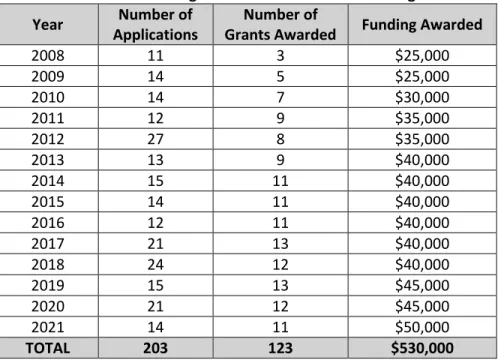
The grant program began in 2008 and continues to provide annual funding to nonprofit organizations that do things like host events, workshops, and educational programs in schools and communities.
GRANT APPLICATION EVALUATION CRITERIA
The agriculture awareness activity is unique. A high score will be given to awareness activities that are one of a kind in the region and are currently not being done by another organization in
The geographic scope of the grants awarded reaches out to municipalities across the region. A high score will be awarded to projects that provide a broad reach in Metro Vancouver or are
The activity contributes to the following desirable outcomes that support regional policy objectives, where a high score is awarded when the agriculture awareness activity aligns with two
The extent to which grant applicants have received previous Agriculture Awareness Grant funding, and the completion of the imposed conditions listed on the application form. Groups
2022 AGRICULTURE AWARENESS GRANTS
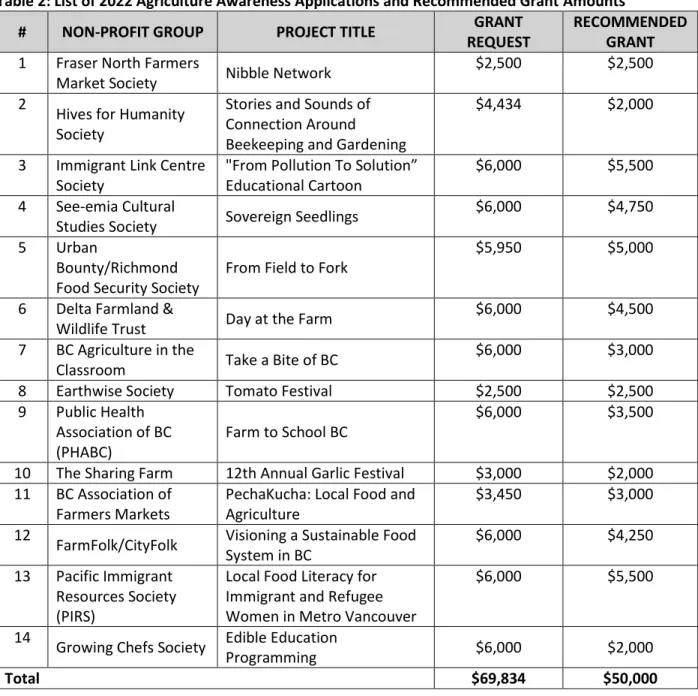
That the MVRD Board award the annual Agriculture Awareness Grant to the following fourteen non-profit organizations as described in the report dated April 8, 2022, titled “2022 Agriculture
That the Regional Planning Committee receive for its information the report dated April 8, 2022, entitled “2022 Agricultural Outreach Grant Recommendations” and provide an alternative direction.
That the Regional Planning Committee receive for information the report dated April 8, 2022 titled “2022 Agriculture Awareness Grant Recommendations” and provide alternative direction
Summary List of 2022 Agriculture Awareness Applications
ATTACHMENT
The City of Maple Ridge submitted an application to the Greater Vancouver Sewerage and Drainage District to extend sewer service to a parcel to provide services to allow for the expansion of an existing restaurant at 13179 224 Street. On November 4, 2019, the City of Maple Ridge submitted an application to the Greater Vancouver Sewerage and Drainage District (GVS&DD) to serve the property at 13179 224 Road (Attachment 1).
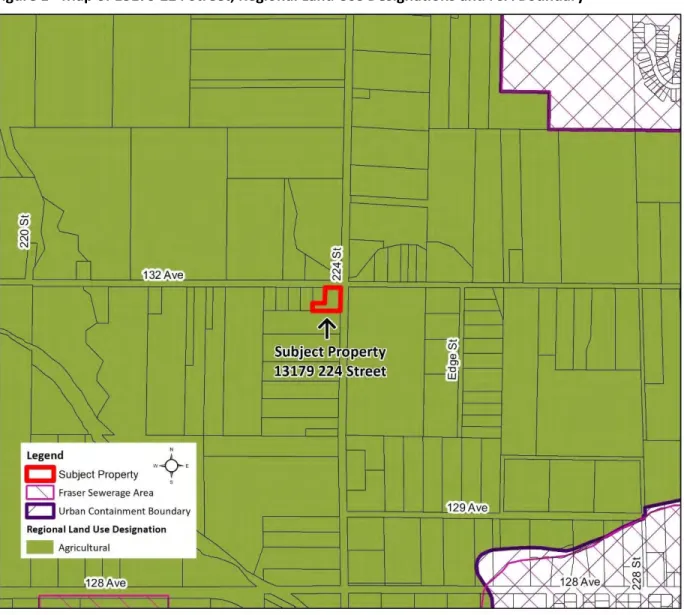
METRO 2040 AND SEWERAGE AREA EXTENSION REQUESTS
REGIONAL PLANNING ANALYSIS
- That the MVRD Board
- That the MVRD Board resolve that the extension of GVS&DD sewerage services to an existing restaurant and three additional existing businesses at 13179 224 Street in the City of Maple Ridge
If the MVRD Board selects Option 2, the decision will be forwarded to Liquid Waste Services staff and the GVS&DD Board, and the City of Maple Ridge will be notified. GVS&DD has received an application from the City of Maple Ridge to extend the sanitary service connection to the property at 13179 224 Street to allow for an expansion to the existing restaurant.
Attachments
Letter from the City of Maple Ridge dated November 4, 2019 to Metro Vancouver Liquid Waste Services staff requesting a sanitary sewer service connection for 13179 224 Street
Any financial implications related to the proposed service connection will be considered within the GVS&DD's application review process. If the MVRD Board selects Alternative 1, since the property is located outside the FSA, GVS&DD Board approval is still required.
Letter from the Agricultural Land Commission dated December 14, 2021
- ATTACHMENT 1
It is recommended that Council support the request to seek approval from Metro Vancouver to make a sanitary service connection to the proper provision. That Metro Vancouver approve the property owner's request for a sanitary service connection to the regional collection system.
Section 30 Township 12 New Westminster District Plan 10983
- ATTACHMENT 2
Any future advice provided by the ALC to local government as part of the bylaw referral process, further described in the ALC Bylaw Reviews: A Guide for Local. Governments will reaffirm the ALC's mandate to preserve agricultural land and maintain the integrity of the ALR.
REGIONAL PLANNING COMMITTEE 2022 WORK PLAN
REGIONAL GROWTH STRATEGY IMPLEMENTATION GUIDELINES UPDATE
As part of the engagement process, Metro Vancouver will provide the Regional Planning Advisory Committee and other key stakeholders with the opportunity to review and comment on the draft implementation guidelines. The final implementation guidelines will be forwarded to the Regional Planning Committee and the MVRD Board for approval after Metro 2050 has been adopted.
CLIMATE 2050 DRAFT AGRICULTURE AND DRAFT NATURE AND ECOSYSTEMS ROADMAPS
Regional Planning Committee 2022 Work Plan Report Date: April 28, 2022
Priorities
ATTACHMENT
To seek direction from the MVRD Board to continue engagement on the draft Nature and Ecosystem Climate Roadmap 2050. Draft Nature and Ecosystem Climate Roadmap 2050 Climate Action Committee Regular Meeting Date: April 8 2022 Page 2 of 4.
CLIMATE 2050
DRAFT CLIMATE 2050 NATURE AND ECOSYSTEMS ROADMAP
Integrate Natural Assets into Conventional Asset Management and Decision-Making Processes
Potential Impact on Greenhouse Gas Emissions
Potential Impact on Regional Resiliency
Draft Climate 2050 Roadmap for Nature and Ecosystems Climate Action Committee ordinary meeting date: 8 April 2022 Page 3 of 4. There are important connections between the draft Climate 2050 Roadmap for Nature and Ecosystems and the regional growth strategy (draft for Metro 2050), which is currently in the approval phase.
ENGAGEMENT PROCESS
That the MVRD Board direct staff to proceed with engagement on the draft Climate 2050 Nature and Ecosystems Roadmap, as presented in the report dated March 9, 2022, titled "Draft Climate
That the MVRD board receives the report dated March 9, 2022 for information, entitled "Draft Climate 2050 Roadmap Nature and Ecosystems" and provides alternative instructions to the staff. Staff recommends Alternative 1, with Council directing staff to continue engagement on the draft Climate 2050 Nature and Ecosystems Roadmap.
CLIMATE 2050 ROADMAP
ATTACHMENT
1 Metro Vancouver recognizes that residents of the region live, work and learn on the shared lands of many Indigenous peoples, including 10 local First Nations: Katzie, Kwantlen, Kwikwetlem, Matsqui, Musqueam, Qayqayt, Semiahmoo, Squamish, Tsawwassen and Tsleil-Waututh. Metro Vancouver respects the diverse and diverse histories, languages and cultures of First Nations, Metis and Inuit people who together enrich our lives and the region.
Your input is valued
Metro Vancouver
Serve as a Regional Federation Serve as the main political forum for discussion of significant community issues at the regional level, and facilitate the collaboration of members in delivering the services best provided at the
Plan for the Region Carry out planning and regulatory responsibilities related to the three utility services as well as air quality, regional planning, regional parks, Electoral Area A, affordable housing, labour relations, regional
BUILDING A RESILIENT REGION
As part of this role, Metro Vancouver coordinates and advocates with other governments and partners on behalf of its member jurisdictions on greenhouse gas management and climate change adaptation initiatives. Metro Vancouver will look to other government mandates, First Nations and other regional partners to lead and collaborate on the implementation of many of the key actions in the 2050 Climate Roadmaps.
The Roadmap At a Glance
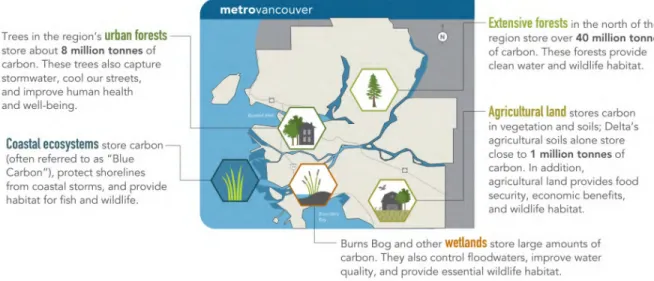
A path to carbon storage and building a resilient future with nature and ecosystems in Metro Vancouver. The importance of nature and ecosystems in the Metro Vancouver region is intrinsic, priceless and.
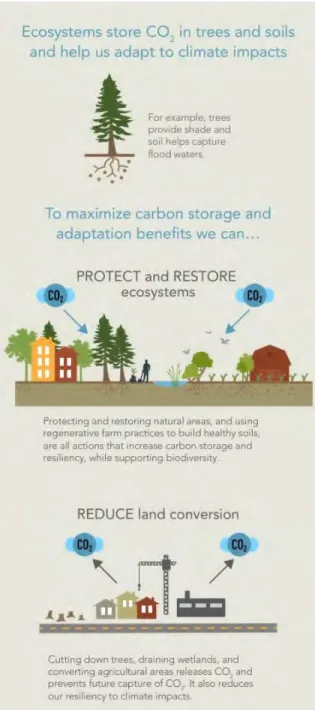
NATURE-BASED SOLUTIONS
Protect, Restore, and Enhance the Region’s Ecosystems
Metro Vancouver maintains a Sensitive Ecosystem List (SEI) of the region's most important ecological areas and monitors it for changes. Metro Vancouver provides land for regional parks to protect the region's natural areas and connect people with nature.
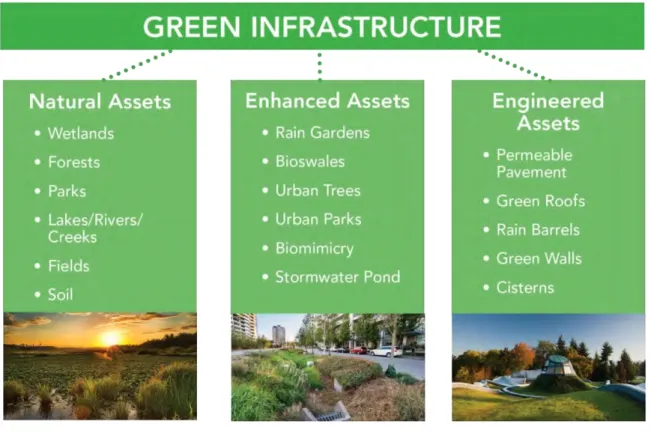
Connect Green Infrastructure
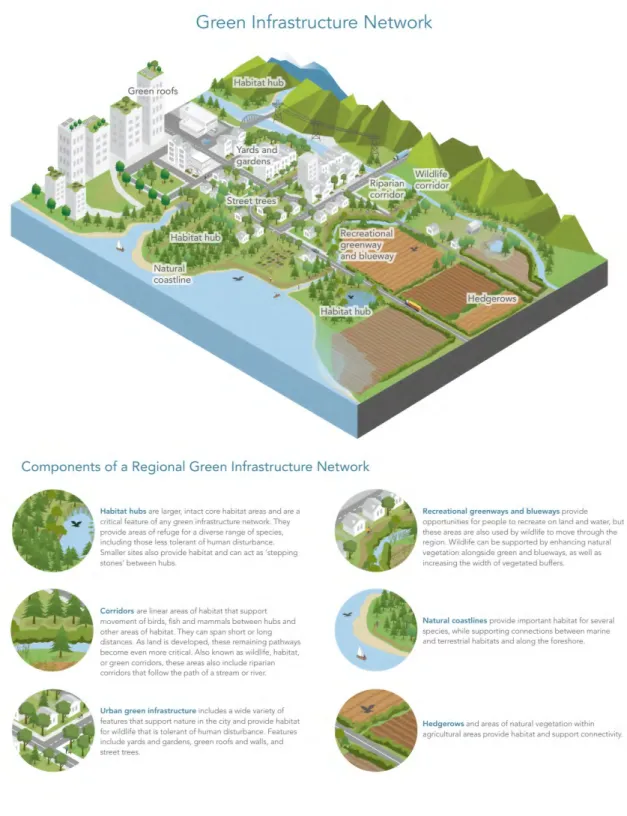
They provide refuges for a wide range of species, including those less tolerant of human disturbance. Corridors are linear areas of habitat that support the movement of birds, fish and mammals between hubs and other areas of habitat.
Integrate Natural Assets into Conventional Asset Management and Decision-Making Processes
Develop guidance materials to support natural resource management at the local level and provide a forum for sharing and advancing best practices. Explore the legal environment and other barriers that may hinder the management of natural resources in the Metro Vancouver region.
Support a Resilient, Robust, and Healthy Urban Forest
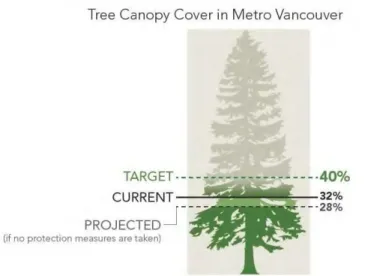
All member jurisdictions, through the implementation of the regional growth strategy, will identify local tree canopy cover targets and demonstrate how these targets will contribute to the regional target of 40% canopy cover within the Urban containment boundary of the region. This means that local residents can play an important role in improving residential tree canopy cover within communities.
Advance Nature-based Solutions to Climate Change
Providing a forum for collaboration and knowledge sharing will help overcome barriers and promote nature-based solutions in the region. Work with academic institutions and other regional partners to better understand the long-term health and carbon storage potential of the region's coastal and marine ecosystems.
CLIMATE 2050 STRATEGIC FRAMEWORK
DRAFT CLIMATE 2050 AGRICULTURE ROADMAP
Protect Agricultural Land
Support Farmers and Climate Action Leaders 3. Support Long-Term Farm Health and Resiliency
Leverage Economic Opportunities, Innovation and Leadership
Each of the Climate 2050 Roadmaps, including the Climate 2050 Agriculture Roadmap, is intended to serve as a “living, breathing” document that charts the path to achieving the region's climate action goals and targets. Relationship between the Climate 2050 Agriculture Roadmap, Clean Air Plan and Metro 2050 Approved by the MVRD Board of Directors on September 24, 2021, the Clean Air Plan is Metro Vancouver's fourth.
Relationship between the Climate 2050 Agriculture Roadmap, Clean Air Plan and Metro 2050 Approved on September 24, 2021 by the MVRD Board, the Clean Air Plan is Metro Vancouver's fourth
That the MVRD Board authorize staff to proceed with engagement on the draft Climate 2050 Agriculture Roadmap, as presented in the report dated October 13, 2021, titled "Draft Climate
Metro Vancouver's draft Climate 2050 Agriculture Roadmap outlines strategies and actions to transform regional agriculture to be resilient and adaptable to climate change and achieve carbon neutrality by 2050. Staff recommends Alternative 1: that the board authorize staff to continue public engagement on the draft Climate 2050 Agricultural Roadmap.
AGRICULTURE ROADMAP
ATTACHMENT
The three broad roles outlined in Metro Vancouver's mission each demonstrate responsibilities related to climate change. Metro Vancouver's 2015 Regional Emissions Inventory estimates that agricultural activities generate 4% of total greenhouse gas emissions in the region.
ROLES AND RESPONSIBILITIES
- Protect Agricultural Land
- Support Farmers as Climate Action Leaders
- Support Long-Term Farm Health and Resiliency
- Leverage Economic Opportunities, Innovation and Leadership
Metro Vancouver will continue to work with its Agricultural Advisory Committee to protect the region's agricultural land base and will continue to work with the Agricultural Land Commission to protect and optimize agricultural land use to maintain agricultural land capacity well into the future. Work with the BC government, member jurisdictions, industry and other regional partners to increase the agricultural community's capacity to integrate climate change into their ongoing business decisions and operations.
CLIMATE 2050 AGRICULTURE ROADMAP ACTION TIMELINE
Protect Agricultural
Carbon dioxide (CO2) is the primary driver of climate change, and is mainly produced by burning fossil fuels. Methane (CH4) is a short-lived greenhouse gas and is 25 times more effective than carbon dioxide at trapping heat in the atmosphere.
LIVING TOGETHER
Connecting housing, social well-being and resilience
Please join us for a two-day series of engaging presentations and dialogues about tackling loneliness and social isolation in our homes and urban communities
In-person Virtual
SESSION DESCRIPTIONS & SPEAKER BIOGRAPHIES
REGISTER HERE
PROFESSIONAL PLANNERS: Each day of the symposium is eligible for 5.0 PIBC CPL units
ARCHITECTS: You can self-report the following sessions as non-core learning units to the AIBC Continuing Education system
SPEAKERS
SPEAKER BIOGRAPHIES
Sarah Silva, CEO, Hiy̓ám̓ ta Sḵwx̱wú7mesh Housing Society
Joan Ramon Riera Alemany, Councillor, City of Barcelona
Ashley Flanagan, Research Fellow, National Institute on Ageing
Bruce Haden, Co-Founder, Human Studio
Madyson McKay, Project Manager, City of Calgary
Sadhu Johnston, Former City Manager, City of Vancouver
Daley, where he led the development of the first climate action plan in a major North American city. He is co-author of The Guide to Greening Cities (Island Press, 2013) and is co-founder of the Urban Sustainability Directors Network (USDN).
Iris Lok, University of British Columbia
Erin Rennie, Senior Planner, Metro Vancouver
Laurie Bates-Frymel, Senior Planner, Metro Vancouver
Forward-looking architects, builders, housing operators and non-profit organizations are working hard to create and maintain innovative forms of housing that support social cohesion and well-being. They will also share examples of challenges and barriers to mainstreaming innovative housing across the province.
Michael Eliason, Founder, Larch Lab (Seattle)
Join us to hear from industry champions working to design and develop more sustainable, affordable and socially connected housing. Our champions will present innovative projects and policies that overcome systemic barriers to create spaces and programming that promote social connectedness.
Kent Patenaude, Development Manager, Lu’ma Development (West Vancouver)
In his presentation, Kent will share some of Lu'ma's recent development projects, including Sixth Street Housing in New Westminster and the ALT Hastings project. He will share the success and challenges of creating housing for urban-indigenous people and the importance of partnerships.
John Wall, Public Architecture, Vienna House (Vancouver)
WORKSHOP
BIO TO COME
ABOUT THE SYMPOSIUM HOSTS
Since 2016, we have been exploring the keys to addressing the loneliness crisis in multi-unit buildings. In 2017, we published the Happy Homes Toolkit, complete with design and programming actions to promote social connection in multi-unit buildings.