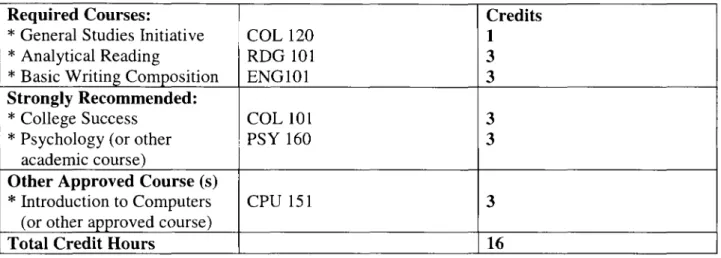
The aim of this study was to evaluate and determine the effectiveness of the Initiative programme. College Success 120 (COL120): This course was originally called Independent Study 151, and it was changed to College Success 120 after the first semester of the Initiative Program. Some of the intervention strategies presented in the high school study can be considered and adapted to meet the needs of the General Studies Initiative Program students.
The results of the above high school study showed some support for my hypothesis that attention focused on interventions and integration of students conditionally accepted into the General Studies Initiative Program at Lethbridge Community College should enable them to succeed . Finally, as mentioned earlier, some of the review processes and required courses used in the Predicting Academic Success program were worthy of consideration for the Initiative Program study at Lethbridge Community College. The administration of the Initiative Program in its first semester was the. treatment used in this experiment.
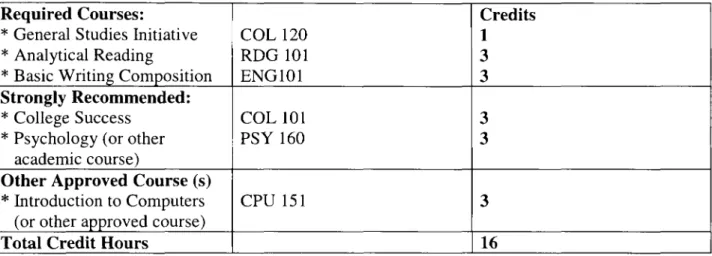
Using an experimental design, the goal was to determine whether or not participation in the Initiative Program would result in increased retention and success for the Program's conditionally accepted General Studies students. The structure and requirements of the General Studies Program remained the same during these years, with the exception of the Initiative Program. which offered more student support and the COL120 course) which was added in the fall of 2000. The experimental treatment used in this study was the administration of the Initiative Program for conditionally accepted General Studies students.
The duration of treatment for this study was one academic semester; However, the Initiative Program is still being adjusted and is still focused on helping conditionally admitted first-semester students succeed and continue their education. Therefore, the Initiative Program, which includes the College Success 120 course, and the developmental courses were part of the students' registration requirements. Furthermore, students in the experimental group were not aware that they were participating in a study until the end of the semester when they completed a survey for this study.
RESULTS
The majority of students in both the control group and the experimental group were between 18 and 19 years old. The average credit load per students in the control group was 16.7 in the first semester and 17 in the second semester. The average credit load per students in the experimental group was 16.88 in their first semester and 15.97 in semester two.
In the second semester, the experimental group averaged one credit less than the control group in the number of credits enrolled per student. Since some of the full-time students from the first semester returned as part-time students in the second semester, there was a wider range of credits enrolled per student in the second semester for both groups. For example, in the second semester, the range of credits enrolled per student for the control group was 6 to 25 credits and 2 to 23 credits for the experimental group.
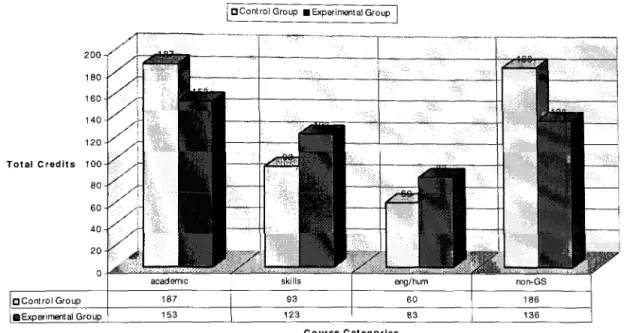
In semester two, students in the experimental group who successfully completed their prerequisites, including COLI20, were able to register for any courses they wanted; therefore, the total credits and range numbers have no value. For example, if a conditionally accepted student attempts to complete the majority of science and math courses in semester one, he or she may encounter difficulties due to a lack of skill development, which may lead to failure in semester one. Grade point average central tendency measures and variability for semesters one and two of control group and experimental group.
Only the control group in the first semester shows an almost symmetrical distribution with mean, mode and median. The amount of variability (1.59 SD) shown in Table 4.2 showed a wide dispersion of scores from the mean for the experimental group in the first semester, which explains the 90% concentration of the population within deviations -1 and +1. The control group in the first and second semesters together with the experimental group in the second semester show a more normal distribution with approximately 68%.
The control group had a 10% drop in the number of students who passed in the second semester compared to the first semester. There was a 6% increase in second semester GPA pass rate for the experimental group. Students in both groups who received a GPA score < 1.50 in the first semester were placed on academic probation and their subsequent semester brought their GPA scores up to 1.50 or higher to ensure their continued placement in the program.
CII 11
Of those who continued, 28 out of 31 in the experimental group remained in the general study program. When students were asked if the advantages of the initiative program (survey question #14, see Appendix A) outweighed the disadvantages, 69% said yes and 31% said no. The results of the retention data do not clearly indicate that the initiative program had a positive effect on the number of initiative students who returned for the second semester.
The control group scored higher on average in all areas (reading, writing, algebra) of the computerized placement tests than. The control group may not have acquired any of the necessary skill development in the first semester to initiate an increase in the percentage of successful students in the second semester. Of the students who did not return to Lethbridge Community College for a second semester, 9% were from the control group and 20% from the experimental group.
Homesickness may have been a possibility why some Initiative students did not return for the second semester. The research helped shed light on the data outcomes and success of the initiative. The survey responses showed a similar pattern to previous responses when students were asked how satisfied they were with the content of the Initiative's courses.
According to the data, the effectiveness of the initiative program was not clearly evident in the first semester. However, ongoing feedback and evaluation of the program will help maintain the overall effectiveness of the initiative program in future semesters. The COL120 course was essential to the success of the initiative program because the course was used as a means of supporting students.
In other words, the COL120 instructor was also there to support the instructors of the Initiative students. The following questions require your honest and thoughtful answers regarding the operation and relevance of the Initiative program. If you do not want your answers to be included in the research, you can indicate this at the end of the survey.
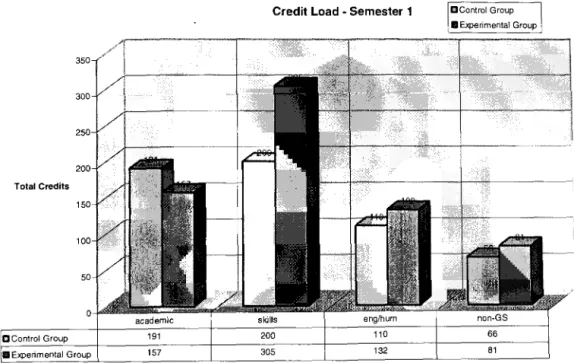
For example, the experimental group may have increased its average GP A score in semester two because of the high credit load in the skill development area in its first. The following questions require your honest and thoughtful answers about the value and relevance of the Initiative Program and COL120.