This study explores the role of second units in the socio-economic integration of young immigrants living in the city of Mississauga, Ontario. How allowing second units helps socio-economic integration of new immigrants in Mississauga. This section informs about the benefits and drawbacks of second units in the perspective of socio-economic barriers that new immigrants face in the settlement process.

Literature Review
Kilbride et al (2006) present a similar observation in a pioneering study of housing and homelessness in the Peel region. First, the slower rate of income convergence of immigrants with Canadian-born in the Toronto metropolitan area (Dougherty, 1999), second, because they are less informed about the housing market due to limited knowledge and network resources (Preston et al., 2009, Kilbride et al, 2006) . In the second half of the 20th century, this composition of immigrants changed dramatically due to shifts in selection criteria, the expansion of immigrant categories, and the elimination of explicit racial selection criteria (Preston et al., 2009; Ray, 1994).
Method
Experiences of living in Canada including housing history, reason to move to a second unit, living standards and conditions, maintenance, design and layout, landlord behavior and pros and cons of living in a second unit . For the interviews, second unit owners were asked about their tenant preferences, the benefits and drawbacks of second units, their condition and maintenance, the second unit legalization process and challenges, their perspective on barriers to integration of new immigrants and how programs can help to address them. . City of Mississauga staff responsible for the second unit legalization process were also interviewed for this study.
What are the various concerns and requests expressed by homeowners and second unit owners at the public consultation meetings. There is no database compiled for the residents of the second unit, so an informal network was used to inform them about searches in public places such as parks, playgrounds, schools, etc. Second, it was very difficult to identify whether a second unit had been rented since then. many did not have independent access or bells.
Staff responsible for the second unit legalization process in the City of Mississauga and those working for the settlement agency were contacted via email. These summaries, combined with qualitative data, helped understand the challenges second unit renters face and the benefits they reap from living in a unit. Furthermore, in light of the discussion with city staff and the settlement agency, it was possible to propose programs and policy recommendations that could be included in the second unit legislation for the smooth and rapid socio-economic integration of new immigrants in Mississauga.
The next chapter will explain the survey findings and further analyze them to realize the benefits and appeal of living in a second unit for newcomers to this Mississauga neighbourhood.
Survey Findings
Demographic characteristics
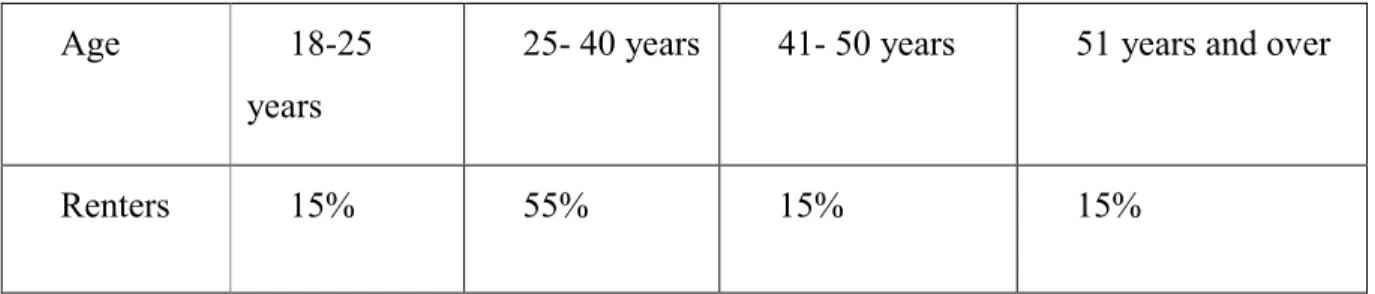
Age: The representative sample of second unit renters in this residence ranged primarily in the 25 to 40 age group (55%). Their main reason for living in the area was proximity to their relatives, friends and children. However, respondents belonging to all age groups considered living in the second unit as a temporary phase.
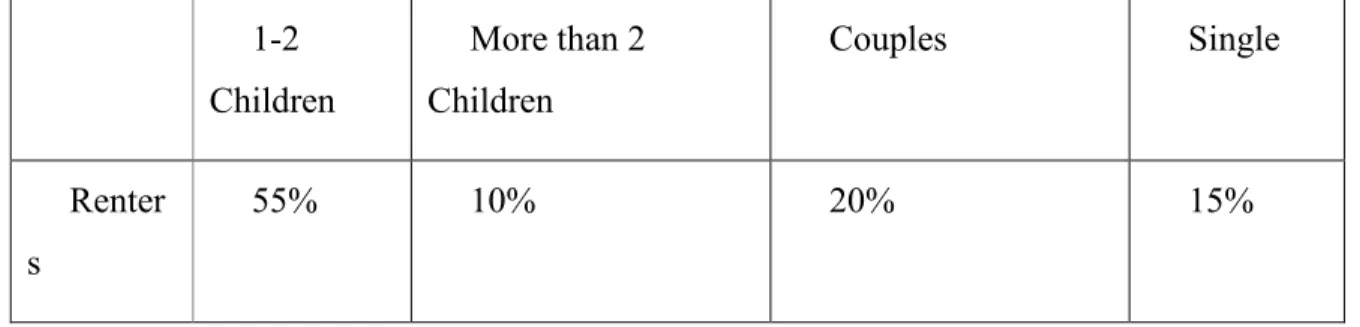
Large population (85%) were either couples or lived with children: 55 percent of them with one to two children. For ages of the total population of second unit renters, 80 percent of the children lied between 0-10 years of age. This statistic can be linked to the changes in the immigration policy, which encourages immigration of the childbearing age through the allocation of points.
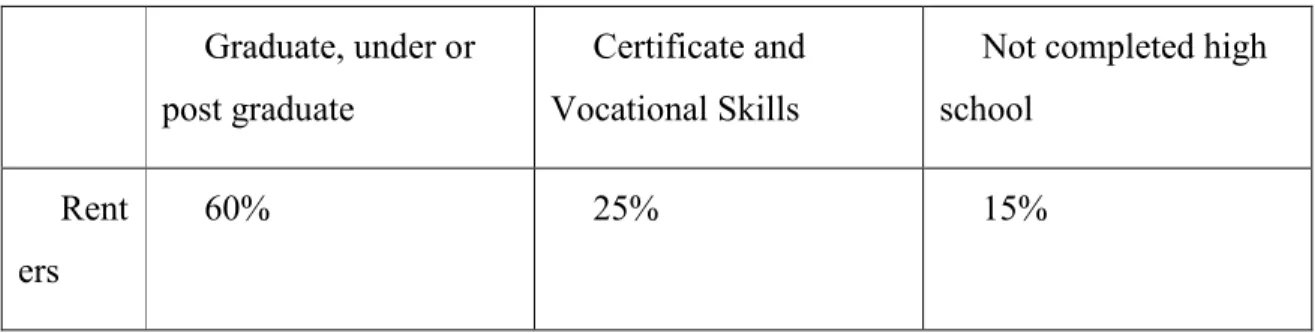
Many of them also reported having some kind of vocational or skills training, mostly outside of Canada. Although they reported having extended families living in the same city or in Canada. However, their reason for living in this area was not based on proximity to their families or friends.
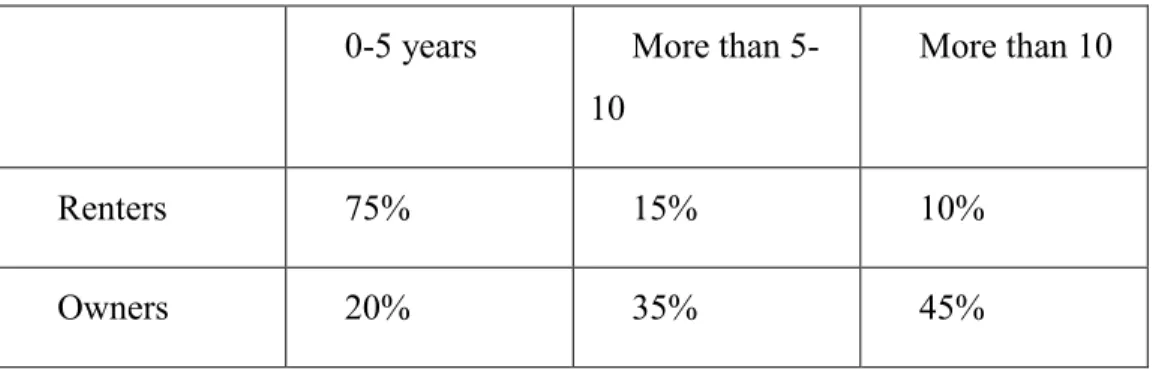
Those tenants who have lived in Canada for more than 10 years, however, based their residential location on proximity to their children, friends and family, in addition to proximity to their jobs.
Socio-economic challenges
They acknowledged how their links and communication with their families made it easier for them to fulfill basic needs in an informed way. Many of them realized that their decision to come and live in Mississauga was based on recommendations from friends or family as their knowledge about settlement and housing in some GTA cities was incomplete. Respondents mostly reported that the work they are currently doing is not relevant to their education.
Income: Renters, mostly new immigrants, talked about the high cost of living in Canada compared to their incomes. Combined with the stress of unaffordable jobs and the high cost of living, it was risky for them to wait for suitable employment. Many respondents said that despite the low cost of renting other units, they find it difficult to cover the cost of renting and buying groceries with their current income.
Most of those who immigrated from temperate or hot climates never required the warm clothing they needed here in Canada for themselves and their children. Some of them trusted to buy them incrementally from thrift stores, garage sales, or other people who didn't need them anymore. Social networks: Respondents informed that they had expanded their social networks after moving into these units through their homeowner and neighbor connections.
These web-based networks played a crucial role in their socio-economic integration in Canada by introducing them to many social media websites, internet blogs and other forums.
Housing access, availability, and adequacy
Some of the respondents also reported moving from another city or from a single-family housing unit. Most of the respondents said that they considered living in these units as a transitional phase, which they could successfully overcome once their incomes increased. One of the respondents talked about a doctor who could not find an equal job even after completing the necessary requirements.
One of the respondents, who lived in the unit because his daughter's house was nearby, said that he could not afford to live in a house in that area. None of the respondents reported being looked down upon for living in these units. Career development and other units: Some respondents also said that they do some small jobs for the owner or in the neighborhood for social networking or instead of money, such as sewing or babysitting.
Owners sometimes also threaten them with the consequences of living in an illegal unit, if they complain. Many of the respondents said that they did not know their legal status or rights as tenants in Canada. Some of the respondents stated that it is expensive for them to rent equipment if it is available.
Thus, the settlement services are unaware of the location of new immigrants who live in other units of single dwellings in large numbers besides apartment buildings and city centers.
Case studies
With zoning changes, other units could be built on owner-occupied lots of 5,000 square feet or more. The program extends the affordable housing benefits of other units to address socio-economic issues of women. The city also encouraged new second units through its low-interest loan program for low-income owners if they agreed to rent a unit.
The second unit program helped address many of the housing issues in the City. General Provisions: This section addresses state policy regarding the encouragement of second units to improve neighborhoods. Limiting Regulatory Authority: This section regulates parking requirements and fees that limit the regulatory authority of the city government to impede the growth of the second units.
With these changes, since 1996, other units have been legalized in the city to provide affordable housing in single-family residential and rural residential zones. The researchers examined the validity of different approaches to charging other units and homes for utilities in three different population densities in the municipalities of the City of Victoria, the District of North Vancouver and the City of Abbotsford. On average, 4.3 people lived in houses without other units, and 7.3 people in houses with other units.
As discussed above, the increased population and the added strain on the city's infrastructure were successfully integrated and dispelled the threatening myths of the expected incapacity of other units.
Conclusion and Next Steps
These issues and the second question of this research are addressed in the next steps. More extensive changes to the alarm system design are also required to accommodate different cooking methods. The four case studies in the methods section can be very useful if the City and other levels of government seriously collaborate to address the outstanding issues.
In summary, it is very important to mention that this study serves as a preliminary investigation into the role of second units for newcomer socio-economic integration in one Mississauga neighbourhood. Purpose of the study: This research will compare the advantages and disadvantages of Second Units in socio-economic integration of new immigrants in the City of Mississauga. 15 adult Second Unit renters and 10 owners will be randomly recruited for interviews and questionnaire surveys in the Heartland area of Mississauga.
Questionnaires would be given to subjects in the first week of January for fifteen days to fill. Benefits of the Study: Although this research would serve no individual benefit to the participants; it would benefit society in general in the following ways;. Accessory Units: State of the Art, Report I, Summary of Experience with Accessory Units in the United States and Canada.
An examination of the extent of substandard housing problems faced by immigrants and refugees in British Columbia's Lower Mainland. Local strategies in financing resale properties in the Toronto housing market, Urban Studies The Social Planning Council of Peel. Towards a Comfortable Neighborhood and Appropriate Housing: Immigrant Experience in Toronto in The World in A City eds.