I authorize Ryerson University to lend this dissertation to other institutions or individuals for scientific research. I further authorize Ryerson University to reproduce this dissertation in whole or in part by photocopying or otherwise, at the request of other institutions or individuals, for the purpose of scholarly research. I would like to express my deepest and sincere gratitude to my supervisor and mentor Dr.
I am grateful to him for all the opportunities he has given me in such a short time and for the chance to grow not only as a scientist but also as a person. Jeffery Fillingham for their valuable opinions and guidance throughout my graduate degree. I would like to thank my labmates, new and old, for sharing their knowledge, skills and camaraderie during our time together.
Hugo Menzella and Pablo Ravasi for their generous gift of the synthetic shuttle vector, Dr. Also, I would like to thank my family from the bottom of my heart for their support and encouragement, in addition to instilling in me the value of following my passions.
Introduction
- Glycoside hydrolases
- Originating from soil bacteria
- CAZy database annotation
- A brief history of glycoside hydrolases from Cellulomonas
- Potential applications of novel glycoside hydrolase family 6s
- Problematic expression in Escherichia coli
- Twin-arginine-translocon dependent secretion
- TorA signal peptide
- Corynebacterium glutamicum
- Use as an expression host in tandem with TAT secretion
- Overall goal
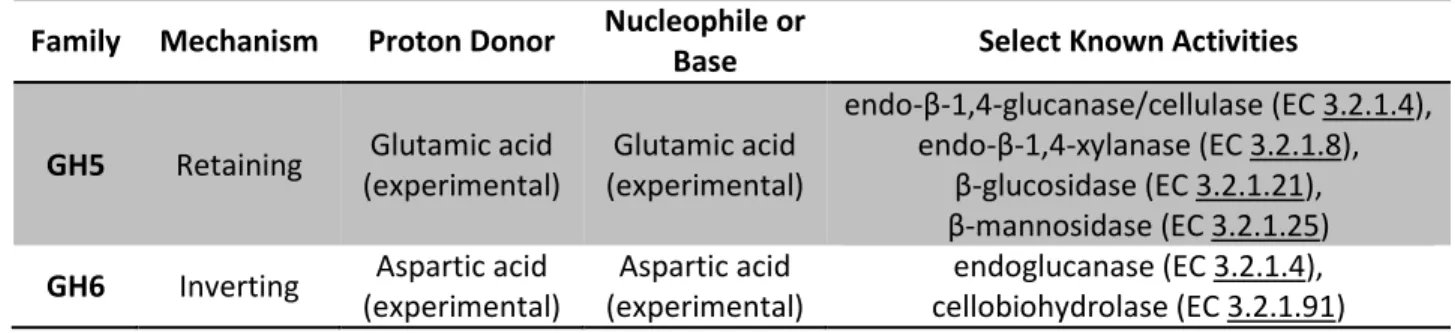
The CAZy database indicates both the stereochemical outcome of the reaction as well as the amino acid residues acting as a proton donor and nucleophile (when known) 58. The identification of the nucleophile is much less straightforward, although there is increasing evidence that it is also an aspartic acid residue located within the active site tunnel 51. Many of the newly identified GHs are hypothesized to be novel cellulases or xylanases and a handful of them have been identified as unique to C.
Identification and characterization of new GH6s could serve to improve the efficiency of the saccharification of cellulosic biomass for the production of biofuels. Protein export from the cytoplasm of a cell to other organelles or out of the cell is common. The TAT signal peptide of the molybdopterin-containing protein trimethylamine N-oxide (TMAO) reductase (TorA), a protein known to be exported via the TAT pathway in E.
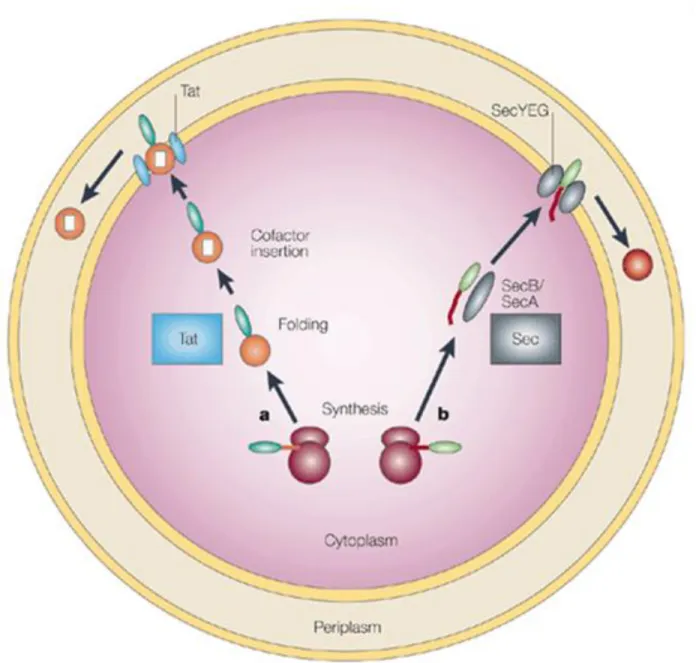
Fusion of the TorA signal peptide with green fluorescent protein (GFP) has been shown to simultaneously enhance the cytoplasmic folding of heterologous GFP and localize it to the periplasmic space when expressed in E. The Sec pathway (B) connects the preproteins to the SecB protein (which prevents cytoplasmic folding of the mature domain) before it is transferred to SecA.

Materials and Methods
- Strains
- Shuttle vector design
- Synthetic gene design and synthesis
- Cloning
- Verification of TorA modification
- Generation of glycoside hydrolase construct library
- Genomic DNA extraction
- Primer design and PCR
- Verification of cloning and sequencing
- Preparation and transformation of competent cells
- Chemically competent E. coli
- Electrocompetent E. coli
- Electrocompetent C. glutamicum
- TorA-dependant localization of recombinant proteins
- E. coli periplasmic extraction of recombinant proteins
- Expression and purification of recombinant glycoside hydrolases
- Expression and purification in Escherichia coli
- Expression and purification in Corynebacterium glutamicum
- Enzyme activity assays
- PAHBAH
- Dye-conjugated substrates
- Thin-layer chromatography
- Determination of enzyme concentration
Individual colonies were picked and used to inoculate and grown overnight with shaking at 37°C. C. This was used to inoculate 100 ml of LB medium at a dilution of 1:100, which was then incubated at 30°C with shaking until early exponential growth was observed, indicated by an OD600. The culture was chilled on ice for 10 minutes before centrifugation at 3000 g for 15 minutes at 4°C.
Frozen cells were thawed on ice before adding 1 µL containing ≈ 100 ng of plasmid DNA. This was used to inoculate 500 ml of LB media at a 1:100 dilution, which was subsequently incubated at 37°C with shaking until early logarithmic growth was observed, indicated by an OD600 measurement of 0.35 – 0, 4. The culture was cooled on ice for 10 min before centrifugation at 1,000 g for 20 min at 4°C.
Frozen cells were thawed on ice before adding 1 µL containing ≈ 10 ng of plasmid DNA. Frozen cells were thawed on ice before adding 1 µL containing ≈ 50 ng of plasmid DNA. Outgrowth was performed with shaking at 30°C for 2 h in LB media supplemented with 0.5% w/v glucose before plating on selective media containing 25 µg/ml kanamycin (BioShop) and growth overnight at 30°C.
Cultures of 2 ml of Shuffle Express with different constructs (containing GFP, CFI-65, CFI-75, CFI-85 or CFI-93) were grown overnight in LB media with 50 µg/ml kanamycin (BioShop) at 30°C while shaking. This was used to inoculate 50 ml of 2YT medium (Sigma-Aldrich) with 50 µg/ml kanamycin (BioShop) at a dilution of 1:500 and incubated with shaking at 30°C until exponential growth was observed, indicated by an OD600 -measurement of 0.5. – 0.7. Sterile IPTG (isopropyl β-D-1-thiogalactopyranoside, BioVectra) was added to a final concentration of 0.5 mM and the induction was continued overnight at 25°C with shaking.
2 ml of Shuffle Express culture with different constructs (CFI-65, CFI-75, CFI-85 or CFI-93) were grown overnight in LB medium with 50 µg/mL kanamycin (BioShop) at 30 °C with shaking. This was used to inoculate 200 mL of 2YT medium (Sigma-Aldrich) with 50 µg/mL kanamycin (BioShop) at a dilution of 1:500 and incubated at 30 °C with shaking until logarithmic growth as indicated by OD600 was observed. Sterile IPTG (BioVectra) was added to a final concentration of 0.5 mM and induction continued overnight at 25°C with shaking.
This was used to inoculate 50 ml of 2YT medium (Sigma-Aldrich) with 25 µg/ml kanamycin (BioShop) at a dilution of 1:100 and incubated overnight at 30°C with shaking. Sterile IPTG (BioVectra) was added to a final concentration of 0.5 mM and the induction was continued for 48 hours at 30°C with shaking.
Results
Molecular biology
- Vector modification
- Glycoside hydrolase construct library
Recombinant protein production
- Test expression of eGFP
- Expression of glycoside hydrolases in Escherichia coli
- Expression of glycoside hydrolases in Corynebacterium glutamicum
After comparing activity with control proteins, it was determined that 780 µg of CFI-75 and 43 µg of CFI-93 were purified (Figure 3.3 B and Figure 3.4 B, respectively). Although similar to the methods described in section 2.6.1, the purification of these proteins is not described here. These cells were cultured, induced and protein was purified from the culture supernatants as described in section 2.6.2.
After comparing activity with control proteins, it was determined that 25 µg of CFI-75 and 350 µg of CFI-93 were purified (Figure 3.5 B and Figure 3.6 B, respectively).
Biochemical characterization
- Control protein activity on cellulose derivatives
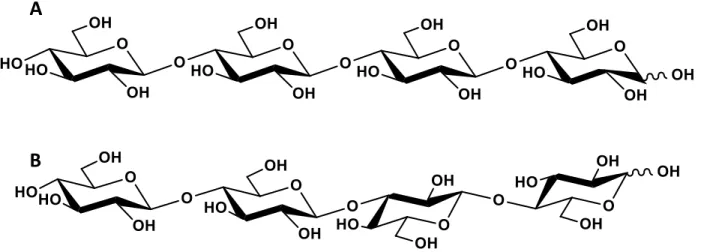
The hydrolysis products of both Celf_1230 and Celf_3184 on CMC and 1,3:1,4-Barley β-glucan were tested by TLC as described in Section 2.8 (Figure 3.8) to identify whether the β-1,3-glycosidic bond (Figure 2.4) ) was cleaved, resulting in the observed increase in activity on the mixed binding substrate. The result of this test shows that the β-1,3 linkage is in fact not cleaved. The thermostabilities of Celf_1230 and Celf_3184 were tested on both CMC and 1,3:1,4-Barley β-glucan to observe any trends in activity over time for both glycoside hydrolases and substrates at both their optimal temperatures and 5°C from their temperature. optimal temperatures (Figure 3.9).
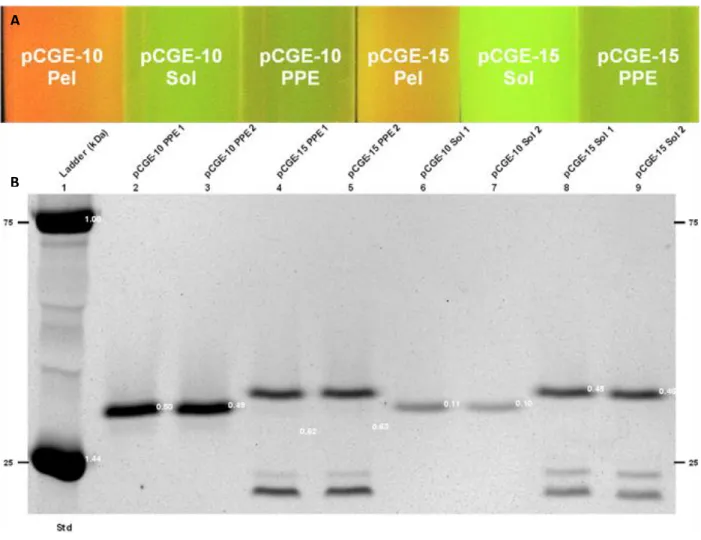
Both glycoside hydrolases showed improved activity on 1,3:1,4-Barley β-glucan (compared to CMC) over time and across both temperatures analyzed. These results show that both glycoside hydrolases are not only more active but also more thermostable on the 1,3:1,4-Barley β-glucan substrate than on CMC. GFP expressed with TorA signal peptide shows more fluorescence when visualized with a short-wave blue light box in all fractions, especially the soluble fraction.
Increased fluorescence in the soluble fraction of GFP linked to TorA is the result of a greater proportion of correctly folded and active protein compared to GFP without the TAT signal sequence. The TorA signal peptide enhanced GFP activity by a factor of 1.26 in the periplasmic fraction and by a factor of 4.33 in the cytoplasmic fraction. A total of 300 ng of purified 6His-tagged Celf_1230 was loaded as a western blot control, while 25 µg of protein from cell lysates was loaded per lane.
After purification (A) and buffer exchange, protein recovery was determined by assaying relative activity against purified Celf_1230 (B) with no detectable activity in either the flow-through or wash fractions. After purification (A) and buffer exchange, protein recovery was determined by testing relative activity against Celf_1230 (B), in total 25 µg CFI-75 was purified. Both Celf_1230 (A) and Celf_3184 (B) display activity on 1,3:1,4-Barley β-glucan that is significantly greater than on the classical glycoside hydrolase substrate CMC.
Only one replicate is shown for Celf_3184, but the observed trend was similar across all datasets. Data shown are from a representative data set; however, the observed trend is the same across all sets.
Discussion
- TAT dependent export
- Glycoside hydrolase analysis
- Celf_0233 and Celf_2403
- Celf_1230
- Celf_3184
- Carboxymethylcellulose as a preferred substrate
- Applications of a Gram positive expression system
- Future directions
- Optimization of TAT signal sequence
- Activity of glycosylated glycoside hydrolases and other proteins
- Optimization of Corynebacterium glutamicum expression
- Concluding remarks
Although more information needs to be collected to determine exactly why these proteins would not be expressed in a Gram-positive expression system, a few hypotheses are currently possible. It was initially thought that differences in the secretion signal between the native protein and the TAT sequence used by the expression system could explain the deficiencies. However, this is unlikely to be the case, as the native Celf_1230 protein has a Sec leader sequence and was produced in detectable amounts in C.
It is much more likely that the expression problems arose from the fact that C. Celf_1230 itself is an exciting protein with an optimal temperature of 65°C (Figure 3.9) and is derived from a soil bacterium whose optimal growth temperature is only 30°C .This may make Celf_1230 a good candidate for future studies and possible engineering for industrial purposes.
Mixtures of Celf_1230 and Celf_3184 have previously been shown to have only additive activity on cellulose 27, further study on other types of activity will need to be tested for synergistic action. Apart from the activity of Celf_1230 on 1,3:1,4- Barley β-glucan, the lack of activity on alternative substrates was not surprising since the GH6s only reported endoglucanase and cellobiohydrolase activities. It was initially thought possible that the significantly improved activity of Celf_1230 on 1,3:1,4-Barley β-glucan compared to the traditional endoglucanase/cellulase substrate, carboxymethyl cellulose (CMC) (Figure 3.7), could be explained by a novel become β-1, 3 hydrolysis activity, although this was later rejected after the analysis of Celf_1230 hydrolysis products of 1,3:1,4-β-glucotetraose.
This is likely due to the fact that the native Celf_3184 TAT leader sequence is much more compatible with C. The comparison of the activity of Celf_1230 and Celf_3184 on both CMC and 1,3:1,4-Barley β-glucan contrasts the traditional zeitgeist. that CMC is the "ideal". The use of this Gram-positive expression system (along with a TAT signal peptide) for the production of heterologous proteins has a number of practical applications.
This expression system also virtually eliminates the need for cell lysis during the harvest of heterologous proteins. Our laboratory plans to use this expression system for genes derived from Gram-positive organisms that are difficult to produce in E. The use of a GRAS expression system may aid in the production of these enzymes in a form that would be better for biomedical applications than the corresponding E.
Appendix
Hydrolysis of carbohydrate polymers by glycoside hydrolases
Mechanisms of glycoside hydrolases
Exo-/endo- classification of glycoside hydrolases
C. fimi secretome analysis for cellulases or xylanases by mass-spectrometry
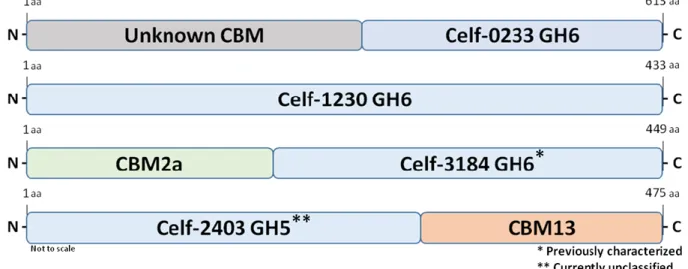
Putative native glycoside hydrolase domain architecture as determined by BLAST
Expression of native C. fimi glycoside hydrolase Celf_2403 in E. coli
Periplasmic localization via Sec-dependent and Tat-dependent transport
Periplasmic localization of GFP in E. coli with TorA signal peptide
Genetic relationship of E. coli and C. fimi
Genetic relationship of C. glutamicum and C. fimi
Simplified and detailed vector maps of pCGE-10
Simplified and detailed vector maps of pCGE-15
Simplified and detailed vector maps of pCGE-20
Structural comparison of cellotetraose (A) and 1,3:1,4-β-glucotetraose (B)
Sequence of TorA signal peptide within expression vector pCGE-20
Comparison of GFP activity and localization in expression vectors with and without
Coomassie stained 12% SDS-PAGE showing periplasmic (PPE), soluble (Sol), and
Batch purification of CFI-75 with Ni + resin and relative activity on AZCL-Barley β-glucan
Anion exchange of CFI-93 and relative activity on AZCL-Barley β-glucan
Batch purification of CFI-75 with Ni + resin and relative activity on AZCL-Barley β-glucan
Anion exchange of CFI-93 and relative activity on AZCL-Barley β-glucan
Characteristics of GH5 and GH6
TorA synthetic gene sequence and features
Glycoside hydrolase cloning primers
Shuttle vectors
Glycoside hydrolase construct library
Theoretical molar extinction coefficients of expressed glycoside hydrolases
Shuttle vector and construct sequencing primers
Genotypes of bacterial strains