THE IMPACT OF MINDFULNESS TRAINING ON THETA AND BETA POWER IN YOUTH WITH ADHD: AN EEG ANALYSIS AND METHODOLOGICAL CONSIDERATIONS
by Annabel Sibalis
Honours Bachelor of Science, University of Toronto, 2014
A thesis
presented to Ryerson University in partial fulfilment of the requirements for the degree of
Master of Arts in the Program of
Psychology
Toronto, Ontario, Canada, 2017
© Annabel Sibalis, 2017
AUTHOR'S DECLARATION FOR ELECTRONIC SUBMISSION OF A THESIS
I hereby declare that I am the sole author of this thesis. This is a true copy of the thesis, including any required final revisions, as accepted by my examiners.
I authorize Ryerson University to lend this thesis to other institutions or individuals for the purpose of scholarly research.
I further authorize Ryerson University to reproduce this thesis by photocopying or by other means, in total or in part, at the request of other institutions or individuals for the purpose of scholarly research.
I understand that my thesis may be made electronically available to the public.
The Impact of Mindfulness Training on Theta and Beta Power in Youth With ADHD: An EEG Analysis and Methodological Considerations
Master of Arts, 2017 Annabel Sibalis
Psychology Ryerson University
Abstract
Attention-deficit/ hyperactivity disorder (ADHD) is a neurodevelopmental disorder characterized by inattention and/or hyperactivity and impulsivity. The most common management tool,
stimulant medication, shows limited efficacy in youth due to side effects, stigma, and
noncompliance. The current quasi-experimental study examines the influence of a behavioural, mindfulness-based treatment program for youth, Integra Mindfulness Martial Arts, on theta power, beta power, and theta/ beta ratio (TBR), neural indices reflecting attentional ability.
Additionally, the current study compared the use of rest versus active attention tasks in order to determine which task type best displayed attention-related treatment gains. Improvements in attentional ability, indexed by a decrease in TBR, were found for the treatment group, but not controls, during an active attention task and not during a rest task. These findings support mindfulness training as a treatment option for ADHD, and support the use of active versus passive attention tasks when examining treatment-related gains.
Keywords: attention-deficit/ hyperactivity disorder, mindfulness, youth, EEG, theta/
beta ratio
Acknowledgements
It is with great pleasure that I take this opportunity to thank the many people who have helped this research and thesis come to fruition.
I would first like to thank my supervisor, Dr. Karen Milligan, for her endless guidance and wisdom throughout my graduate career. I have immensely enjoyed working with her and appreciate greatly her kindness and generosity.
I would also like to thank my committee member, Dr. Margaret Moulson, and my reader, Dr. Alexandra Fiocco, for their time and effort.
I extend my gratitude to all members of the Child Self-Regulation Lab, particularly those who devoted hours to helping collect and process our EEG data, and to Trish McKeough at Integra.
Thank you to Carson Pun for his ample help and boundless patience, as well as Drs.
Segalowitz and Schmidt for their guidance and knowledge.
Thank you to my friends and most especially my parents, whose love and support mean the world to me. Finally, I would like to thank my partner, Benjamin, for his love and
encouragement, and for being the most wonderful human being on earth.
Table of Contents
Author’s Declaration...ii
Abstract...iii
Acknowledgements...iv
List of Tables...vii
List of Figures...viii
List of Appendices...ix
Statement of the Problem...1
Introduction...3
Existing Treatments for ADHD...5
Mindfulness Treatments for ADHD...6
Theta and Beta Brainwaves in Typical and ADHD Populations...8
Tasks Used to Measure Theta, Beta, and TBR...12
Current Study Objectives...13
Hypotheses...14
Method...15
Mindfulness Treatment Program...15
Participants...16
Procedure...17
Measures...18
EEG Data Processing...20
Statistical Analyses...21
Results...23
Participant Characteristics...23
Rest Task...23
Go/No-Go Task...24
Selective Auditory Attention Task...24
Discussion...26
Impact of Mindfulness Training on Attentional Ability...26
Methodological Considerations: Measuring TBR During Passive vs. Active Tasks...28
Limitations & Directions for Future Research...31
Conclusion...34
Appendices...42
References...60
List of Tables
Table 1: Demographic information...35 Table 2: Theta Power, Beta Power, and Theta/Beta Ratio at Electrode Site Cz for Correct Go Trials in the Go/No-Go Task...36 Table 3: Theta Power, Beta Power, and Theta/Beta Ratio at Electrode Site Cz for Correct No-Go Trials in the Go/No-Go Task...37 Table 4: Theta Power, Beta Power, and Theta/Beta Ratio at Electrode Site Fz for AT Trials in the Selective Auditory Attention Task...38
List of Figures
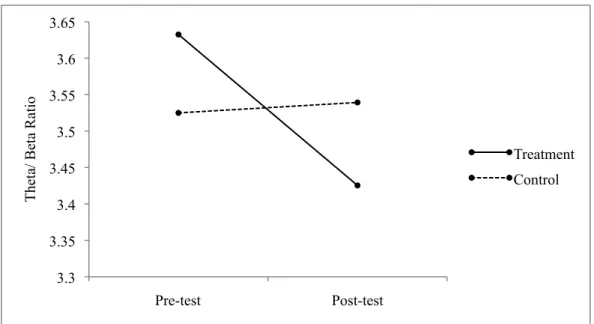
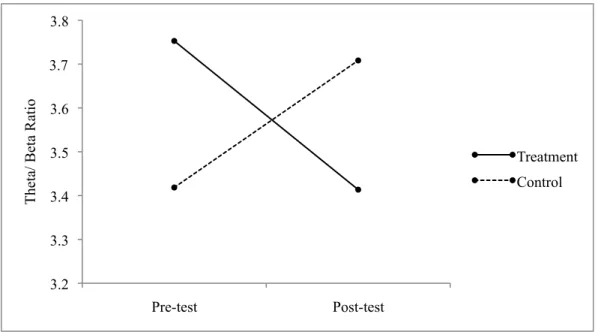
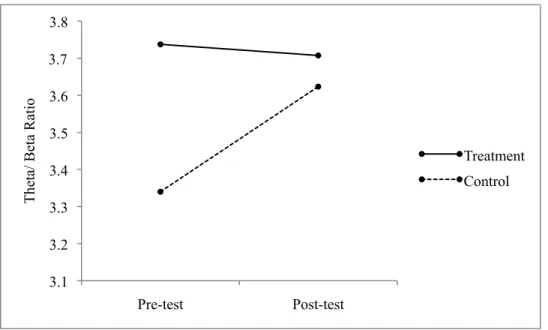
Figure 1: Group changes in theta/ beta ratio for Go trials of the Go/No-Go task...39 Figure 2: Group changes in theta/ beta ratio for No-Go trials of the Go/No-Go task...40 Figure 3: Group changes in theta/ beta ratio for AT trials of the Selective Auditory Attention task...41
List of Appendices
A. Research Study Consent Agreement: Parent...42
B. Research Study Consent Agreement: Youth...46
C. Research Study Consent Agreement: Parent – Waitlisted Controls...50
D. Research Study Consent Agreement: Youth – Waitlisted Controls...54
E. Client Information Form...58
Statement of the Problem
Attention-Deficit/ Hyperactivity Disorder (ADHD) is a neurodevelopmental disorder marked by significantly increased levels of inattention and/or hyperactivity and impulsivity.
ADHD affects 5-7% of children and youth worldwide, and is associated with behavioural and performance difficulties in academic and vocational domains, strained peer and parent
relationships, and increased risk for comorbid psychiatric diagnoses (APA, 2013).
Stimulant medications (e.g. Ritalin, Adderall) are a common treatment tool used to manage ADHD symptoms. However, stigma and unpleasant side effects such as weight loss, insomnia, and tics often limit their usage (Charach, Skyba, Cook & Antle, 2006). Ability to adhere to strict medication regimens is also an issue that impedes medication efficacy (Corkum, Rimer & Schachar, 1999). As such, clinicians and researchers have called for alternative
treatment options that address ADHD symptomatology.
Training in mindfulness, a practice derived from Buddhist meditation, has been identified as a promising treatment option for addressing ADHD symptoms (Cairncross & Miller, 2016).
Mindfulness teaches users to cultivate focus and awareness of the mind and body through meditation (Kabat-Zinn, 2003), therein strengthening skills such as sustained attention, non- reactivity, and calmness. As these abilities are some of the central deficits experienced in ADHD, mindfulness may be well-suited as a treatment to address them.
While existing studies have explored the beneficial impact of mindfulness training on core symptoms of ADHD (e.g. van de Weijer-Bergsma, Formsma, de Bruin & Bogels, 2012; van der Oord, Bogels & Peijnenburg, 2012; Zylowska et al., 2007) these studies have relied primarily on parent- or self-report measures of symptom change or performance on attention and inhibition
tasks. Such measures are open to bias and can be impacted by response strategy, potentially obscuring the full impact of mindfulness treatment.
Only one study has examined the neurophysiological influence of mindfulness in ADHD using electroencephalography (EEG) (Schoenberg et al., 2014), however, this study used an adult sample. No existing studies have examined the neurophysiological impact of mindfulness using a child or youth clinical sample. Further, there is a lack of consensus about the types of tasks employed in the context of ADHD that may be most sensitive to detecting attentional differences in ADHD, as well as treatment-related attentional changes. More specifically, existing research has generally obtained attentional measures from EEG recordings during passive resting state or
‘rest tasks’ (Arns et al., 2011), however, some researchers have argued that these measures may be more valid and reflective of attentional ability when measured during active attention tasks (Cubillo, Halari, Smith, Taylor & Rubia, 2012; Mann et al., 1992).
The current study sought to address these issues by investigating the neurophysiological impact of a mindfulness training program using a youth ADHD sample. Theta power, beta power, and theta/ beta ratio, EEG correlates of attentional ability that are commonly used in ADHD research (Barry, Clarke & Johnstone, 2003; Snyder & Hall, 2006), were examined in the context of rest and active attention tasks to better understand if the impact of mindfulness is moderated by task demands.
Introduction
Attention-Deficit/ Hyperactivity Disorder (ADHD) is the most common
neurodevelopmental disorder, affecting 5-7% of children and youth worldwide (Polanczyk, de Lima, Horta, Biederman & Rhode, 2007). It is characterized by inattentive and/or hyperactive and impulsive behaviours that interfere with one’s development or daily functioning (APA, 2013). The Diagnostic and Statistical Manual of Mental Disorders, Fifth Edition (DSM-5; APA, 2013) outlines inattentive and hyperactive/ impulsive symptoms that may be present for
individuals with ADHD, and describes criteria for diagnosis.
The inattentive symptoms of ADHD outlined in the DSM-5 relate to difficulty focusing and a tendency for distraction. Individuals might often make careless mistakes, show difficulty sustaining attention for the duration of tasks, or not follow through with instructions. Individuals may also have difficulties with organization, time management, and forgetfulness, including losing important items or missing appointments. In addition, they may avoid school or work tasks requiring substantial mental effort or sustained attention (APA, 2013).
The hyperactive/ impulsive symptoms of ADHD outlined in the DSM-5 relate to
excessive or inappropriately-timed physical activity. Individuals may often fidget, squirm in their seat, or have difficulty remaining seated or still for periods of time. They may often talk
excessively, interrupt others in conversation, or blurt out answers before it is appropriate to do so.
Experiencing persistent restlessness and having difficulty engaging in activities calmly or quietly may also be demonstrated. There may be a sense of always needing to be ‘on the go’ or being unable to slow down (APA, 2013).
In youth under age 17, six symptoms from either or both of the two categories (inattention and hyperactivity/ impulsivity) must be habitually displayed for at least six months, be present prior to age 12, and be present in two or more settings, such as home, work, and school. Further,
symptoms must impede academic, occupational, and/or social functioning and not be better accounted for by another mental disorder.
The DSM-5 outlines three ADHD subtypes dependent on the domain from which an individual displays most symptoms. The subtypes are labelled as ADHD predominantly
inattentive type (ADHD-I), ADHD predominantly hyperactive-impulsive type (ADHD-H), and ADHD combined type (ADHD-C) (APA, 2013). The most common of the subtypes is ADHD-C, which reflects individuals who exhibit challenges in both the inattentive and
hyperactive/impulsive domains (APA, 2013).
ADHD, regardless of subtype, is more commonly exhibited and diagnosed in males, with reported male:female prevalence rates ranging from 2:1 to 9:1 (Barry, Clarke & Johnstone, 2003). The disorder is known to be highly comorbid, that is, existing independently and
simultaneously alongside other mental disorder(s) (Halldorsdottir & Olldendick, 2014). The most common diagnosed comorbidities with ADHD are behavioural disorders, such as oppositional defiant disorder, which occurs in up to 60% of youth with ADHD (Gillberg et al., 2004), and conduct disorder, which affects approximately 25% of youth with ADHD (Gillberg et al., 2004).
Comorbid diagnoses of depression, anxiety, and learning disabilities are also common for youth with ADHD, with prevalence rates of 16-26%, 40%, and 40%, respectively (Gillberg et al., 2004;
Tannock, 2009). While ADHD has its onset in childhood, it often extends into adulthood. More than 15% of individuals with ADHD will continue to meet full diagnostic criteria, while in 65%
of cases, symptoms will lessen but continue to persist to some degree (Faraone, Biederman &
Mick, 2006).
In addition to increased risk for various mental health diagnoses, children and youth with a diagnosis of ADHD are more likely than their typically-developing peers to experience a variety of adverse outcomes in later youth and adulthood. ADHD has been identified as a risk
factor for substance abuse and dependence in youth and adulthood (Levy et al., 2014),
involvement in the criminal justice system (Bussing, Mason, Bell, Porter & Garvan, 2011), and high school dropout (Fried et al., 2016). ADHD has also been associated with increased risk for a variety of physical health issues in adulthood, including obesity (Khalife et al., 2014) and
hypertension (Nigg, 2013). As such, treatments that promote benefits across the lifespan are needed.
Existing Treatments for ADHD
A first-line treatment for addressing the core symptoms of ADHD is use of stimulant medications. Stimulant medications such as methylphenidate (e.g., Ritalin, Concerta) and amphetamine/dexamphetamine (e.g., Dexedrine, Adderall) work by influencing the
neurotransmitter dopamine, the levels of which are severely reduced in individuals with ADHD (Blum et al., 2008). These medications block certain dopamine transport receptors in the brain, consequently enhancing dopamine levels (Del Campo, Chamberlain, Sahakian & Robbins, 2011).
Use of stimulant medication has widely been reported to significantly decrease hyperactive and inattentive ADHD symptoms (d=1.53, large effect) as well as improve social problems (d=0.62, moderate effect) and oppositional/ conduct problems (d=0.61, moderate effect; van der Oord, Prins, Oosterlaan & Emmelkamp, 2008) in children with ADHD.
Due to its demonstrated effectiveness and relative ease of use, stimulant medication is accepted as the most customary treatment for ADHD. However, long-term rates of compliance to medication regimens are low, ranging from 25-50% one year after the onset of medication use (Corkum, Rimer & Schachar, 1999). Individuals who receive an ADHD diagnosis in later childhood, those who have less severe ADHD symptoms, and those who have a comorbid diagnosis of oppositional defiant disorder are particularly unlikely to comply with regular medication regimens (Thiruchelvam, Charach & Schachar, 2001). Those who do use stimulant
medication on a regular basis often experience or worry about stigmatization or negative side effects such as weight loss, insomnia, decreased appetite, or tics (Charach, Skyba, Cook & Antle, 2006). Many individuals continue their medication use for years despite experiencing adverse side effects, most due to lack of other treatment options (Charach, Ickowicz & Schachar, 2004).
Due to these issues, there is an urgent need to identify alternate treatment methods that address the attention and inhibition problems experienced by those with ADHD. This need is intensified during adolescence, when rates of treatment compliance are known to decrease dramatically (Thiruchelvam et al., 2001).
Mindfulness Treatments for ADHD
Many clinicians and researchers have begun to endorse non-drug treatment alternatives for ADHD that are behaviourally-based (Charach & Fernandez, 2013; Fabiano et al., 2009).
Training in mindfulness has been identified as a promising possible treatment option (Cairncross
& Miller, 2016). Mindfulness, a practice derived from Buddhist meditation, teaches users to cultivate focus and awareness of the mind and body through meditation (Kabat-Zinn, 2003). It involves actively and non-judgmentally attending to the present moment with a mindset of acceptance as opposed to reactivity (Kabat-Zinn, 2003). The core skills that mindfulness training develops – attention orienting, sustaining attention, non-reactivity, and calmness – are some of the central deficits experienced in ADHD (APA, 2013). Thus, mindfulness may be uniquely suited to address ADHD symptomatology.
A small body of literature has investigated mindfulness training as a treatment for ADHD. Initial feasibility studies have examined the effect of mindfulness training on ADHD symptoms and performance on behavioural tasks. Zylowska and colleagues (2007) found that an 8-week mindfulness training program led to decreases in self-reported inattention and
hyperactivity, as well as improved performance on tasks measuring attention and cognitive
inhibition, for both adolescents and adults diagnosed with ADHD. Similarly, van de Weijer- Bergsma, Formsma, de Bruin and Bogels (2012) measured changes in ADHD symptoms and performance on attention tasks before and after youth aged 11-15 underwent an 8-week
mindfulness training program. Post-training, participants’ self- and parent-rated inattention and behavioural problems decreased and attentional ability improved, as evidenced by a decrease in reaction time on a visual sustained attention task and fewer false alarms and misses on an auditory sustained attention task(van de Weijer-Bergsma et al., 2012). A recent meta-analysis of eight controlled and uncontrolled studies examining the behavioural impact of mindfulness-based therapies for both adults and children with ADHD found medium-to-large effect sizes for
decreases in both inattentive (d=-.53) and hyperactivity/impulsivity (d=-.66) symptoms (Cairncross & Miller, 2016).
From a methodological perspective, changes in inattentive and hyperactive/impulsive symptoms have predominantly been explored using self-, parent-, or teacher-report
questionnaires assessing ADHD symptomatology (e.g., van de Weijer-Bergsma et al., 2012; van der Oord, Bogels & Peijnenburg, 2012) and performance on behavioural tasks that require sustained attention or impulse control (e.g., Zylowska et al., 2007). To date, only a small number of studies have examined how mindfulness may influence neurophysiology in individuals with ADHD (e.g., Schoenberg et al., 2014).
Neurophysiological changes can be measured via electroencephalography (EEG). During EEG, electrodes are placed on the scalp to detect and record electrical brain activity, and this information is transferred to a computer. Schoenberg and colleagues (2014) used EEG to
examine neural differences acquired after a sample of adults diagnosed with ADHD participated in mindfulness-based cognitive therapy (MBCT). Pre- and post-test EEGs revealed that
participation was associated with improved attention allocation, including when tasks demanded inhibitory control or processing of error responses (Schoenberg et al., 2014)
Because neurophysiological measures such as EEG are uniquely sensitive to attentional shifts (Sanger & Dorjee, 2015) and can detect finer attention- and inhibition-based changes than behavioural questionnaires (Sanger & Dorjee, 2015; Luck, 1998), such measures may be the optimal method to examine attention-related treatment gains. However, to date, no known studies have examined the influence of mindfulness using neural indices of attention for child or youth ADHD samples. This is surprising given the strong tradition of neurophysiological research into the basis of ADHD and the field’s recent recognition of ADHD as a neurodevelopmental rather than a behavioural disorder (APA, 2013). Further, there is an extensive body of literature examining the neural impact of other treatments such as stimulant medications, thus using such an approach within the treatment literature would make findings more amenable to comparison.
Theta and Beta Brainwaves in Typical and ADHD Populations
The majority of research studies examining neural correlates of attention in ADHD have examined changes in theta and beta power as a measure of treatment outcome (Barry, Clarke &
Johnstone, 2003; Barry, Clarke, Johnstone & Oades, 2005; Snyder & Hall, 2006). Humans have five defined ‘types’ of brainwaves, each reflecting different mental states or thought processes, which can be measured via EEG. Each of the five types of brainwaves is defined by a certain frequency range. Delta waves, which have a frequency of 0-4 Hz and are the slowest human brainwaves, are produced during deep sleep or extreme relaxation (Empson, 1986). Theta waves have a frequency of 4-7 Hz, and reflect lighter sleep or daydreaming (Empson, 1986). Alpha waves have a frequency of 8-12 Hz, and appear during relaxed wakefulness (Empson, 1986).
Beta waves have a frequency of 12-30 Hz, and are present during normal, alert wakefulness
(Empson, 1986). Gamma waves have a frequency of 30-100 Hz, and appear during intense concentration and information processing (Empson, 1986).
The aforementioned theta frequency band, also referred to as ‘theta waves’ or ‘theta rhythm’, refers to brainwaves that have a frequency of roughly 4-7 Hz, though certain researchers or studies define the range slightly differently (e.g. 3.5-7.5 Hz, 4-8 Hz, etc.). Theta waves are understood to reflect daydreaming, focus on inner thought, light sleep, and similar states of reduced consciousness or inattention. Theta waves, and all other brainwaves, are measured by their ‘power’ or ‘power of the [theta] frequency band’, which refers to the amount of theta (or delta, gamma, etc.) waves present within an EEG recording of an individual’s brainwaves. Power can be measured in two ways: absolute or relative. Using theta as an example, absolute theta power is simply a measure of the amount of theta waves present, while relative theta power is a measure of theta waves present as a percentage of total EEG activity present in a recording (i.e.
theta power as a percentage of total power). Though both absolute and relative power measures can be found in the literature, relative power is generally used when comparing brainwave differences across individuals, as absolute power values can vary widely from person to person due to individual differences (Arns et al., 2011). In typically-developing populations, relative theta power during resting state in which the individual is not engaged in a task and is asked to keep their eyes open or closed is approximately 25% (that is, 25% of the brainwaves present when at rest are theta waves) (Barry, Clarke, Johnstone, McCarthy & Selikowitz, 2009;
Bresnahan, Anderson & Barry, 1999; Snyder et al., 2008).
The beta frequency band, also referred to as ‘beta waves’, refers to brainwaves that have a frequency of approximately 12-30 Hz (occasionally defined by certain researchers or studies as 12.5-30 Hz, 12-40 Hz, etc.) Beta waves are associated with conscious, active thought and concentration, and appear during normal wakefulness. They too can be measured in terms of
absolute or relative power; in typically-developing populations, relative beta power during eyes- open or eyes-closed resting state is approximately 13-15% (Barry et al., 2009; Bresnahan et al., 1999).
In ADHD populations, both theta and beta waves show systematic differences when compared to healthy populations. Children, adolescents, and adults with ADHD show
consistently higher relative theta power and consistently lower relative beta power at rest when compared to age-matched controls (Arns et al., 2011; Snyder & Hall, 2006). This finding is regarded as one of the most commonly reported and well-established findings in the ADHD EEG literature (Arns et al., 2011; Barry et al., 2003). A meta-analysis by Snyder and Hall (2006), which examined EEG findings associated with ADHD, found an average effect size of d= 1.31 for increased theta power for ADHD individuals compared to controls, and an average effect size of d=-0.51 for decreased beta power. These effect sizes corresponded to 32% more theta power in ADHD relative to controls, and 6% less beta power in ADHD relative to controls (Snyder & Hall, 2006). Studies that report values for relative theta power and relative beta power in ADHD fall in line with Snyder and Hall’s findings, giving estimates for an increase in relative theta power of approximately 40% and estimates for a decrease in relative beta power of approximately 9%
(Bresnahan et al., 1999; Snyder et al., 2008). Often, these theta and beta findings are combined in the calculation of a theta/ beta ratio (TBR; sometimes denoted as θ/β ratio). Increased theta power and reduced beta power compared to normal levels, as found in ADHD, leads to a larger TBR. Thus, higher TBR values reflect increased inattention and decreased focus, and are indicative of more severe ADHD impairment.
Increased theta power and decreased beta power for individuals with ADHD is in keeping with the ADHD behavioural phenotype of the ADHD-I and ADHD-C subtypes. As theta waves are known to appear during daydreaming or unfocused thought, an excess of theta power would
reflect a higher level of these behaviours. A dearth of beta waves, known to appear during alert attentiveness or concentration, would reflect fewer of these behaviours. Ogrim, Kropotov and Hestad (2012) examined the association between theta and beta power and ADHD symptoms in youth diagnosed with ADHD. They found that theta power was positively correlated with parent- rated inattention, social problems, difficulty in initiating activity, and difficulty in behaviour monitoring (Ogrim et al., 2012). Another study examining TBR and ADHD symptoms in youth with ADHD found that reduction in TBR (achieved over time via neurofeedback training) was significantly associated with reduction in ADHD symptoms (Leins et al., 2007). While both ADHD symptoms and TBR are understood to diminish with age (Arns, Conners & Kraemer, 2011; Snyder & Hall, 2006), Snyder and Hall (2006) report a near-perfect correlation (r=0.99) between TBR and age-related changes in ADHD behavioural symptomatology. Despite the sex differences in ADHD prevalence, elevated TBR appears equivalently for both males and females diagnosed with ADHD (Hermens, Kohn, Clarke, Gordon & Williams, 2005).
Because TBR is so highly studied within the ADHD literature, the influence of stimulant medication on TBR has naturally been examined. Clarke, Barry, Bond, McCarthy and Selikowitz (2002) investigated the effects of stimulant medication on theta and beta power in 8-13-year-old boys diagnosed with ADHD. They reported that use of stimulant medication was significantly associated with reductions in absolute and relative theta power, an increase in relative beta power, and reduction in theta/beta ratio (Clarke et al., 2002). Pre-medication, 78% of ADHD boys had theta levels 1 SD or more above the mean of typically-developing control boys (64% of boys had levels more than 2 SD above the mean), and after medication, 72% of those showed normalized theta levels (within 1 SD of the control mean). Thirty-eight percent of boys with ADHD showed lowered beta levels pre-medication, 80% of whom showed normalized beta levels post-medication (Clarke et al., 2002). Chabot, Orgill, Crawford, Harris & Serfontein (1999) and
Loo, Teale & Reite (1999) have also found normalization of theta and beta levels in children with ADHD following use of stimulant medication.
To date, no studies have examined the impact of mindfulness on TBR in youth with ADHD. Given the extensive use of TBR in the medication treatment literature, the impact of mindfulness on TBR warrants further investigation. Additionally, using TBR as a measure for mindfulness-related changes would make findings amenable to comparison with other types of treatments also investigated using TBR.
Task Conditions Used to Measure Theta, Beta, and TBR
Throughout the extant ADHD literature, including the earliest neural studies of ADHD, theta power, beta power, and TBR have typically been measured with tasks requiring a single pointed focus with participants’ eyes open or closed (hereafter referred to as “rest tasks”, Arns et al., 2011; Jasper, Solomon & Bradley, 1938; Lindsley & Cutts, 1940; Snyder & Hall, 2006).
While stillness and focus during resting state is undeniably difficult for those with ADHD, there may be limitations to this paradigm in terms of its relatability to the daily activities of youth with ADHD. The conditions under which ADHD symptomatology and sustained attentional control ability are arguably most evident are during performance of tasks that actively require these skills (Cubillo, Halari, Smith, Taylor & Rubia, 2012).
A limited number of studies have examined theta power, beta power, and TBR in individuals with ADHD during active attention tasks (e.g. El-Sayed, Larsson, Persson &
Rydelius, 2002; Groom et al., 2010; Mann, Lubar, Zimmerman, Miller & Muenchen, 1992). Only two studies have measured theta power, beta power, and TBR during both rest tasks and active attention tasks, finding mixed results. El-Sayed and colleagues (2002) examined children with ADHD and typically-developing controls, investigating differences in theta power and beta power during both an eyes-open rest task and a sustained attention task. For both tasks, children
with ADHD showed decreased beta power compared to controls (El Sayed et al., 2002). On the other hand, while Mann et al. (1992) noted the expected theta power and beta power differences between children with ADHD and typically-developing controls, they found that these
differences were greater during reading and drawing tasks than they were during eyes-open resting state. The authors conclude that perhaps abnormalities are best detected during cognitive tasks as opposed to at rest (Mann et al., 1992). To date, no existing studies have investigated if rest versus active tasks are more sensitive measures of treatment-related gains in attention.
Current Study Objectives
The current study used a quasi-experimental design to investigate how participation in a mindfulness treatment program influences theta power, beta power, and theta/beta ratio in a sample of youth aged 11-17 diagnosed with ADHD, as measured during both a rest task and active attention tasks. A secondary objective of this study was to identify the optimal task conditions (i.e. rest task versus active attention tasks) during which to use theta power, beta power, and TBR as measures of change in attentional control associated with mindfulness treatment. Understanding the neurophysiological impact of mindfulness-based treatments for youth with ADHD, and how best to measure treatment-related gains, may help inform treatment options for this population, shed light on the complex neural and behavioural difficulties
experienced by this population, and provide insight into what degree these difficulties can be ameliorated.
Hypotheses
(1) Treatment participants will show a significant reduction in relative theta power from pre- to post-test, while control participants will show no significant changes in relative theta power.
(2) Treatment participants will show a significant increase in relative beta power from pre- to post-test, while control participants will show no significant changes in relative beta power.
(3) Treatment participants will show a significant reduction in theta/beta ratio from pre- to post- test, while control participants will show no significant changes in theta/ beta ratio.
(4) The pre- to post-test differences outlined in hypotheses (1), (2), and (3) will be strongest when measured during the Go/No-Go Task and Selective Auditory Attention Task compared to eyes- open or eyes-closed trials of the rest task.
Method Mindfulness Treatment Program
Integra Mindfulness Martial Arts TM (Integra MMATM) is a manualized group treatment program designed to address the attention, inhibition, and self-regulation difficulties experienced by youth with ADHD in a health-promoting and non-stigmatizing environment. The program incorporates mindfulness meditation instruction and practice with yoga, cognitive behavioural therapy (CBT), and martial arts.
One evening per week for 20 weeks, youth attended 90-minute sessions led by one of two trained instructors. Each group session comprised 6-10 youth, one instructor and one volunteer assistant. Sessions centred around various forms of mindful meditation, including sitting meditation, walking meditation, and body scans. The length of time committed to meditation increased each week. During these meditations, youth were encouraged to focus on their breath and body awareness (sometimes incorporating an anchoring mantra such as ‘be’) and gently redirect their thoughts back to their breath whenever their mind wandered. During body scans, youth were guided to direct their attention towards a specific body part (e.g. fingers) and then gradually shift their focus to other parts of the body. The central concepts emphasized during all meditations were non-judgement, acceptance, non-striving, awareness and letting go.
Elements of CBT were introduced during each session, including recognizing and naming thoughts and feelings, using helpful self-talk, noticing self-defeating thoughts, and understanding how thoughts and feelings influence actions and interpersonal relationships. The participants outlined individual goals to work towards throughout the program, and progress was monitored through discussion with instructors at each session. Meditation home practice and prosocial behaviour during sessions were also encouraged and rewarded by instructors (e.g., in-the-moment praise; points towards yellow belt attainment).
Yoga and martial arts were integrated into the therapeutic components to provide an opportunity to practice coping with a physical and mental challenge, which included practicing attentional control, self-monitoring, nonjudgement, softening into discomfort, and self-talk. Thus, youth were challenged to stay present, focused and persistent during difficult tasks rather than engaging in impulsive patterns of fight, flight, or freeze as forms of withdrawal.
Program instructors were child and family therapists with Master’s degrees in social work, advanced martial arts and yoga training, and training in mindfulness meditation. Volunteer assistants were university-age adults with backgrounds in martial arts and working with children.
While treatment fidelity was not assessed as part of this study, all program instructors received weekly supervision from the supervisor of the MMA program.
Participants
The study sample included 34 treatment participants aged 11-17 (M = 13.2, SD = 1.84) and 22 waitlist control participants aged 11-16 (M = 12.6, SD = 1.22). The treatment group was recruited from youth registered for Integra MMATM at an urban community-based children’s mental health treatment centre, while the control group was recruited from youth who had
indicated interest in participating in Integra MMATM and were on the waitlist for the program. All treatment and control participants met criteria for ADHD (DSM-IV-TR, APA, 2013), identified through a diagnostic interview with parents (Mini International Neuropsychiatric Interview for Children and Adolescents, Parent Version 6.0, M.I.N.I. KID-P; Sheehan et al., 2010). All treatment and control participants had a comorbid diagnosis of a learning disability (LD)
diagnosed by a registered psychologist/psychological associate. For this study, LD was defined as having average to above-average cognitive ability with significantly lower levels of academic achievement and information processing (e.g., memory, executive functions, processing speed;
LDAC, 2002). In addition to ADHD and LD, many participants also met criteria for additional
mental health diagnoses. Participant demographic information by group (treatment, control) is displayed in Table 1.
Procedure
Data collection took place at Ryerson University in the Institute for Stress and Wellbeing Research. The current study used participants and data from a larger treatment study investigating the effects of MMA on a variety of brainwave components and ADHD symptoms. Participants and their parents attended two 3-hour testing sessions approximately 20 weeks apart, one before participation in MMA and one directly following completion of the program. Upon arrival, information about the testing procedures was provided and written informed consent was obtained from participants and parents. After both youth and parents provided consent, parents completed the Client Information Form and a diagnostic interview to determine the presence of psychological disorders for their children (see Measures, below).
Participants completed EEG testing using the BioSemi ActiveTwo system (BioSemi, 2007). Participants were seated comfortably as their head circumference was measured and the correctly-sized EEG cap was chosen. The cap was placed on the participant’s head and the Cz electrode site centered, equidistant from the two ears and equidistant from the nasion and inion.
Facial electrodes EX1 and EX2 were secured to the participant’s left and right mastoids, respectively. Participants were then instructed to comfortably connect their cap’s chin strap.
Using plastic syringes, conductive electrode gel was applied to each of the 64 electrode sites in the EEG cap. The corresponding electrodes were then connected to each site. Following this, the remaining skin electrodes were applied (EX3 and EX4 to the left and right temples beside the eyes, EX5 and EX6 to the left and right cheekbones below the eyes, EX7 to the bottom left rib and EX8 to the right collarbone).
The participant was then moved to a separate, soundproof testing room and seated comfortably in front of a testing computer. Their electrodes were plugged into the recording box and the connectivity and recording quality were examined on the recording computer. Monopolar displays were reviewed to ensure that each electrode was adequately recording with no
interference or disconnections, and that eye blinks and heart rate were being recorded. Any misperforming electrodes were disconnected, cleaned, re-gelled, and re-connected until readings were clear. Electrode offset channels were set to 50µV and examined to ensure that readings were stable and fell within the appropriate power range. Once the EEG setup was deemed to be
recording correctly, the participant began their computer tasks (see Measures, below).
Measures
Client Information Form. Parents were asked to provide their personal contact information and income level as well as their child’s age, ethnicity, medication status, and handedness. In addition, they reported on their child’s participation in past or current mental health interventions and past or current sport/ fitness activities. They were also asked to indicate any mental health diagnoses their child had received. This information was used to describe the study sample as well as explore any potential moderators of group differences.
Mini International Neuropsychiatric Interview for Children and Adolescents, Parent Version 6.0 (M.I.N.I. KID-P; Sheehan et al., 2010). The M.I.N.I. KID-P is a short, structured diagnostic interview for parents, used to diagnose psychiatric disorders in children and
adolescents ages 6-17. The interview assesses the presence of 24 DSM-IV child and adolescent psychiatric disorders, and was used to confirm each participant’s diagnosis of ADHD as well as identify their ADHD subtype. Interviews were administered by graduate students, under the supervision of a registered clinical psychologist, at the pre-MMA testing session only. Interviews lasted approximately 15-20 minutes.
Computerized Rest Task. An eyes-opened/ eyes-closed rest task programmed (adapted from Lewis, Lamm, Segalowitz, Stieben & Zelazo, 2006) and presented using E-Prime software (Psychological Software Tools, 2012) was administered while EEG was recorded continuously.
Participants were seated comfortably approximately two feet in front of a computer screen displaying a fixation cross, and were instructed by an audiorecorded message heard through the computer speakers to remain still and rest with their eyes open. After 120 seconds of eyes-open rest, participants were instructed to close their eyes and remain resting for 120 additional seconds. Following the eyes-closed portion, participants were instructed to open their eyes for another, 120-second eyes-open block. The task lasted six minutes in total, with EEG recording continuously.
Go/ No-Go Task. A Go/No-Go task programmed and presented using E-Prime software (Psychological Software Tools, 2012), adapted from a task developed by Garavan, Ross, and Stein (1999), was administered while EEG was recorded continuously. Participants were
instructed to press a response button as quickly and accurately as possible every time a character from the Mr. Men series (Hargreaves, 2010) appeared on the computer screen (“Go” trials), but withhold their second button press if the same character was presented twice in a row (“No-Go”
trials). Incorrect responses, omitted responses, and late responses prompted a red square to appear onscreen, indicating an error had been made. Three blocks of the task, each with 200 total trials (66 of which were “No-Go” trials) were presented in sequence, with a 20-second break in between blocks, for a total task length of 12 minutes. How long was this task?
Selective Auditory Attention Task. An auditory oddball task used by Lackner, Santesso, Dywan, Wade and Segalowitz (2013), programmed and presented using E-Prime software (Psychological Software Tools, 2012), was administered while EEG was recorded continuously.
Participants were seated comfortably in front of a computer screen with one speaker to their left
and a second speaker to their right. From either the left or right speaker, 200-ms tones were emitted: a 1000 Hz non-target tone and a 2000 Hz target tone. Non-target tones were produced 88% of the time, and target tones produced 12% of the time, with a varying interstimulus interval of 600-800ms. The task included four blocks of 200 trials each; in two blocks participants were instructed to push a response button whenever the target tone was emitted from the right speaker, and in two blocks participants were instructed to push a response button whenever the target tone was emitted from the left speaker. Target tones were presented to the attended ear 12 times per block (attended target trials; AT), target tones were presented to the unattended ear 12 times per block (unattended target trials; UT), non-target tones were presented to the attended ear 88 times per block (attended non-target trials, ANT), and non-target tones were presented to the
unattended ear 88 times per block (unattended non-target, UNT). All participants began the task attending to the speaker on their right side. After each block, participants were given a 20-second break and told which speaker to attend to during the upcoming block. The task lasted
approximately 12 minutes. For this study, only the AT and UT conditions were examined. This is traditionally the case with auditory oddball tasks; the comparison between these two conditions best reflects accurate attending as it involves discernment for both the target tone and target ear (Lackner et al., 2013).
EEG Data Processing
EEG data files were trimmed to remove unusable portions (e.g. recorded segments from before tasks began and after tasks ended, break segments, etc.). Data files were then processed using independent component analysis (ICA) in EEGLAB (Delorme & Makeig, 2004). Using ICA, EEG records were cleaned by removing individual components if they were excessively noisy (e.g., malfunctioning electrodes, components that reflected heartbeat, eye blink, or muscle
activity data). EEG files were then segmented by task: rest task, Go/No-Go task, and Selective Auditory Attention Task.
Mean theta power and mean beta power over the full length of each task were calculated via Fast Fourier transform using fixed frequency bands (4 to 7 Hz for theta and 12 to 30 Hz for beta), and theta/beta ratio was calculated from these values. For the rest task files, values were extracted separately from eyes-open trials and eyes-closed trials; for the Go/No-Go task, values were extracted separately from Go trials and No-Go trials, and for the Selective Auditory
Attention Task values were extracted separately from AT trials and UT trials. Electrodes placed on the mastoids were used as the reference site for all values. Electrode site Cz was selected as the site of interest for all analyses based on previous meta-analytic research suggesting that site Cz best measures TBR and is most commonly used in TBR research (Arns, Conners & Kraemer, 2011; Snyder & Hall, 2006).
Statistical Analyses
Independent sample t-tests were used to examine pre-test group differences in continuous variables (i.e. age, number of comorbid diagnoses). Pearson’s chi-square tests were used to examine pre-test group differences in categorical variables (i.e. gender, ADHD subtype,
medication status, presence of an anxiety disorder, presence of CD/ODD). A one-way analysis of variance (ANOVA) was conducted in order to examine the impact of ADHD subtype on pre-test TBR.
Factorial repeated-measures (RM) analyses of variance (ANOVAs) were completed to examine the impact of group (treatment, control) on pre- to post-test changes in theta power, beta power, and TBR for both eyes-closed and eyes-open trials of the Rest Task. To explore changes in theta power, beta power, and TBR during the Go/No-Go Task, a series of 2 (group: treatment, control) x 2 (condition: go, no-go) x 2 (time: pre-test, post-test) RM ANOVAs were completed.
To examine changes in theta power, beta power, and TBR during the Selective Auditory Attention Task, a series of 2 (group: treatment, control) x 2 (condition: AT, UT) x 2 (time: pre- test, post-test) RM ANOVAs at electrode site Cz were completed.
All analyses were completed using IBM SPSS Statistics software (Version 22.0; IBM Corp., 2013).
Results Participant Characteristics
No significant group differences were noted for age, t(54) = 1.28, p = .21 or number of comorbid diagnoses, t(54) = 1.16, p = .25. There were more males than females in the total sample, however gender did not significantly differ by group, χ2 (1) = .799, p = .37. Similarly, the ADHD-inattentive subtype was most common across the total sample, with no significant group differences in ADHD subtype indicated, χ2 (2) = .656, p = .72. No significant group differences in medication status, χ2 (1) = .007, p = .93, presence of an anxiety disorder, χ2 (1) = .204, p = .65, or presence of CD/ODD, χ2 (1) = 2.49, p = .11 were indicated.
In order to identify potential moderators, the aforementioned variables were correlated with pre-test theta/beta ratio during Go trials and No-Go trials of the Go/No-Go task, AT trials of the Selective Auditory Attention task, and eyes-open and eyes-closed trials of the Rest task. No significant correlations were found. As such, these variables were not controlled for in the subsequent analyses.
A one-way ANOVA was conducted to examine the impact of ADHD subtype (ADHD- inattentive, ADHD-hyperactive, ADHD-combined) on pre-test theta/beta ratio during Go trials and No-Go trials of the Go/No-Go task, AT trials of the Selective Auditory Attention task, and eyes-open and eyes-closed trials of the Rest task. No significant differences between subtypes were found. As such, subtype differences in theta power, beta power, and TBR during the rest and attention tasks were not explored.
Rest Task
No significant main effects or interactions for theta power, beta power, or TBR were found for eyes-closed or eyes-open resting state trials.
Go/No-Go Task
In terms of behavioural performance for the Go/No-Go Task, participant accuracy during Go trials was high (91.9%) with no significant group differences found between the treatment and control groups at pre- or post-test. Participant accuracy during No-Go trials was lower (62.9%), as expected, with no significant group differences found between the treatment and control groups at pre- or post-test.
A significant group x condition x time interaction was revealed for TBR, F(1,48) = 6.86, p = .01. Post-hoc paired-sample t-tests revealed that for Go trials, the treatment group showed a significant decrease in TBR from pre-test (M = 3.63, SD = 0.748) to post-test (M = 3.43, SD
=0.826), t(30) = 2.472, p = .02, while no difference from pre-test (M = 3.52, SD = 0.854) to post- test (M = 3.54, SD =0.707) was found for controls, t(18) = –0.124, p = .90; see Figure 1. These findings reflect a small effect size (d = 0.279). For No-Go trials, the treatment group showed a significant decrease in TBR from pre-test (M = 3.75, SD = 0.979) to post-test (M = 3.41, SD = 0.947), t(30) = 2.747, p = .001, while controls showed a significant increase in TBR from pre-test (M = 3.42, SD = 0.898) to post-test (M = 3.71, SD = 0.964), t(18) = –2.530, p = .02; see Figure 2.
These findings reflect a medium to large effect size (d = 0.663). Group x condition x time interactions were not significant for theta power, F(1,48) = 0.090, p = .765, or beta power, F(1,48) = 2.317, p = .135.
Selective Auditory Attention Task
In terms of behavioural performance, participant accuracy was generally high for both AT trials (84.8%) and UT trials (87%) with no significant group differences found between the treatment and control groups.
A marginally significant group x condition x time interaction was revealed for TBR, F(1,46) = 4.002, p = .051. Post-hoc paired-sample t-tests revealed that for AT trials, the treatment
group showed no change from pre-test (M = 3.74, SD = 0.816) to post-test (M = 3.71, SD = 1.21), t(28) = 1.77, p = .861, while controls showed a significant increase in TBR from pre-test (M = 3.34, SD = 0.707) to post-test (M = 3.62, SD = 0.914), t(18) = –2.576, p = .019; see Figure 3.
These findings reflect a small effect size (d = 0.325). For UT trials, the treatment group showed no change in TBR from pre-test (M = 3.60, SD = 0.796) to post-test (M = 3.68, SD = 1.04), t(28)
= –0.666, p = .511), while no significant change from pre-test (M = 3.63, SD = 0.934) to post-test (M = 3.58, SD = 0.857) was found for the control group, t(18) = 0.391, p = .700. Group x
condition x time interactions were not significant for theta power, F(1,46) = 0.478, p = .493, or beta power, F(1,46) = 0.013, p = .911.
Discussion
While research is accumulating that supports the positive impact of mindfulness treatments on attentional deficits associated with ADHD, no known studies have examined changes at the neural level in youth with ADHD. This study sought to address this gap in the extant literature by examining the impact of a novel mindfulness treatment for youth with ADHD using theta power, beta power, and TBR, common measures of change in attentional ability used when examining first line ADHD treatments (e.g., stimulant medication).
Impact of Mindfulness Training on Attentional Ability
Overall, results suggest that participation in a mindfulness-based martial arts treatment (Integra MMATM) improves attentional ability, as evidenced by a decrease in TBR, and that significant improvements are found when active rather than passive attention tasks are required.
During the Go/No-Go task, youth who had participated in the mindfulness treatment showed increased attention allocation (evidenced by a decreased TBR) when attending to target stimuli (i.e., Go trials) from pre- to post-treatment, whereas similar gains were not found for the control group. This suggests that youth in the treatment condition were engaging in more active thought and concentration versus unfocused thought during the active attention Go/No-Go task.
Similarly, on the No-Go condition of the Go/No-Go task, which requires inhibition of a prepotent behavioural response and associated attentional control, participants in the mindfulness treatment showed a decrease in TBR post-treatment, whereas an increased TBR from pre- to post-treatment was found for the control group. Once again, this suggests that participation in Integra MMATM is associated with an increase in more active thought and concentration in the context of having to attend to and inhibit one’s behaviour.
These results extend previous research that has supported the beneficial impact of mindfulness treatment on attentional outcomes in youth (Haydicky, Wiener, Badali, Milligan &
Ducharme, 2012; Semple, 2010; van de Weijer-Bergsma, Formsma, de Bruin & Bogels, 2012;
Zoogman, Goldberg, Hoyt & Miller, 2014; Zylowska et al., 2008). Specifically, findings indicate that attentional changes are occurring at a neural level. This is important from a measurement perspective as it suggests that we may be able to detect treatment effects at an early level, before they are influenced by response strategy or feedback from the environment. Additionally, previous research has found significant change in neural indices prior to changes appearing in behavioural performance (Harms, Martin & Wallace, 2010), thus, the current results may reflect attentional changes at a neural level that may precede change seen at a behavioural level. Further longitudinal research with behavioural and questionnaire-based measures of attention are
required to examine this hypothesis.
While this is the first study with an ADHD youth sample to demonstrate this relation, these results are consistent with previous research with adult populations. As described previously, mindfulness-based cognitive therapy (MBCT) has been found to lead to
improvements in event-related potentials (ERPs) indexing attentional control for an adult ADHD sample (Schoenberg et al., 2014). In another study, MBCT was shown to correct bipolar adults’
previously atypical theta/ beta ratios to ratios consistent with those of healthy individuals (Howells, Ives-Deliperi, Horn & Stein, 2012). Additionally, participation in mindfulness-based stress reduction has been found to increase activation in brain regions representing awareness and attention, as measured by fMRI in healthy adult samples (Farb, Segal & Anderson, 2013).
While not specific to an ADHD population, Sanger and Dorjee (2016) have found a similar pattern of results in typically developing youth aged 16-18 using ERPs. More specifically, they found post-mindfulness training increases in N2 amplitude as measured during an active attention task (a visual oddball task), indicating improvements in attentional control. The present research extends these results by showing neural changes in attention in a clinical population of
youth with ADHD.
The current findings appear to reflect the underlying theory of mindfulness being put into practice. The treatment group’s improvement in ability to apply attention to the task at hand mirrors the skills introduced and enhanced in mindfulness training: directing attention to the present moment, sustaining that attention, and resisting impulses that may divert attention (e.g.
physical movement, distracting thoughts). The attentional improvements noted in the current study have also been noted upon application of other treatments, such as stimulant medication and biofeedback training (Monastra, Monastra & George, 2002).
Integra MMATM is associated with attentional gains measured during active attention tasks that range in strength from small (d = .28) to medium (d = .66) in effect, depending on the demands of the task. Studies examining the influence of stimulant medication on TBR for
children with ADHD have found medium (d = 0.52; Clarke et al., 2002) to large (d = 1.23; Clarke et al., 2003) effect sizes, and studies examining the influence of behavioural ADHD treatments, as measured by questionnaires, show a range of effect sizes from small (d = .19) to large (d = .87;
van der Oord et al., 2008), with some studies of behavioural treatments finding no improvements (Kendall, 1993). The effect sizes noted in the current study, while smaller than those associated with medication use, nonetheless suggest significant improvements in attentional ability and appear to be comparable in strength to behavioural treatments.
Methodological Considerations: Measuring TBR During Passive vs. Active Tasks From a methodological perspective, the present study provides support for the use of active attention tasks, suggesting that they may be more sensitive to the attentional gains
associated with mindfulness than rest tasks. More specifically, attentional gains were noted post- test for the treatment group during the Go/No-Go task, while for the Selective Auditory Attention
Task, the treatment group showed non-significant improvements at post-test, with attentional control significantly decreasing for the control group.
A possible reason for this discrepancy in results between the two active attention tasks relates to the severity of attention deficit for visual versus auditory stimuli. Children with ADHD have been noted to show greater impairments on visual attention tasks compared to auditory attention tasks (Lin et al., 2014). Further, when taking methylphenidate, children with ADHD show greater performance improvements on visual as opposed to auditory attention tasks (Jonkman et al., 1997). It may be the case that performance on visual attention tasks allows for greater room for improvement, explaining why post-test differences were noted for a visual task but not an auditory one.
Alternatively, these results may be reflective of the well-supported finding that for individuals with ADHD, attentional deficits are most evident during less interesting, repetitive, and/or low-reward tasks (Barkley, 1990; Sonuga-Barke, Wiersema, van der Meere & Roeyers, 2010; Taylor & Sonuga-Barke, 2008). In the current study, the visual task used colorful, engaging characters that provided a concrete point of focus, and provided direct feedback regarding performance (red square for an incorrect response). In contrast, the auditory task provided more repetitive and less engaging stimuli and had a low presentation rate of target tones requiring a response (12%). The lower stimulation level provided by the auditory task may have resulted in higher levels of disengagement and inattention compared to the visual task, which might explain why attentional gains were noted for the visual but not the auditory task.
When measuring theta power, beta power, and TBR during a rest task, the present study found no pre- to post-test differences for either the treatment or control groups. This was the case for both eyes-open and eyes-closed resting state trials. There are a number of variables that may have contributed to these results. Changes in attention may be more pronounced in tasks
requiring attentional skills, such as sustained attentional tasks requiring vigilance and fast-paced decision making, as opposed to at rest (Cubillo, Halari, Smith, Taylor & Rubia, 2012). Previous researchers have highlighted the theoretical similarities between the attentional skills fostered by mindfulness and the attentional skills called upon during attentional monitoring tasks (Holzel et al., 2011; Jha, Krompinger & Baime, 2007). Further, they have suggested that practice in these abilities during meditation allows for these abilities to be generalized from meditation to performance on attentional tasks specifically (Jha, Krompinger & Baime, 2007). Alternatively, rest tasks may be a sufficient medium to display mindfulness-related attentional gains in neurotypical samples, but not when examining highly comorbid samples with a variety of
complex and interrelating executive function issues, as in the present study. Existing studies that have employed rest tasks to examine stimulant treatment effects on TBR have tended to use samples with only a diagnosis of ADHD (e.g., Arns et al., 2011; Snyder & Hall, 2006); more complex samples may require measurement during more active attention tasks that require more active recruitment of attention networks.
The present results suggest that active tasks may more sensitively capture attention- related treatment gains using theta power, beta power, and TBR compared to rest tasks. While no other studies have systematically compared rest tasks and active attention tasks, or have done so within the context of a treatment evaluation, these results support previous researchers’
suggestions that active tasks may reveal differences in attentional ability better than rest tasks (Mann et al., 1992).
From a clinical perspective, active tasks may also be a more valid and meaningful measure of attention. For many youth with ADHD and co-occurring learning and mental health issues, attentional challenges may not be as pronounced and impairing during single-focus tasks (such as rest tasks) as they are on more complex problem-solving tasks. It is when faced with
complexity and challenge that these youth may be more likely to reduce their allocation of attentional resources as a means of coping with the distress associated with the challenge
(Haydicky et al., 2012; Milligan et al., 2015). As this is the first study to systematically compare rest versus active attention tasks, further research directly comparing measurements of theta power, beta power, and TBR during these two task types is warranted, as is future research examining treatment-related changes as measured during rest tasks versus active tasks, using mindfulness as well as other treatments for ADHD.
Limitations & Directions for Future Research
While the current study provides support for mindfulness treatments improving attention at a neurophysiological level and guidance for future research in terms of task design, there are limitations to the current study design that warrant attention. The present study utilized a sample from a community-based treatment agency and as such was quasi-experimental in design, not allowing for randomization to treatment and control groups. While groups did not significantly differ on demographic variables measured, the pre-test differences in theta/ beta ratio between the treatment and control groups (see Figures 1-3) suggest underlying group differences. A
randomized control trial may result in greater equivalence between groups at pre-test. Further, the present study did not use an intent-to-treat design. Post-testing was not available for youth who did not complete the program. By including post-test data for those who did not complete the program and including number of sessions completed as a moderator, results might more accurately reflect the variety and variability of outcomes for youth who enter treatment.
The community-based sample recruited for this study was also diagnostically complex, with many youth presenting with comorbid challenges with anxiety, mood, behaviour, and autism. Previous research has found that training in mindfulness positively influences symptoms of anxiety (Semple, Reid & Miller, 2005), depression (Teasdale et al., 2000), behavioural
disorders (Bogels, Hoogstad, van Dun, de Schutter & Restifo, 2008) and various other disorders (Baer, 2003), thus gains in these areas may have influenced attentional gains displayed by the current sample. While the complexity of the current sample speaks to the ability of mindfulness treatments to address complex comorbidity, further research with a larger sample is needed to discern if type or number of comorbidities moderates the gains seen in attention. Such an investigation was not feasible for the current study, due to sample size and a sample that
exhibited extreme variance in diagnostic combination. Future studies may seek to investigate the influence of mindfulness on symptoms of specific combinations of diagnoses. ADHD with comorbid anxiety, for example, is highly prevalent (Tannock, 2009) and is known to differ in attentional and inhibitory ability compared to ADHD alone (Klymkiw et al., 2017), thus warranting further study.
This study did not specifically address variables associated with engagement in treatment, including attendance and home practice. Engaging in regular home practice has been found to positively predict improvements related to mindfulness training (Huppert & Johnson, 2010) and is thus an important variable to consider for future studies. Similarly, program attendance and engagement has been shown to positively influence uptake of therapeutic programming (Milligan et al., 2015; Smith, Duffee, Steinke, Huang & Larkin, 2008). Therefore, engagement in training is another variable that may moderate attentional improvements. Similarly, fidelity to the manual was not assessed, rather, weekly supervision of instructors was provided. Future research should more clearly explore fidelity to the manual to ensure that the program is being delivered as intended and method of delivery did not differ across participant groups.
The present study focused on sustained attention as indexed by theta power, beta power, and TBR. In order to examine and compare which specific types of attention the Integra MMATM program addresses (sustained, orienting, error-focused, etc.) future studies may wish to employ
other neural indices of attention such as ERPs. Previous studies examining the influence of mindfulness training have found improvements in ERP components reflecting attention orienting (the N2 component; Sanger & Dorjee, 2016) and error awareness (the Pe component; Schoenberg et al., 2014), thus these components may be of interest to examine in relation to Integra MMATM. Other neural constructs known to relate to attention, such as gamma power (Jensen, Kaiser &
Lachaux, 2007) and cerebral asymmetry (Yamaguchi, Yamagata & Kobayashi, 2000), might also be considered.
While existing research supports the link between improvements in ADHD
symptomatology and improvements in neural indices of attention (Leins et al., 2007; Ogrim, Kropotov & Hestad, 2012; Wiersema & Roeyers, 2009), the present study did not specifically explore the relation between changes in neural indices of attention and changes in behavioural report of attention (e.g., parent report of ADHD symptomatology using the Conners-3). By providing evidence of positive changes in ADHD symptomatology and correlating these findings with neurophysiological changes, we may gain a clearer view as to the degree of treatment- related improvement, as well as the real-world manner in which these changes can manifest and the specific attentional symptoms addressed. Future examinations of the impact of mindfulness training might consider investigating both neural and behavioural markers of ADHD symptom improvement and the relation between the two.
Finally, it is important to note that Integra MMATM integrates multiple components that may positively affect attention. While the core component of the program is mindfulness, Integra MMATM also involves exercise and inclusion in a supportive and encouraging group
environment. Engaging in exercise has been found to positively influence attention and ADHD symptomatology in children, as measured by parent and teacher report (Gapin, Labban & Etnier, 2011) and performance on cognitive tasks (Gapin & Etnier, 2010; Medina et al., 2010). Chronic
and acute exercise have also been shown to improve EEG measures of attention for children with ADHD, as indexed by theta power (Huang et al., 2014) and ERPs (Chuang, Tsai, Chang, Huang
& Hung, 2015). Inclusion in a socially and emotionally supportive group environment may also influence treatment-related gains (Milligan et al., 2015; Reblin & Uchino, 2008). Future research examining Integra MMATM should seek to control for exercise and group inclusion in order to tease apart the individual influence of mindfulness on attention.
Conclusion
Results of the current study suggest that mindfulness training is associated with
significant decreases in TBR, a marker of inattention known to be elevated in individuals with ADHD, and that this effect is strongest when active attention is demanded. This study is the first to examine the neural influence of mindfulness training for youth with ADHD. Combined with previous research suggesting improvements in self-reported focus and parent-reported ADHD symptomatology (Haydicky et al., 2012; Milligan et al., 2015), the current findings suggest that Integra MMATM is a promising treatment option for improving attention in youth with ADHD.
Future research is needed that accounts for a number of limitations in the current study, including random assignment to treatment and control groups, controlling for number and type of comorbid diagnoses present in the sample, accounting for participant engagement in the treatment program, and examining behavioural report of ADHD symptoms in combination with neurophysiological measures of attentional change. Replication of the current findings is also needed. In addressing these outstanding issues, future research can support the current findings that training in
mindfulness is an engaging, safe, and effective alternative to traditional ADHD treatment options such as stimulant medication.
Table 1
Demographic Information
Treatment Group (n = 34) Control Group (n = 22)
Age M = 13.2, SD = 1.84 M = 12.6, SD = 1.22
Gender Male Female
28 6
20 2 ADHD Subtype
Inattentive Hyperactive Combined
22 1 11
16 1 5 Medication Status
Takes medication
Does not take medication No data
14 20 0
8 12 2 Number of Comorbid Diagnoses
(in addition to ADHD + LD) 0
1 2 3 4 5
11 9 4 3 4 3
10 3 5 3 1 0 Presence of Anxiety
Has an anxiety disorder
Does not have an anxiety disorder 16 18
9 13 Presence of CD/ ODD
Has CD or ODD
Does not have CD or ODD
11 23
3 19 Notes: M = Mean, SD = Standard Deviation