African Canadians comprise one of the largest non-European ethnic groups and the fastest growing racial group in the country (James, Este, Bernard, Benjamin, Lloyd, & Turner, 2010). Counting ROSCA as part of the social economy allows us to pay attention to these women-led informal cooperatives in the Canadian context. The organization of alternative financial services is deeply rooted in the French-Canadian tradition of the economy sociale (Fontan, Hammel, Morin, & Shragge, 2009).
While these stories are important in the timeline, it is important to also recognize the role of ROSCAs by people from the south. Black theorizing in the social economy is crucial to understanding the social economy of racialized people. This is the first work in the social economy literature to examine the ways in which African Canadian women and their use of ROSCAs contribute to the social economy.
The concept of "group economy" is a fundamental aspect of Black liberation theory, and one that can help with the theoretical framework of the social economy. Both liberation and feminist theorizing have politicized the need to consider the ways in which black people organize collectively in the social economy (Hossein forthcoming).

Are Quebeckers Really Stingier Than Other Canadians?
An Empirical Analysis of Philanthropy in Canada and How Québec Compares to Other Provinces
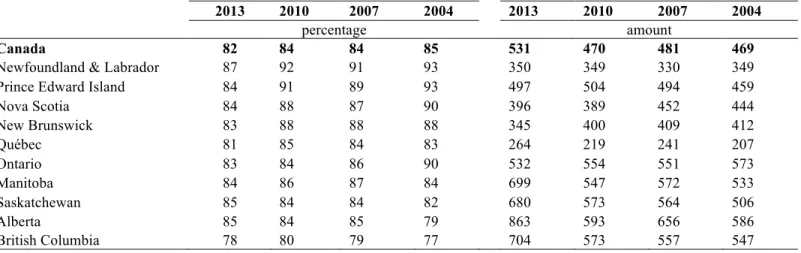
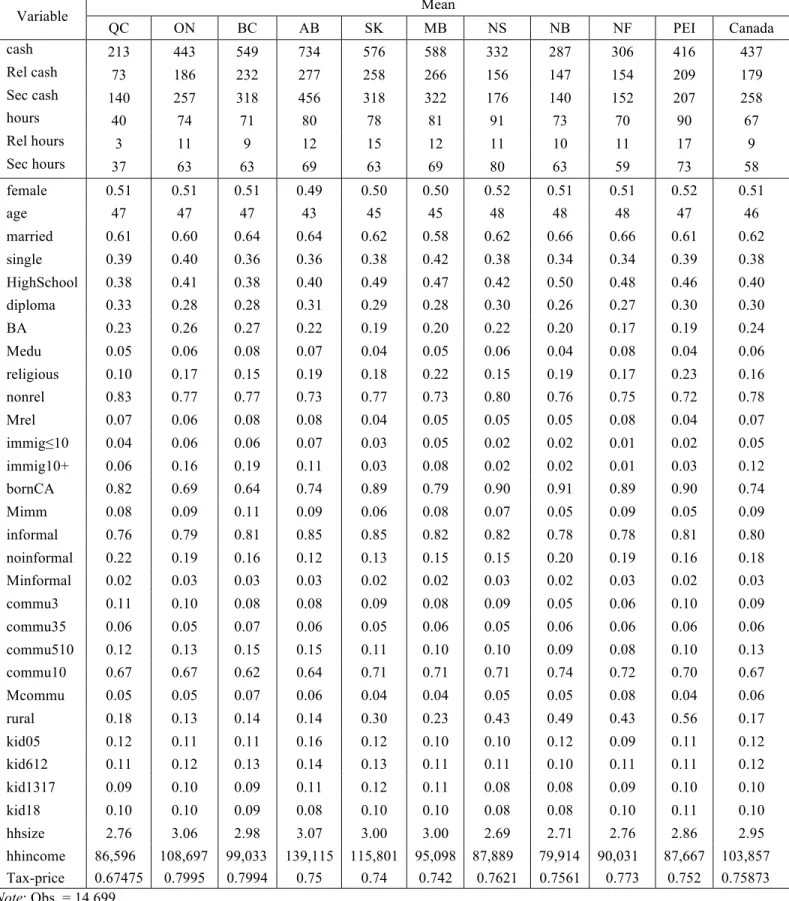
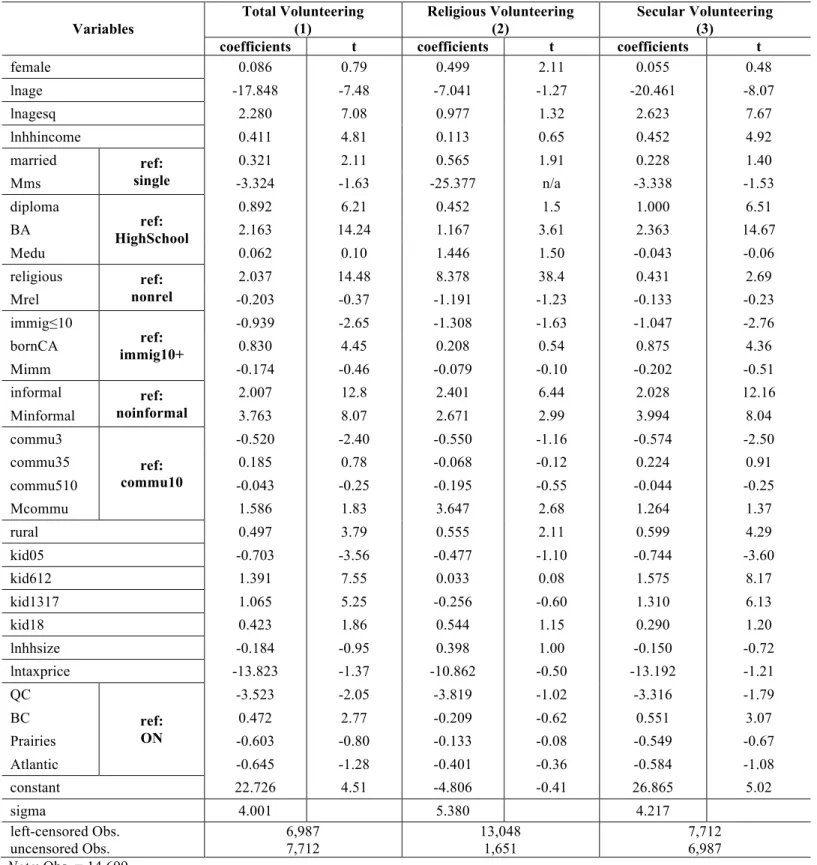
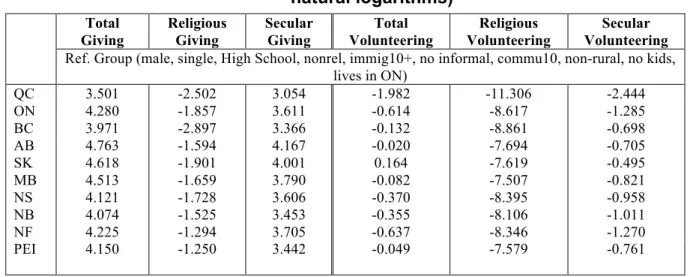
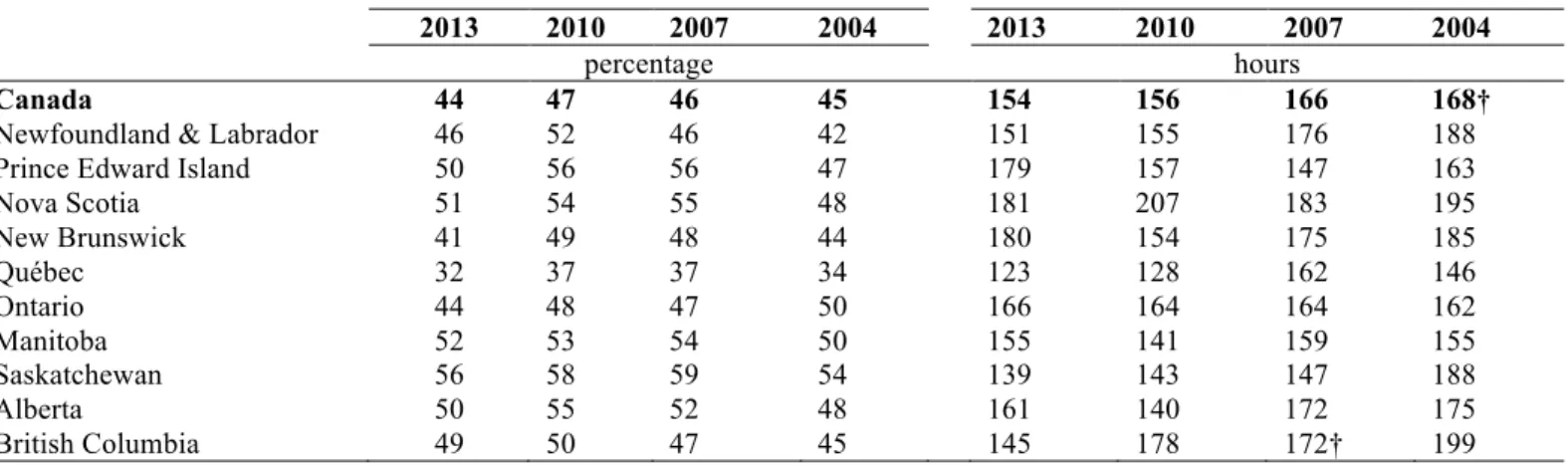
When the main drivers of gifts of time and money are taken into account, Quebecers are no different than Ontarians and those in the Atlantic provinces when it comes to monetary donations, but they consistently volunteer fewer hours than all other residents. In order to keep the sample as large as possible, individuals who did not answer the questions of interest were marked as “missing” (the variable name is preceded by “M”) and included in the analysis. Sec cash The total number of dollars donated to secular organizations in the last 12 months (total dollars donated minus total dollars donated to religious organizations).
This means that the first dollar given to charity yields a 15 cent tax credit and thus "costs" the donor 85 cents. Thus, the one dollar donation "costs" the individual an out-of-pocket amount of 68 cents - referred to as the "tax price" of the one dollar donation. In this case, the effective "marginal tax rate" for the first dollar gift is $0.32.2 The larger the tax credit (or deduction), the smaller the tax price, and vice versa.
Note that all the variation in this tax price is generated by provincial differences in the tax treatment of donations. Overall, females give 20 percent more than their male counterparts—the transformation (eβ-1)*100 where β is the estimated coefficient is required to interpret the estimated coefficients from dummy variables due to the logarithmic specification—this percentage is even higher with religious gifts (26 %) although in that case it is statistically weak; and female giving to secular organizations is 27 percent more than their male counterparts. Finally, when it comes to household size, the number of individuals in the household is negatively correlated with total and secular giving, but positively with religious giving.
We wondered whether the fact that fewer individuals in Québec are religious, within the meaning of the above definition, might illuminate their giving behavior. This implies that it is important to include these missing observations in the regression analysis. When it comes to total giving, those who have lived in a community for the least amount of time give substantially less than those who have lived in the community for ten years or more.
This may reflect the fact that gifts to religious organizations often go directly to a place of worship in the community. The length of time in the community may reflect a person's "attachment" to a place of worship. However, giving to secular organizations is not as directly linked to the physical location of the organization in the community, with the option of giving via phone, internet or regular mail.
Système Scolaire et Économie Solidaire Chez Les Nasa de Colombie
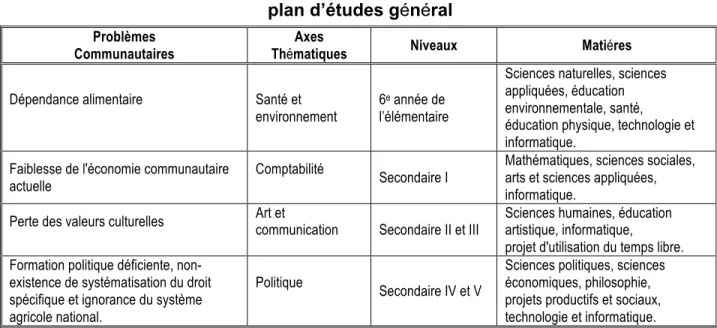
L'observation directe nous a permis d'acquérir une connaissance directe de cette communauté ainsi que de l'école cible. Il s’agit d’une économie basée sur des connaissances autochtones informelles acquises à travers l’expérience, la culture mais aussi à travers des connaissances et des théories universelles. cadre de l'École Eduardo-Santos). A cette fin, le projet éducatif de l'École Eduardo-Santos propose, par exemple, l'enseignement des sciences sous la forme d'un dialogue entre jeunes et vieux, entre savoirs locaux et universels, entre tradition et modernité.
La formation à l'économie solidaire intégrée au programme scolaire du lycée Eduardo-Santos est issue du projet de vie de sa communauté. Elle intègre des mécanismes propres à l'économie communautaire de la NASA ainsi que les principes de l'économie solidaire (Laville Côté et de Pablo, 2005) : réciprocité, redistribution et marché. La deuxième dynamique productive enseignée à l'école Eduardo-Santos est celle des projets qui proviennent directement de la communauté et des familles, tuls7 (potagers traditionnels nasa) et roza (cultures de subsistance).
Ces projets permettent aux étudiants d'apprendre la langue et la culture de la NASA tout en pratiquant l'économie communautaire et solidaire. L'apprentissage des étudiants à l'école Eduardo-Santos intègre des techniques respectueuses de l'environnement ancrées dans le concept contemporain de développement durable. Cela leur permet d'intégrer dans le savoir classique de l'éducation nationale colombienne le savoir collectif qu'est la loi originelle de la NASA, le savoir spirituel de la NASA et les façons de gérer la terre de la NASA.
Ainsi, le programme scolaire de l'école secondaire Eduardo-Santos de Toribío intègre la socialisation familiale et communautaire, piliers de l'apprentissage de la NASA, tout en améliorant la réussite scolaire et les conditions de vie des jeunes. Cette expérience éducative, qui assure l'autosuffisance de l'école, contribue également à la communauté NASA de Toribío. Soulignons enfin l’importance d’intégrer les connaissances issues de cette expérience dans le corpus théorique de l’économie solidaire occidentale.
Héritée de modes de production et d'échange ancestraux, cette économie est solidaire et a intégré certaines caractéristiques de l'économie solidaire de type occidental.
An Exploration of Charity/Non-Charity Partnerships in Canada
Although this sounds relatively simple, it is the source of the complexity of charity/non-charity partnerships. The rationale for using the language of charitable/non-charitable partnerships is provided in the findings. Regardless of the term applied, the description of charity/non-charity partnerships was consistent across the literature.
The defining characteristics of a charity/non-charity partnership is that it is a partnership between a charity. The sample indicated that charity/non-charity partnerships are practiced throughout the voluntary sector. Charity/non-charity partnerships have been used to support a variety of different activities within the sector.
Both were passionate about the benefits of charity/non-charity partnerships, which are summarized in Table 3. The uncertainty about the processes of charity/non-charity partnerships highlights the gap between current policy guidance and practice. As a result, charity/non-charity partnerships initiated by a funder were often the least compatible.
From interviews with legal professionals, a clear understanding emerged of what policies govern charitable/non-charitable partnerships. The practice of charity/non-charity partnerships challenges many aspects of the voluntary sector and its governance. Rather than engaging in the registration process, organizations and groups are opting for charity/non-charity partnerships.
A specific consideration regarding the definition of charity is the legitimacy of charity/non-charity partnerships as a charitable purpose. This provides a valuable incentive for the CRA to consider facilitating partnerships between charities and non-charities as a charity mandate. This exploratory study provides an important basis for the further study of partnerships between charities and non-charities.
Book Review
Think Like a Common Fresh perspective on the relationship between social objectives and economic activity is all the more urgent given the increasingly contested language of the commons. However, it is in this context that Bollier's reluctance to establish a definition of the commons becomes problematic. However, the economist Jeffrey Sachs also released a book called Common Wealth in 2008 with similarly important implications for understanding the concept of the commons (but with a different focus than Hardt and Negri), and Bollier fails to cite this influential work.
The fact that two books with almost identical titles represent different perspectives speaks to the need to clarify how the concept of the common property is used, and for whose benefit. Finally, Think Like a Commoner is a concise introduction to both the contemporary practices and historical context of the commons. Although Bollier does not resolve issues surrounding the conceptual definition of the commons, the examples he provides lay the foundation for a more theoretical discussion of the term.
The book will undoubtedly be of interest to researchers and practitioners in microfinance, students of the social economy and community development, to colonial and decolonizing historians, policy makers and those interested in Caribbean socio-economic affairs. In short, Hossein's critique of what has gone wrong with microfinance in the Caribbean is grounded in a political analysis of the region. Although the analysis varies by nation, the gist of the criticism - especially in Jamaica, Guyana and Trinidad and Tobago - is that microfinance has become a tool of a very divisive political system, the divisions often based on race but also nuanced through the additional intersections of class and gender.
For a positive example, Hossein turns to Haiti, interestingly one of the poorest countries in the world and also a country with very extreme forms of inequality. In Haiti, whose formal institutions have been undermined by a politically oppressive environment, Hossein estimates that about 80 percent of the population relies on sols, informal financial arrangements that originated in the West African nation of Benin. Interestingly, formal banks in the Caribbean, including Jamaica's Bank of Nova Scotia, have also recognized the popularity of informal financial arrangements and offered schemes designed to attract their participants.
Although Politicized Microfinance is highly critical of the path microfinance has taken in some Caribbean countries, arguing that it has been co-opted by political elites, that it is often racist in orientation, and that the primary goal is to gain political support and patronage . , the book offers a balanced analysis of the politicization of microfinance in the Caribbean.