
Teachers' Gender Related Beliefs And Pedagogical Practices: Experiences In Single Sex Classrooms
127
0
0
Texto completo
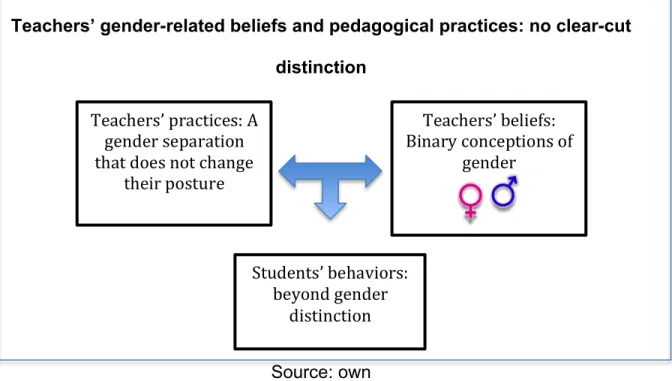
(2) . 1 . Abstract The present research shows the results of a qualitative interpretative study that inquired about the way teachers’ gender-related beliefs shaped their pedagogical practices in single-sex EFL classrooms in a private coeducational school in Bogotá, Colombia. As emergent categories, the study showed that teachers’ practices did not change because of the gender of their students; however, classroom management was mediated by gender and it was necessary to adopt a discipline system specific for boys demonstrating behaviors from the laddish culture. Furthermore, neither classroom environment nor students’ engagement was mediated by gender. Nevertheless, teachers' beliefs showed binary conceptions of their students from a gender perspective, as they conceived them as academically opposites and such conceptions were related to teachers’ historical legacies and culturally held beliefs. Key words: gender, teachers’ beliefs, pedagogical practices, single-sex classrooms Resumen La investigación muestra los resultados de un estudio cualitativo e interpretativo que indagó acerca de la manera como las creencias acerca del género de profesores de inglés moldearon sus prácticas pedagógicas en salones diferenciados por el género en un colegio mixto y privado de Bogotá, Colombia. Como categorías emergentes, el estudio demostró que las prácticas pedagógicas no cambiaron en razón del género de los estudiantes. Sin embargo, el manejo de grupo fue mediado por el género y se hizo necesario adoptar un sistema para el manejo de la disciplina en los grupos masculinos que demostraron actitudes de la cultura “machista”. De igual manera, ni el ambiente de clase, ni el grado de atención fueron mediados por el género. Sin embargo, las creencias de los docentes mostraron concepciones binarias de sus estudiantes desde una perspectiva de género en tanto los concibieron como opuestos académicos y dichas concepciones se relacionaron con los legados históricos de los docentes y sus creencias culturales. Palabras clave: género, creencias, prácticas pedagógicas, salones diferenciados por género..
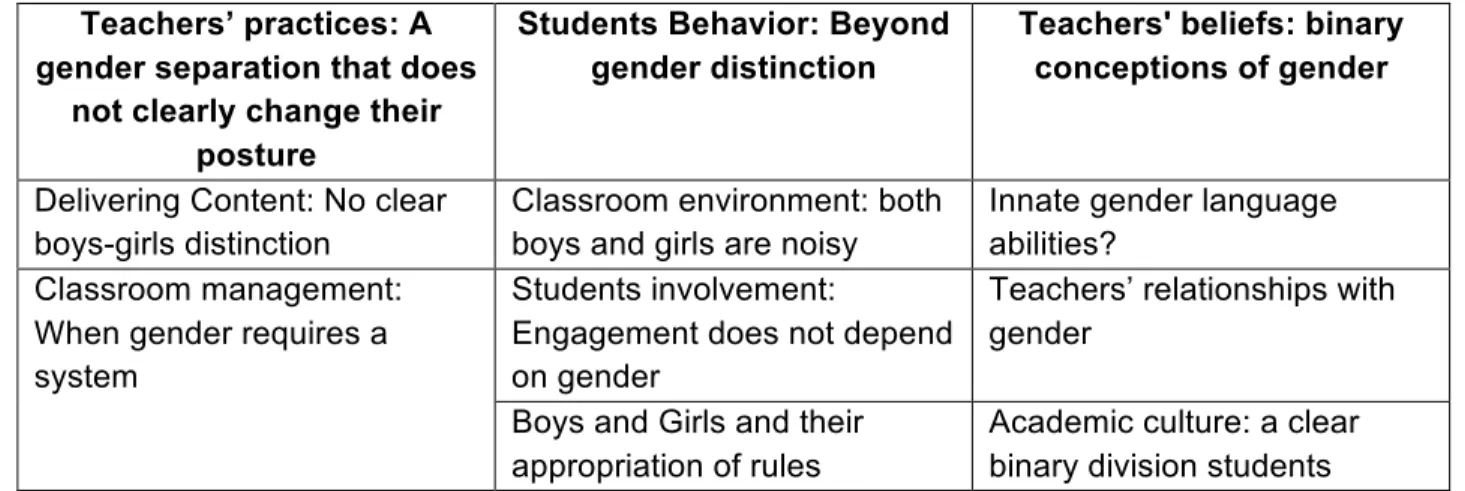
(3) . 2 TABLE OF CONTENTS. Introduction ................................................................................................................................................................. 4 Chapter 1 ..................................................................................................................................................................... 6 Statement of the Problem ............................................................................................................................... 6 Justification .......................................................................................................................................................... 12 Chapter 2 ................................................................................................................................................................... 14 Literature review ................................................................................................................................................ 14 Gender and Language .............................................................................................................................. 14 Teachers' Beliefs and Pedagogical Practices ............................................................................... 26 Chapter 3 ................................................................................................................................................................... 31 Research Design ............................................................................................................................................... 31 Type of study .................................................................................................................................................. 31 Context .............................................................................................................................................................. 32 Participants ...................................................................................................................................................... 33 Instruments ...................................................................................................................................................... 34 Researcher's role ......................................................................................................................................... 36 Ethical issues ................................................................................................................................................. 36 Chapter 4 ................................................................................................................................................................... 38 Data Analysis ...................................................................................................................................................... 38 Data Analysis Framework ............................................................................................................................ 38 Data Management ............................................................................................................................................ 39 Data Analysis Process ................................................................................................................................... 43 Categories ............................................................................................................................................................ 47 Teachers' practices: A gender separation that does not change their posture ........... 51 Delivering Content: No clear boys-girls distinction ................................................................ 56 Classroom management: When gender requires a system ............................................. 61 Students' Behavior: Beyond gender distinction ........................................................................... 67 Classroom environment: both boys and girls are noisy ...................................................... 68 Students' involvement: Engagement does not depend on gender ............................... 72 .
(4) . 3 Boys and Girls and their appropriation of rules ....................................................................... 75 Teachers' beliefs: binary conceptions of gender ......................................................................... 80 Innate gender language abilities? .................................................................................................. 81 Teachers' relationships with gender .............................................................................................. 84 Academic culture: a clear binary conception of students ................................................... 92 . Chapter 5 ................................................................................................................................................................... 99 Conclusions ......................................................................................................................................................... 99 Limitations .......................................................................................................................................................... 105 Pedagogical implications ........................................................................................................................... 106 Further Research ........................................................................................................................................... 108 REFERENCES ..................................................................................................................................................... 110 ANNEXES ............................................................................................................................................................... 115 . .
(5) . 4 Introduction. When I was told that the school where I was going to work followed a model with gender perspective, I got really excited because I thought schools were now understanding the need of inclusion and gender equality. However, the fancy term became a little confusing when I realized that although it was a coeducational school, boys and girls studied in separate classrooms. As a teacher, I embarked in this idea that seemed more an experiment than an educational model, just to realize that it was the perfect scenario to explore gender and language teaching. The present document reports a qualitative, interpretative study that explored the way teachers’ gender-related beliefs shaped their pedagogical practices in single-sex classrooms in a coeducational school. This process took me to understand the way teachers and students acted as gendered subjects in gendered environments and how beliefs manifested their historical legacies (Ivinson and Murphy, 2007) that led them to make very specific decisions in their classroom contexts. The document is divided into six chapters that give an account of the research journey undertaken. Thus, the first chapter presents the research problem, research questions and objectives that underpin this study. The reader can find in this section the reasons that led me to explore gender and L2 and the way the EFL community benefits from the findings of the research. The second chapter will provide the reader with the theoretical constructs that support the study. In this section, concepts such as gender and language, single- sex education and teachers' beliefs and pedagogical practices will be presented..
(6) . 5 The third chapter will present the research design. Thus, the methodological. framework that was utilized in order to carry out this study will be explained as well as the context and participants involved. The fourth chapter presents the data analysis undertaken. This chapter will provide the emerging categories from the data gathered and that answer the research question. Finally, the fifth chapter will acquaint the reader with the conclusions drawn from data analysis, as well as the limitations of the study, the pedagogical implications that the findings might have in the ELT community and the further research that is suggested after the study..
(7) . 6 Chapter 1. Statement of the Problem The relationship between gender and ELT has gained importance in the last decades. Issues in regards to gendered agency in language learning, (Pavlenko and Piller, 2008), gendered interactions in the classroom (Durán, 2006; Sunderland, 2004) and gender in the curriculum (Davis and Skilton-Sylvester, 2004; Pavlenko, 2004) have been studied. These studies show how students' identities as language learners are shaped by the gender they are ascribed to. Hence, the interactions that take place in the classroom are also mediated by gender and teachers and students appear to consciously or unconsciously privilege certain gendered interactions. These studies have shown how curricula have also been created by gendered subjects privileging a group in particular. Issues about gender and language have been as well addressed by Colombian studies in regards to gendered positioning, power relationships and the conceptions of gender that students and teachers have. Accordingly, Castañeda-Peña (2008) explored gender positioning in an-all girls school in EFL classes, Durán (2006) revealed teacher and students` conceptions about gender in an EFL setting, Rojas (2012) studied the way interaction discourses in the EFL classroom unveiled the construction of gender identities and power relationships and Castañeda (2012) also addressed the issue of gendered positioning, but in her study she found the construction of egalitarian power relationships among EFL women-learners. The Colombian studies align to the international ones in the sense that both study how students as gendered subjects try to.
(8) . 7 . get a place in their classrooms and how teachers' perceptions of their students are shaped by the gender they are ascribed to. However, there is not much said about the particular condition of having boys and girls in separate classrooms and what teachers experience in this matter. Although similar experiences have been reported in English-speaking countries, framed within educational policies intended to create boys-friendly pedagogies, (Martino et al., 2005; Younger & Warrington, 2006 Ivinson & Murphy, 2007) information about single-sex classes in coeducational settings in the Colombian context is scarce. This particular situation takes place at Colegio New Hampshire (CNH) 1 , a bilingual school in Bogotá where classrooms are gender-differentiated spaces. Colegio New Hampshire was originally an only-girls school, but when boys were admitted in the 90s, boys and girls started studying in separate classrooms. The school adopted what was called “a model of coeducation with a gender perspective”. (Colegio New Hampshire, n.d) It is important to mention that the official documents of the school, such as the PEI (Proyecto Educativo Institucional), Quality System Policy and PCD (Plan Curricular de Departamento) do not provide any theoretical references that support this model. This model, however, consists of having boys and girls studying in separate classrooms, “as a means of boosting the capacities, learning styles, particularities and multiplicities of each gender. In addition, boys and girls share the rest of the common areas for cultural, sports and social events. There are also programmed projects in which boys and girls have the opportunity to work together”. (Colegio New Hampshire, n.d) Colegio New Hampshire's PEI states in its mission that the school "takes advantage of the 1 A fictitious name has been provided .
(9) . 8 . potential of each gender group (masculine / feminine) through pedagogic strategies and spaces appropriate to each”. (Colegio New Hampshire, n.d) Nonetheless, there are two situations that caught my attention as a member of the school community. Firstly, teachers at school did not seem to clearly understand the model or the reasons behind it. In my role as a teacher, I constantly wondered about the ways we teachers faced such particular context in our daily practices. And secondly, it was not clear to me what were those pedagogic strategies appropriate to each gender in my English classes, which were promulgated by school's mission. In regards to teachers' understanding of the model, a survey was carried out at “III Foro de Coeducación en el Colegio New Hampshire” to 114 teachers in August, 2012. The survey showed that this model was understood from varied perspectives.. Figure 1. displays a graph that shows the ways teachers defined the model. Figure 1. Teachers' Understandings about Coeducation with Gender Perspective. Not clear Capacities 9% in each gender are boosted 12%. Other 7%. Boys and girls learn differently 17%. Source: Own. Boys and girls study in separate classrooms 40% Boys and girls study in separate classrooms but share other spaces 15%.
(10) . 9 Teachers adopt the physical separation as the core of the model, but the reasons. behind the measure are not clear. Even when teachers assert ideas such us the fact that boys and girls learn differently or that the model boosts their capacities, those evidences are not clearly supported. Teachers are immersed in a context mediated by gender but they do not understand why or how their practices should be or adapt the demands of the model. An informal interview carried out to four elementary teachers showed these tensions and misunderstandings. “Boys and girls study in separate classrooms because of the coeducation with gender perspective, boys and girls study in separate classrooms but they can socialize in other spaces like the recess and buses” Margarita. Int.1 Margarita knows there is a model that school follows but she does not give an account of why boys are separated from girls and how this impacts her practices, she privileges the fact that students can share common spaces, but the way the model works is still blurry. In this regards, Younger and Warrington (2006) inform us about the importance of carrying out research in this field in order to make informed decisions and implement pedagogies efficiently. “There is little research to support a case for gender-specific pedagogies and that single-sex classes do pose significant challenges to the teacher, not only in terms of management and motivation but also in terms of dealing with the wider ability span. present. in. single-sex. classes. and. students'. subsequent. greater. requirements for differentiated learning approaches and resources.”(p.614) Those gender-specific pedagogies that Younger and Warrington mention and that are part of Colegio New Hampshire's mission are not clearly evidenced in the EFL.
(11) . 10 . classrooms at CNH. Firstly, lesson plans are designed indistinctively for boys and girls. Teachers are requested to plan in advance for the grade level and there are not different versions for boys' or girls' groups. Annex 1 shows a sample of a lesson plan designed for ninth grade at Colegio New Hampshire, which shows a series of activities to be carried out and does not mention any variation or difference according to gender. Secondly, during the interview, EFL elementary teachers at Colegio New Hampshire showed that when teachers plan their lessons, gender is not considered. “No, I don't actually do it. Lesson plans are the same for both boys and girls, when I teach them, at that specific moment; I probably do different things with boys or girls” Angie. Int.1 Teachers' pedagogical practices are different in each classroom, but asserting that this happens due to the gender their students are ascribed cannot be clearly established. However, it caught my attention that teachers make decisions in class time based on the way they perceive their students as gendered subjects. “Boys prefer to work individually and girls prefer to do things with their hands, so the same activity can be carried out in different ways” Angie Int. 1. Teachers assume that there are specific behaviors in their students depending on their gender and those assumptions lead them to the decisions made in the classroom. In this specific case, Angie perceived her male and female students as subjects with certain preferences mediated by their gender and those differences are taken into account when teaching them. This situation puzzled me in regards to the role teachers' beliefs play in the classroom particularly in regards to gender. Consequently, I could perceive two problematic situations at Colegio New Hampshire. Initially, teachers live tensions and misunderstandings about the model of.
(12) . 11 . coeducation with a gender perspective that school adopts and subsequently, there is a gap between what school promulgates in its mission and what is really happening in the EFL classrooms. I decided to pose the following research question in order to better understand this phenomenon.. How do teachers' gender-related beliefs shape their pedagogical practices in single-sex EFL classrooms in a coeducational school? In order to answer this question, there are two sub-questions that also need to be addressed. What are teachers' gender-related beliefs when teaching English in single-sex EFL classrooms in a coeducational school? What are teachers' pedagogical practices when teaching English in single-sex EFL classrooms in a coeducational school?. Hence, the objectives of the present study will be: •. To analyze teachers' gender- related beliefs when teaching English in single-sex EFL classrooms in a coeducational school. •. To analyze EFL teachers' pedagogical practices when teaching English in singlesex EFL classrooms in a coeducational school.. •. To examine the way teachers' gender- related beliefs shape their pedagogical practices when teaching English in single-sex EFL classrooms in a coeducational school..
(13) . 12 . Justification I have pointed out how studies about gender and language are informing the community of the multiple issues that occur when L2 learning/teaching takes place. The present study will particularly inform the ELT community about gender-differentiated classrooms and the pedagogical implications of these kinds of pedagogical decisions in EFL classes. Since the information in the Colombian context is scarce, Colombian institutions will be informed in this matter and will be able to understand this phenomenon better, in case the experience is replicated. Internationally speaking, many schools have implemented this policy. The results of this research will inform international communities about teachers' experiences and beliefs in regards to the implementation of single-sex classes from the teachers' point of view. Hence, knowledge about this gender-related phenomenon will be enlarged through the outcomes of this research. In my role as an English teacher the findings of this study will guide my own pedagogical practice into the school's context and my students' realities as gendered subjects. The informed decisions made after this research process, will benefit my students since gendered pedagogies can be unveiled and used in different grade levels at school. The most meaningful insight that this research process can provide to the academic community both pre-service and in-service teachers, is the awareness that it can generate in regards to the role that gender plays in our daily practices. This.
(14) . 13 . research informs teachers of the need to be more aware of the interactions, the roles they play as gendered teachers in a gendered classroom, the blurry line that exits when a system like the one presented here can reproduce stereotypes in search of pedagogical strategies to cater students’ needs from a gender perspective. This research invites teachers to be aware of how they establish practices that may for instance, privilege agency in one gender, (Ivinson and Murphy, 2007, Pavlenko & Piller 2008 and Gordon 2008), or how their students are investing in language learning from their gendered subjectivity. (Pavlenko & Piller 2008, Gordon 2008 and Lu and Luk, 2014). With the present research teachers are questioned about the kinds of masculinities that they face in this environment. The fact that this kind of masculinity can be firstly understood and subsequently addressed will generate environments where learning occurs and our teaching practices can be facilitated. Finally, it has always been Colegio New Hampshire's desire to document the experience of single-sex classes in coeducational settings. Thus, the present study will contribute to such documentation providing more insights about the daily practices carried out inside the institution..
(15) . 14 Chapter 2. Literature review The exploration of teachers' gender-related beliefs and pedagogical practices in the context where this study takes place needs the examination of important concepts such as gender, beliefs and pedagogical practices. Therefore, I will firstly give an account of the relationship between gender and language; within this frame, the way single-sex classrooms policies have been implemented will be examined. Finally, I will provide ideas on what teachers' beliefs are and how they contribute to decision-making processes and classroom practices. Gender and Language This section provides the reader with a definition of gender, as well as an explanation of the approaches historically used to understand the relationship between gender and language. Subsequently, a categorization of studies about gender and language learning will be presented. In the same line of thought, a brief discussion about gender and literacy will be shown in order to incorporate the experiences of single-sex classrooms. The section concludes with an exploration to gender and stereotyping. In the context of this research, gender plays an important role. As a starting point, it is important to define what gender is and how it relates to language. Whereas the concept of “sex” refers to a biological distinction, the one of “gender” is used to describe socially constructed categories according to the sex. (Coates, 2009) The relationship between language and gender has been studied from four different theories: deficit approach, dominance approach, difference approach and.
(16) . 15 . dynamic or social construction approach. (Coates, 2009; Davis & Skilton-Sylvester, 2004; Pavlenko & Piller, 2008). The deficit approach, considered female language inferior to male's language; in linguistic terms it was defined as weak or deficient. (Coates, 2009). In the dominance framework, “women-as-a-group” were seen as linguistically oppressed and dominated by “men-as-a-group.” In the study of linguistic diversity, this view led to an argument that women lag behind because they are linguistically oppressed by men (Pavlenko & Piller, 2008). The difference framework suggests that girls and boys are socialized into different ways of relating to one another in their predominately same-sex interactions and, thus, acquire different communicative styles. (Davis & Skilton-Sylvester, 2004). For the dynamic approach, gender identity is seen as a social construct rather than an established social category. (Coates, 2009) Although the present study is set at a specific context in which boys and girls study in different classrooms, and teachers' perspectives will be seen from that specific context, I will assume a dynamic point of view, gender will be considered a social construct that is built from other variables, such as culture, history, socioeconomic conditions, etc. It is a complex system of social relations and discursive practices, differentially constructed in local contexts. (Norton & Pavlenko, 2004) In this line of thought, Gordon (2008) reminds us of the complexity of the teaching and learning of a second language. “More than just learning a structure for communication, learners are acquiring social, cultural and gendered norms along with procedures for interpretation within a new cultural landscape.(p.231)”. This vision of language learning goes beyond the mere structure, and takes into account the social.
(17) . 16 . context where it takes place. Accordingly, this social context is mediated by culture and gender. Thus, it is important to see the role that gender plays within the language class. Gordon (2008) and Pavlenko and Piller (2008) categorize the studies about this issue into four important groups. Studies about gendered access, studies about gendered interactions, studies about gendered agency and ideologies and studies about gender in the curriculum. (Pavlenko & Piller, 2008), gendered interactions in the classroom (Durán, 2006; Sunderland, 2004), and gender in the curriculum (Pavlenko, 2004; Davis & Skilton-Sylvester, 2004). In terms of gendered access, Gordon (2008) alludes to the fact that gender identity affects the access to L2 socialization. This is due to the fact that the communities of practices in which individuals socialize are also influenced by gender identities. In other words, being a man or a woman can affect your opportunities to access a second language or activities related to its acquisition, framed within cultural practices of the context where learning takes place. This situation is mostly seen in ESL contexts where for instance being a woman could represent having less opportunity to learning a second language. To illustrate this situation, Rockhill (1993) reports that Latino women in the USA, often have less access to L2 socialization in workplace settings than men. This perspective aligns with the dominance approach previously described in the sense that a group prevails linguistically speaking over the other due to their gender. Another study that found insightful ideas about how learners' access to second language can be mediated by gender was carried out by Hruska (2004). The study demonstrated how relationships and interaction mediated through local gender constructions support and constrain English language learners' classroom participation..
(18) . 17 . Based on these results, the author concluded that local gender ideologies operating in second language (L2) learning contexts affect students' access to the interactions that they need to develop a second language. Hruska's (2004) study not only portrays the question of gendered access to L2 but also incorporates the role of interaction in this intricate net of connections in the language classroom. Gender and classroom interaction studies have shown precisely how gender shapes interaction in the classroom, in other words gender may be a determiner about which participants have the right to speak, to define meaning and to stay invisible in different classroom settings (Pavlenko and Piller, 2008). Hence, the idea of positioning plays and important role here, since gender, among other different factors influence positioning and thus opportunities for L2 socialization (Gordon, 2008). Sunderland, (2004) in this aspect comments on the apparent assertiveness and academic approach of the girls and the differential teacher treatment by gender in which boys may have received more attention but girls more academically useful attention. Durán (2006) in a study carried out in a Colombian High School, explored teacher and students` conceptions about gender in an EFL setting and the way they were manifested in their discourse patterns. She concluded that there were imbalances in relation to boys` and girls` participation during interaction, made manifest by verbal and nonverbal attitudes. There was also evidence of girls' low self-esteem in response to the lack of value and respect granted to their opinions by their male peers. In her study, stereotypes were part of teachers' and students' conceptions regarding gender and thus they were maintained to a great extent. Rojas (2012) in a study at a Colombian University with a group of pre-service women-teachers found that emergent femininities construct gender identities and power.
(19) . 18 . relations inside de EFL classroom setting through interaction discourses. She concluded that language learners cannot be perceived as abstract entities but as individuals that perform different identities in specific settings and contexts. She also recognized the presence of power in the discourses that students perform and how teachers should be conscious of such when planning or delivering instruction. For Rojas, the discovery of gender identities allows students and teacher to know how they are perceived by others and even by themselves and therefore teachers can shape pedagogical practices differently. Lahelma et al (2014) explored the concept of caring and teaching. Hence, they present the idea that female teachers are frequently believed to be more involved than men, therefore caring is a cultural belief that is seen as suitable for women in a given place and time. For the authors, teacherhood means a constant negotiation between teaching and taking care of students. Teachers strive to focus on their teaching role and perceive care as something extra, but unavoidable. So, taking distance from caring is easier for male teachers than for female teachers. Correspondingly, Castañeda (2012) carried out a study with the idea of tracing the discourses through which a group of women learners subject-positioned in online interaction and how the construction of discourses could inform language as a socialization process. The author discovered that in the EFL context where the experience took place, women perceived each other as worth to be listened as there was what she calls a “co-management of the power relations” (p.177) that allowed language learners to socialize language more easily and without harm. Castañeda-Peña (2008) explored the gendered discourses available for preschoolers in the English language classroom. Among his findings, he reported the.
(20) . 19 . importance of the Teacher- Approval' discourse as this shows traces of constant identity construction of girls as language learners. Castañeda-Peña showed as well that these gendered discourses impact on language learner identity. This time that it was “within the 'Peer Approval' discourse where girls could find, at times, positions in which their femininities are empowered interactionally. This happens because both boys and girls see each other as (English) language learners” (p.123). These experiences show the importance of gender in classroom interactions and how this mediates to establish power relationships, to position an individual as a language learner with a gendered identity within a specific discourse. This overlaps to some extend with the studies about gendered agencies and ideologies. In terms of gendered agency in language learning, it has been shown how gendered ideologies about L2 and practices shape learners' desires, investments in or resistance to learning. (Pavlenko & Piller 2008, Gordon 2008). In this regard, ideas such as the fact that women incline to study L2 and outperform in relation to boys are present (Sunderland 2000). Gender hence plays the role of determining the ways learners invest or disinvest to learn a second language. This has been shown in the experiences of women inclined to study a second language in a very specific context in order to have opportunities for jobs or changes in power relationships established with men. Nevertheless, this relationship needs to be cautiously understood since “it is not the essential nature of femininity and masculinity that shapes language learning trajectories of particular individuals, but rather the nature of gendered social and economic relations, culture specific ideologies of language.” (Pavlenko and Piller, 2008 p.61). This idea promotes the understanding of gender from.
(21) . 20 . a dynamic point of view, where the surrounding factors are the ones that also determine gender. Lu and Luk (2014) studied subjectivity and investment and how they were related to the fact that reading was related to the feminine domain. They found out that it was easier for female students to engage in EFL reading because the subject positions in the informants’ discourse of EFL reading are more compatible with the subject positions available to females. They concluded that the feminization of EFL reading and patriarchal values in societies offer male students excuse to distance from EFL reading. The last group of studies of language learning and gender deals with gender and curriculum. Pavlenko and Piller (2008) remark on experiences where gender and sexuality have been included in the curriculum of ELT. Thus, the discussions about sexual harassment, gay and lesbian communities, gendered vocabulary, sexism in books, among others, are incorporated in the teaching practices of L2 settings. Posada (2004) shows an experience in which the curriculum becomes a tool to incorporate these issues into the ELT classroom. Her project at a private university in Bogotá with undergraduate students consisted of finding out what students' oral discourse informed about their beliefs regarding gender and ethnicity. To do so she incorporated the discussions of non-canonical texts written by women from different ethnicities and discovered that students showed that there is an internalization of the values that characterize the Western society. A society ruled by dichotomies such as male/female, white/black and rich/poor, who perpetuate power relations that favor certain groups over others. The relationship that can be established between gender and language can be seen from innumerable perspectives, however all of them.
(22) . 21 . interrelate; thus studies of curriculum involve, identities ideologies and even access. These relations will be seen when gender is studied in relation to literacy practices. Moss (2008) explains how studies about gender and literacy have addressed the issue of access, as mentioned before, but also the underachievement that boys in general show. According to the author, the situation is caused by the dissonance between aspects of masculinity and aspects of schooling. Those aspects could be among, others, the genre preferences of boys that are not actually portrayed in the curriculum and the way that reading is perceived by boys. Millard (1997) points out that certain kinds of narrative and character and personal response are not part of boys’ interests and this has reduced full participation within the language curriculum. The author also found that boys perceive reading as a female activity and when they like it, they tend not to share it with their peers. The author proposes that English curriculum should be rebalanced and should provide wider range of material. In this regard, Bristol (2015) studied gender relevant pedagogy and defined it as the teaching practice that requires practitioners to examine how they have formed learning conditions that enable or constrain boys’ learning, specifically through unconscious beliefs about gender manifested in curriculum development and responses to students perceived misbehavior. In his findings, Bristol (2015) discovered that pedagogy relevant for boys would have to include elements of experiential learning where boys can acquire and apply knowledge in a setting outside the traditional classroom. He emphasized on the fact that punitive responses to boys’ disengagement could not facilitate learning..
(23) . 22 We can see here how this idea of literacy performance and gender is closely. related to the difference framework previously mentioned due to the fact that it considers boys' and girls' performance different and suggests it should be addressed particularly according to the genders students are ascribed to. This vision of students led some English-speaking countries such as Australia, The United Kingdom, Canada and The United States to create “Raising Boys Achievement” policies due to the fact that boys were underachieving during their school years (Younger & Warrington, 2006). Among the different decisions adopted, there was the inclusion of boys-friendly pedagogies, which included more male teachers in the classrooms, changes in curriculum and the incorporation of single-sex classes in coeducational settings. Research carried out in regards to single-sex classes suggests that: Single-sex classes can contribute to raising achievement levels in schools and enhancing the self-esteem and social attributes of girls and boys only when they are implemented within a gender- relational context, with the support of teachers at all levels of the school, and within a positive framework rationalized clearly through the school community (staff, students, and parents and caregivers. (Younger & Warrington, 2006, p. 614). Gender relational contexts imply teachers making informed decisions when having boys and girls in separate classrooms; decisions that imply a deeper understanding of what gender implies and a constant reflection about their practices. In the Australian context, Martino et al. (2005) reported as an important outcome, in terms of single-sex classes experiences that “teacher threshold knowledges about gender impact significantly on the execution of pedagogy, often with the effect of reinforcing taken for granted assumptions about the way boys as a group learn, behave.
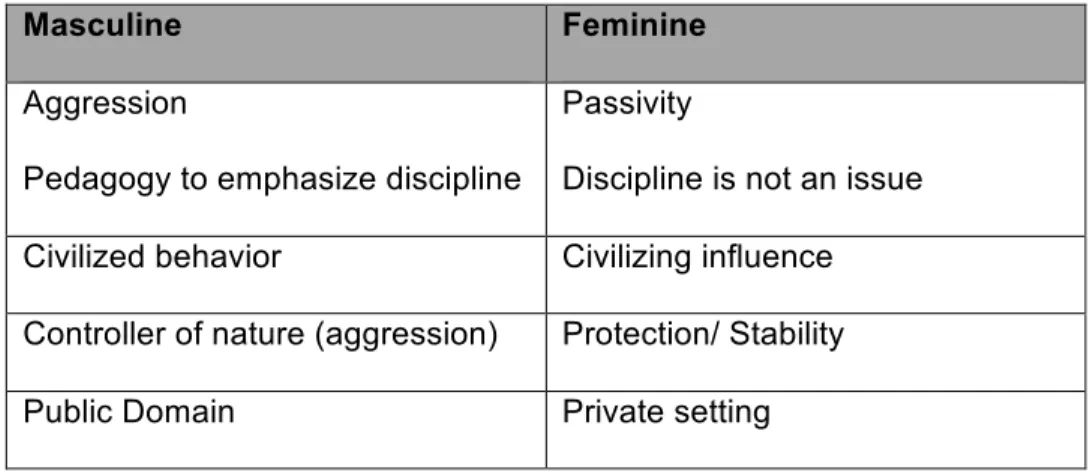
(24) . 23 . and respond”. (p.251).. Threshold knowledges are the different understandings that. teachers have of the context where they work. Figure 2 presents the way Martino et al, (2004) understand this concept of “threshold knowledges”. Figure 2. Threshold Knowledges. Knowledge of student development . Discipline knoweldge . Knowledge of gender and their impact on ss' attitudes and learning . Threshold Knowledges . Knowledge of educational policy . Understanding about the purposes of teaching . Source: Graph designed with information from Martino et al (2004). In this regard, teachers’ knowledges about gender and schooling are based on the problematic normalizing assumption about boys as a group, which emphasizes that boys are predisposed to behaving, thinking and learning in different ways. Ivinson and Murphy (2007) explored single-sex education and the conception of enduring beliefs about gender. For these authors it is clear that throughout history there has been a dominant cultural belief that understands gender from cultural binaries: what one is the other is not. These binary conceptions of gender can be observed in table 1..
(25) . 24 . Table 1. Binary conceptions of gender explored by Ivinson and Murphy (2007) Masculine. Feminine. Aggression. Passivity. Pedagogy to emphasize discipline. Discipline is not an issue. Civilized behavior. Civilizing influence. Controller of nature (aggression). Protection/ Stability. Public Domain. Private setting. Therefore, a binary conception of gender in single-sex contexts has contributed to ideas such as masculinities that are oppositional to an academic culture, and the fact that learning and achievement are perceived as not cool by boys-students. Thus, behaviors such as humor and absurdity are present in male groups in order to get a position in the peer culture. Ivinson and Murphy studies of single-sex education confirmed that teachers can unwittingly revitalize such binary conceptions through their practices when they are confronted with a need to respond to gender as an emergent aspect in their setting and when they have no other resources to draw on to inform their actions. In their results, they found that pedagogic practices and instruction addressed to boys gave them more autonomy than girls, their ideas were validated more explicitly and their right to play was tolerated more than girls. In this line of thoughts, boys were treated more agentive than girls. In the exploration of those behaviors that teachers perceived different in “boys as a group”, Jackson (2010) explored the concept of Laddish Culture. Thus,.
(26) . 25 . underachievement was linked to this culture and in her study she explored teachers’ perceptions of ladishness amongst boys. Teachers identified as key traits of this culture the fact that laddish behaviors were group, seeking attention behaviors. These behaviors were related to showiness and competition that prioritize sport over academic work. Additionally, teachers perceived laddish behaviors to be disruptive, especially from a sexual or even sexist perspective. The last characteristic attributed to the laddish culture was the lack of respect for authority. In her study, she reported that among teachers there was a blurry line between the idea that ladishnes was problematic or not. Jackson (2010) found that some men teachers encounter less problematic laddish behavior because they understand it better. Men teachers speak their language and have masculine styles that do not problematize with this culture. With these attitudes, it can be stated that male teachers in that particular context, perpetuate the idea of laddish culture. In this sense, it is important to see the role of stereotyping when talking about gender. Schmenk (2004) points out the danger of oversimplifying gender and having therefore a stereotyping vision of it. She defines stereotypes as shared beliefs about personality traits and behaviors of group members; according to her, by stereotyping we overlook individuality. She points out how beliefs and practices interact at local sites and how they affect learners and teachers. She suggests that such beliefs are to a large extent based on commonsense conceptions of gender and of language learning resulting from particular instances of stereotyping. Lynch (2014) explored how kindergarten teachers reinforced gender attitudes and thus, they portrayed their own gender prejudices. In that specific context, the author points out that in the classroom, kids learn about gender roles in unforgettable ways. In.
(27) . 26 . her study, teachers promoted stereotypes such as the idea that dramatic play is for girls and that specific settings suit gender. She found whereas some teachers perpetuated stereotypes, other resisted them by not restringing settings and activities to according to their gender. From this perspective, we see the connection between gender and beliefs in educational settings. Thus, it is important to clarify how beliefs can be defined and how they can be meaningful tools to gain insights about certain phenomena. For the present study, teachers' beliefs will be addressed. Teachers' Beliefs and Pedagogical Practices Before analyzing what teachers' beliefs imply, it is important to mention what it is understood by this term. In psychological terms, its definition is complex and different terms have been used to refer to similar ideas: values, judgments, axioms, opinions, ideology, perceptions, conceptions, conceptual systems, preconceptions, dispositions, implicit theories,. explicit theories,. personal theories,. internal. mental. processes,. action strategies, rules of practice, practical principles, perspectives, repertories of understanding, and social strategy, to name but a few can be found in the literature (Pajares, 1992). In this sense it is better, then to attribute characteristics to them and see the role they play in educational settings. Because of the complicated nature of beliefs, some researchers have talked about beliefs as a system (Block & Hazelip, 1995; Pajares, 1992). Beliefs are formed early and tend to self-perpetuate, persevering even against contradictions caused by reason, time, schooling, or experience (Ginsburg & Newman, 1985). Pajares (1992) points out how individuals develop a belief system that houses all the beliefs acquired.
(28) . 27 . through the process of cultural transmission. According to him, the belief system has an adaptive function in helping individuals define and understand the world and themselves. Knowledge and beliefs are inextricably intertwined, but the affective, evaluative, and episodic nature of beliefs makes them a filter through which new phenomena are interpreted (Nespor, 1987). In this sense, belief substructures, such as educational beliefs, should be understood in terms of their connections not only to each other but also to other, perhaps more central, beliefs in the system. Psychologists usually refer to these substructures as attitudes and values. (Pajares, 1992) Beliefs are instrumental in defining tasks and selecting the cognitive tools with which to interpret, plan, and make decisions regarding such tasks; hence, they play a critical role in defining behavior and organizing knowledge and information (Schommer, 1990). This decision-making feature allows beliefs to strongly influence perception hence, affecting people's behavior. (Nespor, 1987) The research task is not easy when dealing with beliefs, as they must be inferred, this inference must take into account the congruence among individuals' belief statements, the intentionality to behave in a predisposed manner, and the behavior related to the belief in question (Goodman, 1988). The complexity of beliefs has been presented, then seeing how those features are present in educational settings is needed to support this research proposal. According to Nespor (1987), beliefs about teaching are well established by the time a student gets to college, which supports the idea of beliefs having a long term existence in people's life. In the present study, teachers' beliefs will be analyzed and this implies taking into account their background knowledge and life histories..
(29) . 28 Davis (2003) declares, "That people's beliefs are instrumental in influencing their. behavior is a truism: people act on the basis of perceptions and their 'definition of the situation'" (p. 207). The author continues by stating that if people perceive some situation to be a reality, then they will behave as if that were the case regardless of whether or not it is true. This is also true in teaching and learning. If teachers believe that languages are learned a certain way, their behavior will reflect that way of thinking in spite of possible research and training to the contrary. (Thompson, 2009). According to Richardson (1996), “teachers' beliefs are interactive with their practices. Beliefs are thought to drive actions; however, experiences and reflection on action may lead to changes in and/or additions to beliefs” (p. 104). Thompson (2009) also states that the relationship between beliefs and practices is dialectic, not a simple cause-effect relationship, and suggests that studies should seek to elucidate the dialectic between teachers' beliefs and practices. Teachers' beliefs in regards to language and gender will be central in the present research proposal and will be inferred through the pedagogical practices carried out by teachers in the very specific context of single-gender classrooms. Understanding the relationship between teachers’ beliefs and their pedagogical practices necessarily involves understanding what the concept of pedagogy is and what it is implied by the term pedagogical practice. In this regard, Zuluaga (1999) defines pedagogy as the “discipline that conceptualizes, applies and experiments the knowledge related to the teaching of specific “knowledges”, in different cultures” 2 (p.11).. This. concept of pedagogy is polemic because it goes beyond the idea of pedagogy as a teaching method; hence it involves a multiplicity of methods that are related to the 2 Translation provided by the author. .
(30) . 29 . historical moment and the cultural and social scenarios where the knowledge takes place. The idea that Zuluaga (1999) proposes envisions pedagogy beyond theory and gives a special place to the pedagogical practices. This idea is understood as Pedagogical Knowledge since not only does it involve theory, but also the reflections about the school, the teacher and, in general terms, what the teacher does in their daily practices. Zuluaga (1999) understands the notion of pedagogical practices as a comprising concept, where many other ideas converge. Thus, as explained in figure 3, the concept of pedagogical practices involves pedagogical models, multiplicity of concepts, ways in which discourses work and social characteristics acquired in those pedagogical practices. Figure 3. Notion of Pedagogical Practices provided by Olga Lucía Zuluaga. Theoretical and practical models in different teaching levels . Ways they work within Institutions . Heterogeneous fields . Provider of roles to the subjects . Source: Own. Adapted and designed from Zuluaga (1999).
(31) . 30 From this perspective, Zuluaga (1999) conceives that the pedagogical practice is. ruled by the discursive practice, which comprises the institution, the subject and the pedagogical discourse itself. In the present study, the idea of pedagogical practices align with the way teachers are conceived as subjects that face a particular situation given by the institution where they work in which gender is mediating their daily practices and the particular situation makes them behave in particular ways and acquire specific discourses as it will be shown in the forthcoming chapters where results are discussed. . .
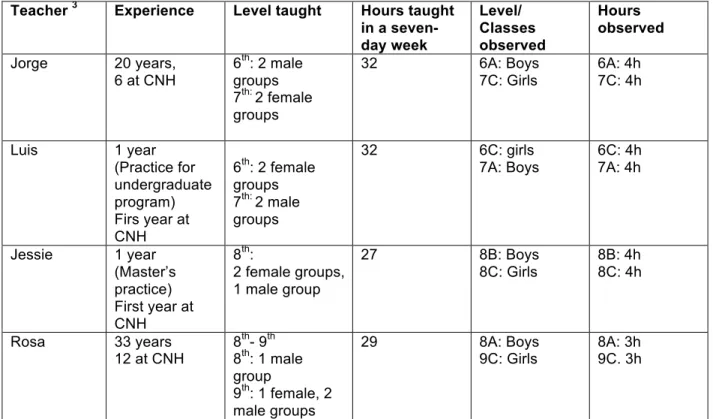
(32) . 31 Chapter 3. Research Design The purpose of this study is to examine the way EFL teachers' gender-related beliefs shape their pedagogical practices in gender-differentiated classrooms. In this chapter I will give an account of the type of study, the context where the study took place, the participants, and the instruments used to collect data, the ethical considerations taken into account and my role as a researcher. Type of study The type of study corresponds to a qualitative interpretative study. According to Strauss and Corbin (1990), qualitative research requires an interpretative approach about the events that occur in natural contexts. In this approach, we explore people's lives, their behaviors, their ways of organization, their social movements and interactions. This qualitative study can be framed as well within a social constructionist approach in the sense that it captures multiple perspectives from different social agents. According to Patton (2002), the interest of constructivism is to explore how people in a particular setting construct reality, what their perceptions, explanations, beliefs and world-views are and what are the consequences of their constructions for those with whom they interact. As the present study explores teachers' gender-related beliefs and the way they shape their pedagogical practices in single-gender classrooms, a constructivism approach corresponds to the nature of the phenomenon to be studied..
(33) . 32 Context The present study took place at Colegio New Hampshire, which is a private,. bilingual (Spanish- English) school in Bogota. Colegio New Hampshire has a population of 1577 students distributed in three sections: preschool, elementary and high school. There is a total group of 120 teachers. Colegio New Hampshire was originally founded in 1945 and was an only-girls school.. In 1994, the school changed its name to Colegio New Hampshire and. established a partnership agreement with Saint Michael's College, in Vermont State, U.S. to teach English as a second language. In 1997, the first group of boys was admitted and its female-based educational system became known as a model for coeducation with a gender perspective, which consists of designing gender-based pedagogic strategies. Boys and girls study in separate classrooms, but share the rest of the common areas for cultural, sports and social events. Colegio New Hampshire's mission is “To efficiently contribute to the ethical and intellectual education and training of competent men and women, with a humanist focus that respects individual differences and takes advantage of the potential of each gender group (masculine / feminine), through pedagogic strategies and spaces appropriate to each that are developed through a bilingual (Spanish English) educative program (Spanish English) where humanities, science, art, technology and sports make for a base of excellence.” (Colegio New Hampshire, n.d., para.1) Colegio New Hampshire's bilingual program includes four phases: the first allows children in Pre-Kinder, Kindergarten and Transition grade to acquire English in the same way that they did their native Spanish. This stage is called: Early Total Immersion in which children begin their reading and writing processes in English..
(34) . 33 The second phase, called Bilingual BICS (Basic Interpersonal Communication. Skills), begins the bilingual process from first to fifth grade of primary. It stimulates the development of interpersonal communication skills and uses English as a teaching instrument since subjects such as math, science, art, learning tools, IT and Mandarin are taught in English. English teachers in first and second grade teach math, science, Learning Tools and English to one single group of students whereas teachers from third grade on, are specialized in one subject and have the possibility to teach three classes each. The third phase, Bilingual CALP, (Cognitive Academic Language Proficiency) from sixth to ninth grade, strengthens students' cognitive academic language in order to allow them to deal with the formal demands of university. The last phase for tenth and eleventh grade consolidates the education and training of students to allow them to access the “International Baccalaureate Program”. Participants As my interest in this study was to examine middle school teachers' beliefs and their pedagogical practices in EFL single-sex classrooms, the participants of my study were four English middle school teachers of sixth to ninth grade at Colegio New Hampshire, who have the possibility to teach both boys and girls. According to Merriam (1998) this methodological decision is understood as purposeful sampling in the sense that the researcher is interested in discovering, understanding and gaining insights on a specific group or situation. The participants were middle school teachers, three Colombian, one American with a different range of teaching experiences at Colegio New Hampshire. Two are.
(35) . 34 . women and two are men. Table 2 presents important information regarding teachers’ experience and classes observed. Table 2. Information of teachers participating in the study Teacher. 3. Experience. Level taught. Jorge. 20 years, 6 at CNH. 6 : 2 male groups th: 7 2 female groups. Luis. 1 year (Practice for undergraduate program) Firs year at CNH 1 year (Master’s practice) First year at CNH 33 years 12 at CNH. Jessie. Rosa. th. th. Hours taught in a sevenday week 32. Level/ Classes observed 6A: Boys 7C: Girls. Hours observed. 32. 6C: girls 7A: Boys. 6C: 4h 7A: 4h. 27. 8B: Boys 8C: Girls. 8B: 4h 8C: 4h. 29. 8A: Boys 9C: Girls. 8A: 3h 9C. 3h. 6 : 2 female groups th: 7 2 male groups th. 8 : 2 female groups, 1 male group th. th. 8 -9 th 8 : 1 male group th 9 : 1 female, 2 male groups. 6A: 4h 7C: 4h. Instruments As my interest was to gain insights on teachers' beliefs and their pedagogical practices, there are two techniques that were used to collect data to inform me on this matter: observations and interviews. Observation is understood as a systematic process of recording descriptive information on a particular phenomenon and that addresses a specific research question (Patton, 2002). In the present study, teachers were observed regularly during an academic term at school in two of their classes, one of girls and one of boys. Visits were 3 The names provided are fictitious to protect teachers’ identity. .
(36) . 35 . carried out on a weekly basis, so I could observe each teacher on the same day with each class. In total, eight observations were carried out per teacher, four per class. This observation was carried out through the use field notes understood as written descriptions or accounts of events in the research context (Merriam, 1998). Annex 2 presents an example of the field notes used. The classes were also video recorded. Hence, I subsequently watched them again and completed the initial notes I had taken. Observation allowed me as a researcher to have an account of the pedagogical practices that teachers carried out when teaching English in genderdifferentiated classrooms. In regards to the other instrument to collect data, Merriam (2009) defines an interview as “a process in which a researcher and participant engage in conversation focused on questions related to research study”(p.57). According to this author, interviews are carried out when we cannot observe behavior, feelings, or how people interpret the world around them or when past events are impossible to replicate. In this sense, an interview was carried with each one of the participants after observations took place. Annex 3 shows the protocol followed in the interview. The interview was designed to provide information about teachers' beliefs and their interpretations about their experiences when teaching English in gender differentiated classrooms. The interviews were audio recorded and transcribed to preserve information gotten for the analysis. Annex 4 shows an excerpt of one of the interviews transcribed. In terms of validity of this instrument, research colleagues reviewed the instrument and it was piloted with two participant teachers in order to validate the fact that this instrument was really gathering information that would answer the research question..
(37) . 36 The use of these two techniques constitutes triangulation in the sense that the. information does not rely just on one kind of data, but on diverse ways of looking at the same phenomenon (Patton, 2002). Hence, triangulation occurred as observations were compared with interviews. Thus, both observations and interviews analyzed teachers' beliefs and pedagogical practices, and as it will be shown in chapter four, although results were not consistent in both sources, that was illuminative for the findings of this study. Researcher's role Following Merriam's (2009) typology, my role in this study was the one of observer as participant, since I was part of the community being studied when being a teacher at Gimansio Vermont but I studied other teachers' beliefs and practices. My activities were known to the group, in this case teachers, but participation in the group was secondary to my role of information gatherer. My observation and interaction with participants allowed me to explore the phenomenon without participating in the activities done by the participants. Ethical issues The present study followed the ethical principles presented by the American Psychological Association (APA) in regards to the professional work of psychologyrelated fields. As the present study dealt with human beings as participants, such principles were applicable for the research job. The first principle has to do with Beneficence and Nonmaleficence of the study; in the sense that the research should benefit those with whom the study will be working and take care to do no harm. (American Psychological Association, 2010). The study.
(38) . 37 . sought to document the experience at Colegio New Hampshire from teachers' perspective in regards to gender-differentiated classrooms. The insights from the study did not harm participants and provided Colegio New Hampshire with documented experiences that could benefit the institution in the construction of its PEI. The second and third principles refer to fidelity and responsibility. In this sense, the researcher has to “establish relationships of trust with those with whom they work” (American Psychological Association, 2010) (para.3) and integrity since it seeks to promote accuracy, honesty and truthfulness. I informed participants about the nature and objectives of the study. The results of this project must accurately represent what I observed or what the participants informed. Information was not taken out of context. The fourth principle refers to justice.. This is understood as the researcher. “recognizing that fairness and justice entitle all persons to access to and benefit from the contributions of the study” (American Psychological Association, 2010) (para. 4) Therefore, results from this study are accessible to all participants and there was not be any differential treatment. Finally, the fifth principle that refers to respect for people's rights and dignity deals with the fact the study should “respect the dignity and worth of all people, and the rights of individuals to privacy, confidentiality, and self-determination” (American Psychological Association, 2010) (para. 5). In that sense, information gathered from interviews and observations was handled confidentially and through the consent form participants expressed their will to use the information coming from their participation in the study. Annex 5 shows the consent form used with the participants of the study..
(39) . 38 Chapter 4. Data Analysis After the process of data collection, I will present the framework I used to analyze the data gathered, how data were managed, the process I used to analyze the information and the categories that arose from the analysis in order to answer the research question that intended to explore how teachers’ gender-related beliefs shaped teachers’ pedagogical practices in single-sex classrooms in coeducational settings Thus, an explanation regarding the use of techniques of the grounded theory as a methodological approach to analyze data will be provided. Consequently, I will introduce the reader to a computer software for qualitative research called TAMS analyzer used in the data management and analysis stages of the process. Finally, the findings of the study will be shown through the emerging categories from the analysis undertaken. Data Analysis Framework As mentioned in the research design, this is a qualitative interpretative study in the sense that it deals with naturally-occurring data. My interest as a researcher is to inquire about teachers' beliefs and pedagogical practices in their school contexts from a gender-based perspective. Framed within a constructivist approach, it is important to emphasize on my role as a researcher, which is not the one of generating theory per se, but analyzing a phenomenon in a very specific context. In this sense, Patton (2002) presents a clear understanding of the researcher roles when he states: “The constructionist evaluator would attempt to capture these different perspectives through open-ended interviews and observations, and then would examine the implications of different perceptions (or multiple “realities”) but would not pronounce which set of.
(40) . 39 . perceptions was “right” or more “true” ore more “real.”p.98.. This constructionist. perspective implies relativism, in other words: knowledge is relative to time and place and it is never absolute, which does not leave room for generalizations (Patton, 2002). However, the nature of the study required elements of a grounded theory approach (Strauss and Corbin, 1990). Grounded theory focuses on the process of generating theory that emerges from systematic comparative analysis so as to explain and observed phenomenon. (Patton, 2002). Although this is not the end of this study, the mechanics for data analysis offered by grounded theory resulted useful. Using the interviews and field notes collected, grounded theory proposes a systematized way to analyze data. Thus, data is reviewed so repeated ideas or concepts become apparent, data therefore is tagged with codes extracted from the data. The process is cyclic as data is re-reviewed and codes can be grouped into concepts, and then into categories. Categories can subsequently become new theory or findings as in the case of this study. In this sense, theory arises from the data gathered and it is not a pre-established theory the one that guides the analysis (Strauss and Corbin, 1990). Even though I will not generate theory, the methodological steps used by grounded theory were really helpful to give an answer to the research question, which implied the multiple perspectives of teachers participating in this study. The forthcoming sections will show this systematic process undertaken by explaining how data were managed and analyzed. Data Management In order to carry out a systematic analysis, I used a computer program called TAMS analyzer 4.0 that allowed me to store, label, code and sort the data gathered for.
(41) . 40 . this process. “TAMS Analyzer (TA) is a software program for coding and analyzing qualitative, textual and audiovisual information such as interviews, observations/field notes.”(Weinstein, 2010, p.1). The program is free and available on-line to be downloaded. It is especially designed to be used for Macintosh OS X which was the kind of computer where the analysis took place. Before using the program, I video recorded the classes in MP4 files, a name was assigned to each audio file indicating the kind of data, the participant and date in which it was carried. The field notes were recorded in situ in a Word document called “journal”, each entry had the date, time, class and teacher observed. Page and line numbers were given to facilitate further report. Subsequently, the video files were watched again and more notes were added to the existing journal. The interviews were audio recorded in MP3 files, transcribed and saved in Word documents. Each of the files was saved using the names of the teacher and the word “Interview”. The transcriptions contained information about the date when interviews were carried out and each page and line were numbered to facilitate further report. TAMS analyzer was used to create a project called Gendered beliefs and practices in Single-sex classrooms. Figure 4 displays a screenshot that shows the interphase of the program and the project created. Although the program allows using audiovisual material, just the Word documents were used because it made handling of the information easier and because they already contained the information in the audiovisual files. Consequently, files were converted to .rtf format so the program could use them and then they were added to the project. Figure 5 shows the five files used within the project created..
(42) . 41 Figure 4. Project Created with TAMS analyzer. Source: Own Figure 5. Files used in TAMS analyzer. Rosa.rtf Jorge.rtf Luis.rtf Jessie.rtf. Source: own.
(43) . 42 The program allowed the use of a tool called “metatags” which served to the. purposes of data management. This tool consisted of telling the program what kind of information was going to be analyzed. Thus “metatags” referring to file name, date, time, class and teacher were added at the beginning of each entry in the journal and of each interview. Figure 6 visualizes the use of metatags in two files: an interview and the journal. Figure 6. Metatags used in TAMS analyzer. Metatags . Source: own This process was highly useful in the further stages of analysis, as it allowed me to notice occurrences in boys or girls' classrooms and in specific teachers. The.
(44) . 43 . upcoming section presents the way data analysis was undertaken making use of the software previously presented with other techniques that enriched the process. Data Analysis Process Framed within the Grounded Theory approach, I followed Charmaz (2010) stages in grounded theory. I used initial coding understood as “categorizing short segments of data with a short name” (p. 43). Thus TAMS helped in this first stage of the process by allowing me to create the codes that emerged from the data and add them to specific passages in the files that were analyzed. Figure 7 shows a window with some of the codes that I created on the left side and how they were shown in the file that was being analyzed. Figure 7. List of codes used in TAMS analyzer. Source: own.
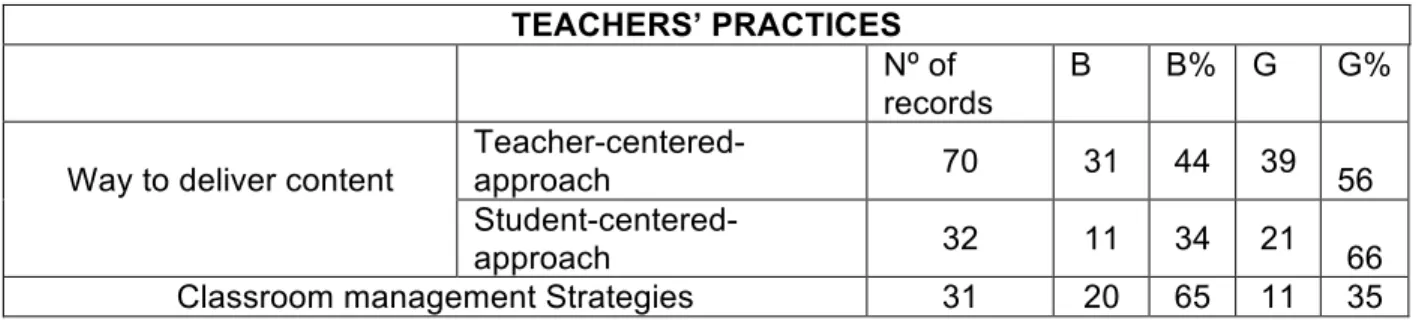
(45) . 44 The program uses the symbol “>” to indicate hierarchy in codes. The program did. not allow spacing, so hyphens had to be used to separate words. These features of the program are exemplified with this fragment from an interview that was coded: “Teacher_beliefs>boys>opposite_to_academic_culture” {Teacher_belief>boys>opposite_to_academic_culture}and when it comes to sort of their behavior in the classroom, but they're totally apathetic about learning and about doing anything for greater life purpose. {/Teacher_belief>boys>opposite_to_academic_culture}. The fragment shows the initial code, which is “Teacher belief”. Since the teacher is talking specifically about boys, a sub code was created called “boys”. Her statement addressed how they are opposite to academic culture and that was the final code assigned to this fragment. This way, from the very beginning of the coding stage and because of the nature of the data and the research question which intended to explore both teachers' practices and beliefs, three main codes were defined: Teachers practices, which referred to the actions that teachers performed in the classroom, students' behaviors, related to what students did in the classes observed, and teachers beliefs, which were the statements that teachers uttered referring to their students as gendered subjects. For this final code, it was necessary therefore, to create four sub codes that referred to beliefs about boys, girls, both of them and their separation. The codes that referred to teachers' practices and students’ behaviors were found in the field notes (Journal) since the observations gave an account of what teachers actually did in the classroom, whereas the codes.
Figure


+7
Documento similar
In this study, based on the same students as this study, it was found that a positive attitude of the school and teachers towards parents could explain evolutions in parent
However, the pedagogical aspect covers the ability of teachers to explore the didactic capabilities of technologies, design activities adapted to the level of their
Finally, the purpose of this study was threefold: first, to check the relationship between goal orientations, satisfaction, beliefs about the causes of success in swimming
The aim was to improve the students' level of training before attending laboratory practices, to standardize the evaluation among teachers and to involve students in the
The aesthetics of the neighborhood, a variable which in this study was defined as things that are interesting in the neighborhood, has been a characteristic related to
The article analyzes perception of students in the Major of Physical Education Teachers (1 st and 2 nd ), regarding the self-assessment process lived during this pedagogical
and 59% of the Spanish population of 15 years or more, respectively; and on the other hand, a group of practices and beliefs that receive little trust, such as horoscopes
The following analysis addresses the ways in which the teachers lead the students into the academic content of the lesson in four Natural Science classrooms that correspond to year
