FACULTAD DE EDUCACIÓN DE PALENCIA UNIVERSIDAD DE VALLADOLID
ENGLISH TEACHING:
A comparison between Norway and Spain
ENSEÑANZA DEL INGLÉS:
Comparación entre Noruega y España
TRABAJO FIN DE GRADO EN EDUCACIÓN PRIMARIA, MENCIÓN LENGUA EXTRANJERA
AUTORA: Irene Arroyo Barrio
- 2 -
Resumen
El proceso de aprendizaje y enseñanza de una nueva lengua puede ser un proceso
complicado. La cultura de un país y los métodos de enseñanza usados en las escuelas
pueden, o bien facilitar o bien complicar, este proceso. Este es el motivo por el que es
de gran importancia analizar diferentes métodos utilizados en diferentes países con una
cultura más bilingüe que la nuestra, ayudándonos a mejorar nuestro sistema educativo y
ayudando a las futuras generaciones a hablar una segunda lengua lo mejor posible.
ABSTRACT:
The process of learning and teaching a new language can be a hardprocedure. The culture of the country and the methods used in school can facilitate or
complicate this process. This is why it is really important to analyse the different
methods used in different countries that shows a more bilingual culture than ours,
helping us improve our educational system and helping the future generations to speak a
second language as best as possible.
Palabras clave
Educación, habilidades, escucha, escritura, lectura, Inglés, cultura, etapa, bilingüe,
currículum, unidades, lenguaje, evaluación, asistencia, escuela, Noruega, España,
sistema, estándares de aprendizaje, objetivos, Marco común Europeo, motivación
KEY WORDS:
Education, skills, listening, writing, reading, English, culture, stage,bilingual, task-based, curriculum, units, language, assessment, assistance, school,
- 3 -
TABLE OF CONTENTS
0. INTRODUCTION ... - 4 -
1. JUSTIFICATION ... - 5 -
2. AIMS ... - 7 -
2.1. GENERAL DEGREE’S AIMS ... - 7 -
2.2. SPECIFIC DEGREE’S AIMS ... - 7 -
2. BACKGROUND INFORMATION ... - 9 -
3. METHODOLOGY ... - 25 -
4. CONCLUSIONS ... - 39 -
- 4 -
0. INTRODUCTION
Norway is one of the richest countries in the world and its welfare system is
desirable. Education is free and one of the best-considered systems in the world
though it was not always like this. Regarding to the second language, Norway is
considered one of the non English-speaking countries that use this language as their
mother tongue, becoming a bilingual country. Only few countries are ahead of
Norway in this topic – Denmark, Sweden and Finland –.
Spain, on the other hand, has experienced many changes in the education laws,
different curriculums in few decades and a change in the culture. The educational
system has been criticised for many, especially in the language sector. A society that
has experienced many changes in the last decades; from learning French as a second
language to learn English as the new second language. A society that do not speak
English as fluently as would be desired and communication does not always take
place.
In this paper, these two educational systems regarding the teaching and learning
of a second language – English specially – will be compared. The culture of these
two countries – Spain and Norway – will gain importance to understand the
differences and similarities they might experience.
This analysis can help us understand those parts that need to be improved in each
educational system, the strong points that we should feel proud of and those changes
that we might need to do in our society in order to improve our skills to the learning
- 5 -
1.
JUSTIFICATION
The realisation of this work takes place in order to understand the educational system
in Spain, the main characteristics of schools and the main objectives and principles of
the curriculum that guides the structural features of the educational systems. I aim to be
able to apply the knowledge learnt during these four years, not only in Spain, but in
other European countries. For this reason, I want to compare it to one of the best
considered systems: the Norwegian one. After studying in this country for some months
and having a traineeship in a public school, I felt really interested in how this country’s
culture influenced the methodology used in schools, especially in the learning of a
foreign language. I believe that what I have learnt about the Spanish education could be
interested to be applied in other places. What is more, I consider that a change in the
way we teach and learn new languages in our country could be modified based on the
Norwegian culture.
My interest in this Scandinavian country made me feel very curious about the way
the society is built and the way the education takes place, since it is different to what I
have experienced in many ways. I tried, not only to see the positive parts of this famous
yet not that known system but to see those parts that could have been improved from
my point of view.
One of those questions I had in mind when I went to Norway the first time was
“How is it possible that everyone, from the youngest kid to the oldest mankind, can speak English so fluently and well?” This question was in my head for so long, I
wondered how the school system was like and why it was working that well in this
country, while in Spain, it was very easy to find people who could not or barely could
speak English fluently. I was curious about the fact that many people in Spain were
afraid of speaking in English, a language that is being studied in schools almost since
preschool.
Being specialized in English made me think that if I could be able to learn the
methodology used in other countries to teach a second language, maybe I could be able
- 6 -
small change to help students learn this second language providing them not only
- 7 -
2. AIMS
The competence aims I am aiming to achieve are divided into the degree’s aims and the
specific aims of this work based on my experience and my interest topics. The degree’s
aims achieved by the realization of this work are the following:
2.1.
GENERAL DEGREE’S AIMS
1. Que los estudiantes hayan demostrado poseer y comprender conocimientos
en un área de estudio –la Educación- que parte de la base de la educación
secundaria general, y se suele encontrar a un nivel que, si bien se apoya en
libros de texto avanzados, incluye también algunos aspectos que implican
conocimientos procedentes de la vanguardia de su campo de estudio.
2. Que los estudiantes sepan aplicar sus conocimientos a su trabajo o vocación
de una forma profesional y posean las competencias que suelen demostrarse
por medio de la elaboración y defensa de argumentos y la resolución de
problemas dentro de su área de estudio –la Educación-.
3. Que los estudiantes puedan transmitir información, ideas, problemas y
soluciones a un público tanto especializado como no especializado. Esta
competencia conlleva el desarrollo de:
a) Habilidades de comunicación oral y escrita en el nivel C1 en Lengua
Castellana, de acuerdo con el Marco Común Europeo de Referencia
para las Lenguas.
b) Habilidades interpersonales, asociadas a la capacidad de relación con
otras personas y de trabajo en grupo
2.2.
SPECIFIC DEGREE’S AIMS
Materia: Aprendizaje y Desarrollo de la Personalidad.
1. Conocer y comprender las características del alumnado de primaria, sus
procesos de aprendizaje y el desarrollo de su personalidad, en contextos
familiares sociales y escolares.
Materia: Procesos y contextos educativos.
2. Conocer en profundidad los fundamentos y principios generales de la etapa
- 8 -
dominando estrategias metodológicas activas y utilizando diversidad de
recursos.
3. Conocer la organización de los colegios de Educación primaria, los
elementos normativos y legislativos que regulan estos centros, desarrollando
la habilidad para trabajar en equipo y definir proyectos educativos de centro.
Materia: Enseñanza y Aprendizaje de las Lenguas
4. Utilizar el lenguaje como herramienta al servicio de la comunicación y de la
comprensión de la realidad desarrollando al mismo tiempo las habilidades y
destrezas necesarias para la interpretación y creación de textos literarios.
5. Expresarse oralmente y por escrito en una lengua extranjera de acuerdo con
el nivel B2 del Marco Europeo de Referencia para las Lenguas.
Materia: Practicum
6. Conocer, participar y reflexionar sobre la vida práctica del aula, aprendiendo
a colaborar con los distintos sectores de la comunidad educativa,
relacionando teoría y práctica.
The specific aims I am intending to achieve, in relation with the general and specific
aims of the degree, are the following:
Know the organization of primary education in Norway and Spain
Present a comparison between two schools, one in Norway and one in Spain in
relation to the teaching methods regarding a second language, in this case,
English.
Find out what can be improved in the Spanish schools following the Norwegian
methodology
Find out what can be improved in the Norwegian schools following the Spanish
- 9 -
2.
BACKGROUND INFORMATION
The curriculum governing in Norway has varied over time. Mønsterplan 74, which
was the national curriculum from 1974, was written to recognize the teacher’s authority
to make judgements concerning the teaching content (Mølstad, 2015). From the Second
World War, the school system in Norway was characterised by a combination of a
national curriculum and regulatory legislation, which suffered from different reforms
during the 1980s and 1990s (Helgoy & Homme, 2006).
During the first decade of the twenty-first century a lot of changes occurred in the
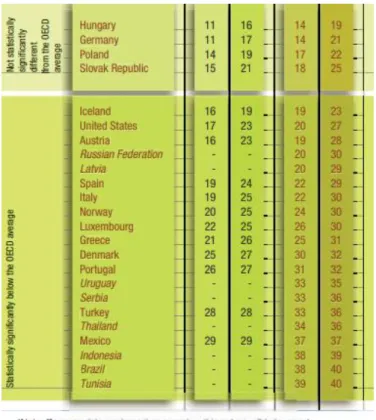
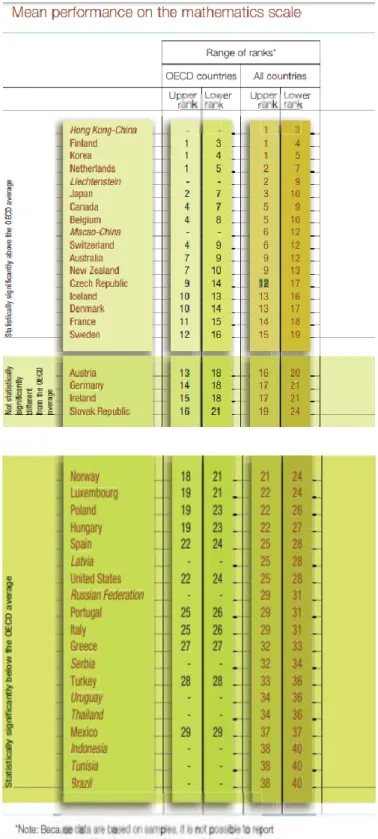
educational assessment in Norway. The results in the PISA test and the TIMSS were not
as good as expected (see figure 1 & 2).These results were considered the consequences
- 10 -
Figure 1. Mean performance on the science scale 2003. Source: OECD PISA 2003
- 11 -
Figure 2. Mean performance on the mathematics scale. Source: OECD PISA 2003
- 12 -
Due to these disastrous results in Maths, Reading and Sciences, the Government of
Norway, specifically the Minister of Education and Research, settled the need of a new
reform to be implemented in 2006. The reform was called The Knowledge Promotion
and it reflected the principal goal of the reform: raising achievement for all students.
The reform alleged a new curriculum that represented a move from an input to
output-orientated policy. The curriculum focused on competence aims (Ministry of Education
and Research [MER], 2007).
It is necessary the understanding of the MER and the Directorate of Education and
Training (DET) to comprehend how the Norwegian Educational System works. The
local municipalities are the responsible for the primary education, while the regional
municipalities administrate the upper secondary schools. The county Governors are
responsible for the supporting and inspection of the local municipalities’ and counties’
implementation (DET, 2012).
The current situation in Norway involves different inspection reports, local surveys
based on observation, research and evaluation reports, Data in the School Portal,
international surveys, marks and exams, national tests and pupil survey. The National
government improve and adjust education policies based on the results of the different
surveys and reports. The school owner improves the quality of teaching through
dialogue and guidance while the teachers plan, follow through and assess progress and
dialogue with both pupils and parents. The School leader tries to improve educational
practice among teachers through dialogue and guidance and the instructor plans, follows
through and assesses progress in dialogue with apprentices and workshops. It is
important to prepare realistic but ambitious aims for improvement, trying them out and
reflecting over the improved practice, and above all, it is important to involve, cooperate
and develop a common terminology (Utdanningsdirektoratet, 2018).
The main sources of information about quality in education in Norway are the
following:
Skoleporten (The School Portal). It presents information on a
school/municipal/county/national level, grouped into five key areas: learning
outcomes, learning environment, completion of upper secondary education and
- 13 -
development. Sources for data on learning outcomes are examination results
from national test. These national tests are set to produce knowledge about the
students’ basic skills. All schools have to hold tests in reading, English and
Maths in Years 5, 8 and 9. The results from these tests are published and the
results are bestowed as mean values with standard errors for the different levels
of reporting. There is a pupil survey that allows students to express their beliefs
about the learning environment in their schools. These surveys are mandatory at
years 7, 10 and 11. (Utdanningsdirektoratet, 2018).
Tilstandsrapporten (The Quality Report). An annual status report is produced every year by the local authorities. This report focuses on the learning
environment, learning outcomes and completion rates. The main goal of the
report is to empower knowledge-based quality improvement.
(Utdanningsdirektoratet, 2018).
Ståstedsanalysen (Point of View-analysis). The main aim is to stimulate joint reflection and discussion on the school’s practices and on which quality areas
the school wants to prioritize. This point of view-analysis – also called the status
analysis – is an unforced tool. (Utdanningsdirektoratet, 2018).
The current curriculum reform is centred on learning outcomes. As the Minister of
Education (2001) said: “we are a small country, on the outskirts of Europe. A tiny
fraction of the world’s population lives here and if we don’t take care of what is our
legacy... no-one else is going to do it... if we want to preserve what you would call
ecological variation in the worlds, we have to take part...”. This manifest was the one
that forced the Government to change the curriculum to implement a new one in which
there were underpinning principles detailing six desirable dimensions of the human
being (Broadhead & Broadhead, 2010). It was called the Core Curriculum.
The Core Curriculum facilitates the knowledge and respect of the national heritage
and traditions of Norway and the meeting of other cultures openly (Broadhead &
Broadhead, 2010). This curriculum has as the main goal in primary education “the
understanding of an in cooperation with the home, assist in providing pupils with a
Christian and ethical upbringing, develop their mental and physical abilities, and give
- 14 -
in their private lives and in society.” (Primary, n.d.). Schools shall promote intellectual
freedom and tolerance, and emphasize the establishment.
The Government grouped a number of key formulations that expands on the
following themes:
Moral outlook
Creative abilities
Work
General education
Cooperation
Natural environment
As it is said in the Core Curriculum (n.d) “education must be based on the view that
all persons are created equal and that human dignity is inviolable. It should confirm the
belief that everyone is unique, that each can nourish his own growth and that individual
distinctions enrich and enliven our world”. This means that the education should be
based on humanistic values. The veneration for human equality and dignity of man is a
constant source of change to enhance the human condition (Primary, n.d.).
Norway spends 150 NOK billion (15.376.599.630€) per year on pre-school, primary
and secondary education. In pre-school there are 6 children per staff member and 39%
of the staff working are qualified teachers. Pupils in primary and lower secondary
school thrive at school and are among the top performers in Europe. 39% of pupils
enter the programme for Specialization in General Studies in Lower Secondary School
(Utdanningsdirektoratet, 2017).
The Utdanningsdirektoratet – The Norwegian Directorate for Education and Training
– is the executive agency responsible for the development of kindergarten, primary and
secondary education. The Directorate is responsible for the supervision of kindergarten,
education and the implementation of Acts of Parliament and regulations. It is
responsible as well for the management of the Norwegian Support System for Special
- 15 -
Centres. Its main objective is to ensure that all children, pupils and apprentices receive
the high quality education they are entitled to (Utdanningsdirektoratet, 2017).
Three sector goals for primary and secondary education have been defined by the
Norwegian government:
Good, inclusive learning environment
The pupils shall master basic skills and have sound subject knowledge
More pupils and apprentices shall complete upper secondary education and
training
The fulfilment of those three sector goals is considered the quality in education. The
system is composed of different goals and plans nationally, on a local/county authority
level and in each school and enterprise. All participants should be implicated and have
different roles in the system, meaning parents, pupils, teachers, the school management
and the school owner (Utdanningsdirektoratet, 2018).
There are some incentives for schools to improve their results. Those schools that
perform well would receive financial rewards. However, this incentive tool is nowadays
of a minor importance. Another incentive tool is the system per capita. Norway is one of
the countries that are spending the most per pupil in primary education, meaning that,
on average, there are 11 students per teacher, outstanding in the fourth place among
OECD countries. (OECD, 2003)
Currently, there are some national tests that provide acquire facts to students, parents
and other entities in order to qualify the students’ basic skills so as to monitor the
endowment of the education system as an accountability purpose. Evaluations show that
while school owners and school leaders believe in the use of the tests for
decision-making, many teachers state that the national test are not helpful for giving feedback to
individual students (Tveit, 2014).
A learning theory or method needs to answer to two basic questions:
a) What are the psycholinguistic and cognitive processes involved in language
- 16 -
b) What are the conditions that need to be met in order for these learning processes
to be activated?
When we talk about learning theories that associated with methods to approach it,
these learning theories may emphasize one or both of these two dimensions. Learning
processes such as habit formation, induction, etc., are built on the process-oriented
theories. The condition-oriented theories are focused on the nature of the human a
context in which language learning takes place (Richards & Rodgers, 1986, p.18).
The monitor theory addresses both the process and the condition dimensions of
learning. There is a distinction between acquisition – natural assimilation of languages
rules – and learning – formal study of language rules –. With this theory, the input the
learner receives must be comprehensible, interesting and relevant, experienced in
low-anxiety contexts (Richards & Rodgers, 1986, p.18).
Charles A. Curran (1972) believes that the atmosphere in the classroom is a crucial
factor for the learning. At the same time, James Asher (1977) considers that child
language learning is based on motor activity and this should be the basis of foreign
language teaching. (Richards & Rodgers, 1986, p.18-19).
In the Norwegian educational system, the teaching and learning allow the pupil to
decide and choose the thematic approach. The active learning is perceived by the main
curriculum subject designers to be central to their design (Broadhead, 2001). Teachers
anticipating and recognising active learning as profitable for students, provide them the
ability to design and manage an integrated curricular approach. Active participation
promotes motivation. Students require being clear about the possibilities accessible to
them, facilitating the active and investigative learning opportunities. It is vital that
teachers and pupils see themselves as joint and equal participants in a universal
enterprise (Broadhead, 2001).
The Norwegian Curriculum can be found both in English and Norwegian – both
Bokmål and Nynorsk – in the Norwegian Directorate for Education and Training
website. The English subject curriculum is divided in six main contents:
Purpose
- 17 -
Teaching hours
Basic Skills
Competence aims (starting from Year 2)
Assessment
In the Spanish curriculum, we can find the methodological guidelines and the
English curriculum for each year, incorporating at the end the reference for the syntactic
and discursive contents in the mentioned language.
The learning of English in the Spanish Curriculum is based on the development of
the four communicative skills based on the European framework for languages: Oral
comprehension (listening), oral expression (speaking), written comprehension (reading)
and written expression (writing); while this subject in the Norwegian curriculum is
based on the following basic skills:
Oral skill
Being able to express oneself in writing
Being able to read in English
Numeracy, being able to use relevant mathematical concepts in English in different situations.
Digital skills, being able to use a varied selection of digital tools, media and resources to assist in language learning, to communicate in English and to
acquire relevant knowledge in the subject of English.
(Utdanningsdirektoratet, 2013)
The main objective in the Spanish Curriculum is the active use of English in a
communicative context. The teacher should design communicative tasks and projects
having in mind the curriculum and necessities of the students. The teacher should adopt
the role of guide, promoter and facilitator of the competence development of the
students (BOCYL, 2016 p. 34466).
In the Norwegian Curriculum, English is considered both a tool and a way of gaining
- 18 -
communicate with others on personal, social, literary and interdisciplinary topics.
Language and cultural competence promote the general education perspective and
strengthen democratic involvement and co-citizenship. The subject of English should
provide insight into how English is used as an international means of communication.
(Utdanningsdirektoratet, 2013).
In both the Spanish and the Norwegian Curriculum, the tasks, assignments and
projects are considered important for the evaluation of the pupils and for the acquisition
of different competences.
We can find four main subject areas in the Norwegian Curriculum:
Language Learning. The main focus is what is involved in learning a new language and seeing relationships between English and Norwegian. It is the
ability to evaluate our own language usage and learning needs to select suitable
strategies and working methods.
Oral communication. It deals with the understanding and the using of the English language by listening, speaking, conversing and applying suitable
communication strategies.
Written communication. It deals with understanding and using English language
through reading, writing and using suitable reading and writing strategies.
Culture, society and literature. It focuses on cultural understanding in a broad sense. It is based on the English-speaking countries and covers key topics
connected to social issues, literature and other cultural expressions.
(Utdanningsdirektoratet, 2013)
The four main subject areas in the Spanish Curriculum, based on the Common
European Framework of Reference (2001) are:
Oral texts comprehension
- 19 -
Written texts comprehension
Production of written texts
(BOCYL, 2016 p. 34465)
The teaching hours for the English subject during the first grade in Spain, in Castilla
y León is of two hours per week. During the second and third grade, the teaching hours
are two hours and a half. The teaching hours during the rest of the grades are of three
hours per week. In Norway, the teaching hours are not planned per week, but per
scholar year. This way, the number of teaching hours in the first four grades is of 138
hours, while it is 228 hours from the fifth to the seventh grades. The school organize
those hours. The lower grades have usually just half an hour of English each day, while
the higher grades have one hour and a half each day that they have English – two days
per week –.
The competences aims in the Norwegian Curriculum start in the second year. This
does not mean that English is not taught in the first year in primary education. It is
taught but there are no competences aims. At the same time, the competences are set
only for “after year 2”, “after year 4” and “after year 7”. This means that the teachers
plan the acquisition of the competences during the previous years, up to year r2, up to
year 4 and up to year 7. In the Spanish Curriculum we can find the competences aims
for each grade.
In the Spanish Curriculum, in the first block (BOCYL, 2016), Comprensión de
Textos Orales, during the first years, the main aims are based on the comprehension of
simple oral texts, identifying different socio-cultural and socio-linguistic aspects such as
habits, activities and celebrations, to understand the language as a tool of
communication. In this same block, but in the last year, what matters is the addition of
new lexicon vocabulary related to the daily life of the students, recognizing basic
syntactic structures and distinguishing the communicative functions of the oral text.
There is no much difference in the different years, but an enlargement of the previous
- 20 -
In the second block, (BOCYL, 2016) Producción de textos orales: expressión e
interacción, the main aim is the oral communication, having in mind the fact that
mistakes will be made. The aims for the first years are similar to the aims for the last
year, in which an improvement over the first years is expected. The vocabulary should
be greater and hesitations should be expected.
In the third block, (BOCYL, 2016) Comprensión de textos escritos, during the
first years, the main aims are identifying the general meaning of different texts,
distinguishing the main communicative function and recognizing basic orthographic
signs. In the last year, the general meaning, the theme or topic and specific information
should be identified. Pupils should be able to recognize basic structures and identify
orthographic sings, symbols and the intention and meaning of different situations.
In the fourth block, (BOCYL, 2016) Producción de textos escritos: expression e
interacción, the main aim for all the years is writing and producing simple texts. During
the first years, it is important to know the socio-cultural and socio-linguistic aspects to
write about it, use basic syntactic structures having in mind connectors as “and”. In the
last year, pupils should be able to fulfil the communicative function of the written text
(for instance, a letter), use basic syntactic structures, increasing connectors. It is
understandable that pupils can make mistakes.
The competence aims for the second grade in Norway are the following:
Give examples of situations where it might be useful to have some English language skills
Find words and phrases that are common to English and one’s native
language
Use digital resources in experiencing the language
Listen for and use English phonemes through practical-aesthetic forms of expression
- 21 -
Listen to and understand words and expressions in English nursery rhymes,
word games, songs, fairy tales and stories
Understand and use some English words, expressions and sentence patterns
related to local surroundings and own interests
Greet people, ask and respond to simple questions and use some polite expressions
Participate in simple rehearsed dialogues and spontaneous conversations related to local surroundings and own experiences
Use figures in conversation about local surroundings and own experiences
Recognise the relation between some English phonemes and spelling
patterns
Experiment with reading and writing English words, expressions and basic sentences related to local surroundings and own interests
Converse about aspects of the day-to-day life of children in English-speaking
countries
Participate in and experience children’s culture from English-speaking
countries through words, pictures, music and movement
Express own experiences from English nursery rhymes, word games, songs,
fairy tales and stories
(Utdanningsdirektoratet, 2013)
The competence aims after year 7 in Norway, which is considered the last year of
Primary education are the following:
- 22 -
Describe his/her own work in learning English
Identify some linguistic similarities and differences between English and one’s native language
Use digital resources and other aids in one`s own language learning
Use listening and speaking strategies
Understand and use a vocabulary related to familiar topics
Understand the main content of oral texts about familiar topics
Use expressions of politeness and appropriate expressions for the situation
Express oneself to obtain help in understanding and being understood in different situations
Express and give grounds for own opinions about familiar topics
Introduce, maintain and terminate conversations related to familiar situations
Use basic patterns for pronunciation, intonation, word inflection and
different types of sentences in communication
Express oneself using simple calculations, currency and units of measure when communicating about everyday situations
Use reading and writing strategies
Understand and use a vocabulary related to familiar topics
Understand the main content of texts one has chosen
Read and understand different types of texts of varying length from different
sources
- 23 -
Write coherent texts that narrate, retell and describe experiences and express own opinions
Use basic patterns for orthography, word inflection, sentence and text construction to produce texts
Use digital tools and other aids to find relevant information and to create different types of texts
Narrate about people, places and events in English-speaking countries
Converse about the way people live and socialise in different cultures in English-speaking countries and in Norway, including the Sami culture
Read children’s and youth literature in English and converse about persons and content
Express own reactions to English literary texts, films, internet culture, pictures and music
Express oneself creatively inspired by different types of English literature from various sources
Communicate short texts about topics one has chosen
(Utdanningsdirektoratet, 2013)
When we talk about the assessment we need to understand that there is no
assessment in Norway before the 10th grade. The pupils do different projects that the
teachers “evaluate” just to orientate them in which aspects they need some
improvement, but there are no grades. It is not possible to find any kind of assessment.
In the Spanish Curriculum, (BOCYL, 2016) it is said that the assessment is a
fundamental aspect to have in mind, taking into account different strategies suitable in
the learning process of the pupils: self-assessment, peer-assessment, portfolio, etc.,
making it easier for the pupil to be conscious of their own learning process. Oral and
- 24 -
respect for other languages and their culture will help the assessment process for the
teachers and the acquisition of competences for the pupils.
In the year 2014, Denmark was considered the country, in which English, as a
second language, was best spoken, followed by Sweden, Finland, Norway and The
Netherlands (García, 2016). These countries – Denmark, Sweden and Norway – share a
similar language, since Denmark and Sweden had had many wars to rule over Norway
until the 1905, when Norway finally got its independence forming the Kingdom of
Norway. Due to these wars, the language is similar in grammar and vocabulary
(Maagerø & Simonsen, 2008, p. 30-46).
In Norway there are two official languages: Bokmål (Book language) and Nynorsk
(New Norwegian). Most Norwegians speak Bokmål – 85% of the population – while
the rest uses Nynorsk. In 1885, these two languages were declared official languages.
There are small differences between these two languages, however, they differ in the
lexicon, in the grammar, the use of prefixes and suffixes and in the phonetic system
(Maagerø & Simonsen, 2008, p. 210-211).
These two languages have an equal and official status. This means that both are
learnt in school, however, the first year of mandatory school, students choose one as
their main language. All the textbooks must be published in bokmål and in Nynorsk. All
students must have equal access to good learning material in their particular language
- 25 -
3.
METHODOLOGY
To carry out this work, the previous knowledge about the culture and education has
been compared and contrasted with a personal experience working in a public primary
school in Horten Kommune, in the county of Vestfold, in Norway during almost four
months. Direct observation of the English lessons in different grades has been done to
understand the teaching process followed in this public school. A comparison has been
made between this school and a public school in Palencia, Spain.
It is important to understand that the Norwegian culture focuses a lot on the
education at home. When the mandatory education starts, children are six years old.
They do not need to know how to read nor how to write, since they will start with this
process during the first year. Teachers spend the first semester working on the writing
and the reading. English is taught for the first time in this year however, due to the
culture most of the children already speak and understand English. Kids’ shows and
cartoons are shown in the original language with Norwegian subtitles. However, not all
the pupils can read nor write when they start the mandatory education, for instance, the
subtitles are used to help pupils to recognize some words and vocabulary. This
facilitates the learning process of a second language. It is important to understand that
there are assistants in each class to help the teachers and the pupils. The number of
students, even though the ratio allows thirty students per class, is lower, at least during
the first years. Due to this, the education is more personalized and it allows the teachers
to focus on those students that have difficulties with the learning process of a second
language.
The use of textbooks in Primary Education is common. In this school, the textbook
used is QUEST, a Norwegian editorial that can be found both in Nynorsk and Bokmål.
The textbook is written both in English and Norwegian, however, the workbook is only
found in English. Each pupil has an identification number that is shared between all the
pupils in the same class. This number allows the pupil to get access to the QUEST
- 26 -
the texts of the book. There are multiple activities to practice the pronunciation and
listening.
The book QUEST is used in the seven grades and it is divided in a similar way. The
teachers’ textbook shows a possible planning for the teachers. Each year has a different
organization in relation to the units. However, each unit in the seven years has the same
topics:
Språklæring (Language work)
Muntlig kommunikasjon (Oral communication)
Skriftlig kommunikasjon (Writing communication)
Kultur, samfunn og litteratur (Culture, society and literature)
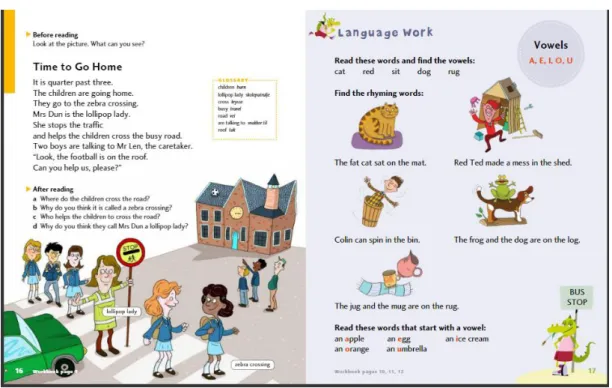
Each time that there is a text in the book, there is a small square with the vocabulary
of the text in Norwegian and in English. In the section “Language work” is where we
can find the grammar.
There is also a workbook and a flagbook which is their personal notebook for the
subject. These are completed by the students when the teachers say so and the teachers
are responsible for the correction, so they ask for these workbook and flagbook every
- 27 -
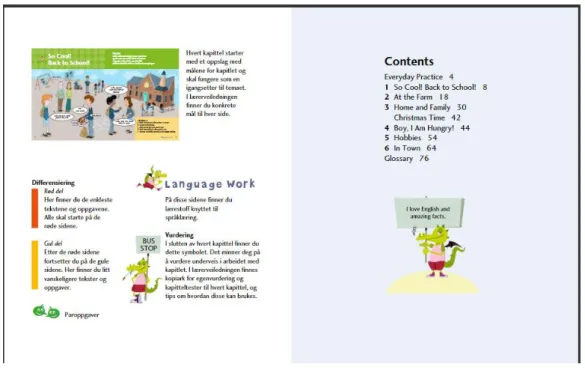
Figure 3. QUEST 3 https://issuu.com/aschehoug/docs/quest_3_textbook_bm
- 28 -
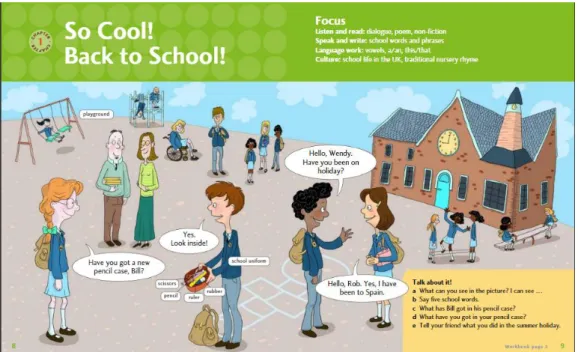
Figure 5. QUEST 3 https://issuu.com/aschehoug/docs/quest_3_textbook_bm
- 29 -
Figure 7. QUEST 3 https://issuu.com/aschehoug/docs/quest_3_textbook_bm
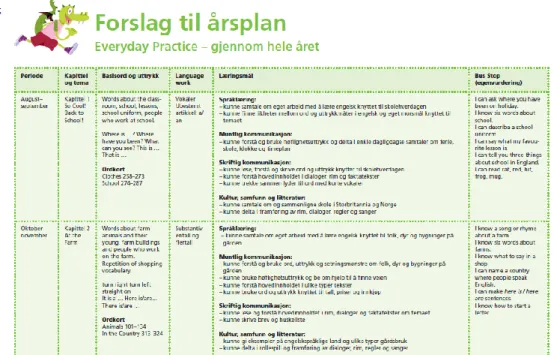
There is also a textbook for the teachers that works as a guide. This teachers’ book
contains advices to facilitate the communication in English for the pupils and there is a
plan on how to accomplish the subject during the school year, for example:
From August to September first unit
From October to November second unit
From November to December third unit
From January to February fourth unit
From March to April fifth unit
From May to June sixth unit
- 30 -
Figure 8. QUEST 3 årsplan
- 31 -
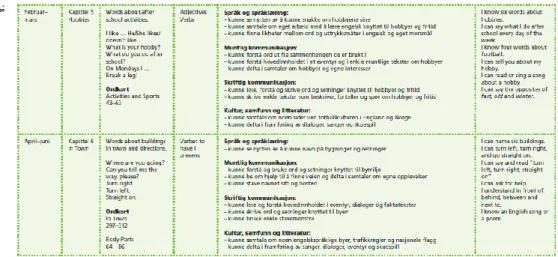
Figure 10. QUEST 3 årsplan
In each unit, there are activities that are in the students’ text book and activities
planned for the teachers that are only in the teachers’ book. There are a lot of advices to
achieve the competence aims for each year. In this guide, there are tests and
self-assessment for the pupils, though the results are not taking into account since there are
no grades before tenth year.
During the first year, English is taught in a “fun” way. Many songs and games are
used to learn vocabulary, useful expressions and some idioms. The main focus during
this year is speaking. To achieve this, since some pupils might be scared of talking in a
language they do not control, this language is used in other subjects as well. Some
vocabulary can be used in Sciences, Maths, Arts & Crafts, etc. This does not mean that
these different subjects are taught in English but some words are said in English to
make the pupils get used to new vocabulary and facilitate the use of the second
language. During the English lessons the teachers try to motivate the pupils to promote
their speaking and are aware that some pupils might make fun of others, and it is the
teachers’ job to avoid these behaviours. At the same time, teachers do not correct pupils
when there are pronunciation mistakes since achieving the communication is the
important factor. When corrections are made, they are made in a way that pupils will
not feel embarrassed and that they will continue to speak in English. It is remarkable the
- 32 -
Everyday English should be used at least once in each subject to reinforce the pupils’
confidence and to help them see English as a tool of communication. The units during
this year are the following:
Colours and numbers
My body
Winter fun
I love animals
Summer picnic
Since it is the first year when the pupils are learning English, the main focus is on
learning the basic vocabulary and grammar structure.
During the second year, the main focus is in writing English. The pupils learn a lot of
vocabulary of the daily life and basic vocabulary about situations that pupils can
experience and can relate to. The ICTs are used as much as possible. During the first
semester, the main work is learning new vocabulary and strengthen the expressions they
have learnt in the previous year. For doing this, there are activities that the pupils can do
online and they can see different images of objects and they need to write the English
name and they can listen to the right pronunciation. The lessons are both in English and
Norwegian to facilitate the learning process to those students who can have difficulties
with the English. Many times, questions are asked in English, but the pupils do not need
to answer in that language. If the answer is in Norwegian, that means that they
understood the question, however, they might not be sure of the English answer. The
teachers try to speak in English as much as possible. When pupils show no
understanding of what the teachers are talking about, they try to rephrase it and if there
is still no understanding the teachers explain it in Norwegian and then they repeat the
same slowly in English, trying to make the students relate the two languages. This year,
the textbook QUEST 2 is divided in the following units:
In the classroom
My family and home
My new clothes
Merry Christmas
- 33 -
Happy birthday!
Fun in the park
Time to go
At the end of this year, the pupils should have worked on basic vocabulary and
simple structures to be able to understand basic instructions, words and expressions and
be able to communicate with others in simple dialogues and conversations about local
surroundings and their own experiences. They should be able to experiment with
reading and writing English words and basic sentences. At the same time, they should
know aspects of the day to day life of children in English-speaking countries.
In the third year, English is more used than Norwegian in the English class. During
this year, the teachers try to motivate the pupils so that they answer the questions in the
same language that they have been asked. In this year, substantives, adjectives and the
verbs are studied for the first time. There is a lot of work related to reading, but it is not
the pupils the ones reading, but the teachers. It is important that the pupils get used to
listen to English and that they understand what they are hearing. When the teachers read
out loud, they ask questions about what they have read to check if the pupils understand
what has been read. At the same time, teachers try to work one by one with each pupil
to check their pronunciation and their reading and listening skills. Even though English
is the most used language during the English lessons, when it comes to grammar, it is
explained in Norwegian to facilitate its comprehension. The units we can find in this
year are the following:
So Cool! Back to School!
At the farm
Home and family
Christmas time
Boy, I am hungry!
Hobbies
In town
During the fourth year, the language work is focused on the previous years’ grammar,
strengthening the vocabulary and verbs, extending the verbs’ forms, substantives and
- 34 -
practice the writing and reading skill. The lessons in this year are in English as much as
possible. However, when something is hard to understand, Norwegian is used. The units
during this year are the following:
A day in my life
It is getting dark
Big, bigger, biggest
The Christmas school play
Let’s read
Spring Time
At the Zoo
At the end of this year, the Curriculum set the competence aims that the pupils need
to achieve. The work of the teachers to facilitate this achievement starts in the third
year. There are more competence aims than in the second year, focusing in the oral
communication. The pupils should be able to understand the main content of simple
texts and they should be able to write short texts expressing their opinions. The culture
knowledge is still important, therefore, pupils should be able to compare their culture
with English-speaking countries.
During the fifth year, there is a change in the curriculum. Since this school is taking
part in an experiment that is taking place in the county of Vestfold, everyday, during
fifth grade and from this year forward, pupils must do some minutes of physical
exercise. This experiment is called HOPP and it takes part in the English lessons. The
physical activity needs to be related to the subject. At the same time, the English lesson
takes one hour and a half. In this year, there is a lot of work regarding reading, for
instance, once a week pupils read an English book of their choice for fifteen minutes.
Norwegian is not used during this year. Those pupils that show difficulties in the
language and those who are more advanced than the rest, work in small groups to
adequate the activities to their level of knowledge. During this year, pupils work a lot in
pairs and in groups to practice the speaking. The units in this year are the following:
- 35 -
How the body works
Let’s go to the UK
Let’s read
The three R’s
Hidden treasure
There are a lot of activities that require translation English-Norwegian and
Norwegian-English. Due to this activities, many students gain confidence into writing
and reading in English. Norwegian and English have similar words and similar
grammar.
During the sixth grade, the number of students per class is bigger than in previous
years. This hinders the development of the lessons. The main focus during this year is,
as the previous year, the reading skills. Every day, as in the previous year, pupils read
an English book for half an hour. The pupils have reading assignments and they work a
lot with vocabulary and differences between British English and American English.
Pupils read out loud so that the teachers can help them with the pronunciation. When
there is a word or an idiom that cannot be understood in English, the teachers explain it
in English. Sometimes, when most pupils do not understand the English explanation but
some pupils understand it, then the pupils are the responsible to explain that word or
idiom in English for the rest of their classmates. If none of the pupils can understand the
explanation in English, then the teachers say the word or idiom in Norwegian. Most of
the time, the pupils work in pairs or in groups. Those pupils that have difficulties with
the language work with pupils that are more advanced in this subject. The units during
this year are the following:
Friends and Foes
Record Breakers!
Ok, USA!
Let’s read
Weather
Stars
- 36 -
The seventh year is the last year of primary school. During this year there is no
Norwegian in class. The main focus is to achieve the competences aims and prepare the
pupils for middle school. During this year, pupils work a lot on speaking, so all the
activities are focused on motivating the pupils to help them speak in English. Some
pupils that do not have difficulties in this language are offered the possibility to explain
some grammar to their classmates. This way, they have a challenge and the rest of the
pupils can understand the grammar better than when the teachers explain it. This year,
many books are read out loud to accomplish the reading comprehension skill. During
this year, there is more individual work than cooperative. Those pupils that show a lot
of difficulties with the language are taken out of the class to work individually or in
small groups with teachers specialised in this type of work. There are some tests at the
end of the semester, but these tests are just an orientation for the teacher to check what
needs to be improved. The units during this last year are the following:
Big Dramas
English-speaking countries 1
English-speaking countries 2
Let’s read
Tell us about Tellus
Mysteries
At the end of the year, the pupils need to be able to use English in their daily life.
This means that they should be able to use English when they are talking about Maths,
Sciences or any other topic. To achieve this, English is used in all the subjects. Pupils
should be able to write about topics they are interested in, write stories, and understand
the main information of different types of texts. After all these years, they should be
able to talk about similarities and differences between Norway and English-speaking
countries.
The public school chosen in Spain is in Palencia, in the county of Castilla y León.
This is a public school that has a linguistic section. The school has also the certificate of
TICs 5. English is taught since preschool, despite the fact that education is not
mandatory until primary. The culture in Spain and in Norway is different that is to say,
- 37 -
been going to preschool and kindergarten before starting the mandatory education. This
implies that most pupils are able to write and read when they start primary education.
They have received an education not from the parents, but from the school and the
government.
The textbook in English is also common. In this school, the editorial used is
Cambridge and the book is Kid’s Box Level 1 and Kid’s Box Level 2 for the first two
years. During these two years there is no workbook. The book used in third year and
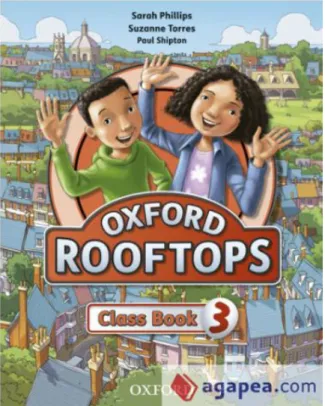
from this year on is Oxford Rooftops. There is also a workbook. The editorial is Oxford
University Press. In the official website, different booklets for the different years can be
found, as well as links to reading guides and syllabus. The pupils can use the online
website to get the Oxford Online Learning Zone.
Figure 11. Oxford Rooftops 3
http://www.oupe.es/es/ELT/Primary/oxfordrooftops/Paginas/oxfordrooftops.aspx
The teachers have a guide that contains the audio CDs for listening activities, a
- 38 -
The lessons are done following the textbook and doing the respective activities in the
workbook or activity book. When there is homework, it is revised in class out loud. The
lessons are mostly in English and pupils are encouraged to speak in English during the
class.
During the fifth and sixth year, the pupils do different games to practice the past
forms of the verbs. Teachers in these and previous years use different apps such as
Plickers and Kahoot! to practice and revise the different grammar and vocabulary that is
being studied in class. This year, an escape room has been planned and developed for
the pupils to practice what they have learnt during the previous semesters.
The units are planned based on the task-based learning. This way, the pupils are an
active part of the learning process and the scientific thinking is developed. The project
is analysed by the teachers and it helps the pupils shape the critical thinking. The pupils
are able to develop different skills, feel more motivated, build their own thoughts, etc.
Due to this method, different subjects are integrated.
The units are planned based on the task-based learning. This approach aims to offer
the learners a natural context for language use. Learners work to complete tasks and
they have a lot of opportunities to interact. These interactions facilitate the language
acquisition (Larsen-Freeman, 1986).
The second language acquisition is developed having in mind their surroundings and
personal experiences. The pupils are able to do some show & tell in which they present
a topic they are interested in. At the same time, other subjects such as Sciences are
taught in English – CLIL – to facilitate the learning of a foreign language.
- 39 -
4.
CONCLUSIONS
It is clear that there is no perfect educative system and both the Norwegian and
the Spanish system have strong and weak points. It is extremely important to
understand that the culture in each country is different. The parental leave in
Norway is longer than in Spain and both the mother and the father get the same
number of months of parental leave. This parental leave is of 59 weeks in Norway,
while it is 12 weeks in Spain. This difference facilitates the home education in the
first country mentioned. It is true that mandatory education in both countries starts
at the age of six; however, most parents decide to count on kindergartens and
preschools to educate their children in Spain.
Despite the fact that many kids go to kindergarten in Norway, the majority stay at
home with the parents. People in Norway work a lot in the English immersion,
meaning that most channels are in the original language. Both series and cartoons
watched by the kids are in English and movies in the cinema are also in the original
version with Norwegian subtitles. This facilitates a lot the process of the acquisition
of a new language. In Spain the situation is different though it has changed a lot the
past two decades. Nowadays it is easier to change the settings on TV to watch the
different shows and programs in the original language. What is more, many parents
are worried about the language situation and want their children to learn languages,
so the use of language academies is booming.
I believe one of the strongest points in the Norwegian educational system is the
previously mention culture. This facilitates the achievement of the aims set in the
curriculum. Due to this culture, students are able to speak English as their mother
tongue and they are practically bilingual. Nevertheless, the writing skill is the
weakest point in this system. This happens due to the focus on the oral
communication considered more important than the written communication.
I consider that the Spanish educational system has varied a lot. One of the
strongest points, in my opinion, is the task-based learning. I believe that the CLIL –
- 40 -
acquisition in those countries that do not have a bilingual culture. When you live in
a country in which a second language is used as the mother tongue, I do not really
see the use of having bilingual schools, though I believe they are useful in some
countries. This method facilitates the integration of different subjects and helps the
pupils into developing diverse skills. I strongly believe that this method motivates
the pupils a lot more than the traditional system. However, I still ponder the stress
that the tests and exams cause as one of the weakest points. The fact that there is
only one teacher per class, and that this teacher has to work with many pupils that
have different needs can put a lot of pressure on the teacher. At the same time, many
students might feel stressed because of the exams and grades. The number of pupils
in each class is usually high, so the education cannot be as personalized as it should
be.
Since one of the biggest issues with the Norwegian education is the written
communication, I strongly believe that we could implement the task-based learning
method so that we can work on Literacy and help the students practice their writing
in a second language. The developing of these subtasks and final tasks can facilitate
the acquisition of not only the writing skill but the oral skill as well. The
self-assessment and per-self-assessment is already being used in Norway. What is not being
used and could be implemented is the booklet. This booklet can help the pupils
revise and practice what they have learnt. The important thing, as I see it, is to keep
talking and practising the oral skill, since sometimes it is pretty easy to focus too
much in some skills and forget about the others.
Regarding the Spanish educational system, I think the main problem comes with
the oral communication. There is a big focus on grammar, though this is changing
with time. I consider really important being able to maintain a conversation, even if
it is not perfect. As far as the conversation takes place, the grammar is not that vital.
I strongly believe that the work done at home is significant; trying to use English as
much as possible can speed up the acquisition of the second language.
I also consider exams and test something that should be avoided. If there are
exams, pupils will focus more on passing them than in learning. If we can make the
lessons enjoyable and focus on the learning and the experience rather than the grade,
- 41 -
There is also something that could help the teaching process. The presence of
assistants in the classroom to help those students that need more help than the others
is a good point to start. This change should come from the Government, and there
should be an assistant in each class for each student that has special needs. This way
the teaching and learning is individualized and the stress both the teacher and the
students feel would decrease.
I also believe that the education of the teachers both in Norway and in Spain
should be excellent. They are the responsible ones for sharing the knowledge and
guide the pupils. If their knowledge of English is not the right one, there will be a
lack of learning in the students as well. Teachers should be trained in a way that
they could not teach English if their oral communication and written communication
is not perfect. Pupils should have teachers that could help them communicate and
- 42 -
5.
BIBLIOGRAPHY
Broadhead, P. (2001). Curriculum Change in Norway: Thematic approaches, active
learning and pupil cooperation – from curriculum design to classroom
implementation. Scandinavian Journal of Educational Research, 45(1), 19-36.
https://doi.org/10.1080/00313830020023375
DET. (2012). Nasjonale prøver – 399Veiledning til skoleeier og skoleledere med
retningslinjer for gjennomføring [National tests – guidelines to school owners and
school leaders with guidelines for implementation]. Oslo: Directorate of Education
and Training.
FETE-UGT (2014). Distribución Horaria Semanal por Cursos y Materias en
Educación Primaria. Retrieved from
https://www.fespugt.es/images/PDF/ensenanza/kh4xyjsy_rwu.pdf
García, B. (2015, October 20). El secreto de los escandinavos para hablar bien
inglés. El Confidencial. Retrieved from
https://www.elconfidencial.com/alma-
corazon-vida/2015-10-20/el-secreto-de-los-escandinavos-para-hablar-bien-ingles_1065264/
Generales, A. D., & Educación, C. D. E. (2016). Boletín Oficial de Castilla y León I
. COMUNIDAD DE CASTILLA Y LEÓN Boletín Oficial de Castilla y León.
Helgøy, I., & Homme, A. (2006). Policy Tools and Institutional Change Comparing
Education Policies in Norway, Sweden and England. Journal of Public Policy, 26(2), 141-165
Larsen-Freeman, D. (1986). Techniques and Principles in Language Teaching (2nd
ed.). Oxford: Oxford University Press
MER. (2007). Oppdragsbrev nr. 06 om tiltak knyttet til individvurdering i skole og
fag- og yrkesopplæring [Commissioning letter No. 06 on actions related to
individual assessment in school and vocational education and training]. Oslo:
- 43 -
Molstad, C. (2015). State-based curriculum-making: approaches to local curriculum
work in Norway and Finland. Journal of Curriculum Studies, 47(4), 441-461. https://doi.org/10.1080/00220272.2015.1039067
Norwegian Ministry of Education and Research (2017). Curriculum for Primary, Secondary and Adult Education in Norway. Retrieved from:
https://www.udir.no/laring-og-trivsel/rammeplan/ Primary, F. O. R. (n.d.).
CURRICULUM FOR PRIMARY , SECONDARY AND ADULT EDUCATION
IN NORWAY THE ROYAL MINISTRY OF EDUCATION ,.
OECD (2003). Education at a Glance 2003. Retrieved from
http://www.oecd.org/education/skills-beyond-school/educationataglance2003-home.htm
Richards, J., & Rodgers, T. (1986). Approaches and Methods in Language
Teaching: A description and analysis. Cambridge University Press: Cambridge
Tveit, S. (2014). Educational assessment in Norway. Assessment in Education: Principles, Policy & Practice, 21(2), 221-237.
https://doi.org/10.1080/0969594X.2013.830079
Utdanningsdirektoratet. (2017). Facts about Norwegian Education. Retrieved from
https://www.udir.no/in-english/
Utdanningsdirektoratet. (2018). Primary, Lower and Upper Secondary School.
Retrieved from
http://www.udir.no/in-english/Quality-in-ECEC-Schools-and-Vocationa-Education-and-training/kindergarden/
Utor. (year, date). Title. Newspaper title in italics. Retrieved from
Wendelborg, C., & Tossebro, J. (2008). School placement and classroom
participation among children with disabilities in primary school in Norway: a
longitudinal study. European Journal of Special Needs Education, 23(4), 305-319.