Controversies in Early Liver
Transplantation for Severe Alcoholic Hepatitis
Tiffany Wu,* Timothy R. Morgan,† Andrew S. Klein,‡ Michael L. Volk,§ Sammy Saab,|| Vinay Sundaram* * Department of Medicine, Division of Gastroenterology and Comprehensive Transplant Center, Cedars-Sinai Medical Center, Los Angeles, CA, USA. † Department of Veterans Affairs, VA Long Beach Healthcare System, Long Beach, CA, Division of Gastroenterology, University of California, Irvine, CA, USA. ‡ Department of Surgery and Comprehensive Transplant Center, Cedars-Sinai Medical Center, Los Angeles, CA, USA. § Division of Gastroenterology and Transplantation Institute, Loma Linda University, Loma Linda, CA, USA. || Division of Digestive Diseases and Pfleger Liver Institute, University of California, Los Angeles, CA, USA.
September-October, Vol. 17 No. 5, 2018: 759-768
INTRODUCTION
Alcoholic hepatitis (AH) is a syndrome characterized by acute inflammatory liver injury in the setting of exces-sive alcohol use. Diagnosis of AH may be determined clin-ically in the setting of acute jaundice, fever, malaise, weight loss and malnutrition, elevation of aspartate ami-notransferase (AST) greater 1.5-2.0 times that of alanine aminotransferase (ALT), with AST ranges usually > 50 to
300 IU/mL.1 Recent guidelines have recommended a
standard definition of jaundice within the last 8 weeks and ongoing heavy alcohol use for at least 6 months, though some patients may demonstrate less than 60 days
absti-nence before onset of jaundice.2 Heavy alcohol use leading
to alcohol-related liver disease has been described as con-sumption of > 20 g per day in women and > 30 g per day
in men.1 The mechanism of liver injury is attributed to the
production of pro-inflammatory cytokines by Kupffer
cells, induced by lipo-polysaccharide translocation sec-ondary to increased gut permeability.3,4 Histologically, this
results in steatosis, hepatocyte ballooning, and neu-trophilic infiltration. Liver biopsy may be used as a diag-nostic adjunct in patients with atypical presentation, uncertain alcohol history, or presence of other confound-ing factors.5
In cases of severe AH, treatment with steroids confers a
modest survival benefit.5,6 However, studies have
demon-strated that as many as 40% of patients treated with steroids may be non-responders. These patients subsequently have a 6-month mortality rate as high as 75%, without the op-tion for second-line medical therapy.7,8 For these patients,
liver transplantation (LT) provides a reasonable rescue therapy. However, transplant centers have traditionally re-quired 6 months abstinence before liver transplantation, known as the “6-month rule.” By definition, patients with severe AH would not meet this time requirement before
The Official Journal of the Mexican Association of Hepatology, the Latin-American Association for Study of the Liver and
the Canadian Association for the Study of the Liver
Manuscript received: Manuscript received:Manuscript received:
Manuscript received:Manuscript received: April 01, 2018. Manuscript accepted:Manuscript accepted:Manuscript accepted:Manuscript accepted:Manuscript accepted: August 06, 2018.
DOI:10.5604/01.3001.0012.3134
A B S T R A C T A B S T R A C T A B S T R A C T A B S T R A C T A B S T R A C T
Alcoholic hepatitis (AH) is a condition of acute liver inflammation in the setting of heavy alcohol use that is often managed with corti-costeroids in severe cases. Among non-responders to steroids, however, prognosis is poor with up to 75% mortality within 6 months after treatment failure. Early liver transplantation (LT) can achieve an acceptable short-term survival, and initial studies have demon-strated 3-year survival rates of up to 84%. However, the practice of early LT in severe AH remains controversial with concerns over the 6-month rule of sobriety and risk of alcohol relapse post-transplant. Proponents of LT advocate for better understanding of alco-hol use as a disorder rather than self-inflicted cause of illness, aim to redefine the misguided application of the 6-month rule, and point out similar relapse rates among patients with early LT and those with greater than 6 months abstinence before transplant. Op-ponents of LT emphasize the correlation between alcohol relapse and graft failure and mortality, public resistance and potential for distrust among donors, and arguments that transplant centers need to establish improved models to predict relapse and standardize candidate selection criteria across centers. Here we review recent literature on this controversy and provide recommendations for moving forward to consensus.
Key words. Key words.Key words. Key words.
diagnosis, steroid failure, and need for rescue therapy. As such, early experiences in liver transplantation before 6 months sobriety in patients with alcoholic hepatitis have demonstrated improved post-transplant survival of 77-100% at 6 months, among those who receive LT compared
to those treated with supportive care.9-13 Given the
suc-cess of early studies, controversies exist regarding this strategy due to concerns of limited availability of donor organs, risk of relapse after LT, and lack of standardized policy across transplant centers.
The aim of this review article is to summarize com-monly utilized prognostic models in severe AH, the role of steroids as pharmacologic treatment, and early LT for severe AH patients non-responsive to steroids. We aim to discuss survival rates with and without transplantation, re-lapse rates after LT, and arguments in favor and against uti-lizing this therapeutic intervention.
Prognostic Models
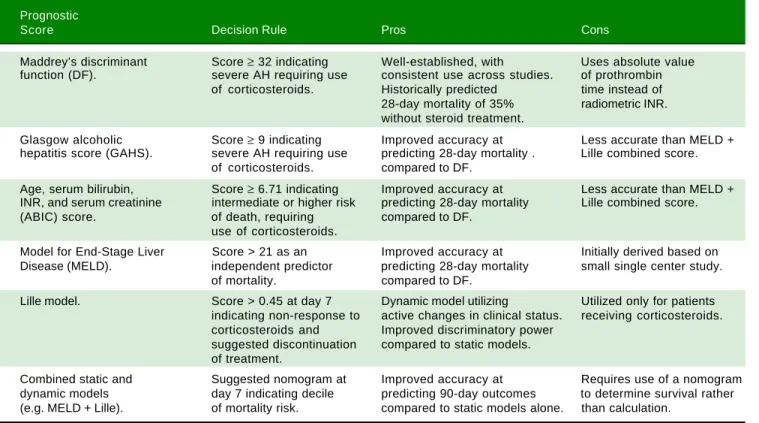
Several scoring systems have been developed to evalu-ate the severity of AH, determine prognosis, and guide treatment decisions. The most established and common-ly utilized prognostic model is Maddrey’s discriminant
function (DF), with a score ≥ 32 indicating severe AH
re-quiring treatment with corticosteroids.14 Historically,
combined analysis has shown a predicted 28-day mortali-ty rate of 35% in patients who do not receive treatment
with steroids,15 though more recent studies suggest the
mortality rate may be closer to 15-20%.16 Critics have
ex-pressed concern regarding the utility of the DF score, as it is calculated using the absolute value of prothrombin time rather than international normalized ratio (INR). As a result, other scoring systems have been proposed as alternatives.
The Glasgow alcoholic hepatitis score (GAHS) utilizes age, serum bilirubin and blood urea on day 1, and serum bilirubin, prothrombin time, and peripheral white blood cell count on day 6-9, to predict 28-day outcomes. Severe AH is classified by GAHS > 8, and early studies demon-strated an accuracy of 81% compared to a lower
perform-ing prediction of 49% by the DF score.17 Another system,
known as the age, serum bilirubin, INR, and serum creati-nine (ABIC) score, emerged to stratify patients according to risk of mortality at 90 days and 1 year. Low, intermedi-ate, and high risk of death was characterized by scores of < 6.71, 6.71 - 8.99, and > 8.99, respectively.18
The Model for End-Stage Liver Disease (MELD) score can also be utilized to predict mortality in severe
AH. Dunn, et al., performed a retrospective cohort study
to determine the 30-day and 90-day mortality for 73
pa-tients hospitalized with AH at a single center.19 The
au-thors determined that a MELD score of 21 or greater was
an independent predictor of 90-day mortality, and further-more that both DF and MELD scoring systems were sim-ilar in predicting mortality at 30 and 90 days.19
In contrast to these “static” scoring systems, based on one time point during treatment, other “dynamic” scoring systems have been designed to include the change in bi-lirubin and assess benefit from therapy. For instance, the Lille model incorporates age, creatinine, albumin, pro-thrombin time, bilirubin level at day 0, and the serum bi-lirubin level at day 7.7 Patients with a score above 0.45 are
deemed to be “non-responders” to corticosteroid therapy, indicating that clinicians should consider discontinuing therapy given lack of improvement in liver function and greater risk of mortality from infection-related complica-tions.7 In a separate study, Louvet, et al., combined the
stat-ic models (Maddrey DF and MELD) with the dynamstat-ic Lille model to predict survival at 2 and 6 months after presentation, and the MELD+Lille combination was found to be the best predictive model of expected
mortal-ity.20 Mortality at 6 months can be determined by utilizing
a nomogram at day 7 of treatment, which provides deciles regarding mortality risk when combining these scoring systems.20
A recent study examining the performance of existing scoring systems demonstrated that GAHS, ABIC, and MELD are superior to DF in predicting 28-day survival benefit from prednisolone, with consistently low static scores indicating favorable outcomes regardless of
pred-nisolone use.21 However, it was noted that combining static
with dynamic scoring systems such as the Lille model, had
improved performance at predicting 90-day outcomes.21 A
comparison of scoring systems is shown in table 1.
Pharmacologic Treatment for Alcoholic Hepatitis
For severe AH, determined by Maddrey DF score ≥ 32,
MELD score ≥ 21, or the presence of encephalopathy, the
standard of care is treatment with prednisolone 40 mg
dai-ly for 28 days.1,19,22 The benefit of steroid treatment has
been demonstrated by a meta-analysis of five randomized-control trials with a total of 418 patients, showing that those patients receiving prednisolone had higher 28-day
survival rates compared to placebo (80 vs. 66%, p =
0.0005).15 The survival benefit was mainly observed in
pa-tients identified as responders per the Lille model.15 For
patients with baseline renal insufficiency, pentoxyfilline has been studied as an alternative treatment,6 based on data
from a randomized controlled trial demonstrating de-creased inpatient mortality with pentoxyfilline compared
to placebo (24.5 vs. 46.1%). The decreased mortality rate
was deemed secondary to a reduction in development of
Table 1. Overview of prognostic models.15-21
Prognostic
Score Decision Rule Pros Cons
Maddrey’s discriminant Score ≥ 32 indicating Well-established, with Uses absolute value
function (DF). severe AH requiring use consistent use across studies. of prothrombin
of corticosteroids. Historically predicted time instead of
28-day mortality of 35% radiometric INR.
without steroid treatment.
Glasgow alcoholic Score ≥ 9 indicating Improved accuracy at Less accurate than MELD +
hepatitis score (GAHS). severe AH requiring use predicting 28-day mortality . Lille combined score.
of corticosteroids. compared to DF.
Age, serum bilirubin, Score ≥ 6.71 indicating Improved accuracy at Less accurate than MELD +
INR, and serum creatinine intermediate or higher risk predicting 28-day mortality Lille combined score.
(ABIC) score. of death, requiring compared to DF.
use of corticosteroids.
Model for End-Stage Liver Score > 21 as an Improved accuracy at Initially derived based on
Disease (MELD). independent predictor predicting 28-day mortality small single center study.
of mortality. compared to DF.
Lille model. Score > 0.45 at day 7 Dynamic model utilizing Utilized only for patients
indicating non-response to active changes in clinical status. receiving corticosteroids.
corticosteroids and Improved discriminatory power
suggested discontinuation compared to static models. of treatment.
Combined static and Suggested nomogram at Improved accuracy at Requires use of a nomogram
dynamic models day 7 indicating decile predicting 90-day outcomes to determine survival rather
(e.g. MELD + Lille). of mortality risk. compared to static models alone. than calculation.
Despite concerns regarding the safety of steroids and efficacy of pentoxyfilline, the survival benefit of
pred-nisolone was confirmed in the STOPAH trial.16 In this
trial of 1,103 patients, multivariable analysis revealed that taking prednisolone improved 28-day survival (OR for death = 0.61, 95% CI 0.41-0.91). No benefit was seen with pentoxyfilline. Additionally, the effect of prednisolone on mortality at 90 days (OR = 1.00; 95% CI, 0.73 to 1.36; P = 0.98) and at 1 year (OR = 1.01; 95% CI, 0.74 to 1.39; P = 0.94) was not significant when compared to not taking prednisolone.16
Beyond traditional pharmacological treatment, other therapies have been studied, including enteral nutrition, immunotherapy, and extracorporeal liver therapy (ELAD). Moreno, et al., assessed intensive enteral nutrition therapy, defined by a regimen of enteral feeding tube for 14 days. Although methylprednisolone combined with intensive nutrition did not increase survival compared to conven-tional nutrition, authors identified that low daily caloric intake of less than 21.5 kcal/kg/day was associated with higher mortality, suggesting an overall significance of
ade-quate nutrition.24 Immunotherapy such as
granulocyte-colony stimulating factor (G-CSF) has been postulated to
mobilize CD34+ stem cells, induce hepatocyte
regenera-tion, and therefore improve survival. Spahr, et al., initially demonstrated in a small cohort of patients with alcoholic
cirrhosis, an increase in hepatocyte growth factor and thus hepatic progenitor cells when combining a 5-day course of G-CSF to prednisone, compared to prednisone standard
therapy alone.25 Additional studies have reiterated
im-proved survival rates at 90 days (78.3 vs. 30.4%, P = 0.001)26
with associated reduction in MELD scores at 3 months by 55% (P = 0.01) with use of G-CSF, however these studies used pentoxifylline instead of prednisone as standard
ther-apy for comparison.27 In a multinational, prospective,
ran-domized controlled trial of 203 patients, investigators have tested extracorporeal liver therapy (ELAD) in severe AH, finding no difference in overall 90-day survival. However, subgroup analysis suggests possible benefits in a specific population with MELD < 28, age < 47, sufficient renal
function, and less severe coagulopathy.28 These alternate
interventions may serve a role in supplementing existing and current therapies, however they require larger clinical trials to validate overall efficacy.
Outcomes After Early Liver Transplantation
In the subgroup of patients that fail to respond to corticosteroid therapy, the 6-month survival rate is ap-proximately 25%, leading clinicians to consider early liver transplantation. Early studies of this practice
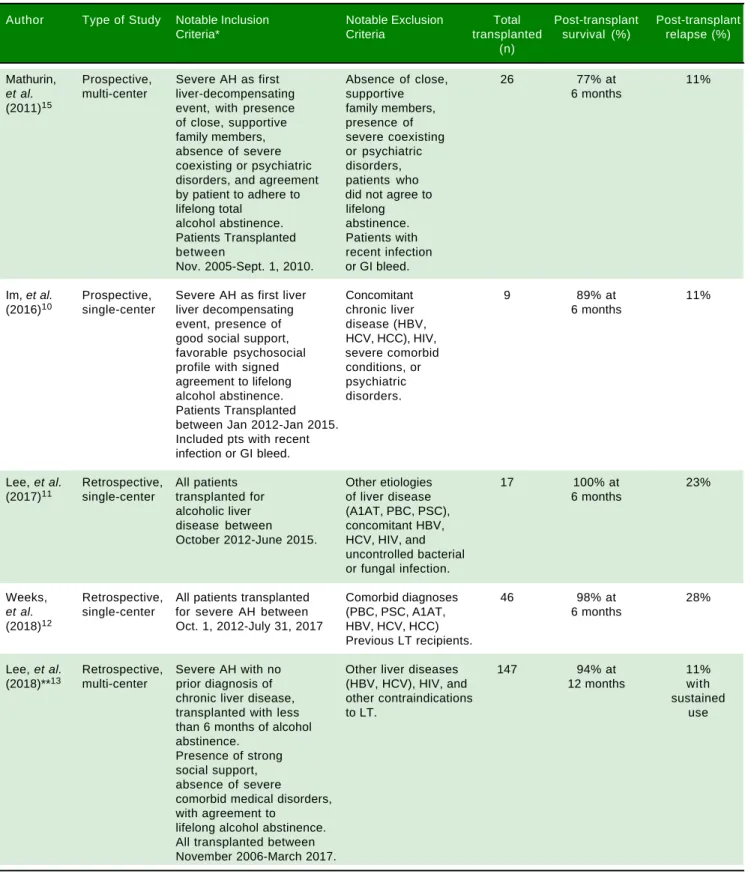
Table 2. Summary of previous publications on early liver transplantation for alcoholic hepatitis.
Author Type of Study Notable Inclusion Notable Exclusion Total Post-transplant Post-transplant Criteria* Criteria transplanted survival (%) relapse (%)
(n)
Mathurin, Prospective, Severe AH as first Absence of close, 26 77% at 11%
et al. multi-center liver-decompensating supportive 6 months
(2011)15 event, with presence family members,
of close, supportive presence of
family members, severe coexisting
absence of severe or psychiatric
coexisting or psychiatric disorders, disorders, and agreement patients who by patient to adhere to did not agree to
lifelong total lifelong
alcohol abstinence. abstinence.
Patients Transplanted Patients with
between recent infection
Nov. 2005-Sept. 1, 2010. or GI bleed.
Im, et al. Prospective, Severe AH as first liver Concomitant 9 89% at 11%
(2016)10 single-center liver decompensating chronic liver 6 months
event, presence of disease (HBV,
good social support, HCV, HCC), HIV,
favorable psychosocial severe comorbid
profile with signed conditions, or
agreement to lifelong psychiatric
alcohol abstinence. disorders.
Patients Transplanted between Jan 2012-Jan 2015. Included pts with recent infection or GI bleed.
Lee, et al. Retrospective, All patients Other etiologies 17 100% at 23%
(2017)11 single-center transplanted for of liver disease 6 months
alcoholic liver (A1AT, PBC, PSC),
disease between concomitant HBV,
October 2012-June 2015. HCV, HIV, and uncontrolled bacterial or fungal infection.
Weeks, Retrospective, All patients transplanted Comorbid diagnoses 46 98% at 28%
et al. single-center for severe AH between (PBC, PSC, A1AT, 6 months
(2018)12 Oct. 1, 2012-July 31, 2017 HBV, HCV, HCC)
Previous LT recipients.
Lee, et al. Retrospective, Severe AH with no Other liver diseases 147 94% at 11%
(2018)**13 multi-center prior diagnosis of (HBV, HCV), HIV, and 12 months with
chronic liver disease, other contraindications sustained
transplanted with less to LT. use
than 6 months of alcohol abstinence.
Presence of strong social support, absence of severe comorbid medical disorders, with agreement to
lifelong alcohol abstinence. All transplanted between November 2006-March 2017.
* All patients met criteria for severe alcoholic hepatitis based on Maddrey’s discriminant function score ≥ 32, and were deemed nonresponsive or ineligible for medical therapy. ** This study encompasses data from the American Consortium of Early Liver Transplantation, which comprises 12 centers from 8 United Network for Organ Sharing regions. This comprehensive publication includes the results of single-center studies presented by Im, et al.,10 Lee, et al.11 and
conducted the landmark European trial of early LT for
patients with severe AH nonresponsive to medical.9
The authors identified a total of 26 patients through a stringent selection process consisting of several meet-ings among multiple medical teams, the patient’s family, and the patient. Selected patients were non-responders to medical therapy who presented with AH as the first liver-decompensating event and met strict psychosocial criteria, including presence of supportive family mem-bers, absence of coexisting or psychiatric disorders, and agreement by patients and family members to adhere to lifelong total abstinence. For selected candidates matched to controls, the 6-month survival rate was higher among early transplant recipients (77 vs. 23%, P < 0.001), and this benefit remained through 2 years of follow-up time (HR = 6.08, P = 0.004). Only 3 of the 20 recipients (12%) relapsed at 720, 740, and 1140 days post-transplant, with one returning to harmful levels of drinking (> 50 g/day).9
In the United States, Im, et al., reported a single-center
experience of early liver transplantation.10 The authors
identified a total of 9 non-responders to medical therapy, who also presented with severe AH as the first liver-de-compensating event, had good social support, and were deemed to have a favorable psychosocial profile with low relapse risk. Candidate selection followed the process typ-ical of selection committee meetings, comprising staff hepatologists, transplant psychiatrists and social workers, senior hepatologists, transplant surgeons, and financial co-ordinators, with consensus required before listing for ear-ly LT. For selected patients matched to controls, 6-month survival rates were higher among early transplant recipi-ents (89 vs. 11%, p < 0.001). After transplantation, only one patient relapsed. Although the presence of good social sup-port was a general requirement for a favorable psychoso-cial profile, the authors found it had minimal impact on candidate selection. Multivariable analysis instead demon-strated that good insight into the consequences of alcohol use, along with severe AH as the first liver-decompensat-ing event was significantly associated with selection for transplant listing.10
Lee, et al., published another single-center trial of LT in the United States for patients with alcohol-related liver disease, stratifying patients into two groups: 1) severe AH as the first liver decompensation event, and 2) alcoholic
cirrhosis (AC) with ≥ 6 months abstinence.
A total of 17 patients with AH and 26 patients with AC underwent liver transplantation. Six-month survival rates were 100% for AH and 89% for AC (P = 0.27), with alco-hol relapse rates numerically but not statistically higher
among AH patients (23.5 vs. 11.5%, p=0.42).11 Long-term
follow-up on a larger cohort of patients from this initial
study was presented in a different publication by Weeks, et
al., comparing 46 patients with AH and 34 patients with
AC. After a median follow-up of 532 days post-transplant, there were no significant differences between groups in 6-month and 1-year patient or graft survival. Alcohol relapse was also similar, found to be 28% in the AH group
com-pared to 24% in the AC group.12
More recently, Lee, et al., published findings from the
multicenter, American Consortium of Early Liver Trans-plantation, which comprises 12 centers from 8 United
Network for Organ Sharing regions.13 This
comprehen-sive publication includes the results of single-center studies presented by Im, et al.,10 Lee, et al.11 and Weeks, et
al.12 Across all centers, there were 147 transplants
per-formed for patients who presented with severe AH as the first decompensating event. Among these patients, the median number of days for listing before LT was 7 (range 3 - 12), and the median number of days from the last alcoholic drink to LT was 55 (range 36 - 91). One-year survival was 94% (95% CI 89 - 97%), and three-One-year survival was 84% (95% CI 75 - 90%). Cumulative inci-dence of any alcohol use was 25% at 1-year post-trans-plant and 34% at 3 years, however cumulative incidence of sustained alcohol use was lower, at 10% at 1 year and 17% at 3 years post-transplant. Sustained alcohol use post-transplant was associated with increased risk of
mortality at HR 4.59.13
Predictors of post-LT relapse were younger age (OR 1.05, CI 1.01-1.09, p = 0.02) and lack of complete ac-ceptance of diagnosis (OR 2.36, CI 1.10-5.08, p = 0.04). Notably, factors not associated with post-transplant al-cohol use included length of pre-LT abstinence, quan-tity of alcohol use, years of heavy drinking, history of illicit drug use, or history of failed rehabilitation at-tempts. The greatest predictors of post-LT death in-cluded sustained alcohol use post-LT (HR 4.59, CI 1.45-14.54, p = 0.01), any alcohol use post-LT (HR 3.54, CI 1.06-11.85, p = 0.04), and > 10 drinks per day at presentation (HR 3.17, CI 1.04-9.67, p = 0.04). Length of pre-LT abstinence and other alcohol-related factors, as well as pre-LT clinical factors such as Maddrey DF score, Lille score, and MELD scores were not
associat-ed with post-LT death.13
The Controversy
Table 3. Opinions regarding early liver transplantation for alcoholic hepatitis.
Pros: Cons:
• LT significantly improves survival rate for severe AH • Recipients of liver transplant for alcoholic liver disease nonresponsive to medical therapy, with repeated studies have sufficiently high risk of relapse that leads to graft from both prospective and retrospective, single-center and dysfunction and failure.35,36
multi-center studies, demonstrating >77% 6-month survival among transplant recipients.9-13
• Alcohol use disorder should be treated as a medical • Alcohol use disorder has conventionally been associated comorbidity rather than a self-inflicted cause of illness.30 with “self-inflicted disease,” and imbues moral judgments
that affect decisions regarding candidate selection.38
• Prior ambivalence toward addiction medicine has colored • Historically, public opinion polls demonstrated resistance medical judgments regarding appropriateness of LT to to transplantation for alcoholics. Removing the minimum
alcoholic patients.29 sobriety guidelines may decrease trust and lower
donation rates.39,40
• The “6-month rule” of abstinence has not been validated, • Expanding liver transplantation to patients with severe but rather has been created to service transplant centers.30 alcoholic hepatitis will lead to further challenges in organ
shortages.38
• Duration of abstinence and duration of alcohol use history • Previous experience with success in LT for AH has are not directly associated with relapse risk. Long-term utilized strict psychosocial inclusion criteria.9 There are
studies have not identified a length of pre-transplant no optimal models to predict risk of alcohol relapse. sobriety to predict abstinence.31,32
• Alcohol relapse post-transplant is not significantly • There are not objective and consistent mechanisms for higher among early LT recipients than those with >6 months candidate selection across all transplant centers.
abstinence.11 Variation in policy may unjustly cause patients
to self-refer to centers that follow different guidelines.
Arguments supported by evidence from prospective Arguments supported by evidence from prospective observational cohort studies,9,10,31 retrospective observational cohort studies,9 retrospective observational
observational cohort studies,11-13 and editorials.29,30,32 cohort studies,35,36 editorials,38,39 and questionnaires.40
In Favor of Early Transplantation
Opinions in favor of LT primarily focus on the separa-tion between alcohol use as a disorder and alcohol use as a cause of liver disease. Lucey describes this differentiation that alcohol use disorder is an illness that may itself be
complicated by alcoholic liver disease.29 Alcohol use
dis-order and addiction are not purely subjective choices, but rather involve multifactorial mechanisms including genet-ics, neurohormonal communication, the microbiome, and
environmental factors.30 Alcohol use should therefore be
viewed similarly to other chronic medical comorbidities such as diabetes mellitus or hypertension, and weighed as a medical diagnosis that can impact suitability for LT. Un-til now, ambivalence about addiction and treatment of ad-diction as a self-inflicted disorder that patients can “control on their own,” has influenced medical judgments regarding the appropriateness of alcoholic patients for LT. This has also been reflected in terminology, using the word “recidivism,” which has origins is legal phrasing that
implies personal fault, instead of “recurrence”.29 To fully
understand a candidate’s addiction to alcohol as a disease process as opposed to “lack of willpower” requires engag-ing with addiction specialists.
Beyond the definition of alcohol use disorder, the 6-month rule for sobriety has been brought under question. It is argued that current application of requiring 6 months sobriety before transplantation has been used out of con-text from its original intent, which was to identify patients who could obtain spontaneous recovery with improve-ment of liver function after a period of abstinence.30
Previ-ously, the 6-month period was proposed as a surrogate predictor of alcohol relapse. However, it has been found
that duration of abstinence is not a consistent predictor.31
Although longer duration of sobriety has been associated with a reduction in risk of “any alcohol use” after trans-plant, studies have not distinguished between return to harmful levels of drinking compared to minimal levels. In long-term studies of alcohol abstinence, risk of relapse is
less likely after 5 years of sobriety.32 Time period alone
efforts at sobriety or rehabilitation.30 As such, the “6-month
rule” has not been validated, but rather has been created to service transplant centers, selection committees, and in-surance companies by providing simple rules to define candidacy for listing. Predicting relapse after transplanta-tion is complex and challenging, and applying a blanket rule for all patients would unfairly exclude many with po-tential to benefit from early LT.
In terms of mortality outcomes, not only does LT sig-nificantly improve survival for severe AH refractory to medical treatment, but post-transplant survival rates and relapse rates are similar between those transplanted for AH as compared to chronic alcoholic liver disease.33,34 Lee,
et al., demonstrated this comparison by identifying similar alcohol relapse rates between patients transplanted with AH and patients transplanted with alcoholic cirrhosis and
6 months abstinence.11 Enforcement of the “6-month rule”
may therefore delay listing among those who would otherwise die without LT, even if unlikely to relapse after LT.9
Together, the evidence provided by early experience with liver transplantation for severe AH along with argu-ments for better understanding alcohol use disorder and the need for validating the 6-month rule, suggest that early liver transplantation should be more widely accepted as a rescue therapy among select patients.
Against Early Transplantation
Although early transplantation is clearly beneficial to many patients with alcoholic hepatitis, opponents of this practice note the high rate of recurrent harmful drinking and resulting graft dysfunction. In a study of 369 patients transplanted with alcoholic liver disease, 20% showed se-vere relapse with approximately one third of this subset getting a recurrence of alcoholic cirrhosis at a median
time of 6 years (range 3 to 10) from LT to cirrhosis.35
An-other study showed that long-term survival was signifi-cantly reduced in those that relapsed compared to those that remained abstinent (45 vs. 86% at 10 years, P < 0.01).36
Both of these studies demonstrate study populations at-risk for relapse and resulting graft failure and dysfunction. This should be considered in the context of the overall role of alcohol use and all-cause mortality, with previous studies suggesting that people with alcohol use disorder have a four-fold increased risk from premature death and average 24- to 28-year decrease in life expectancy than the
general population.37 Mortality rate ratios have also been
noted to be highest among younger age groups, especially
between 30-59 years old.37 Thus, in addition to concern for
graft failure, alcohol use can itself increase risk of death from other medical conditions, suicide, and external caus-es of death.
Given the limited supply of donor organs, some argue that transplantation should be reserved for patients with-out such “preventable” risk factors for poor with-outcome. Al-cohol use has conventionally been associated with “self-inflicted disease.” It remains that alcohol use disor-der is viewed by both medical and moral principles, and despite efforts to isolate patients in terms of their medical diagnoses, moral judgments still impact decision making
during LT selection.38 In addition to ethical
considera-tions, the natural history of alcoholic hepatitis is variable. Statistically, 25-30% of AH patients may recover their liver
function even without response to steroids.7 Thus, it is
possible that up to 30% of transplants performed for se-vere AH will be done in patients who would have sponta-neously recovered without liver transplant.
Beyond concerns about justice in allocating a limited supply of organs, others fear that expansion of early trans-plantation for AH may actually decrease organ donation
rates by eroding public trust.39 Historically, public
opin-ion polls consistently demonstrated resistance to
trans-plantation for alcoholics in general,40 though a more
recent survey suggests the public may be moving toward more neutral viewpoints regarding the specific role of ear-ly LT in severe alcoholic hepatitis.41 Given different
prac-tices among transplant centers and inconsistency among which centers employ the 6-month rule and which do not, it is difficult to project what the real impact of early LT for AH will be on donor pool. However, the burden of this practice will still lead to further challenges in organ short-ages. Though only 3% of liver grafts were used for patients
with AH in the earliest study by Mathurin, et al.,9
remov-ing the minimum sobriety requirement and expandremov-ing LT to include this group will thereby increase the percentage of donor grafts needed.38
Finally, and perhaps most importantly, allowing liver transplantation for AH would require an objective and consistent mechanism for candidate selection across cent-ers. Although the denominators are not clearly reported in the studies quoted above, the candidates selected for
trans-plantation seem to represent ≤ 10% of all patients with
encephalopathy. Employing the practice of early LT may leave gastroenterologists in the community without clear guidelines for referral among patients with alcoholic liver disease. From the referral process to evaluation and selec-tion, transplantation for this population would be further challenged by ethical and moral dilemmas regarding pa-tients that may subsequently self-refer to centers that fol-low different guidelines for early LT.
The 6-month rule of sobriety defined by a 1997 con-sensus conference42 is often criticized as arbitrary and only
weakly predictive of the likelihood of relapse. Although these criticisms are valid, in its defense the rule is objec-tive and transparent. According to Norman Daniels, one of the most influential modern experts on distributive jus-tice, even if we never achieve consensus on the criteria for resource allocation, we must ensure that the process is perceived as being fair.43
Thus, critics point to graft failure and overall increased mortality with alcohol relapse, the need for appropriate al-location, and the current challenge of inconsistent mecha-nisms for selection, as barriers to current practice in distributing scarce organs in resource-limited settings.
CONCLUSIONS
Current clinical guidelines regarding the management of AH focus on abstinence and medical treatment with
corticosteroids.6 There is sufficient evidence to support
similar or improved survival rates for early liver transplan-tation for severe alcoholic hepatitis nonresponsive to ster-oid therapy. However, the most common concerns are supported by cases of alcohol relapse after transplant, lead-ing to graft failure. Attitudes toward early LT remain di-vided, with proponents advocating for a better understanding of alcohol use as a disorder, redefining the misguided application of the 6-month rule, and highlight-ing comparable relapse rates among recipients with less than and greater than 6 months sobriety. Meanwhile, op-ponents cite post-transplant relapse leading to reduced survival rates, ambivalent public opinions and concerns for a limited donor pool, and inconsistency in practices across transplant centers.
Both sides can agree on the need for optimizing candi-date selection. Moving forward, further studies are needed to better define tools for predicting alcohol relapse, as well as methods to implement practical addiction re-sources and programs during post-transplant surveillance. At this time, there are still significant differences in prac-tices of liver transplantation for alcoholic hepatitis across transplant centers. It is necessary to develop a united poli-cy that settles the controversies regarding early LT for this population and begins to move toward broader consensus.
ABBREVIATIONS
• AC: alcoholic cirrhosis.
• AH: alcoholic hepatitis.
• AST: aspartate aminotransferase.
• ALT: alanine aminotransferase.
• LT: liver transplantation.
• DF: Maddrey’s discriminant function.
• MELD: Model for End-Stage Liver Disease.
• UNOS: United Network for Organ Sharing.
• US: United States.
DISCLOSURES
The authors have nothing to disclose regarding con-flicts of interest relevant to this manuscript.
FINANCIAL SUPPORT
None.
WRITING ASSISTANCE
None.
AUTHOR CONTRIBUTIONS
TW, TM, MV, and VS drafted the manuscript. TM, AK, MV, SS, and VS provided critical revision of the manu-script for intellectual content.
REFERENCES
1. European Association for the Study of the Liver. EASL clini-cal practice guidelines: management of alcohol-related liver disease. J Hepatol 2018; 69: 154-81.
2. Lee BP, Terrault NA. Early liver transplantation for severe al-coholic hepatitis: moving from controversy to consensus. Curr Opinion in Organ Transplant 2018; 23: 229-36. 3. Stickel F, Datz C, Hampe J, Bataller R. Pathophysiology and
management of alcoholic liver disease: update 2016. Gut and Liver 2017; 11: 173-88.
4. Gao B, Bataller R. Alcoholic liver disease: pathogenesis and new therapeutic targets. Gastroenterology 2011; 141: 1572-85.
5. Crabb DW, Bataller R, Chalasani NP, Kamath PS, Lucey M, Mathurin P, McClain C, et al. Standard definitions and com-mon data elements for clinical trials in patients with alcoholic hepatitis: recommendation from the NIAAA Alcoholic Hepati-tis Consortia. Gastroenterology 2016; 150: 785-90.
6. Singal AK, Bataller R, Ahn J, Kamath PS, Shah VH. ACG clinical guideline: alcoholic liver disease. Am J Gastroenterol 2018; 113: 175-94.
8. Louvet A, Wartel F, Castel H, Dharancy S, Hollebecque A, Canva-Delcambre V, Deltenre P, et al. Infection in patients with severe alcoholic hepatitis treated with steroids: early response to therapy is the key factor. Gastroenterology 2009; 137: 541-8.
9. Mathurin P, Moreno C, Samuel D, Dumortier J, Salleron J, Du-rand F, Castel H, et al. Early liver transplantation for severe alcoholic hepatitis. N Eng J Med 2011; 365: 1790-800. 10. Im GY, Kim-Schluger L, Shenoy A, Schubert E, Goel A,
Friedman SL, Florman S, et al. Early liver transplantation for severe alcoholic hepatitis in the United States–a single-cent-er expsingle-cent-erience. Am J Transplant 2016; 16: 841-9.
11. Lee BP, Chen PH, Haugen C, Hernaez R, Gurakar A, Philoso-phe B, Dagher N, et al. Three-year results of a pilot program in early liver transplantation for severe alcoholic hepatitis. Ann Surg 2017; 265: 20-9.
12. Weeks SR, Sun Z, McCaul ME, Zhu H, Anders RA, Philoso-phe B, Ottmann SE, et al. Liver transplantation for severe al-coholic hepatitis, updated lessons from the world’s largest series. J Am Coll Surg 2018; 226: 549-57.
13. Lee B, Mehta N, Platt L, Gurakar A, Rice JP, Lucey MR, Im GY, et al. Outcomes of early liver transplantation for patients with severe alcoholic hepatitis. Gastroenterology 2018. Doi: 10.1053/j.gastro.2018.04.009 [Epub ahead of print].
14. Maddrey WC, Boitnott JK, Bedine MS, Weber FL Jr, Mezey E, White RI Jr. Corticosteroid therapy of alcoholic hepatitis. Gastroenterology 1978; 75: 193-9.
15. Mathurin P, O’Grady J, Carithers RL, Phillips M, Louvet A, Mendenhall CL, Ramond MJ, et al. Corticosteroids improve short-term survival in patients with severe alcoholic hepati-tis: meta-analysis of individual patient data. Gut 2011; 60: 255-60.
16. Thursz MR, Richardson P, Allison M, Austin A, Bowers M, Day CP, Downs N, et al. Prednisolone or pentoxifylline for al-coholic hepatitis. N Eng J Med 2015; 372: 1619-28.
17. Forrest EH, Evans CD, Stewart S, Phillips M, Oo YH, McAvoy NC, Fisher NC, et al. Analysis of factors predictive of mortal-ity in alcoholic hepatitis and derivation and validation of the Glasgow alcoholic hepatitis score. Gut 2005; 54: 1174-9. 18. Dominguez M, Rincón D, Abraldes JG, Miquel R, Colmenero J,
Bellot P, García-Pagán JC, et al. A new scoring system for prognostic stratification of patients with alcoholic hepatitis. Am J Gastroenterol 2008; 103: 2747-56.
19. Dunn W, Jamil LH, Brown LS, Wiesner RH, Kim WR, Menon KV, Malinchoc M, et al. MELD accurately predicts mortality in patients with alcoholic hepatitis. Hepatology 2005; 41: 353-8. 20. Louvet A, Labreuche J, Artru F, Boursier J, Kim DJ, O’Grady J, Trépo E, et al. Combining data from liver disease scoring systems better predicts outcomes of patients with alcoholic hepatitis. Gastroenterology 2015; 149: 398-406.
21. Forrest EH, Atkinson SR, Richardson P, Masson S, Ryder S, Thursz MR, Allison M, et al. Application of prognostic scores in the STOPAH trial: discriminant function is no longer the op-timal scoring system in alcoholic hepatitis. J Hepatol 2018; 68: 511-8.
22. O’Shea RS, Dasarathy S, McCullough AJ, Practice Guideline Committee of the American Association for the Study of Liv-er Diseases, Practice ParametLiv-ers Committee of the AmLiv-eri- Ameri-can College of Gastroenterology. Alcoholic liver disease. Hepatology 2010; 51: 307-28.
23. Akriviadis E, Botla R, Briggs W, Han S, Reynolds T, Shakil O. Pentoxifylline improves short-term survival in severe acute alcoholic hepatitis: a double-blind, placebo-controlled trial. Gastroenterology 2000; 119: 1637-48.
24. Moreno C, Deltenre P, Senterre C, Louvet A, Gustot T, Bas-tens B, Hittelet A, et al. InBas-tensive enteral nutrition is
ineffec-tive for patients with severe alcoholic hepatitis treated with corticosteroids. Gastroenterology 2016; 150: 903-10. 25. Spahr L, Lambert JF, Rubbia-Brandt L, Chalandon Y,
Frossa-rd JL, Giostra E, Hadengue A. Granulocyte-colony stimulat-ing factor induces proliferation of hepatic progenitors in alcoholic steatohepatitis: a randomized trial. Hepatology 2008; 48: 221-9.
26. Singh V, Sharma AK, Narasimhan RL, Bhalla A, Sharma N, Sharma R. Granulocyte colony-stimulating factor in severe alcoholic hepatitis: a randomized pilot study. Am J Gastro-enterol 2014; 109: 1417-23.
27. Singh V, Keisham A, Bhalla A, Sharma N, Agarwal R, Shar-ma R, Singh A. Efficacy of granulocyte colony-stimulating factor and n-acetylcysteine therapies in patients with se-vere alcoholic hepatitis. Clin Gastroenterol Hepatol 2018. doi: 10.1016/j.cgh.2018.01.040 [Epub ahead of print]. 28. Thompson J, Jones N, Al-Khafaji A, Malik S, Reich D, Munoz
S, MacNicholas R, et al. Extracorporeal cellular therapy (ELAD) in severe alcoholic hepatitis: A multinational, pro-spective, controlled, randomized trial. Liv Transplantat 2018; 24: 380-93.
29. Lucey MR. Liver transplantation for severe alcoholic hepati-tis- The PRO view. Liv Int 2017; 37: 343-4.
30. Kubiliun M, Patel SJ, Hur C, Dienstag JL, Luther J. Early liver transplantation for alcoholic hepatitis: ready for primetime? J Hepatol 2018; 68: 380-2.
31. DiMartini A, Day N, Dew MA, Javed L, Fitzgerald MG, Jain A, Fung JJ, et al. Alcohol consumption patterns and predictors of use following liver transplantation for alcoholic liver dis-ease. Liv Transplant 2006; 12: 813-20.
32. Vaillant GE. The natural history of alcoholism and its relation-ship to liver transplantation. Liv Transplant Surg 1997; 3: 304-10.
33. Singal AK, Bashar H, Anand BS, Jampana SC, Singal V, Kuo YF. Outcomes after liver transplantation for alcoholic hepati-tis are similar to alcoholic cirrhosis: exploratory analysis from the UNOS database. Hepatology 2012; 55: 1398-405. 34. Wells JT, Said A, Agni R, Tome S, Hughes S, Dureja P, Lucey
MR. The impact of acute alcoholic hepatitis in the explanted recipient liver on outcome after liver transplantation. Liv Transplant 2007; 13: 1728-35.
35. Erard-Poinsot D, Guillaud O, Hervieu V, Thimonier E, Vallin M, Chambon-Augoyard C, Boillot O, et al. Severe alcoholic relapse after liver transplantation: what consequences on the graft? a study based on liver biopsies analysis. Liv Transplant 2016; 22: 773-84.
36. Cuadrado A, Fabrega E, Casafont F, Pons-Romero F. Alco-hol recidivism impairs long-term patient survival after ortho-topic liver transplantation for alcoholic liver disease. Liv Transplant 2005; 11: 420-6.
37. Westman J, Wahlbeck K, Laursen TM, Gissler M, Nordentoft M, Hällgren J, Arffman M, et al. Mortality and life expectancy of people with alcohol use disorder in Denmark, Finland and Sweden. Acta Psychiatrica Scandinavica 2015; 131: 297-306.
38. Artru F, Louvet A, Mathurin P. Liver transplantation for pa-tients with alcoholic hepatitis. Liv Int 2017; 37: 337-9. 39. Fung JY. Liver transplantation for severe alcoholic
hepatitis-The CON view. Liv Internat 2017; 37: 340-2.
40. Neuberger J, Adams D, MacMaster P, Maidment A, Speed M. Assessing priorities for allocation of donor liver grafts: sur-vey of public and clinicians. BMJ 1998; 317: 172-5.
42. Lucey MR, Brown KA, Everson GT, Fung JJ, Gish R, Keeffe EB, Kneteman NM, et al. Minimal criteria for placement of adults on the liver transplant waiting list: a report of a nation-al conference organized by the American Society of Trans-plant Physicians and the American Association for the Study of Liver Diseases. Liv Transplant Surg 1997; 3: 628-37.
43. Daniels N, Sabin JE. Setting Limits Fairly: Can we learn to share medical resources? Oxford, England, UK: Oxford Uni-versity Press; 2002.
Correspondence and reprint request: Vinay Sundaram, M.D., MSc.
Division of Gastroenterology and Comprehensive Transplant Center. Cedars-Sinai Medical Center
8900 Beverly Blvd, Suite 250. Los Angeles, CA 90048, USA. Tel.: 310-423-6000. Fax: 310-423-0849