11th Meeting of the Scientific and Technical Review Panel Gland, Switzerland, 8-11 April 2003
DOC. STRP11-19
Agenda item 6.3 iii)
Background materials concerning climate change
1. Attached to this note are:
i) COP8 Resolution VIII.3 on Climate change and wetlands: impacts, adaptation and mitigation;
ii) COP8 DOC. 40, Interim Executive Summary to Ramsar COP8 DOC. 11: Climate Change and Wetlands; and
iii) COP8 DOC. 11, Information Paper: Climate change and wetlands: impacts, adaptation and mitigation;
2. These provide background materials to the tasks requested to be undertaken by the Panel for 2003-2005 on this issue.
"Wetlands: water, life, and culture"
8th Meeting of the Conference of the Contracting Parties to the Convention on Wetlands (Ramsar, Iran, 1971) Valencia, Spain, 18-26 November 2002
Resolution VIII.3
Climate change and wetlands: impacts, adaptation, and
mitigation
1. RECOGNIZING that climate change may substantially affect the ecological character of wetlands and their sustainable use, and AWARE of the potentially important role of wetlands in adapting to and in mitigating climate change;
2. CONCERNED that persistent drought in many regions of the world is already seriously affecting the ecological character of wetlands and that climate change, along with other land use and land management activities, is projected to exacerbate such problems;
3. FURTHER CONCERNED by the recent degradation of peatlands through drainage and fire in many parts of the world and the associated impacts on greenhouse gas emissionsas well as the impact on biodiversity and local people of this degradation;
4. RECOGNIZING that heavy precipitation events are projected in many areas as a consequence of climate change and NOTING that many Contracting Parties are
concerned that this will seriously adversely affect the ecological character of wetlands and their potential for supplying economic benefits, especially coral reefs and sea grass beds, which are wetland types under-represented in the Ramsar List;
5. ALSO NOTING that in its Third Assessment Report (TAR), the Intergovernmental Panel on Climate Change (IPCC) concluded that somewetlands, including reefs, atolls,
mangroves, and those in prairies, tropical and boreal forests, and arctic (including permafrost) and alpine ecosystems, are considered to be amongst those natural systems especially vulnerable to climate change because of their limited adaptive capacity, and may undergo significant and irreversible damage;
6. RECOGNIZING the ecological, social and economic vulnerability of small islands developing states to the impact of climate change and in particular of sea level rise;
7. RECALLING that Action 5.1.6 of the Convention’s Work Plan 2000-2002 requested the Scientific and Technical Review Panel (STRP) to prepare for consideration at COP8 a comprehensive review of the potential impacts of climate change on wetlands and the roles that wetlands can potentially play in mitigating the effects of climate change and sea level rise;
contribution that the Ramsar Convention’s Communication, Education, and Public
Awareness Programme, as elaborated by Resolution VIII.31, can make to addressing issues of climate change and wetlands;
9. WELCOMING efforts by countries to address climate change, including those reflected in the 2001 Marrakesh Declaration, the Marrakesh Accords, and the 2002 Delhi Ministerial Declaration on Climate Change and Sustainable Development; RECOGNIZING the work of the IPCC and WELCOMING its report on Land Use, Land Use Change and Forestry (LULUCF), which includes forested wetlands; and EXPRESSING DEEP CONCERN about the findings of the IPCC Third Assessment Report;
10. ACKNOWLEDGING the developing cooperation among multilateral environmental agreements and their subsidiary bodies on matters of common interest on climate change; AWARE that the Joint Work Plan 2002-2006 between the Convention on Biological Diversity (CBD) and the Ramsar Convention includes joint actions on climate change, wetlands and biodiversity; and WELCOMING the decision by the Conference of the Parties to the UNFCCC at its eighth session which notes the need for the Joint Liaison Group between the CBD, the UN Convention to Combat Desertification, and the UNFCCC to invite the secretariat of the Ramsar Convention to share information and to participate in the meetings of the Joint Liaison Group, as appropriate;
11. THANKING the STRP for its preparation of the comprehensive COP8 information paper on climate change and wetlands; ALSO THANKING the Environmental Research Institute of the Supervising Scientist, Australia, the Australian National University
scientists involved in the IPCC assessments, and IUCN–The World Conservation Union for their contribution to this work; and HAVING HAD AVAILABLE the “Interim Executive Summary to Ramsar COP8 DOC. 11: Climate Change and Wetlands” (COP8 DOC. 40) distributed at this meeting of the COP;
12. AWARE that the STRP’s report recognizes that there are key gaps in current knowledge and information on the impacts of climate change upon wetlands, and on wetland adaptation, and on the ways in which wetlands can mitigate climate change impacts, notably the role of peatlands in carbon sequestration; and
13. NOTING that other guidance adopted by this meeting of the Conference of the Parties is relevant to addressing issues of climate change and wetlands, notably Principles and guidelines for incorporating wetland issues into Integrated Coastal Zone Management (Resolution VIII.4), Guidelines for Global Action on Peatlands (Resolution VIII.17), Partnerships and synergies with Multilateral Environmental Agreements and other institutions (Resolution VIII.5), and Strategic Plan Operational Objective 3 (Resolution VIII.25);
THE CONFERENCE OF THE CONTRACTING PARTIES
14. CALLS UPON Contracting Parties to manage wetlands so as to increase their resilience to climate change and extreme climatic events, and to reduce the risk of flooding and drought in vulnerable countriesby, inter alia, promoting wetland and watershed protection and restoration;
wetland types that are significant carbon stores, or have the ability to sequester carbon and are considered as mitigation factors, as well as to increase the adaptive capacity of society to respond to the changes in these ecosystems due to climate change;
16. ENCOURAGES Contracting Parties to consider, and use as appropriate, the information on climate change and wetlands in the background papers COP8 DOC. 11 and COP8 DOC. 40 when integrating climate change considerations into their national policy pertaining to the conservation and wise use of their wetlands;
17. URGES Contracting Parties to make every effort, when implementing UNFCCC and, where appropriate, its Kyoto Protocol, including revegetation and forest management, afforestation and reforestation, that this implementation does not lead to seriousdamage to the ecological character of their wetlands, using, where appropriate, strategic and other forms of environmental impact assessment and risk assessment, taking account
Resolutions VII.10, VII.16 and VIII.9, as well as Article 4.1 of the UNFCCC and Article 2.1 of the Kyoto Protocol, as appropriate;
18. ENCOURAGES Contracting Parties and other organizations to undertake, where possible, studies of the role of wetlands in carbon storage and sequestration and in mitigating the impacts of sea-level rise and to make their findings available to the Convention;
19. INVITES Contracting Parties to pay special attention to the need for building and strengthening institutional capacity and synergies between related instruments at the national level in order to address the linkages between climate change and wetlands, and to report to COP9 on progress in this matter, including achievements and the identification of difficulties encountered;
20. INVITES the IPCC and UNFCCC to focus some of their future work on issues related to region-specific wetland data, and to improve knowledge on the vulnerability of wetlands to climate change and the capacity to project impacts on wetlands; and REQUESTS the STRP to become involved in this work, drawing upon the work of the IPCC and other relevant bodies as appropriate and reporting on the status of international discussions at COP9;
21. WELCOMES the recognition by the Plan of Implementation adopted by the World Summit on Sustainable Development (WSSD) of the need to improve and apply more widely techniques and methodologies for assessing the potential adverse effects of climate change on wetlands, and, as appropriate, to assist countries that are particularly vulnerable to those effects;
22. NOTES that in the WSSD Plan of Implementation, States that have ratified the Kyoto Protocol strongly urge States that have not yet ratified the Kyoto Protocol to do so in a timely manner; and
determined by the STRP, for consideration by Contracting Parties at COP9. If the IPCC is unable to undertake preparation of a Technical Paper on the relationship between
wetlands and climate change, the Conference of the Parties REQUESTS the STRP to prepare an information paper, based on the IPCC Third Assessment Report and other authoritative, updated information, that synthesizes key issues on wetlands and climate change, which should undergo a rigorous peer review process as directed by the Standing Committee upon the advice of the STRP, and which should be made available for
“Wetlands: water, life, and culture”
8th Meeting of the Conference of the Contracting Parties to the Convention on Wetlands (Ramsar, Iran, 1971) Valencia, Spain, 18-26 November 2002
Ramsar COP8 DOC. 40
Unedited information paper
English only
Interim Executive Summary to Ramsar COP8 DOC. 11:
Climate Change and Wetlands
Note: This Interim Executive Summary had been prepared by members of the Scientific and Technical Review Group’s Expert Working Group on Climate Change. It was written after the finalisation of the Third Assesment Report of the Intergovernmental Panel on Climate Change (IPCC) Working Group 2: Impacts, Adaptation and Vulnerability, but prior to the finalisation of the IPCC Synthesis Report and the IPCC Technical Paper on Climate Change and Biodiversity.
Ten questions were developed by the 10th meeting of the STRP for summarizing the importance of wetlands, the impacts of climate change on wetlands, potential adaptation options and the role wetlands can play in mitigation of climate change. This Interim Executive Summary addresses these questions; underlying scientific and technical details are provided in COP8 DOC. 11.
1. What are the goods and services that wetlands provide?
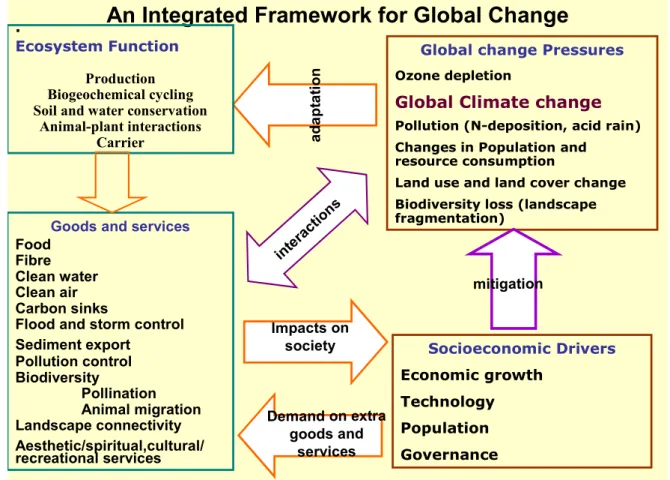
Wetlands provide goods and services essential for the survival of humans. Goods and services that wetlands, like many ecosystems provide are: food, fibre (wood, reed thatching), clean water, clean air, carbon and other nutrient stores/sinks, flood and storm control, ground water recharge and discharge, pollution control, organic matter or sediment export, biodiversity, pollination, routes for animal and plant migration, landscape and waterscape connectivity, aesthetic/spiritual, cultural and recreational services (see Figure 1). These all contribute to human health and well-being.
2. What is the role of wetlands in the global biogeochemical cycles and how do human activities affect this role?
Terrestrial wetlands have a major role in the carbon, nitrogen and sulphur cycle. All these cycles are driven by the hydrological (or water) cycle. Since the 1750s, human activities, e.g., burning fossil fuel and land use land cover change, have increased the atmospheric concentrations of greenhouse gases (e.g., water vapour, carbon dioxide, methane, nitrous oxides) and thus affected all these cycles. Increase in greenhouse gases has and will continue to increase the mean surface global
temperature and enhance the global hydrological cycle resulting in more extreme and heavier precipitation events in many areas with increasing precipitation. Atmospheric concentrations of carbon dioxide have increased by about 30% and methane by about 150%. Nitrogen production due to chemical fertiliser production, has doubled in the 20th century and atmospheric
the anthropogenic sulphur dioxide emissions have decreased due to structural changes in the energy system as well as concerns about local and regional air pollution.
The concentration of CO2 in the atmosphere along with nitrous oxide has acted as a fertiliser and has affected the uptake of carbon by some terrestrial ecosystems (including wetlands). Peat accumulating wetlands are especially important in the carbon cycle because of the large carbon store accumulated in them over millennia. With projected climate changes and the land use land cover change these stores are at risk of being released to the atmosphere. Besides being carbon sinks, wetlands are sources of methane to the atmosphere. Most wetlands are highly sensitive to hydrological changes especially at the catchment level and thus changes in hydrology (e.g., through drainage, fires, climate change) could lead to further changes in the carbon stores.
3. What are the key biophysical and socio-economic impacts of climate change on wetlands?
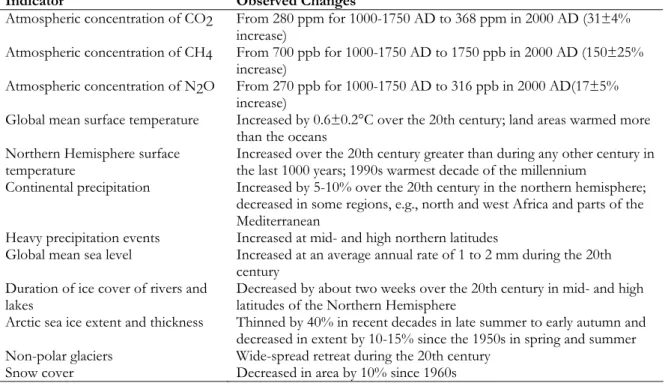
Climate change can directly or indirectly affect many ecosystem functions and thus the goods and services they can provide (see Figure 1). Some of these impacts are:
• a potential for significant disruption of ecosystems affecting many of their functions, e.g. productivity and decomposition
• increasing CO2 concentrations in the atmosphere could increase net primary
productivity and net ecosystem productivity in vegetation systems, causing carbon to accumulate in vegetation over time
• increased risk of extinction of vulnerable species for very minimal changes in climate (e.g., 1-3oC additional warming in high latitude/altitude wetlands)
• largest and earliest impacts induced by climate change, particularly where changes in weather-related disturbance regimes and nutrient cycling are primary controls on productivity
• reduced average annual surface water runoff in some areas and increased annual runoff in others would affect many ecosystem functions. In snowmelt dominated watersheds, earlier snowmelt and a smaller proportion of winter precipitation falling as snow is projected to shift peak river flows toward winter from spring and may intensify peak flows thus changing the phenology of many species
• climatic change and other pressures making inland waters that are small and/or downstream from many human activities vulnerable
• peatlands underlain by permafrost could become net carbon sources rather than sinks. With climate warming drainage of tropical peatlands could lead to increased risk of fires and affect the viability of tropical wetlands
Examples of projected changes due to sea level rise and climate change include:
• many coastal systems will experience increased levels of inundation and storm flooding, accelerated coastal erosion, seawater intrusion into fresh groundwater, encroachment of tidal waters into estuaries and river systems, elevated sea surface temperatures and ground temperatures prevailing wave activity and storm waves and surges.
and economies such as freshwater, fisheries, coral reefs and atolls, beaches, and wildlife habitat would be adversely impacted
• adverse impacts on coral reefs through increased bleaching and reduced calcification rates due to higher carbon dioxide levels and increased sea water temperatures • traditional indigenous societies in coastal areas and/or small islands are vulnerable
due to their dependence on climate sensitive resources for subsistence hunting and gathering and sometimes low capacity to adapt to changes in the productivity, abundance or geographic distribution of these resources
• a number of marine mammal and bird species may be adversely affected as they are dependent on coastal fish that are sensitive to inter-annual and longer-term
variability in oceanographic and climatic parameters
• migratory bird populations that rely on suitable foraging habitat whilst en-route and or those dependent on coastal sites for nesting may be adversely affected by climate change.
Extreme climatic events have and would continue to have major impacts on wetlands. Examples include:
• projected higher maximum temperatures, more hot days and heat waves could lead to increased heat stress and increased susceptibility to pest and disease attack in many wetland plants and animals
• projected increased summer drying over most mid-latitude continental interiors and associated risk of drought could lead to decreased water resource quantity and quality, physiological stress on animals and plants, decreased wetland productivity in some areas and increased risk of fires.
Impacts of potential changes in wetlands on climate change include:
• in the Arctic, changes in forests/grassland/shrubland/wetland extent and boundaries could enhance projected regional warming
• in areas without surface water (typically semi-arid or arid), evapotranspiration and the albedo affect the local hydrologic cycle and thus a reduction in vegetative cover could lead to reduced precipitation at local/regional scale and change the frequency and persistence of droughts.
Human responses to climate change could further exacerbate the negative impact on many wetlands. For example, human responses to a warmer climate are likely to place greater demands on freshwaters to meet water needs for urban and agricultural use. This could potentially result in decreased flow in rivers and streams and/or decrease in free flowing rivers/streams and greater fluctuations in water level. These changes would cause a loss of ecosystem services and products from some wetlands. Conflicts between developers and those wishing to reduce the development pressure on lakes and streams would likely intensify as freshwater becomes either more scarce or more abundant.
4. Do these impacts differ between types of wetlands and between regions?
and/or because the species and the function have very narrow temperature and moisture limits. Broadly speaking, wetlands can be classified into those with
a) permanent wetlands (e.g., lakes, rivers, reefs),
b) broad short-term variability (i.e., high intra-annual variation, e.g. between wet and dry season, or high and low tide) and
c) ephemeral wetlands that have high interdecadal or interannual variability (e.g., those in arid and semi-arid parts of the world).
Impacts of climate change would thus vary between these wetland types. In addition, there is an effect of inertia in many wetland ecosystems, e.g. due to the longevity of the species, which means that the impacts may not become apparent over a short time period. Wetlands in high latitude and/or high latitude areas and coral reefs are considered to be amongst those most sensitive to climate change and thus are likely to be impacted earliest. The others that could be impacted by climate change are those in regions that experience El Niño-like phenomena which are projected to increase in intensity and frequency and/or are located in the continental interiors and thus are likely to experience changes in the catchment hydrology. In the near-shore marine and coastal systems, many wetlands could be impacted indirectly as a result of climate change due to changes in storm surges and saltwater intrusion into the freshwater systems.
5. What is the effect of climate change relative to the other pressures affecting wetlands?
The earth is being subjected to many human induced and natural changes, often referred to as global change. These include pressures from increased demand for resources, increase in human consumption patterns leading to land-use and land-cover change (including urbanisation), accelerated rate of anthropogenic nitrogen production/deposition and other air pollutants, accelerated rate of biodiversity loss and climate change (see Figure 1). The impacts of these pressures often lead to increased demand for access to land, water and wildlife resources. The result is a change in the state of the earth's land surface and in the landscapes where humans live and the goods and services humans receive from the ecosystems, at regional and global scales. The impacts of climate change include changes in atmospheric composition of greenhouse gases (e.g., water vapour, carbon dioxide, and nitrous oxides), temperature, precipitation and sea level rise. These can then affect disturbance regimes, such as frequencies of fires and outbreaks of pest/diseases.
Over the next two or three decades, the land use land cover change resulting in drainage and clearance of wetlands, changes in their hydrology, are likely to dominate the changes due to projected climate change. However, the changes listed above interact with each other and affect the ecosystem functions (e.g., primary and secondary production, decomposition etc). For wetlands in particular, climate change is an added stress that would affect the hydrological regime, the biodiversity and thus many of the functions and thus the goods and services
provided by these ecosystems. Climate change on its own and/or in combination with the other pressures is thus likely to become more important especially if the greenhouse gas emissions and thus the temperature projections are at the higher end of the Intergovernmental Panel on
An Integrated Framework for Global Change
Global change Pressures
Ozone depletion
Global Climate change Pollution (N-deposition, acid rain) Changes in Population and resource consumption
Land use and land cover change Biodiversity loss (landscape fragmentation)
Goods and services Food
Fibre Clean water Clean air Carbon sinks
Flood and storm control Sediment export Pollution control Biodiversity Pollination Animal migration Landscape connectivity Aesthetic/spiritual,cultural/ recreational services Socioeconomic Drivers Economic growth Technology Population Governance · Ecosystem Function Production Biogeochemical cycling Soil and water conservation
Animal-plant interactions
Carrier ad
ap ta ti o n mitigation
Demand on extra goods and services Impacts on society inte ract ions
Figure 1: Climate change in the context of global change and the interaction between these changes, their drivers (socio-economic pathways), the ecosystem functions and the goods and services that ecosystems
provide. Modified from IPCC (2001c) and Gitay et al (2001)
6. What options exist to adapt to climate change and which of these options complement or conflict with Ramsar’s Guidelines for the wise use of wetlands?
Adaptation in IPCC is taken to be a human intervention with the intent of lessening the effects of climate change and not the autonomous response of the ecosystems (e.g., increased net primary productivity in many species due to the increased levels of atmospheric concentrations on carbon dioxide). Adaptation options can thus be dependent on institutional capacity and infrastructure in the region or country. In general, the potential for adaptation is more limited for developing countries, which are also projected to be the more adversely affected by climate change. Adaptation appears to be easier if the climate changes are modest and/or gradual rather than large and/or abrupt. Many of the adaptation options can not only address climate change impacts but could provide “win-win” option for other problems, e.g. wetland degradation.. Adaptation options should be considered in the sustainable development framework and thus are not likely to conflict with the wise use of wetlands. However, given the inertia in some wetland species and function, developing adaptation options would have to take these into account. In addition, there is also likely to be institutional inertia, e.g. implementation of management plans may be in a 10-year cycle, and thus these could affect the planning and implementation of adaptation options. Monitoring of adaptation options should be considered to be an essential feature so that the overall adaptive framework that is responsive to the changes being observed either as a result of the adaptation measures or some other factors can be
Most of the wetland processes are dependent on the catchment level hydrology. Thus, adaptations for the projected climate change may be practically impossible or very limited. Potential adaptation options are also limited due to the geomorphology of the system so that the evolutionary time frame the dynamics of the system can limit some options. For example, a coastal low-lying wetland system that is relatively young and has dynamic substrate and channelling system has fewer adaptation options than an older and more stable system.
Nevertheless there are a number of potential adaptation options that can contribute to the conservation and sustainable use of wetlands. Examples include:
• designing multiple-use reserves and protected area which incorporate corridors that would allow for migration or organism as a response to climate change. The
response of some wetland species (both animals and plants) to climate change could be a range expansion or poleward movement of the species. Some of these may be invasive species (both native and exotics) and could impact on the system especially through changes in the hydrology. Adaptation option in this case would have to include truncation of potential corridors or control of invasive species to limit the expansion of more competitive native or exotic species especially into wetlands that may be small and have high endemism.
• expanding aquaculture to relieve stress on natural fisheries
• specific management in some ecosystems could reduce pressures on wetlands, e.g., in the wetlands in the Arctic, economic diversification could reduce the pressure on wildlife, rotational and decreased use of marginal wetlands especially in semi-arid areas could reduce wetland and wetland biodiversity loss
• integrated land, water and marine area management with the aim of reducing non-climate stresses could be beneficial to wetlands, e.g., reduction of fragmentation of water systems, reduction of land-based pollution into marine systems such as coral reefs
• others that could benefit wetlands include: efficient use of natural resources and restoration of degraded wetlands.
There are likely to be negative repercussions of specific adaptation options. Examples include:
• active transportation of aquatic species or “better-adapted” warm water species poleward which from historical evidence would suggest could result in the extinction of local wetland species and large changes in ecosystem processes and structure all with economic consequences
• interactions resulting from increased stocking and relocation of recreational and aquaculture endeavours
• other negative effects related to secondary pressures from new hydrologic engineering structures.
8. Are there some ecosystem types that could be considered to be particularly vulnerable?
location). Due to limited or lack of adaptation options for wetlands and or the sensitivity to climate change, some wetlands can be considered to be vulnerable to climate change.
High latitude and high altitude wetlands, e.g. in the Arctic and sub-arctic ombotrophic bog communities, alpine streams and lakes, coral reefs, coastal freshwater wetlands and freshwater lenses that are susceptible to salt water intrusion are considered to be vulnerable to climate change. Wetlands that are affected by one or more of the pressures of global change (see figure 1) and/or introduction or invasion by exotic species are also considered to be vulnerable to climate change. Potential changes in quantity and quality of water reduce the ability of these wetlands to provide and continue to provide many of the goods and services.
9. What options exist to use wetlands in mitigating greenhouse gas emissions and which of these complement or conflict with Ramsar guidelines on the wise use of wetlands?
Human activities, e.g. fossil fuel use, land use land cover change, have resulted in increase in the amounts of carbon being added to the atmosphere. About 28% of the carbon since the 18th century has been retained in the atmosphere and the remainder is estimated to have been taken up, in approximately equal amounts, by oceans and the terrestrial ecosystems. Between 1980 and 1998, the terrestrial ecosystems have been a small net sink for carbon dioxide probably as a result of land use practices and natural regrowth, the indirect effects of human activities, including the CO2 fertilisation effect and nitrogen deposition and possibly changing climate. Projections suggest that the additional terrestrial uptake of atmospheric CO2 on a global scale may continue for a number of decades but may then gradually diminish and could even become a source by the end of the 21st century. This conclusion does not consider the effect of future land use and land cover change or actions to enhance the terrestrial carbon sinks. In particular the Kyoto Protocol and the Bonn Accord allows carbon credits for afforestation, reforestation and avoided deforestation activities. Both of these are likely to affect wetlands as afforestation could allow forested wetlands on land that has been without forest cover for a period if time (eg. 20 to 50 years) and reforestation - the conversion of non-forested land to forest land, with the land being under a different land use over historical times. However, these actions may be minimal for forested wetlands. Nevertheless, these actions can have benefits to the wetlands but can also pose risks. Consistency with national and/or international sustainable development goals could reduce the risk of the negative impacts. Impacts include:
• reforestation or afforestation activity benefits could include an increase in the diversity of flora and fauna, except in cases where biologically diverse non-forested ecosystems (e.g., grasslands) are replaced by forests consisting of single or few species. These negative impacts could be minimised by measures that lengthen rotations, maintain understory vegetation, use native tree species and minimise chemical inputs. Afforestation can have varied impacts on ecosystem functions, such as water run-off and nutrient cycling.
• avoiding deforestation can provide potentially large co-benefits, including
conservation of biodiversity, soil resources and maintenance of non-timber forest products.
• One of the major sources of greenhouse gases is from peatland dominated wetlands (as methane and CO2). Actions that would avoid degradation of these wetlands and thus the potential release of the greenhouse gases would be an beneficial mitigation option.
10. What are the robust conclusions and key uncertainties?
There is still lack of detailed information about the distribution, extent and use of wetlands which makes it difficult to predict the impacts of climate change. Lack of consistent classification exacerbates the problem. In addition, changes in wetlands are dominated by changes in
catchment hydrology.
Climate change has already affected some wetlands (e.g. Arctic wetlands, coral reefs) and will continue to do so. Lack of regional specific wetland data, regional climate change scenarios let alone catchment level climate change scenarios, makes it difficult to predict that the impacts of climate change on many wetlands.
Many pressures (e.g., land use change, pollution, extraction of water for urban or agricultural use) act on the wetlands simultaneously, but may be with different time lags (eg. the run-of changes due to deforestation can be slow compared with those due to local temperature changes due to changes in the frequency and intensity of El Niño-like phenomena). These add to the problems of looking at the impacts but also the adaptation options. Increase in the additional pressures due to human activity (e.g., drainage of wetlands or changes in their uses, including introduction of exotic species for recreational purposes) is likely to increase the impacts and limit the adaptation options. The overall adaptation options would be to minimise changes in
hydrological regimes. Adaptation is no longer an option; it is a necessity, given that climate change-related impacts are already occurring. Adaptation options will vary with location and wetland types but have the potential to reduce many of the adverse impacts of climate change and to enhance beneficial impacts. The capacity of different regions to adapt to climate change depends highly upon their current and future states of socio-economic development and their exposure to climate stress. Therefore the potential for adaptation is more limited for developing countries, which are projected to be the most adversely affected. Adaptation appears to be easier if the climate changes are modest and/or gradual rather than large and/or abrupt.
A major component of adaptation that needs further attention is assessment of the vulnerability of wetlands to climate change and sea level rise. Many wetlands are vulnerable to climate change either due to their sensitivity to changes in moisture and temperature regimes and or due to the other pressures from human activities and limited or lack of adaptation options. Future
management for these wetlands would have to take the multiple pressures and the added stress of climate change into account. Monitoring program to look at the effectiveness of these adaptation or management options and steps to rectify any adverse effects should be part of the adaptive management strategy. There is a danger of implementing adaptation options that have local or short term benefits (e.g., fish stock for recreational fishing in a warming lake,
infrastructure development to control floods) but could result in longer term negative consequences (e.g., extinction of local species and thus loss in local biodiversity and more damage from a large flood as there was limited route for water to flow).
uncertainties tend to escalate with the complexity of the problem (eg. changes due to the
multiple pressures), but also due to elements being introduced to include a more comprehensive range of physical, technical, social, and political impacts and policy responses. The uncertainties can never be fully resolved, but often they can be bounded by more evidence and understanding, particularly in the search for consistent outcomes or robust conclusions.
“Wetlands: water, life, and culture”
8th Meeting of the Conference of the Contracting Parties to the Convention on Wetlands (Ramsar, Iran, 1971) Valencia, Spain, 18-26 November 2002
Ramsar COP8 – DOC. 11
Information Paper
English only
Climate Change and Wetlands: Impacts, Adaptation and
Mitigation
Note: This paper provides background information in support of draft resolution COP8 – DR 3, the Annex to which provides a summary of the key issues described in this paper. The six Figures referred to in this paper are available in Ramsar COP8 – DOC. 11 Annex. The draft text of this paper has been prepared Rick van Dam1, Habiba Gitay2 and Max
Finlayson1 on behalf of the Scientific and Technical Review Panel and its Expert Working Group on Climate Change and Wetlands, and edited and finalised by the Bureau’s Deputy Secretary General.
Contents
1. Introduction
1.1 Background
1.2 Scope and sources of information
2. The importance of wetlands and their values and functions
2.1 Hydrological functions 2.2 Biogeochemical functions
2.3 Consequences of wetland modification and changes in disturbance regimes
3. Global summary of impacts of climate change on wetlands
3.1 Global wetland distribution
3.2 Summary of observed and projected global climate change 3.3 Impacts of climate change on wetlands and wetland species
4. Regional impacts of climate change on wetlands
4.1 Summary of projected regional climate change 4.2 Africa
4.3 Asia
4.4 Australia and New Zealand 4.5 Europe
4.6 Latin America 4.7 North America 4.8 Polar Regions 4.9 Small Island States
1
National Centre for Tropical Wetland Research, c/o Environmental Research Institute of the Supervising Scientist
(eriss), Locked Bag 2, Jabiru, NT, 0886, Australia
2
5. Adaptation options 6. Mitigation options
7. Assessment of vulnerable wetlands 8. Key uncertainties and robust conclusions 9. References
1 Introduction
1.1 Background
1. This paper has been prepared by the Scientific and Technical Review Panel (STRP) of the Convention on Wetlands (Ramsar, Iran, 1971) in response to Action 5.1.6 of the
Convention’s Work Plan 2000-2002, which requested the STRP to prepare for
consideration at the 8th meeting of the Conference of the Parties (COP8) a comprehensive review of the potential impacts of climate change on wetlands and the roles that wetlands can potentially play in mitigating the effects of climate change and sea level rise.
2. The continuing loss and degradation of wetlands has attracted increasing worldwide concern, including through efforts made under the Ramsar Convention. Wetlands, as defined by the Convention, include coastal/marine habitats such as reefs, seagrass beds and mangroves, inland habitats such as lakes and marshes whether saline or fresh, temporary or permanent, and high altitude and latitude habitats such as bogs and fens.
3. The Convention seeks to achieve the conservation and wise (sustainable) use of wetlands by maintaining their ecological character through the promotion of effective management regimes that include monitoring and, where necessary, rehabilitation.
4. Currently, and in the future, wetlands are being and will be affected by pressures from global change such as climate change, sea level rise, pollution (including acid rain), and land use or land cover change. Successes in wetland conservation and wise use will need to be measured against the potential impacts of these pressures.
5. Human activities such as burning of fossil fuels and land use and land cover change have caused recent changes in the world’s climate systems, and continued emissions of
greenhouse gases is projected to result in further climate change (IPCC 2001a), which is a potentially large future pressure on wetlands. The projected changes in climate, including increasing mean global temperatures, changes in precipitation, sea level rise, and increased frequency and intensity of some extreme climatic events, will impact wetlands and their dependent species.
6. Adaptation measures3 could reduce some impacts, especially in the short term, and could also address some wetland degradation resulting from other pressures. Wetlands are considered to be vulnerable to climate change if adaptation options are limited and/or the wetlands are sensitive to climate change.
7. Full mitigation of climate change would require a substantial reduction of emission of greenhouse gases, although some impacts (e.g., sea level rise) will continue for centuries due to the emissions from the 19th and 20th centuries. However, mitigation options could
not only include reducing greenhouse gas emission through the reduction of fossil fuel use, but also reducing the land-based emissions through conservation of existing large pools in wetlands. Changes in wetlands themselves may also affect at least the local and regional climate.
8. In addition to providing the analysis of climate change and wetlands called for in Action 5.1.6 of the Convention’s Work Plan 2000-2002, this paper provides background
information in support of the implementation of several other recent decisions made by Ramsar’s Contracting Parties, including:
i) Action 7.2.7 of the Ramsar Strategic Plan (1997-2002), which calls for the development of links with the UN Framework Convention on Climate Change (UNFCCC), in view of the potential impacts on wetlands of climate change;
ii) Resolution VII.4 on partnerships and cooperation with other Conventions, which called for a Memorandum of Cooperation with the UNFCCC; also endorsed through Recommendation 7.2 (see below);
iii) Recommendation 7.1 on the preparation of a global action plan for the wise use and management of peatlands, which noted the need to include wetland carbon sinks and sequestration initiatives as key issues in the Kyoto Protocol under the UNFCCC; and
iv) Recommendation 7.2 on small island states, which noted the direct and urgent interests of Small Island Developing States in the impacts of climate change and the important role of wetlands in addressing these threats.
9. The findings of this paper are relevant also to implementation of a number of Resolutions being considered for adoption by COP8, including inter alia COP8 – DR 4 on wetlands and Integrated Coastal Zone Management, COP8 – DR 5 on partnerships and synergies with Multilateral Environmental Agreements and other institutions, and COP8 – DR 17 which provide guidelines for global action on peatlands.
1.2 Scope and sources of information
10. The focus of this paper is the impacts of climate change on wetlands, and adaptation and mitigation options. To set the context for this, the paper also provides a brief overview of the importance and global distribution of wetlands, as well as of recent and projected changes in global and regional climate and some other pressures (e.g., land use and land cover change). The paper also examines adaptive management options and reviews the extent to which the tools and guidelines contained in the Ramsar ‘toolkit’ of Wise Use Handbooks provides adequate guidance in support of management responses to climate change for wetlands. Climate change projections have a number of associated uncertainties due to the current state of knowledge and the complexity of the problem. These issues are addressed in the final section of the report in relation to how the uncertainties affect the robustness of projections of climate change and its impacts on wetlands.
alone. Furthermore, as reflected in this paper, available information on adaptation and mitigation options for wetlands is limited, and more detailed regional or local work on this issue should be a priority for the future.
12. The major sources for information on climate change impacts on wetlands and adaptation and mitigation options were the results of the recent Intergovernmental Panel on Climate Change (IPCC) assessment reports (e.g., IPCC 1998, 2000, 2001a, 2001b, 2001c). These have been supplemented with more recent work on wetlands and climate change published since 2000. The section on adaptive management and vulnerability assessment draws on material from Kay & Waterman (1993), Harvey et al (1999), and van Dam et al (1999). Information on the global extent and distribution of wetlands is drawn from Finlayson & Spiers (1999) and Finlayson et al (1999).
2. The importance of wetlands and their values and functions
13. Wetlands are valuable resources that supply many goods and services (or products, functions and attributes) to people (Finlayson 1996). These goods and services include food, fibre (e.g., reeds), clean water, carbon and other nutrient stores/sinks, flood and storm control, ground water recharge and discharge, pollution control, organic matter or sediment export, routes for animal and plant migration, landscape and waterscape connectivity. Costanza et al. (1997) estimated the total global value of these goods and services provided by coastal areas and inland wetland ecosystems to be US$15.5 trillion or some 46% of the estimated total value of goods and services provided by all ecosystems worldwide.
14. Under the Ramsar Convention, ecological character of a wetland is defined as the sum of the many biological, physical, and chemical components of the wetland ecosystem, and their interactions (http://www.ramsar.org/key_res_vii.10e.htm). The goods and services provided by an individual wetland are the result of its ecological character and include important wetland functions, such as hydrological and biogeochemical cycling (described further below).
15. Other ecosystem functions are primary and secondary production, animal and plant interaction (e.g., pollination, herbivory), and carrier functions which include connectivity (landscape and waterscape), routes for animal migration, plant dispersal (including seeds), maintenance of biodiversity and aesthetic, spiritual, cultural and recreational services.
16. Wetland functions, and hence the goods and services provided by wetlands, will be impacted by climate change. For example, wetlands are critically important in global biogeochemical cycling (Sahagian & Melack 1998); but climate change will impact the biogeochemical cycling by affecting the hydrology, net primary production, respiration and decomposition rates and so also carbon and nitrogen cycling in wetlands.
Convention (Davis 1994) and contribute to sustainable development of wetlands, both locally and further afield.
2.1 Hydrological functions
18. Many wetlands have inherently variable and rapidly reversible “states” driven by
sometimes extremely variable water supply. Many of the goods and services provided by wetlands are dependent on their hydrological functions as well as the “state” they are in.
19. Water runoff, water flows, ground water recharge and discharge and flow systems, residence period of the water and turnover time (“flushing of wetlands” and their replenishment) are closely associated with the control of water quality, nutrient cycling, and the distribution and survival of certain plant and animals species (Hollis 1998, Mitsch et al 1994).
20. Many of these hydrological functions operate at the catchment level and thus management of the catchment hydrology will affect the overall functioning of wetlands and the goods and services they provide [(see also Ramsar’s guidance on water allocations and
management (COP8 – DR 1))].
2.2 Biogeochemical functions
21. Biogeochemical functions of wetlands include the transformation and cycling of elements, the retention and removal of dissolved substances from surface waters, and accumulation of peats and inorganic sediments. These functions retain nutrients and other elements, improve water quality, and affect aquatic and atmospheric chemistry (Sahagian & Melack 1998).
22. Wetlands play an important role in carbon and nitrogen storage, and they are also natural sources of greenhouse gases (GHG) such as methane (CH4) and sulphur dioxide (SO2) (Sahagian & Melack 1998). The general roles played by wetlands in the production, metabolism, storage and release of these compounds (particularly carbon dioxide,
methane, nitrous oxide and sulphur dioxide) are briefly outlined below. However, the wide range of wetland types and their differing characteristics in cycling of for different GHGs makes it difficult to identify the specific role of each wetland (Patterson, 1999).
Carbon storage (carbon dioxide and methane)
23. Wetlands are important reservoirs of carbon, representing about 15% of the terrestrial biosphere carbon pools (Bolin & Sukumar 2000; Patterson 1999). When boreal forests and some tropical forested wetlands are included as wetlands, this figure comes to about 37% of the terrestrial carbon pool (Bolin & Sukamar 2000).
24. In terrestrial ecosystems (including wetlands), the majority of carbon is stored in the soil as organic matter, which may be released when the soil is disturbed, for example due to wetland drainage and destruction or fires (Bolin & Sukumar 2000; Gitay et al 2001). In general, carbon in soil is
25. Wetlands and rice fields, when flooded, are among the largest sources of methane from the terrestrial systems to the atmosphere (Cao et al 1998; Dale 1997; Roulet 2000; Sahagian & Melack 1998). Wetland plants enhance methane emissions by acting as conduits of gas exchange, and through the production of root exudates and plant litter. Important factors controlling methane production include rates of primary productivity, salinity, water level, temperature, light, and soil properties (Cao et al 1998; Patterson 1999; Sahagian & Melack 1998). Vegetative biomass, including that of rice, is positively correlated with methane emissions in wetlands, i.e. the larger the biomass the higher the emission of methane.
26. About one quarter of the carbon sequestered by wetlands is subsequently emitted to the atmosphere as methane (Patterson 1999) and approximately one fifth to one third of the global wetland methane emissions are derived from rice paddies (Cao et al 1998). Tropical wetlands appear to be larger contributors of methane to the atmosphere than northern wetlands (north of 45° latitude).
27. As well as being sources of methane, wetlands may also act as sinks of methane although the dynamics of methane storage in relation to primary production and drying/inundation patterns is poorly understood and requires significant further investigation.
Nitrous oxide production
28. Microbiological processes in soils are the major source of atmospheric nitrous oxide (N2O), with fertilizer application and biomass burning probably being the largest
anthropogenic sources (Bolin & Sukumar 2000; Watson et al 1992). Emissions from soils are greater under warm and wet conditions, for example in tropical forest environments. There is little information about N2O emissions from wetlands, but peatlands are thought to be neither a significant source or sink (Roulet 2000).
Sulfur production
29. Sulfur gases exist in the atmosphere mostly as sulfate aerosols (i.e., microscopic airborne particles; Carter & La Rovere 2000). Anthropogenic sources of sulfur, particularly sulfur dioxide (SO2) from industrial emissions, are the greatest contributors to atmospheric sulfate aerosols (Watson et al 1992). Sulfur compounds are commonly present in wetlands and are a minor source of atmospheric sulfur. The reduction of sulfate resulting from microbial oxidation of organic materials results in the formation of sulfide gases, including dimethyl sulfide (DMS) and hydrogen sulfide (H2S) (Sahagian & Melack 1998). Fluxes of sulfur gases from coastal wetlands are known to be 10-100 times greater than from the ocean, although their aerial extent is thought to be limited (Sahagian & Melack 1998).
Greenhouse gases
31. Given that a) wetlands store about a third of the terrestrial carbon; and b) the terrestrial biosphere, which at present is a sink, is projected to become a source by the 22nd century, wetlands may become a source for GHGs, either directly due to projected changes in climate or indirectly due to changes in their disturbance regimes.
32. Natural peat-accumulating wetlands (peatlands) are known to be an overall sink for carbon (Gitay et al 2001; Roulet 2000), although CH4 emissions from these ecosystems represent a considerable source of carbon to the atmosphere (Roulet 2000; see below). In a study of the Canadian peatlands, Roulet (2000) estimated that these peatlands are neither a net source or sink of GHGs. However, it was recognised that the calculations carried much uncertainty, due mostly to a lack of knowledge about temporal changes to the peatlands. Existing data on carbon storage in peatlands are highly variable (Gitay et al 2001), and very little is known about the carbon dynamics of non-peat-accumulating wetlands (Roulet 2000).
2.3 Consequences of wetland modification and changes in disturbance regimes
33. Past and present land use and land cover change are the main factors that affect terrestrial sources and sinks of carbon (Bolin & Sukumar 2000; Roulet 2000). Of particular
importance is the fact that, during the 1980s, more than 90% of the net release of carbon from land use/land cover change was a result of land use changes in the tropical regions of the world (Bolin & Sukumar 2000).
34. Roulet (2000) identified six anthropogenic modifications that could alter the exchange of gases between wetlands and the atmosphere, in relation to Canadian wetlands: agricultural reclamation; urban and industrial land use; energy development; peat harvesting; forest harvesting; and wetland creation. These modifications are considered also relevant on a global scale, and their consequences are summarised below.
35. In addition, the impacts of climate change on wetlands will also directly and indirectly influence the fluxes of GHGs, either by increasing the respiration rates and primary production and/or by reducing the water table. With increased temperatures this would lead to increased frequency and intensity of fires (Bolin and Sukamar 2000; Gitay et al., 2001). However, while projections for CO2 and CH4 emissions can be made, there is insufficient information to project the fate of N2O emissions under land use change scenarios (Roulet 2000).
Agricultural reclamation
36. Agricultural reclamation includes activities such as drainage, in-filling, construction of dykes, and also cultivation. Lowering of water levels may result in an increase in CO2 emissions but a reduction or even cessation of CH4 emissions. However, CH4 emissions from drainage ditches can be significant (Roulet 2000).
diversity were better able to sequester CO2 and nitrogen than ecosystems with reduced biodiversity (Lazaroff 2001a).
38. Agricultural reclamation also results in wetland fragmentation, which can affect other wetland functions such as migration of some animals and plants.
Urban and industrial land use
39. Wetland destruction, through drainage or in-filling, is a common feature of urban and industrial development. The complete removal of a wetland should eliminate the sink for CO2 and the source of CH4 (Roulet 2000). Thus, the overall net effect on GHG emissions could range from negligible to a small increase in emissions (Roulet 2000). Following in-filling and compaction of the wetland soil, some carbon stock will most likely remain part of the soil carbon pool (Roulet 2000).
Energy development and water storage
40. The major modification to wetlands associated with energy development and water storage is the construction of reservoirs and dams. The flooding of former wetlands, and
subsequent creation of new wetlands, can result in a number of changes to GHG fluxes.
41. Reservoirs are known to be significant sources of both CO2 and CH4, especially if a former carbon-rich land cover (e.g., forest or peatlands) is inundated. Although the proportion of GHG emissions derived from the former wetland’s sediments is usually unknown, it is known that flooding of such systems increases both CO2 and CH4
emissions, and therefore net GHG emissions, significantly (Roulet 2000), and that this can continue over a long period of time.
Peat and forest harvesting
42. Peat harvesting requires the drainage of a peatland, and thus will most likely result in a reduction in CH4 emissions and an increase in CO2 emissions from peat soils. The impact on net GHG emissions could range from negligible to a large increase in emissions (Roulet 2000). In addition, there will be a net loss in the carbon stock due to that contained in the extracted peat.
43. Harvesting of wet forests also involves their drainage, resulting in a reduction in CH4 emissions and a small increase in CO2 loss from the soil. Loss of CO2 is partially offset by carbon uptake in the living biomass of the vegetation, although removal of the tree cover would be expected to minimise this effect. Apart from the impact on the GHG emissions, forestry activities are a threat to the viability of many forested peatlands, but particularly tropical forested wetlands (Gitay et al 2001).
Wetland creation
the flooded soils will also contribute to increased CH4 emissions. The overall effect on net GHG emissions is difficult to determine but could range from a small negative effect to a small positive effect (Roulet 2000).
Changes in the frequency and intensity of fires
45. Fires are part of natural dynamics and management regimes of many wetlands. Fire as a disturbance is likely to be affected by climate change, with some regions, for example those experiencing El Niño-like phenomena and those in the higher latitude regions, likely to experience increased intensity and frequency of fires as a result of increased primary productivity and climatic conditions more favourable to fires (Gitay et al. 2001)
Climate change feedbacks
46. Most research on the impacts of climate change on the exchange of GHGs between wetlands and the atmosphere has focused on peatlands (e.g., Anisimov & Fitzharris 2001; Gitay et al 2001; Kundzewicz & Parry 2001; Lal et al 2001). The main points are
summarised here, and further information is provided in sections 3 and 4 below:
i) By altering the hydrology of wetlands, climate change will have significant
consequences for CO2 and CH4 exchange between wetlands and the atmosphere. Drying of wetlands will probably reduce CH4 emissions and increase CO2
emissions. Overall, it is generally accepted that aspects of climate change, such as longer and more frequent droughts, increased incidence of fire, and thawing of permafrost, will have negative effects on the carbon balance of wetlands such as peatlands (Gitay et al 2001).
ii). However, higher temperatures and atmospheric CO2 levels will also increase net primary productivity of wetlands in many regions, and thus increase CO2 uptake by the plant biomass.
iii) Methane emissions could increase if the area under rice cultivation increases with climate change (Cao et al 1998), although it is uncertain whether this will occur on a global scale (Lal et al 2001).
iv) Terrestrial ecosystems are currently a sink for carbon due to past land management practices, the fertilization effect of CO2 on plant photosynthesis (either directly via increased carbon assimilation, or indirectly through higher water use efficiency), nitrogen deposition (especially in the northern hemisphere), and climate change. This sink is projected to be maintained over the next few decades, but may then diminish and even become a source of carbon with increased warming towards the end of the 21st century. This be due to an increase in plant and soil respiration and changes in disturbance regimes (e.g., fire and insect outbreaks) mediated through climate change (IPCC 2001c).
3. Global summary of impacts of climate change on wetlands
3.1 Global wetland distribution
47. Using a standard methodology to assess more than 500 regional and national inventory sources(Finlayson & Davidson 1999a), a global review of wetlands resources was
undertaken in 1999 for the Ramsar Convention (Finlayson & Spiers 1999, Finlayson et al 1999a). This included an international/continental analysis (Spiers 1999) and regional analyses that addressed the extent and adequacy of the wetland inventory information base in Africa (Stevenson & Frazier 1999a), Asia (Watkins & Parish 1999), the Middle East (Frazier & Stevenson 1999), Eastern Europe (Stevenson & Frazier 1999b), Western Europe (Stevenson & Frazier 1999c), the Neotropics (Davidson et al 1999a), North America (Davidson et al 1999b), and Oceania (Watkins 1999).
48. Overall, the 1999 Ramsar review found that the extent of wetland inventory was patchy or incomplete and often unreliable, and that it was very difficult to establish standardised and reliable figures for many wetland types owing to inconsistencies in coverage of wetland types. Only 7% of countries examined at that time had adequate or comprehensive national wetland inventory. Regional and global estimates compiled from national sources are given in Table 1, and provide a global estimate of approximately 12.8 million km2..
49. Global estimates for some wetland types covered by the Ramsar Convention were also compiled as part of the global review, and include:
Natural freshwater wetlands 5.7 million km2
Rice paddy 1.3 million km2
Mangroves 0.18 million km2
Coral reefs 0.3-0.60 million km2
50. On these figures the area of wetlands worldwide ranges from 7.48-7.78 million km2, but that does not include many other wetland types, such as salt marshes, coastal flats and seagrass meadows, karst and caves, and reservoirs as recognised under the Ramsar Convention.
51. Despite the poor level of overall coverage of national wetland inventory, these estimates are considerably higher than previous estimates for wetland extent, derived largely from remote sensing, which vary from 5.6-9.7 million km2 (Spiers 1999). Darras et al (2000) also report that there are inconsistencies between global wetland datasets, partly due to
incompatible classification of data. By combining a number of datasets they provided an estimate of 9.542 million km2 (excluding marine wetlands), but most likely still
underestimated the global extent of wetlands, especially the extent of seasonally inundated wetlands.
Table 1. Estimated area of wetlands in each of the regions of the world recognised under the Ramsar
Wetlands Convention, from Finlayson & Davidson (1999b); Finlayson et al (1999).
Estimated area of wetlands
Region Million km2 Percentage of global
Africa 1.21 9.5
Asia 2.04 16.0
Eastern Europe 2.29 17.9
Western Europe 0.29 2.3
Neotropics 4.15 32.5
North America 2.42 19.0
Oceania 0.36 2.8
Global (total) 12.76 100
52. As a visual representation, wetland groups as defined by Matthews & Fung (1987) are illustrated in Figure 1 in the appendix, which provides a broad picture of the global distribution of commonly recognised inland wetlands. This representation suffers from many of the problems outlined above. Marine and possibly many coastal wetlands are not shown. Furthermore, it has been extremely difficult to map the distribution and extent of wetlands that are only inundated intermittently or episodically. It is unlikely that a valid representation of wetland types, particularly as defined under the Ramsar Convention, is available (Finlayson et al 1999a).
53. Uncertainty over the distribution and extent of wetlands makes any impact and vulnerability assessments difficult, particularly at regional and local levels. This is further complicated by the fact that the commonly used plant-based (or morphological/structural) wetland classifications do not reflect the functioning of wetlands in terms of their hydrology and biogeochemical cycling (Sahagian and Melack 1998). A functional characterization of wetlands reflecting these functions will be needed for the importance of wetlands, particularly in global biogeochemical cycling, to be fully determined.
3.2 Summary of observed and projected global climate change
54. Changes in climate occur as a result of internal variability of the climate system and external factors (both natural factors such as solar radiation, cloud formation, and rainfall and those resulting from human activities, including increased concentrations of
greenhouse gases) in the atmosphere.
55. Since the 1750s, human activities (e.g., burning fossil fuel and land use/land cover change) have increased the atmospheric greenhouse gases (e.g., water vapour, carbon dioxide, methane, nitrous oxides, and sulphur dioxide). Increase in these greenhouse gases has and will continue to increase the mean global temperature, alter the precipitation patterns, and raise sea level. This will result in an enhanced global hydrological cycle and more extreme and heavier precipitation events in many areas. Atmospheric concentrations of carbon dioxide have increased by about 30% and methane by about 150% during this period (IPCC 2001c).
56. Other greenhouse gases and the associated biogeochemical cycles have also been affected. For example, nitrogen production, due largely to chemical fertilizer production, has doubled in the 20th century (Walker et al 1999), and atmospheric concentrations of nitrous oxide have increased by about 16% (IPCC 2001c).
Observed climate change
58. In the latest IPCC assessment, a suite of changes consistent with a warming world have been documented (Folland & Karl 2001; IPCC 2001c, see also Table 2).
59. The global surface temperature is estimated to have increased by 0.4ºC to 0.8ºC, with the rate of warming in the 20th century being greater than that in the past 1000 years, with the 1990s being the warmest decade of the millennium. Global land surface air temperatures have warmed faster than the global ocean surface temperatures. Night-time minimum temperatures have increased along with the lengthening of the freeze-free season, and thus, growing season (by about 4 to 16 days in the last four decades of the 20th century) in many middle and high latitude regions. There has been a reduction in the frequency of extreme low temperatures, without an equivalent increase in the frequency of extreme high temperatures.
60. Over the past 25 years, there has been an increase in precipitation in many parts of the northern hemisphere, with an increase in heavy and extreme precipitation events over land in the mid- and high latitudes, leading to an enhanced hydrological cycle. There has been an increase in the intensity and frequency of El Niño events that has affected drought and/or floods in many parts of the southern hemisphere. There has been a decline in the extent of Arctic sea ice, particularly in spring and summer, with about a 40% decrease in the average thickness of summer Arctic sea ice over the last three decades of the 20th century (Folland & Karl 2001; IPCC 2001c).
61. Table 2 provides further examples of observed changes in the biophysical system during the 20th century.
Table 2 Observed changes in the atmospheric greenhouse gases, climatic variables and associated
changes in some biophysical systems during the 20th century (modified from IPCC 2001c).
Indicator Observed Changes
Atmospheric concentration of CO2 From 280 ppm for 1000-1750 AD to 368 ppm in 2000 AD (31±4% increase)
Atmospheric concentration of CH4 From 700 ppb for 1000-1750 AD to 1750 ppb in 2000 AD (150±25% increase)
Atmospheric concentration of N2O From 270 ppb for 1000-1750 AD to 316 ppb in 2000 AD(17±5% increase)
Global mean surface temperature Increased by 0.6±0.2°C over the 20th century; land areas warmed more than the oceans
Northern Hemisphere surface
temperature Increased over the 20th century greater than during any other century in the last 1000 years; 1990s warmest decade of the millennium Continental precipitation Increased by 5-10% over the 20th century in the northern hemisphere;
decreased in some regions, e.g., north and west Africa and parts of the Mediterranean
Heavy precipitation events Increased at mid- and high northern latitudes
Global mean sea level Increased at an average annual rate of 1 to 2 mm during the 20th century
Duration of ice cover of rivers and
lakes Decreased by about two weeks over the 20th century in mid- and high latitudes of the Northern Hemisphere Arctic sea ice extent and thickness Thinned by 40% in recent decades in late summer to early autumn and decreased in extent by 10-15% since the 1950s in spring and summer Non-polar glaciers Wide-spread retreat during the 20th century
Permafrost Thawed, warmed and degraded in parts of the polar regions El-Niño events More frequent, persistent and intense during the last 20-30 years
compared to the previous 100 years
Projected climate change
62. The Working Group I report of the IPCC Third Assessment (IPCC 2001a) has provided revised global, and to some extent regional, climate change projections based on a new series of emission scenarios from the IPCC Special Report of Emissions Scenarios (SRES).
63. The SRES scenarios consist of six scenario groups, based upon narrative storylines. They are all plausible and internally consistent, and no probabilities of occurrence are assigned. They encompass four combinations of demographic change, social and economic
development, and broad economic developments (see Box 1). Each of these scenarios has its own greenhouse gas emission trajectories (Carter & La Rovere 2000). Parts of this report will refer to the A2 and B2 scenarios: A2 has high greenhouse gas emissions which continue to increase beyond 2100; and B2 scenarios have mid to low levels of greenhouse gas emissions with rates of increase showing signs of slowing by the end of 2100 (IPCC 2001a).
Box 1.The Emission Scenarios of the Special Report on Emission Scenarios (SRES)
A1. The A1 storyline and scenario family describes a future world of very rapid economic growth, global population that peaks in the mid-21st century and declines thereafter, and the rapid introduction of new and more efficient technologies. Major underlying themes are convergence among regions, capacity building, and increased cultural and social interactions, with a substantial reduction in regional differences in per capita income. The A1 scenario family develops into three groups that describe alternative directions of technological change in the energy system. The three A1 groups are distinguished by their technological emphasis: fossil intensive (A1FI), non-fossil energy sources (A1T), or a balance across all sources (A1B) (where balanced is defined as not relying too heavily on one particular energy source, on the assumption that similar improvement rates apply to all energy supply and end-use technologies).
A2. The A2 storyline and scenario family describes a very heterogeneous world. The underlying theme is self-reliance and preservation of local identities. Fertility patterns across regions converge very slowly, which results in continuously increasing population. Economic development is primarily regionally oriented and per capita economic growth and technological change more fragmented and slower than in other storylines.
B1. The B1 storyline and scenario family describes a convergent world with the same global population (which peaks in mid-century and declines thereafter) as in the A1 storyline, but with rapid change in economic structures toward a service and information economy, with reductions in material intensity and the introduction of clean and resource-efficient
technologies. The emphasis is on global solutions to economic, social and environmental sustainability, including improved equity, but without additional climate initiatives.
B2. The B2 storyline and scenario family describes a world in which the emphasis is on local solutions to economic, social and environmental sustainability. It is a world with