Promoting oral interaction through task-based learning activities in an EFL virtual learning environment
Elizabeth Barraza Barrios
A thesis submitted as a requirement to obtain the degree of MA in Applied Linguistics to the Teaching of English as a Foreign Language
Thesis Director Clelia Pineda Baéz PhD.
Universidad Distrital Francisco José de Caldas School of Science and Education Master in Applied Linguistics to TEFL
Note of Acceptance
Thesis Director:
________________________________ Clelia Pineda Baéz PhD.
Juror:
________________________________
Juror:
Acuerdo 19 de 1988 del Consejo Superior Universitario.
Acknowledgements
First of all, I would like to express my gratitude to the Supreme Being who with his divine manifestations keeps me firm and full of faith. My gratitude to each member of my adorable and beautiful family who always fills me with love and supports me in all my projects. They are my light and inspiration.
My special acknowledgements to all my Master Professors, especially to Dr. Clelia Pineda and Dr. Harold Castaneda who with their knowledge, permanent support, attention, patience and time contributed to my professional development
I am very grateful with my dear friends Dayana, Jennifer and Cindy who always expressed reassurance and encouragement that motivated me to finish this research project. Last, but not least I would like to express my gratitude to my dear students, without their valuable participation, this research project would not have been possible.
Abstract
This study aims to identify the main characteristics of synchronic oral interaction in an EFL virtual learning environment and also investigates students’ perceptions regarding the use of computer mediated communication tools in the language learning process. This research project is theoretically supported by constructivism theory, social interaction and the theoretical foundation that supports the use of computer mediated communication tools in language learning.
The study was carried out in a public institution, which offers free vocational
education as well as free virtual English courses. Twelve elementary level students, ranging in age from 17 to 22, were encouraged to participate in six videoconferences in which they had to interact orally and develop task-based learning activities. The videoconferences were developed through the technological tool Blackboard Collaborate.
The data was collected from video conferencing recordings, field notes and semi-structure interviews. The results of this study showed that the main characteristics of synchronic online oral interaction are collaboration, engagement and sense of belonging to a learning community. Students were able to work together and help each other to complete a specific task. The result also shows that when students work together in an online learning activity, they apply different communication strategies to transmit a message and help each other to complete a task.
Resumen
Este estudio tiene como objetivo identificar las principales características de la interacción oral en un ambiente virtual de aprendizaje de inglés como lengua extranjera y también investigar las percepciones de los estudiantes con respecto al uso de la
comunicación mediada por la tecnología en los procesos de aprendizaje de un lenguaje. Este proyecto de investigación está fundamentado en la teoría constructivista, en la interacción social y en los principios teóricos que fundamentan el uso de las herramientas tecnológicas en los procesos de aprendizaje de idiomas.
El estudio fue llevado a cabo en una institución pública que ofrece educación técnica y cursos virtuales de inglés. Doce estudiantes de nivel básico de inglés, cuyas edades oscilan entre 17 y 22 años fueron invitados a participar en seis videoconferencias en las cuales ellos debían interactuar oralmente y desarrollar tareas de aprendizaje. Las
videoconferencias fueron desarrolladas a través de la herramienta tecnológica Blackboard Collaborate.
Los datos de esta investigación fueron recopilados de las grabaciones de las videoconferencias, notas tomadas durante las videoconferencias y entrevistas hechas a los estudiantes. Los resultados de este estudio muestran que las principales características de la interacción sincrónica en línea son la colaboración, particación activa y sentido de
pertenencia a una comunidad de aprendizaje. Los estudiantes trabajaron juntos y se ayudaron mutuamente para completar las tareas asignadas. Los resultados también
Table of Contents
Page
Chapter 1. Introduction ... 12
Statement of the problem ... 13
Research questions and objectives ... 19
Justification ... 19
Chapter 2. Literature Review ... 22
Social constructivism ... 22
Interaction ... 24
Teacher–Student Interaction ... 26
Student-Student Interaction ... 28
Oral interaction ... 34
Interaction through computer-mediated communication tools ... 29
Collaboration in online learning environments ... 35
Social presence ... 37
Task-based learning approach ... ¡Error! Marcador no definido. Chapter 3. Research Design ... 40
Type of Study ... 40
Context ... 41
Ethical issues ... 42
Role of the researcher ... 43
Data collection instruments ... 43
Audio recordings ... 44
Field notes ... 45
Semi-structured interviews ... 45
Validation of the data collection instruments ... 45
Chapter 4. Instructional Design ... 47
Vision of curriculum ... 47
Vision of Language ... 49
Vision of learning ... 49
Vision of technology ... 50
Pedagogical intervention ... ¡Error! Marcador no definido. Activities ... 55
Chapter 5. Data Analysis and findings ... 61
Data analysis approach ... 61
Data analysis procedure ... 62
Findings ... 63
Collaboration ... 67
Social presence ... 71
Learning community consolidation ... 73
Sharing and strengthening knowledge of the language ... ¡Error! Marcador no definido. Chapter 6. Conclusions ... 78
Pedagogical implications ... 80
Limitations ... 81
Further research ... 82
Table of Appendices
Page
Appendix A. Students´consent form ... 90
Appendix B. Coordinator´s consent form ... 92
Appendix C. Coding format ... 94
Appendix D. Sample of field notes ... 95
Appendix E. Sample of interviews ... 96
Appendix F. Tasks ... 98
Appendix G. Sample of transcription ... 113
Table of Figures Figure 1-1 Operational system of the voice recognition software. ... 13
Figure 1-2. Activities implemented in the English virtual course. ... 14
Figure 1-3. Activities implemented in the English virtual course. ... 15
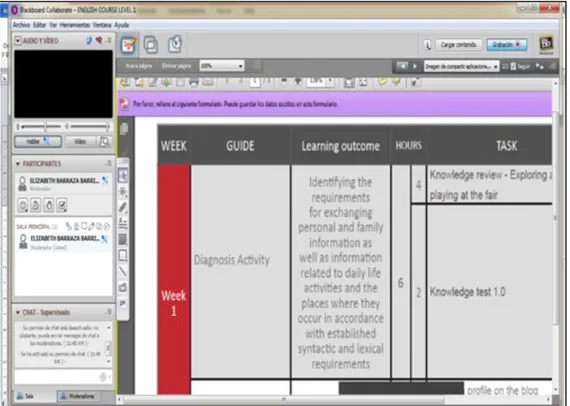
Figure 1-4. Presentation of the content of the course through Blackboard Collaborate. ... 15
Figure 1-5. Presentation of the timetable of the course through Blackboard Collaborate. ... 16
Chapter 1.! Introduction
The development of learning processes through virtual learning environments are one of the growing tendencies in education programs around the world. Without doubt, language learning is not the exception in this tendency, primarily the learning of English, as it is for economic and political reasons, an international language or lingua franca. In Colombia, there are academic institutions, which offer English virtual courses to people interested in getting new opportunities of working and to study.
This research project was carried out at SENA (Servicio Nacional de Aprendizaje), which is a public institution that offers free vocational education to Colombians, especially to those who do not have enough resources to attend private institutions. SENA was founded in 1957 to provide qualified workers who could respond to the needs of industry and commerce. Currently, SENA has 117 branches in the country. The branch in which this study was carried out is located in Bogotá, in Chapinero neighborhood, and it offers vocational programs such as, international commerce, marketing, logistics and telecommunications. In addition to its vocational programs, SENA has a virtual language program named English for All Colombians (Inglés para Todos los Colombianos), which offers English virtual courses through a platform named Blackboard. In total, there are nine levels of English virtual courses, from beginners to advanced, each lasting six weeks.
This study aim to characterize synchronic oral interaction in an EFL virtual learning environment and to examine students’ perceptions regarding to the use of computer
The study is organized in six chapters. In chapter one, I present the research problem along with the research questions, the research objectives and the justification; in chapter two, I explain the main theories and research studies that support my investigation; in chapter three, I present the research design, in which I describe the type of study, the context, the participants and their characteristics along with the instruments I used to collect my data; chapter four is composed by the instructional design, in which I explain the
principles that support my pedagogical implementation; in chapter five, I present the data analysis report and the findings of this investigation; finally in chapter six, I summarize the conclusions along with the pedagogical implications of this research project.
Statement of the problem
After analyzing the design and the content of SENA’s English virtual courses, I noticed that the development of oral language skills, which is very important in the language learning process, is limited to the repetition of words and/or sentences. No attention has been given to the development of conversation skills as will be demonstrated below.
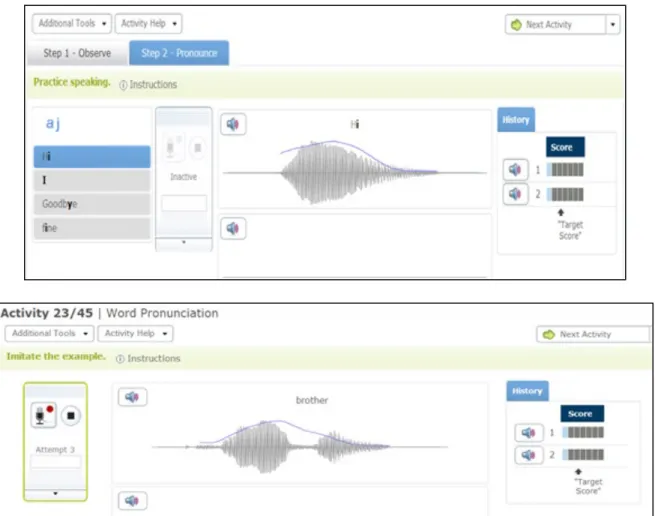
Figure 1-1 Operational system of the voice recognition software. Screen shot taken from the English learning software Tell Me More
Exercises like the ones shown in figure 1 and figure 1.1 are part of the mechanical practices that students have to perform to accomplish the oral component of the course.
Apart from the limitation in the development of oral skills, I have also observed that the interactional part of the English course is very restrictive. The activities do not allow students to interact with their classmates and/or work collaboratively. All the activities are focused on individual work, rather than on group work activities. Basically, as shown in the figures 1.2 and 1.3, students follow instructions, complete grammar and vocabulary
Figure 1. Operational system of the voice recognition software.
exercises, among other tasks. This illustrates that most of the activities are restricted to individual exercises without any interaction:
Figure 1-2. Activities implemented in the English virtual course. Screen shot taken from the English learning software: Tell me more
Figure 1-3. Activities implemented in the English virtual course. Screen shot taken from the English learning software: Tell me more As the previous figures showed the possibilities that students have to interact with their classmates and use the target language are limited.
One of the principles that guides my teaching practices is Vygotsky’s (1978) idea that knowledge and understanding are socially constructed through talk, activity, and interaction. I think students learn better, when they listen to each other, exchange knowledge, experiences and strategies that they bring to a learning situation. I consider fundamental to offer spaces in which students have opportunities to interact, share and construct knowledge among them. Based on this idea, I started looking for options that would allow me to offer spaces in which students could interact and practice the language orally.
Figure 1-4. Presentation of the content of the course through Blackboard Collaborate.
Screen shot taken from the English learning software: Tell me more
Figure 1-5. Presentation of the timetable of the course through Blackboard Collaborate.
Screen shot taken from the English learning software: Tell me more
The literature on virtual education has revealed that tools such as Blackboard Collaborate are fundamental to changing the dynamic of online education (Peterson, (Peterson, 2009); (Bahrani, 2011). These kinds of tools allow students to participate in interactive activities and work collaboratively with their classmates within online learning environments. Computer-mediated communication tools are interactive and collaborative. They provide opportunities to achieve diverse pedagogical goals. For instance, Ming and Murugaiah (2010) developed a pedagogic strategy in which they used a computer mediated communication tool to foster interactive and reflective learning among distance learners at a public university in Malaysia. They found that the students acquired significant cognitive benefits and valuable practical oral learning skills through the online discussions.
Hampel & Stickler (2012) found that the use of videoconferences in online language teaching stimulates the use of language orally and elicits new patterns of communication. In addition, Lee (2007) highlighted that the use of videoconferences supports collaborative learning and encourages the development of speaking skills by urging participants to take an active role in their own learning processes. There are two more cases where researchers have found that synchronic online interaction through videoconferences is effective in supporting collaborative learning and fostering L2 oral communication (Stewart, Harlow, & DeBacco, 2011); Ochoa, 2010)
Considering the amount of work that has been done using these kinds of computer mediated communication tools and that the evidence suggests that it certainly has a positive impact in the development of oral skills, my intention is to design a pedagogical
emerges as a response to the need to create and offer synchronic spaces for students to live and experience the language. It is intended to go beyond the mere mechanization of
linguistic structures, opening spaces that allow students to develop their oral skills while they interact and work collaboratively completing task-based learning activities.
Research questions and objectives
Taking into consideration the situation previously presented, this research aims to answer the following questions:
What characteristics of interaction emerge when implementing oral learning activities in an EFL virtual learning environment through a synchronic communication tool?
What are students’ views on their participation in synchronic oral learning activities within an EFL virtual learning environment?
Research objectives
−! Identify the main characteristics of the interaction carried out in an EFL virtual
learning environment that uses Blackboard collaborate.
−! Examine features of collaboration among students in an EFL virtual learning
environment.
−! Determine students’ perspectives and insights about their participation in oral learning activities in an EFL virtual learning environment.
Justification
students dialogue synchronically through the Blackboard Collaborate tool. Additionally, it aims to determine from student’s perspective on the impact of synchronous oral interaction, and how it affects their language learning development.
As previously stated, the use of virtual environments as a resource to develop learning processes has brought out the possibility to use computer-mediated
communication tools that have the potential to support students’ communication and interaction. Considering this, it is relevant to specify the characteristics of the interaction carried out through computer-mediated communication tools in order to establish the extent to which the development of task-based learning activities through synchronous interaction enriches the language learning process. In addition, this research study will be relevant to SENA, as it aims to use the information and communication technologies, particularly the
Blackboard Collaborate tool, to modify the way in which the English virtual courses have been conducted until now and change the passive role that teachers and students have played in the virtual courses so far. The idea is that both teacher and students participate actively in the course and they can perceive each other as real people in spite of the virtual environment in which the course is been carried out. The findings of this investigation could also contribute to improve the quality of the English virtual courses and hence, the language learning process of SENA’s students. Through this pedagogical implementation students may develop social and communicative strategies which will allow them to participate dynamically in their learning process and hence have a better performance in their professional development.
as the Colombian one. It is expected that teachers can also benefit from the results of this study as it could provide useful information on the use of the platform as well as on its possibilities to foster meaningful communication, especially for students who do not have access to face-to-face English sessions.
Chapter 2.! Literature Review
The main theories reviewed to support this research study are essentially about social constructivism and the fundamental role of social interaction in the learning processes. I also reviewed research studies, which showed the benefits of using synchronous communication tools to facilitate the interaction within virtual learning environments. In this chapter, I present the theoretical foundations that support this
proposal along with brief descriptions of research studies on the main constructs associated to interaction in online learning environment; I also present the concepts of task- based learning approach to support the pedagogical intervention I implemented in this research project.
Social constructivism
According to social constructivism theory, learning is an active, social and
Social constructivism theory understands learning as a cumulative process. According to Vygotsky’s Zone of Proximal Development, in the process of learning, a student goes through four stages. First, the learner in order to complete a particular task needs support from a more competent individual. This stage is defined as other-regulation. Progressively, the student is able to work on his own, and complete the task without support, thus reaching the stage of self-regulation (Bransford, Brown, & Cocking, 2000)
The stage of assisted performance precedes that of unassisted, independent acting is the crucial point in the socio-cultural conception of learning. In language learning, one of the ways in which such assistance can be provided is by means of scaffolding. (Vygotsky 1978, cited in Raymond, (2000)) defined scaffolding instruction as the role of teachers and others in supporting the learner’s development and providing support structures to get to that next stage or level. An important aspect of scaffolding instruction is that the scaffolds are transitory. As the learner’s abilities increase, the scaffolding provided by the more knowledgeable other is gradually removed. Finally the learner is able to complete the task or master the concepts independently (Chang, Chen, & Sung, 2002).
According to Hartman (2002), the main goal of the educator when using the scaffolding, teaching strategy is for the student to become an independent and self-regulating learner and problem solver. As the student’s knowledge and learning competency improves, the educator progressively reduces the supports provided
questioning or insist on accuracy until the student is able to provide a correct response (Olson & Platt, 2000).
One of the main advantages of scaffolding is that it engages the students. The student does not quietly listen to information presented. Instead, through teacher prompting the learner builds on prior knowledge and forms new knowledge. In working with students who have low self-esteem and learning difficulties, it provides an opportunity to give positive feedback which motivate students to learn (Hartman, 2002)
Interaction
The Common European Framework of Reference for Languages (Council of Europe, 2004) defines interaction as follows:
In interaction, at least two individuals participate in an oral and/ or written exchange in which production and reception alternate and may in fact overlap in oral communication. Not only two interlocutors may be speaking and yet listening to each other simultaneously. Even where turn taking is strictly respected, the listener is generally already forecasting the remainder of the speaker’s message and preparing a response. Learning to interact thus involves more than listening to receive and to produce utterances. (p.14)
Communicative competence theories highlight the importance of interaction as human beings use language in several contexts to negotiate meaning, or simply stated, to get one idea out of your head and into the head of another person and vice versa (Brown, 1994). According to Ellis (1990), interaction is meaning-focused and carried out to facilitate the exchange of information and prevent communication breakdowns. However, classroom interaction is of a particular essence and a range of functions, including formal instruction, whole-class and task management and development of group cohesion. Hence, it involves everything communicative happening in the classroom. Ellis defines classroom interaction as: not only to those exchanges involving authentic communication but to every oral exchange that occurs in the classroom, including those that arise in the course of formal drilling…” (Ellis, Instructed second language acquisition: learning in the classroom, 1990, p. 12)
As it will be shown in the data analysis chapter the interaction that came out during the pedagogical implementation involved questions, negotiation of meaning, expression of opinions, comments and requirements that were fundamental to develop students´ language skills and to help them to advance and participate actively in their learning process.
According to Robinson (1994), there are two types of classroom interaction: non-verbal interaction and non-verbal interaction. The first is associated with behavioral responses in the classroom. This means that students interact through their behaviors such as head nods, hand raises, body gestures, and eye contact. In contrast, the second kind of
interaction consists of written and oral interaction. Written interaction is the style of interaction in which students write out their ideas or thoughts. In other words, they interact with others through written words, documents and so forth. On the other hand, oral
asking questions, making comments, and taking part in discussions. It is precisely this one the kind of interaction which is the focus of this research project.
Angelo (1993) points out that classroom interaction include teacher-student and student-student interaction. These two kinds of interaction arose during the pedagogical implementation, especially students –students’ interaction. Students participated in the online interaction, working together, exchanging knowledge, helping and encouraging each other and using communicative strategies that allowed them accomplished the assigned task and developed their social skills.
Teacher–Student Interaction
This kind of interaction takes place between the teacher and the class, small groups, or individuals in the class. In the classroom, the teacher often asks questions to students, which they answer, and vice versa. Questioning is the strategy that the teacher uses in direct interaction with the students. According to Corey (1940) as cited by Hargie et al., (1981)), the teacher asking questions is a fundamental and important means of classroom
interaction. It is considered one of the teacher’s initiating activities and facilitates students’ language acquisition by asking questions and initiating responses from students.
Questioning is one of the elementary strategies through which the teacher encourages student thinking and learning.
impact questions for communicating and learning in the classroom, and find ways to improve the use of questions by themselves and by their students. The purpose of
pedagogical questions is to stimulate, transfer and guide reflection processes of the students and help them to recall what they have learnt.
Long et al. (1984) states that questioning stimulates the teacher-learner interaction and ensures that all students participate in their learning. Long and Sato (1983) propose two questioning techniques for the teacher in EFL classrooms: referential and display questions. Display questions are those for which the teacher previously knows the answers and
requires students to display knowledge. This kind of question is asked for comprehension checks, confirmation checks or clarification requests. With display questions, not only does the teacher know the correct answers, but students have also more possibilities to know them. Display questions are used in EFL classrooms to foster practice in the target language and to increase students’ participation in the form of natural conversation.
On the other hand, referential questions are those in which the teacher does not already know the answers. Hence, it has greater potential to generate social discourse. With the purpose for communicating rather than testing the students’ knowledge, these kinds of questions are used when the teacher’s purpose is to develop students’ speaking skills and to create a social-like environment in the classroom (Brock, 1986). Consequently, when these types of questions are asked, learners are expected to give interpretations and opinions, so they will have authentic communicative purposes. Referential questions demand extended and complex answers. These kinds of questions are mostly used in high proficient language classroom.
beginners, to get interested because these questions require short answers and contain small pieces of information such as parts of speech, word stress, intonation, antonyms and
synonyms, word pronunciation and meaning. Display questions require short or even one-word answers and are less likely to get learners to produce large amounts of speech. These kinds of questions abounded in the interaction carried out in this research project. As it can be seen in the transcriptions of the online sessions, the majority of questions that students posed during the pedagogical implementation attempted to accomplish comprehension checks, confirmation checks or clarification requests. The aim was always to foster interaction and encourage the practice of the target language.
Student-Student Interaction
Student-student interaction takes place among groups of students. In this type of interaction, the teacher plays a role as a monitor and learners are the main participants. Researchers (Gillies, (2006)2006; Storch, 2001) state that practice is the most effective strategy to develop collaboration and social skills when applied to small groups or peers rather than with the teacher or in a whole class setting.
Harmer (2001) suggests that pair work increases the amount of talking time available to every student in the classroom. It allows learners to work and interact
state that students express broader range of language functions in group work than in class-wide work with a teacher.
Furthermore, Doughty and Pica (1986) point out that in-group work activities it is more possible to lead to negotiation of meaning and collaboration than in interaction with the teacher. Wegerif et al (1999) define the conditions required for collaborative interaction as follows: (1) all information is shared; (2) the group seeks to reach agreement; (3) the group takes responsibility for decisions; (4) reasons are expected; (5) challenges are expected; (6) alternatives are discussed before a decision is taken; and (7) all in the group are encouraged to speak by the other group members. (p.5)
All these conditions were offered during the online interaction carried out in this research project. The students had the opportunity to share information, construct
knowledge, interact and work together to achieve the same goal, working collaboratively and developing social skills.
Interaction through computer-mediated communication tools
Wagner (1994) defines interaction in a distance education context as “reciprocal events that require at least two objects and two actions. Interactions occur when these objects and events mutually influence one another” (p. 8). Additionally, Siemens (2005) states that interaction in virtual learning environments is a process that happens between the learner and the learning environment (the tutor, the students, and learning content) in which the learner takes a more active role. Likewise, Palloff and Pratt (1999) point out that
among the previous three points of view is that all of them mention the reciprocal exchange between two subjects and the important role that environment plays in those exchanges. Interaction in virtual learning environments is possible through computer-mediated communication tools such as blogs, wikis, forums, instant messenger, electronic white board, and web-based real-time audio and video conferencing, which offer conditions for people to interact regardless of where they are physically located. In virtual learning environments, there are two types of interactions: asynchronous and synchronous. In asynchronous interaction, participants do not communicate with others in real time, for example, in contexts such as virtual forums and e-mail. On the other hand, synchronous interaction occurs in real time, similar to face-to-face conversations, in which interlocutors can expect immediate responses from one another (Murray, 2004)
The use of synchronous communication tools as a mean to promote interaction has been the focus of several research studies in the language-learning field. Hampel and Stickler (2012) carried out an action research study in which they showed the benefits of using an application that combines audio, video and text chat for negotiating meaning, and emphasized the socio-affective advantages, specifically for distance learning contexts. In their study, they focused on discourse functions, and reported that during the synchronous multimodal interaction, the most predominant characteristics were social conversations (greetings and farewells), management of technology, negotiating meaning (related to the task) to reach mutual understanding during the interaction, off-task conversation among students, and teacher feedback.
comfortable in applying their skills, more confident in what they had learned, and more inspired to make global, cross-cultural connections. Moreover, they remarked that providing authentic interaction could move learners from a state of passivity to active highly motivated learning. Lee (2007) also carried out a research which reveals that videoconferencing is a useful technological tool to provide opportunities for students to develop communicative language skills through audio and visual interaction in real time. The findings of the study show that during the computer-mediated interaction, students co-construct meaning and develop communicative language skills. The study also reveals that the spoken interaction gave the students the opportunity to socially engage in negotiation of meaning using the target language.
Researchers such as Maushak and Ou (2007) and Stewart et al (2011) state that the implementation of synchronous interaction through videoconferences allows dynamic collaborative work among students. Videoconferencing is also recognized as an effective tool in online learning environments, making possible conversations among students and teachers in real time, without physically being together in the same place; additionally, Maor and Volet (2007) state that online discussions through videoconferences contribute to improving speaking skills, as well as to the quality of learning in virtual learning environments.
a group of 14 undergraduate EFL students handle their target language while interact through a synchronous computer mediated communication tool; he found that synchronous interaction is helpful for students in creating a sense of belonging in a social learning community. According to his findings, the interaction in the virtual learning environment was characterized by the use of strategies, which promoted the creation and maintenance of a collaborative environment, the development of the target language and a supportive atmosphere. Likewise, Ryle and Cumming (2007) conducted a research study in which they aimed to find out the effective strategies to form a successful online learning community; they found that synchronous online communication is a fundamental element to promote interaction and collaboration. According to their findings, the collaboration came out when students interact, encourage and facilitate each other’s efforts to reach the group’s goals. Their study also revealed that synchronous interaction enables deeper learning through discourse and helps with retention issues by increasing motivation and reducing feelings of isolation.
Carreño (2014) carried out a research study in a private university in Bogotá (Colombia) which aimed to explore the collaborative practices of a group of intermediate level students, and the way in which students’ interactions in a virtual forum contribute to the establishment of a learning community. The findings of the study revealed that that as students participated in collaborative tasks, they gradually strength their relationships and their sense of belonging to the group. Additionally the study showed that as interaction and exchanges became more productive and enriching, the goals proposed were more
elaborated and students were aware that listening to others and taking into account what others thought had as crucial components of a collective knowledge construction process. Romaña (2015) also conducted an investigation in a Colombian university with adult students, in which he presents the results of a research project on the teaching, and learning English with synchronous computer mediated communication tools. The study concluded that the online synchronic communication helped the students to practice their oral language skills and at the same time expand their social relationships not only with their classmates but also with other people they knew from diverse contexts. The study also revealed that students seemed to use the language as a means of constructing their social networks.
As it can be observed, these studies demonstrated that the use of computer mediated communication tools makes possible the development of social interaction in online
and offer to the students the opportunity to engage in meaning negotiation using the target language. All these studies support my proposal about the benefits of using synchronous communication tools as a way to promote interaction and develop oral language skills.
Oral interaction
Kellal (2006) points out that a person is different from members of other species because it interacts, i.e. because it is related to other members of its species through oral verbal interactions. To speak is to interact, i.e. oral verbal interaction is the fundamental reality of language. Along any communicative exchange, the different participants or interacting exerts on each other a network of mutual influences: talk is to exchange and change by exchanging. These mutual influences are diverse and variable according to the type of interaction.
According to the common European Framework of Reference (2001), oral
interaction is defined as the skill in which the language user acts alternately as speaker and listener with one or more partners to jointly build a conversation through the negotiation of meanings according to the principle of cooperation. Thus, the activities of oral interaction such as conversation or interview, must involve a process of two-way communication that is not just the sum of expression more understanding. As Hernandez (2007) states,
interaction occurs "when the student talks taking into account what has already been said, and this can be seen in the form of beginning his shift of word". (p.613)
At least two individuals participate in the interaction, in an oral or written exchange in which the expression and understanding alternate and may indeed overlap in oral
already predicting the rest of the message of the speaker and preparing a response. Learn to interact, therefore, involves more than learning to understand and produce spoken
expressions. Generally, great importance is attributed to interaction in the use and the learning of the language given its central role in the communication. (Martínez, 2007)
However, to ensure a communicative exchange, it is not enough with two speakers or more to speak alternately (Kellal, 2006). In addition, have to speak, i.e. it is essential that both engage in the exchange and causing signs of this commitment, by resorting to various procedures for interlocutory validation such as greetings, presentations, and other rituals. However, interlocutory validation is carried out mostly with media more
inconspicuous but fundamental. In addition, the psychosocial aspects of those who participate in the interaction are selected, are activated and are interpreted in the concrete course of exchange. The way as people “start” interacting, the roles or roles who choose, the position taken with respect to the situation in which are found and how will playing the positions of others, are crucial to the initiation and development of face-to-face interactions.
Collaboration in online learning environments
According to Dillenbourg (1999), collaboration is a situation in which students work together to achieve a goal. Pallof and Pratt (2005) point out that collaboration is fundamental for any course that bases its theoretical foundation in constructivism learning theory. Collaboration in a constructivism classroom generates not only personal meaning making on the part of the individual student, but also creates a space wherein social
collaborative processes promote initiative, creativity, critical-thinking skills, and dialogue on the part of the students. In addition, Pallof and Pratt (1999) indicate that collaboration in online learning environments assists with deeper levels of knowledge generation, addresses all learning styles, addresses issues of culture and allows students to create a shared goal for learning and forms the foundation of a learning community.
In online environments, collaboration can be seen as the significant element of the learning experience. Everything that students engage in online, from participation on a discussion board to working in small groups, can be viewed as collaboration (Palloff & Pratt, 1999). By learning together in a collaborative learning environment, students have the opportunity to enhance and extend their knowledge, examine new ideas and receive critical and helpful feedback. According to Preece (2000), collaboration forms the foundation of an online learning community; it brings students together to support the learning of each member of the group while promoting creativity and critical thinking. Palloff and Pratt (1999) proposed the model illustrated in the following figure, in which they state that online collaboration is built around the notions of social presence,
Figure 2-1. Model of online collaboration
Pallof, R. and Pratt, K. (2005). Collaborating online: Learning together in community. San Francisco, CA: Jossey-Bass.
It is important to mention that teachers are fundamental in the development of a collaborative learning environment. According to Srinivas (2011), teachers are an essential part of that collaborative process. This process occurs in several ways, from the way in which the teacher sets phases of collaborative activities to the way activities are evaluated. Palloff and Pratt (1999) also assert that collaborative activities require that teachers
empower students to take responsibility on the construction of their own knowledge.
Social presence in online learning environments
reaction of being connected by computer mediated communication to another person. Likewise, Picciano (2002) defined social presence as student’s perceptions of being in and belonging to an online course.
dimensions -social context, online communication and interactivity- were evident during the students’ interaction carried out in this research project.
Chapter 3.! Research Design
Taking into consideration that this research study aims to identify the main characteristics of synchronic interaction within an EFL virtual learning environment, and know students’ view in regards to online synchronic interaction. It was fundamental to select a suitable research methodology that allowed me answer the proposed research questions.
This chapter is organized in six sections, in which I explain the methodology, the context, the characteristics of the participants, the ethical issues, the researcher role, along with the description of the data collection instruments and their corresponding validation.
Type of Study
I define this research as a qualitative grounded theory study that used a descriptive and interpretative perspective to identify the main characteristics of synchronic online interaction and to describe students’ views on regards to their participation in the online interaction. According to Charmaz (2006) grounded theory consists of systematic and flexible guidelines for collecting and analyzing qualitative data to construct theories from the data. Therefore, the data shape the foundation of the theory and the analysis of the data generates the concepts.
analyzing data allowed me identify, describe and characterize the oral interaction carried out in online sessions.
According to Glaser and Strauss (1967), the final product of a grounded theory study is an integrated and comprehensive grounded theory that explains a process or scheme associated with a phenomenon. In this case, grounded theory method was the fundamental to characterize the online interaction as well as describe students’ view in regards to online synchronic interaction.
Context
This research study was carried out at SENA (Servicio Nacional de Aprendizaje), it is a public institution founded in 1957, whose main objective is to provide free vocational education to Colombians, especially those who do not have the resources to attend private institutions. The mission of SENA is to offer integral and professional education in order to prepare Colombians to work in activities that contribute to the social, economic and
technological development of the country. In its mission, SENA projects itself as an institution able to make important contribution to increase Colombia’s competitiveness.
SENA has 117 learning centers distributed in all departments of Colombia. The learning center where this research project was implemented is named Centro de Gestión de Mercados Logística y Tecnologías de la Información, it is located in the Chapinero neighborhood and it offers vocational education programs such as logistic, international business, marketing and ICTS to around 1,200 students, in the morning and afternoon shifts.
delivered online. The courses are developed in a virtual platform named Blackboard and through a software named “Tell me more”. In total, there are nine levels of English virtual courses, from beginners to advanced, and each level lasts for six weeks.
Participants
The participants of this research project were a group of 12 students composed by 8 girls and 4 boys who were enrolled in the elementary English virtual course. They were from different places in Colombia (Bogotá, Bucaramanga, Santa Marta, Tolima and Cali). Their ages range from 17 to 22 years old. All of them were studying at SENA, in vocational programs such as International Business, Marketing and Logistic.
These participants were selected after considering typical case sampling (Patton, 2002). This strategy involves selecting participants who exhibit typical, or average,
characteristics of the group being studied. The purpose of using typical cases is not to make generalized statements about the experiences of all participants, but to be illustrative rather than definitive (Patton, 2002).
Ethical issues
students signed up the consent form as an approval of their free and voluntary participation in the research study.
Role of the researcher
Taking into account that I participated in the online sessions, my role as researcher was participant-observer. My participation was mostly in the two first online sessions, once students were familiar with the technological tool and with the dynamic of the learning activities, I concentrated my attention on observe and register actions that called my attention and that I considered could enrich my data.
In regards to participant-observer role, Breen (2007) states that the main
characteristic of this kind of role is that researcher is the main data collection instrument. Besides that, he/she collects data by participating in the life of those under study while observing them, having a better understanding of their culture without altering the course of their natural interaction, being able to produce a significant description of the phenomenon in its natural setting.
Data collection instruments
synchronic online interaction were audio recordings transcripts of the conversations developed in the online sessions, field notes and semi-structured interviews which are described in the following sections.
Audio recordings
According to Burns (2010) audio recordings are a technique used to capture in detail accurate information on patterns of interactional behavior, which may not be evident during the class. This instrument was used to record students’ interaction in the online sessions. Through the audio recordings, I obtained the richest amount of data since I recorded all the sessions, and I had the opportunity to listen students’ interaction over and over again to get information that allowed me characterize students’ online interaction. The audio recordings were transcript into an excel document (see appendix C) which allowed me organized and coded the data to identify the main patterns and commonalities of the interaction. Schegloff (1992) points out that transcripts are a rich source to collect
qualitative data since they allow the data to be shown as it happens in situations. Likewise Silverman (2001) states that transcriptions offer a number of advantages, such as:
−! They are public records available to the scientific community.
−! With transcripts it is possible to do a detailed analysis observing sequences of
utterances.
−! They offer the opportunity of having the talk-in-interaction in the moment of
Field notes
Freeman (1998) points out that field notes are description of accounts of observed events, including non-verbal information, physical setting, group structures and interactions between participants. This instrument was used during the online session. While students interacted, I registered actions that called my attention, wrote reflections and comments. Field notes allowed me write my thoughts about the synchronic online interaction which enriched my data. The field notes were taken in a word document and were labeled with the number and the date of the session (See appendix D)
Semi-structured interviews
In order to know students’ views in regards to their participation in the synchronic online interaction, I implemented semi-structured interviews, which gave me the
opportunity to talk to the students about the impact that the online interaction had caused on them. Burns (1999) points out that “This type of interview has the advantage of enabling the interviewee’s as well as the interviewer’s perspective to inform the research agenda, and therefore gives rise to a more equal balance in the research relationship. In addition, it allows for the emergence of themes and topics which may not have been anticipated when the investigation began” p. 120. An example of this instrument is presented in appendix E.
Validation of the data collection instruments
These data collection instruments were validated by piloting the instruments with the students. According to (Bannan-Ritland, 2003) piloting is the process during which the conceptual ideas for an intervention are formulated while the intervention phase is
online sessions in which I noticed that students could interact through Blackboard
Chapter 4.! Instructional Design
In this chapter, I describe the pedagogical intervention through which I obtained significant data about the characteristics of synchronic interaction within an EFL virtual learning environment. As I mention in the previous chapters, the main problem presented in English virtual courses at SENA, is that students do not have the opportunity to interact with their classmates and develop their oral language skills. The pedagogical intervention presented below was planned to offer an English virtual course in which students have not only the opportunity to develop reading, writing, listening and pronunciation skills, but also the opportunity to use the target language orally, interact one another, co-construct
knowledge, develop communication strategies, social competences, and teamwork skills. In the following sections, I present the theoretical foundations that support my visions of curriculum, language, learning and technology along with the description of the learning activities I implemented to foster oral interaction among students.
Vision of curriculum
carried out in a specific learning context. The learning activities implemented in this pedagogical intervention were design based on constructivism learning theory principles.
The main principles of the constructivist learning theory can be summarized as follows:
Learning is a social activity that takes place in an environment that stresses the role of the cultural context (Vygotsky, 1978); learning is an active process in which learners construct new ideas or concepts based upon their current and past knowledge, instructors should serve as facilitators and encourage students to discover new knowledge by
themselves (Bruner, 1986). Learners build their own knowledge through experience, but not through given information (Piaget, 1973). The fundamental idea of constructivism learning theory is that learners construct their own knowledge through experience and we teachers act as facilitators in this process.
Considering the theoretical principles of constructivism and the main goal of my pedagogical intervention, in this research project, curriculum is seen as praxis. According to Grundy (1987), in this approach the curriculum itself is developed through the dynamic interaction of action and reflection. That is, the curriculum is not simply a set of plans to be implemented, but rather is constituted through an active process in which planning, acting and evaluating are all reciprocally related and integrated into the process. The central concern of the curriculum as praxis is learning, not teaching, consequently, the focus of the learning process is on the students and the social practices they are involved in. It is
Vision of Language
Having a clear definition about what language is, what theories of learning underpin our teaching practices, and what our vision of language is, allows language teachers to organize the way we are going to teach and establish the goals we want to achieve.
Connected to the vision of curriculum, the vision of language in this research project is language as tool for interaction and communication. As Nunan (1999) states, language is a mean of expression, through language humans beings interact, express opinions, culture, perspectives, points of view, etc. It is only through language that we can communicate with each other, share our ideas, narrate our experiences, express our wishes, needs, solve difficult problems, and communicate in the workplace and across cultures with people from other countries. The learning activities carried out in the pedagogical
implementation were designed to encourage students´ oral interaction and to give them the opportunity to use the target language to share experiences, express their emotions, describe situations, work in group, make decisions, etc.
Vision of learning
The perspective of learning in this research project is learning as a process that occurs through interaction. Ellis (1999) points out that interaction is a mutual activity, which requires at least the participation of two persons and which causes reciprocal effect. Second language development and interaction processes are closely associated. According to Ellis (1999), second language learners are more likely to achieve better levels of
words, when students are engage in interaction, they have the opportunity to develop the language skills.
In this research project, the learning activities were designed to encourage students’ interaction. During the development of the activities, students had the opportunity to work in tasks in which they had to join efforts to achieve a common goal. Students participated actively, using the target language to communicate and helping each other to transmit the correct message and reach the proposed goal of the task.
Vision of technology
Bonk & Kim (Extending Sociocultural Theory to Adult Learning, 1998) states that technology and computer mediated communication tools connects speakers from different backgrounds and enables them to expand social interaction and language learning. In this research project, technology is seen as medium to encourage interaction and develop language learning. According to Kern (2006) technology as medium provides sites for interpersonal communication, multimedia publication, distance learning, community participation and identity formation. During the development of the learning activities, technology was used as medium through which students used the target language to communicate, interact and exchange knowledge to achieve a common goal.
Task-based learning approach
The pedagogical implementation of this research project was designed based on task-based learning approach. The term task has been defined by many scholars, for instance, Long defines task as "a piece of work undertaken for oneself or for others, freely or for some reward. Therefore, examples of tasks include painting a fence, dressing a child, filling out a form, buying a pair of shoes.... In other words, by 'task' is meant the hundred and one things people do in everyday life, at work, at play, and in between" P. 74. On the other hand, Willis (1996) defines task as an activity where the target language is used by the learner for a communicative purpose in order to accomplish an outcome. Likewise, Nunan (2006) states that task is a piece of classroom work that involves students in comprehending, producing or interacting in the target language while their attention is focused on mobilizing their grammatical knowledge to express meaning, and in which the intention is to convey meaning rather than to manipulate form.
According to Willis (1996), tasks should aim to motivate the students and engage their attention. Tasks have to present a suitable degree of intellectual and linguistic challenge, and promote students’ language development as efficiently as possible. It is fundamental that tasks expose students to spontaneous language in appropriate
circumstances, and allow them to use it.
Willis (1996) proposed six types of tasks:
1.! Listing: These tasks tend to generate a lot of talk since students explain their ideas. The processes involved are brainstorming and fact-finding. The expected outcome could be a completed list or draft mind map.
categorizing, ranking and classifying. The expected outcome is a set of information ordered and sorted according to specific criteria.
3.! Comparing: This type of task develops students' ability of differentiation. The activities are focused on comparing information to identify common points and/or differences. The processes involved are matching, finding similarities, or
differences. The expected outcome would be appropriately matched or assembled items.
4.! Problem solving: These tasks help to foster students' reasoning and decision-making abilities. The activities could include examining real situations, reasoning, and decision-making. The outcome involves solutions to the problem, which can then be evaluated.
5.! Sharing personal experiences: These tasks encourage students to talk more freely about themselves and exchange their experiences. The resulting interaction is closer to casual social conversations. The activities could be narrating, describing,
exploring and explaining attitudes, opinions, and reactions.
6.! Creative tasks: These kinds of tasks involve pair or group of students in freer creative work. They can involve combination of task types: listing, ordering and sorting, comparing and problem solving. The expected outcome is a final product that can be appreciated by a wider audience. Students cultivate their comprehensive problem-solving abilities as well as their reasoning and analyzing abilities.
sorting tasks, students worked in groups to organize information and then present a final work. According to Willis (1996), doing tasks in pairs or in groups has advantages such as:
•! It gives students confidence to try out whatever language they know, or think they know, in the relative privacy of a pair or small group, without fear of being wrong or of being corrected in front of the class.
•! It gives students experience of spontaneous interaction, which involves composing what they want to say in real time, formulating phrases and units of meaning, while listening to what is being said.
•! It gives learners a chance to benefit from noticing how others express similar meanings.
•! It gives all students chances to practice negotiating turns to speak, initiating as well as responding to questions and reacting to others’ contributions.
•! It engages students in using language purposefully and co-operatively,
concentrating on building meaning, and not just using the language for display purposes. •! It makes students participate in a complete interaction, not just one-off sentences. Negotiating openings and closings, new stages or changes of direction are their responsibility. It is likely that discourse skills such these can only be acquired through interaction.
•! It helps students gradually gain confidence as they realize they can rely on co-operation with their partners to achieve the goals of the tasks mainly through the use of the target language.
When students work in groups, the main function of the teacher in task-based learning lessons is to facilitate the conditions for the development of the tasks. Lea et al. (2003) points out that when students work in groups, the teacher is generally a facilitator, always keeping the key conditions for learning in mind. Facilitating learning involves balancing the amount of exposure and use of language, and ensuring they are both of suitable quality. Nunan (2006) points out that pedagogically, task-based language teaching has reinforced the following principles and practices:
•! A needs-based approach to content selection.
•! An emphasis on learning to communicate through interaction in the target language. •! The introduction of authentic texts into the learning situation.
•! The provision of opportunities for learners to focus, not only on language, but also on the learning process itself.
•! An enhancement of the learner’s own personal experiences as important contributing elements to classroom learning.
•! The linking of classroom language learning with language use outside the classroom.
(2006), the framework consists of three phases: pre-task, task cycle and language focus. Nunan (1991) defines five characteristics of task-based learning approach:
1.! An emphasis on learning to communicate through interaction in the target language. 2.! The introduction of authentic materials into the learning situation.
3.! The provision of opportunities for learners to focus not only on language, but also on the learning process itself.
4.! An enhancement of the learner’s own personal experience es as important contributing elements to classroom learning.
5.! An attempt to link classroom, language learning with language activation outside the classroom.
All these characteristics were taking into consideration when I was designing the tasks, I always kept in my mind that students had to work on tasks that encouraged them to interact with their classmates and use the target language orally.
Activities
The pedagogical implementation was organized in six learning tasks which had the following pedagogical objectives:
•! To promote interaction through oral learning activities
•! To develop students’ abilities to work in group within an EFL virtual learning environment.
•! To offer spaces where students can interact and develop their oral language skills.
students had to develop grammar, listening, vocabulary and pronunciation exercises in the software offered by SENA’s English virtual course which were fundamental to prepare the students to participate in the videoconferences. As I knew, the content of the course and the topics students had studied during the week. The videoconferences always started with exercises or games that helped students to recall and reinforce what they had learn in the software, once students developed these exercises and clarify their doubts, I explained the task they have to accomplish and gave them useful tips to develop the task successfully. (See the tasks in appendix F)
The types of tasks that students developed were:
1.! Sharing personal experiences: Narrating, describing, exploring and explaining attitudes, opinions, reactions.
2.! Ordering and sorting: Information ordered and sorted according to a specific criteria 3.! Creative task: Creation of a product according to be exposed in public.
Table 1. Pedagogical implementation
Pedagogical Implementation
Date Topics Types of tasks Phases Learning objectives Activities
First week Let’s know each other Sharing personal experiences Pre-task
To know your classmates To identify similarities and differences in the group.
To express likes & dislikes.
Participation in the forum: Students participate in the forum: Introducing yourself
Task
Introduce yourself: Students share information about themselves through the game: talk about yourself. Students choose a card-number with a question and ask one of his/her partner the question.
Language focus
Greetings & introductions Wh questions
Likes & dislikes
Second week Routine Daily and sorting Ordering
Pre-task
To talk about daily routine and free time activities
To ask and answer simple questions.
To use time expressions and frequency adverbs.
Daily routine vocabulary: Students participate in a game in which they review and practice time expressions and frequency adverbs
Task
John’s daily routine: students work in group and exchange information about John has to organize John’s daily routine.
Language focus
Simple present
Wh questions
Pedagogical Implementation Third week Sharing my own daily routine Creative task/ Sharing personal experiences Pre-task
To use simple present to talk about everyday activities.
Creating a voki: Students create a voki in which they talk about their daily routine and post it in the forum.
Listening to my classmates’ voki: Students listen to three of the voki posted in the forum and prepare questions about their classmates’ daily routine.
Task
Talking about my daily routine: Students ask questions to their classmates about his/her daily routine.
Students talk about the common things they found in their daily routines.
Language focus
Simple present Wh questions Frequency adverbs
Fourth week members Family and sorting Ordering
Pre-task
To use vocabulary relates to family members and relationships among them.
Family tree vocabulary: Students complete crosswords about family members in these websites: http://cerquella.com/bilingual/deploy/Unit2/voc abulary_1.html http://www.wikisaber.es/Contenidos/LObjects/ bb1/index.html?b Task
Pedagogical Implementation Language
focus
Family members Jobs and occupations
Fifth week My family tree Creative task/Sharing personal experiences Pre-task
To use vocabulary relates to family members. To use vocabulary relates jobs and occupations.
Family tree: Students create their own family tree and post it in the family information forum.
Students read the family tree of their classmates and prepare questions that they would like to know about their classmates’ family.
Task
Sharing my family tree: Students talk about their family tree and their partners ask questions about the members of the family.
Language focus
Family members Jobs and occupations
Sixth week Talking about Friends
Sharing personal experiences
Pre-task
To use appearance and personality adjectives to describe people.
Participation in the forum: Students participate in the forum: talking about my best friend Watching the video: Students watch this video: How can you be a good friend?
https://www.youtube.com/watch?v=38Sxy5hre j0
Task
Talking about my best friend: Students share their opinion about the video
Students discuss about the characteristics a good friend should have
Chapter 5.! Data Analysis and findings
Along this chapter, I am going to present in detail the process I followed to reduce and to
code the data. I also present the categories and subcategories that arose during the data analysis
procedure along with the findings and conclusions revealed in the analysis of the data.
Data analysis approach
As I mentioned in the former chapters the main objectives of this research are to
characterize the oral interaction in an EFL virtual learning environment and also present the
impact of the oral interaction on the students. Therefore, the sources of data of this research study
were audio recordings extracted from oral learning activities and semi- structured interviews in
which students expressed their opinion about their experience in the synchronous virtual
interaction. It was also taken as a source of data some field notes that I took while the
synchronous virtual interaction was carried out.
The data analysis of this study was based on the grounded theory approach. According to
Charmaz (2006), the first step in grounded theory is the data collection. In this case, the data was
collected from the transcription of audio recordings, students’ interviews and the fieldnotes I
took during the synchronous oral interaction through which, I start the first step of the analysis of
the data: initial coding, in this step, I labeled the data to make comparison, define ideas and
Data analysis procedure
The structure of the data analysis was constructed by gathering audio recording, obtained
from the interactions carried out during nine on-line sessions, a couple of interviews I made to
the in which they expressed their opinion about their participations in the synchronous online
interaction and some field notes I took while students participated in the online interaction. All
online interactions were transcribed into Excel files (see appendix G) and turns were numbered
creating nine documents that I labeled with the number of the session and the name of the task
(e.g. session No 1/ Introducing yourself). The interviews were carried out through Blackboard
Collaborate and organized in Word files (see appendix E) the questions of the interview were
made in Spanish to facilitate students’ answers. The field notes were taken in Word files which I
labeled with the number, the name and the date of the online session (see appendix D). I saved
and organized all these files in a folder, and then I started to analyze it.
The first step to start analyzing the data was open coding. As Creswell (1998) states, open
coding consists on labeling concepts, defining and developing categories based on their
properties and dimensions. In this first step, I went through the data, marked sections in which I
identified patterns of interaction and coded it with words that reflected the actions carried out
during the online interaction.
After completing open coding, I continue with the second step, which was axial coding.
The purposes of axial coding are to sort, synthesize, and organize large amounts of data and
reassembling them in new ways after open coding (Creswell, 1998). In this step, I analyzed the
codes to find connections and grouped them into categories and sub categories based on their