Department of Computer Architecture
Technical University of Catalonia (UPC)
Doctoral Thesis
An Ontology-Based Approach Toward
the Configuration of Heterogeneous
Network Devices
Author:
Anny Martinez
Advisor:
Dr. Marcelo Yannuzzi Co-advisor:
Dr. Xavi Masip-Bruin
A THESIS PRESENTED TO THE TECHNICAL UNIVERSITY OF CATALONIA IN FULFILLMENT OF THE REQUIREMENTS FOR THE
DEGREE OF
DOCTOR IN COMPUTER SCIENCE
-“Intelligence” is the art of good
TECHNICAL UNIVERSITY OF CATALONIA (UPC)
Abstract
Department of Computer Architecture
Doctor in Computer Science
An Ontology-Based Approach Toward the Configuration of Heterogeneous
Network Devices
by Anny Martinez
Keywords: Networking;Semantics;Network Management;Future Internet; Ontology-Based Information Extraction; Device Configuration;Command Line Interface; LISP;
Addressing Scheme.
Despite the numerous efforts of standardization, semantic issues remain in effect in many subfields of networking. The inability to exchange data unambiguously between informa-tion systems and human resources is an issue that hinders technology implementainforma-tion, semantic interoperability, service deployment, network management, technology migra-tion, among many others. In this thesis, we will approach the semantic issues in two critical subfields of networking, namely, network configuration management and network addressing architectures. The fact that makes the study in these areas rather appealing is that in both scenarios semantic issues have been around from the very early days of networking. However, as networks continue to grow in size and complexity current practices are becoming neither scalable nor practical.
typically provide a help feature which is in turn an useful source of knowledge to enable semantic interpretation of a vendor’s configuration space. The large amount of infor-mation a network administrator must learn and manage makes Inforinfor-mation Extraction (IE) and other forms of natural language analysis of the Artificial Intelligence (AI) field key enablers for the network device configuration space. This thesis presents the design and implementation specification of the first Ontology-Based Information Extraction (OBIE) System from the CLI of network devices for the automation and abstraction of device configurations.
Acknowledgements
This thesis would not have been possible without the inspiration and support of many people. I would like to begin by expressing my sincere gratitude to my Ph.D. advisors Dr. Marcelo Yannuzzi and Dr. Xavier Masip-Bruin for their valuable guidance, support and above all for becoming referents of professionalism in this journey. Their dedication, invaluable discussions and timely advices certainly made this work possible.
Furthermore, I would like to extend my appreciation to Rafael Mulero for his commit-ment and collaboration in the implecommit-mentation and demonstration of the work herein developed. Many thanks to my colleagues at CRAAX and NetIT with whom I had the pleasure of working over these past years. Moreover, I would like to thank the administrative staff at UPC for their support during the course of my thesis.
Additionally, I would like to acknowledge Dr. Jorge L´opez-De Vergara for his valuable insights on my work and support in joint papers.
Sincere thanks are extended to the members of my thesis committee Dr. Marilet De Andrade and Dr. Mario Nemirovsky, as well as internal reviewers, for their valuable time and dedication to the evaluation of my work.
In the course of my thesis several organizations have been key supporters of my work. I would like to thank the TARIFA Project (i2CAT) and the European Commission through the ONE Project in the FP7 Program under contract number INFSO-ICT-258300. I would also like to acknowledge the Spanish Ministry of Science and Innovation under contracts TEC2009-07041 and TEC2012-34682, the Catalan Government under contract 2009 SGR1508 and the Technical University of Catalonia (UPC).
Finally, a very special thanks to my parents, my sister and most importantly, to Lorenzo for all their inspiring words, for believing in me even in the most difficult moments, and for always encouraging me to go a step further. Words cannot ever express my gratitude for their support and trust.
Anny Mart´ınez, March 2015
Contents
Abstract iv
Acknowledgements vi
List of Figures xii
List of Tables xiv
Abbreviations xvi
I INTRODUCTION 1
1 Summary and Road Map 3
1.1 Motivations . . . 3
1.1.1 Semantic Issues in Configuration Management . . . 4
1.1.2 Semantic Issues in Addressing Schemes . . . 5
1.2 Thesis Contributions . . . 7
1.2.1 Semantic-Based Configuration Management . . . 7
1.2.2 Semantic-Based Addressing . . . 8
1.3 Supporting Publications . . . 9
1.4 Thesis Structure . . . 11
II BACKGROUND 15 2 Carrier-Grade Network Management 17 2.1 Interoperability Issues in Multi-Layer and Multi-Vendor Carrier-Grade Networks . . . 17
2.1.1 Multi-Layer Interoperability (MLI) Issues . . . 18
2.1.2 Multi-Vendor Interoperability (MVI) Issues . . . 22
2.1.2.1 The Semantic Problem in Network Device Configuration Management . . . 25
2.2 Traditional Strategies to face the MLI and MVI Problem in Network Management . . . 28
2.2.1 In-House Developments . . . 29
2.2.2 IP over DWDM. . . 29
Contents ix
2.2.3 Control Plane Technologies . . . 30
2.3 New Trends in Multi-Layer Network Management and Challenges Faced . 31 2.3.1 MPLS-Transport Profile (MPLS-TP). . . 32
2.3.2 Integrated Multi-Layer Network Management Systems . . . 34
2.3.3 Hybrid Node . . . 35
2.4 The Role of Third Party Management Subsystems in Multi-Layer Networks 36 2.4.1 Path Computation Element (PCE) . . . 36
2.4.2 Virtual Network Topology Manager (VNTM) . . . 40
2.5 Future Trends in Multi-Layer Network Management . . . 43
2.5.1 Coordination vs. Integration . . . 43
2.5.2 Enabling Technologies for Coordinated Approaches . . . 45
2.5.3 Software Defined Networks (SDN) . . . 50
2.6 Summary of Lessons Learned . . . 54
3 Internet Addressing 59 3.1 IP-Based Addressing Scheme . . . 59
3.1.1 Limitations . . . 59
3.2 ID/Locator Split Architectures (ILSA) . . . 61
3.3 Locator/Identifier Separation Protocol (LISP) . . . 63
3.3.1 Overview . . . 63
4 Semantics and Information Extraction 66 4.1 Traditional Information Extraction (IE) . . . 66
4.2 Ontologies and Information Extraction . . . 67
4.3 Semantic Measure of Relatedness and Similarity . . . 68
III SEMANTIC-BASED CONFIGURATION MANAGEMENT 71 5 Ontology-Based Information Extraction System from the CLI 73 5.1 The Rationale supporting the OBIE System . . . 74
5.2 Related Work . . . 75
5.2.1 The alternative path of Industry and Standardization Bodies to-ward seamless network device configuration . . . 75
5.2.2 A semantic-based path toward seamless configuration management 78 5.3 The OBIE System Architecture . . . 81
5.3.1 System Modules . . . 82
5.3.2 The Domain Ontology for Network Device Configuration (ONDC) 86 6 Information Extraction Algorithm 89 6.1 The general notion of a two-fold stage algorithm . . . 89
6.2 Stage I: Resource Identification . . . 90
6.2.1 Data Pre-Processor. . . 90
6.2.2 Lexical Matching . . . 91
6.2.3 Clustering and Inference . . . 93
6.2.4 Semantic Relatedness . . . 95
6.3 Stage II: Operation Identification . . . 100
Contents x
6.4 Extending the OBIE System to other Application Domains . . . 100
7 Command Retrieval Algorithm 103 8 Experiments and System Validation 104 8.1 Experimental Framework . . . 104
8.1.1 Evaluation Metrics . . . 105
8.2 Performance Results . . . 106
8.2.1 CLIE Algorithm . . . 106
8.2.2 D-CLIE Algorithm . . . 108
8.2.3 D-CLIE* Algorithm . . . 109
8.2.4 Tsatsaronis et al. Relatedness Metric . . . 110
8.3 Enhancing CLIs with Meta-Data . . . 112
8.3.1 OPENER . . . 112
8.3.1.1 In a Nutshell . . . 112
8.3.1.2 The Configurable Helps Use Case . . . 113
8.3.2 Results . . . 115
IV SEMANTIC-BASED ADDRESSING 117 9 The Current Internet 119 9.1 Background . . . 119
9.1.1 Internet Routing Scalability Problems . . . 119
9.1.2 Dynamics of the BGP Control Plane Information . . . 120
9.1.3 Multihoming Sites . . . 121
9.1.4 Semantic Overloading . . . 121
9.2 The LISP Redundancy Protocol (LRP) . . . 121
9.2.1 Inter-domain link failure in an Ingress Tunnel Router (ITR) . . . . 123
9.2.2 Ingress Tunnel Router (ITR) failure or unexpected shutdown . . . 123
9.2.3 Ingress Tunnel Router (ITR) Mapping Miss . . . 124
10 The Future Internet 126 10.1 A Service-Centric Internet Architecture: TARIFA. . . 127
10.2 A Service-Centric Addressing Scheme . . . 128
10.2.1 Overview . . . 128
10.2.2 Naming Space . . . 128
10.2.3 Location Space . . . 130
10.2.4 ID/LOC Mapping . . . 131
10.2.5 Experiments and Performance Evaluation . . . 132
V CONCLUSIONS AND FUTURE WORK 137 11 Conclusions 139 12 Future Work 141 12.1 Semantic-Based Network Configuration Management . . . 141
Contents xi
A European Projects 145
A.1 ONE in a Nutshell . . . 145 A.2 TARIFA in a Nutshell . . . 146
List of Figures
2.1 Typical failure scenarios in multi-layer networks. . . 18
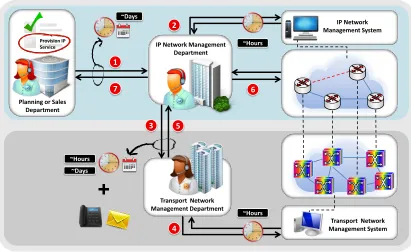
2.2 Current workflow for provisioning an IP service involving configurations at both layers. . . 20
2.3 An example of network management interoperability issues involving cross-layer resource provisioning of an IP link between routers A and B of a carrier network. . . 21
2.4 CLI commands for the configuration of an access control list on two dif-ferent router vendors. . . 26
2.5 Facing the interoperability issues with in-house developments. . . 30
2.6 An example showing one possible PCE/VNTM configuration. . . 41
2.7 Another example of a PCE/VNTM configuration with a VNTM entity embedded within the NMS. . . 42
2.8 Integrated vs. coordinated approaches for multi-layer network management. 43 2.9 MTOSI reference architecture example (adapted from “Framework DDP BA TMF518 FMW Version 1.2” [1]). . . 48
2.10 Mediator architecture for SDN-based management. . . 52
2.11 Network management trend: SDN over MTOSI.. . . 52
3.1 Taxonomy of ILSA schemes. . . 62
3.2 LISP Fundamentals - Example [2]. . . 65
4.1 General Architecture of an OBIE System [3]. . . 69
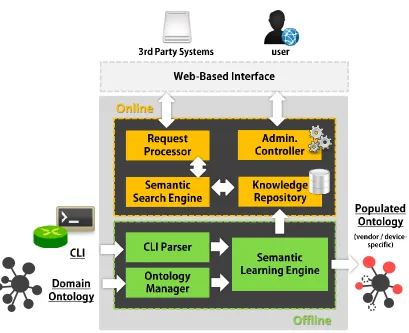
5.1 General Architecture of the OBIE System for the device configuration domain. . . 82
5.2 Typical CLI structure. . . 83
5.3 XML File Example. . . 84
5.4 Semantic Learning Engine Internal Architecture. . . 85
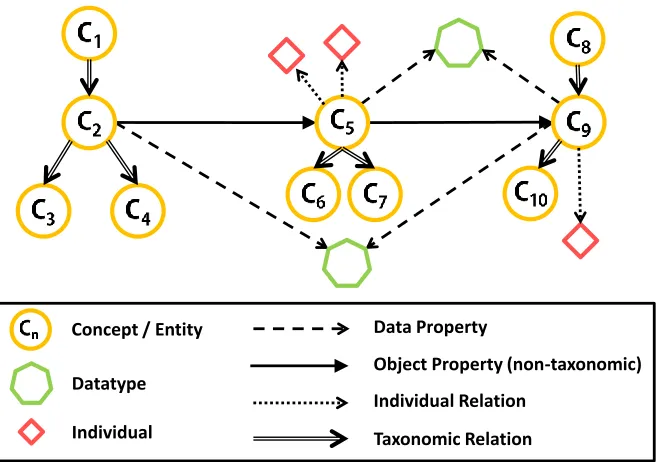
5.5 Layered structure of the domain ontology. . . 87
5.6 Ontology modeled as a semantic graph. . . 88
6.1 Configuration Knowledge Extraction Algorithm (Stage I and II). . . 90
6.2 Example of a router configuration statement. . . 90
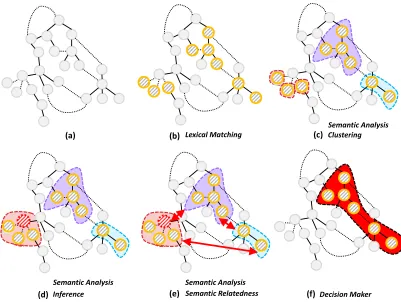
6.3 Semantic Analysis: Step by Step Diagram.. . . 93
6.4 General Notion of the Clustering Stage. . . 94
6.5 General Notion of the Inference Stage. . . 95
6.6 The rationale behind the quantification of the Semantic Relatedness. . . . 96
6.7 An example of Semantic Relatedness.. . . 97
6.8 An example Decision Maker Stage. . . 99
List of Figures xiii
8.1 An SDN application on OPENER for endowing routers with configurable
CLI helps. . . 114
9.1 Master/Slave Model HSRP vs. LRP. . . 122
9.2 LRP: Inter-domain link failure. . . 124
9.3 ITR Failure. . . 125
9.4 ITR has no mapping from EID-to-RLOC. . . 125
10.1 TID format and size for Service-Centric architecture. . . 129
10.2 TLOC format and size for Service-Centric architecture. . . 131
10.3 Mapping Space Dimension as a function of percentage of requests and total number of chord nodes in the system for Rchordnode = 108 [pps]. . 135
10.4 Mapping Space Dimension as a function of percentage of requests and total number of chord nodes in the system for Rchordnode = 30.1012[pps].136 10.5 Storage Space Requirements as a function of the total number of chord nodes in the system for different incoming requests, for first scenario Rchordnode = 108 [pps]. . . 136
A.1 Functionality of the ONE middle-box in a Multi-Layer and Multi-Vendor Scenario.. . . 147
List of Tables
2.1 Multi-layer Path Computation Algorithms. . . 39 2.2 Advantages and drawbacks of integrated vs. coordinated multi-layer
net-work management solutions. . . 45 2.3 Obstacles and pitfalls, paths toward solutions, and lessons learned for
managing multi-layer and multi-vendor settings. . . 58
8.1 Performance Results OBIE Process (Augmented and Traditional): CLIE
Algorithm.. . . 107 8.2 Performance Results OBIE Process: D-CLIE Algorithm.. . . 110 8.3 Performance Results OBIE Process: D-CLIE* Algorithm. . . . 110 8.4 Performance Results OBIE Process: Tsatsaronis et al. Relatedness Measure112 8.5 New commands on a Quagga’s CLI with OPENER implementation. . . . 115 8.6 Performance Results OBIE Process: CLIE Algorithm + Augmented CLIs.116
Abbreviations
AI ArtificialIntelligence
API ApplicationProgramming Interface
AS AutonomousSystem
BDM BalancedDistance Metric
BRPC BackwardRecursive PathComputation
BFS Breadth First Search
CAPEX CAPitalEXpenditures
CC ContinuityCheck
CCV CommonCommunication Vehicle
CLI CommandLineInterface
CMOS Complementary Metal-OxideSemiconductor
CV ConnectivityVerification
DHT DistributedHashTable
DNS DomainNameSystem
DWDM DenseWavelength-DivisionMultiplexing
ECMP Equal Cost Multi-Path
EICTA EuropeanInformation &Ccommunications Technology Industry Association
EID Endpoint IDentifier
ETR EgressTunnel Router
FI Future Internet
GATE GeneralArquitecture forText Engineering
GMPLS Generalized Multi-ProtocolLabelSwitching
HSRP HotStandbyRouting Protocol
ICT Information andCommunicationsTechnology
IE InformationExtraction
IETF InternetEngineeringTask Force
IoT Internetof Things
IP InternetProtocol
IP-NMS IP NetworkManagementSystem
IPoDWDM IP overDWDM
ISP InternetService Provider
ITR IngressTunnelRouter
ITU InternationalTelecommunicationUnion
LCS LeastCommonSubsumer
LISP Locator/IdentifierSeparationProtocol
LMP LinkManagement Protocol
LRP LISPRedundancy Protocol
LSP LabelSwitched Path
MIB Management InformationBase
MLI Multi-LayerInteroperability
MLNM Multi-LayerNetwork Management
MPLS Multi-ProtocolLabelSwitching
MPLS-TP Multi-ProtocolLabelSwitching TransportProfile
MPTCP Multi-PathTransportControl Protocol
MTNM Multi-Technology NetworkManagement
MTOSI Multi-Technology OperationSystemsInterface
MVI Multi-VendorInteroperability
NFV NetworkFunctions Virtualization
NLP NaturalLanguageProcessing
NMS NetworkManagementSystem
OAM&P Operation,Administration, Maintenance andProvisioning
OBIE Ontology-Based InformationExtraction
OEO Optical-Electrical-Optical
OF-CONFIG OpenFlow CONFIGuration Protocol
OIF OpticalInternetworking Forum
OPEX OPerational EXpenditures
OS OperatingSystem
OSS OperationsSupport System
OTN OpticalTransportNetwork
OVS OpenVSwitch
OWL Web OntologyLanguage
OXC OpticalCross-Connect
PA Provider-Aggregatable
PCC PathComputationClient
PCE PathComputationElement
PCEP PathComputationElement Protocol
PHP Penultimate Hop Popping
PI Provider-Independent
POS Part Of Speach
QoS Qualityof Service
RDF Resource Description Framework
RFC Request ForComments
RLOC Routing LOCator
ROADM Reconfigurable OpticalAdd DropMultiplexers
SDH SynchronousDigital Hierarchy
SDN Software DefinedNetworking
SLA Service Level Agreement
SNMP SimpleNetworkManagementProtocol
SONET SynchronousOptical Networking
SPF ShortestPathFirst
SWRL SemanticWeb RuleLanguage
TE Traffic Engineering
TED Traffic EngineeringDatabase
TMF Tele ManagementForum
T-MPLS Transport Multi-ProtocolLabelSwitching
T-NMS Transport Network Management System
UNI User-NetworkInterface
URL UniformResource Locator
UUID UniversallyUniqueIDentifier
VNTM VirtualNetworkTopology Manager
WSON WavelengthSwitchedOptical Networks
XML EXtensibleMarkup Language
To my parents and Lorenzo. . .
Part I
INTRODUCTION
Chapter 1
Summary and Road Map
This introductory chapter provides a thorough description of the motivations and main contributions of this thesis. The rest of the chapter enumerates supporting publications to journals and conferences and concludes with an overview of the structure of this manuscript.
1.1
Motivations
The exponential growth of both Internet traffic and digital information (big data) give no respite to the telecommunications industry and is visibly shortening the life-cycle of the technologies used for core networking. To cope with the traffic demand, the industry has primarily focused on the evolution of the data and control planes, and has rapidly made progress in both subjects. Accordingly, a variety of protocols and technologies have emerged at a very rapid pace, bringing along a complex set of new terminologies and conceptualizations, which in turn raise serious semantic issues.
The semantic problems in the field of networking are related to the inability to under-stand and unambiguously interpret the meaning of domain concepts and protocol units for different purposes, for instance, implementation, management, information model-ing, service deployment, etc. Overall, these problems derive either from: (i) the lack of absolute standards for the performance of network functions—which in turn lead to the use of proprietary solutions that typically raise serious interoperability issues in the con-text of heterogeneous environments; (ii) the lack of formal means for the specification of network protocols—a fact which unquestionably leads to ambiguity and incomplete-ness of conceptualizations; (iii) the intrinsic nature of an ever-changing domain flood of terminologies—wherein dissimilar concepts are often used interchangeably to refer
to the same semantics; or (iv) the semantic overload of domain entities (e.g., Internet Protocol - IP address semantic overload [4]).
The semantic issues in the field of networking have been around for long time. Con-sider for instance, the challenges faced for the implementation and conformance testing due to the loose specification of networking protocols in public Request for Comments’ (RFCs) [5]; or the multiplicity of network management information languages and their unique level of semantic expressiveness [6]. In this thesis, we will approach the semantic problems in two critical areas of networking, namely, the configuration management of network devices and the semantic overload of the current IP addressing architecture—an issue with serious implications in the scalability of the global routing system.
1.1.1 Semantic Issues in Configuration Management
One of the most complex and essential tasks in network management is network device configuration. Overall, it encompasses a large number of functions, which include, setting routing protocols, security filters, interface parameters, forwarding rules, Quality of Service (QoS) policies, etc. Despite numerous efforts, network administrators continue to rely on Command-Line Interfaces (CLIs) as the preferred means for configuring their network devices [7]. This is typically the case of administrators operating in Internet Service Providers (ISPs), data centers, corporate networks, public administrations, etc. Due to the lack of standards, administrators must deal with the complexities associated with this practice, since CLIs are generally both, device and vendor-specific, meaning that, commands syntax and semantics are specific to each configuration environment. This is further exacerbated by the heterogeneity of today’s network infrastructures, as networks are typically composed of devices from different vendors (i.e., multi-vendor networks). Accordingly, network administrators are forced to gain specialized expertise for a wide range of devices, and to continuously keep knowledge and skills up to date as new features, operating system upgrades, or technologies appear in the routing market. In light of all this, device misconfiguration is a common event, which often leads to serious service disruptions [8].
Unfortunately, NETCONF itself has not gained momentum yet, so it remains to be seen if it will finally become the protocol of choice [11]. In this regard, industry sources state that nearly 95% of network devices are still configured through proprietary Command-Line Interfaces (CLIs) [12]. The reason for this is the lack of comprehensive and widely accepted data models. This gap was recently filled by YANG [13], a candidate lan-guage for developing standardized data models for NETCONF. Still, four years after its standardization, only few YANG data models have found broad acceptance [14]. More-over, several industrial initiatives have also attempted to provide uniform configuration means, by developing and maintaining dedicated software agents. Unfortunately, this approach demands serious development efforts, which are neither scalable nor easy to maintain under the dynamics of current networking environments.
In light of this, there is an imminent need to explore other fields that can help pave the way toward seamless network device configuration. We strongly believe that a solution which can assist in the configuration of network devices, is less a matter of develop-ing new ways of managdevelop-ing the network or adddevelop-ing new protocols that boost complexity, but more of adapting well-known techniques that have proven to be absolute trends in the configuration field from the earliest days of networking. For this reason, legacy Command-Line Interfaces can help bridge the configuration gap. One of the most rele-vant features of CLIs is the availability of textual resources for supporting and guiding network administrators on its use. The exploitation of knowledge from natural language has been the focus of several research initiatives in numerous domains wherein text-based resources are largely available, but—to the best of our knowledge—researchers in the networking field have not explored this path yet. Accordingly, there is still a long research path to follow in order to significantly benefit from the field of Information Extraction, ontologies and semantic technologies for networking.
1.1.2 Semantic Issues in Addressing Schemes
In the past years, early forms of ubiquitous communication have arisen and become more evident as society expectations toward technology increases. These facts seem to prove that current Internet will naturally evolve to an Internet of Things (IoT) as a new dynamic communication scheme where objects, services, spaces and even people may be given a unique number, almost avoiding barriers for recognizing, locating, addressing, reaching, controlling and enjoying almost anything via the Internet, through a mix of heterogeneous wired and wireless network infrastructures.
over mobility and scalability concerns. In such a scheme, whenever a host changes of network provider its IP address changes as well—changing not only the network pro-viding host access, but also the host identifier. For the case of upper layer applications wherein IP addresses are fixed for a given host (i.e., hard-coded) this represents a severe mobility constraint. In a world where a huge volume of objects can be uniquely identified and where objects capacity of mobility increases over time, decoupling of naming and location seems to be one of the first steps toward the evolution to an IoT. Several fac-tors, such as the rise of multihoming sites, semantic overloading of IP addresses, among others, affect the scalability of the global Internet Routing Table, thus, fueling its size and dynamics. In an effort to solve these issues, academics have followed one of two research lines.
On the one hand, a first research line pursuits evolutionary solutions for the current In-ternet. In this line, several proposals aimed to decouple the semantics of the addressing scheme have emerged, namely, SHIM6 [15], Six/One Router [16], HIP [17], Multi-Path TCP [18], GSE [19], and LISP [20]. The latter is one of the strongest solutions so far as already considered by the Internet Engineering Task Force (IETF). The LISP concept is based on the notion of decoupling the dual semantics of host identification (Endpoint identifier, EID) and location (Routing locator, RLOC). The scaling benefits arise be-cause EID addresses are not routable through the Internet—i.e., EIDs are only locally distributed. Accordingly, efficient aggregation of the RLOC address space is achieved, significantly reducing the overall routing load throughout the network. Authors in [21] show that the size of the global routing table can be reduced by roughly two orders of magnitude with LISP. While from a deployment perspective LISP is a non-disruptive approach, the existing control plane proposals have some major challenges. These chal-lenges lie in the fact that because EIDs are not globally routable through the Internet, a mapping system is required between EIDs and RLOCs. LISP does not specify a mandatory mapping system, and as a consequence, different proposals can be found in the recent literature, such as ALT [22], NERD [23] or Map Server [24]. Most recently, authors in [25] introduce a new LISP control plane which is based on the idea of re-trieving EID-to-RLOC mappings within the Domain Name System (DNS) Resolution time. Despite the fact that the proposed control plane presents an improvement—with respect to existing state-of-the-art solutions—over three relevant aspects, namely, (i)
unfortunately, it may bring scalability problems since each router must store mapping information that rarely needs to use, thus increasing the latency time to find a map-ping. This new issue directly affects the memory component within the router, which is currently a bottleneck in the computer system compared with processing capacity, thus, hindering the adoption of the LISP architecture.
On the other hand, a second line of research targets clean slate solutions as an alter-native to the current Internet. As a result of these efforts, research projects such as GENI [26], 4WARD [27], DONA [28], TRILOGY [29], PSIRP [30] and TARIFA [31] have been developed to introduce novel network architectures. Overall, because these initiatives represent radical shifts of the networking paradigm new addressing schemes are further required. In the context of TARIFA—one of the most recent initiatives toward developing a clean slate Future Internet (FI)—the networking paradigm is no longer based on the interconnection of machines/interfaces but on the interconnection of services/resources—an approach that seems to meet much better both present and future user requirements. Accordingly, a new addressing scheme is required to make possible the shift to a service-oriented paradigm. This scheme must be able to overcome the semantic limitations already described for the current addressing architecture, and thus, need to be based on the locator/identifier separation paradigm.
1.2
Thesis Contributions
The work in this thesis contributes to enable semantic interoperability in two critical areas of networking, namely, network device configuration management and Internet addressing. To this end, our first contribution is to examine in detail why—despite numerous efforts—semantics remains an unsolved issue in the scope of both areas of networking. Taking into consideration the divergent nature of the semantic issues in each area, we approach these problems from different perspectives. Accordingly, specific thesis contributions derive for each area. These can be further divided into two major categories which are described next.
1.2.1 Semantic-Based Configuration Management
(i.e., multi-vendor) network infrastructures. The main contributions of this thesis in this regard are the following:
• We propose an Ontology-Based Information Extraction (OBIE) System which ex-ploits natural language resources natively provided by network device vendors’ in their CLIs and contribute to an architecture that can easily be generalized to other domains—wherein configuration of devices is also based on CLIs.
• We introduce a novel Information Extraction (IE) algorithm for CLI-based en-vironments which enables automated and highly precise interpretation of CLIs configuration capabilities.
• We prove that the proposed IE algorithm yields the best system’s performance by comparing against variations of our own algorithm and other authors’ approaches and that our system performs in an efficient and highly accurate way.
• We formalize the semantics of the switch/router configuration domain using the Web Ontology Language (OWL) in an effort to become a conceptual reference model of the configuration knowledge in networking.
• We develop an online algorithm for seamless retrieval of configuration commands. The proposed algorithm enables outsourcing of configurations to third-party sys-tems.
• We validate the proposed system in the context of a programmable and coordinated Network Management System (NMS) for multi-layer networks.
• We show that the large amount of information already available in the form of natural language text in CLIs is a valuable resource for automating and abstracting device configurations.
Overall—from a practical perspective—our solution provides network administrators with a simple tool which entirely automates and abstracts the complexities and hetero-geneity of underlying configuration environments in order to reduce time and effort in the configuration of network devices. With such a tool, network administrators will no longer have to read hundreds of manuals, and configuration scripts can be automatically updated for new devices or system upgrades.
1.2.2 Semantic-Based Addressing
LISP Control Plane protocol capable of managing reachability and reliability issues in a LISP-compliant architecture, in an effort to improve technology feasibility. On the other hand, we propose a new addressing scheme for TARIFA—a clean slate service-oriented network architecture—based on the notion of semantic decoupling of host location and identification. Accordingly, the main contributions of this thesis are the following:
• We explore the major limitations of the current Internet addressing architecture and review recent literature in order to examine current strategies in the field. Furthermore, we identify open issues that hinder the deployment and adoption of these approaches.
• We propose a taxonomy for Identifier/Locator Split Architectures (ILSA).
• We propose the LISP Redundancy Protocol (LRP) as an approach for managing reachability and reliability issues of typical LISP architectures.
• We develop a novel addressing scheme for a service-oriented Future Internet archi-tecture.
• We evaluate the performance of the proposed addressing scheme by developing an analytical methodology aimed to estimate the reachability and limitations of the identification space.
1.3
Supporting Publications
Journals and Book Chapters
1. A. Mart´ınez, M. Yannuzzi, J.E. L´opez de Vergara, R. Serral-Graci`a, W. Ram´ırez. “Applying Information Extraction for Abstracting and Automating CLI-Based Configuration of Network Devices in Heterogeneous Environments”, to be pub-lished in Artificial-Intelligence Applications in Information and Communication Technologies (AIAICT 2015), Springer-Verlag in “Studies in Computational Intel-ligence Series” ISSN: 1860-949X.
2. A. Mart´ınez, M. Yannuzzi, V. L´opez, D. L´opez, W. Ram´ırez, R. Serral-Graci`a, X. Masip-Bruin, M. Maciejewski, J. Altmann, “Network Management Challenges and Trends in Multi-Layer and Multi-Vendor Settings for Carrier-Grade Networks”, in
IEEE Communications Surveys and Tutorials, 2014.
K. Campowsky, G. Giammatteo, G. Aristomenopoulos, S. Papavassiliou, T. Kuczyn-ski, S. ZielinKuczyn-ski, J. M. Seigneur, C. Ballester Lafuente, J. Johansson, X. Masip-Bruin, M. Caria, J. R. Ribeiro Junior, E. Salageanu, and J. Latanicki., “TEFIS: A Single Access Point for Conducting Multifaceted Experiments on Heterogeneous Test Facilities”, in Elsevier Computer Networks, Volume 63, Pages 147–172, 22 April 2014.
4. W. Ram´ırez, X. Masip-Bruin, M. Yannuzzi, R. Serral-Graci`a,A. Mart´ınez, M. S. Siddiqui., “A survey and taxonomy of ID/Locator Split Architectures”, inElsevier Computer Networks, Volume 60, Pages 13-33, 26 February 2014.
5. R. Serral-Graci`a, M. Yannuzzi, E. Marin-Tordera,A. Mart´ınez, X. Masip-Bruin, “Metrics and QoE assessment in P2PTV applications”, inInt. J. Internet Protocol Technology, Vol. 7, No. 3, Pages 148-164, 2013.
Conferences and Workshops
1. A. Mart´ınez, M. Yannuzzi, J.E. L´opez de Vergara, R. Serral-Graci`a, W. Ram´ırez. “An Ontology-Based Information Extraction System for bridging the configuration gap in hybrid SDN environments”, to be presented at 14th IFIP/IEEE Interna-tional Symposium on Integrated Network Management (IM 2015), IFIP/IEEE IM 2015 Conference Proceedings and IEEE XploreR, Ottawa, Canada, May, 2015.
2. A. Mart´ınez, M. Yannuzzi, R. Serral-Graci`a and W. Ram´ırez, “Ontology-Based Information Extraction from the Configuration Command Line of Network Routers”, presented atSecond International Conference on Mining Intelligence and Knowl-edge Exploration (MIKE 2014), Lecture Notes in Artificial Intelligence (LNAI), Cork, Ireland, December, 2014.
3. W. Ram´ırez, X. Masip-Bruin, E. Marin-Tordera, M. Yannuzzi, A. Mart´ınez, S. S´anchez-L´opez, M.S. Siddiqui, and V. L´opez, “A Techno-Economic Study of Net-work Coding Protection Schemes”, presented atGlobecom2014 - Optical Networks and Systems Symposium (GC14 ONS), Austin, USA, December, 2014.
4. W. Ram´ırez, X. Masip-Bruin, E. Marin-Tordera, M. Yannuzzi, M.S. Siddiqui,A. Mart´ınez, and V. L´opez, “Improving Reliability in Multi-Layer Networks With Network Coding Protection”, presented at18th International Conference on Opti-cal Network Design and Modeling (ONDM 2014), Stockholm, Sweden, May 2014.
in10th International Conference on Design of Reliable Communication Networks
(DRCN 2014), Ghent, Belgium, April, 2014.
6. W. Ram´ırez, X. Masip-Bruin, E. Marin-Tordera, M. Yannuzzi, A. Mart´ınez, S. S´anchez-L´opez, and V. L´opez, “An Hybrid Prediction-based Routing Approach for Reducing Routing Inaccuracy in Optical Transport Networks”, in 19th European Conference on Networks And Optical Communications (NOC2014), Milan, Italy, June 2014.
7. R. Serral-Graci´a, A. Mart´ınez, E. Marin-Tordera, M. Yannuzzi, and X. Masip-Bruin, “Multi-Layer quality assessment framework for P2PTV applications,” pre-sented in SaCoNeT ICC, Ottawa, Canada, June 2012.
8. A. Mart´ınez, X. Masip-Bruin, W. Ram´ırez, R. Serral-Graci´a, E. Marin-Tordera, and M. Yannuzzi, “Toward a New Addressing Scheme for a Service-Centric Inter-net,” presented inSaCoNeT ICC, Ottawa, Canada, June 2012.
9. A. Mart´ınez, W. Ram´ırez, M. Germ´an, R. Serral-Graci´a, E. Mar´ın-Tordera, M. Yannuzzi, and X. Masip-Bruin, “An Approach to a Fault Tolerance LISP Archi-tecture,” in 9th International Conference on Wired/Wireless Internet Communi-cations, WWIC 2011, Vilanova i la Geltr´u, Spain, June 15-17, 2011.
Ongoing Publications
1. A. Mart´ınez, M. Yannuzzi, J.E. L´opez de Vergara, R. Serral-Graci`a, X. Masip-Bruin. “An Ontology-Based Information Extraction System for complementing network device configuration in the SDN future” (IM 2015 Invited Extension), to be submitted to IEEE Transactions on Network and Service Management (TNSM), April, 2015.
1.4
Thesis Structure
This thesis is structured in five main parts. Next, we provide a brief description of the content and topics discussed along each chapter.
PART I
INTRODUCTION
PART II
BACKGROUND
Chapter 2 examines in detail the interoperability challenges of managing multi-layer and multi-vendor carrier-grade networks, and review the current trends and recent standards in the area, with strong focus on industrial advances. We cover the Multi-Technology Operations System Interface (MTOSI) as well as OpenFlow, and analyze their potential impact and reach. We also discuss some of the reasons why relevant carrier-grade management proposals have not been able to fulfill the requirements of Internet Service Providers (ISPs), and identify a set of features that might help pave the way to market for new management products.
Chapter 3provides insights on the most important limitations of the current Internet addressing architecture, with main focus on the semantic overload of IP-based addresses. Moreover, we review existing proposals of ID/Locator Split Architectures (ILSAs) and delve into the Locator/Identifier Separation Protocol (LISP), in an effort to analyze its major limitations.
Chapter 4 provides a review of the fundamentals in the field of Ontologies and Infor-mation Extraction (IE) as potential enablers of semantic interoperability for domains where standards have failed to find path.
PART III
SEMANTIC-BASED CONFIGURATION MANAGEMENT
Chapter 5describes the Ontology-Based Information Extraction (OBIE) System from the Command-Line Interface (CLI) of network devices, by introducing the rationale supporting our system and then, describing the system’s architecture.
Chapter 6 provides a comprehensive description of the Information Extraction al-gorithm, in an effort to understand how we enable automated interpretation of CLIs configuration capabilities.
Chapter 7 describes the Command Retrieval algorithm which is responsible of per-forming the online functionality of our OBIE System.
PART IV
SEMANTIC-BASED ADDRESSING
Chapter 9describes the proposed LISP Redundancy Protocol (LRP)—a control plane protocol for the LISP architecture—aimed to provide reachability and reliability in sce-narios of failure.
Chapter 10 presents a novel addressing scheme for a service-oriented Future Internet Architecture. Moreover, we assess performance by estimating reachability and limita-tions of the identification space.
PART V
CONCLUSIONS AND FUTURE WORK
Chapter 11 summarizes the main conclusions of this thesis.
Part II
BACKGROUND
Chapter 2
Carrier-Grade Network
Management
This chapter aims to examine in detail the interoperability challenges of managing multi-layer and multi-vendor carrier grade networks, and review the current trends and recent standards in the area, with strong focus on industrial advances. We cover the Multi-Technology Operations System Interface (MTOSI) as well as OpenFlow, and analyze their potential impact and reach. We also discuss some of the reasons why relevant carrier-grade management proposals have not been able to fulfill the requirements of Internet Service Providers (ISPs), and identify a set of features that might help pave the way to market for new management products.
2.1
Interoperability Issues in Multi-Layer and Multi-Vendor
Carrier-Grade Networks
Network management has been the subject of study and one of the central targets of the telecommunications industry since the earliest days of networking. However, the overall management of multi-layer infrastructures still remains an open field for research, primarily because of the scarce interoperability between Network Management Systems (NMSs). In the context of multi-layer networks, management interoperability issues arise mainly due to the heterogeneity of technologies (i.e., IP and Optical) and the diversity of device manufacturers, coupled with the absence of standardized and broadly accepted mechanisms that enable both cross-layer and intra-layer communication of NMSs. A clear proof of this situation is the complexity of current Operations Support Systems (OSS). OSSs were originally conceived as the elements bridging business logic for
service provision and network management, but in practice they have had to incorporate several layers of “Umbrella NMSs” (as described later in section 2.2.1) to provide a minimum degree of workflow automation. Cutting down OSS complexity is among the most important efficiency objectives of practically all telecom operators.
The isolation between the IP and transport management ecosystems is exacerbated by the functional segmentation of standardization bodies, which are not necessarily working in the same direction. While, the Internet Engineering Task Force (IETF) is the orga-nization playing a critical role in the scope of IP-driven network management standards [32], the International Telecommunication Union (ITU) [33], the Optical Internetwork-ing Forum (OIF) [34], and the TeleManagement Forum (TMF) [35], are the most active organizations working toward the development of standards in the field of optical trans-port networks. In this section, we provide a detailed analysis on the Multi-Vendor Interoperability (MVI) and Multi-Layer Interoperability (MLI) issues for carrier-grade networks and outline the complexities that emerge as a result of the isolation of their management ecosystems.
2.1.1 Multi-Layer Interoperability (MLI) Issues
The MLI issues between the IP and transport NMSs arise primarily due to the devel-opment of systems targeting individual network layer functions in the Open Systems Interconnection (OSI) model. While the use of the OSI model has ensured that the technological diversity in lower layers does not affect the operation of the upper layers, the lack of mechanisms for enabling coordinated management between them has led to the replication of critical functions. Restoration mechanisms are a clear example of the redundancy produced by independent (i.e., per-layer) management functions in multi-layer settings, as they are featured by both multi-layers to restore traffic onto alternate paths in case of failure. Indeed, the scarce efficiency for protecting and recovering multi-layer net-works is the result of the absence of communication mechanisms between management ecosystems, which leads to the activation of restoration functions in individual layers
IP/MPLS Layer
Transport Layer
1
2
4
1
2
3
4
Trigger recovery at the Transport Layer Implies recovery at the IP/MPLS Layer
Requires coordinated recovery.
3
based on the utilization of static time thresholds. In typical deployments, transport network restoration is attempted first, and restoration at the IP level is usually delayed by a static time threshold, which can lead to significant losses in case that restoration in the transport network fails [36].
Let us consider the example shown in Fig. 2.1, which summarizes the possible failure scenarios in a multi-layer network. Link and node failures at the transport layer (denoted as (1), and (2), respectively) can be typically recovered by the optical network without manual intervention, provided that the spare resources and capacity are sufficient for that end. A failure of a router (3), on the other hand, can be recovered by the IP/Multi-Protocol Label Switching (MPLS) layer. However, whenever a failure occurs at the interconnect point (4)—i.e., when an inter-layer failure occurs—a coordinated strategy is required for safe and efficient recovery. It is worth mentioning that, currently, this coordination is not dynamically resolved; quite on the contrary, it is predefined and meticulously pre-configured during network planning cycles. Observe that for failures (3) and (4), if no backup router is available at the IP layer, the transport layer could reactively attempt to optically bypass the affected router. Unfortunately, the lack of cross-layer management mechanisms does not allow dynamic cross-layer recovery, which leads to an unnecessary duplication of resources and restoration mechanisms at both layers. Indeed, enabling communication between NMSs of different layers would derive in much more efficient restoration strategies, and could help alleviating in the future part of the duplicity in current carrier-grade protection schemes.
transport network (4). After the Transport Department has fulfilled the incoming re-quest, an acknowledgement is sent back to the IP Department (5). From this response, the IP Network Management Department completes the corresponding configurations of IP devices in their domains (6), and finally, notifies the completeness of the IP service request (7). As seen in Fig. 2.2, the manual coordination process is very slow, so even the simplest cross-layer operation, such as the establishment of a single IP link, can take hours or even days. As depicted in Fig. 2.3, in large carrier-grade networks routers A
and B may perfectly belong to different “IP management domains” (e.g., when router
A is supplied by router vendor VA and router B by vendor VB). Likewise, Fig. 2.3
also shows that, the lightpath required in the transport layer for supporting the IP link may also need to traverse different “Transport management domains” (e.g., from vendor
VX →VY →VZ).
In the scope of cross-layer operations for multi-layer networks, services that could be provisioned in a scale of minutes, currently range to the scale of days or weeks, a fact that beyond its technical and functional implications translates into higher operational expen-ditures (OPEX). Moreover, the configuration of fixed or dynamic policies for proactive cross-layer operations (e.g., for dynamic traffic management) are not openly supported
Planning or Sales Department
Provision IP Service
1
7
IP Network Management Department
2
~Days
~Hours
3 5
Transport Network Management Department
~Days ~Hours
4
~Hours
Transport Network Management System
IP Network Management System
[image:42.596.110.521.407.659.2]6
IP Network Management System (IP-NMS) / Operations Support System (OSS)
IP Layer
Router A
Router B
VX
VY
VA VB
Transport Network Management System (T-NMS) / Operations Support System
(OSS)
IP Network Management System (IP-NMS) / Operations Support System (OSS)
Transport Network Management System (T-NMS) / Operations Support System (OSS)
Transport Network Management System (T-NMS) / Operations Support System (OSS)
VZ Transport
Layer
Figure 2.3: An example of network management interoperability issues involving
cross-layer resource provisioning of an IP link between routers A and B of a carrier
network.
by current multi-layer settings1. Indeed, if more advanced cross-layer operations were developed, they could further contribute to make significant progress in aspects such as multi-layer recovery and self-healing. By self-healing we mean coordinated protection mechanisms that could provide network reliability and automated restoration actions to recover from unplanned failures. Moreover, another significant challenge is the au-tomatic discovery of interlayer connections, as for now network administrators rely on manually built topological databases. Finally, the advent of third party systems makes integration to multi-layer environments more important than ever, as current external tools could be combined to automatically interact with the multi-layer environment, so the latter can benefit from the services of external subsystems, such as multi-layer Path Computation Elements (PCE) [39], monitoring tools, accounting systems, etc.
Accordingly, the absence of standard management interfaces for inter-layer communi-cation not only results in duplicommuni-cation of network functions and lack of automation for cross-layer provisioning tasks, but also derives in slow provisioning timescales, lack of proactive policy-based and failure-related interactions, as well as limited integration of third party management subsystems [40].
Although several efforts are underway for overcoming the MLI issues described above, the overall progress is slow. Most of the solutions proposed thus far have not had enough echo among ISPs, so it is hard to assert that there is a clear trend toward tackling the MLI issues at a management level. In Sections III and IV, we will provide an analysis of the main limitations of current research trends, in order to set the ground for future research lines in the area.
1There are some proprietary solutions, but they are naturally constrained to single vendor settings,
2.1.2 Multi-Vendor Interoperability (MVI) Issues
Various bodies such as the International Telecommunication Union (ITU-T) and the Internet Engineering Task Force (IETF) are working toward developing standard speci-fications of control and data plane functions enabling interoperability between different vendors. However, in practice vendors compete with each other trying to gain higher market share by implementing specific non-standard functionalities in their equipment, a fact that unquestionably leads to customer lock-in. This in turn creates a buyers dependency on the seller. According to the report released by the market research firm
Infonetics Research in the second quarter of 2013 [41], Cisco had the highest market share for carrier router and switches, followed by Huawei who has gained the most mar-ket share over the past two years. Overall, Alcatel-Lucent, Cisco, Huawei and Juniper account for 90% of the market share, while the remaining 10% is split among several other equipment vendors.
The demand for new functionalities has led to vendor-interoperability requirements in the data as well as the control and management planes. A classical example of interop-erability challenges in the data-plane can be seen in the 100G optical solutions available in the market today. While standards propose the use of different configurations of sin-gle 100G or multiplexed 40G and 10G lightpaths using fixed spectrum slots of 50 GHz, vendors such as Ciena, have developed custom 100G optical solutions that employ larger spectrum slots to provide longer reach, but makes it limited in terms of interoperability with other vendors’ equipment.
MVI issues related to the management plane are primarily reflected as the lack of stan-dardized interfaces for communication between NMSs from different vendors within a single layer. Let us consider the following example to illustrate the MVI problem. As shown in Fig. 2.3, nowadays, when a service provider requires to configure a service spanning across different vendor (management) domains (e.g., between Ciena [VX] and
Huawei [VY] at the transport layer) the configuration process is done ad-hoc, mainly due
of different vendors. For instance, this case is well-known at ADVA Optical Network-ing, where the management interoperability issues with Nokia-compliant technology are tackled through ad hoc software developments.
Herein, we refer to the MVI problem in two dimensions, firstly the communication be-tween NMSs in a single network layer (i.e., within IP or within the Transport layer) and secondly, the communication between a NMS and multi-vendor devices (i.e., routers, Op-tical Cross Connects (OXCs) or any other network elements), for example, for performing configuration tasks. This dimension of the MVI problem has led to the development of standard open interfaces, thereby enabling hardware independency (e.g., OpenFlow)—a hot topic in the field which will be further discussed in Section2.5.
As for the first dimension of this problem, despite the numerous efforts for providing
multi-vendor support, at present many network management software solutions are con-strained to interoperate with other management systems, a problem which normally leads to high stresses in internal implementations and increased costs [42]. As men-tioned previously, proprietary network management protocols as well as vendor-specific management data representations are the hallmark of many manufacturers to distin-guish from other vendors. However, these business and market driven decisions result in serious interoperability limitations for managing heterogeneous networks. This problem goes beyond the scope of standard protocols for network management and steps into the field of device-vendors, many of which strongly reject the belief of being as good at managing the competition’s products as their own [43].
by vendors rather than by service providers, thus, it highlights the divergent interest of both parties. While operators target the interoperability in heterogeneous networks, manufacturers clearly target their own business interests.
Two technologies, the Network Configuration Protocol (NETCONF) [10] and the Multi-Technology Operations System Interface (MTOSI) [46] are positioned as promising tech-nologies for the IP and Transport Network Management ecosystems, respectively. On the one hand, NETCONF seems the expected standard for remote IP device configura-tion. This protocol aims to overcome the limitations of SNMP-based configurations as well as proprietary CLIs to reduce complexity and lower OPEX—according to industry sources network device configuration is actually the greatest contributor to OPEX [12]. NETCONF is defined for providing configuration state maintenance, concurrent con-figuration, transaction across devices and roll-back support. Initial implementations of NETCONF in vendor equipment have already been developed (e.g., see Juniper, Cisco and tail-f [47,48,49]). Nevertheless, it is important to note that NETCONF only fore-sees the access protocol and configuration of network elements, but it does not take into account the definition of configuration information, i.e., an explicit way of expressing its payload.
For a complete definition of the configuration model, a data modeling language is also required, to provide the means for defining and declaring the network elements partic-ularities (e.g., interfaces, addressing, bandwidth, etc.). In other words, a concrete and precise way of expressing what can be read and written over the configuration is needed. The lack of a standard data model across all vendors led to a new challenge around NETCONF. Indeed, even if NETCONF is implemented by all vendors’ equipment, its future depends on the adoption of a standard modeling language, allowing a common view and knowledge of network equipment. The initial implementations of NETCONF relied on proprietary data models, which in turn raised clear interoperability issues. Examples of data models that have been proposed and tested for its use within the NETCONF framework are: the XML Schema (XSD) [50], Relax NG [51] and Ontology Web Language (OWL) [52].
data model that has been specifically designed for the NETCONF protocol. According to these studies, YANG also outperformed schema languages in terms of readability, due to its likeliness to programming languages. Furthermore, XSD and Relax NG were shown to be too general for domain-specific data modeling in the context of network management.
On the other hand, OWL [54]—a W3C specification for authoring ontologies—was also proposed as a modeling language for network management information [52]. The pro-posal is to define OWL modules for common concepts of any NETCONF configuration model, as well as operations and notifications, and to agree on a standard serialization method, while suggesting RDF/XML for this purpose. The initiative proposed in [52] also exposes how OWL fulfills NETCONF’s main requirements, such as the capability to define NETCONF operations and newly derived ones, error annotation capabilities, human readability, meta-data support, reusability, support to basic types and relation-ships, etc. Nevertheless, OWL as well as other XML-based initial approaches have failed to position as the best candidates for network configuration data definition either because of their lack of semantics or their intricate use.
At present, YANG [13] is positioned as the strongest candidate to a standard data model language for NETCONF. It is the IETF’s proposed standard to create a common language for data modeling definition, and although some YANG compliant software applications have already been developed, there is still a long path before YANG and NETCONF become leading standards in the network configuration arena.
As for the transport ecosystem, MTOSI emerges as a protocol aimed to overcome the interoperability issues of SNMP and it operates with unified network data models and operations supported by Web Services. However, a limitation is envisioned for MTOSI. Despite the fact that there is a standardized data model specification, the representation of devices within this data model is different, thus, vendor interoperability becomes a major challenge. In Section2.5, we will delve into the potential of MTOSI for enabling interoperability in multi-layer infrastructures.
2.1.2.1 The Semantic Problem in Network Device Configuration
Manage-ment
ensure performance, minimize downtime, support rollback in case of failures, enable de-vice software management as well as collect configuration data. Notice that, in general, the termnetwork configuration refers to the configuration of the network as a whole, for example, the deployment of a Virtual Private Network (VPN) service is a typical con-figuration task, usually expressed through high-level requirements which translate into low-level (individual) device configurations. Herein, our focus is on the configuration of network devices rather than the network as a whole.
As previously stated, the lack of standard protocols for network device configuration makes network management increasingly complex for network administrators—particularly in the context of heterogeneous network infrastructures. In this context, the absence of standard protocols has prompted the use of proprietary mechanisms for the configu-ration of network devices. The Command-Line Interface (CLI) is in fact the preferred mechanism for network device configuration—near 95% of current network devices are configured through proprietary CLIs [12]. Despite its widespread use for configuration purposes, CLIs have numerous limitations, some of which we will briefly overview.
Proprietary Protocol. The most significant limitation of CLIs is theirproprietary na-ture, i.e., CLI-based configuration environments are not standard, and thus, are specific to each vendor. This is exacerbated by the fact that within each vendor’s space a CLI can also be specific to a device model or operating system version. This means that, the terminology, commands, configuration operations and related concepts can be dis-similar even among devices of a single vendor. In order to cope with the ever changing configuration environment, network administrators must develop advanced skills, gain specialized knowledge and continuously update to encompass the full range of devices available in the network market. Figure 2.4depicts an extract of the CLI environment
configure
set interfaces <interface-name> unit <interface-unit-number> family inet address <source>
commit exit
Telnet 10.1.2.15
(a) Router Vendor: Juniper.
enable
configure terminal
interface <interface_id> <slot number/port number> ip address <ip_address> <mask>
no shutdown end
Telnet 10.1.1.20
(b) Router Vendor: Cisco.
Figure 2.4: CLI commands for the configuration of an access control list on two
for two different vendors (Juniper and Cisco, respectively). From this figure we can observe that different sets of terminologies and commands are used by each vendor to refer to thesame configuration operation, namely, configuration of an IP standard Ac-cess Control List (ACL). Notice that, not only commands differ syntactically but the granularity and arrangement of the hierarchy also differs among vendors.
Lack of semantic interoperability. Furthermore, the foundations of the
configura-tion problems are not restricted to syntactical differences, but most importantly, they extend to semantic dissimilarities between CLIs as well. Due to their proprietary nature, device vendors customize their CLIs as a way to unequivocally distinguish from their competitors (as shown in Fig. 2.4). This leads to definitions of the configuration space in their own terms. In some cases vendors set the hallmark by launching their own terminology, while in other cases their interpretation of the domain leads to misleading use of terms with respect to the common routing domain knowledge, or even overlapping meanings in relation to different terminologies with other vendor configuration spaces. The lack of common standards for the conceptualization of the routing domain has led to scenarios wherein the same terms are used to refer to different concepts or where different sets of terminologies have the same meaning. As CLIs were devised for human operators, in practice, this issue is addressed by featuring help descriptors which aim to resolve the semantics of the configuration domain by providing users with a concise natural language description of commands and variables. Generally, help descriptors are a way to narrow down to the common and shared conceptualizations of the domain of knowledge and guide users through the configuration process. In this context, help descriptors are unquestionably valuable resources for network administrators as a means to disambiguate the semantics of configuration commands. However, in the context of automated environments, there are no means for achieving interoperability at a semantic level.
Human/User-driven. The CLI was ideally designed for user-driven operation, i.e.,
but mostly because they significantly increase OPEX.
High Operational Expenditures. Performing network device configuration through
CLI-based mechanisms entails high OPEX. Network device configuration is considered in fact the major contributor to OPEX for current telecom providers [12]. This stems from the fact that manual configuration is expensive. The delay in service provisioning naturally leads to increased costs, in addition to the costs that carry network outages whenever there are mistakes in the configuration process and the expenses required to continuously train network administrators in the configuration of each vendors’ space.
Error-prone. Configuration errors can lead to network outages, performance
degrada-tion and increased OPEX [55]. CLI-based configurations are highly sensitive to errors due to their manual nature, and note that this can potentially affect other network de-vices or the network as a whole.
According to the previous facts, the proprietary, user-driven and manual-based nature of CLI-based mechanisms make this technology an unsuitable solution to automate net-work device configuration in the context of heterogeneous netnet-works. Overall, the issue with CLI-based mechanisms is the lack of semantic interoperability between configura-tion spaces. The means for semantically defining the configuraconfigura-tion domain are solely expressed in the form of natural language textual resources targeting human network operators.
2.2
Traditional Strategies to face the MLI and MVI
Prob-lem in Network Management
(iii) bringing to light the real needs of network operators as they evidence the existence of numerous interoperability problems.
2.2.1 In-House Developments
As stated in the previous section, the choice of large telecommunication service providers to defeat mono-vendor settings is usually a business and market-driven decision, which has naturally led to heterogeneous network infrastructures. The problems arising from such inherent heterogeneity have resulted in the development of in-house applications, aimed to locally address the management limitations in multi-vendor and multi-layer settings (see Fig. 2.5). These platforms are developed as internal network management engines and are also known as Umbrella NMSs. They are custom-made and they are typically centralized solutions built to temporally address the specific needs of network administrators. They follow a Manager of Manager (MoM) architecture, an alternative that has always been available for network managers to “smooth” the limitations around existing management solutions.
Umbrella NMSs lack of flexibility, efficiency or means for exchanging or enabling in-teroperability between layers in a multi-layer setting. They usually perform as central systems with no top-to-low layer communication or vice-versa. As shown in Fig. 2.5, these umbrella systems typically offer custom interfaces to existing NMSs developed in each network layer (A). In many other cases, the umbrella NMSs directly interact with the network elements (B) to avoid the complexity, the high costs and administrative delays that derive from requesting new functionalities to be developed over proprietary NMSs. This allows to achieve the required management functions at lower costs, re-duced time-scales, and higher levels of customization. In-house developments are not efficient and have brought to light the inadequacies of current network management tools for targeting the problems that arise in the context of multi-layer settings. Umbrella NMSs are just an example that discloses the fact that current NMSs lag far behind the requirements faced in practice by network managers.
2.2.2 IP over DWDM
IP-NMS / OSS
T-NMS / OSS IP Layer
Transport Layer
IP-NMS / OSS
T-NMS / OSS A
B
A
B
Interaction with underlying NMS. Direct Interaction with Network Elements.
A
B
A A
Figure 2.5: Facing the interoperability issues with in-house developments.
network while lowering costs. This integration highly contributes to capital and opera-tional savings due to the reduction in the number of network elements, space occupation, and energy consumption. It also leads to simplification of the network by eliminating Synchronous Digital Hierarchy/Synchronous Optical Networking (SDH/SONET) boxes. Furthermore, it provides inherent protection capabilities, due to the knowledge shared between layers, as IP devices can monitor the optical path. However, the final goal for full multi-layer integration assumes support of the control plane to complete cross-layer network provisioning and monitoring—we will delve into these aspects in the following section.
2.2.3 Control Plane Technologies
In addition, signal compatibility is also a limitation of these solutions, since standard-ization efforts are still required to ensure a perfect match between transponders and transport equipment. Accordingly, the value of these solutions is limited in scope to signal compatibility and interoperability constraints. The lack of standardization at the signal transmitted by the transponder is an important issue in the integration of transponders at the IP/MPLS cards [56]. There are some standardization efforts at the ITU G698.2 [63] to solve the problems of the so called “Black Link”. A Black Link is defined as a link where the transponders (source and destination) and the intermediate optical equipment may be from the same or from different vendors. This standard de-fines the signal parameters for the input and output interfaces in such network. There are two different kinds of wavelength connections: (1) “Friendly Wavelength” and (2) “Alien Wavelength”. A Friendly Wavelength is a lambda connection not created in the optical system, but it is known and managed by the optical management system. This Friendly Wavelength may be created by a router, but the optical management system exchanges information with the router to know the status of the connection. Usually this is done in mono-vendor solutions with virtual transponders from the optical man-agement system point of view. On the other hand, an Alien Wavelength is a connection created outside the optical domain (e.g., from an IP Router), but it is not managed by the optical NMS, hence, the DWDM system has no early knowledge of signal param-eters (e.g., bandwidth, wavelength). In such scenario, the optical management system is signaled to configure the intermediate OXCs, but it does not have information about the signal quality. Hence, intermediate integrated solutions open new issues such as the optical signal information exchange between the IP/MPLS and the optical management systems.
Overall, IPoDWDM strategies have been driven by several device manufacturers (e.g., Cisco, Juniper and Alcatel-Lucent) setting the trend of next generation networks. Whether the management of a network with IP/WDM integration with coloured interfaces is sim-pler than todays network management is still an open issue, as most routers do not deal with transport specific issues and some problems are still open to resolution.

![Figure 4.1: General Architecture of an OBIE System [3].](https://thumb-us.123doks.com/thumbv2/123dok_es/5198436.94184/91.596.150.483.82.384/figure-general-architecture-obie.webp)