_________________________
Artículo Breve
Disfunción eréctil en pacientes con tratamiento antihipertensivo
Dra. Yudileidy Brito Ferrer
1, Dra. Liset Jiménez Fernández
1, Dr. Juan M. Chala Tandrón
2,
Lic. Sady R. Cortés Pérez
1, Lic. Yossy González Caballero
1, Dra. Yaquelín Martínez Chávez
1,
Lic. Liset Jaramillo Hernández
1y Dra. Melba Zayas González
11 Departamento de Farmacología. Universidad de Ciencias Médicas de Villa Clara. Santa Clara, Villa Clara, Cuba. 2 Servicio de Anestesiología y Reanimación. Hospital Universitario Celestino Hernández Robau. Santa Clara, Villa Clara, Cuba.
Full English text of this article is also available
INFORMACIÓN DEL ARTÍCULO
Recibido: 14 de octubre de 2015 Modificado: 14 de marzo de 2016 Aceptado: 21 de abril de 2016
Conflictos de intereses
Los autores declaran que no existen conflictos de intereses
Abreviaturas
ARA-II: antagonistas de los receptores de la angiotensina II DE: disfunción eréctil
HTA: hipertensión arterial IECA: inhibidores de la enzima convertidora de angiotensina IIFE: índice internacional de función eréctil
Versiones On-Line:
Español - Inglés
JM Chala Tandrón
Hospital Celestino Hernández Robau Calle Cuba s/n e/Barcelona y Hospital. Santa Clara 50200.
Villa Clara, Cuba. Correo electrónico:
RESUMEN
Introducción: La hipertensión arterial (HTA) y los fármacos antihipertensivos pueden afectar el comportamiento, la gravedad y la respuesta al tratamiento de la disfunción eréctil.
Objetivo: Determinar la influencia del tratamiento farmacológico antihipertensivo en el comportamiento de la disfunción eréctil.
Método: Se realizó un estudio descriptivo y transversal cuyo universo de estudio lo constituyeron 148 pacientes masculinos que asistieron a la consulta de Terapia y Orientación Sexual de Santa Clara, Cuba. Se tomó una muestra de 63 pacientes entre 20-60 años de edad, hipertensos y con disfunción eréctil que recibían trata-miento para ambas enfermedades. Los datos fueron obtenidos de la revisión de las historias clínicas, se analizaron variables sociodemográficas, antecedentes patológicos personales, fármacos y la gravedad de la disfunción eréctil (según el Índice Internacional de Función Eréctil, IIFE).
Resultados: El mayor número de pacientes con HTA y disfunción eréctil tenía edades entre 51-60 años (61,9%), un 38,1% padecía de diabetes mellitus y solo 6,3% tenía diagnóstico de alguna enfermedad psíquica. El 50,8% de los casos estudiados presentaba una disfunción eréctil grave y los fármacos más empleados en el trata-miento de la HTA fueron los diuréticos, los inhibidores de la enzima convertidora de angiotensina y los betabloqueadores; aunque únicamente la hidroclorotiazida sola (p<0,038) o con atenolol (p<0,014), mostró diferencias estadísticas significati-vas.
Conclusiones: El empleo de hidroclorotiazida en monoterapia o combinado con atenolol en pacientes con HTA se asoció a la aparición y gravedad de la disfun-ción eréctil.
Palabras clave: Antihipertensivos, Disfunción eréctil, Hipertensión arterial, Tera-péutica
Erectile dysfunction in patients under antihypertensive treatment
ABSTRACT
Introduction: Hypertension (HT) and antihypertensive drugs can affect behavior, severity and response to treatment in erectile dysfunction.
Disfunción eréctil en pacientes con tratamiento antihipertensivo
CorSalud 2016 Oct-Dic;8(4):241-247
242
Method: A descriptive and cross-sectional study was carried out, with 148 male patients attending the Therapy and Sexual Orientation Consultation in Santa Clara, Cuba. A sample of 63 patients between 20-60 years, hypertensive and with erectile dysfunction, receiving treatment for both diseases was taken. Data was obtained from reviewing medical records, sociodemographic variables, personal pathologi-cal history, drugs and erectile dysfunction severity (according to the International Erectile Function Index, IIFE) was analyzed.
Results: The highest number of patients with HT and erectile dysfunction were between 51-60 years (61.9%), 38.1% had diabetes mellitus and only 6.3% had a psychic illness diagnosis. 50.8% of the cases studied presented severe erectile dys-function, and diuretics, angiotensin converting enzyme inhibitors and beta-block-ers were the most used drugs for HT treatment; though hydrochlorothiazide alone (p <0.038) or with atenolol (p <0.014) showed statistically significant differences.
Conclusions: The use of hydrochlorothiazide monotherapy or combined with atenolol in patients with HT was associated with the onset and severity of erectile dysfunction.
Key words: Antihypertensive agents, Erectile dysfunction, Hypertension, Thera-peutics
INTRODUCCIÓN
La hipertensión arterial (HTA) constituye un serio problema de salud global, que afecta al 25-30% de la
población mundial1. Cuba no está exenta de esta
problemática y muestra una alta prevalencia que
os-cila entre 28-32% de la población adulta2. Su
inciden-cia aumenta con la edad, hasta el punto de que más de la mitad de las personas de entre 60-69 años de
edad son hipertensos1,2.
Los medicamentos hipotensores más usados uni-versalmente y considerados de primera línea en su tratamiento son: los diuréticos –constituyen el grupo de fármacos más prescrito–, los betabloqueadores, los bloqueadores de los canales de calcio, los inhibi-dores de la enzima convertidora de angiotensina (IECA) y más recientemente los antagonistas de los
receptores de la angiotensina II (ARA-II)3-5.
En general, los fármacos antihipertensivos son bien tolerados, pero pueden producir efectos inde-seables como: hipotensión, micciones frecuentes, mareos, sedación y disfunciones sexuales, entre
otros3-6.
La disfunción eréctil (DE) es un efecto adverso habitual de carácter reversible, que puede aparecer por el consumo de fármacos hipotensores, funda-mentalmente por el uso de diuréticos tiazídicos y
betabloqueadores6-8.
Al igual que la HTA, la DE tiene una alta prevalen-cia. Se estima que afecta a unos 100 millones de personas en el mundo y que afectará a 322 millones
en el año 20259. Entre los mecanismos implicados en
su patogenia, en pacientes hipertensos, se encuen-tran: la gravedad y duración de la HTA, la edad y la
terapia antihipertensiva10.
La DE es considerada uno de los mayores obstá-culos y de insatisfacción entre quienes reciben un tratamiento hipotensor, puede afectar la calidad de vida del hombre y ser causa de abandono del
trata-miento11. Además existe una nítida correlación entre
los factores de riesgo de HTA y DE: la edad, el taba-quismo, el alcoholismo, la diabetes mellitus, la
obe-sidad y las dislipidemias10,12-15.
En Cuba existen pocos estudios publicados que relacionen el comportamiento de las DE con el con-sumo de medicamentos y específicamente de fárma-cos hipotensores. Por estas razones nos motivamos a realizar este estudio con el objetivo de determinar la influencia del tratamiento farmacológico antihi-pertensivo en el comportamiento de la DE.
MÉTODO
Se realizó un estudio descriptivo y transversal en pacientes con diagnóstico de DE y HTA que asistie-ron a la consulta de referencia provincial de Terapia y Orientación Sexual, perteneciente al Hospital Uni-versitario Gineco-Obstétrico Mariana Grajales Coello de la ciudad de Santa Clara, Cuba, en el período de enero a diciembre de 2014.
mues-tra de 63 pacientes, seleccionados por muestreo no probabilístico intencional, y se tuvieron en cuenta los siguientes criterios de inclusión:
- Paciente masculino con diagnóstico de HTA.
- Edades comprendidas entre 18 y 60 años.
- Que estuvieran consumiendo fármacos
hipoten-sores, al menos en los últimos 3 meses.
Se excluyeron aquellos pacientes con situaciones limitantes de salud como enfermedades mentales (graves o en crisis), enfermedades tumorales benig-nas y maligbenig-nas de la próstata, y los pacientes con anormalidades anatómicas del pene que impidieran la erección.
Variables
Las variables analizadas fueron: edad, antecedentes patológicos personales, fármacos, presencia de DE y su gravedad.
El diagnóstico de la DE y su gravedad se hizo mediante la aplicación del índice internacional de
función eréctil (IIFE), desarrollado por Rosen et al.16
y publicado en 1997, que consiste en un
cuestiona-rio con 23 preguntas donde cada ítem tiene el valor
de un punto y de acuerdo con los criterios diagnósti-cos se clasifica en grave (puntuación del IIFE < 7), moderada (7 ≤ IIFE < 12) y leve (IIFE de 12-21).
Recolección y procesamiento de la información
Los datos para la investigación fueron obtenidos de las historias clínicas y la entrevista individual. Su organización, análisis y resumen, así como la pre-sentación de los resultados se llevó a cabo mediante la utilización del procesador estadístico SPSS en su versión 15.0. Se confeccionaron tablas, gráficos y se calcularon medidas descriptivas como frecuencia y porcentajes. Se emplearon además pruebas
estadísti-cas de comparación de frecuencia y Chicuadrado.
Ética
Esta investigación se realizó siguiendo los requisitos éticos para la investigación científica y con el con-sentimiento del Comité de Ética y el Consejo Científi-co del municipio de Santa Clara.
RESULTADOS
Algunos factores sociodemográficos pueden influir en la aparición de la DE; pero, sin dudas, la edad es uno de los factores que más puede mediar en su
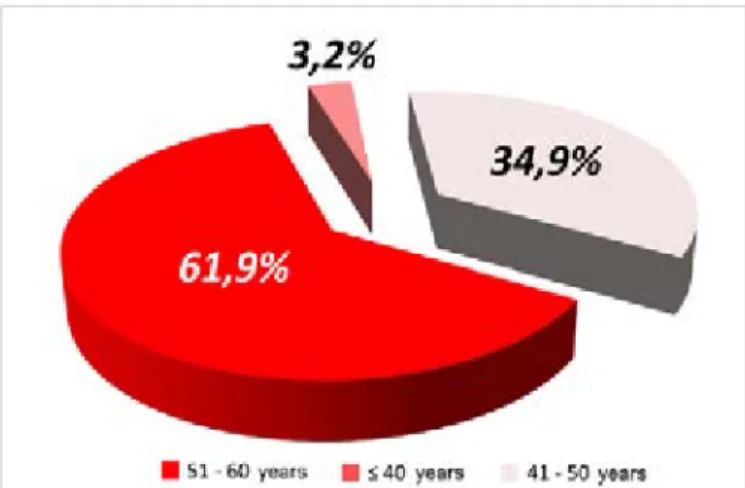
comportamiento. Como puede apreciarse en la
fi-gura 1, el mayor número de pacientes afectados
por esta situación se encuentran en los grupos de edad de 51-60 (61,9%) y de 41-50 años (34,9%).
En latabla 1 aparecen los antecedentes
patológi-cos personales de la muestra estudiada y se aprecia que además de la HTA, presente en todos los pa-cientes, existen otras enfermedades con un impor-tante predominio de la diabetes mellitus (38,1%). Aunque las enfermedades psíquicas se asocian con mucha frecuencia a la DE, en esta investigación solo estuvo presente en el 6,3% de los afectados.
Tabla 1. Antecedentes patológicos personales de los
pacientes estudiados (n=63).
Antecedentes patológicos
personales Nº %
Diabetes mellitus 24 38,1
Enfermedades psíquicas 4 6,3
Úlcera péptica 2 3,2
Asma bronquial 1 1,6
El 50,8% de los casos estudiados presentaba una
DE grave (Figura 2), de acuerdo a la puntuación
obtenida mediante el IIFE; instrumento empleado para clasificar y determinar la gravedad o intensidad de esta disfunción sexual.
La relación entre los fármacos hipotensores que
empleaban los pacientes estudiados yla intensidad
Figura 1. Distribución de pacientes con disfunción eréctil
Disfunción eréctil en pacientes con tratamiento antihipertensivo
CorSalud 2016 Oct-Dic;8(4):241-247
244
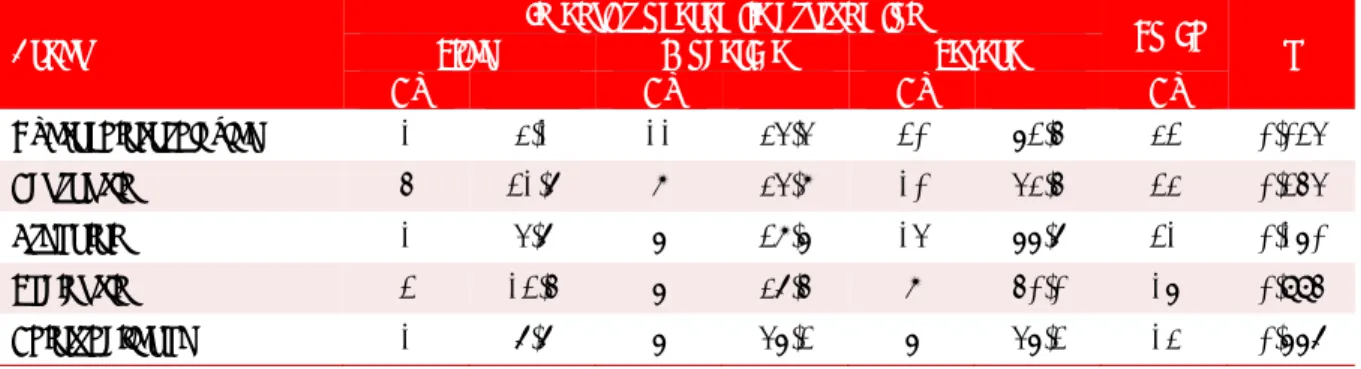
de la DE se muestra en la tabla 2. Diuréticos, IECA
y betabloqueadores fueron los más observados; pero fue solo la hidroclorotiazida la que mostró una diferencia estadística significativa (p<0,05).
La distribución de los pacientes según las combi-naciones de fármacos hipotensores y su relación
con la intensidad de la DE (Tabla 3), muestra que
la combinación que mayor asociación tuvo con la presencia de DE grave fue la de hidroclorotiazida-atenolol (p<0,05). Lo cual refuerza el criterio de la influencia negativa de los diuréticos tiazídicos sobre la función eréctil, ya sea utilizado como fármaco úni-co o en úni-combinación úni-con otros grupos de antihiper-tensivos.
DISCUSIÓN
La gran mayoría de los estudios revisados coinciden en señalar a la edad como un factor importante en la
aparición de DE. En una publicación del National
Health and Social Life Survey (NHSLS), que incluyó
una muestra representativa de hombres, la mayor incidencia de DE –al igual que en esta investigación– fue encontrada en el grupo de edad entre 50-59
años17.
Es lógico observar que la mayor proporción de los pacientes con DE se encuentre en este rango
eta-Tabla 2. Distribución de los pacientes, según el consumo de fármacos hipotensores y la intensidad de la disfunción eréctil.
Fármacos Leve Intensidad de la disfunción eréctil Moderada Grave Total p
Nº % Nº % Nº % Nº
Hidroclorotiazida 1 3,1 11 34,4 20 62,5 32 0,038
Captopril 5 21,7 8 34,8 10 43,5 23 0,254
Atenolol 1 4,7 6 28,6 14 66,7 21 0,160
Enalapril 2 12,5 6 37,5 8 50,0 16 0,995
Clortalidona 1 7,7 6 46,2 6 46,2 13 0,667
Tabla 3. Distribución de los pacientes, según las combinaciones de fármacos hipotensores usadas y la intensidad de la
disfunción eréctil.
Combinaciones de fármacos
Intensidad de la disfunción eréctil Total
p
Leve Moderada Grave
Nº % Nº % Nº % Nº
HCT - Atenolol - - 3 27,3 8 72,7 11 0,014
HCT - Captopril 1 9,1 5 45,4 5 45,4 11 0,345
HCT - Enalapril - - 1 16,7 5 83,3 6 0,215
Captopril - Clortalidona 1 20,0 2 40,0 2 40,0 5 0,598
Atenolol - Clortalidona - - - - 3 100 3 0,341
HCT: hidroclorotiazida
rio, pues acorde al diseño de este estudio todos los pacientes tenían diagnóstico de HTA, enfermedad cuya prevalencia aumenta con la edad. Al envejecer se producen considerables cambios fisiopatológicos que conllevan a un aumento en la prevalencia de
ambas enfermedades18,19. Además la propia
evolu-ción de la HTA y sus cifras elevadas hacen que se establezcan otros cambios en nuestro organismo de-bido al consecuente mayor estrés oxidativo, la infla-mación, la disfunción endotelial y la liberación de endotelinas; que convierten a la HTA en un factor de riesgo no solo para la DE, sino también para otros
padecimientos14,18.
Estos factores están involucrados en el mecanis-mo por el cual la HTA puede causar DE, pues el estrés oxidativo y su efecto sobre las células endo-teliales estimulan el daño endotelial y afectan la vasodilatación del músculo liso vascular en las arterias, arteriolas y sinusoides, donde se incluyen las de los cuerpos cavernosos del pene, que a la postre, le impiden dilatarse adecuadamente y
contri-buyen a la DE del paciente hipertenso9,20. Además,
los efectos indeseables de algunos fármacos antihi-pertensivos sobre la actividad sexual pueden causar
y empeorar la DE7,8.
Corugedo et al.18, en un estudio realizado en
Cien-fuegos (Cuba), señalan que la prevalencia de HTA aumenta con la edad en hombres, con cambios considerables a partir de los 35-44 años. Otros seña-lan que la prevalencia de DE en los hombres
hiper-tensos es mayor que en los normohiper-tensos19 y que la
HTA está presente en el 38-42% de los hombres con DE; o, a la inversa, que aproximadamente el 35% de
los hombres con HTA tienen algún grado de DE20,21.
La DE suele estar asociada a enfermedades endo-crino-metabólicas como la diabetes mellitus y su prevalencia en pacientes diabéticos es superior al 50%; además, es mucho mayor cuando se compara con la población general, pues se han informado
valores que oscilan entre 35-75%13. En Cuba, en
suje-tos de 20 a 29 años de edad, tiene una prevalencia de 9% y aumenta hasta un 90% en aquellos que
alcanzan los 70 años22.
Estas observaciones, unidas al hecho de que la DE aparece asociada a otros componentes del sín-drome metabólico, como la HTA, la obesidad
abdo-minal y la dislipidemia23, –aún sin considerar la
hiperglucemia manifiesta–, han orientado a conside-rar la hipótesis de que la DE podría instalarse tem-pranamente en pacientes con síndrome metabólico, antes del diagnóstico de diabetes mellitus.
Las enfermedades psiquiátricas y su tratamiento
se asocian con frecuencia a trastornos en la esfera sexual. Es conocido que la hiperprolactinemia pro-vocada por los psicofármacos es causa de disfun-ciones sexuales en ambos sexos. El tipo o clase de antipsicótico puede influir, por ejemplo los
anta-gonistas de los receptores de dopamina (D2), como
el haloperidol y la risperidona, considerados los fármacos que más elevan los niveles de prolactina; mientras que los antipsicóticos atípicos como: la olanzapina, clozapina, quetiapina, entre otros del mismo grupo, que no afectan mucho los niveles de
prolactina en sangre24.
Shabsigh et al.25 aplicaron el IIFE a 1053 hombres
de 30 o más años de edad con diagnóstico de DE asociada a factores de riesgo como: las enfermeda-des cardiovasculares, hiperlipidemia, HTA, diabetes mellitus y tabaquismo, y observaron que más de la mitad (54%) presentaba DE moderada o grave.
En el estudio EDOS26, realizado en España para
evaluar la intensidad de la DE, que incluyó una muestra de 1029 pacientes con diagnóstico y trata-miento para la DE, cerca de la mitad presentaba DE grave, de acuerdo al índice aplicado, lo que coincide con nuestros resultados.
Como se ha dicho en párrafos anteriores, la pre-valencia de la DE en pacientes hipertensos es mayor que en normotensos. En el estudio de Manolis y
Doumas27, tras aplicar el l IIFE-5 a 104 pacientes con
HTA, el 62,2% resultó tener algún grado de DE; 45,2%, grave, comparado con solo un 10% de la
po-blación general del Massachusetts Male Aging Study.
Entre los hipertensos existía un alto porcentaje de uso de betabloqueadores y diuréticos, lo que refuer-za una vez más la alta incidencia de DE en aquellos
pacientes tratados con estos grupos de fármacos7,8,27.
Aunque prácticamente todos los fármacos anti-hipertensivos han sido de un modo u otro imputa-dos como inductores de disfunción sexual, algunos lo han sido más que otros. De los actualmente en uso, los diuréticos, los betabloqueadores, en espe-cial los de primera generación, no cardioselectivos como el propanolol, y los vasodilatadores directos suelen ser los más incriminados. Los bloqueadores de los canales de calcio, los IECA y los ARA-II se consideran menos peligrosos en este sentido; in-cluso, diversos estudios les atribuyen efectos
benefi-ciosos en la función eréctil28.
Disfunción eréctil en pacientes con tratamiento antihipertensivo
CorSalud 2016 Oct-Dic;8(4):241-247
246
concluyentes, pues factores como la edad y otras enfermedades endocrino-metabólicas, psicóticas y hábitos tóxicos, pueden haber influido también co-mo factores causales en los pacientes que recibieron
tiazidas29.
En la práctica clínica es frecuente encontrar pacientes que para el control de sus cifras de ten-sión arterial necesitan combinar dos o más fárma-cos. La mayoría de las combinaciones incluyen dosis bajas de una tiazida que potencia el efecto de
otros hipotensores7,8,30.
El número de fármacos consumidos también se asocia con la gravedad de la DE. En la investigación
publicada por Banks et al.29, donde se estudiaron
37712 pacientes con diagnóstico de DE, el 29% pre-sentaba DE moderada o grave asociada al consumo
de dos o más fármacos. Por eso ellos29 y otros
auto-res31,32 sugieren que la valoración de la medicación
constituye parte integral de la evaluación de la DE.
CONCLUSIONES
Los pacientes hipertensos con disfunción eréctil estudiados empleaban, en su mayoría, hidroclorotia-zida en el tratamiento de su enfermedad crónica. Este diurético en monoterapia o combinado con atenolol tuvo una asociación estadística significativa con la gravedad de este trastorno sexual.
BIBLIOGRAFÍA
1. Llibre Rodríguez J, Laucerique Pardo T, Noriega
Fernández L, Guerra Hernández M. Prevalencia de hipertensión arterial, adhesión al tratamiento y su control en adultos mayores. Rev Cubana Med [Internet]. 2011 [citado 18 Feb 2016];50:242-51. Disponible en:
http://scielo.sld.cu/pdf/med/v50n3/med03311.pdf
2. Ministerio de Salud Pública, Dirección de
Regis-tros Médicos y Estadísticas de Salud. Anuario Estadístico de Salud 2012 [Internet]. La Habana: MINSAP; 2015 [citado 23 Feb 2016]. Disponible en:
http://files.sld.cu/dne/files/2013/04/anuario_2012. pdf
3. Álvarez Álvarez G. Propuesta de un subprograma
integral para la atención de la hipertensión arterial esencial en la Atención Primaria de Salud [Tesis]. Santa Clara: UCM Serafín Ruiz de Zárate Ruiz; 2010 [citado 23 Feb 2016]. Disponible en:
http://files.sld.cu/atero/files/2012/06/propuesta- de-un-subprograma-integral-para-la-atencion-de-la- hipertension-arterial-esencial-en-la-atencion-primaria-de-salud.pdf
4. Pérez Caballero MD. Guías para diagnóstico y
tratamiento de la hipertensión arterial en el siglo XXI. Rev Cubana Med [Internet]. 2013 [citado 18 Feb 2016];52:286-94. Disponible en:
http://scielo.sld.cu/pdf/med/v52n4/med08413.pdf
5. Chobanian AV, Bakris GL, Black HR, Cushman
WC, Green LA, Izzo JL, et al. The Seventh Report
of the Joint National Committee on Prevention, Detection, Evaluation, and Treatment of High Blood Pressure: the JNC 7 report. JAMA. 2003;289: 2560-72.
6. Mancia G, Fagard R, Narkiewicz K, Redon J,
Zan-chetti A, Böhm M, et al. 2013 ESH/ESC guidelines
for the management of arterial hypertension: the Task Force for the Management of Arterial Hyper-tension of the European Society of HyperHyper-tension (ESH) and of the European Society of Cardiology (ESC). Eur Heart J. 2013;34:2159-219.
7. Sánchez A, Sáiz J. Farmacología de la
hiperten-sión arterial, la insuficiencia vascular periférica y
la angiogénesis.En: Flórez J. Farmacología
huma-na. Barcelona: Elsevier Masson; 2014. p.633-50.
8. Furones Mourelle JA. Hipertensión arterial. En:
Morón Rodríguez FJ. Farmacología clínica. La Habana: Editorial Ciencias Médicas; 2010. p. 133-58.
9. Hatzimouratidis K, Amar E, Eardley I, Giuliano F,
Hatzichristou D, Montorsi F, et al. Guidelines on
male sexual dysfunction: erectile dysfunction and premature ejaculation. Eur Urol. 2010;57:804-14.
10.Arias Altamar CM, Cuello Torres OA, Mendoza
Castillo CH, Montes Ramos S, Yepes Barreto IJ. Prevalencia de comorbilidades y factores de riesgo asociados a disfunción eréctil en pacientes hipertensos del Hospital Universitario del Caribe de Cartagena en 2013. Urol Colomb. 2014;23:109-13.
11.Scranton RE, Goldstein I, Stecher VJ. Erectile
dysfunction diagnosis and treatment as a means to improve medication adherence and optimize comorbidity management. J Sex Med. 2013;10:551-61.
12.Reis MM, Abdo CH. Prevalence of erectile
13.Yang G, Pan C, Lu J. Prevalence of erectile dys-function among Chinese men with type 2 diabetes mellitus. Int J Impot Res. 2010;22:310-7.
14.Zedan H, Hareadei AA, Abd-Elsayed AA,
Abdel-Maguid EM. Cigarette smoking, hypertension and diabetes mellitus as risk factors for erectile dys-function in upper Egypt. East Mediterr Health J. 2010;16:281-5.
15.Kam SC, Chae MR, Kim JY, Choo SH, Han DH, Lee
SW. Effects of ethanol on the tonicity of corporal tissue and the intracellular Ca2+ concentration of human corporal smooth muscle cells. Asian J Androl. 2010;12:890-8.
16.Rosen RC, Riley A, Wagner G, Osterloh IH,
Kirk-patrick J, Mishra A. The International Index of Erectile Function (IIEF): a multidimensional scale for assessment of erectile dysfunction. Urology. 1997;49:822-30.
17.Sadock VA. Normal human sexuality and sexual
dysfunctions. En: Sadock BJ, Sadock VA, Kaplan HI, editores. Kaplan and Sadock's Comprehensive Textbook of Psychiatry. 8va. Ed. Philadelphia: Lippincott Williams and Wilkins; 2005. p. 1903-36.
18.Corugedo Rodríguez MC, Martín Alfonso L,
Baya-rre Vea H. Adherencia terapéutica en pacientes con hipertensión arterial del Policlínico Univer-sitario “Manuel Fajardo” en el Municipio Cruces, Cienfuegos, 2009. Rev Cubana Med Gen Integr [Internet]. 2011 [citado 18 Feb 2016];27: 504-512. Disponible en:
http://scielo.sld.cu/scielo.php?script=sci_arttext&
pid=S0864-21252011000400009&lng=es&nrm=iso&tlng=es
19.Camacho ME, Reyes-Ortiz CA. Sexual dysfunction
in the elderly: age or disease? Int J Impot Res. 2005;17(Supl 1):52-6.
20.Ghalayini IF, Al-Ghazo MA, Al-Azab R, Bani-Hani I,
Matani YS, Barham AE, et al. Erectile dysfunction
in a Mediterranean country: results of an epide-miological survey of a representative sample of men. Int J Impot Res. 2010;22:196-203.
21.Seo Y, Jeong B, Kim JW, Choi J. The relationship
between age and brain response to visual erotic stimuli in healthy heterosexual males. Int J Impot Res. 2010;22:234-9.
22.Castelo Elías-Calles L, Licea Puig ME. Disfunción
sexual eréctil y diabetes mellitus. Aspectos etio-patogénicos. Rev Cubana Endocrinol [Internet]. 2005;14:[aprox. 14 p.]. Disponible en:
http://scielo.sld.cu/scielo.php?script=sci_arttext&
pid=S1561-29532003000200007&lng=es&nrm=iso&tlng=es
23.Costanzo P, Knoblovits P, Rey Valzacchi G,
Gue-glio G, Layus O, Litwak L. La disfunción eréctil se asocia a elevada prevalencia de obesidad y sín-drome metabólico. Rev Argent Endocrinol Metab. 2008;45:142-8.
24.Park YW, Kim Y, Lee JH. Antipsychotic-induced
sexual dysfunction and its management. World J Mens Health. 2012;30:153-59.
25.Shabsigh R, Kaufman J, Magee M, Creanga D,
Russell D, Budhwani M. Lack of awareness of erectile dysfunction in many men with risk fac-tors for erectile dysfunction. BMC Urol [Internet]. 2010 [citado 23 Feb 2016];10:18. Disponible en:
https://www.ncbi.nlm.nih.gov/pmc/articles/PMC 2991280/pdf/1471-2490-10-18.pdf
26.Martín-Morales A, Gutiérrez Hernández PR,
Meiji-de Rico F, Arrondo Arrondo JL, Turbí Disla C. Efectividad y satisfacción con el tratamiento en pacientes con disfunción eréctil en España: Estu-dio EDOS. Actas Urol Esp. 2010;34:356-64.
27.Manolis A, Doumas M. Antihypertensive
treat-ment and sexual dysfunction. Curr Hypertens Rep. 2012;14:285-92.
28.Hellstrom WJ. Does erectile dysfunction drug use
contribute to risky sexual behavior? Asian J An-drol. 2010;12:626-7.
29.Banks E, Joshy G, Abhayaratna WP, Kritharides
L, Macdonald PS, Korda RJ, et al. Erectile
dys-function severity as a risk marker for cardiovas-cular disease hospitalisation and all-cause mor-tality: A prospective cohort study. PLoS Med [In-ternet]. 2013 [citado 18 Feb 2016];10:e1001372. Disponible en:
https://www.ncbi.nlm.nih.gov/pmc/articles/PMC 3558249/pdf/pmed.1001372.pdf
30.Ekman E, Hägg S, Sundström A, Werkström V.
An-tihypertensive drugs and erectile dysfunction as seen in spontaneous reports, with focus on angio-tensin II type 1 receptor blockers. Drug Healthc Patient Saf. 2010;2:21-5.
31.Conaglen HM, Conaglen JV. Drug-induced sexual
dysfunction in men and women. Aust Prescr 2013;36:42-5.
32.Cortés Pérez SR, Jiménez Fernández L, Brito
Fe-rrer Y, Chala Tandrón JM, Armada Esmores Z, González Caballero Y, González Sánchez N. Adhe-rencia al tratamiento hipotensor y presencia de disfunción sexual. CorSalud [Internet]. 2015 [cita-do 18 Feb 2016];7:292-9. Disponible en:
CorSalud 2016 Oct-Dec;8(4):241-247
RNPS 2235-145 © 2009-2016 Cardiocentro Ernesto Che Guevara, Villa Clara, Cuba. All rights reserved. 241
Cuban Society of Cardiology
_________________________Brief Article
Erectile dysfunction in patients under antihypertensive treatment
Yudileidy Brito Ferrer
1, MD; Liset Jiménez Fernández
1, MD; Juan M. Chala Tandrón
2, MD;
Sady R. Cortés Pérez
1, BSc; Yossy González Caballero
1, BSc; Yaquelín Martínez Chávez
1, MD;
Liset Jaramillo Hernández
1, MD; and Melba Zayas González
1, MD
1 Department of Pharmacology. Universidad de Ciencias Médicas de Villa Clara. Santa Clara, Villa Clara, Cuba.
2 Department of Anesthesiology and Resuscitation. Hospital Universitario Celestino Hernández Robau. Santa Clara, Villa Clara, Cuba.
Este artículo también está disponible en español
ARTICLE INFORMATION
Received: October 14, 2015 Modified: March 14, 2016 Accepted: April 21, 2016
Competing interests
The authors declare no competing interests
Acronyms
ACEI: angiotensin converting enzyme inhibitors
ARA-II: angiotensin-II receptor antagonists
ED: erectile dysfunction HT: hypertension
IIEF: international index of erectile function
On-Line Versions:
Spanish - English
JM Chala Tandrón
Hospital Celestino Hernández Robau Calle Cuba s/n e/Barcelona y Hospital. Santa Clara 50200. Villa Clara, Cuba. E-mail address:
ABSTRACT
Introduction: Hypertension (HT) and antihypertensive drugs can affect behavior, severity and response to treatment in erectile dysfunction.
Objective: To determine the influence of antihypertensive drug treatment on erectile dysfunction behavior.
Method: A descriptive and cross-sectional study was carried out, with 148 male patients attending the Therapy and Sexual Orientation Consultation in Santa Clara, Cuba. A sample of 63 patients between 20-60 years, hypertensive and with erectile dysfunction, receiving treatment for both diseases was taken. Data was obtained from reviewing medical records, sociodemographic variables, personal pathologi-cal history, drugs and erectile dysfunction severity (according to the International Erectile Function Index, IIFE) was analyzed.
Results: The highest number of patients with HT and erectile dysfunction were between 51-60 years (61.9%), 38.1% had diabetes mellitus and only 6.3% had a psychic illness diagnosis. 50.8% of the cases studied presented severe erectile dys-function, and diuretics, angiotensin converting enzyme inhibitors and beta-block-ers were the most used drugs for HT treatment; though hydrochlorothiazide alone (p <0.038) or with atenolol (p <0.014) showed statistically significant differences.
Conclusions: The use of hydrochlorothiazide monotherapy or combined with atenolol in patients with HT was associated with the onset and severity of erectile dysfunction.
Key words: Antihypertensive agents, Erectile dysfunction, Hypertension, Thera-peutics
Disfunción eréctil en pacientes con tratamiento antihipertensivo
RESUMEN
Introducción: La hipertensión arterial (HTA) y los fármacos antihipertensivos pueden afectar el comportamiento, la gravedad y la respuesta al tratamiento de la disfunción eréctil.
Objetivo: Determinar la influencia del tratamiento farmacológico antihipertensivo en el comportamiento de la disfunción eréctil.
entre 20-60 años de edad, hipertensos y con disfunción eréctil que recibían trata-miento para ambas enfermedades. Los datos fueron obtenidos de la revisión de las historias clínicas, se analizaron variables sociodemográficas, antecedentes patológicos personales, fármacos y la gravedad de la disfunción eréctil (según el Índice Internacional de Función Eréctil, IIFE).
Resultados: El mayor número de pacientes con HTA y disfunción eréctil tenía edades entre 51-60 años (61,9%), un 38,1% padecía de diabetes mellitus y solo 6,3% tenía diagnóstico de alguna enfermedad psíquica. El 50,8% de los casos estudiados presentaba una disfunción eréctil grave y los fármacos más empleados en el trata-miento de la HTA fueron los diuréticos, los inhibidores de la enzima convertidora de angiotensina y los betabloqueadores; aunque únicamente la hidroclorotiazida sola (p<0,038) o con atenolol (p<0,014), mostró diferencias estadísticas significati-vas.
Conclusiones: El empleo de hidroclorotiazida en monoterapia o combinado con atenolol en pacientes con HTA se asoció a la aparición y gravedad de la disfun-ción eréctil.
Palabras clave: Antihipertensivos, Disfunción eréctil, Hipertensión arterial, Tera-péutica
INTRODUCTION
Hypertension is a serious global health problem,
affecting between 25-30% of the world population1.
Cuba is not exempt from this problem, and there is a high prevalence of it, ranging between 28-32% of the
adult population2. Its incidence increases with age,
considering that more than half of people aged 60-69
years are hypertensive1,2.
The antihypertensive agents most used univer-sally and considered of first line in treatment are:
diuretics –constitute the group of most prescribed
drugs–, beta-blockers, calcium channel blockers,
ACEI and more recently, angiotensin-II receptor
antagonists (ARA-II)3-5.
In general, antihypertensive agents are well toler-ated, but may produce undesirable effects such as: hypotension, frequent urination, dizziness, sedation
and sexual dysfunction, among others3-6.
The ED erectile dysfunction (ED) is a common adverse effect with reversibility, which can follow the consumption of antihypertensive agents, mainly
by the use of thiazide diuretics and beta-blockers6-8.
Like hypertension (HT), ED is highly prevalent. It is estimated to affect about 100 million people
worldwide and it will affect 322 million by 20259.
Among the mechanisms involved in its pathogene-sis, in hypertensive patients are: the severeness and
duration of HT, age, and antihypertensive therapy10.
The ED is considered one of the greatest obsta-cles and dissatisfaction among those who receive antihypertensive treatment, because it can affect the
quality of life of men and treatment
discontinua-tion11. There is also a clear correlation between risk
factors for HT and ED: age, smoking, alcoholism,
dia-betes mellitus, obesity and dyslipidemia10,12-15.
In Cuba, there are few published studies that relate the behavior of ED with the consumption of drugs, specifically, antihypertensive agents. Those are the reasons that motivated the development of this research, with the aim of determining the in-fluence of the antihypertensive treatment in the behavior of ED.
METHOD
A descriptive cross-sectional study was conducted in patients diagnosed with ED and HT, who went to the provincial reference consulting room of Therapy
and Sexual Orientation, belonging to the Hospital
Universitario Gineco-Obstétrico Mariana Grajales
Co-ello, in Santa Clara, Cuba, from January to December
2014.
The population of study was constituted by 148 men who attended this consulting room and had ED diagnosis, from which a sample of 63 patients was selected by a non-probabilistic intentional sampling. The following inclusion criteria were taken into con-sideration:
- Male patient diagnosed with HT.
- Age between 18 and 60 years.
Brito Ferrer Y, et al.
CorSalud 2016 Oct-Dec;8(4):241-247 243
least in the past 3 months.
There were excluded patients with limiting health conditions like mental illness, (serious or crisis) benign and malignant prostate tumor diseases, and patients with anatomic abnormalities of the penis which obstructed erection.
Variables
The variables analyzed were: age, personal patho-logical records, medications, presence of ED and its severeness.
The diagnosis of ED and its severeness was made by applying the international index of erectile
func-tion (IIEF), developed by Rosen et al.16 and
pub-lished in 1997, which consists in using 23 questions, where each item has the value of a point and ac-cording to the diagnostic criteria, it is classified: in
severe (IIEF score <7), moderate (7≤IIEF <12) and
slight (IIEF of 12-21).
Collection and processing of information
The data for the research were obtained from medi-cal records and individual interviews. Its organiza-tion, analysis and summary, as well as the presenta-tion of the results, were performed by using the statistical processor SPSS in its version 15.0. Tables and graphs were prepared, and descriptive meas-ures, like frequency and percentage, were calcu-lated. Comparison statistical tests of frequency and Chi square were employed.
Ethics
This research was developed following the ethical requirements for scientific research and with the consent of the Ethics Committee and the Scientific Council of the municipality of Santa Clara.
RESULTS
Some demographic factors can influence the onset of ED, but, no doubt, age is one that can mediate more
in its behavior. As can be seen in figure 1, the
greater number of patients, affected by this situation, are in the age group of 51-60 (61.9%) and 41-50 years (34.9%).
In table 1 are shown the personal pathological records of the studied sample and it is also shown that, in addition to the HT present in all patients, there are other diseases, being the diabetes mellitus the most prevalent (38.1%). Although psychic diseases are frequently associated with ED, in this research was only present in 6.3% of patients.
Table 1. Personal pathological records of the studied patients
(n=63).
Personal pathological
records Nº %
Diabetes mellitus 24 38.1
Psychic diseases 4 6.3
Peptic ulcer 2 3.2
Bronchial asthma 1 1.6
From the cases studied, 50.8% presented severe ED (Figure 2), according to the score obtained by IIEF; this instrument is used to classify and determine the severeness or intensity of this sexual
Figure 1. Distribution of patients with erectile dysfunction
disorder.
In table 2 is shown the ratio between the anti-hypertensive agents employed by the patients stud-ied and the intensity of ED. Diuretics, ACE inhibitors and beta-blockers were the most observed; but it
was only hydrochlorothiazide which showed a sta-tistically significant difference (p<0.05).
The patients' distribution in combinations of anti-hypertensive agents and its relationship with the
in-tensity of ED (Table 3) shows that the combina-tion
which had the strongest association with the pres-ence of severe ED was hydrochlorothiazide-atenolol (p<0.05). This reinforces the negative influence of thiazide diuretics on erectile function, either as a single drug or in combination with other antihyper-tensive groups.
DISCUSSION
The vast majority of revised studies agree that age is an important factor in the occurrence of ED. In a publication of the National Health and Social Life Survey (NHSLS), which included a representative
sample of men, the highest incidence of ED –as in
this research– was found in the age group between
Table 2. Distribution of patients according to antihypertensive agents and intensity of the erectile dysfunction.
Drugs Slight Intensity of erectile dysfunction Moderate Severe Total p
Nº % Nº % Nº % Nº
Hydrochlorothiazide 1 3.1 11 34.4 20 62.5 32 0.038
Captopril 5 21.7 8 34.8 10 43.5 23 0.254
Atenolol 1 4.7 6 28.6 14 66.7 21 0.160
Enalapril 2 12.5 6 37.5 8 50.0 16 0.995
Chlorthalidone 1 7.7 6 46.2 6 46.2 13 0.667
Table 3. Distribution of patients according to the combinations of antihypertensive agents and intensity of
erectile dysfunction.
Drugs combination Slight Intensity of erectile dysfunction Moderate Severe Total p
Nº % Nº % Nº % Nº
HCT - Atenolol - - 3 27.3 8 72.7 11 0.014
HCT - Captopril 1 9.1 5 45.4 5 45.4 11 0.345
HCT - Enalapril - - 1 16.7 5 83.3 6 0.215
Captopril - Chlorthalidone 1 20.0 2 40.0 2 40.0 5 0.598
Atenolol - Chlorthalidone - - - - 3 100 3 0.341
HCT: Hydrochlorothiazide
Brito Ferrer Y, et al.
CorSalud 2016 Oct-Dec;8(4):241-247 245
50-59 years17.
It is logical to notice that the highest proportion of patients with ED is in this age range, because according to the design of this study, all patients had HT diagnosis, a disease whose prevalence increases with age. When aging, considerable pathophysiolog-ic changes take place, whpathophysiolog-ich lead to an increase in
the prevalence of both diseases18,19. In addition, the
evolution of HT, and its high levels, make that other changes are established in our body due to the resulting increased oxidative stress, inflammation, endothelial dysfunction and release of endothelins; all this make HT a risk factor not only for ED but also
for other ailments14,18.
These factors are involved in the mechanism by which HT can cause ED, as the oxidative stress and its effect on endothelial cells stimulate endothelial damage and affect vasodilatation of the vascular smooth muscle in arteries, arterioles and sinusoids where the cavernous bodies of the penis are in-cluded, which ultimately prevent it from the proper dilation and contribute with the appearance of ED in
the hypertensive patient9,20. In addition, the
undesir-able effects of antihypertensive agents on sexual
activity can cause and worsen the ED7,8.
Corugedo et al.18, in a study in Cienfuegos (Cuba),
indicate that the prevalence of HT increases with age in men, with considerable changes between 35-44 years. Others note that the prevalence of ED in
hypertensive men is greater than in normotensive19
and HT is present in 38-42% of men with ED; or, con-versely, that approximately 35% of men with HT
have some degree of ED.
The ED is usually associated with endocrine-me-tabolic diseases such as diabetes mellitus, and its prevalence in diabetic patients exceeds 50%; in addition, it is much higher when compared with the general population, as there are reported values
ranging between 35-75%13. In Cuba, in individuals
be-tween 20-29 years old, it has a prevalence of 9% and
increases to 90% in those who attain the age of 7022.
These observations, together with the fact that the ED is associated with other components of the metabolic syndrome, such as hypertension,
abdomi-nal obesity and dyslipidemia 23, –even without
con-sidering the overt hyperglycemia– they have
direct-ed to consider the hypothesis that the ED could be installed early in patients with metabolic syndrome, before the diagnosis of diabetes mellitus.
Psychiatric illnesses and their treatment are often associated with disorders in the sexual sphere. It is
known that hyperprolactinemia, caused by psycho-tropic drugs causes sexual dysfunction in both sexes. The type or class of antipsychotic can in-fluence, for example, antagonists of dopamine
receptors (D2), such as haloperidol and risperidone,
drugs considered to rise the most the prolactin levels; while atypical antipsychotics such as olan-zapine, cloolan-zapine, quetiapine, among others of the same group, do not affect that much the prolactin
levels in blood24.
Shabsigh et al.2 applied the IIFE to 1053 men aged
30 or more years, with diagnosis of associated risk factors such as: cardiovascular disease, hyperlipide-mia, HT, diabetes mellitus and smoking, and notice that more than half (54%) presented moderate or severe ED.
In the EDOS study26, held in Spain to assess the
intensity of ED, which included a sample of 1029 patients with diagnosis and treatment for ED, about half presented severe ED, according to the rate applied, which coincides with our results.
As mentioned above, the prevalence of ED in hy-pertensive patients is higher than in normotensive.
In the study by Manolis and Doumas27, after
apply-ing the IIEF-5 to 104 patients with HT, 62,2% were found to have some degree of ED; 45.2% severe, compared with only 10% of the general population of the Massachusetts Male Aging Study. Among the hy-pertensive patients, there was a high percentage of usage of beta-blockers and diuretics, which reinfor-ces, once again, the high incidence of ED in those
patients treated with these drugs7,8,27.
Although practically all antihypertensive agents have been imputed, in some way, as inducers of sex-ual dysfunction, some have been more than others. Of the currently used, diuretics, beta-blockers, espe-cially of first generation, noncardioselective as pro-pranolol, and direct vasodilators are often the most incriminated. The calcium channel blockers, the ACEI and ARA-II are considered less hazardous in this regard; even, several studies attribute them
beneficial effects on erectile function28.
In a study that compared two groups of hyperten-sive patients with ED, one receiving thiazides and the other not, a higher incidence of severe ED among consuming thiazide diuretics was found; however, this research is not conclusive, as factors such as age and other endocrine-metabolic, psychot-ic and toxpsychot-ic diseases may have also influenced as
causal factors in patients receiving thiazides29.
need to combine two or more drugs for controlling their blood pressure levels. Most combinations in-clude low doses of thiazide that potentiate the effect
of other antihypertensive agents7,8,30.
The number of consumed drugs is associated with the severeness of ED. In a research published
by Banks et al.29, where they studied 37712 patients
diagnosed with ED, 29% presented moderate or se-vere ED, associated with the consumption of two or
more drugs. Therefore, they29 and other authors31,32
suggest that the assessment of medication is an integral part of the ED’s evaluation.
CONCLUSIONS
The studied hypertensive patients with erectile dys-function used, mostly, hydrochlorothiazide in the treatment of their chronic disease. This diuretic alone, or combined with atenolol, had a significant statistical association with the severeness of this sexual disorder.
REFERENCES
1. Llibre Rodríguez J, Laucerique Pardo T, Noriega
Fernández L, Guerra Hernández M. Prevalencia de hipertensión arterial, adhesión al tratamiento y su control en adultos mayores. Rev Cubana Med [Internet]. 2011 [citado 18 Feb 2016];50:242-51. Disponible en:
http://scielo.sld.cu/pdf/med/v50n3/med03311.pdf
2. Ministerio de Salud Pública, Dirección de
Regis-tros Médicos y Estadísticas de Salud. Anuario Estadístico de Salud 2012 [Internet]. La Habana: MINSAP; 2015 [citado 23 Feb 2016]. Disponible en:
http://files.sld.cu/dne/files/2013/04/anuario_2012. pdf
3. Álvarez Álvarez G. Propuesta de un subprograma
integral para la atención de la hipertensión arterial esencial en la Atención Primaria de Salud [Tesis]. Santa Clara: UCM Serafín Ruiz de Zárate Ruiz; 2010 [citado 23 Feb 2016]. Disponible en:
http://files.sld.cu/atero/files/2012/06/propuesta- de-un-subprograma-integral-para-la-atencion-de-la- hipertension-arterial-esencial-en-la-atencion-primaria-de-salud.pdf
4. Pérez Caballero MD. Guías para diagnóstico y
tratamiento de la hipertensión arterial en el siglo XXI. Rev Cubana Med [Internet]. 2013 [citado 18 Feb 2016];52:286-94. Disponible en:
http://scielo.sld.cu/pdf/med/v52n4/med08413.pdf
5. Chobanian AV, Bakris GL, Black HR, Cushman
WC, Green LA, Izzo JL, et al. The Seventh Report
of the Joint National Committee on Prevention, Detection, Evaluation, and Treatment of High Blood Pressure: the JNC 7 report. JAMA. 2003;289: 2560-72.
6. Mancia G, Fagard R, Narkiewicz K, Redon J,
Zan-chetti A, Böhm M, et al. 2013 ESH/ESC guidelines
for the management of arterial hypertension: the Task Force for the Management of Arterial Hyper-tension of the European Society of HyperHyper-tension (ESH) and of the European Society of Cardiology (ESC). Eur Heart J. 2013;34:2159-219.
7. Sánchez A, Sáiz J. Farmacología de la
hiperten-sión arterial, la insuficiencia vascular periférica y
la angiogénesis.En: Flórez J. Farmacología
huma-na. Barcelona: Elsevier Masson; 2014. p.633-50.
8. Furones Mourelle JA. Hipertensión arterial. En:
Morón Rodríguez FJ. Farmacología clínica. La Habana: Editorial Ciencias Médicas; 2010. p. 133-58.
9. Hatzimouratidis K, Amar E, Eardley I, Giuliano F,
Hatzichristou D, Montorsi F, et al. Guidelines on
male sexual dysfunction: erectile dysfunction and premature ejaculation. Eur Urol. 2010;57:804-14.
10.Arias Altamar CM, Cuello Torres OA, Mendoza
Castillo CH, Montes Ramos S, Yepes Barreto IJ. Prevalencia de comorbilidades y factores de riesgo asociados a disfunción eréctil en pacientes hipertensos del Hospital Universitario del Caribe de Cartagena en 2013. Urol Colomb. 2014;23:109-13.
11.Scranton RE, Goldstein I, Stecher VJ. Erectile
dysfunction diagnosis and treatment as a means to improve medication adherence and optimize comorbidity management. J Sex Med. 2013;10:551-61.
12.Reis MM, Abdo CH. Prevalence of erectile
dysfunction as defined by the International Index of Erectile Function (IIEF) and self-reported erectile dysfunction in a sample of Brazilian men who consider themselves healthy. J Sex Marital Ther. 2010;36:87-100.
13.Yang G, Pan C, Lu J. Prevalence of erectile
Brito Ferrer Y, et al.
CorSalud 2016 Oct-Dec;8(4):241-247 247
14.Zedan H, Hareadei AA, Abd-Elsayed AA,
Abdel-Maguid EM. Cigarette smoking, hypertension and diabetes mellitus as risk factors for erectile dys-function in upper Egypt. East Mediterr Health J. 2010;16:281-5.
15.Kam SC, Chae MR, Kim JY, Choo SH, Han DH, Lee
SW. Effects of ethanol on the tonicity of corporal tissue and the intracellular Ca2+ concentration of human corporal smooth muscle cells. Asian J Androl. 2010;12:890-8.
16.Rosen RC, Riley A, Wagner G, Osterloh IH,
Kirk-patrick J, Mishra A. The International Index of Erectile Function (IIEF): a multidimensional scale for assessment of erectile dysfunction. Urology. 1997;49:822-30.
17.Sadock VA. Normal human sexuality and sexual
dysfunctions. En: Sadock BJ, Sadock VA, Kaplan HI, editores. Kaplan and Sadock's Comprehensive Textbook of Psychiatry. 8va. Ed. Philadelphia: Lippincott Williams and Wilkins; 2005. p. 1903-36.
18.Corugedo Rodríguez MC, Martín Alfonso L,
Baya-rre Vea H. Adherencia terapéutica en pacientes con hipertensión arterial del Policlínico Univer-sitario “Manuel Fajardo” en el Municipio Cruces, Cienfuegos, 2009. Rev Cubana Med Gen Integr [Internet]. 2011 [citado 18 Feb 2016];27: 504-512. Disponible en:
http://scielo.sld.cu/scielo.php?script=sci_arttext&
pid=S0864-21252011000400009&lng=es&nrm=iso&tlng=es
19.Camacho ME, Reyes-Ortiz CA. Sexual dysfunction
in the elderly: age or disease? Int J Impot Res. 2005;17(Supl 1):52-6.
20.Ghalayini IF, Al-Ghazo MA, Al-Azab R, Bani-Hani I,
Matani YS, Barham AE, et al. Erectile dysfunction
in a Mediterranean country: results of an epide-miological survey of a representative sample of men. Int J Impot Res. 2010;22:196-203.
21.Seo Y, Jeong B, Kim JW, Choi J. The relationship
between age and brain response to visual erotic stimuli in healthy heterosexual males. Int J Impot Res. 2010;22:234-9.
22.Castelo Elías-Calles L, Licea Puig ME. Disfunción
sexual eréctil y diabetes mellitus. Aspectos etio-patogénicos. Rev Cubana Endocrinol [Internet]. 2005;14:[aprox. 14 p.]. Disponible en:
http://scielo.sld.cu/scielo.php?script=sci_arttext&
pid=S1561-29532003000200007&lng=es&nrm=iso&tlng=es
23.Costanzo P, Knoblovits P, Rey Valzacchi G,
Gue-glio G, Layus O, Litwak L. La disfunción eréctil se asocia a elevada prevalencia de obesidad y sín-drome metabólico. Rev Argent Endocrinol Metab. 2008;45:142-8.
24.Park YW, Kim Y, Lee JH. Antipsychotic-induced
sexual dysfunction and its management. World J Mens Health. 2012;30:153-59.
25.Shabsigh R, Kaufman J, Magee M, Creanga D,
Russell D, Budhwani M. Lack of awareness of erectile dysfunction in many men with risk fac-tors for erectile dysfunction. BMC Urol [Internet]. 2010 [citado 23 Feb 2016];10:18. Disponible en:
https://www.ncbi.nlm.nih.gov/pmc/articles/PMC 2991280/pdf/1471-2490-10-18.pdf
26.Martín-Morales A, Gutiérrez Hernández PR,
Meiji-de Rico F, Arrondo Arrondo JL, Turbí Disla C. Efectividad y satisfacción con el tratamiento en pacientes con disfunción eréctil en España: Estu-dio EDOS. Actas Urol Esp. 2010;34:356-64.
27.Manolis A, Doumas M. Antihypertensive
treat-ment and sexual dysfunction. Curr Hypertens Rep. 2012;14:285-92.
28.Hellstrom WJ. Does erectile dysfunction drug use
contribute to risky sexual behavior? Asian J An-drol. 2010;12:626-7.
29.Banks E, Joshy G, Abhayaratna WP, Kritharides
L, Macdonald PS, Korda RJ, et al. Erectile
dys-function severity as a risk marker for cardiovas-cular disease hospitalisation and all-cause mor-tality: A prospective cohort study. PLoS Med [In-ternet]. 2013 [citado 18 Feb 2016];10:e1001372. Disponible en:
https://www.ncbi.nlm.nih.gov/pmc/articles/PMC 3558249/pdf/pmed.1001372.pdf
30.Ekman E, Hägg S, Sundström A, Werkström V.
An-tihypertensive drugs and erectile dysfunction as seen in spontaneous reports, with focus on angio-tensin II type 1 receptor blockers. Drug Healthc Patient Saf. 2010;2:21-5.
31.Conaglen HM, Conaglen JV. Drug-induced sexual
dysfunction in men and women. Aust Prescr 2013;36:42-5.
32.Cortés Pérez SR, Jiménez Fernández L, Brito
Fe-rrer Y, Chala Tandrón JM, Armada Esmores Z, González Caballero Y, González Sánchez N. Adhe-rencia al tratamiento hipotensor y presencia de disfunción sexual. CorSalud [Internet]. 2015 [cita-do 18 Feb 2016];7:292-9. Disponible en: