Comorbidities have a limited impact on
post-transplant survival in carefully selected cirrhotic patients:
a population-based cohort study
Filipe S. Cardoso,* Sean M. Bagshaw,* Juan G. Abraldes,** Norman M. Kneteman,*** Glenda Meeberg,**** Pedro Fidalgo,* Constantine J. Karvellas*,**
* Division of Critical Care Medicine, Faculty of Medicine and Dentistry, University of Alberta, Edmonton, Alberta, Canada. ** Division of Gastroenterology, Department of Medicine, Faculty of Medicine and Dentistry, University of Alberta, Edmonton, Alberta, Canada.
*** Division of Transplantation, Department of Surgery, University of Alberta, Edmonton, Alberta, Canada. **** Liver Transplant Program, Alberta Health Services, Edmonton, Alberta, Canada.
ABSTRACT
Background. Improving estimation of long-term survival of patients with end-stage liver disease after ortho-topic liver transplantation (OLT) would optimize decisions on eligibility for transplant. We aimed to exter-nally validate previously derived Charlson Comorbity Index for OLT (CCI-OLT); subsequently, we developed a new model to predict 5-year mortality after transplant. Material and methods. This single center retro-spective cohort study included 524 consecutive adult cirrhotic patients who underwent OLT in 2002-2012. External validation of CCI-OLT used Kaplan-Meier method. Derivation of the new predictive model used Cox proportional hazards regression. Results. One-, 3-, and 5-year cumulative survival after OLT was 89%, 80%, and 73%, respectively. CCI-OLT was not associated with 5-year mortality after transplant (P = 0.34). We de-rived and internally validated a new predictive model of 5-year mortality after OLT based on six pre-trans-plant characteristics of patients: age, body mass index, hepatitis C, hepatic encephalopathy, intensive care unit stay at transplant, and live donor (C-index = 0.64). We further developed a nomogram to estimate individual probability of 1-, 3-, and 5-year survival after OLT. Conclusions. In our cohort, CCI-OLT was not associated with survival following transplant. The new predictive model discriminative capacity was only modest, suggesting that pre-transplant characteristics are of limited value in predicting post-transplant outcomes in thoroughly selected patients.
Key words. Cirrhosis. Transplant. Risk prediction. Long-term survival. Nomogram.
Correspondence and reprint request: Constantine J. Karvellas MD, SM, FRCPC. Assistant Professor of Medicine
Division of Critical Care Medicine, Division of Hepatology
1-40 Zeidler Ledcor Building, University of Alberta, 130 University Drive Edmonton, Alberta T6G-2X8, Canada.
Phone: +17804924390, Fax: +17804925643 E-mail: [email protected]
Manuscript received: October 18, 2014.
Manuscript accepted: December 17, 2014.
INTRODUCTION
Orthotopic liver transplantation (OLT) is the de-finitive treatment for a wide range of liver diseases.1 Survival and quality of life has been improving as a result of advances in organ preservation and alloca-tion, surgical techniques, immunosuppression regi-mens, and overall medical management.2,3
Despite improving post-transplant outcomes, many patients still succumb to the complications of
end-stage liver disease while awaiting OLT due to organ scarcity. The Model for End-Stage Liver Dis-ease (MELD) accurately predicts mortality prior to OLT,4 and has been widely used to prioritize candi-dates for organ allocation. This widespread use of the MELD has led to a reduction in waitlist new registrations, waiting time, and mortality, and an increase in transplant procedures, without signifi-cantly altering overall survival after OLT.5 In fact, while accurate at predicting survival in the absence of transplant, the MELD has not been shown to ac-curately predict outcomes after OLT.6
to better advise their patients on potential survival, prioritize organ use, and compare outcomes between different transplant centers.9
The Charlson Comorbidity Index for OLT (CCI-OLT), an adaptation of the classical Charlson Co-morbidity Index, was recently developed to predict 5-year mortality after OLT for patients with end-stage liver disease.10-12 It is a composite index based on the presence of five comorbidities before trans-plant: coronary artery disease; diabetes mellitus; chronic pulmonary obstructive disease; connective tissue disease; and kidney injury.12 However, after its development, there has not been an appropriate external validation of this index.
Accordingly, our first objective was to validate the CCI-OLT in our cohort of cirrhotic patients un-dergoing OLT. As CCI-OLT did not predict post-transplant mortality in our cohort (see Results), our second objective was to develop a new predictive rule for 5-year mortality after OLT based on an al-ternative set of pre-transplant characteristics of po-tential liver recipients.
MATERIAL AND METHODS
The reporting of this study followed the STROBE statement.13 The local Health Research Ethics Board approved this study and the requirement for individual informed consent was waived.
Design, setting, and participants
This was a single center retrospective cohort study, which included consecutive adult (≥ 18 years of age) cirrhotic patients who underwent OLT in a Canadian transplant center (University of Alberta Hospital, Edmonton, Alberta) between January 1, 2002 and June 30, 2012. Patients were excluded if:
a) They had a re-transplant within one year of the initial transplant.
b) They were concomitantly transplanted with an-other organ (kidney or pancreas).
c) Their primary diagnosis was acute liver failure. d) They were lost to follow-up.
Operational definitions
Cirrhosis was defined as bridging fibrosis on pre-vious liver biopsy or a composite of clinical signs and findings provided by laboratory tests, endosco-py, and radiologic imaging.14 Complications of cir-rhosis considered were infection, variceal bleeding,
hepatic encephalopathy, and hepatorenal syndrome. The definition of each of these complications is pro-vided in Supplementary Methods.
Comorbidities included in the CCI-OLT were de-fined based on the study that developed this index to facilitate comparisons.12 Coronary artery disease was defined as documented history of myocardial infarction or coronary disease on angiography. Di-abetes mellitus was defined as chronic hyperglyc-emia (fasting plasma glucose ≥ 7mmol/l (126 mg/dL) or glycated hemoglobin ≥ 6.5%), requiring outpa-tient medications at any time during the month preceding transplant.15 Chronic obstructive pulmo-nary disease was defined as documented chronic pulmonary obstruction (based on pulmonary func-tion tests) with frequent requirement for medica-tions (e.g. bronchodilators, corticosteroids). Connective tissue disease included diagnostics of systemic lupus, rheumatoid arthritis, scleroderma, or seronegative spondyloarthropathy. Kidney inju-ry was defined by a serum creatinine equal or greater than 133 μmol/l (1.5 mg/dL) on the most re-cent pre-transplant assessment.16 CCI-OLT is therefore a composite index calculated by adding the individual scores earned by each of the five co-morbidities (total score out of 10).12 The individual scores are assigned as follows: 2 for coronary ar-tery disease, 1 for diabetes mellitus, 3 for chronic obstructive pulmonary disease, 2 for connective tis-sue disease, and 2 for kidney injury.12 Only pa-tients with inactive or controlled comorbidities were included.
The University of Alberta Hospital liver trans-plant program indications and contra-indications for OLT and immunosuppression regimen in use are specified in Supplementary Methods.
Primary exposure and outcome
Primary exposure was the liver transplant. Pri-mary outcome was long-term mortality after OLT, which was defined as 5-year mortality.
Data collection
cirrho-sis, comorbidities (CCI-OLT), serum parameters, se-verity of liver disease indexes (Child-Turcotte-Pugh and MELD), the need for intensive care unit (ICU) admission just prior to OLT, Sequential Organ Fail-ure Assessment (SOFA), time between listing and transplant, live donor transplant, follow-up, and survival status were retrieved from OTTR and pa-tients’ medical records.
Statistical analysis
Categorical variables were presented as propor-tions and continuous variables as mean and stand-ard deviation (SD), if normally distributed, or median and inter-quartile range (IQR), if non-nor-mally distributed.
Univariable comparisons were performed taking into account time-to-event (Kaplan-Meier method for categorical variables and univariable Cox pro-portional hazards regression for continuous varia-bles). External validation of CCI-OLT was done using the Kaplan Meier method. Survival was then modeled with Cox proportional hazards regression. We first specified a full model of ten variables based on previously reported clinically relevant knowl-edge, the number of events in our sample, and data inspection. The rate of missing values for these variables was lower than 3%. Single imputation was performed in order to use the complete set of patients. Due to obvious non-linear relationship with the primary outcome, body mass index was modeled with restricted cubic splines (3 knots). Further selection of variables in the model was done with Lasso shrinkage of regression coeffi-cients. This approach provides less biased and un-stable models than methods relying on the significance of the variables (automatic stepwise selection methods).17 Variables with regression co-efficients shrunk to zero were dropped from the model. This selection method yielded a final model with six variables, which was subsequently inter-nally validated with bootstrapping (two-hundred replications). Regression coefficients were corrected for optimism also with bootstrapping. Discrimina-tive capacity of the final model was assessed by the C-index.18 Based on the final model, a nomogram to predict 1-, 3-, and 5-year survival after OLT was derived as previously described.19 Statistical analy-sis was performed with IBM SPSS Statistics, Ver-sion 20 (IBM Corp., North Castle, New York, USA) and R software (R Foundation for Statistical Computing, Vienna, Austria), with the aid of rms
and penalized packages.
RESULTS
Pre-transplant characteristics of patients
Of the 603 OLT procedures performed at the University of Alberta Hospital during the study period, 524 met the eligibility criteria (Figure 1). Median age was 54 years (IQR, 48-59) and 68% were men. Median body mass index was 25 kg/m2 (IQR, 22-28). The most common indications for OLT were hepatitis C (24%), liver malignancy (21%), and primary biliary cirrhosis or primary sclerosing cholangitis (18%). On transplant wait-list, hepatic encephalopathy was the most fre-quent complication of cirrhosis (60%). On the day of OLT, median biochemical MELD score was 15 (IQR, 11-23). ICU admission just prior to OLT was required for 13% of patients. Organ support was necessary for the majority of patients in ICU: mechanical ventilation in 76%, vasopres-sors in 71%, and renal replacement therapy in 69%. On the day of OLT, patients in the ICU had a mean SOFA score of 16 (SD, 4). A liver from a live donor was used in 12% of patients. Pre-transplant characteristics of patients are summa-rized in table 1.
Figure 1. Flowchart of 524 patients who underwent ortho-topic liver transplantation included in this analysis following exclusion criteria.
Inclusion Exclusion
603 liver transplants
Re-transplant within one year of index transplant
588 liver transplants
Another organ transplanted
576 liver transplants
Acute liver failure
546 liver transplants
Lost to follow-up
Table 1. Pre-transplant characteristics for the entire cohort and stratified by survival status at 5 years after transplant.
n (%), median (IQR), or mean (SD)
Total (n = 524) Alive (n = 407) Dead (n = 117) P**
Demographics
Age (years) (n = 524) 54 (48-59) 53 (48-59) 54 (50-60) 0.016
Sex (male) (n = 524) 356 (68%) 273/407 (67%) 83/117 (71%) 0.63
Race (caucasian) (n = 519) 445 (85%) 347/404 (86%) 98/115 (85%) 0.83 Body mass index (kg/m2) (n = 522) 25 (22-28) 25 (22-28) 24 (21-28) 0.08
Indications for OLT (n = 524)
Hepatitis C 124 (24%) 86/407 (21%) 38/117 (33%) 0.07
Hepatitis B 13 (3%) 13/407 (3%) 0/117 (0%) 0.22
Liver malignancy 109 (21%) 83/407 (20%) 26/117 (22%) 0.33
PBC or PSC 96 (18%) 84/407 (21%) 12/117 (10%) 0.023
Alcohol 70 (13%) 55/407 (14%) 15/117 (13%) 0.60
NASH or cryptogenic 41 (8%) 30/407 (7%) 11/117 (9%) 0.32
Other 71 (14%) 56/407 (14%) 15/117 (13%) 0.89
Complications of cirrhosis
Infection (n = 470) 192 (41%) 146/371 (39%) 46/99 (47%) 0.26
Variceal bleeding (n = 522) 235 (45%) 182/405 (45%) 53/117 (45%) 0.75 Hepatic encephalopathy (n = 524) 312 (60%) 228/407 (56%) 84/117 (72%) 0.002 Grades 3 or 4 (vs. Grades 1or 2) 90 (17%) 63/228 (28%) 57/84 (32%) 0.33 Hepatorenal syndrome (n = 461) 75 (16%) 61/306 (17%) 14/94 (15%) 0.95
Serum parameters (day of OLT)
Hemoglobin* (g/l) (n = 189) 100 (20) 100 (21) 100 (15) 0.70
INR (n = 524) 1.4 (1.2-1.7) 1.4 (1.2-1.7) 1.4 (1.2-1.8) 0.48
Albumin (g/l) (n = 491) 34 (30-39) 33 (29-39) 35 (32-40) 0.29
Bilirubin (μmol/l) (n = 524) 50 (28-138) 51 (27-138) 44 (29-137) 0.79 Sodium (mmol/l) (n = 515) 133 (136-138) 136 (133-138) 136 (133-139) 0.35 Creatinine (μmol/l) (n = 524) 86 (68-113) 84 (67-112) 92 (72-118) 0.79
pH* (n = 189) 7.39 (0.06) 7.39 (0.06) 7.37 (0.08) 0.38
Lactate (mmol/l) (n = 189) 1.7 (1.2-2.7) 1.7 (1.2-2.7) 2.2 (1.5-4.1) 0.09
Severity of liver disease indexes (day of OLT)
Child-Turcotte-Pugh (n = 524) 10 (8-12) 10 (7-12) 10 (8-12) 0.11
MELD (n = 524) 15 (11-23) 15 (11-23) 15 (11-24) 0.41
ICU stay at OLT (n = 524) 71 (13%) 48/407 (12%) 23/117 (20%) 0.018 Time from listing to OLT (months) (n = 524) 5.6 (1.6-12.6) 5.9 (1.7-14.7) 4.6 (1.2-10.1) 0.09 Live donor transplant (n = 524) 64 (12%) 55/407 (14%) 9/117 (8%) 0.15
n: frequency. IQR: inter-quartile range. SD: standard deviation. OLT: orthotopic liver transplantation. PBC: primary biliary cirrhosis. PSC: primary sclerosing cholangitis. NASH: nonalcoholic steatohepatitis. INR: international normalized ratio. MELD: Model for End-Stage Liver Disease. ICU: intensive care unit. * Normal distribution. ** All comparisons were made using Kaplan-Meier method or univariable Cox proportional hazards regression.
External validation of CCI-OLT
Overall, the median follow-up time after OLT for the entire cohort was 3.5 years (IQR, 1.4-6.4). For the survival analysis, follow-up time was capped at 5 years after OLT. A total of 117 deaths and 23 re-transplants occurred during this selected time peri-od. The 1-, 3-, and 5-year cumulative patient survival after OLT was 89%, 80%, and 73%, respec-tively. Causes of death were sepsis in 26%, malig-nancy (both recurrent and de novo) in 24%,
recurrence of non-malignant liver disease in 21%, cardiovascular event in 15%, chronic rejection in 4%, and other in 10%.
As presented also in Table 2, CCI-OLT was not associated with 5-year mortality after OLT, both as a continuous (median, 0 vs. 0; P = 0.25) and a cate-gorical variable (P = 0.40 for the comparison be-tween the three categories). Kaplan-Meier cumulative survival after transplant stratified by CCI-OLT categories 0, 1, and > 1 was not signifi-cantly different (Figure 2: Log-Rank test P = 0.34).
New predictive model of 5-year mortality after OLT
As per univariable comparisons shown in Table 1, age (median, 53 vs. 54; P = 0.016), hepatic encepha-lopathy (any degree by West Haven criteria; 56% vs. 72%; P = 0.002), and ICU stay at OLT (12% vs. 20%; P = 0.018) were significantly associated with 5-year mortality after OLT. Hepatitis C (21% vs. 33%; P = 0.07) showed a non-significant trend to-wards higher likelihood of 5-year mortality after OLT. On the contrary, body mass index (median, 25 vs. 24; P = 0.08) and live donor transplant (14% vs. Table 2. Pre-transplant comorbities and Charlson Comorbidity Index for Orthotopic Liver Transplantation (CCI-OLT) for the en-tire cohort and stratified by survival status at 5 years after transplant.
Total (n = 524) Alive (n = 407) Dead (n = 117) P*
Comorbidity, n (%)
Coronary artery disease 24 (5%) 19 (5%) 5 (4%) 0.73
Diabetes mellitus 112 (21%) 80 (20%) 32 (27%) 0.13
COPD 23 (4%) 16 (4%) 7 (6%) 0.32
Connective tissue disease 7 (1%) 7 (2%) 0 (0%) 0.37
Kidney injury 88 (17%) 66 (16%) 22 (19%) 0.39
CCI-OLT, median (IQR) 0 (0-1) 0 (0-1) 0 (0-2) 0.25
0 318 (61%) 253 (62%) 65 (56%) 0.40
1 76 (15%) 54 (13%) 22 (19%)
> 1 130 (25%) 100 (25%) 130 (26%)
n: frequency. COPD: chronic obstructive pulmonary disease. CCI-OLT: Charlson Comorbidity Index for Orthotopic Liver Transplantation. IQR: inter-quartile range. * All comparisons for 407 survivors (column 3) vs. 117 non-survivors (column 4) were made using Kaplan-Meier method or univariable Cox proportional hazards regression.
Figure 2. Kaplan-Meier cumulative survival after trans-plant stratified by Charlson Comorbidity Index for Orthotopic Liver Transplantation (CCI-OLT) categories 0, 1, and > 1 (Log Rank test P = 0.34).
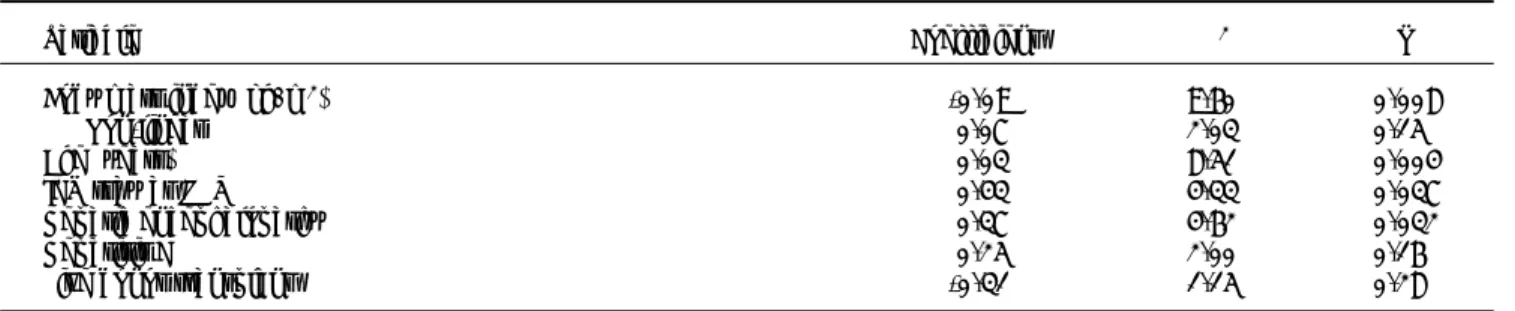
Table 3. Cox proportional hazards regression new predictive model of 5-year mortality after transplant.
Variable Coefficient χ2 P
Body mass index (kg/m2) -0.09 9.60 0.008
Non-linear 0.07 2.03 0.15
Age (years) 0.03 8.51 0.004
ICU stay at OLT 0.43 4.33 0.037
Hepatic encephalopathy 0.37 4.62 0.032
Hepatitis C 0.25 2.00 0.16
Live donor transplant -0.31 1.15 0.28
Model measures (n = 524): χ2, 27.77 (Df, 7). P < 0.001. C-index, 0.64. ICU: intensive care unit. OLT: orthotopic liver transplantation.
Patients 318 293 262 236 207 188 172 160 145 131 119 CCI-OLT: 0
At risk 76 67 60 57 50 47 42 37 37 35 28 CCI-OLT: 1
130 110 104 97 87 82 75 66 63 52 48 CCI-OLT > 1
Survival probability
0.0 1.0 2.0 3.0 4.0 5.0 Years 1.0
0.8
0.6
0.4
0.2
0.0
8%; P = 0.15) revealed a non-significant trend to-wards a lower likelihood of 5-year mortality after OLT.
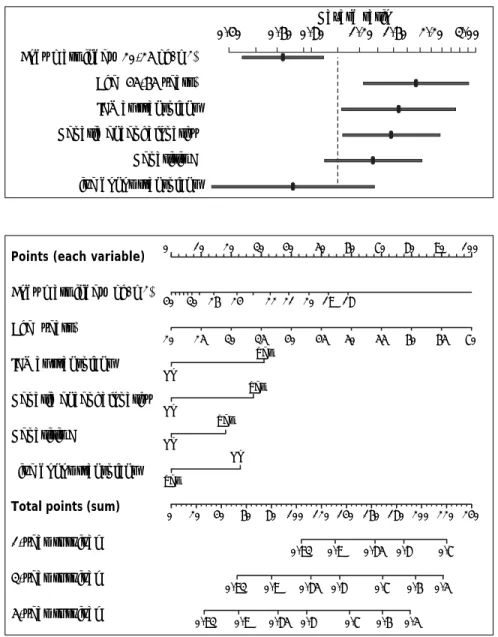
After variable selection procedures (see Material and Methods section), these six variables were deemed to be the best to derive the new predictive model of 5-year mortality after OLT. As presented in Table 3, age (P = 0.004), body mass index (P = 0.008), hepatic encephalopathy (P = 0.032), and ICU stay at OLT (P = 0.037) were the most influen-tial predictive factors of 5-year mortality after trans-plant. Hazard ratios of the variables in the new predictive model are displayed in Figure 3. The C-in-dex of the predictive model was 0.64.
Based on the six variables included in the new predictive model of 5-year mortality after OLT, a
nomogram to estimate individual predicted probabil-ity of 1-, 3-, and 5-year survival after transplant was derived (Figure 4). Total points are calculated by adding points earned by each of the six predictive variables.
DISCUSSION
External validation of CCI-OLT
In a large cohort of cirrhotic patients undergoing OLT, we found that the previously derived CCI-OLT was not associated with 5-year mortality after transplant.12
In their study, Volk, et al.12 reported proportions of pre-transplant comorbidities (e.g. diabetes
melli-Points (each variable)
Body mass index (kg/m2)
Age (years)
ICU at transplant
Hepatic encephalopathy
Hepatitis C
Live donor transplant
Total points (sum)
1-year survival
3-year survival
5-year survival
Figure 4. Cox regression nomogram: estimation of individual predicted prob-ability of 1-, 3-, and 5-year survival af-ter transplant. Total points, which are calculated by adding points earned by each of the six predictive variables, read corresponding prognosticated sur-vival.
Body mass index (20-25 kg/m2)
Age (45-65 years)
ICU at transplant
Hepatic encephalopathy
Hepatitis C
Live donor transplant
Figure 3. Cox regression hazard ra-tios for the six variables in the new predictive model of 5-year mortality af-ter liver transplant. The hazard ratio for body mass index reflects the rela-tive change in risk of a patient with a body mass index of 25 as compared with a patient with a body mass index of 20. The hazard ratio of age reflects the relative change in risk comparing a 65-year-old patient with 45-year old one.
0 10 20 30 40 50 60 70 80 90 100
40 30 26 24 22 21 20 19 18
20 25 30 35 40 45 50 55 60 65 70 Yes
No
Yes
No
Yes
No
No
Yes
0 20 40 60 80 100 120 140 160 180 200 220 240
0.93 0.9 0.85 0.8 0.7
0.93 0.9 0.85 0.8 0.7 0.6 0.5
0.93 0.9 0.85 0.8 0.7 0.6 0.5
tus, 23%; and kidney injury, 16%) and CCI-OLT categories (0, 62%; 1, 16%; and > 1, 22%) similar to the ones we found in our study. However, they reported a 5-year survival after OLT (68%) lower than the one we found in our cohort. This differ-ence in long-term survival after transplant may be explained by the older character of their cohort (1994-2005), as there is mounting evidence that cirrhotic patients outcomes after OLT have been improving throughout time due to several advances in the overall management of those patients before and after transplant.20,21 An additional explanation to that dissimilarity in long term survival after OLT may be the overall severity of liver disease in the two cohorts. Despite the median biochemical MELD score in their cohort16 being similar to the one found in our study, they did not report the prevalence of additional markers of severity of liver disease, such as the complications of cirrhosis, which may not be entirely reflected by the MELD, but are still most relevant to the prognosis of these patients.22,23
In summary, CCI-OLT cannot be used as a pre-dictive rule for 5-year mortality after transplant in our center and possibly in other centers whose pop-ulations have similar characteristics to ours.
New predictive model of 5-year mortality after OLT
Due to the lack of external validity of CCI-OLT, we developed a new predictive model of 5-year mor-tality after OLT for adult cirrhotic patients. After a variable selection process described in Material and Methods section, the final model was based on the following pre-transplant characteristics: age, body mass index, hepatitis C etiology, hepatic encephalop-athy, the need for ICU stay just prior to OLT, and enrollment for live donor transplant. To allow for a potential translation into clinical practice, we went further to create an easy-to-use nomogram that esti-mates the individual probability of 1-, 3-, and 5-year survival after OLT.
The potential strengths of the new predictive model reside in its simplicity, as it relies only on six pieces of information easily available to clini-cians, and its internal validity, due to the thor-ough statistical approach used for its derivation. Predicted 5-year mortality after transplant was uniformly under 50%, which complies with the widely accepted selection criterion for OLT, a mini-mum expected predicted 5-year survival after trans-plant greater than 50%.8 In this regard, an example
to show the ultimate utility of the new predictive model would be to calculate the predicted 5-year survival after OLT for a patient with end-stage liv-er disease, 60 years of age, a body mass index of 20 kg/m2, hepatitis C, hepatic encephalopathy, admit-ted to the ICU, and not a candidate to receive a liv-er from a live donor. Using the dliv-erived nomogram, this patient would have an estimated predicted 5-year survival after OLT lower than 50% (total points > 190), which could factor in the decision for listing for OLT.
In the new predictive model of 5-year mortality after OLT, age, body mass index, hepatic encepha-lopathy, and the need for ICU stay just prior to OLT are the most influential predictive factors, which is in part consistent to what has been previ-ously described.
In their study, Thuluvath, et al.9 developed a model to predict 5-year survival after OLT based on the following seven categorized pre-transplant characteristics of patients: age, body mass index, United Network for Organ Sharing (UNOS) sta-tus,24 etiology of liver disease, serum bilirubin, se-rum creatinine, and race. However, the reported 5-year survival for this cohort (61%) was lower than the one we found in our study. As neither overall MELD score nor the prevalence of compli-cations of cirrhosis were specified in their study, the overall severity of liver disease may be sparing-ly reflected by the proportion of patients classified as UNOS status 1 (17%), given the fact that they did not exclude patients transplanted for acute liv-er failure. Thliv-erefore, the diffliv-erence in long-tliv-erm survival between the two cohorts may be explained by the older character of their cohort (1987-2001).20,21 Additionally, even with a fairly larger cohort of patients (n = 9,100), discrimination of their predictive model (C-index 0.63) was similar to ours. The fact that the new predictive model ex-plains a low proportion of variability in 5-year mortality after OLT is not unexpected, as patients undergoing OLT need to be thoroughly selected25 and other factors cannot be accounted for prior to transplant, namely donor, peri-operative, and post-operative related factors.26-28
pre-sented until 70 years because selected patients at this age may still be eligible for OLT. In fact, age re-strictions for transplant vary by center, but ‘physio-logic’ rather than chronologic age seems to be most important.29,30
Also in the nomogram, due to the non-linear be-havior of BMI, individual risk variations for scores between 18 and 30 kg/m2 were clearly more impor-tant than those for scores between 30 and 40 kg/m2. By considering BMI a possible surrogate for pa-tients’ nutritional status, the risk of transplanting a less well nourished patient, with all its physiologi-cal implications, is probably greater.
Neither Volk, et al.12 nor Thuluvath, et al.9 re-ported the prevalence of complications of cirrhosis in their cohorts, so our description of pre-transplant hepatic encephalopathy as a predictor of long-term mortality after OLT may only be compared with a recent study from Ahmed, et al.;31 they too showed that pre-transplant hepatic encephalopathy was as-sociated with increased post-OLT mortality. While ptransplant hepatic encephalopathy has been re-ported to be associated with post-transplant neuro-cognitive changes,32,33 the mechanistic explanation for its influence on post-OLT outcomes needs fur-ther clarification.
Prognosis of critically-ill cirrhotic patients re-quiring ICU admission depends on the number of or-gan failures.14 In our cohort, organ support in the ICU may have been an additional surrogate for dis-ease severity with impact on post-OLT outcomes, as suggested previously.34
Hepatitis C showed a tendency to be associated with worse outcomes after OLT, as it has been de-scribed.35 New treatment regimens for hepatitis C after transplant may help change this course.36,37 Nevertheless, there may be a relevant time lag be-fore sicker patients, those with acute on chronic liv-er failure, actually see the presumable benefit of those new treatment regimens.
The fact that our study included patients receiv-ing a liver from a live donor may reinforce compara-bility of our results, as this practice is becoming more frequent and most recent publications report reasonable post-transplant outcomes for this partic-ular group of liver recipients.38,39
In summary, even with a large cohort of patients and up-to-date robust statistical approach, prognos-tication of long-term survival following OLT based only on pre-transplant patients’ characteristics may be difficult, as patients undergo such a thorough se-lection process before inclusion in the waitlist for transplant.
Limitations of the study
The results of our study need to be considered in the context of the following limitations. First, despite the largest referral base for OLT in west-ern Canada, this was a retrospective analysis of prospectively collected data from a single trans-plant center and may have been prone to selection bias. Second, even though our cohort of patients represents a very recent period of time (2002-2012), thus being likely to reflect a reliable “real-world” setting, with outcomes closer to day-to-day clinical practice, and despite modeling with state-of-the-art statistical methodologies to reduce bias (shrinkage and bootstrapping), generalization of our results would require external validation. In this regard, as individual transplant centers, es-pecially from different countries, have diverse groups of patients and practices regarding listing for transplant, organ allocation, and medical and surgical management strategies, such generaliza-tion of results may be difficult. While a more site-specific application of a predictive model such as ours may be worthwhile, in the future, larger mul-ticenter studies may help to clarify which factors should we consider most for predicting post-OLT outcomes and thus optimize selection of patients for OLT.
CONCLUSIONS
In our cohort of adult cirrhotic patients, CCI-OLT was not associated with survival after trans-plant. Based on six pre-transplant characteristics of these patients, we derived a new predictive model of 5-year mortality after OLT. The relatively modest discriminative capacity of this model suggests that pre-transplant characteristics may be of limited val-ue in predicting post-transplant outcomes in such highly selected patients.
ABBREVIATIONS
• CCI-OLT: Charlson Comorbity Index for Ortho-topic Liver Transplantation.
• ICU: Intensive Care Unit. • IQR: inter-quartile range.
• MELD: Model for End-Stage Liver Disease. • OLT: orthotopic liver transplantation. • OTTR: Organ Transplant Tracking Record. • SD: standard deviation.
AUTHORSHIP CONTRIBUTIONS
F.S.C. Conceived the idea of the study, wrote and extensively revised the manuscript, compiled the fi-nal database, and performed statistical and data analyses.
S.M.B. Provided content expertise, significant guidance on analysis and interpretation of data, and assisted extensively with manuscript revision.
J.G.A. Provided content expertise, performed sig-nificant statistical analysis (bootstrapping, multi-variable modeling), significant guidance on analysis and interpretation of data, and assisted extensively with manuscript revision.
N.M.K. Provided content expertise and signifi-cantly revised the final manuscript
G.M. Helped compile the database and revised the final manuscript.
P.F. Significantly revised the final manuscript. C.J.K. Conceived the idea for the study, provided content expertise, significant guidance on compilation of the database, analysis and interpretation of data, and assisted extensively with manuscript revision.
FUNDING SOURCES
Dr. Bagshaw is supported by a Canada Research Chair in Critical Care Nephrology and Clinical In-vestigator Award from Alberta Innovates – Health Solutions. Drs. Cardoso and Fidalgo are supported by an unrestricted educational grant donated by Gambro Inc.
REFERENCES
1 Keeffe EB. Liver transplantation: current status and novel approaches to liver replacement. Gastroenterology 2001; 120: 749-62.
2. Jain A, Reyes J, Kashyap R, Dodson SF, Demetris AJ, Rup-pert K, Abu-Elmagd K, et al. Long-term survival after liver transplantation in 4,000 consecutive patients at a single center. Ann Surg 2000; 232: 490-500.
3. Duffy JP, Kao K, Ko CY, Farmer DG, McDiarmid SV, Hong JC, Venick RS, et al. Long-term patient outcome and quali-ty of life after liver transplantation: analysis of 20-year survivors. Ann Surg 2010; 252: 652-61.
4. Wiesner RH, McDiarmid SV, Kamath PS, Edwards EB, Malin-choc M, Kremers WK, Krom RA, et al. MELD and PELD: ap-plication of survival models to liver allocation. Liver Transpl 2001; 7: 567-80.
5. Bernardi M, Gitto S, Biselli M. The MELD score in patients awaiting liver transplant: strengths and weaknesses. J Hepatol 2011; 54: 1297-306.
6. Karvellas CJ, Lescot T, Goldberg P, Sharpe MD, Ronco JJ, Renner EL, Vahidy H, et al. Liver transplantation in the critically ill: a multicenter Canadian retrospective cohort study. Crit Care 2013; 17: R28.
7. Merion RM. When is a patient too well and when is a pa-tient too sick for a liver transplant? Liver Transpl 2004; 10: S69.
8. Knight M, Barber K, Gimson A, Collett D, Neuberger J, Liv-er Advisory Group of National Health SLiv-ervice Blood Trans-plant. Implications of changing the minimal survival benefit in liver transplantation. Liver Transpl 2012; 18: 549-57. 9. Thuluvath PJ, Yoo HY, Thompson RE. A model to predict
survival at one month, one year, and five years after liver transplantation based on pretransplant clinical character-istics. Liver Transpl 2003; 9: 527-32.
10. Charlson ME, Pompei P, Ales KL, MacKenzie CR. A new method of classifying prognostic comorbidity in longitudi-nal studies: development and validation. J Chronic Dis
1987; 40: 373-83.
11. Quan H, Li B, Couris CM, Fushimi K, Graham P, Hider P, Januel JM, et al. Updating and validating the Charlson co-morbidity index and score for risk adjustment in hospital discharge abstracts using data from 6 countries. Am J Epidemiol 2011; 173: 676-82.
12. Volk ML, Hernandez JC, Lok AS, Marrero JA. Modified Charlson comorbidity index for predicting survival after liver transplantation. Liver Transpl 2007; 13: 1515-20. 13. von Elm E, Altman DG, Egger M, Pocock SJ, Gøtzsche PC,
Vandenbroucke JP; STROBE Initiative. Strengthening the Reporting of Observational Studies in Epidemiology (STROBE) statement: guidelines for reporting observation-al studies. BMJ 2007; 335: 806-8.
14. Moreau R, Jalan R, Gines P, Pavesi M, Angeli P, Cordoba J, Durand F, et al. Acute-on-chronic liver failure is a distinct syndrome that develops in patients with acute decompen-sation of cirrhosis. Gastroenterology 2013; 144: 1426-37. 15. American Diabetes Association. Diagnosis and classifica-tion of diabetes mellitus. Diabetes Care 2007; 30(Suppl. 1): S42-7.
16. Arroyo V. Acute kidney injury (AKI) in cirrhosis: should we change current definition and diagnostic criteria of renal failure in chirrosis? J Hepatol 2013; 59(3): 415-7.
17. Goeman JJ. L1 penalized estimation in the Cox proportion-al hazards model. Biom J 2010; 52: 70-84.
18. Harrell FE Jr, Lee KL, Califf RM, Pryor DB, Rosati RA. Re-gression modelling strategies for improved prognostic pre-diction. Stat Med 1984; 3: 143-52.
19. Harrell FE, Jr. Regression Modelling Strategies. With Appli-cations to Linear Models, Logistic Regression and Survival Analysis. New York: Springer; 2001.
20. Schoening WN, Buescher N, Rademacher S, Andreou A, Kuehn S, Neuhaus R, Guckelberger O, et al. Twenty-Year Longitudinal Follow-Up After Orthotopic Liver Transplan-tation: A Single-Center Experience of 313 Consecutive Cases. Am J Transplant 2013; 13: 2384-94.
21. Sela N, Croome KP, Chandok N, Marotta P, Wall W, Hern-andez-Alejandro R. The changing donor characteristics in liver transplantation over the last 10 years in Canada. Liv-er Transpl 2013; 19: 1236-44.
22. Rahimi RS, Rockey DC. End-stage liver disease complica-tions. Curr Opin Gastroenterol 2013; 29: 257-63.
23. Huo TI, Lin HC, Lee FY, Hou MC, Lee PC, Wu JC, Chang FY, et al. Occurrence of cirrhosis-related complications is a time-dependent prognostic predictor independent of baseline model for end-stage liver disease score. Liver Int
2006; 26: 55-61.
25. Murray KF, Carithers RL, Jr. AASLD practice guidelines: Evaluation of the patient for liver transplantation. Hepa-tology 2005; 41: 1407-32.
26. Feng S, Goodrich NP, Bragg-Gresham JL, Dykstra DM, Punch JD, DebRoy MA, Greenstein SM, et al. Characteris-tics associated with liver graft failure: the concept of a donor risk index. Am J Transplant 2006; 6: 783-90. 27. Freire MP, Soares OIC, Bonazzi PR, Guimarães T, Ramos
FER, Bacchella T, Costa SF, et al. Surgical site infections in liver transplant recipients in the model for end-stage liver disease era: An analysis of the epidemiology, risk factors, and outcomes. Liver Transpl 2013; 19: 1011-9.
28. Barbier L, Garcia S, Cros J, Borentain P, Botta-Fridlund D, Paradis V, Le Treut YP, et al. Assessment of Chronic Re-jection in Liver Graft Recipients Receiving Immunosup-pression with low-Dose Calcineurin Inhibitors. J Hepatol
2013; 59: 1223-30.
29. O’Leary JG, Lepe R, Davis GL. Indications for liver trans-plantation. Gastroenterology 2008; 134: 1764-76. 30. Collins BH, Pirsch JD, Becker YT, Hanaway MJ, Van der
Werf WJ, D’Alessandro AM, Knechtle SJ, et al. Long-term results of liver transplantation in older patients 60 years of age and older. Transplantation 2000; 70: 780-3. 31. Wong RJ, Gish RG, Cheung R, Ahmed A. Pre-Transplant
He-patic Encephalopathy is Associated with Significantly Low-er Survival Following LivLow-er Transplantation. Hepatology
2014; 60(4): 392A.
32. Kanwal F, Chen D, Ting L, Gornbein J, Saab S, Durazo F, Yersiz H, et al. A model to predict the development of mental status changes of unclear cause after liver trans-plantation. Liver Transpl 2003; 9: 1312-9.
33. Sotil EU, Gottstein J, Ayala E, Randolph C, Blei AT. Impact of preoperative overt hepatic encephalopathy on neuro-cognitive function after liver transplantation. Liver Transpl 2009; 15: 184-92.
34. Dutkowski P, Oberkofler CE, Slankamenac K, Puhan MA, Schadde E, Müllhaupt B, Geier A, et al. Are there better guidelines for allocation in liver transplantation? A novel score targetting justice and utility in the model for end-stage liver disease era. Ann Surg 2011; 254(5): 745-53. 35. Forns X, García-Retortillo M, Serrano T, Feliu A, Suarez F,
de la Mata M, García-Valdecasas JC, et al. Antiviral thera-py of patients with decompensated cirrhosis to prevent recurrence of hepatitis C after liver transplantation. J Hepatol 2003; 39(3): 389-96.
36. Lens S, Gambato M, Londoño MC, Forns X. Interferon-free regimens in the liver-transplant setting. Semin Liver Dis
2014; 34: 58-71.
37. Gane EJ, Agarwal K. Directly Acting Antivirals (DAAs) for the Treatment of Chronic Hepatitis C Virus Infection in Liver Transplant Patients: “A Flood of Opportunity”. Am J Transplant 2014; 14: 994-1002.
38. Kasahara M, Umeshita K, Inomata Y, Uemoto S; Japanese Liver Transplantation Society. Long-term outcomes of pediatric living donor liver transplantation in Japan: an analysis of more than 2200 cases listed in the registry of the Japanese Liver Transplantation Society. Am J Trans-plant 2013; 13: 1830-9.