
Beto’s senses: an adventure
89
0
0
Texto completo
(2) BETO‟S SENSES: AN ADVENTURE. Dedication. This book is dedicated to my parents, María Elma and Luis Ernesto, who have been a constant source of support and encouragement during the challenges of graduate school and life. I am truly thankful for having you in my life. This work is also dedicated to my siblings, Mayra, Edison, Angie and Dayana who have always loved me unconditionally and whose good examples have taught me to work hard for the things that I aspire to achieve. Katherine Marin Acevedo. This book is dedicated to my lovely parents, Gloria Ocampo and Jaime Martínez, who have been my pillars of strength, for their love, encouragement, and support. I feel so fortunate that they exist in my life. This work is also dedicated to Edward Benítez whose good examples have taught me to work hard for the things that I aspire to achieve. This is for them, with all my love. Erika Martínez Ocampo.
(3) BETO‟S SENSES: AN ADVENTURE. Acknowledgements. Our endless gratitude to Silvio Alejandro Puertas Pino who has been our guide throughout the development of this work. Also, our words of deep appreciation to Mayra Capera for supporting us all the way through to the achievement of our goal. A deep and sincere thanks to Edward Benítez and Jairo Galvis for their professional guide and patience in the development of this venture, thus, contributing to achieve our goal. Erika and Katherine..
(4) BETO‟S SENSES: AN ADVENTURE. Abstract. Systemic functional linguistics is the study of the relationship between language and its functions in social settings. The aim of the present document is to create an English artist book which allow students to communicate their ideas making use of the linguistic, pragmatic and sociolinguistic competences suggested in Estándares Básicos de Competencias en Lenguas Extranjeras through images and lexis presented on the same as well as to provide teacher with didactic material as a complementary resource for the teaching learning process.. Key words Artist Book, Estándares Básicos de Competencias en Lenguas Extranjeras, Communicative Language Competences, Functional Approach..
(5) BETO‟S SENSES: AN ADVENTURE. Table of Contents. INTRODUCTION. 7. JUSTIFICATION AND PROPOSAL. 9. Problem Statement. 11. Objectives. 12. General Objectives. 12. Specific Objectives. 12. STATE OF THE ART. 13. Language Focus. 13. Material Design. 18. CREATION PROCESS. 22. Script. 22. Illustration. 25. Reinforcement and production activities. 34. FINAL PRODUCT. 35. EDUCATIONAL AND LANGUAGE IMPLICATIONS. 40. CONCLUSIONS. 43. LIST OF REFERENCES. 45.
(6) BETO‟S SENSES: AN ADVENTURE. LIST OF FIGURES Figure 1. First prototype showing how it opens. 26. Figure 2. Third prototype showing how it opens. 26. Figure 3. First prototype. Shape, size and opening of the book. 27. Figure 4. First prototype. Shape, size and opening of the book. 27. Figure 5. Second prototype. Size, and shape proposal. 28. Figure 6. Second prototype. Puppet shifting proposal. 29. Figure 7. Second prototype. Opening. 29. Figure 8. Third prototype. Closing and appearance. 30. Figure 9. Third prototype. Cover and front page. 30. Figure 10. Third prototype. First page and puppet translation. 31. Figure 11. Third prototype. Sceneries. 31. Figure 12. Third prototype. Scenery. 32. Figure 13. Third prototype. Puppet shifting. 32. Figure 14. Third prototype. Closing. 33. Figure 15. Front page. 35. Figure 16. Narrator‟s puppet. 36. Figure 17. First page. Malva‟s limit. 36. Figure 18. Fanal world. 37. Figure 19. Napias world. 37. Figure 20. Fauces world. 38.
(7) BETO‟S SENSES: AN ADVENTURE. Figure 21. Fragor world. 38. Figure 22. Zarpas world. 39. Figure 23. Opening. 39. APPENDIX Appendix 1. Beto‟s senses: and adventure, suggested tale. 48. Appendix 2. Activtities‟ chart. 58. Appendix 3. Lesson plans. 66. Appendix 4. Timetable. 91.
(8) 7. INTRODUCTION. The graduation project reported in this document deals with the creation and design of a didactic and innovative English artist book called “Beto‟s senses: an adventure” addressed to learners in the level A1. It covers ages between 7 and 9 years old. This graduation paper is focused, firstly on the creation of a short story which involves some lexis related to the main topics to learn, suggested in the basic A1 level of English from the Estándares Básicos de Competencias en Lenguas Extranjeras1, and secondly, on the creation of didactic material for the teaching-learning process. This book is divided into five different settings where the whole story takes place. Furthermore, it is accompanied by a set of activities to reinforce reading and listening understanding, vocabulary recognition and use, and language competences development. What motivated us to create and design this book, first of all, was the necessity of a complementary material for the teaching-learning process that we observed while teaching English during our pedagogical experiences and pedagogical interventions. On the other hand, the interest in designing an innovative English artist book emerged from the idea of using it as a support to English classes and as a way to practice the content suggested during the course through the different suggested activities. For the creation of this material we took into account not just the content of the tale, but the book appearance itself, since. 1. Estándares Básicos de Competencias en Lenguas Extranjeras is abbreviated as EBCLE hereinafter, and at the same time based on the Common European Framework of Reference for Languages A1 level of English..
(9) 8. BETO‟S SENSES: AN ADVENTURE. we wanted to present a different book model. In order to get an original idea for the creation and design of this book, we visited different libraries and bookstores in Bogota and, we observed that although there are several English books in the market there is not a book like the one we created. In our teaching experience, we identified students who liked to learn English, but they also felt distress about learning it in a non- didactic way, where outcome is prevailing in the learning process. Therefore, we considered necessary to admit a creative and innovative English artist book in class to provide students with sceneries to practice some content they learnt and integrate it to their learning process. In the first part, the reader can find the justification, proposal, and objectives which guided the process of the creation of the didactic book. Followed by a recompilation of some theories, approaches and statements about communicative language, functional approach and meaningful learning to argue the content of the book. Additionally, for the creation of the book we had into account the definitions of artistic book, as well as, narrative and fantastic gender. In the third place, the educational and learning implications are explained and in the final part the reader can find the conclusions of this paper..
(10) 9. BETO‟S SENSES: AN ADVENTURE. CHAPTER 1 JUSTIFICATION AND PROPOSAL. Communication allows sharing ideas and or thoughts with other people through a channel that conveys the message. So, according to the communicative process, communication make the message sent be received and understood by the receiver. In this regard, “Beto‟s senses: an adventure” is an artifact which allows a communicative process, since, it permits to convey a message from the author to the audience and participate in a both sender-receiver and receiver-receiver interaction, as learners and teachers interact with the book and the audience. The communicative skills are the axis around which the oral and written production of a language is established. According to Orwing, C. (1999) the basic language skills are divided into two important groups: the first one called receptive, which involves listening and reading skills; and the second one called productive which involves speaking and writing skills. This graduation paper is guided on the receptive skills. The creation and design of a didactic and innovative English book named “Beto‟s senses: an adventure” provides the learner with a way to know and practice topics suggested at A1 level of English according to the EBCLE. “Beto‟s senses: an adventure” consists of an illustrated English artist book divided into five mobile sceneries, where a finger puppet becomes the narrator of the marvelous story. Each scenery represents a human sense according to the development of the story. In.
(11) 10. BETO‟S SENSES: AN ADVENTURE. that way, the finger puppet has the possibility of visiting each mobile scenery, interacting at the same time with the reader. The book will be read from bottom to top. This paper has impact on the English as a Foreign Language community, starting with the school's teachers since it is proposed as a complementary resource to review and practice topics studied applying the English artist book as a supplementary activity for the English classes, continuing with the students as they can review, remember, associate and use in context the lexis they have learnt in a classroom elsewhere, they can reinforce their own knowledge about specific topics presented previously during the English classes, taking some elements of each setting offered, and finishing with the institutions where it is applied since the teachers have new material which serves to the learners for practicing the topics they need to know, in this way the student‟s will increase their understanding and the institution will have better results in the English assessments. Furthermore, this research work has had a positive impact in our own lives, in first place, because it is our first design approach and it has been really exciting to devise something in our heads and then see it all printed on a paper, and additionally, because we conceive this as an interesting, innovative, and original work. To conclude, the design and creation of this English artist book is important and necessary because it is a resource which allows the EFL community to reinforce English classes content..
(12) 11. BETO‟S SENSES: AN ADVENTURE. Problem statement. As pre-service teachers, we worked with a group of students from 7 to 9 years old at a public co-educational institution located in Bogota. To elicit the problematic situation, we observed some of the English classes of the head teacher and with those observations we could identify the head teacher had a good level of English language, but the teacher could not make students communicate their thoughts in that language. We also saw that the classes were only focused on giving grammar rules and some vocabulary to students, but not in a didactic way. Hoping that just with that, students start to communicate their ideas and thoughts, but they did not, because they did not feel motivated with the material presented by the teacher. Likewise, we observed that they probably understood the way they should create a sentence but they did not have, first, enough vocabulary repertoire to express themselves and to be understood and second, an appropriate didactic material. So, those reasons allowed us to diagnose that in the teaching-learning process it is necessary to create a didactic material to use during the English classes to support the content of the A1 level of English according to the EBCLE..
(13) 12. BETO‟S SENSES: AN ADVENTURE. Objectives. General ▪. To design an artist book entitled “Beto‟s senses: an adventure” which aims. to promote the teaching-learning process of English as a foreign language at EBCLE level A1 of students between 7 and 9 years old from the development of a fantastic tale. ▪. To provide teachers with didactic material for the teaching-learning process.. Specific ▪. To create a script for the artist book.. ▪. To compose the illustrations according to the script.. ▪. To propose a set of activities to reinforce communicative competence.. ▪. To suggest tasks for students to create their own stories based on their. previous knowledge..
(14) 13. BETO‟S SENSES: AN ADVENTURE. CHAPTER 2 STATE OF THE ART. To support the design and development of the English artist book “Beto‟s senses: an adventure” and its content, this chapter describes and defines some important theories, where the most illustrative are language focus and material design.. Language Focus. The notions of communicative language that focus the English artist book content will be explained through the following lines bearing in mind some references and authors. The origins of the communicative approach have arisen both in linguistics and in language teaching as a “reaction against the view of language as a set of structures” (Brumfit and Johnson 1979:3). Formerly, linguistics was concerned mainly with the structure of a language, and as language teaching is closely connected to contemporary linguistic view, language teachers were mainly interested in grammatical correctness. In other words, “the „form‟ rather than the „meaning‟ has dominated the teaching” (Brumfit and Johnson 1979:3). Eventually, it had been found that the knowledge of grammar rules itself does not enable students to use the language for communicative purposes sufficiently. Communication does not imply just composing correct sentences but using them “to make.
(15) 14. BETO‟S SENSES: AN ADVENTURE. statements of different kinds, to describe, to record, to classify and so on, or to ask questions, make requests, give orders” (Widdowson in Brumfit and Johnson 1979). The communicative approach places emphasis on developing the communicative competence, viewed as “the overall underlying knowledge and ability for language use which the speaker-listener possesses” (Brumfit and Johnson1979:3). Through the communicative teaching, learners are encouraged to “consider language not only in terms of its structures (grammar and vocabulary), but also in terms of the communicative functions that it performs” (Littewood 1981). By giving opportunities to use the language for real communicative purposes the teacher helps them to develop strategies for relating the structures of a language to the communicative functions they can perform. On the other hand, Howatt distinguishes between a “strong” and a “weak” version of Communicative Language. There is, in a sense, a “strong” version of the communicative approach and a “weak” version. The weak version which has become more or less standard practice in the last ten years, stresses the importance of providing learners with opportunities to use their English for communicative purposes and, characteristically, attempts to integrate such activities into a wider program of language teaching... The “strong” version of communicative teaching, on the other hand, advances the claim that language is acquired through communication, so that it is not merely a question of activating an existing but inert knowledge of the language, but of stimulating the development of the language system.
(16) 15. BETO‟S SENSES: AN ADVENTURE itself. If the former could be described as “learning to use” English, the latter entails “using English to learn it.” (1984: 279) Beto‟s senses: an adventure was emphasized on the “strong” version of communicative teaching, “using English to learn it.” Systemic functional linguistics (SFL) is the study of the relationship between language and its functions in social settings. In SFL three sections make up the linguistic system: meaning (semantics), sound (phonology), and wording or lexicogrammar (syntax, morphology, and lexis). Systemic functional linguistics was developed in the 1960s by British linguist M.A.K. Halliday (b. 1925), who had been influenced by the work of the Prague School and British linguist J.R. Firth (1890-1960). Systemic functional linguistic is an admittedly functionalist approach to language, and it is arguably the functionalist approach which has been most highly developed. Like other functionalist frameworks, SFL is deeply concerned with the purposes of language use. Systemicists constantly ask the following questions: What is this writer (or speaker) trying to do? What linguistic devices are available to help them do it, and on what basis do they make their choices? According to Halliday (1979) cited by Nordquist, R (2005) there are four main theoretical claims about language to explain how people use it with each other in accomplishing everyday social life. 1) language use is functional, 2) its function is to make meanings, 3) these meanings are influenced by the social and cultural context in which they are exchanged, and 4) the process of using language is a semiotic process, a process of.
(17) 16. BETO‟S SENSES: AN ADVENTURE. making meaning by choosing. These four claims that language uses are: functional, semantic, contextual and semiotic, can be summarized by describing the systemic approach as a functional-semantic approach to language. According to Halliday (1975) “language has developed in response to three kinds of social-functional „needs‟. The first is to be able to construct experience in terms of what is going on around us and inside us. The second is to interact with the social world by negotiating social roles and attitudes. The third and final need is to be able to create messages with which we can package our meanings in terms of what is new or given, and in terms of what the starting point for our message is, commonly referred to as the theme. Halliday (1978) calls these language functions: “meta functions”, and refers to them as ideational, interpersonal and textual respectively. “Halliday‟s point is that any piece of language calls into play all three metafunctions simultaneously.” The Meaningful Learning Theory is attributed to David Ausubel. This theory claims that learners learn through a meaningful process of relating new events to already existing concepts. Consequently, meaning is not an implicit response but an expressed and distinguished conscious experience that takes place when meaningful signs, symbols, concepts, or propositions are related to a given individual‟s cognitive structure. According to Ausubel, the students have to be active, and teachers have to reinforce new learning by underlining, completing missing words, restructuring sentences, or by giving additional examples. So, Ausubel‟s theory has three requirements. 1) Relevant prior.
(18) 17. BETO‟S SENSES: AN ADVENTURE. knowledge: Students construct mental pictures of the language which help them to relate to new information. Students are able to analyze the concepts that they learn in different stages during their second language acquisition in a nontrivial way, 2) Meaningful material: That is, students construct significant concepts and propositions, which must be relevant to the knowledge to be obtained, and 3) The learner must choose to learn meaningfully: That is, students must consciously and deliberately choose to relate new knowledge to knowledge the learner already knows in some nontrivial way. Systemic Functional linguistic follow three main questions 1) What is this writer (or speaker) trying to do? 2) What linguistic devices are available to help them do it, and 3) on what basis do they make their choices? And the creation of the book and activities are directed to them. The main objective here is communication, so the learner needs to communicate their ideas, transform their thoughts into words, these could be written or spoken, to do it we offer them a linguistic device called “Beto‟s Senses: an adventure” where through a set of activities the speech is narrowed allowing students to share their ideas making use of the language in context. Through the activities the students have the choice to create, to talk, to draw, to write, to express themselves. Based on Ausbel‟s meaningful learning theory learners learn relating new events to already existing concepts, by this way, learners link previous knowledge with the one presented in the class, in other words, previous language refers to two specific aspects, the first one is related to the realia, how they feel the world they are immersed in and the second.
(19) 18. BETO‟S SENSES: AN ADVENTURE. one is related to the knowledge acquired in the classroom, in this case vocabulary and its function; and the new event is the English artist book, that help the student to use the current language in a specific situation, presented in the book.. Material Design. In order to classify “Beto‟s senses: an adventure” as an English artist book it is necessary to take into account some definitions about what book and artist book mean. Oxford dictionary defines book as: “A written or printed work consisting of pages glued or sewn together along one side and bound in covers, also as, a literary composition that is published or intended for publication as a book”. In the same way Cambridge dictionary defines book as: “a set of pages that have been fastened together inside a cover to be read or written in, additionally, as a number of one type of thing fastened together flat inside a cover”. According to the definitions given by the different dictionaries, we can conclude that “Beto‟s senses: an adventure” can be defined as a book. Besides, one important topic to take into consideration is artist book, …An artist‟s book is a medium of artistic expression that uses the form or function of “book” as inspiration. It is the artistic initiative seen in the illustration, choice of materials, creation process, layout and design that makes it an art object. Similarly, Méndez (2012) states: “El Libro-arte es el objeto resultante de una visión alternativa de narratividad dentro de la.
(20) 19. BETO‟S SENSES: AN ADVENTURE expresión artística, en el que cualquier historia, idea, concepto, etcétera…, puede ser plasmada en heterogéneos formatos que alteran el uso tradicional del término lectura”. So, in concordance with the definitions of book and artist book, “Beto‟s senses: an adventure” is classified as an artist book, because of, it is an artistic expression exposed in a nontraditional and illustrated format. The narratives of the world are numberless. Narrative is first and foremost a prodigious variety of genres, themselves distributed amongst different substances – as though any material were fit to receive man‟s stories. Able to be carried by articulated language, spoken or written, fixed or moving images, gestures, and the ordered mixture of all these substances; narrative is present in myth, legend, fable, tale, novella, epic, history, tragedy, drama, comedy, mime, painting, stained glass windows, cinema, comics, news item, conversation. Moreover, under this almost infinite diversity of forms, narrative is present in every age, in every place, in every society; it begins with the very history of mankind and there nowhere is nor has been a people without narrative. All classes, all human groups, have their narratives, enjoyment of which is very often shared by men with different, even opposing, cultural backgrounds. Caring nothing for the division between good and bad literature, narrative is international, trans historical, transcultural: it is simply there, like life itself. (Barthes 1977, p.79). According to Barthes, narrative means mankind stories presented through spoken or written language and fixed or moving images contained in a variety of genres. It is presented in every age, in every place, in every society. That was what we did in the.
(21) 20. BETO‟S SENSES: AN ADVENTURE. English artist book. The fantastic genre contained in a narrative presented through a variety of fixed and moving images as a complement task for the English classes. Considering the content suggested in EBCLE. Narrative is important in children's learning. They use narrative as a tool to help them organize and explore their ideas and experiences. Narrative is essential for them to express themselves creatively and imaginatively. Theorists argue whether the fantastic should be treated as a genre or as a literary quality. Two important authors in this area are Tzvetan Todorov and Rosemary Jackson, have slightly different definitions for this literary phenomenon. Jackson describes the fantastic as a literary mode which can appear in a variety of genres, while Todorov treats the fantastic as a genre in its own right. Todorov also points out that “a work can [...] manifest more than one category, more than one genre”, and if one agrees with that, there should be no reason for not treating the fantastic as a genre in its own right. While Todorov‟s focus is the structural aspect, Jackson tries to develop his theory. Jackson thinks that Todorov “fails to consider the social and political implications of literary forms”, and this is what she tries to do in her book Fantasy: The Literature of Subversion. In this essay, the focus will be on the structure of the text. Therefore, Todorov‟s definition will be used and the fantastic will be treated as a literary genre. For Leffler in “Aspects of the Fantastic and the Gothic in Nineteenth Century Scandinavian Literature” there are two different categories into the fantastic genre. The first category is related to horror stories or ghost stories: Gothic, in which we did not emphasize.
(22) 21. BETO‟S SENSES: AN ADVENTURE. on; and in the second category fantastic events take place within a framework of realism: Fantastic. The English artist book was classified into the second category above mentioned: Fantastic. It is common to find in the fantastic narratives somewhere in the story something strange and unknown break into the everyday world and this something remains unexplainable until the very end of the story. That is, these stories have an open ending because of the fantastic elements. In fantastic narratives, it is common to introduce the reader to a fictional world that in every way seems to work in our own everyday world..
(23) 22. BETO‟S SENSES: AN ADVENTURE. CHAPTER 3 CREATION PROCESS. This stage of the document deals with the design, procedure and development of the four most important sections of the final product, the script, illustration, activities and framing. For the creation of this product four main periods were considered. First at all, the tale‟s creation where the content of the tale had central relevance. Secondly, the illustration of the story where the visual representation was the emphasis. Third, where the reinforcement and production activities were estimated, and last but not least, the framing of the book where materials and printing were contemplated.. Script. The idea of design and create a book emerged from the necessity of ludic material for the teaching-learning process observed during the practicum experience, so it was decided to create an innovate English artist book. This process started selecting settings and characters from a huge repertoire, bearing in mind the population it was directed to. In the first phase, it was thought to write a tale referring to the four nature elements (fire, water, earth and air) but it did not work because the content was not appropriate for the level we were working with..
(24) 23. BETO‟S SENSES: AN ADVENTURE. In the second phase, it was decided to work with the senses of the human being since these were appropriate for the A1 level of English according to the EBCLE. It was decided to divide both, the tale and the book, into six different settings: Malva, Fanal, Napias, Fauces, Zarpas and Fragor, the order of the senses was the following sight, smell, taste, touch and hearing respectively. Each setting was referred to a human sense, and each of them is correlated to its meaning in Spanish. In Malva, Beto the main character, was introduced, his daily life and his common environment and how he started his adventure leaving Malva, when he discovered he had the power of fly, gift his grandpa passed to Beto before dying, he started his trip around those marvelous worlds. In Fanal, the sight sense was presented. A setting that highlighted the importance of seeing, looking, observing, staring and watching our surrounding. In Napias, the smell sense was presented. A setting that highlighted the importance of smelling, sniffing, snorting and breathing, this last one as one of the most important functions to live. In Fauces, the taste sense was presented. A setting that highlighted the importance of tasting, savoring, chewing, licking and swilling to enjoy the diversity of flavors such as sweet, bitter, strong, yucky, spicy, sour and salt. In Zarpas, the touch sense was presented. A setting that highlighted the importance of touch, perceive and feel all the elements contained in the world..
(25) 24. BETO‟S SENSES: AN ADVENTURE. The last setting was Fragor, the hearing sense was presented here. It highlighted the importance of hearing and listening to our surrounding sounds. In each one of those settings were presented simple vocabulary words appropriate and related to the five senses and the A1 level of English as well as the importance of the five senses in human beings. In an attempt to develop the story, several ways to present it were proposed. The story had three moments, two of them in a scientific LAB and the final one in Malva‟s world. Initially, the story was carried out at a scientific LAB, there was an alien who found a lost LAB. The alien activated it when he moved a lever inside it and discovered there was a hidden gate. This gate allowed him travel from that world to another. However, it was decided to change it because of the lexis was for a higher level. In the same way, the story continued in a scientific LAB, but the character changed, it was a little boy instead of an alien, who worked there. One day, while he was sleeping he dreamed about life in other worlds, situations, events and different people living in several worlds. That story finished when he woke up and went to the LAB because of his dreams started to create a gate that allowed him to travel to those different places. The third and final proposal of the story was the one presented at the end of this document. The story deals with a not human being boy who did not know anything about life outside his own world. So, one day, while thinking about his appearance he arrived at the limit of his world and after he fell down and was aware of his grandpa‟s gift the power.
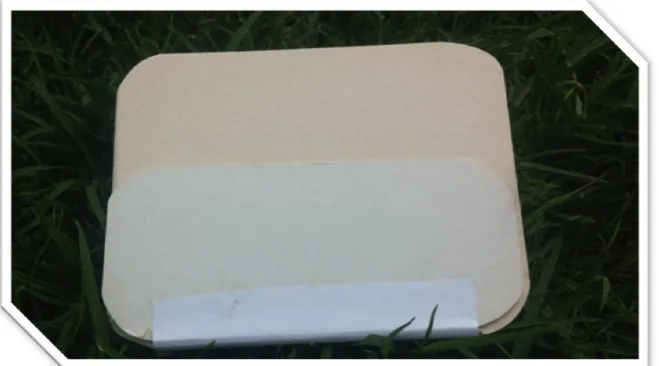
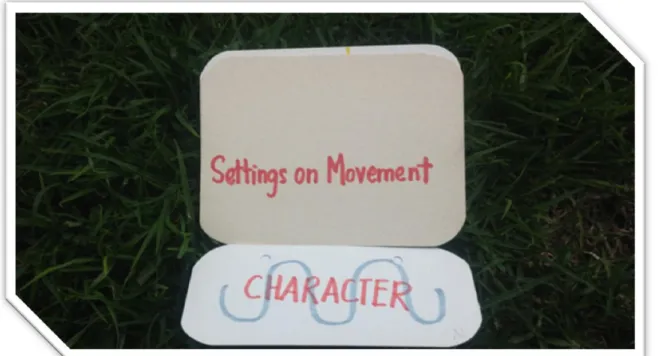
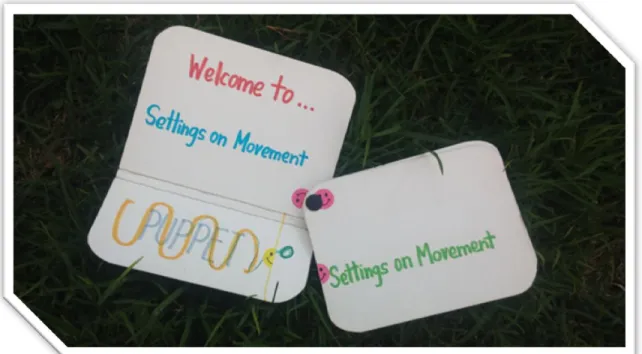
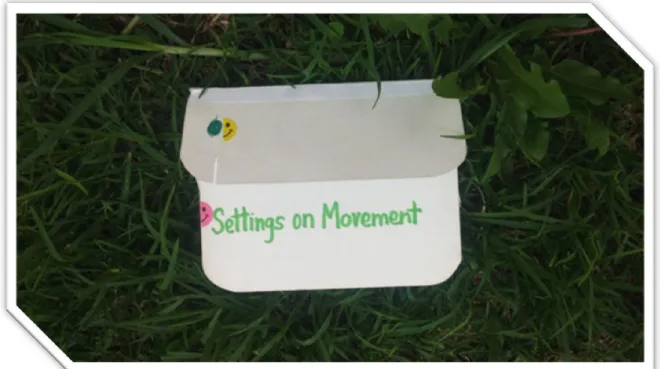
(26) 25. BETO‟S SENSES: AN ADVENTURE. of fly. He realized there were other worlds he did not know existed, but he wanted to visit. (See Appendix 1). The whole story changed into different moments because of the population it was directed to, and because of the level of English it was decided to work on. (Students from 7 to 9 years old).. Illustration. The book was divided into different settings because through each one, the human senses and its importance, were represented. To illustrate the book; the material, drawings, and tale‟s development were taken into consideration. After a meticulous research about what kind of books existed in the libraries and book stores, we notice that a puppet was added to any book and it was in charge of telling the story. At the same time, it was observed the longing of creating a different kind of book, so the proposal and the execution was a book which could be open as a fan. (See Figures 1 and 2)..
(27) 26. BETO‟S SENSES: AN ADVENTURE. Figure 1. First prototype showing how it opens.. Figure 2. Third prototype showing how it opens..
(28) 27. BETO‟S SENSES: AN ADVENTURE. There were several prototypes in order to create the final book. The first prototype was created to analyze the shape, size and the opening of the book. (See Figures 3 and 4).. Figure 3. First prototype. Shape, size and opening of the book.. Figure 4. First prototype. Shape, size and opening of the book..
(29) 28. BETO‟S SENSES: AN ADVENTURE In the second and third prototypes, the puppets‟ size and its management were evaluated. The emphasis in the third prototype was to improve the opening of the book in a way the teacher could manage it easier, as well as, the trajectory the finger puppet had to get around. (See Figures 5, 6 and 7 for second prototype; and Figures 8, 9, 10, 11, 12, 13 and 14 for third prototype).. Figure 5. Second prototype. Size, and shape proposal..
(30) 29. BETO‟S SENSES: AN ADVENTURE. Figure 6. Second prototype. Puppet shifting proposal.. Figure 7. Second prototype. Opening ..
(31) 30. BETO‟S SENSES: AN ADVENTURE. Figure 8. Third prototype. Closing and appearance.. Figure 9. Third prototype. Cover and front page..
(32) 31. BETO‟S SENSES: AN ADVENTURE. Figure 10. Third prototype. First page and puppet translation.. Figure 11. Third prototype. Sceneries..
(33) 32. BETO‟S SENSES: AN ADVENTURE. Figure 12. Third prototype. Scenery.. Figure 13. Third prototype. Puppet shifting..
(34) 33. BETO‟S SENSES: AN ADVENTURE. Figure 14. Third prototype. Closing.. The above images show the illustration process and the main character creation. In the final product a space for questions, activities or vocabulary was added at the bottom of each page. And the last one was the final delivery with the illustrations approved. (See Appendix 2). Some prototypes from the main and secondary characters and the final version of the tale were sent to the graphic illustrator. In this way, the designer periodically sent to us the illustrations‟ drafts and then the final version was created. The one was sent to the editor and printer. Meanwhile, book‟s materials were evaluated and at the same time, the.
(35) 34. BETO‟S SENSES: AN ADVENTURE. puppet was being created its appearance and its movement in the book, in that way we could send the final illustrations and the tale to print.. Reinforcement and production activities. Activities proposed in the English artist book were divided into reinforcement and production. The first group is about activities such as: asking and answering questions making use of patterns presented through the tale, and the second group is about activities such as: following instructions and or matching pictures. All those activities were planned considering some learning strategies mentioned by Rebecca Oxford and the content of the EBCLE. Reinforcement activities were created to practice some language lexis learners may know using it in a specific context. Here the main resource used was the English artist book, the learners can extract some words from a bank of words found on each stage of the book. These activities are explained in a set of proposed lesson plans. (See Appendix 3). Production activities were created with the aim learners could experience and realize their senses and its importance in their daily life. The resources used for these activities are primarily the human senses and secondly, different objects which let them exposure to distinct feelings and sensations. These activities are explained in a set of proposed lesson plans. (See Appendix 3)..
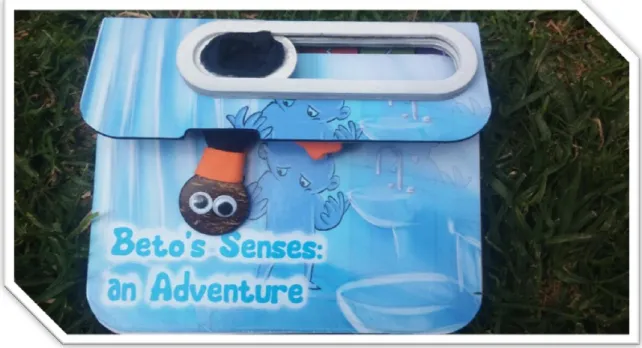
(36) 35. BETO‟S SENSES: AN ADVENTURE. CHAPTER 4 FINAL PRODUCT. Here there are some images of the final product.. Figure 15. Front page..
(37) 36. BETO‟S SENSES: AN ADVENTURE. Figure 16. Narrator’s puppet.. Figure 17. First page. Malva’s limit..
(38) 37. BETO‟S SENSES: AN ADVENTURE. Figure 18. Fanal world.. Figure 19. Napias world..
(39) 38. BETO‟S SENSES: AN ADVENTURE. Figure 20. Fauces world.. Figure 21. Fragor world..
(40) 39. BETO‟S SENSES: AN ADVENTURE. Figure 22. Zarpas world.. Figure 23. Opening..
(41) 40. BETO‟S SENSES: AN ADVENTURE. CHAPTER 5 EDUCATIONAL AND LANGUAGE IMPLICATIONS. The creation and design of new material to be applied in an educational context involves inquiry, time, effort, money and more. But the results are the enrichment as in the educational as in the pedagogical contexts. Letting the learner to learn something new and to use it in diverse situations presented during life. Children create possible worlds having the opportunity to practice language through the text. Hypothetical situations presented in the English artist book offer students chances to enhance communicative language competences in the way there is not just a possibility to tell the story using the lexis they acquired during their language learning process, but to share different students‟ perspectives creating their own stories following the one proposed by the teacher. According to the EBCLE “la competencia comunicativa sirve como punto de referencia para establecer lo que los estudiantes están en la capacidad de saber sobre el idioma y lo que deben saber hacer con él en un contexto determinado”. With the English artist book “Beto‟s senses: an adventure” is aimed that children explore new contexts, so through the creation of possible worlds the learner can experience different situations that allow them to communicate their ideas, thoughts or feelings. Alike when to the learner the possibility of creating and knowing probable worlds through language is offered and he or.
(42) 41. BETO‟S SENSES: AN ADVENTURE. she is supported to deal with them, the learning process becomes in meaningful learning and on the same way effective. Interacting with the English artist book students aware of the existence of common situations and expressions that allow them to appropriate the language and to express individual and subjective qualities. So, learners are able to communicate and express more efficiently their internal knowledge. It is evidenced in one of the types of learning argued by Ausubel in the meaningful learning theory, where is explained that representation learning consists in the attribution of meanings to specific symbols. He points out that representations learning “Ocurre cuando se igualan en significado símbolos arbitrarios con sus referentes (objetos, eventos, conceptos) y significan para el alumno cualquier significado al que sus referentes aludan” (Ausubel, 1983: 46).. The approach of didactic activities related to the development of language and communication skills constitutes direct implication with cognitive development of the population whom it is aimed to be impacted pedagogically. From this perspective, and taking up the objectives from EBCLE, the design of an English artist book entitled “Beto‟s senses: an adventure” is proposed, which from the development of a fantastic tale, aims to promote the teaching-learning process of English as a foreign language at the A1 level from EBCLE, focusing the pedagogical implications in the developing of linguistic, pragmatic and sociolinguistic competences, which through the socialization among peers, increasing of vocabulary, and students‟ communication are evidenced..
(43) 42. BETO‟S SENSES: AN ADVENTURE. Some of the technical implications around the creation and design of new material is that the book was not easy to assemble the first time, however from the second book the assembled was easier and faster. After printing the book, the advantage of its accessible reproduction was evidenced. Although the handling of this book is not common and it could be difficult to be manipulated by kids it can be perfectly handled by an adult while the kid gets familiarized with the book..
(44) 43. BETO‟S SENSES: AN ADVENTURE. CONCLUSIONS. To sum up, this document was created to support theoretically the creation and design of an English artist book as a part of complementary activities to be integrated in the English classes. For the development of this material, factors as: curriculum, context, and content were essential. When a new material is created it is important to contextualize the content to the curriculum it is intended to address, as well as, the material should be linked to what the learners already know, to their culture and to their language in order to create a significantly impact on the learning process. Besides, topics need to be contextualized, to provide meaningful uses of the target language, where learners stimulate interaction allowing them to focus in the form as well in the function of language. On the other hand, it is important to address materials and resources to the population it will be used with. In this way, the context becomes in one of the most relevant aspects to take into consideration when a material is designed. The instructions should be written or expressed in a language understandable by the learners, so the activities will be more clear and easier to develop not just for the learner but also for the teacher allowing a better pedagogical realization. Additionally, it is important to highlight that the content is the focus of a material development. In the creation of the English artist book the attention was focused on the content of the text and tasks to develop. In the text creation, topics suggested internationally.
(45) 44. BETO‟S SENSES: AN ADVENTURE. were taken into account and added in a way everybody could understand. In the tasks creation the aims were first, that the learner could perform with the book content in different situations. Second, to generate materials where both the text and the activities learners are required to do reflect the language acquired in class. To close, materials should be attractive, in terms of physical appearance, density of the text on the page, type size and the cohesiveness and consistency of the layout. Furthermore, materials should be attractive in terms of usability, durability and ability to be reproduced..
(46) 45. BETO‟S SENSES: AN ADVENTURE. LIST OF REFERENCES. Arcila, P et al (2009). Comprehension of the meaning from Vygotsky, Bruner and Gergen. Universidad Santo Tomas. Bogotá, Colombia. Berko, J & Bernstein, N. (1999). Psicolingüística. Segunda edición. Una explicación psicolingüística de la lectura. (433-468). Aravaca, Madrid. McGraw-Hill. Eggins, S. (2005). An Introduction to Systemic Functional Linguistics, 2nd ed. Continuum. Ewing, R. (1994). What is a functional model of language? Primary English Teaching Assoiation. (P.E.T.A). Hazel, P. (2007). Narrative: An introduction. Swansea Institute of Higher Education. Mount Pleaseant. Introduction: The Fantastic as a Literature Genre. Lawrence, R and Stockwell, P. (2007). Language and Linguistics: The Key Concepts. Routledge. Leffler, Yvonne. (1991). Aspects of the Fantastic and Gothic in Ninteenth-Century Scandinavian Literature. Lundberg, S. (2011). Fantastic Narrations: A comparison of the structures of Henrry James. The turn of the screw and Doris Lessing‟s the fifth child. The Fantastic as a Literary Genre. Lund University. María del Socorro Mayberry. B.A., M.A. (2006). Listening comprehension in the foreign language classroom: the cognitive receptive process in the development in Spanish phonological perception. The University of Texas, Austin..
(47) 46. BETO‟S SENSES: AN ADVENTURE. Minguez, H. (2012). Libro-arte/abierto. Primera Edición. Ciudad Juarez, Chihuahua. Universidad Autónoma. Ciudad Juarez. Muntigl, P and Ventola, E. (2010) "Grammar: A Neglected Resource in Interaction Analysis?" New Adventures in Language and Interaction, ed. by Jürgen Streeck. John Benjamins. Nordquist, Richard. (2017, March 24). Systemic Functional Linguistics (SFL). Retrieved from https://www.thoughtco.com/systemic-functional-linguistics-1692022. Osado, Nobuku. (2014). Listening Comprehension Research: A Brief Review of the past 30 years. Waseda University. Petra Poelmans. (2003). Developing Second Language Listening Comprehension: Effects of training lower-order skills versus higher-order strategy. University of Amsterdam. Plocková, M. (2000). Chapter 1. An Experimental Learning in Teaching English (7, 8). Madrid: BRNO. Richards, J & Rodgers, T. (2001). Approaches and Methods in language Teaching. Second Edition. CAMBRDGE. University press. Rothenberg, J, & Clay, C. (2000). A book of the book. Granary Books. New York City. Schoenbach, R. (1999). Reading for understanding: A Guide to Improving Reading in Middle and High School Classroom (pp. 17-20). Jossey-Bass, A Wiley Company. Widya. K. (2013). Teaching Reading Comprehension by using Cooperative integrated Reading and composition (CIRC). Mahaesaraswati. Denpasa University..
(48) 47. BETO‟S SENSES: AN ADVENTURE. Wooley, G. (2011). Reading Comprehension: Assisting Children with children difficulties. Springer Science-Bussiness Media..
(49) 48. BETO‟S SENSES: AN ADVENTURE. APPENDIX. APPENDIX 1. Beto‟s senses: and adventure, suggested tale.. BETO‟S SENSES: AN ADVENTURE. Beto is a small, cheerful, outgoing and curious character, but with low self-esteem. One morning as usual, he gets up, takes a shower, gets dressed, he has breakfast and brushes his teeth and observing himself in the mirror he repeats once more "what eyes, nose, mouth and hands that ugly and these large ears that cannot hide behind anything" and then he wonders “how my life would be if I had these body parts with different sizes and / or shapes?” He thinks that these parts of his body are useless, so he despises them and wants to change them. So that he leaves his home very thoughtful and when he looks up he realizes that he has reached the limit of Malva, the place where he lives, he observes the infinite and as time passes his eyesight begins to fail so he loses his balance and falls. Suddenly he ascends because without his knowledge he has the gift of flying. Gift he inherited from his grandfather.. Beto rises and slowly realizes that under his foot there are hundreds and hundreds of pink clouds which look like cotton candy, in this moment he observes that he is leaving Malva, while he is looking at a new scenery, a place full of colors that overwhelms and also.
(50) 49. BETO‟S SENSES: AN ADVENTURE. shows him that the world is not just violet and pink, as Malva. From the distance, he can still look at Malva a world surrounded by others, some of them red others very yellow, worlds that are distinguished by its name and of course for its color. Full of enthusiasm, fear and specially amazement Beto decides to go to one of these worlds, which catches his attention because of its brightness. Slowly he approaches to this bright world and entering he sees a sign: "Welcome to Fanal".. As he moves, his eyes are changing its shape, those are becoming bigger and brighter, those little eyes that seems drawn on his face are out of it now, but something strange happens with his other senses, those are smaller as if those wanted to disappear. Beto frightened and amazed explores this different and unknown world, so far, walking for several minutes he sees very special creatures, creatures with big eyes, all very quiet. Beto continues walking and discovers that some creatures rub those big eyes and they generate small and bright tears that buried in crystal floors. Beto spends a few hours walking around the place and he feels hungry he searches for food, but in this world, he just can find crystals and many shining objects. Without energy and dehydrated Beto lies down on the ground to watch these small creatures and discovers that their food are the rays of light coming out of those crystals. Beto amazed tries to do the same, but he realizes that in the moment his eyes receive much light his other senses tent to disappear. Beto very frightened, rises slowly going away from Fanal. Leaving this place his senses change to its normal shape. Amazed by what happened in that world he draws a big smile in his face; Beto has.
(51) 50. BETO‟S SENSES: AN ADVENTURE. discovered something wonderful, his sense of sight for a moment became important while he was in Fanal. Obviously, the incident increases Beto's curiosity. Beto observes the other worlds and without hesitation decides to go to another of them. Then he observes a very green world which catches his attention and he starts walking to it finding a huge sign: "Welcome to Napias".. Beto advances into the new world but, his nose begins to take a new shape and he detects thousands of smells, an intense flowers smell, but this smell of flowers is mixed with a stinky odor. Beto continues and feels very odd because his nose is receiving so many different smells and it starts growing with each smell. Finally, he discovers the beings of Napias, creatures that move like slugs and who use their breathing to locate their path. Beto observes these creatures but after a while his nose is that big and it already covers his vision and he tries to walk forward but his gigantic nose makes him fall down. Beto discovers that those creatures have a lake where they can rest and there he finds some blue spheres that seem being alive. Beto slowly approaches and touches one of these huge spheres, it opens and an enormous nose emerges from it. This nose breathes in deeply and Beto can see how the air enters through its nostrils, and fantastically this nose becomes bigger and bigger with each breath. Beto looks at his nose and does the same he starts breathing in deeply and to his surprise it grows with each breath. He feels how his nose grows faster and faster, at this moment Beto‟s nose is almost as big as a half of his head, and he feels how the rest of his senses become smaller and smaller; he thinks that those are going to disappear. Afraid.
(52) 51. BETO‟S SENSES: AN ADVENTURE Beto tries to control his mind to fly again but he couldn‟t, so he thinks he is going to become in a gigantic nose. Thus, he concentrates every time more and more because he doesn‟t want his nose to control all his being and suddenly and fortunately his whole body begins to react, Beto is finally able to rise slightly until leave Napias.. Impressed by these worlds Beto wants to discover another, he does not wait and he approaches to a new sign that says, "Welcome to Fauces" Beto enters to this new world, and it has an exquisite smell from the entrance, immediately he feels his belly grows, his lips move by themselves, this smell makes his mouth water. In the other worlds that had not happened, his physical appearance changes, his interest in food does not stop, he is always starving. Suddenly, Beto runs and discovers the creatures of this world, restless and hyperactive beings who eat all they have around. Beto stares to a magnificent mountain with lots of food, hot dogs, pizzas, bacon, fries, milkshake, coke, ice cream, hamburger, salad, vegetables, fruits, yogurt, cereal, water, cracks, peanut butter, everything he would never had imagined, but the mountain is surrounded by water, a thick chocolate-scented water; the creatures run and run trying to go up the mountain, but this thick chocolate water does not allow them to approach to it, unexpectedly the mountain moves and the creatures get more upset, at this moment something inside Beto makes his cravings grow and he behaves as well as the creatures. After a few seconds the mountain explodes, and a lot of food fall everywhere, the creatures devours it and Beto with his tongue hanging out his mouth and relishing does the same than the creatures, but again happens that strange.
(53) 52. BETO‟S SENSES: AN ADVENTURE. experience of the other worlds, his other senses disappear and his taste sense grows, Beto reacts less afraid and raises his body out of Fauces.. Beto realizes that his senses are important, and going out of Fauces those cravings disappear, and his body gets back to its normal shape, now Beto realizes that he can experience a different adventure in each world, so his curiosity increases, with a big smile Beto flies out Fauces and observes a world different from the others, it does not have any color, it's just white, he addresses to it and looks toward this sign "Welcome to Zarpas" he enters to it but he notices something very strange, he goes on and on but everything is white. Suddenly, his hands grow, his fingers move from one side to the other, and again the other senses disappear, Beto stumbles upon the floor, and he does not like this world because everything is white. Beto disappointed of Zarpas lies down on the floor, and think about what he really enjoys, he remembers how much he likes to go out with his friends as well as to play with his parents, also he likes milkshakes but he does not like candy and ice cream. He looks around and several figures approaches from far away; his hands try to guide him to these figures, Beto without thinking too much let his hands guide him, when he gets closer the figures take forms of human hands and he notices that when they pass they create huge constructions of colors, he really likes it. When he approaches to them his hands want to touch everything, and when he does it these big constructions disappear and his hands grow, his hands pores absorb the color of all, Beto begins to understand why the world is white, in this world hands like to create their own food. But again, happens the.
(54) 53. BETO‟S SENSES: AN ADVENTURE. same, his hands want to dominate his body and again happens what Beto does not like all his being wants to become hands, Beto knows what to do, he raises his body to get out from Zarpas very fast. Beto is overwhelmed because of what he can do with those four senses, Beto feels satisfied, so he wants to return to his world to show everybody what he has learned and the importance of the senses.. Beto addresses to Malva, but on his way he observes a different world, a tiny and brown world, he had not noticed it before, Beto very curious decides to visit this last world, and watch its sign "Welcome to Fragor" When entering he hears thousands of noises, his ears do not grow as in the other worlds, contrary they become smaller, when he steps on ground, he looks around, and discovers trees with its stem in violins shapes and its leaves with trumpet and harps shapes, lakes of gigantic waterfalls in form of xylophones, which change its sound touching its colors, clouds in form of guitars, birds in form of flutes and flowers in form of saxophones, and paths with musical notes, when walking his steps produce marvelous music; he keeps walking and suddenly appear in the sky some small creatures with ears figures, those look like insects; Beto keeps walking, but those creatures approach to Beto musical notes and eat them as termites eat wood, it does not stop Beto, he continues his path and suddenly feels that his ears want music, Beto feels that his body changes, his other senses disappear, his body shrinks and his feet do not touch the ground, abruptly his ears pull him toward the music, when Beto reacts he moves his body to the sky to leave this world, but at the same time Beto is fling, the creatures too, and this causes.
(55) 54. BETO‟S SENSES: AN ADVENTURE. his hearing control more and more his body; definitely it gets more difficult to leave this place, because, it is a case of sounds everywhere, melodies that are in the air, coming from the floor, flying through the air, the musical notes overwhelm his senses; his sight, his smell, his touch and his taste seems terrified at the symphony and they hide almost disappearing, while his ear gets stronger, and it is increasingly autonomous and seems to manage Beto. Beto worries because of this situation concentrates his thoughts in his home and family. He visualizes himself awakening one morning with his parents‟ company, a normal day in Malva. After a few seconds, his senses seem to appear again but it does not work too longer. Beto can only hear, his other senses are lost. Beto scared because he can only hear, rises again, but these creatures make ears dominate his body, suddenly Beto feels a force in his ears, as if they wanted to talk; he stopped putting up resistance and his ears began to move his body, every passing moment he felt his ears come to life. A few seconds passes and he feels his ears want to detach the other senses of his body, Beto feels inside himself like its other senses call him, they do not want to be separated from Beto, his other senses help Beto to react, they start straining to leave, Beto slowly begins to emerge from Fragor, his senses take their normal way, Beto touches his huge ears and he smiles because he caresses every part of his body now..
(56) 58. APPENDIX 2. Activtities‟ chart.. PHASE. STRATEGIES. ACTIVITY. ACHIEVEMENTS COMPETENCES PRODUCT ASSESMENT OF THE PRODUCT. INTRODUCTION Grouping.. Song and. Comprendo. Linguistic C.. To draw. Learner identifies. / MALVA. video.. canciones, rimas y. Pragmatic C.. Beto‟s daily the 5 senses.. Receiving and. Recognizing. rondas infantiles, y. Sociolinguistic. morning. Learner. sending. the 5 senses. lo demuestro con. C.. routine.. recognizes what. messages.. and its usage. gestos y. the sense are used. movimientos.. for.. Comprendo. Learner. secuencias. recognizes a daily. relacionadas con. routine.. hábitos y rutinas..
(57) 59. BETO‟S SENSES: AN ADVENTURE. Identifico palabras relacionadas entre sí sobre temas que me son familiares. SIGHT / FANAL. Grouping.. Odd one out. Identifico palabras. activity. relacionadas entre sí Pragmatic C.. images.. colors and shapes.. Receiving and. bearing in. sobre temas que me. Sociolinguistic. To organize. Learner orders. sending. mind. son familiares.. C.. Fanal‟s. accurately the. messages.. Colors and. Reconozco y sigo. story. images according. shapes.. instrucciones. through. to the story.. Optical. sencillas, si están. images.. Learner. illusions and. ilustradas.. visual. Reconozco cuando. To describe. image making. phenomena. me hablan en inglés. how does. use of. Using imagery.. Linguistic C.. Sequence of Learner identifies. describes each.
(58) 60. BETO‟S SENSES: AN ADVENTURE. y reacciono de. Beto look. subjects, main. manera verbal y no. like? And. verbs and / or. verbal.. how does. adjectives.. he feel?. Learner recognizes the importance of the sight sense.. SMELL / NAPIAS Receiving and. Matching. Identifico palabras. Linguistic C.. Mind map. Learner names. sending. name of. relacionadas entre sí Pragmatic C.. To make a. food related to the. messages.. objects with. sobre temas que me. mind map. smell sense.. essences. son familiares.. making use. Learner spells. smelled.. Reconozco y sigo. of just. some verbs. instrucciones. images in. correctly in. sencillas, si están. order to. English.. Using imagery..
(59) 61. BETO‟S SENSES: AN ADVENTURE. ilustradas.. illustrate. Learner labels. Utilizo diagramas. elements. food essences with. para organizar la. related to. the respective. información de. smell sense.. card.. cuentos cortos. Learner. leídos en clase.. recognizes the importance of the smell sense.. TASTE /. Grouping.. Identifying. Identifico palabras. To develop. Learner classifies. different. relacionadas entre sí Sociocultural C.. ideas. correctly food into. Recognizing. kind of food. sobre temas que me. making use. different. and using. according to. son familiares.. of the. categories.. formulas and. its taste,. Relaciono. following. Learner identifies. patterns.. having the. ilustraciones con. pattern “the. and uses the. FAUCES. Linguistic C..
(60) 62. BETO‟S SENSES: AN ADVENTURE. eyes Receiving and. oraciones simples.. covered.. sending. food is an. pattern “the food. unhealthy. is an unhealthy. food”.. food”.. messages.. Learner recognizes the. Using Imagery.. importance of the taste sense.. TOUCH /. Grouping.. To describe. Learner identifies. relacionadas entre sí Pragmatic C.. Beto‟s. different type of. Feeling. sobre temas que me. preferences. textures in. different. son familiares.. in Zarpa‟s. English.. Recognizing. textures. Comprendo. world. Learner answers to. and using. through. descripciones cortas. making use. the question What. formulas and. walking on. y sencillas de. of likes and. does Beto like or. ZARPAS Using imagery.. How does it. Identifico palabras. feel?. Linguistic C..
(61) 63. BETO‟S SENSES: AN ADVENTURE. patterns.. diverse. objetos y lugares. objects.. conocidos.. dislikes.. dislike using the pattern “Beto likes or dislikes activity. Feeling. or food”.. different. Learner. temperatures.. recognizes the importance of the touch sense.. HEARING/. Receiving and. Follow. Identifico palabras. FRAGOR. sending. instructions. messages.. Using imagery.. Linguistic C.. Guess what. Learner identifies. relacionadas entre sí Pragmatic C.. is it. and associates. having the. sobre temas que me. To ask and. sounds with. eyes. son familiares.. answer. musical. covered.. Comprendo. questions. instruments.. descripciones cortas. about. Learner follows. Sociolinguistic C..
(62) 64. BETO‟S SENSES: AN ADVENTURE. Recognize/. y sencillas de. musical. instructions. identify. objetos y lugares. instruments. correctly.. sounds of. conocidos.. making use. Learner. nature.. Reconozco cuando. of shapes,. recognizes the. me hablan en inglés. colors and. importance of the. y reacciono de. sounds.. hearing sense.. manera verbal y no verbal. Sigo instrucciones relacionadas con actividades de clase y recreativas propuestas por mi profesor..
(63) 65. BETO‟S SENSES: AN ADVENTURE. APPENDIX 3. Lesson Plans. Universidad Distrital Francisco José de Caldas Facultad de Ciencias y Educación Licenciatura en Educación Básica con Énfasis en inglés PREPARATION.
(64) 66. BETO‟S SENSES: AN ADVENTURE COURSE: 2nd. ACHIEVEMENT:. LEVEL: A1 . THEME:. Comprendo canciones, rimas y rondas infantiles, y lo demuestro con gestos y. INTRODUCTION SESSION. movimientos. . Comprendo secuencias relacionadas con hábitos y rutinas.. . Identifico palabras relacionadas entre sí sobre temas que me son familiares.. LESSON: 1 SESION: 1. PREVIOUS CLASS WORK:. TOPIC:. LEXIS:. Present simple. Daily morning routine..
(65) 67. BETO‟S SENSES: AN ADVENTURE. PRESENTATION SESSION I STAGE. ACTIVITY. DESCRIPTION. RESOURCES AND. TIME. MATERIALS Warm-up. Student will watch a short video. Senses video. Video about. in which the 5 senses are. https://www.youtube.co. the 5 senses.. explained. Then he / she will. m/watch?v=q1xNuU7g. associate each sense with its. aAQ. 10‟. function. Presentation. Teacher will read the introduction Malva. of the illustrated book about senses. Student will pay attention to the reading and ask questions about. Illustrated book. 10‟.
(66) 68. BETO‟S SENSES: AN ADVENTURE. lexis.. Practice. Song about. Student will listen to a song called Five senses song. the 5 senses.. 5 senses. Then he / she will identify the verbs related to each. https://www.youtube.co. sense.. m/watch?v=MtwV9Mi. 10‟. _aNk. Production. To draw. Students will draw Beto‟s. Beto‟s daily. morning routine according to the. morning. Malva world.. 10‟ Illustrated book. routine. Closure. Review and. Teacher will give a review of. feedback. present simple, adjectives, what. 10‟.
(67) 69. BETO‟S SENSES: AN ADVENTURE. and how questions and possessives. Furthermore, teacher will give an explanation of what the student needs to reinforce.. Universidad Distrital Francisco José de Caldas Facultad de Ciencias y Educación Licenciatura en Educación Básica con Énfasis en inglés PREPARATION.
(68) 70. BETO‟S SENSES: AN ADVENTURE COURSE: 2nd. ACHIEVEMENT:. LEVEL: A1 . THEME:. Identifico palabras relacionadas entre sí sobre temas que me son familiares.. . SIGHT SENSE. Reconozco y sigo instrucciones sencillas, si están ilustradas.. . Reconozco cuando me hablan en inglés y reacciono de manera verbal y no verbal.. LESSON:. PREVIOUS CLASS WORK:. 2 SESION: 1&2. Introduction session. TOPIC:. LEXIS:. Present simple. What and How questions Adjectives Possessives..
(69) 71. BETO‟S SENSES: AN ADVENTURE. PRESENTATION SESSION I STAGE. ACTIVITY. DESCRIPTION. RESOURCES AND. TIME. MATERIALS Warm-up. Before you read!. What are eyes used for?. Illustrated book. 10‟. What can you do without seeing? How does Beto look like? Presentation SIGHT SENSE. Teacher will read the chapter about sight sense and student will pay attention to the reading and ask questions about lexis.. Illustrated book. 15‟.
(70) 72. BETO‟S SENSES: AN ADVENTURE. Practice. Optical illusions. Teacher will bring to the class. Optical illusions. and visual. some optical illusions. activities and visual. phenomena. activities, then student will. phenomena (on-line or. Odd one out. look at it and say what he / she. offline). activity bearing in. sees. After teacher will explain. mind colors and. why it is important.. 25‟. shapes. SESSION II 10‟. REVIEWING PREVIOUS SESSION. Production. Sequence of. 1. Teacher will bring some. Flashcards with different. images.. flashcards to the class with the. events happened in. To organize Fanal‟s different sceneries, with the story through. purpose of the student. images.. organizes them according to. Fanal‟s story.. Illustrated book. 25‟.
(71) 73. BETO‟S SENSES: AN ADVENTURE. To describe how. the text read.. does Beto look like? And how does 2. Teacher will ask the next he feel?. question to the students: How does Beto look like? So the students will answer using the personal pronoun -he or Beto instead, as well as, adjectives from the bank of words and adding “s” to the verb if necessary.. Closure. Review and. Teacher will give a review of. feedback. present simple, adjectives, what and how questions and. 15‟.
(72) 74. BETO‟S SENSES: AN ADVENTURE. possessives. Furthermore, teacher will give an explanation of what the student needs to reinforce.. Universidad Distrital Francisco José de Caldas Facultad de Ciencias y Educación Licenciatura en Educación Básica con Énfasis en inglés PREPARATION.
(73) 75. BETO‟S SENSES: AN ADVENTURE. COURSE: 2nd. ACHIEVEMENTS: . LEVEL: A1. Identifico palabras relacionadas entre sí sobre temas que me son familiares.. THEME: . SMELL SENSE. Reconozco y sigo instrucciones sencillas, si están ilustradas.. . Utilizo diagramas para organizar la información de cuentos cortos leídos en clase.. LESSON: 3. PREVIOUS CLASS WORK:. TOPIC:. LEXIS:. Sight sense. Present simple. WH- Questions Verbs. SESION:. Food vocabulary.. 1&2. PRESENTATION.
(74) 76. BETO‟S SENSES: AN ADVENTURE. SESSION I STAGE. ACTIVITY. DESCRIPTION. RESOURCES AND. TIME. MATERIALS Warm-up. Before you read!. What is nose used for? And What does. Illustrated book. 10‟. Illustrated book. 15‟. 25‟. Beto use his nose for? Student will answer some questions before to start the reading session about the sense. Presentation SMELL SENSE. Teacher will read the chapter about smell sense and student will pay attention to the reading and ask questions about lexis.. Practice. Matching the name. Teacher will bring to the class some. Food: cinnamon,. of objects with. essences and some cards in order to. coffee, cocoa, lemon,.
(75) 77. BETO‟S SENSES: AN ADVENTURE. essences smelled.. student will match the card with the. onion, garlic.. essence smelled.. Flashcards illustrating the food above mentioned. SESSION II 10‟. REVIEWING PREVIOUS SESSION Mind map Production. Student will make a mind map making. Magazines. use of just images in order to, illustrate. Markers. elements related to smell sense.. Scissors. 25‟. Glue Cardboard Closure. Review and. Teacher will give a review and feedback. feedback. taking into account WH- Questions, present simple, verbs and food. 15‟.
(76) 78. BETO‟S SENSES: AN ADVENTURE. vocabulary. Furthermore, teacher will give an explanation of what the student needs to reinforce.. Universidad Distrital Francisco José de Caldas Facultad de Ciencias y Educación Licenciatura en Educación Básica con Énfasis en inglés PREPARATION COURSE : 2nd. ACHIEVEMENT: . LEVEL: A1. Identifico palabras relacionadas entre sí.
(77) 79. BETO‟S SENSES: AN ADVENTURE. sobre temas que me son familiares.. THEME: TASTE SENSE LESSON:. Relaciono ilustraciones con oraciones simples.. PREVIOUS CLASS WORK:. LEXIS:. TOPIC:. Smell session. What and How questions. Present. Healthy and unhealthy food.. simple.. 4 SESION: 1. -. 2. PRESENTATION SESSION I STAGE. ACTIVITY. DESCRPTION. RESOURCES AND. TIME. MATERIALS Warm-up. Illustrated book. Pre- reading WHAT IS MOUTH USED. 10‟.
(78) 80. BETO‟S SENSES: AN ADVENTURE. FOR?. What do you think will happen to Beto‟s mouth? Presentation Illustrated English book.. Teacher will read the. Illustrated English. chapter about taste sense. book.. 15‟. and student will pay TASTE SENSE. attention to the reading and ask questions about lexis.. Practice. Identifying different. Teacher will bring to the. Food: Honey, Chile,. kind of food according. class different kind of food,. Lemon, Salt. to its taste, having the. then student will taste and. Chart divided into the. eyes covered.. classify them into sweet,. sweet, spicy, sour, and. spicy, sour, and salt flavors.. salt flavors.. 25‟.
(79) 81. BETO‟S SENSES: AN ADVENTURE. SESSION II REVIEWING PREVIOUS SESSION Use of patterns Production. Closure. Teacher will introduce the. 10‟ 25‟. phrases “The hamburger is To develop ideas. an unhealthy food” and. making use of the. “The apple is a healthy. following patterns “the. food” then student will. food is an unhealthy. complete the sentences of. food” “The apple is a. healthy and unhealthy with. healthy food”. the corresponding food.. Review and Feedback. Teacher will give a review of present simple, healthy and unhealthy food, What and how questions. 15‟.
(80) 82. BETO‟S SENSES: AN ADVENTURE. and possessives. Furthermore, teacher will give an explanation of what the student needs to reinforce.. Universidad Distrital Francisco José de Caldas Facultad de Ciencias y Educación Licenciatura en Educación Básica con Énfasis en inglés PREPARATION COURSE: 2nd LEVEL: A1. ACHIEVEMENTS: . temas que me son familiares.. THEME: TOUCH SENSE. Identifico palabras relacionadas entre sí sobre. . Comprendo descripciones cortas y sencillas.
(81) 83. BETO‟S SENSES: AN ADVENTURE. de objetos y lugares conocidos.. LESSON: 5. PREVIOUS CLASS WORK:. TOPIC:. LEXIS:. Taste sense. Present simple. WH- Questions Likes and dislikes.. SESION: 1&2. PRESENTATION SESSION I STAGE. ACTIVITY. DESCRIPTION. RESOURCES AND. TIME. MATERIALS Warm-up. Before you read!. What are hands and feet used for? And What do you think will happen. Illustrated book. 10‟.
(82) 84. BETO‟S SENSES: AN ADVENTURE to Beto‟s hands? Student will answer some questions before to start the reading session about the sense. Presentation Illustrated English book. Teacher will read the chapter about. Illustrated book. 15‟. touch sense and student will pay attention to the reading and ask. Practice. TOUCH SENSE. questions about lexis.. How does it feel?. Teacher will bring to the class some Objects: tops of the objects in boxes.. bottles, cotton, sawdust,. Student will walk on those objects. grass, sand, water, mud.. 25‟. and feel different textures. SESSION II REVIEWING PREVIOUS SESSION. 10´.
(83) 85. BETO‟S SENSES: AN ADVENTURE Beto‟s preferences Production. Student will make a description of. 25‟. Beto‟s preferences in Zarpa‟s world making use of -likes and dislikes-.. Closure. Feedback. Teacher will give a review and feedback taking into account WHQuestions, present simple, likes and dislikes. Furthermore, teacher will give an explanation of what the student needs to reinforce.. 15‟.
(84) 86. BETO‟S SENSES: AN ADVENTURE. Universidad Distrital Francisco José de Caldas Facultad de Ciencias y Educación Licenciatura en Educación Básica con Énfasis en inglés. PREPARATION COURSE: 2nd LEVEL: A1. ACHIEVEMENTS: . Identifico palabras relacionadas entre sí sobre temas.
(85) 87. BETO‟S SENSES: AN ADVENTURE. THEME:. que me son familiares. . HEARING SENSE. Comprendo descripciones cortas y sencillas de objetos y lugares conocidos.. . Reconozco cuando me hablan en inglés y reacciono de manera verbal y no verbal.. . Sigo instrucciones relacionadas con actividades de clase y recreativas propuestas por mi profesor.. LESSON: 6. PREVIOUS CLASS WORK:. TOPIC:. LEXIS:. Touch sense. Present simple. WH-. SESION:. Questions. 1&2. Shapes and colors Musical.
(86) 88. BETO‟S SENSES: AN ADVENTURE. instruments.. PRESENTATION SESSION I STAGE. ACTIVITY. DESCRIPTION. RESOURCES AND. TIME. MATERIALS Warm-up. Before you read!. What are ears used for? And What do. Illustrated book. 10‟. Illustrated book. 15‟. you think will happen to Beto‟s ears? Student will answer some questions before to start the reading session about the sense. Presentation. Illustrated English. Teacher will read the chapter about. book. hearing sense and student will pay.
(87) 89. BETO‟S SENSES: AN ADVENTURE. attention to the reading and ask. Practice. HEARING SENSE. questions about lexis.. Follow instructions. Having the eyes covered by pairs,. Illustrated book. 25‟. student will follow some directions. SESSION II REVIEWING PREVIOUS SESSION Guess what is it? Production. Student will ask and answer questions. 10‟ 25‟. about musical instruments making use of shapes, colors and sounds lexis.. Closure. Feedback. Teacher will give a review and feedback taking into account WHQuestions, present simple, likes and dislikes. Furthermore, teacher will. 15‟.
(88) 90. BETO‟S SENSES: AN ADVENTURE. give an explanation of what the student needs to reinforce.. SUGGESTED ACTIVITIES: Recognize sounds of nature.. APPENDIX 4. Timetable..
(89) 91. BETO‟S SENSES: AN ADVENTURE.
(90)
Figure


+7



Outline
Documento similar