Supervisors:
Dra. Ana Isabel Ares Pernas, Dr. Senentxu Lanceros-Méndez and Dr.
Ferrie Wander Joseph van Hattum
A study of the physical properties of carbon
nanofiber reinforced polypropylene composites
Dª. Ana Isabel Ares Pernas, Profesora Titular de Universidad en el área de Física Aplicada
perteneciente al Departamento de Física de la Universidad de A Coruña.
D. Senentxu Lanceros Méndez, Profesor Asociado Doctor en Física perteneciente al
departamento de Física de la Escuela de Ciencias de la Universidade do Minho, (Portugal).
y
D. Ferrie W. J. Van Hattum, Profesor Auxiliar Doctor en Ciencia e Ingeniería de Polímeros
perteneciente al IPC – Instituto de Polímeros e Compósitos de la Universidade do Minho,
(Portugal).
AUTORIZAN:
A D. Antonio J. Paleo Vieito a presentar la memoria titulada: “A study of the physical
properties of carbon nanofiber reinforced polypropylene composites”, que ha realizado bajo
nuestra dirección para optar al grado de Doctor por la Universidad de A Coruña con Mención
Internacional.
A Coruña, Julio de 2012
Fdo.: Dra. Ana I. Ares Pernas
Departamento de Física
Universidad de A Coruña
Fdo.: Dr. Senentxu Lanceros Méndez
Departamento de Física
Universidade do Minho
Fdo.: Dr. Ferrie W.J. Van Hattum Instituto de Polímeros e Compósitos Universidade do Minho
vii
Acknowledgments
First and most of all, I should like to thank all my supervisors. Prof. Ferrie van Hattum for
offering me the possibility to work as a research holder at the University of Minho, UM
(Portugal). I wish also to express my gratitude to him because of his open-mind and
availability to share results and knowledge generated within the project with the Electroactive
Smart Materials group led by Prof. Senentxu Lanceros-Mendez of the University of Minho,
and with the Group of Polymers of the University of A Coruña, UDC (Spain). In this regard,
I can firmly state that this thesis would not also be possible without this triple - collaboration.
I wish to thank Prof. Senentxu for their relevant and continuous support and guidance. I
cannot forget Prof. Gerardo Rocha for his important scientific contribution and last but not
least I am indebted to my friend Prof. Ana Isabel Ares, this thesis would be no more than
wishful thinking without her help, motivation and interest since the first moment.
I would like to sincerely thank all my colleagues and friends of Polymers and Physic
Departments at the UM, Carla Leer, Eva Barroso, Jorge Silva and Marcin Bilewicz. They
made my first months in Portugal were a very pleasant and like-home experience. I also want
to thank very much Vitor Sencadas for his first-level scientific vision and friendship, Jaime
Silva for his friendship and patient for answering all of my questions. I cannot forget all my
colleagues of Physic Department, especially, I would like to thank Paulo Cardoso, Armando
Ferreira, Marcos Silva and Pedro Costa for their friendship and fun times shared at Lab. I
also want to thank very much João Paulo Gomes Peixoto, Carla Leer and Patrick Lake,
Mauricio Malheiros and Natalia López for their important scientific, technical and
collaborative assistance.
I am especially thankful to my family, my mom Hersi, dad Antonio, my brother Juan and my
sister Ana and brother-in-law Chevi and their beautiful daughter Alba, without their loving
ix
Table of Contents
Resumo ... 1
Resumen ... 5
Abstract ... 9
Resumo ... 13
Chapter 1 - Introduction ... 17
1.1 Carbon-based polymer nanocomposites... 19
1.1.1 Interest ... 19
1.1.2 Properties ... 20
1.1.3 Applications ... 22
1.1.4 Processing ... 23
1.2 Carbon nanofibers and carbon nanotubes ... 24
1.2.1 Synthesis ... 25
1.2.2 Morphology ... 26
1.2.3 Properties ... 27
1.3 Carbon nanofiber reinforced polymer composites ... 29
1.4 Objectives ... 35
References ... 37
Chapter 2 - Carbon nanofiber type and content dependence of the physical properties of carbon nanofiber reinforced polypropylene composites ... 47
2.1 Introduction ... 51
2.2 Experimental ... 53
2.2.1 Materials ... 53
2.2.2 Processing of the nanocomposites ... 54
x
2.2.4 Greyscale Analysis ... 56
2.3 Results and Discussion ... 56
2.3.1 Dispersion and morphology of the nanocomposites... 56
2.3.2 Thermal Behaviour ... 61
2.3.3 Thermal stability of composites ... 62
2.3.4 Kinetic analysis of thermal decomposition ... 64
2.3.5 Mechanical Properties ... 67
2.3.6 Electrical Properties ... 68
2.4 Conclusions ... 70
References ... 73
Chapter 3 - Rheological and electrical analysis in carbon nanofibre reinforced polypropylene composites ... 79
3.1 Introduction ... 83
3.2 Experimental ... 84
3.2.1 Materials ... 84
3.2.2 Melt-compounding ... 85
3.2.3 Characterization ... 85
3.3 Results and Discussion ... 86
3.3.1 Morphological analysis... 86
3.3.2 Electrical properties in CNFs / PP nanocomposites ... 86
3.3.3 Rheological properties in CNFs / PP nanocomposites ... 88
3.3.4 Comparison of electrical and rheological behaviors in CNFs / PP nanocomposites ... 93
3. 4 Conclusions ... 95
References ... 97
Chapter 4 - Piezoresistive effect in polypropylene - carbon nanofiber composites obtained by shear extrusion ... 101
xi
4.2 Experimental ... 106
4.2.1Materials ... 106
4.2.2 Fabrication of CNF/PP composites ... 107
4.2.3 Electrical conductivity measurement ... 107
4.2.4 Electro-mechanical characterization of composites ... 108
4.2.4.1 Testing of mechanical and electrical properties ... 108
4.2.4.2 Four - point bending tests ... 109
4.3 Results and discussion ... 110
4.3.1 Electrical Conductivity ... 110
4.3.2 Mechanical Properties ... 114
4.3.3Electro-Mechanical Properties ... 115
4.4 Conclusions ... 119
References ... 121
Chapter 5 - Piezoresistive polypropylene-carbon nanofiber composites as mechanical transducers ... 125
5.1 Introduction ... 129
5.2 Experimental ... 130
5.2.1 Processing of materials ... 130
5.2.2 Electro-mechanical characterization ... 131
5.3 Results and discussion ... 132
5.3.1 Gauge factor dependence with deformation ... 134
5.3.2 Gauge factor dependence on long-cycle-series ... 135
5.3.3 Gauge factor dependence with velocity ... 136
5.3.4 Electrical equivalent model ... 136
5. 4 Conclusions ... 139
xiii
List of Tables
Chapter 2 - Carbon nanofiber type and content dependence of the physical properties of carbon nanofiber reinforced polypropylene composites
Table 2. 1 - CNFs types and properties. ... 53
Table 2. 2 - CNFs types and formulations. ... 54
Table 2. 3 - DSC data of neat PP and PP / CNF nanocomposites at 0.9 vol %. ... 62
Table 2. 4 - TGA data of neat PP and PP / CNF nanocomposites. ... 64
Chapter 3 - Rheological and electrical analysis in carbon nanofibre reinforced polypropylene composites Table 3. 1 - Composites nomenclature. ... 85
Table 3. 2 - Fitting results for power-law relations in electrical and rheological experiences for PP / PR 24 LHT XT composites. ... 95
Chapter 4 - Piezoresistive effect in polypropylene - carbon nanofiber composites obtained by shear extrusion Table 4. 1 – Materials and processing conditions. ... 106
Table 4. 2 – Theoretical bounds for the percolation threshold for the two types of CNF. ... 113
Table 4. 3 – The normalized tensile´s Young modulus of PP and CNF / PP composites. .... 115
xv
List of Figures
Chapter 1 - Introduction
Figure 1. 1 - HRTEM Micrograph of nanofiber PR-25. Center and right images show in further detail internal and external frontiers in a typical cup-stacked carbon nanofiber [62,
63]. ... 26
Figure 1. 2 - TEM micrograph of PR-19-LHT-XT (left) and PR-25-PS-XT (right). ... 27
Figure 1. 3 - Possible applications of CNFs/polymer composites as function of electrical resistivity level [97]. ... 32
Figure 1. 4 - Different possible morphologies of 1D filler in polymer composites [98]. ... 34
Chapter 2 - Carbon nanofiber type and content dependence of the physical properties of carbon nanofiber reinforced polypropylene composites
Figure 2. 1 - TEM micrograph of PR-19-LHT-XT (left) and PR-25-PS-XT (right). ... 54
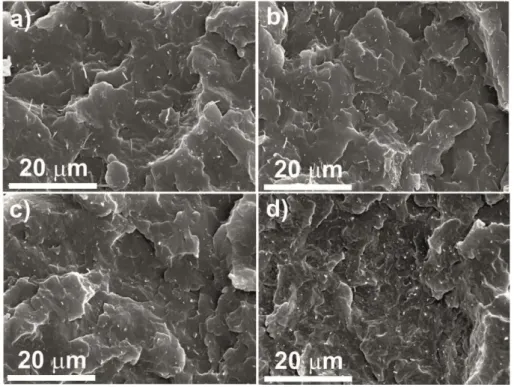
Figure 2. 2 - SEM micrographs of 0.9 vol % PP / CNFs composites: a PP / PR 19 LHT XT composites, b PP / PR 24 LHT XT composites, c PP / PR 25 PS XT composites and d PP / PR 25 AG composites. ... 57
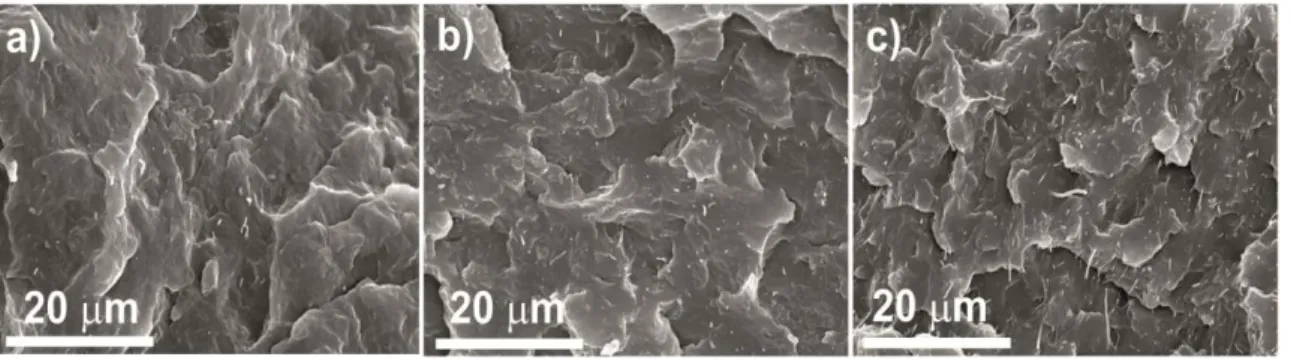
Figure 2. 3 -. SEM micrographs of PP / PR 19 LHT XT composites: a 0.2 vol %, b 0.9 vol % and c 1.4 vol % composites... 58
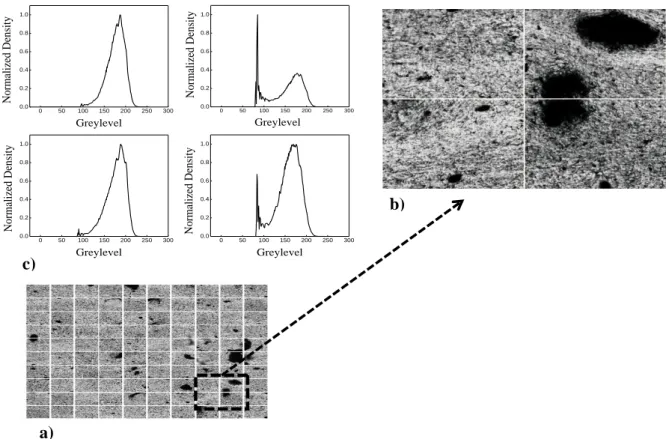
Figure 2. 4 - PP / 24 PR LHT XT CNFs composites at 0.5 vol %: a Composition of 100 adjacent micrographs representative of approx. 2.3 mm2, b four adjacent images of 175 x 135 µm, c histograms (density vs. greylevel) corresponding to the four adjacent micrographs presented in Figure 2.4b. ... 59
Figure 2. 5 - Representative micrographs (170 x 135 µm) for the PP / PR 24 LHT XT composites with loadings of 0.9, 1.4 and 1.9 vol % (from left to right) and the corresponding
histograms b calculated from the micrographs. ... 60
Figure 2. 6 - Variance as a function of CNF loading for the different composites. ... 60
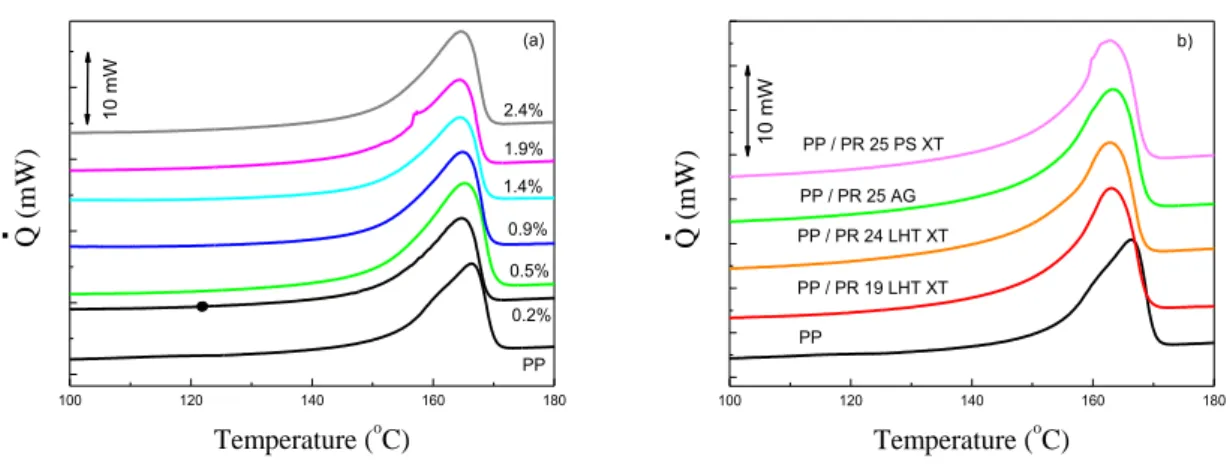
Figure 2. 7 - DSC thermographs for PP / CNFs nanocomposites: a PP / PR 25 PS XT nanocomposites for all loadings, b the different nanocomposites with a 0.9 vol % content of CNF. ... 61
xvi
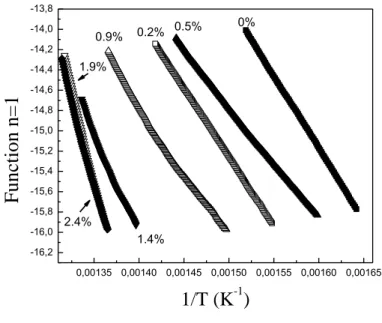
Figure 2. 9 - Coats and Redfern plots of the PP / PR 25 PS XT composites at different volume fractions... 66
Figure 2. 10 - Activation energy for PP / PR 19 LHT and PP / PR 25 PS XT composites as a function of volume fraction. ... 66
Figure 2. 11 - Tensile modulus average and 95 % confidence interval of PP and PP / CNFs composites [20]. ... 68
Figure 2. 12 - Electrical conductivity values versus volume fraction loadings of CNFs for the various composites [20]. ... 69
Chapter 3 - Rheological and electrical analysis in carbon nanofibre reinforced polypropylene composites
Figure 3. 1 - SEM micrographs of 1.9 vol % PP / CNFs composites: a PP / PR 24 LHT XT composites, b PP / PR 25 PS XT composites. ... 86
Figure 3. 2 - Electrical conductivity values versus volume fraction loadings of CNFs and corresponding fit using equation 1. R2 is 0.99 for the PP / PR 24 LHT XT composites fitting.
... 88
Figure 3. 3 - Storage modulus of a PP / PR24LHTXT composites, and b PP / PR25PSXT composites as a function of frequency at 190 º C . ... 89
Figure 3. 4 - Loss moduli of a PP / PR24LHTXT composites and b PP / PR25PSXT composites as a function of frequency at 190 º C. ... 90
Figure 3. 5 - Inverse loss tangent of a PP / PR24LHTXT composites, and b PP / PR25PSXT composites as a function of frequency at 190 º C. ... 91
Figure 3. 6 - Complex viscosity of a PP / PR24LHTXT composites, and b PP / PR25PSXT composites as a function of frequency at 190 º C. ... 92
Figure 3. 7 - The normalized log values of electrical conductivity σ, storage modulus G´, loss modulus G´´, inverse loss tangent G´ / G´´ and complex viscosity η* as a function of
PR24LHTXT´s concentration. The rheological data corresponds to a frequency of 0.1 rad/s.
xvii
Chapter 4 - Piezoresistive effect in polypropylene - carbon nanofiber composites obtained by shear extrusion
Figure 4. 1- Four-point bending testing configuration. ... 109
Figure 4. 2 - Typical I-V curves for the different concentrations of PR19 LHT XT samples. The inset shows the I-V curves for the two lower CNF concentrations. Similar trends were
also observed for Composites PR24 LHT XT. ... 110
Figure 4. 3 - Electrical conductivity values vs. volume fraction loadings of CNFs for the various samples and the corresponding fit using equation 4. 3. The R2 is 0.99 for the two fits.
... 112
Figure 4. 4 - Longitudinal piezoresistive effect in stress-strain mechanical test simultaneously with total relative resistance change for PR19 LHT XT composites at 1.9 vol
% loading. ... 116
Figure 4. 5 - Sensing resistance of a rectangular sample PR19 LHT XT at 2.4 vol % as a function of time, during a four-point bending experiment consisting of 4 cycles at 1 mm in
z-displacement. ... 116
Figure 4. 6 - Experimental piezoresistivity of PR 24 LHT XT composites.... 117
Figure 4. 7 - Gauge Factor values for PR19 LHT XT and PR24 LHT XT composites in function of volume loadings. The dashed-lines are to guide the eyes. ... 118
Chapter 5 - Piezoresistive polypropylene-carbon nanofiber composites as mechanical transducers
Figure 5. 1 - Diagram of the 4-point bending jig used in the present study. mm and mm . ... 131
Figure 5. 2 - SEM pictures of the PP / CNF composites with 0.9 vol %. ... 132
Figure 5. 3 - Resistance of the PP/CNF composites with 0.9 vol % as a function of time, during a four-point bending experiment, consisting of displacement cycles of 1 mm in z
direction. ... 133
Figure 5. 4 - Relative resistance change, ΔR/R, as a function of applied strain, ε, by 4-point bending of PP/CNF nanocomposites. ... 134
xviii
Figure 5. 6 - GF as a function of the number of loading-unloading cycles in the four-point bending experiments. ... 136
Figure 5. 7 - Electrical circuit model of the piezoresistive sensor. R1 and R2 represent the fixed and variable contributions to the resistance and C represents the capacitance. ... 137
Figure 5. 8 - Simulated and measured responses of the piezoresistive sensor for a ramp displacement waveform. ... 138
xix
List of abbreviations
AC – Alternating current
AFM - Atomic force microscopy
AR – Aspect Ratio
CB - Carbon black
CNFs - Carbon nanofibers
CNTs - Carbon nanotubes
CPICs - Conducting particle-reinforced insulating matrix composites
CR - Coats-Redfern method
CSCNT - Cup-stacked carbon nanotubes
CVD - Chemical vapor deposition
DC- Direct current
DSC - Differential scanning calorimetry
DTGA - Derivative thermogravimetric analysis
Ea - Activation energy
EACs - Electroactive ceramics
EAPs - Electroactive polymers
ECPNs – Electrically conductive polymer nanocomposites
EM – Electron microscopy
EMI - Electromagnetic interference shielding
ESD - Electrostatic dissipative materials
GF – Gauge factor
xx
GFT- Gauge factor along transversal direction
GSA - Greyscale analysis
HIPS - High impact polystyrene
HRTEM - High resolution transmission electron microscopy
IVP – Initial value problem
LOM - Transmitted light optical microscopy
LVE - Linear viscoelastic region
MR – Magnetoresistance
MWCNT - Multi wall carbon nanotube
NGPs - Nanographene platelets
OM – Optical microscopy
PE – Polyethylene
PNCs - Polymer nanocomposites
PP – Polypropylene
PS – Polystyrene
RFI - Radio frequency interference
RPSD - Radial power spectral density
SEM - Scanning electron microscope
SMAs - Shape memory alloys
SSE - Single screw extruder
SWCNT - Single wall carbon nanotube
TEC - Thermal expansion coefficient
xxi
TGA - Thermogravimetric analysis
TSE - Twin screw extruder
VGCFs - Vapor grown carbon fibers
xxii
List of symbols
A – Pre-exponential factor
C – Energy storage
cm2 – Centimetre squared
d – Distance
di(t) – Variable displacement
ΔHm - Melting enthalpy
ΔHo - Melting enthalpy of the 100 % crystalline polypropylene
ΔR/R – Resistance change
ΔXc – Degree of crystallinity
e
- Electron chargeε
– Mechanical strainη* - Complex viscosity
G – Conductance
G´ - Storage modulus
G’’ – Loss modulus
G´ / G´´ - Inverse of loss tangent
g/cm3 – Grams per centimeter cubic
GPa – Giga Pascals
h
- Planck constantI - Electrical current densities
xxiii
J g-1- Joules per grams
KJ/mol – Kilo joules per mole
MPa – Mega Pascals
mm – Milimeter
mm min-1 - Milimeters per minute
μA - Micro amperes
μm- Micro meter
N – Newton
nm – Nanometer
v
ort
- Critical exponentº C - Degrees Celsius
ω
– FrequencyΩ cm – Ohms per centimetre
Ω m – Ohms per metre
Pa – Pascal
Φ –Concentration (filler)
Φc - Percolation threshold
R – Electrical resistance
R1 – Fixed electrical resistance
R2 – Variable electrical resistance
Rg - Radius of gyration
xxiv
rad/s – Radians per second
ρ
V –Volume resistivityσ
- Electrical conductivity / Mechanical Stressσ
0- Polymer conductivityS cm-1 - Siemens per centimetre
Tc – Crystallization temperature
Tinitial – Initial temperature
Tm– Melting temperature
Tonset – Onset temperature
vol % - Volume percentage
Ve - Average excluded volume
V(t) – Variable voltage
wt % - Weight percentage
1
Resumo
Os polímeros termoplásticos son coñecidos, en xeral, pola súa ampla empregabilidade en
extrusión e moldeamento, cunha gran variedade de aplicacións tales como a embalaxe, os
téxtiles e os compoñentes para a industria do automóbil.
Unha tentativa de aumentar a súa aplicabilidade implica a incorporación de partículas
nanométricas con propiedades eléctricas e mecánicas intrínsecas no interior da matriz
termoplástica. Entre os diversos tipos de aditivos, as nanofibras de carbono, CNFs, demostran
un potencial elevado debido ás súas características eléctricas e mecánicas, similares aos
nanotubos de carbono, CNTs, pero cun custo asociado máis reducido. Estas características,
relacionadas coa relativa facilidade de incorporación e dispersión en polímeros, aumentaron o
interese nas CNFs como novos materiais capaces de achegaren solucións nalgunhas
aplicacións innovadoras para os materiais compósitos.
As CNFs poden ser preparadas con diámetros de dimensións nanométricas e dan lugar a
materiais cunha razón lonxitude/diámetro bastante elevada. Neste traballo foron utilizadas
nanofibras Pyrograf [Applied Sciences Inc. (ASI), Ohio, EUA], procesadas por evaporación
química de fase vapor, CVD, que revelan unha morfoloxía similar a unha serie de vasos
amoreados.
Asociadas á súa elevada área superficial específica, as CNFs tenden a formar agregados que
poderán reducir as propiedades dos nanocompósitos onde estas son inseridas, especialmente
de non se producir a súa dispersión de maneira correcta e uniforme. O éxito para a aplicación
das CNFs está estreitamente vinculado ao coñecemento do seu grao de dispersión nas
propiedades finais dos nanocompósitos. Con base nesta premisa, realizouse un estudo
intensivo en compósitos de CNTs e CNFs de base polimérica, motivado pola importancia da
influencia dalgúns factores chave: morfoloxía, dispersión e distribución das nanofibras na
matriz polimérica, interacción polímero-nanofibra e relación coas propiedades do
posprocesamento.
Co fin de definir de forma clara e sistemática a relación entre o procesamento, a morfoloxía e
as propiedades finais, é importante identificar inicialmente as vantaxes e desvantaxes da
contribución de cada compoñente (CNFs, matriz polimérica e método de procesamento) nas
2
Este estudo aséntase na introdución de diferentes tipos de nanofibras de carbono nunha
matriz de polipropileno, PP, procesados nunha extrusora de duplo fuso. Esta técnica
emprégase amplamente na industria de transformación de plásticos, o que permitirá un
“scale-up” e a consecuente produción en masa que promoverá unha boa relación
calidade/prezo destes materiais compósitos.
O principal obxectivo deste traballo ten que ver coa investigación e o control do efecto das
diferentes estruturas intrínsecas das CNFs nas propiedades morfolóxicas, térmicas,
mecánicas, eléctricas, reolóxicas e electromecánicas dos nanocompósitos de CNF/PP.
Inicialmente, catro tipos de CNFs (Pyrograf®-III VGCNF) foron sistematicamente
incorporados na mesma matriz de polipropileno a través da extrusión de duplo fuso e
mesturados so un efecto de corte relativamente elevado. Axiña ficou caracterizada a relación
entre a morfoloxía e as propiedades térmicas, mecánicas e eléctricas. A morfoloxía foi
analizada por microscopia electrónica de varrido, SEM, e a través dunha análise de escala de
cincentos, GSA, con base en microscopia óptica de transmisión, LOM. As propiedades
térmicas foron caracterizadas a través de ensaios de termogravimetría, TGA, e calorimetría
diferencial de varrido, DSC. Como resultado desta caracterización, a evolución da morfoloxía
e a distribución das CNFs na matriz polimérica foi correlacionada. Posteriormente, as
propiedades reolóxicas e eléctricas dos nanocompósitos illantes e condutores foron estudadas
e correlacionadas coa finalidade de avaliar a análise reolóxica como ferramenta útil que
permita diferenciar comportamentos condutores dos non-condutores neste tipo de sistemas.
Finalmente, a última parte deste estudo dedicouse á caracterización das propiedades
electromecánicas destes compósitos para aplicacións como materiais transdutores.
Este estudo establece os contidos e as estruturas máis axeitadas das CNFs para as propiedades
físicas desexadas dos nanocompósitos de polipropileno baseados nas nanofibras de carbono.
En particular, os nanocompósitos procesados con CNFs con elevados contidos de grafito na
parede exterior e con tratamentos térmicos a 1500 ºC posúen resposta eléctrica e exhiben uns
baixos límites de percolación e uns requisitos próximos dos escudos de protección
electromagnéticos e de radiofrecuencia, EMI/RFI. Por outra parte, os nanocompósitos
procesados con CNFs, en que a camada exterior foi removida por efecto pirolítico, revelaron
posuír un bo desempeño mecánico; porén, estes mostraron ser illantes eléctricos para a
3
As análises termogravimétricas amosan un aumento da estabilidade térmica dos
nanocompósitos poliméricos co aumento da concentración de CNF na matriz de PP. Os
ensaios por DSC amosaron un incremento da estabilidade térmica dos nanocompósitos
poliméricos co aumento da concentración de CNF na matriz de PP. O DSC sinalou un
aumento do grao de cristalinidade coa inclusión de nanofibras de carbono, independente do
tipo e concentración das CNF. O grao de dispersión avaliado mediante o uso de LOM e GSA
amosou unha correlación entre a concentración de carga e a variancia, un parámetro que
permite cuantificar a dispersión: canto máis elevada sexa a variancia, mellor será a dispersión
dos aglomerados de CNF na matriz polimérica.
Detectouse unha diferenza nas propiedades viscoelásticas entre os nanocompósitos
condutores e illantes. As propiedades reolóxicas permitiron establecer unha relación
viscosidade–propiedades eléctricas dos compósitos.
Por outra banda, os nanocompósitos condutores de CNF/PP amosaron unha resposta
piezorresistiva máis elevada e unha meirande variación da resistividade eléctrica na presenza
dunha acción mecánica externa, para concentracións preto do límite de percolación eléctrico.
Finalmente, foi caracterizada a dependencia do factor de Gauge, GF, parámetro asociado á
resposta piezorresistiva, en función da deformación mecánica e da velocidade de
deformación. Neste sentido, ficou demostrado que os nanocompósitos condutores obtidos no
5
Resumen
Los polímeros termoplásticos se conocen, en general, por su amplio uso en extrusión y
moldeo, con una gran variedad de aplicaciones tales como envasado, textiles y componentes
para la industria automovilística.
Un intento de ampliar su rango de aplicación consiste en incorporar partículas nanométricas
con propiedades eléctricas y mecánicas intrínsecas, en el interior de la matriz termoplástica.
Entre los diversos tipos de cargas, las nanofibras de carbono, CNFs, demuestran un elevado
potencial debido a sus propiedades eléctricas y mecánicas similares a los nanotubos de
carbono, CNTs, pero a un menor coste. Estas propiedades, junto con la facilidad que
presentan para ser incorporadas y dispersas en los polímeros, han aumentado el interés de las
CNFs como nuevos materiales capaces de ofrecer soluciones a algunas aplicaciones
innovadoras en el ámbito de los materiales compuestos.
Las CNFs se pueden producir con diámetros con dimensiones nanométricas, dando lugar a
materiales con una razón de longitud/diámetro bastante elevada. En este trabajo se han
empleado nanofibras Pyrograf®-III [Applied Sciences Inc. (ASI), Ohio, EUA], procesadas
por deposición química de vapor, CVD, y que muestran una morfología parecida a la de
vasos apilados.
Debido a su elevada área superficial específica, las CNFs tienden a formar agregados que
pueden reducir las propiedades de los nanocompuestos en los que se encuentran,
especialmente si la dispersión de las mismas no se produce de forma correcta y uniforme. El
éxito para la aplicación de las CNFs depende de modo muy directo del conocimiento de los
niveles de dispersión de las mismas en las propiedades finales de los nanocompuestos.
Teniendo en cuenta este hecho, se ha producido un estudio intensivo de compuestos de base
polimérica con CNTs y CNFs, motivado por la importancia de la influencia de algunos
factores clave: morfología, dispersión y distribución de las nanofibras en la matriz
polimérica, interacción polímero con nanofibra y relación con las propiedades del
post-procesado.
Con el objetivo de definir de modo claro y sistemático la relación entre procesado,
6
de la contribución de cada componente: CNFs, matriz polimérica y el método de procesado,
en las propiedades eléctricas, térmicas y mecánicas.
Este estudio muestra la introducción de diferentes tipos de nanofibras de carbono en una
matriz de polipropileno, PP, procesadas en una extrusora doble husillo. Esta técnica es muy
empleada en la industria de transformación de plásticos, lo que permitirá una producción a
gran escala, proporcionando así una buena relación entre calidad / precio para este tipo de
materiales compuestos.
El principal objetivo de este trabajo se centra en la investigación y control del efecto de las
diferentes estructuras intrínsecas de las CNFs en las propiedades morfológicas, térmicas,
mecánicas, eléctricas, reológicas y electromecánicas de los nanocompuestos de CNFs / PP.
Inicialmente, cuatro tipos de CNFs (Pyrograf®-III VGCNFs) fueron sistemáticamente
incorporados en la misma matriz de polipropileno a través de extrusión doble husillo y
mezclados a tasas de corte relativamente elevadas. A continuación, se caracterizó la relación
entre morfología, y las propiedades térmicas, mecánicas y eléctricas fue caracterizada. La
morfología fue analizada por microscopía electrónica de barrido, SEM, y a través de un
análisis de la escala de grises, GSA, con base en microscopía óptica de transmisión, LOM.
Las propiedades térmicas fueron caracterizadas a través de ensayos termogravimétricos, TGA
y de calorimetría diferencial de barrido, DSC. Como resultado de esta caracterización, se
correlacionó la evolución de la morfología y la distribución de las CNFs en la matriz
polimérica. Posteriormente, se estudiaron y correlacionaron las propiedades reológicas y
eléctricas de los nanocompuestos aislantes y conductores con el objetivo de evaluar el
análisis reológico como herramienta útil que permita diferenciar comportamientos
conductores de aislantes en este tipo de sistemas. Por último, la parte final de este estudio está
dedicada a la caracterización de las propiedades electromecánicas de estos compuestos para
aplicaciones como materiales transductores.
Este estudio establece los contenidos y las estructuras más adecuadas de las CNFs para las
propiedades físicas deseadas en nanocompuestos de polipropileno basados en nanofibras de
carbono. En particular, los nanocompuestos procesados con CNFs con elevados contenidos
7
respuesta eléctrica, mostrando bajos límites de percolación y requisitos próximos a los
requeridos por los escudos de protección electromagnética y de radio-frecuencia (EMI / RFI).
Por otro lado, los nanocompuestos procesados con las CNFs en las que la pared exterior fue
retirada por efecto pirolítico, mostraron poseer un buen comportamiento mecánico, aunque al
mismo tiempo demostraron ser aislantes eléctricos, para la misma cantidad de carga en el
interior de la matriz de PP.
Los análisis termogravimétricos muestran un aumento de la estabilidad térmica de los
nanocompuestos poliméricos con el aumento de la concentración de CNFs en la matriz de PP.
El análisis por DSC ha mostrado un aumento del grado de cristalinidad con la introducción de
las nanofibras de carbono, independientemente del tipo y concentración de CNFs. El grado de
dispersión evaluado mediante el uso de LOM y GSA demostró la existencia de una
correlación entre la concentración de la carga y la varianza, un parámetro que permite
cuantificar la dispersión: cuanto más elevada es la varianza, mejor resultará la dispersión de
los aglomerados de CNFs en la matriz polimérica.
Se ha detectado una diferencia considerable en las propiedades viscoelásticas entre los
nanocompuestos conductores y aislantes. Así mismo las propiedades reológicas permitieron
establecer una relación entre la viscosidad y las propiedades eléctricas de los compuestos.
Por otro lado, los nanocompuestos conductores de CNFs / PP han mostrado una respuesta
piezoresistiva más elevada y por tanto una mayor variación de la resistividad eléctrica en
presencia de una acción mecánica externa, a concentraciones próximas al del límite de
percolación eléctrica.
Por último, se caracterizó la dependencia del factor de Gauge, GF, parámetro asociado con la
respuesta piezoresistiva, en función de la deformación mecánica y de la velocidad de
deformación, fue caracterizada. De este modo, queda demostrado que los nanocompuestos
conductores obtenidos en el ámbito de este estudio, pueden ser utilizados como futuros
9
Abstract
Thermoplastic polymers are known, in general, for their broad use in the melt extrusion and
moulding plastic industry with a large variety of applications such as packaging, textiles and
automotive components.
One attempt to increase their application range is to incorporate into them, nanoscale fillers
with intrinsically high electrical and mechanical performance. Among nanoscale modifiers,
carbon nanofibers, CNFs are very suitable due to show similar mechanical and
electrochemical properties compared to the carbon nanotubes, CNTs, but at a lower cost.
These facts, together to the relatively easier incorporation and dispersion into polymers also
raised the interest in CNFs as adequate new materials to provide solutions to some challenges
in composite applications.
CNFs can be prepared with diameters in the nanometer scale, resulting in high aspect ratios,
AR. Pyrograf®-III nanofibers [Applied Sciences Inc. (ASI), Ohio, USA], used in this study
in particular, are a sort of vapor-grown carbon nanofibers, VGCNFs, fabricated by chemical
vapor deposition, CVD, with stacked-cup morphology.
Associated with their large surface area, CNFs tend to come in aggregated structures which
may negatively affect the composites properties if not dispersed correctly. Success strongly
depends on knowing the influence of degree of dispersion of CNFs in the final properties. In
this regard, an intensive research in CNTs and CNFs based polymer composites has been
motivated by the importance of several key-factors: morphology, dispersion and distribution
of nanofillers in the host polymer, polymer-nanofiller interactions and finding out
processing-structure-final properties relationships.
In order to define clear and systematic relationships between processing, final structure and
final properties, is important to identify first the advantages and disadvantages that each kind
of CNFs, polymer and processing method may contribute to the final electrical, thermal and
mechanical performance.
This study introduces different carbon nanofiber-based polypropylene, PP, nanocomposites
processed by twin-screw extrusion, a common-use industrial technique which allows a
large-scale production and provides a good relation between quality and cost of the composite
10
The main focus is to investigate and tailor, if possible, the effect of the content and the
different intrinsic CNFs´ structures on morphology and thermal, mechanical, electrical,
rheological and electro-mechanical performance of the final nanocomposites.
First, four different Pyrograf®-III VGCNFs were systematically incorporated in the same
polypropylene matrix by twin-screw extrusion under relatively high shear mixing conditions.
Then, the relations between morphology, thermal and mechanical and electrical analysis were
studied. Morphology was analyzed by scanning electron microscopy, SEM, and by statistical
greyscale analysis, GSA, based on transmitted light optical microscopy, LOM. Thermal
properties were characterized by thermogravimetric analysis, TGA, and differential scanning
calorimetry, DSC. As a result of this first approach, the morphology together with
distribution in the polymer was evaluated. After, rheological and electrical properties in
electrical and non-electrical conducting composites were evaluated and correlated with the
aim of examining if rheological analysis, besides being a method to assess processing
performance, allows distinguishing electrical conducting from electrical isolating response in
this kind of systems. The last part of this study was dedicated to investigate the
electromechanical performance of these composites as piezoresistive transductors.
This study establishes that the desired physical properties of carbon nanofiber
based-polypropylene nanocomposites fabricated by shear extrusion can be tailored when the
adequate CNFs structure and content are chosen. In particular, nanocomposites fabricated
with CNFs with highly graphitic outer wall layer and with heat treatments of 1500 ºC
revealed to have electrical response, exhibiting low thresholds and values close to meet the
electromagnetic / radio-frequency interference (EMI / RFI) shielding requirements. On the
other hand, nanocomposites fabricated with CNFs with pyrolitical stripped outer layer
showed good mechanical performance, but they revealed non-electrical conducting response
at the same contents of CNFs.
Thermogravimetric analysis showed shift to higher temperatures of the main thermal
degradation of the polymer with the addition of CNFs. DSC indicated a strong enhancement
of the degree of crystallinity with the inclusion of the filler, independently on the filler
content and type. The degree of dispersion evaluated using LOM and GSA shows a
correlation between the filler concentration and the variance, a parameter which measures
quantitatively the dispersion: the lower the variance, the better the cluster´s dispersion, for all
11
Besides, it was also observed a large difference in viscoelastic properties between electrical
conducting and isolating composites. In this regard, rheological analysis demonstrated to
establish direct viscoelastic – electrical properties relationships.
On the other hand, the electrical conducting CNFs / PP composites showed to have better
piezoresistive performance or variation of the electrical resistivity in the presence of external
deformations at concentrations close to the electrical thresholds.
Finally, the dependence of Gauge Factor, GF, parameter associated with piezoresistive
response, as a function of the deformation and velocity of deformation was calculated. In this
way, it was demonstrated that the electrical conducting composites obtained in this study can
13
Resumo
Os polímeros termoplásticos são conhecidos, em geral, pela sua ampla empregabilidade em
extrusão e moldação, com uma grande variedade de aplicações tais como embalagem, têxteis
e componentes para a indústria automóvel.
Uma tentativa de aumentar a sua aplicabilidade envolve a incorporação de partículas
nanométricas com propriedades eléctricas e mecânicas intrínsecas, no interior da matriz
termoplástica. Entre os diversos tipos de aditivos, as nanofibras de carbono, CNFs,
demonstram um potencial elevado devido às suas características eléctricas e mecânicas,
similares aos nanotubos de carbono, CNTs, mas com um custo associado mais reduzido.
Estas características, associadas à relativa facilidade de incorporação e dispersão em
polímeros, aumentaram o interesse nas CNFs como novos materiais capazes de promover
soluções em algumas aplicações inovadoras para os materiais compósitos.
As CNFs podem ser preparadas com diâmetros com dimensões nanométricas, resultando em
materiais com uma razão comprimento/diâmetro bastante elevada. Neste trabalho foram
utilizadas nanofibras Pyrograf®-III [Applied Sciences Inc. (ASI), Ohio, EUA], processadas
por evaporação química de fase vapor, CVD, revelando uma morfologia similar a um serie de
copos empilhados.
Associados à sua elevada área superficial especifica, as CNFs tendem a formar agregados que
poderão reduzir as propriedades dos nanocompósitos onde estas são inseridas, especialmente
se a dispersão das mesmas não ocorrer correcta e uniformemente. O sucesso para a aplicação
das CNFs está fortemente dependente do conhecimento do grau de dispersão das mesmas nas
propriedades finais dos nanocompósitos. Tendo por base esta premissa, um estudo intensivo
em compósitos de CNTs e CNFs de base polimérica tem sido realizado, motivado pela
importância da influência de alguns factores chave: morfologia, dispersão e distribuição das
nanofibras na matriz polimérica, interacção polímero-nanofibra e relação com as
propriedades pós-processamento.
Com o intuito de definir de forma clara e sistemática a relação entre o processamento,
morfologia e propriedades finais, é importante identificar inicialmente as vantagens e as
desvantagens da contribuição de cada componente: CNFs, matriz polimérica e o método de
14
Este estudo reporta a introdução de diferentes tipos de nanofibras de carbono numa matriz de
polipropileno (PP), processados numa extrusora de duplo fuso. Esta técnica é amplamente
utilizada na indústria de transformação de plásticos, o que permitirá um “scale-up” e
consequente produção em massa, promovendo uma boa relação entre a qualidade/preço
destes materiais compósitos.
O principal objectivo deste trabalho prende-se com a investigação e controlo do efeito das
diferentes estruturas intrínsecas dos CNFs nas propriedades morfológicas, térmicas,
mecânicas, eléctricas, reológicas e electromecânicas dos nanocompósitos de CNFs/PP.
Inicialmente, quatro tipos de CNFs (Pyrograf®-III VGCNFs) foram sistematicamente
incorporados na mesma matriz de polipropileno através da extrusão de duplo fuso e
misturados sob um efeito de corte relativamente elevado. Em seguida, a relação entre a
morfologia, e as propriedades térmicas, mecânicas e eléctricas foi caracterizada. A
morfologia foi analisada por microscopia electrónica de varrimento, SEM e através de uma
análise de escala de cinzentos, GSA, com recurso à microscopia óptica de transmissão, LOM.
As propriedades térmicas foram caracterizadas através de ensaios de termogravimetria, TGA,
e calorimetria diferencial de varrimento, DSC. Como resultado desta caracterização, a
evolução da morfologia e a distribuição das CNFs na matriz polimérica foram
correlacionadas. Posteriormente, as propriedades reológicas e eléctricas dos nanocompósitos
isoladores e condutores foram estudadas e correlacionadas com o intuito de avaliar a analise
reológica como ferramenta útil que permita diferenciar comportamentos condutores de
isoladores neste tipo de sistemas. Finalmente, a última parte deste estudo foi dedicada à
caracterização das propriedades electromecânicas destes compósitos para aplicações como
materiais transdutores.
Este estudo estabelece os conteúdos e as estruturas mais adequadas das CNFs para as
propriedades físicas desejadas dos nanocompósitos de polipropileno baseados nas nanofibras
de carbono. Em particular, os nanocompósitos processados com CNFs com elevados
conteúdos de grafite na parede exterior e com tratamentos térmicos a 1500 ºC possuem
resposta eléctrica, exibindo baixos limites de percolação e requisitos próximos dos escudos
de protecção electromagnéticos e de rádio-frequência (EMI / RFI). Por outro lado, os
nanocompósitos processados com CNFs em que a camada exterior foi removida por efeito
pirolítico, revelaram possuir bom desempenho mecânico, contudo estes mostraram ser
15
As análises de termogravimetria mostraram um incremento da estabilidade térmica dos
nanocompósitos poliméricos com o aumento da concentração de CNFs na matriz de PP. O
DSC indicou um aumento do grau de cristalinidade com a inclusão de nanofibras de carbono,
independente do tipo e concentração das CNFs. O grau de dispersão avaliado mediante o uso
de LOM e GSA mostrou uma correlação entre a concentração de carga e a variância, um
parâmetro que permite quantificar a dispersão: quanto mais elevada seja a variância, melhor
será a dispersão dos aglomerados de CNFs na matriz polimérica.
Uma diferencia nas propriedades viscoelásticas entre os nanocompósitos condutores e
isoladores foi detectada. As propriedades reológicas permitiram estabelecer uma relação
viscosidade – propriedades eléctricas dos compósitos.
Por outro lado, os nanocompósitos condutores de CNFs/PP mostraram uma resposta
piezoresistive mais elevada e uma maior variação da resistividade eléctrica na presença de
uma acção mecânica externa, para concentrações perto do limite de percolação eléctrico.
Finalmente, a dependência do factor de Gauge, GF, parâmetro associado à resposta
piezoresistiva, em função da deformação mecânica e da velocidade de deformação, foi
caracterizada. Neste sentido, foi demonstrado que os nanocompósitos condutores obtidos no
19
1.1Carbon-based polymer nanocomposites
1.1.1 Interest
Polymers are versatile materials with unique properties such as low density, proper strength,
flexibility, ease of processing, etc. However, by the fact that their intrinsic properties are
insufficient to address a wide range of applications, processing of polymers with all kind of
additives and/or fillers, has been one of the most common methods to improve their intrinsic
properties. In this way, many studies have dealt with the incorporation of different fillers in
polymers: silicates such as mica, talcum, clays, precipitated silica or glass, metal oxides
(titanium, aluminium or magnesium) or others such as calcium carbonate and carbon black,
to mention just a few.
Polymer nanocomposites, PNCs, can be defined as a class of composites constituted by
several components in which some of them have at least one dimension (length, width,
thickness) in the nanometric range [1].
In PNCs, above certain concentrations, distance among nanoparticles may be of the order of
radius of gyration, Rg, from polymer itself or in other words, in the range of size of
polymeric chains, in such a way that properties such as curing reaction, (thermoset polymers),
crystallinity and polymeric chains´ mobility might be completely affected [2]. This is just an
example to assess that, in principle; these materials have different properties and need
different processing conditions when compared to the traditional composites.
There are several ways to classify nanocomposites, one of them is by mean of the
nanoparticle shapes employed: spherical (carbon black, silicates), laminates (clays) or
fibrous.
Among the various types of PNCs, one of the systems that aroused most interest is the
consisting of polymers and carbon fibrous nanostructures: carbon nanofibers and carbon
nanotubes, CNFs and CNTs, respectively.
These two types of carbon structures possess remarkable intrinsic properties such as high
strength, high thermal and electrical conductivity and low chemical reactivity [3-5], which
20
applications as diverse as lightweight structures, electromagnetic interference shielding, EMI,
sporting goods, automotive components, electrostatic paint, electronic components for
heating dissipation and multifunctional materials for high structural performance, just to
mention a few [6].
1.1.2 Properties
The incorporation of CNFs and CNTs in polymer matrixes results therefore in new
multifunctional composite materials with significant improvement of mechanical properties
and new thermal and electric properties. Some of the main responsible factors for the final
resulting composites behaviors are the processing methods, the intrinsic nature of CNFs and
CNTs and their consequent Aspect Ratio, AR, (or length / diameter ratio), the particular kind
of polymer, the weight or volume fraction of CNTs / CNFs and fibers´ dispersion in the
polymer [7,8]. In general, the choice of a certain type of processing method may be beneficial
for a particular property but it may not be the most appropriate for another one. For instance,
some process methods such as surface functionalization or modification by chemical means
in CNTs / CNFs to improve compatibility with matrix, generally increase mechanical
properties but it may be worse the electrical properties [9].
Mechanical Properties
The use of low contents of CNFs or CNTs as structural reinforcement with the aim of gain
significant increases in tensile modulus and tensile strength has focused the major part of
research. Though a brief state-of-art is presented later, overall it is possible to assert that all
the expected results that intrinsic properties of CNFs / CNTs point out has not yielded yet.
Due to the fact that mechanical transferring loads across the CNF / CNT – matrix interface
play a key role in the mechanical properties of nanocomposites, it is fundamental that a
proper interaction polymer with CNF or CNT exists [10]. Several studies suggest that
interfacial interactions with nanotubes result in an interfacial region of polymer with
morphology and properties different to the bulk [11]. The nature of this interface and its role
21
Although the length scales of reinforcements in polymer nanocomposites are smaller than
those of traditional composites, there are some known mechanisms of energy dissipation in
these last ones which can be taken into account as starting research points for the first ones:
fiber fracture, fiber pullout, debonding / crack bridging and matrix cracking [12].
In general, it can be said that good mechanical performance depends mainly on two variables.
First, there should be a high degree of load transfer between the matrix and the nanotubes or
nanofibers in order to avoid local stress concentrations. Second, the nanotubes / nanofibers
should be well dispersed; otherwise CNFs / CNTs will fail by separation of the bundle rather
than by failure of the nanofiber / nanotube itself [13, 14]. In this regard, intensive research
has focused on improving interfacial bonding by means of surface treatment or
functionalization without creating defects in CNTs / CNFs which can compromise their
intrinsic properties [15].
Electrical properties
Besides their unique mechanical properties, CNFs and CNTs exhibit also high electrical
conductivity,
σ
. Values in the range of metals between 107 to 108 S/m have been estimated,for CNTs [16, 17], whereas for CNFs, several studies have reported values of 105 S/m [5].
The variation in electrical properties in PNCs is usually understood under the framework of
statistical percolation theory [18-20]. The application of the percolation theory to study the
conductive behavior of PNCs is based on some important assumptions and concepts. One of
these concepts is the percolation threshold,
Φ
c, defined as the critical concentration at whichan infinite cluster emerges in an infinite lattice. When
Φ > Φ
ca cluster spreads throughoutthe system, whereas for
Φ < Φ
c the system is made of many isolated and disconnectedclusters. The maximum size of these clusters is denominated as the correlation length of the
system. The way that this length tends to infinite as a function of
Φ
in the vicinity ofpercolation thresholds obeys a typical power-law C vin which
v
is the critical exponent, assumed as universal because of only depends on system´s dimensions.For the particular case of PNCs reinforced with CNFs / CNTs, the percolation threshold is
calculated representing electrical conductivity as function of volume fraction or weight
22
electrical conductivity of CNFs / CNTs and principal properties of polymer such as
crystallinity, surface tension and molecular weight [21, 22].
Furthermore, composites with different conductivity levels can be produced and tailored with
controlling the volume fraction or weight content of CNFs / CNTs [23, 24].
Thermal properties
As important as electrical and mechanical properties, thermal properties must be taken into
consideration in order to choose the best processing conditions and application area. PNCs
reinforced with nanofibers or nanotubes can be used as dissipative devices due to the negative
value of thermal expansion coefficient, TEC. High values of thermal conductivity of 1950
W/mK have been reported for CNFs [25]. Properties such as AR, orientation and dispersion,
and thermal resistance between polymer interface and CNFs will influence the final
performance [26-28].
Overall, thermal conductivity increases with increasing content of nanofibers, though without
experimenting percolation thresholds as it happens with electrical behaviors [29, 30].
1.1.3 Applications
An important application of these materials lies in the effective use of their electrical
conductivities for protection against electromagnetic interference, EMI, and as electrostatic
dissipative materials, ESD, [23, 31]. Their final application will be determined as a function
of their electrical conducting levels. For instance, for EMI applications, the composites must
attach surface resistivity levels of ~ 10 Ω/sq, whereas for ESD applications, the surface
resistivities must be in the range from 106 to 109 Ω/sq.
Furthermore, PNCs reinforced with CNTs or CNFs may be used in the automotive area for
specifically applications such as painted electrostatic pieces, innovative braking systems,
engine components, etc.
In addition, these composites are promising materials for using as batteries, available both as
electrodes and as catalyst support [4]. For this kind of applications, these composites offer
clear advantages over different materials, such as metal oxides and sulphites, in terms of cost,
23
Polymer based on CNTs or CNFs may be also candidates in other applications such as
drug-carrier delivers by incorporating biological structures such as proteins and ADN in the core
hollow of CNTs and CNFs [32].
Finally, these materials are also expected to replace traditional composites based on carbon
black or conventional carbon fibers by exploiting their lower bulk densities.
1.1.4 Processing
Three methods are commonly used to incorporate nanotubes or nanofibers into a polymer:
solution mixing, in situ polymerization, and mixing in molten polymers. Melt mixing is the
industrially preferred method in many cases because of its environmentally benign character,
its versatility, and its compatibility with current polymer processing techniques [33, 34].
Melt mixing processing
From an industrial point of view, melt mixing represents a good option due to its low-cost
and large-scale implementation. In general, melt processing involves the melting of polymer
pellets to form a viscous liquid. Any additives, such as nanotubes and nanofibers can be
mixed into the melt by shear mixing in single screw extruder, SSE, or, twin screw extruder,
TSE, and also by internal mixing. Bulk samples can then be fabricated by techniques such as
compression molding, injection molding or extrusion [14, 34, 35].
In particular, twin screw extruders can have conical or parallel design. The two screws can be
counter-rotating or co-rotating, intermeshing or non-intermeshing. Also, the screws´
configurations can be varied using different conveying and mixing elements. For instance, the
co-rotating twin-screw extrusion is commonly used in compounding materials for which
thorough mixing is important. Co-rotating twin-screw extruders may have modular
configurations which make this kind of processing technique suitable for CNTs and CNFs
melt compounding.
In internal mixing, which commonly uses equipment made by HAAKE (Thermo-scientific,
Germany) and Brabender (C. W. Brabender instruments, EEUU), the mixing is produced in a
seal chamber with two rotors of different geometry inside [36]. A particular version is the
24
Solution Mixing processing
Solution mixing is other common method for preparing polymer nanocomposites. In this
technique, CNTs or CNFs are mixing in a suitable solvent before evaporating the solvent to
form a composite film. The process has three broad steps: dispersion of CNTs or CNFs in a
solvent or in a polymer solution, mixing of CNTs or CNFs with the host polymer in solution
and controlled evaporation of solvent resulting in the final film [38].
Some of the disadvantages of this technique are: pristine CNTs and/or CNFs cannot be
well-dispersed in most of the solvents, the solvents are not compatibles with most of the polymers
and the step towards large-scale production is more complicated. Nevertheless, the lowest
electrical thresholds have been obtained by using this method [39].
In situ polymerization processing
This technique is particularly important for the preparation of insoluble and thermally
unstable polymers, which cannot be processed by solution or melt processing. More
particularly, polymerization allows grafting of polymer macromolecules onto the walls of
carbon nanotubes, maintaining AR and getting good dispersion levels and bounding (covalent
or not) between CNFs and host polymer [38].
1.2 Carbon nanofibers and carbon nanotubes
Even though CNTs and CNFs have important likenesses, they have also different
characteristics. Before 1985 carbon was known in only two allotropic forms: diamond and
graphite. Diamond is a tri-dimensional material with isotropic properties, whereas graphite is
a bi-dimensional material. More recently, zero dimensional carbon structures such as
fullerenes and one dimensional carbon structures such as CNTs and CNFs were developed
[40].
CNTs can be described as long cylinders of covalently bonded carbon atoms. There are two
main types of CNTs: single wall carbon nanotube, SWCNT, which can be considered as a
single graphene (a monolayer of sp2-bonded carbon atoms) sheet rolled into a seamless
cylinder, and multi wall carbon nanotube, MWCNT, consist of nested graphene cylinders
coaxially arranged around a central hollow core. SWCNTs have diameters in the range of
25
Carbon nanofibers, CNFs, which comprise graphitic networks in concentric cylinders, are
mainly differentiated from nanotubes by the orientation of the graphene planes, whereas for
nanotubes these layers are parallel to the axis, nanofibers can show a wide range of angles of
the graphitic layers with respect to the fibre axis. They are also intrinsically less perfect due
to the amorphous carbon terminations on their surface [43, 44]. Their total diameter is
normally in the range of hundreds of nanometer, for this reason they can be named as
submicron fibers in literature.
In order to see their differences and similarities the synthesis, morphology and main
properties of them are discussed in the lower sections.
1.2.1 Synthesis
Even though a wide variety of methods exist in order to produce CNTs and CNFs [45-47],
chemical vapor deposition, CVD, is one of the most common technologies due to its
simplicity, high output, low-cost and ease of large scale implementation. In this method,
vapor grown carbon fibers, VGCFs, are manufactured by using small metal particles, almost
always containing iron, nickel, or cobalt which are exposed to CO or hydrocarbon gases at
temperatures between 500 and 1200 ºC. When the catalyst particles are properly dispersed
and activated with sulfur, carbon filaments are abundantly produced in a reactor with a
diameter similar to the metal particle [45-51].
Other techniques for producing CNTs and CNFs have been developed, for instance,
nanotubes were observed in 1991 in the carbon soot of graphite electrodes during an Arc
discharge. In this process, the carbon contained in the negative electrode sublimates because
of the high-discharge temperatures. In the laser ablation process, a pulsed laser vaporizes a
graphite target in a high-temperature reactor while an inert gas is bled into the chamber.
When the vaporized carbon condenses, the nanotubes develop on the cooler surfaces of the
reactor [52-54].
More in particular, the CNFs used in this work, Pyrograf III TM by Applied Sciences, Inc, [55]
have been produced by CVD and implemented through a process which uses natural gas as
the primary feedstock, while the catalytic iron particles are produced by the decomposition of
Fe (CO) 5. When the catalyst particles are properly dispersed and activated with sulfur,
26
1.2.2 Morphology
As it has been noted, single wall carbon nanotubes, SWCNTs, may be considered as
bi-dimensional single graphene walls rolled into seamless cylinders. They can be metallic or
semiconducting, depending on the diameter and the various ways of rolling graphene into
tubes described by their tube chirality (or helicity or wrapping), which describes the carbon´s
orientation in the wall [58]. MWCNTs, on their hand, contain a variety of chyralities, so their
physical properties are more complicated to predict.
The main difference between CNTs and CNFs is the orientation of graphene´s walls relative
to their axis [59]. Depending on this particular orientation, the internal structures vary,
forming different structures such as bamboo-like, truncated cones or cup-stacked, to name a
few [60]. These structures have a chemically active surface area which is important for their
functionalization [61].
Figure 1. 1 – High resolution transmission electron microscopy, HRTEM, Micrograph of nanofiber PR-25. Center and right images show in further detail internal and external
27
Figure 1. 2 – Transmission electron microscopy,TEM, micrograph of PR-19-LHT-XT (left) and PR-25-PS-XT (right).
Overall, fibers used in this study have diameters from 80 to 120 nm, with lengths between
125 to 200 µm. More in particular, three different grades PR-19, PR-24 and PR-25 (Figure
1.1 and 1.2) with different intrinsic nature in diameters and outer wall properties were used.
Further details about the carbon nanofibers used, are described in the particular chapters of
this thesis.
1.2.3 Properties
As it has already been indicated before, polymer composites based on carbon nanostructures
show a variety of significantly relevant properties: high tensile strength, high thermal and
electrical conductivity and good chemical stability, to name a few [43]. Recently, some
studies have reported nanoparticles and inorganic nanofilaments incorporated into their
hollows cores [64, 65]. The CNTs or CNFs´ surfaces can be functionalized to improve
dispersion in polymers and solvents, or, for instance for creating links with organic molecules
to act as transportation containers that could deliver active drug ingredients [66]. CNFs with
larger diameters than CNTs are easier for dispersion [67], furthermore CNFs with
cup-stacked structure have high chemical reactivity ideal for functionalization [68]. In the
following sections these three main properties are discussed with further detail.
Mechanical Properties
The structural properties in CNTs with strong covalent bonds C-C show high Young´s
modulus and tensile strength. CNTs have also good elastic performance because of 2D