Treatment of Type-1 Hepatorenal Syndrome
with Pentoxifylline:
A Randomized Placebo Controlled Clinical Trial
Jonathan G. Stine,* Jennifer Wang,** Scott L. Cornella,* Brian W. Behm,* Zachary Henry,* Neeral L. Shah,* Stephen H. Caldwell,* Patrick G. Northup*
* Division of Gastroenterology & Hepatology, Department of Medicine, University of Virginia, Charlottesville, VA, United States. ** Department of Medicine, University of Virginia, Charlottesville, VA, United States.
March-April, Vol. 17 No. 2, 2018: 300-306
INTRODUCTION
Hepatorenal syndrome (HRS) is a feared complication of chronic liver disease and cirrhosis presenting a unique challenge to physicians. The incidence of Type 1 hepato-renal syndrome (HRS-1) in patients with cirrhosis and as-cites is 18 and 39 % at one and five years, respectively.1
HRS-1 occurs in the absence of underlying kidney disease and leads to renal failure secondary to compensatory renal vasoconstriction due to splanchnic arterial vasodilation and an ineffective interarteriolar blood volume.2,3 The
prognosis of HRS-1 is poor with median life expectancy around two weeks.4 Patients often decompensate and die
prior to liver transplantation. The current standard of care
to treat HRS-1 in North America is the combination of al-bumin, octreotide and midodrine (AMO).5 Terlipressin
in combination with albumin is also effective, however, this is not approved by the Food and Drug Administration or available currently in the United States.6 Noradrenalin
and albumin may also be used, however this requires In-tensive Care Unit monitoring which is not applicable for all patients or all hospitals.7 Patients who develop HRS-1
and survive are more likely to have HRS recurrence. After the withdrawal of treatment for HRS-1, recurrence can occur in up to 20% of cases.5
Pentoxifylline (PTX) is a phosphodiesterase inhibitor with anti-inflammatory capabilities that lowers blood vis-cosity and improves erythrocyte flexibility.
Pro-inflamma-Manuscript received: Manuscript received: Manuscript received: Manuscript received:
Manuscript received: June 25, 2017. Manuscript accepted:Manuscript accepted:Manuscript accepted:Manuscript accepted:Manuscript accepted: July 26, 2017.
DOI:10.5604/01.3001.0010.8660
A B S T R A C T A B S T R A C T A B S T R A C T A B S T R A C T A B S T R A C T
Introduction. Introduction.Introduction. Introduction.
Introduction. Type-1 hepatorenal syndrome (HRS-1) portends a poor prognosis in patients with cirrhosis. Currently available medi-cal therapies are largely ineffective, save for liver transplantation. We aimed to determine if pentoxifylline (PTX) therapy in addition to the standard of care of volume expansion with albumin and vasoconstriction with midodrine and octreotide (AMO) is safe and effica-cious compared to AMO in HRS-1 treatment. Material and methods. Material and methods. Material and methods. Material and methods. Hospitalized subjects with decompensated cirrhosis and Material and methods. HRS-1 were enrolled. PTX or placebo was administered with AMO therapy for up to 14 days. The primary endpoint was HRS-1 res-olution (serum creatinine ≤ 1.5 g/dL for > 24 h). Secondary endpoints were change in creatinine and MELD score, partial treatment response, 30-and 180-day overall and transplant free survival. Results.Results.Results.Results.Results. Twelve subjects with mean age 58.9 ± 6.2 years were en-rolled and randomized. Mean MELD score was 26.5 ± 7.4 and 58.3% were male. Overall cohort 30- and 180-day survival was 58.3% and 33.3% respectively. Two subjects underwent liver transplantation. HRS-1 resolution (16.7% vs. 16.7%, p = 1.000), partial treat-ment response (33.3% vs. 16.7%, p = 0.505), change in creatinine (+0.48 g/dL, 95% CI -0.49-1.46 vs. +0.03 g/dL, 95% CI -0.64-0.70, p = 0.427), 30-day survival (66.6% vs. 50.0%, p = 0.558) and 180-day survival (50.0% vs. 16.7%, p = 0.221) were similar between the two groups. Serious adverse events necessitating treatment discontinuation were rare (n = 1, PTX). Discussion.Discussion.Discussion.Discussion.Discussion. The addition of PTX to AMO in the treatment of HRS-1 is safe when compared to the current standard of care. Future large-scale pro-spective study to validate the efficacy of this treatment seems warranted.
Key words. Key words. Key words. Key words.
Key words. Cirrhosis. Liver transplantation. Hepatology. Survival. Renal failure. Nephrology.
The Official Journal of the Mexican Association of Hepatology, the Latin-American Association for Study of the Liver and
tory cytokines, including tumor necrosis factor alpha (TNFα) and interleukin-6 are elevated in patients with cir-rhosis in response to circulating endotoxemia.8,9 These
cy-tokines lead to a pro-inflammatory, hyperdynamic state. PTX has been shown to not only decrease levels of TNFα,10 but also to increase systemic vascular resistance
directly opposing splanchnic vasodilation without precipi-tating an increase in the pressure in the portal venous sys-tem.11 Patients with HRS have even greater levels of TNFα
when compared to cirrhosis patients without HRS.12
Clinically, PTX has been shown to be effective in pre-venting HRS in patients both with acute alcoholic hepati-tis13 and cirrhosis;12,14 however, despite this, no direct
survival benefit has been observed. To our knowledge, no study to date has investigated adding PTX to the algorithm for the treatment of HRS-1 despite the benefit of PTX when used as primary prophylaxis. We hypothesize that the addition of PTX to AMO is safe and efficacious when compared to AMO plus placebo in the treatment of HRS-1 in hospitalized patients with decompensated cirrhosis.
MATERIAL AND METHODS
Patients at the University of Virginia Health System hospitalized with decompensated cirrhosis and acute renal failure were screened for enrollment from July 2014 through June 2016. HRS-1 was defined according to the criteria put forth by the American Association for the Study of Liver Disease as:
• Cirrhosis with ascites;
• Serum creatinine greater than 1.5 mg/dL;
• No improvement of serum creatinine (decrease to a level of 1.5 mg/dL or less) after at least two days with diuretic withdrawal and volume expansion with albu-min;
• Absence of shock;
• No current or recent treatment with nephrotoxic drugs; and
• Absence of parenchymal kidney disease as indicated by proteinuria > 500 mg/day, microhematuria (> 50 red blood cells per high power field), and/or abnormal re-nal ultrasonography.15
All participants were older than or equal to 18 years of age. Patients with labeled contraindications to PTX were excluded [allergy or hypersensitivity to PTX or intoler-ance to methylxanthines (e.g. caffeine, theophylline),
re-cent cerebral or retinal hemorrhage or pregnancy, or if they had concurrent use of nephrotoxic drugs, uncon-trolled bacterial infection, renal parenchymal disease (e.g. acute tubular necrosis, glomerular disease, interstitial ne-phritis, urinary obstruction), shock, TNFα antagonist use, severe or poorly controlled comorbid disease as deter-mined by the principal investigator to hinder the ability of the subject to adhere to study protocols. No institutional-ized subjects or prisoners were enrolled. No surrogate consent was obtained in subjects with uncontrolled hepat-ic encephalopathy.
Following enrollment, each subject underwent a pre-dosing medical history, physical exam, and safety assess-ment, which included a review of laboratories, imaging tests and procedural results performed during their hospi-talization. Subjects were blinded to the study investigators and medical care team and were randomized in 1:1 ratio to either a 14-day course of PTX 400 mg three times a day or the equivalent dose adjusted for renal impairment [400 mg twice a day for estimated glomerular filtration rate (eFFR) 10-50 mg/dL and 400 mg once a day for eGFR < 10 mg/ dL] or to placebo. On day three, seven, 10 and 14, an in-depth assessment for treatment response and review of side effect profile with medical history and physical exam was completed. All adverse events, including those that were serious, were graded according to the National Can-cer CTCAE version 4.0. If a patient was determined to be a “partial responder,” as defined as serum creatinine level decreased by > 50% from baseline but not < 1.5 mg/dL, without dialysis or HRS recurrence, the treating physician was allowed to continue therapy in a blinded fashion for an additional 14 days at their discretion. If a patient was unable to swallow a pill for six consecutive doses, they were withdrawn from the study as PTX cannot be admin-istered through a gastric feeding tube due to its pharmaco-logic properties.
The primary endpoint was the incidence of HRS-1 res-olution, which was defined as a decrease in serum creati-nine level to < 1.5 mg/dL for > 24 h without dialysis or death.4,16-18 Secondary endpoints assessed were change in
serum creatinine from baseline to day 14, change in Model for End Stage Liver Disease (MELD) score from baseline to day 14, incidence of treatment failure on day 14 (defined as creatinine level above baseline value after day seven, re-nal replacement therapy or death), partial response with-out dialysis or HRS recurrence, transplant free survival at day 30 and 180 and overall survival at day 30 and 180. MELD score was calculated using the standard formula
MELD=11.2*ln(INR)+9.57*ln[creatinine(mg/dL)]+3.78*ln[bilirubin(mg/dL)]+ 6.43
Figure 1. Figure 1.Figure 1.
(Figure 1), with a lower limit of 1.0 for all variables.19
Sur-vival was assessed by telephone interview and a review of the medical record.
All analyses were conducted based on the intention to treat methodology. Results were expressed as means with standard deviations. Chi-squared and Fisher s exact test were used to analyze categorical endpoints. Student s t test and Mann-Whitney Rank Sum test were used for second-ary analysis of differences in continuous lab data. Kaplan-Meier curves were constructed for overall and transplant-free 180-day survival and compared by a log-rank test to assess our secondary endpoints of survival. Subjects were right-censored if they died, were trans-planted, progressed to the need for renal replacement therapy or were lost to follow-up. A p value of < 0.05 was considered significant. Data analysis and graph generation were performed using SAS Version 9.4 (Cary, North Carolina, USA) and GraphPad Prism version 7.03 for Win-dows, GraphPad Software (La Jolla, California, USA). Study approval was obtained from the University of Vir-ginia Institutional Review Board for Health Sciences Re-search.
RESULTS
Twelve subjects with mean age 58.9 ± 6.2 years were enrolled and randomized, six in the PTX + AMO arm and six in the placebo + AMO arm (Figure 2). Overall cohort mean MELD score was 26.5 ± 7.4 and all subjects had Child-Pugh-Turcotte Class B (n = 2) or C (n = 10) liver disease. 58.3% were male. The leading etiologies of liver disease included alcoholic cirrhosis (50.0%) and nonalcoholic steatohepatitis (25.0%). One subject each with chronic hepatitis C, hereditary hemochromatosis and autoimmune hepatitis was enrolled. Overall cohort 30- and 180-day survival was 58.3% and 33.3% respective-ly. Two subjects underwent liver transplantation, one in the PTX group and one in the control group. There were no clinically significant differences in baseline character-istics (demographics, liver disease etiology, baseline lab-oratories, medications, HRS risk factors, or manifestations of portal hypertension) between the inter-vention and the control group, although two PTX sub-jects had been prescribed AMO treatment in the previous week prior to transfer to our tertiary care
insti-, ,
Figure 2. Figure 2. Figure 2. Figure 2.
Figure 2. CONSORT enrollment. AMO: albumin, midodrine and octreotide (standard of care). PTX: pentoxifylline.
Assessed for eligibility (n = 31)
Randomized (n = 12)
Excluded (n = 19)
• Not meeting inclusion criteria (n = 17) • Declined to participate (n = 2)
Allocated to PTX + AMO (n = 6)
- Received allocated intervention (n = 6) - Did not receive allocated intervention (n = 0)
Allocated to AMO (n = 6)
- Received allocated intervention (n = 6) - Did not receive allocated intervention (n = 0)
Lost to follow-up (n = 0)
Discontinued intervention (n = 1, nausea/vomiting)
Analized (n = 6)
- Excluded from analysis (n = 0) Lost to follow-up (n = 0)
Discontinued intervention (give reasons) (n = 0)
Analized (n = 6)
- Excluded from analysis (n = 0)
Enrollment
Allocation
Follow-Up
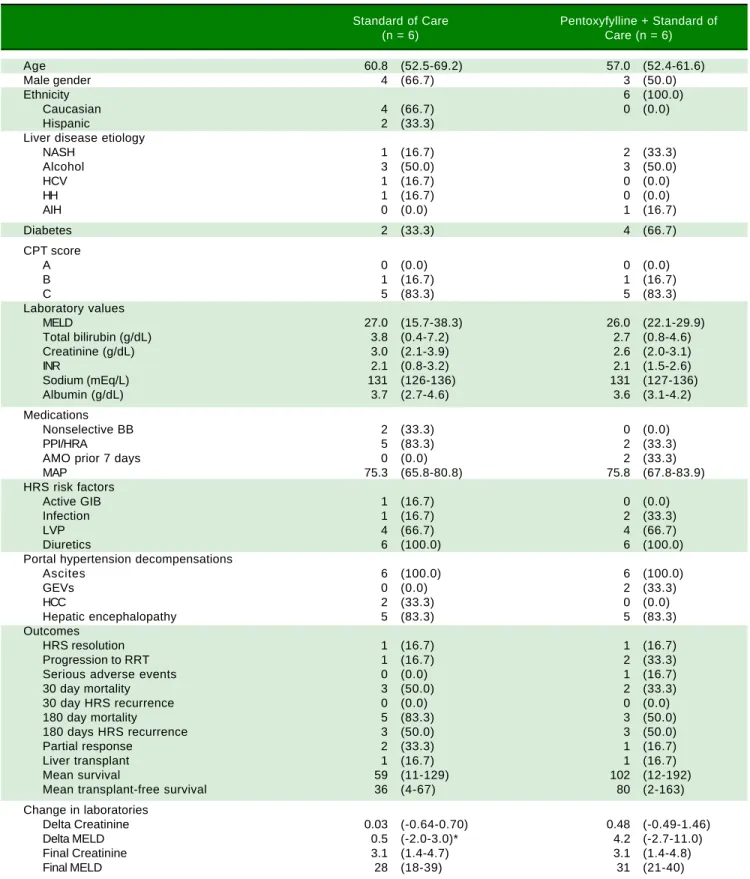
Table 1. Univariate comparison looking at Standard of Care (albumin, midodrine and octretotide) compared to Pentoxyfylline + Standard of Care.
Standard of Care Pentoxyfylline + Standard of
(n = 6) Care (n = 6)
Age 60.8 (52.5-69.2) 57.0 (52.4-61.6)
Male gender 4 (66.7) 3 (50.0)
Ethnicity 6 (100.0)
Caucasian 4 (66.7) 0 (0.0)
Hispanic 2 (33.3)
Liver disease etiology
NASH 1 (16.7) 2 (33.3)
Alcohol 3 (50.0) 3 (50.0)
HCV 1 (16.7) 0 (0.0)
HH 1 (16.7) 0 (0.0)
AIH 0 (0.0) 1 (16.7)
Diabetes 2 (33.3) 4 (66.7)
CPT score
A 0 (0.0) 0 (0.0)
B 1 (16.7) 1 (16.7)
C 5 (83.3) 5 (83.3)
Laboratory values
MELD 27.0 (15.7-38.3) 26.0 (22.1-29.9)
Total bilirubin (g/dL) 3.8 (0.4-7.2) 2.7 (0.8-4.6)
Creatinine (g/dL) 3.0 (2.1-3.9) 2.6 (2.0-3.1)
INR 2.1 (0.8-3.2) 2.1 (1.5-2.6)
Sodium (mEq/L) 131 (126-136) 131 (127-136)
Albumin (g/dL) 3.7 (2.7-4.6) 3.6 (3.1-4.2)
Medications
Nonselective BB 2 (33.3) 0 (0.0)
PPI/HRA 5 (83.3) 2 (33.3)
AMO prior 7 days 0 (0.0) 2 (33.3)
MAP 75.3 (65.8-80.8) 75.8 (67.8-83.9)
HRS risk factors
Active GIB 1 (16.7) 0 (0.0)
Infection 1 (16.7) 2 (33.3)
LVP 4 (66.7) 4 (66.7)
Diuretics 6 (100.0) 6 (100.0)
Portal hypertension decompensations
Ascites 6 (100.0) 6 (100.0)
GEVs 0 (0.0) 2 (33.3)
HCC 2 (33.3) 0 (0.0)
Hepatic encephalopathy 5 (83.3) 5 (83.3)
Outcomes
HRS resolution 1 (16.7) 1 (16.7)
Progression to RRT 1 (16.7) 2 (33.3)
Serious adverse events 0 (0.0) 1 (16.7)
30 day mortality 3 (50.0) 2 (33.3)
30 day HRS recurrence 0 (0.0) 0 (0.0)
180 day mortality 5 (83.3) 3 (50.0)
180 days HRS recurrence 3 (50.0) 3 (50.0)
Partial response 2 (33.3) 1 (16.7)
Liver transplant 1 (16.7) 1 (16.7)
Mean survival 59 (11-129) 102 (12-192)
Mean transplant-free survival 36 (4-67) 80 (2-163)
Change in laboratories
Delta Creatinine 0.03 (-0.64-0.70) 0.48 (-0.49-1.46)
Delta MELD 0.5 (-2.0-3.0)* 4.2 (-2.7-11.0)
Final Creatinine 3.1 (1.4-4.7) 3.1 (1.4-4.8)
Final MELD 28 (18-39) 31 (21-40)
Figure 3. Figure 3. Figure 3.
Figure 3. Figure 3. Change in renal function comparing the addition of pentoxyfyl-line to the standard of care. No differences were observed between the two groups when assessing improvement in renal function following intervention.
2
1
0
-1
Standard of care Pentoxifylline
Delta creatinine (mg/dL)
p = 0.4266
Figure 4. A. Figure 4. A. Figure 4. A. Figure 4. A.
Figure 4. A. 180-Day Overall. B.B.B.B.B. Transplant-Free Survival. No differences were observed in overall and transplant-free survival when comparing the in-tervention and the control group.
B B B B B
Transplant-free 180-Day survival
0 50 100 150
Days
Standard of care
Pentoxyfylline
p = 0.3081
Percent survival
100
50
0 A A A A A
Overall 180-Day survival
0 50 100 150
Days
Standard of care
Pentoxyfylline
p = 0.2088
Percent survival
100
50
0
tution for further medical care (Table 1). There was a trend towards significance in the use of acid suppressing medications in the standard of care group (33.3% PTX vs.
83.3%, p = 0.079).
HRS-1 resolution was identical between the two groups with one subject in each arm (16.7%). No differ-ences were seen in partial treatment response [n = 2 (33.3%) vs. n = 1 (16.7%), p = 0.505], change in creatinine (+0.48 g/dL, 95% CI -0.49-1.46 vs. +0.03 g/dL, 95% CI -0.64-0.70, p = 0.427) (Figure 3), 30-day survival [n = 4 (66.6%) vs. n = 3 (50.0%), p = 0.558] and 180-day survival [n = 3 (50.0%) vs. n = 1 (16.7%), p = 0.221] (Figure 4) when comparing PTX to the control group. Mean survival (102.0 days, 95% CI 11.7-192.3 vs. 58.8 days, 95% CI 10.9-128.5, p = 0.357) and mean transplant-free survival (80.2 days, 95% CI 2.3-162.7 vs. 35.8 days, 95% CI 4.3-67.3, p = 0.226) were also similar for PTX compared to control. A significant difference was seen when looking at the change in MELD over the course of the entire study as the PTX group had a significantly greater increase in MELD score (+4.2, 95% CI -2.7 to + 11.0) vs. the AMO group (+0.5, 95% CI -2.0 to +3.0) driven largely by the above men-tioned change in creatinine, p = 0.042 (Figure 5), however both initial (26.0, 95% CI 22.1-29.9 PTX vs. 27.0, 95% CI 15.7-38.3, p = 0.835) and final MELD scores (30.5, 95% CI 21.4-39.6 PTX vs. 28.0, 95% CI 17.5-38.5, p = 0.654) were statistically similar. No subjects were lost to follow-up. Serious adverse events necessitating treatment discontinu-ation were rare. One subject in the PTX group discontin-ued treatment due to significant nausea and vomiting which was later attributed to another concomitant medi-cation. No adverse events ≥ grade 3 were documented in the AMO group.
Figure 5. Figure 5. Figure 5.
Figure 5. Figure 5. Change in MELD Score. The pentoxyfylline group experienced more heterogeneity with change in MELD score when stratified at the indi-vidual and group level.
Delta MELD
15
10
5
0
-5
-10
DISCUSSION
In a randomized, placebo-controlled, triple blinded pilot study, we found that PTX, when added to stand-ard of care with volume expansion and vasoconstric-tion, is a safe alternative to the standard of care alone. This potential novel therapy is important to consider in light of the abysmal prognosis for cirrhosis patients who develop HRS-1, especially those who are not eli-gible for liver transplantation where progression of disease more often than not leads to a palliative, end-of-life approach.
PTX has been shown previously to be effective in preventing HRS in patients with either acute alcoholic hepatitis or cirrhosis.12-14 In their study of 101 patients,
Akriviadis, et al.,13 demonstrated that compared to
place-bo, patients randomized to 400 mg PTX orally three times a day had a 71% lower risk of developing HRS as a cause of death (RR 0.29; 95% CI 0.13-0.65, p = 0.009). More importantly, the authors found improved survival (24.5% vs. 46.1% mortality, p = 0.037; RR 0.59, 95% CI 0.35-0.97). Our cohort was comprised of 50% alcoholic cirrhosis subjects. PTX is also effective in preventing HRS in patients with cirrhosis albeit with an attenuated effect. In their randomized controlled trial of 335 pa-tients with advanced cirrhosis, Lebrec, et al.15
demon-strated that the proportions of patients without a composite of complications, including HRS, were high-er in the PTX group than the placebo group at two (78.6% vs. 63.4%, p = 0.006) and six months (66.8% vs.
49.7%, p = 0.002) respectively. Furthermore, the proba-bility of being free of renal failure was statistically signif-icant at 6 months in the PTX group (90.9%, 95% CI 86.1-95.6) vs. the placebo group (79.4%, 95% CI 72.6-86.1%), p = 0.02. However, there was no appreciable sur-vival difference at 2 and 6 months between these two groups. Similarly, Tyagi, et al.12 demonstrated that PTX is
effective in preventing HRS in cirrhotic patients with as-cites. In their randomized placebo controlled trial of 70 patients, 35 were given PTX with improvement in serum sodium, mean arterial pressure and preservation of creati-nine. Of the 12 patients who developed HRS, only two patients were in the PTX arm (p = 0.01).
In general, treatment related serious adverse events were rare. The one patient who suffered a serious adverse event attributable to PTX had significant nausea and vom-iting; however, this was in the setting of co-administration of tramadol, a medication the subject remembered they had a similar reaction to when given prior but did not dis-close as an allergy/intolerance. Thus, the exact role of PTX in precipitating significant gastrointestinal side effects ne-cessitating drug discontinuation remains unclear, although nausea and vomiting have been reported in upwards of
28% of patients taking PTX. Other common side effects including dizziness, headache, dyspepsia and diarrhea13
were not observed.
While we did not find a survival benefit in this study due to a small sample size (we prematurely terminated study enrollment due to low numbers of recruitment over the two year study period), our study was not powered to detect survival rate and there was a trend towards a survival benefit in the PTX group. Overall cohort survival rate was higher than expected, largely due to the frequency of liver transplantation in the setting of the relatively small sample size. Future large-scale, well-powered multicenter study may be considered to corroborate these findings. Other limitations of our study are the inherent limitations to PTX as this medication cannot be administered through a gastric feeding tube owing to its pharmacologic proper-ties. This is problematic as oftentimes patients with ad-vanced cirrhosis and HRS have significant hepatic encephalopathy which can impair their ability to take oral medications. Additionally, we excluded patients in the in-tensive care unit, a setting where HRS patients often re-ceive aggressive medical care. This decision limits the generalizability of our findings somewhat and prevented a third comparison to patients who were prescribed the al-ternative HRS treatment regimen of norepinephrine and albumin.
In conclusion, the addition of PTX to AMO in the treatment of HRS-1 is safe and may offer a well-tolerated novel treatment to the limited armamentarium for this highly morbid condition. Future large-scale prospective study to validate the efficacy of this treatment seems war-ranted.
GUARANTOR OF ARTICLE
Jonathan G. Stine, M.D. MSc, FACP
DISCLOSURE STATEMENT
The authors have nothing to disclose.
FINANCIAL SUPPORT
This work was supported in part by grant funding from the National Institutes of Health (Grant 5T32DK007769-15).
This work was also supported by a Transplant Hepatol-ogy Fellowship Award from the American Association for the Study of Liver Diseases (AASLD).
SOURCES OF SUPPORT
management, analysis or interpretation of the data; or preparation, review or approval of the manuscript.
AUTHOR CONTRIBUTIONS
Stine JG, Henry Z, Caldwell SH and Northup PG de-signed research; Stine JG, Wang J, Cornella SL, Behm BW, Shah NL, Northup PG performed research; Stine JG and Northup PG analyzed data; Stine JG, Wang J, Cornella SL, Behm BW, Henry Z, Caldwell SH, and Northup PG wrote and approved the final version of the paper.
POTENTIAL COMPETING INTERESTS
None
REFERENCES
1. Ginès A, Escorsell A, Ginès P, Saló J, Jiménez W, Inglada L, Navasa M, et al. Incidence, predictive factors, and prognosis of the hepatorenal syndrome in cirrhosis with ascites. Gas-troenterology 1993: 105: 229-36.
2. Gines P, Schrier RW. Renal failure in cirrhosis. N Eng J Med
2009:361:1279-1290. doi: 10.1056/NEJMra0809139; 10.1056/NEJMra0809139.
3. Martin PY, Gines P, Schrier RW. Nitric oxide as a mediator of hemodynamic abnormalities and sodium and water retention in cirrhosis. New Engl J Med 1998:339:533-541. doi: 10.1056/NEJM199808203390807.
4. Moreau R, Durand F, Poynard T, et al. Duhamel C, Cervoni JP, Ichaï P, Abergel A, et al. Terlipressin in patients with cir-rhosis and type 1 hepatorenal syndrome: a retrospective multicenter study. Gastroenterology 2002: 122: 923-30. 5. Salerno F, Gerbes A, Gines P, Wong F, Arroyo V. Diagnosis,
prevention and treatment of hepatorenal syndrome in cirrho-sis. Gut 2007: 56: 1310-18. doi: 10.1136/gut.2006.107789. 6. Sanyal AJ, Boyer T, Garcia-Tsao G, Regenstein F, Rossaro
L, Appenrodt B, Blei A, et al. A randomized, prospective, double-blind, placebo-controlled trial of terlipressin for type 1 hepatorenal syndrome. Gastroenterology 2008; 134: 1360-8. doi: 10.1053/j.gastro.2008.02.014; 10.1053/ j.gastro.2008.02.014.
7. Singh V1, Ghosh S, Singh B, Kumar P, Sharma N, Bhalla A, Sharma AK, et al. Noradrenaline vs. terlipressin in the treat-ment of hepatorenal syndrome: a randomized study. J Hepatol 2012; 56: 1293-8. doi: 10.1016/j.jhep.2012.01.012; 10.1016/j.jhep.2012.01.012.
8. McClain CJ, Cohen DA. Increased tumor necrosis factor pro-duction by monocytes in alcoholic hepatitis. Hepatology (Baltimore, Md.) 1989; 9: 349-51.
9. Tazi KA, Quioc JJ, Saada V, Bezeaud A, Lebrec D, Moreau R. Upregulation of TNF-alpha production signaling pathways in monocytes from patients with advanced cirrhosis: possi-ble role of Akt and IRAK-M. J Hepatol 2006; 45: 280-9. doi: 10.1016/j.jhep.2006.02.013.
10. Tahir F, Riaz H, Rehman A, Munir MB. Potential role of TNF alpha blockers in delaying the progression of hepato-renal syndrome. Medical Hypotheses 2012; 78: 225-6. doi: 10.1016/j.mehy.2011.10.030; 10.1016/j.mehy.2011.10.030. 11. Fernández-Rodríguez CM, Lledó JL, López-Serrano P,
Gu-tiérrez MA, Marcos Alonso S, Pérez-Fernández MT, Férnán-dez Gil MA, et al. Effect of pentoxifylline on survival, cardiac function and both portal and systemic hemodynamics in ad-vanced alcoholic cirrhosis--a randomized double-blind pla-cebo-controlled trial. Revista Española de Enfermedades Digestivas: Órgano Oficial de la Sociedad Española de Pa-tología Digestiva 2008; 100: 481-9.
12. Tyagi P, Sharma P, Sharma BC, Puri AS, Kumar A, Sarin SK. Prevention of hepatorenal syndrome in patients with cirrho-sis and ascites: a pilot randomized control trial between pentoxifylline and placebo. Eur J Gastroenterol Hepatol
2011; 23: 210-17. doi: 10.1097/MEG.0b013e3283435d76; 10.1097/MEG.0b013e3283435d76.
13. Akriviadis E, Botla R, Briggs W, Han S, Reynolds T, Shakil O. Pentoxifylline improves short-term survival in severe acute alcoholic hepatitis: a double-blind, placebo-controlled trial.
Gastroenterology 2000; 119: 1637-48.
14. Lebrec D, Thabut D, Oberti F, et al. Pentoxifylline does not decrease short-term mortality but does reduce complications in patients with advanced cirrhosis. Gastroenterology 2010; 138: 1755-62. doi: 10.1053/j.gastro.2010.01.040; 10.1053/ j.gastro.2010.01.040.
15. Runyon BA, Aasld. Introduction to the revised American As-sociation for the Study of Liver Diseases Practice Guideline management of adult patients with ascites due to cirrhosis 2012. Hepatology (Baltimore, Md.) 2013; 57: 1651-3. doi: 10.1002/hep.26359; 10.1002/hep.26359.
16. Ortega R, Calahorra B, Gines P. Vasoconstrictors in the treatment of hepatorenal syndrome. Nefrología: 2002; 22 (Suppl.)5: 56-61.
17. Uriz J, Ginès P, Cárdenas A, Sort P, Jiménez W, Salmerón JM, Bataller R, et al. Terlipressin plus albumin infusion: an ef-fective and safe therapy of hepatorenal syndrome. J Hepa-tol 2000; 33: 43-8.
18. Colle I, Durand F, Pessione F, et al. Clinical course, predictive factors and prognosis in patients with cirrhosis and type 1 hepatorenal syndrome treated with Terlipressin: a retro-spective analysis. J Gastroenterol Hepatol 2002; 17: 882-8. 19. Kamath PS1, Wiesner RH, Malinchoc M, Kremers W, Therneau TM, Kosberg CL, D'Amico G, et al. A model to pre-dict survival in patients with end-stage liver disease. Hepa-tology 2001; 33: 464-70. doi: 10.1053/jhep.2001.22172.
Correspondence and reprint request: Jonathan G. Stine, M.D. MSc, FACP.
The Pennsylvania State University Division of Gastroenterology and Hepatology
Milton S. Hershey Medical Center 200 Campus Drive Entrance 4, Suite 2400