
Aproximación a las migraciones históricas a través del estudio de la información nominal
235
0
0
Texto completo
(2) Tesis Doctoral Doctorado en Demografía Departament de Geografia/Centre d’Estudis Demogràfics Universitat Autònoma de Barcelona. APROXIMACIÓN A LAS MIGRACIONES HISTÓRICAS A TRAVÉS DEL ESTUDIO DE LA INFORMACIÓN NOMINAL. JOAN PAU JORDÀ SÁNCHEZ. DIRECTORAS Prof. Anna Cabré Pla Dra. Joana Maria Pujadas‐Mora. BELLATERRA, FEBRERO 2016.
(3)
(4) A Maria Triay.
(5)
(6) AGRADECIMIENTOS Quería dedicar las primeras palabras de agradecimiento a las dos personas que han hecho posible esta tesis, la Profesora Anna Cabré y la Dra. Joana Maria Pujadas‐Mora. A la Profesora Cabré, por su confianza mostrada durante mi formación predoctoral así como también por la orientación, los consejos y las oportunidades que me ha dado durante este período. A la Dra. Pujadas‐Mora, por su paciencia, dedicación, complicidad y meticuloso trabajo. La presente tesis ha llegado a buen puerto gracias a su inestimable buen hacer. Finalmente, tengo que agradecer también el apoyo recibido por parte del Centre d’Estudis Demogràfics (CED) y del Departament de Geografia de la Universitat Autònoma de Barcelona (UAB) así como a sus respectivos directores. De igual forma no puedo obviar la ayuda de todos los que, de una u otra forma, desde la academia, la amistad y el hogar, han hecho posible este proyecto, especialmente a Maria Triay. Esta tesis fue matriculada hace ya cinco años y ha sido posible gracias a la financiación del programa de Formación del Profesorado Universitario (FPU) del Ministerio de Educación, Cultura y Deporte (AP 2010‐ 5699) y a los proyectos Matrimonio y posición social en el área de Barcelona, 1451‐1905. Construcción de una base de datos y análisis sociodemográfico (CSO2010‐21300/SOCI) y Five Centuries of Marriages (ERC‐2010‐AdG‐269796), ambos dirigidos por la Profesora Cabré. Mi participación en estos proyectos, así como mi inserción en las dinámicas internas del grupo de Demografía Histórica del CED ha permitido que esta tesis sea un proceso vital que va mucho más allá de la investigación. La gestación de este proyecto me ha llevado a Rostock, Ann Arbor, Minneapolis, Lund, Estocolmo, Budapest, Albacete, Las Vegas, San Diego, Roma, Nueva York, Washington… pero también a Gràcia, sa Pobla, Pollença, Binissalem, Sants, 9Barris (y St Pere Més Baix), Valencia, A Guarda, La Rábita, Buenos Aires, Caracas, Bogotá, a los vuelos Palma‐Barcelona‐Palma, a Sarrià‐Sant Gervasi, Idiazábal, Sant Climent, Valldoreix, Ankara, Sant Cugat, Sabadell y Terrassa, Berga, Planoles, Castellar, Pontevedra, Poble‐Sec, St Feliu y St Just, Madrid, la Habana, Montevideo... y también a las calles Saragossa, Gran de Gràcia, Legalitat… y siempre, General Riera. Además de al Camp Nou, al mercadillo de Badia, a l’Espiga del Farró y al Liadísimo, a las cafeterías de las facultades de Letras y Educación, al Sant Pancràs, al Espai Mallorca, a St Feliu de Codines, al Delta del Llobregat, al aula 203, a la biblioteca de humanidades y a la del CED, a la Vía Catalana, a los Cines Texas y al Microteatro. Ello me ha llevado a conocer a demógrafos de renombre internacional, a la vez que a aprender inglés, cambiar fondos de pantalla, practicar teatro y yoga e incluso a cazar. A tener conversaciones interesantísimas a puerta cerrada, además de llevarme a participar en una Colla de Diables, en un Club de Lectura, en diversas calçotades, choripanes,.
(7) “vermades” y paellas. Igualmente, a aprender sobre la burocracia y la vida de becario, sobre la gentrificación, las mujeres en la industria latera, la cultura mod, Paco Candel, las clases subalternas, la inmigración francesa y valenciana en Catalunya, los Pastorets de St Just y los gatos… mucho sobre gatos. Todo ello siempre, acompañado de grupos de WhatsApp, contubernios, confidencias, conversaciones furtivas, vermuts y películas de domingo. De esta forma esta tesis ha llenado “mi mochila” de cosas que son mucho más que ciencia, y me ha llevador a pensar que, si bien la historia es mi pasión, soy demógrafo por convicción. Por todo ello, gracias..
(8)
(9) ÍNDICE GENERAL SUMMARY. 1. INTRODUCCIÓN 1 INTRODUCCIÓN Objetivos y estructura de la tesis Resumen de los artículos. 19 21 24 26. 2. LA UTILIZACIÓN DE LOS APELLIDOS EN EL ESTUDIO DE LA POBLACIÓN Genealogía Reconstrucción de familias Biología y Genética Geografía e Historia Social. 30 30 31 33 35. 3. LA EVOLUCIÓN DE LOS APELLIDOS EN CATALUNYA Características generales del sistema de apellidación. 38 39. 4. FUENTES Y TRATAMIENTO DE LOS DATOS Los fogatges de 1497 y 1553 Los Libros de Esponsales: 1451‐1905 (Llibres d’Esposalles) La armonización de los apellidos. 42 42 44 49. PUBLICACIONES 5. Alteracions en la Forma de Cognomar‐se i les Seves Raons Històriques Socials i Demogràfiques: El cas de l’Oficialitat de Barcelona als segles XVI‐XVII.. 56. 6. The Footprint of Migrations on Surnames. Onomastic Changes in the Barcelona Area at the Late Middle Ages (1451‐1500).. 84. 7. Apellidos y Migraciones. Estudio a Través de los Fogatges Catalanes de 1497 y 1553.. 108. 8. Surnames and Migrations: The Barcelona Area (1451‐1900).. 132. CONCLUSIONES 9. CONCLUSIONES Alta variabilidad onomástica vinculada a las dinámicas demográficas Barcelona como área de fuerte inmigración El sur, el interior y el área de Barcelona, polos de atracción migratoria Una elevada homonimia Valoración de las fuentes y métodos utilizados Futuras vías de investigación. 55. 149 150 150 152 153 154 155 157. 10. DISCUSIÓN. 159. BIBLIOGRAFIA GENERAL ANEXOS. 165 195.
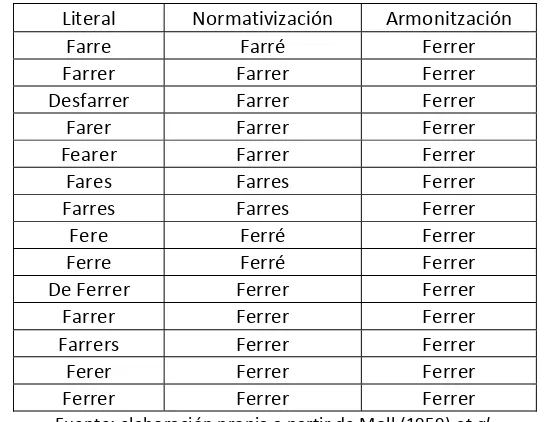
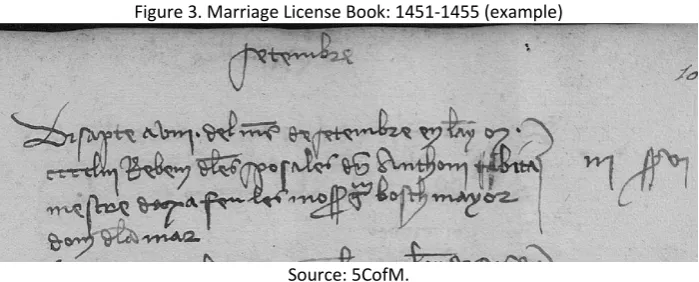
(10) ÍNDICE DE GRÁFICOS Gráfico 1. Evolución del número de matrimonios a lo largo del tiempo y distribución estandarizada del pago de tasas armonizado en sueldos (total) (1451‐1905) Gráfico 2. Distribución del pago de tasas armonizado en sueldos (%) (1451‐1905) Gráfico 3. Excepciones observadas en el pago de las tasas (1451‐1905) Gráfico 4. Casos en los que consta el primer apellido. Oficialidad de Barcelona, 1451‐1905 Gráfico 5. Casos en los que consta el segundo apellido. Oficialidad de Barcelona, 1451‐1905. 46 46 47 48 48. Gráfico 6. Número de fuegos registrados por colectas una vez armonizados los datos (1497‐1553). 115. Graph 7. Surname classification through cluster analysis: number of surnames (total) Graph 8. Surname classification through cluster analysis: number of surnames (%) Graph 9. Surname classification through cluster analysis: number of individuals (total) Graph 10. Surname classification through cluster analysis: number of individuals (%). 143 143 144 144. ÍNDICE DE IMÁGENES Y FIGURAS Figura 1. Etapas del proceso de armonización de los apellidos. 53. Figura 2. Exemple de Llicència Matrimonial (1573 – 1643). 63. Figure 3. Marriage License Book: 1451‐1455 (example) Figure 4. Marriage License Book: 1481‐1500 (example). 91 92. ÍNDICE DE MAPAS Mapa 1. División territorial de Catalunya por Col∙lectes (c. 1553) Mapa 2. Diócesis de Barcelona y su división en Decanatos. 43 44. Mapa 3. Al mapa, dins el context de Catalunya, l’Àrea de la Diòcesi de Barcelona i la seva divisió en deganats. En blau, l’Oficialitat de Barcelona. 62. Map 4. The Barcelona Main Deanery Map 5. The Old Catalonia Map 6. Catalan place‐surnames distribution (1451‐1500) Map 7. Place‐surnames from the Spanish Monarchy (c. 1500) Map 8. Place‐surnames from the rest of Europe (c. 1500). 90 96 97 98 99. Mapa 9. Distribución territorial de Cataluña en col∙lectes (1553) Mapa 10. Aparición y Desaparición de apellidos Mapa 11. Distribución de los apellidos más frecuentes (1497‐1553). 117 120 125. Map 12. Spain, Catalonia, the Diocese of Barcelona and the Main Deanship of Barcelona. 137.
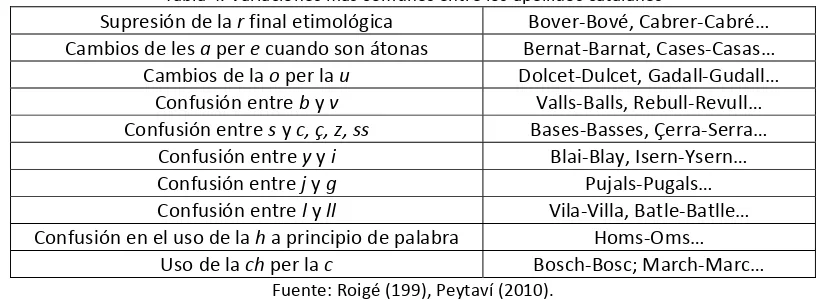
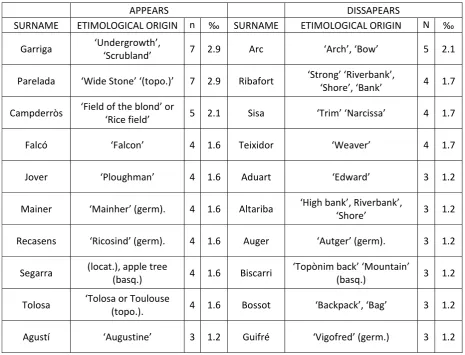
(11) ÍNDICE DE TABLAS Tabla 1. Distribución estandarizada del pago de tasas armonizado en sueldos (total) Tabla 2. Distribución del pago de tasas armonizado en sueldos (%) Tabla 3. Niveles del Proceso de armonización: ejemplo apellido Ferrer ‘herrero’ Tabla 4. Variaciones más comunes entre los apellidos catalanes Taula 5. Taula de correspondències i variacions existents: exemple del cognom Ferrer Taula 6. Principals fórmules de nominació a l’Àrea de Barcelona (%) segles XVI‐XVII Taula 7. Origen dels nuvis immigrants recollits als Llibres d’Esposalles (%). Segles XVI‐XVII Taula 8. Els 15 cognoms portats freqüentment per la immigració provinent de la resta de Catalunya i la seva distribució entre els autòctons (1573 – 1643) Taula 9. Els 15 cognoms portats freqüentment per la immigració provinent del Regne de França i la seva distribució entre els autòctons (1573 – 1643) Taula 10. Excepcions més comunes en la transmissió patrilineal del cognom (%). 1573‐1643 Taula 11. Descendència final neta a l’Àrea de Barcelona per matrimoni (segles XVI‐XVII). 47 47 50 52. 65 66 67 69 70 71 75. Table 12. Distribution of surnames in the BHMD Table 13. The most common surnames registered in the BHMD (1451‐1500) Table 14. Main examples of appearance and disappearanceof surnames before and after 1487 Table 15. Main examples of abnormal increase of surnames frequency before and after 1487 Table 16. Main examples of abnormal decrease of surnames frequency before and after 1487. 92 95 102 103 104. Tabla 17. Distribución de los fuegos por colectas (col∙lectes) según Josep Iglésies (1981 y 1991) Tabla 18. Coeficiente de Chen y Cavalli‐Sforza (1983) para el fogaje de 1497 Tabla 19. Coeficiente de Cavalli‐Sforza (1983) para el fogaje de 1553. 114 122 123. Table 20. Number of marriages by period Table 21. Similarities between Catalan, French and Occitan surnames: Some examples Table 22. Similarities between Catalan, and Castilian surnames: Some examples Table 23. Catalan surnames classified by cluster aggregation and linguistic origin. 139 140 141 141.
(12) SUMMARY.
(13)
(14) INTRODUCTION Anthroponyms have the essential function of identifying an individual. However, concurrently and indirectly, they also indicate belonging to human groups of various kinds: family, ethnic, cultural, geographical and socio‐economic, providing extra information beyond that of onomastics (Lasker 1975, 1980, Colantonio et al. 2003a, 2003b, 2008a, 2008b 2009, Sánchez‐Rubio and Testón 2012).1 Accordingly, the study of nominal data is a demonstrably reliable resource when analyzing population movements in the past, especially when primary sources are scarce and it becomes necessary to draw on indirect methods of various kinds.2 This is largely due to the fact that migrations are the result of a combination of demographic and historical factors that bring about profound changes in the prevalence, structure and distribution of anthroponyms, both in the origin and destination communities (Colantonio et al. 2003a, 2003b, 2008a, 2008b, 2009, Fuster 2010). Thus, if a name is passed down following a stable pattern, as was the case in Catalonia from the thirteenth to the fourteenth centuries, a direct relationship between the increase in the number of names over time and the population dynamics can be identified. The use of historical sources that record extensive nominative information on large population groups is crucial to carrying out this type of analysis. For this reason, in this study it is used the Barcelona Historical Marriage Database (BHMD), which covers 600.000 marriages from 1451 to 1900, and the Catalan Household tax counts of 1497 and 1553. These sources provide important insights into the multicultural character and mobility of the people. Continuous migration flows occurred in Catalonia, and Barcelona in particular, throughout the fifteenth, sixteenth and seventeenth centuries: chief among these were the expulsion of the Jewish community, the arrival of thousands of immigrants from the Kingdom of France, attracted by the economic growth in the region, and a steady stream of farmers, seasonal workers and traders who moved from the countryside to the city.. 1. In this study we use the generic term "name" in its broadest sense (forename, surname, nickname), specifying as necessary to which we are referring. Thus, we understand "forename" to mean first name; "surname", the family name; and "nickname", the non‐formal identifiers of individuals and their families (such as house names, which cover the entire family, including nicknames, pet names, and aliases, which informally identify a single individual) (Salinero 2010). Similarly, we understand "lineage" to mean an individual's family line of descent (Fluvià 1995). Finally, although they are not exact synonyms, for stylistic reasons terms such as "surname", "nominal information", "personal names" and "onomastics" will be used interchangeably throughout the text. 2 For more on this point, see the work of Tafunell and Carreras (2005), Alfaro (2006), Bourin and Sopena (2010) and Susino (2012), among others. Additionally, it should be kept in mind that it was not until the second half of the twentieth century and the beginning of the twenty‐first that Spanish records such as the Residential Variation Statistics (EVR) and the National Immigrant Survey (ENI) were introduced.. 3.
(15) As a result of the combination of all of these factors, Catalan onomastics underwent profound transformations stemming from population movements, which would suggest that migration was a key phenomenon in the evolution of early modern demographic dynamics. Therefore, this study follows the lines of inquiry already established by such researchers as Charles Tilly (1978) in his Migration in Modern European History, which views Europe before the Industrial Revolution as a region of high mobility in which migration played a key structural role in the economic development of the continent (Lucassen 1987, 2009, 2015, Moch 1992, Canny 1994, 2001, de Vries 1994, 2008, Poley and Turnbull 1998, Hochstadt 1999, Hoerder 2002, Bade 2003, van Babel and van Zanden 2004, De Munk and Winter 2012). The format of this thesis is a compendium of publications, which was selected because it allows, in our view, greater flexibility in the application of methods and sources as well as greater variety in choosing research questions. Thus the focus has been on three different but complementary aspects: 1) in overview, how surnames were passed down in modern Catalonia has been analyzed, with special attention to those demographic and sociohistorical factors that influenced their formation while also emphasizing the exceptions observed; 2) the distinguishing aspects of Catalan anthroponymy of the fifteenth, sixteenth and seventeenth centuries have been identified (e.g. frequency, distribution, the origin of names, etc.) as well as the impression that the various international flows of migrants, coming for the most part from the Kingdoms of Spain and of France, left. Additionally, the main centers of emigration and of the reception of migrants, their sociodemographic characteristics and the social, political and economic reasons for migration, as well as their impact on host communities, has been studied; and 3) new surname classification methods have been proposed, complementary to existing onomastic criteria, to better capture the complexity of forms and geographic origins of Catalan anthroponyms, and their evolution over time.. 4.
(16) SUMMARY OF RESEARCH ARTICLES Deviations in the catalan way of be named and its historical, social and demographic reasons: the case of the Barcelona Main Deanship in the 16th and 17th centuries3 This paper aims to explore the demographic and socio‐historical factors that determined the emergence, permanence and extinction of the Catalan surnames during the sixteenth and seventeenth centuries. Using data from the Barcelona Historical Marriage Database (BHMD), the analysis shows that there is a high variation in anthroponomy beyond the general surname’s patrilineal transmission (96% of cases) in the Early Modern period due to multiple causes. These results are consistent with previous studies (Salinero 2010, Martin‐Sopena 2010). In general, this research shows that only 1.77 children per marriage reached adulthood in the Barcelona area due to the combination of high mortality rates and low urban net offspring, causing the loss of many lineages in the subsequent generations. In this sense, the key factor that guaranteed the permanence and transmission of surnames was the continuous migration flow from rural areas, which permanently introduced new surnames. At the same time, results indicate that some individuals were named differently throughout their life according to their social role in different moments. For example, women lost their father’s surname when they got married. All these alterations and intra‐generational changes are boosted, to a lesser extent, by the absence of a Catalan standard language, as well as by a soft legislation regulating surnames transmission. It should be remarked that, during the Early Modern Period, the survival of surnames was not only determined by mechanisms of social transmission and net reproductive rates, but also by lineages alterations (3%‐4% of all the cases) such as transcription errors, nicknames adoptions or individuals’ economic and social strategies. This is the case of freedmen, foundlings and younger sons. In the first two cases, individuals acquired a new surname when they had full access into the society. In the latter, individuals endorsed their wife’s family name as a way to fully access her heritage.. 3. Jordà, Joan Pau; Pujadas‐Mora, Joana Maria; Cabré, Anna (CED‐UAB) (2016) “Alteracions en la forma de cognomar‐se i les seves raons històriques, socials i demogràfiques: El cas de l’Oficialitat de Barcelona als segles XVI‐ XVII” [Deviations in the catalan way of be named and its historical, social and demographic reasons: the case of the Barcelona Main Deanship in the 16th and 17th centuries] Recerques, història, economia, cultura, 71 [IN PRESS].. 5.
(17) The footprint of migration on surnames. Onomastic changes in the Barcelona Area at the Late Middle Ages (1451‐1500)4 The paper aims to analyze how migration affected surnames in the Barcelona Area from 1451 to 1500. During this period, surnames were subject to multiple changes as a consequence of three main factors: a continuous inflow of rural immigrants and groups of traders, the crypto‐Judaic population and, to a lesser extent, the constant arrival of French migrants. As a result, Catalan onomastics experienced a series of modifications, which led to variations in name prevalence, structure, and distribution. The analysis uses data from the historical registers of marriage licenses from the Diocese of Barcelona for the 15th (1451‐1501, volumes 1 to 8). These data were selected because its ancient origin and its continuity throughout the time. The emergence, extinction, permanence and frequency distributions of surnames are computed by territory in order to establish the relationship between surnames and migration. Moreover, Hebrew family names adapted to Christian forms are also analyzed. Finally, foreign spouses’ surnames are verified throughout the studied period in order to identify external influences on Catalan onomastics. The analysis of surnames geographical distribution by place of origin shows that many of them (60%) may have originated in the northern half of Catalonia, or inherited from individuals coming from this territory. Additionally, when considering only those surnames that initially referred to non‐Catalan geographic features (20% of cases), results point that most of them came from other territories in the Iberian Peninsula (56%), the Kingdom of France (30%) or the Italian Peninsula (8%). This is consistent with the main medieval migratory flows identified by various historians, linguists and demographers such as Font i Rius (1961, 1983), Soldevila (1970) or Nadal and Giralt (1960) among others. Furthermore, the analysis highlights the Jewish onomastic influence on Catalan surnames, representing at least 1% of the onomastics. Finally, the paper points at the high anthroponymic variability identified in the 15th century, indicating a high mobility in the Barcelona area in which more than half of the surnames may have belonged to migrants, who were most likely from the rest of Catalonia.. 4. Jordà, Joan Pau; Pujadas‐Mora, Joana Maria; Cabré, Anna (CED‐UAB) (2016) “The footprint of migration on surnames. Onomastic changes in the Barcelona Area at the Late Middle Ages (1451‐1500)” Onoma, 50 [UNDER REVIEW]This article has been accepted in the call for papers of the journal Onoma as part of its special issue number 50: "Medieval Multiculturalism: The Evidence from Names", having been peer reviewed and awaiting editor final acceptance.. 6.
(18) Surnames and migrations. Study through the Catalan household counts of 1497 and 1553.5 This paper aims to identify migration flows during the first half of the 16th century. Population movements are analyzed though the distribution and emergence of surnames using the Catalan household tax counts (fogatges) for the period 1497‐1553. First, the study focuses on a descriptive analysis of the nominative data, especially for the most frequent surnames. It maps their spatial distribution throughout the time. As it is shown, inland, the south and the coast territories were areas of high mobility in the sixteenth century, with a significant increase in the number of households between 1497 and 1553. In a second step, these migration patterns are confirmed throughout the computation of the degree of interrelation among different regions of Catalonia at the time (col∙lectes). The coefficient of Chen and Cavalli‐Sforza (1983) is used, and various migratory patterns are identified. Therefore, it is possible that during the first half of the 16th century a steady migration flow happened from northern Catalonia (Cataluña Vella) to the south, (Cataluña Nova). Moreover, Catalan inland also experienced a migration stream. Finally, the Barcelona area and its surroundings are recognized as another migration attraction pole. It should be remarked that the application of the coefficient of Chen and Cavalli‐Sforza revealed a general decline of the relationship indicators among territories from 1497 to 1553. This result would suggest that the increased number of households, as well as the different migration patterns were the result of the introduction of new surnames carried, most probably, by foreigners unaware of Catalan onomastics. All these results would confirm the idea that during the first half of the 16th century, Catalonia suffered several migration flows, mostly internal, favored by the economic growth and the increase of the grain demand during this period (Junqueras 2002).. 5. Jordà, Joan Pau; Valls, Miquel, Pujadas‐Mora, Joana Maria (CED‐UAB) (2013) “Apellidos y migraciones. Estudio a través de los fogatges catalanes de 1497 y 1553” [Surname and migrations. Study through the Catalan household counts of 1497 and 1553.] Revista de Demografía Histórica, 31, 1, 13, pp. 105‐130.. 7.
(19) Surnames and Migrations: The Barcelona Area (1451‐1900)6 This study has shown how the interrelations between Catalan, Occitan, French and Castilian lenguages have conditioned the evolution of surnames collected in the BHMD during the Modern and Contemporary eras. Immigration from France, then from the rest of Spain has enriched Catalan onomastics by introducing new forms of surnames. This influence by migratory flows, together with the relatively high number of homonymic surnames and the absence of a standardised onomastics, make it necessary to develop new avenues of study. For this purpose this research has presented a first approach to an alternative classification of surnames based on cluster analysis, seeking to complement onomastic studies. The cluster analysis showed certain trends that identify similarities between surnames, independently from linguistic and historical origins. From the resulting classification, it has been observed that surnames considered to be Catalan from linguistic criteria are the majority in all groups. Similarly, it has also been found that a significant number of them may have been introduced or (re)introduced by French immigration during the 16th and 17th centuries. When analysing each group in detail, it can be seen that Group A has the highest number of Catalan surnames; Group B has the highest percentage of foreign; and Group C, the most heterogeneous of all, comprises the largest number of Castilian surnames and the smallest number, in relative terms, of surnames influenced by French immigration. These hypotheses are corroborated by the evolution over time of each group, which matched with the major immigration periods. It should be noted that these results do not show that each cluster is formed solely by Catalan, French and Spanish surnames respectively, but it rather finds three main frequency patterns to classify surnames in the Barcelona area Cluster analysis is proved to be an effective tool in this case, providing substantial complementary information about the complex evolution of Catalan onomastics between the 15th and 20th centuries.. 6. Jordà, Joan Pau; Pujadas‐Mora, Joana Maria, Cabré, Anna (2016) “Surnames and Migrations: The Barcelona Area (1451‐1900)” en Hough, C.; Izdebska, D. (eds.) Names and their Environment. Proceedings of the XXV International Congress of Onomastic Sciences, Glasgow, 25‐29 August 2014. Glasgow: University of Glasgow. [IN PRESS]. 8.
(20) CONCLUSIONS This thesis supports the view that in the early modern era, Catalonia was a land of migrations, and demonstrates a clear relationship between population flows and nominal data from the fifteenth, sixteenth and seventeenth centuries. Thus 1) a high degree of variability in the nominal data, resulting from very low natural growth and the constant influx of immigrants from this period has been observed; 2) the processes whereby, from 1451 to 1500, Barcelona received immigration from all over Catalonia as well as from abroad, mostly from the Kingdom of France and the rest of the Kingdom of Spain, have left identifiable traces on the surnames of the period; 3) there were three major settlement patterns in Catalonia between 1497 and 1553, with those in the Barcelona area, coastal south and interior regions particularly standing out. The results, for their part, suggest a decline in onomastic similarities, implying that part of the foreign immigrants who were arriving bore names distant from the Catalan anthroponymy at the time; and lastly, 4) from the observed similarities between Catalan, Castilian, French and Occitan surnames, a classification method based on cluster analysis, complementary to the onomastic criteria to identify the geographical origin of surnames has been proposed. So, firstly it can be stated that the system of naming was widely standardized in Catalonia in the sixteenth century, with the vast majority of anthroponyms transmitted from father to children patrilineally (96% of reported cases). However, at the same time, there was continuous onomastic instability due to several causes. On the one hand, during this period the demographic characteristics of the Barcelona area fostered a certain degree of variability at the intergenerational level: High rates of urban mortality, especially among the young, meant that from generation to generation 1.77 children per marriage reached reproductive age.7 This entailed surnames disappearing due to a lack of biological continuity. In this context, the key phenomenon that ensured the survival and transmission of personal names, but especially their increase, were the migrations. The endemic low natural growth in the Barcelona area was far outweighed by the constant influx of new individuals and also, consequently, new surnames. On the other hand it may be observed that some individuals were named differently at various points in their lives according to the status they enjoyed in society at particular times. All of these processes of 7. This value should be considered as a reproductive minimum, as the information recorded in the Marriage Books makes it impossible, for example, to reconstruct the genealogies of individuals who were married outside the jurisdiction or to collect genealogical information on immigrants' ancestors. These limitations preclude firm conclusions that the Barcelona area experienced endemic negative natural growth, but it is possible to state that, in any case, it was very low.. 9.
(21) alteration and intragenerational changes were exacerbated by the lack of legislation regulating the transmission of nominal information (which did not occur until the Ley del Registro Civil (Civil Registration Act) of 1870). The influence on the survival of anthroponyms that the typing and/or transcription errors of the scribes of the time, the adoption of nicknames and the various economic and social strategies that affected about 3‐4% of the total individuals recorded in the Marriage Books during the early modern era should also be highlighted. This was the case with freedpersons, foundlings and younger siblings, who adopted a surname to integrate into society as members with full rights or took their spouse's name as their own. Secondly, in this thesis the migrations in the Barcelona area between 1451 and 1500 have been analyzed from the nominal data in the BHMD. During this period, onomastics in general and surnames in particular underwent various changes resulting from the continuous flows to the cities of the rural population and, to a lesser extent, immigration from the Kingdom of France. Similarly, another phenomenon that substantially altered the onomastics of the age was the expulsion of the Jewish community from the Spanish Kingdom in 1492‐1493. As a result of the combination of these factors, the series of alterations in number, prevalence and distribution that Catalan surnames experienced have been analyzed from an etymological perspective. Thus, the origin of migrants has been established from the geographical distribution of toponymic surnames — those that originally referred to the bearer's place of origin or residence — with an estimate that at the end of the Middle Ages Barcelona received migrants from all over Catalonia, but especially from the surrounding areas, predominantly those which toponymically were originally from the northern half of the region (60%), with surnames such as Berguedà, Perpinyà, and Rosselló. Similarly, considering those anthroponyms referring only to non‐Catalan places (20% of cases) it may be observed that the majority came from the rest of the Iberian Peninsula (56%), the Kingdom of France (30%) and the Italian Peninsula (8%). Examples would be surnames such as Tolosà, Navarro and Napolità. These results correspond with the migration trends in the second half of the fifteenth century previously identified by historians, linguists and demographers such as Nadal and Giralt (1960), Mitjà (1962), Font‐i‐ Rius (1961, 1983), Soldevila (1970) Ferrer‐Mayol (1980), Batlle (1989), Costa (2003) and Armenteros (2009), among others. Furthermore, these migration trends are confirmed when we focus on those cases where the individual was recognized as a foreigner in the BHMD: 26.6% of these came from the Kingdom of France, 26.2% from the Kingdom of Castile and 17.8% of the rest from the Crown of Aragon, and 9.3% from Italy.. 10.
(22) The appearance, disappearance, prevalence and distribution of surnames indicate that about half of the anthroponyms from this period could have belonged to migrants, probably most of whom were from the rest of Catalonia. This is consistent with research by Moreu‐Rey (1959), Nadal and Giralt (1960), Cuadrada (2003) and Ubach (2013) as well as others, but it is not possible to confirm definitively due to the limitations of the source for the end of the fifteenth century, as the data for this period is highly fragmented and only exceptionally records individuals' birthplaces. Thirdly, this thesis has also examined the migrations that occurred in Catalonia between 1497 and 1553 starting with the Hearth Taxes of 1497 and 1553. Thus it has been observed that the interior regions, the south and the coast were areas of a high mobility during the second half of the sixteenth century. They confirm the significant increase in the number of hearths between 1497 and 1553 and continual onomastic instability previously observed, as already noted in Nadal and Giralt (1960), Nadal (1973, 1983), Moreno et al. (1986), Simón (1992) and Feliu (2004), among others. Similarly, through the application of isonymic indicators such as the Chen Cavalli‐Sforza coefficient (1983) and analysis of the most common surnames (such as Ferrer, Serra, Font, Soler, and Martí) has identified a number of settlement trends throughout the first half of the sixteenth century. The first of these is a movement from north to south. The second major migratory movement identified was the flow into the Catalan interior. Finally, a third detectable settlement trend revolves around the Barcelona area and its surroundings. Together these results suggest that the increase in the number of hearths, as well as the various observed flows, caused a decline in similarities in the surname frequency distribution by region and, therefore, the coefficients of correlation, which would have been caused by the introduction of new names, distant from contemporary Catalan onomastics, which were almost certainly borne by foreigners. Generally, we can say that everything that has been recounted so far confirms the idea that between 1451 and 1553 Catalonia experienced various population flows, for the most part internal, which were fostered by five main factors covered in this thesis: a very low natural growth in the Barcelona area; an enormous supply of undeveloped land; an increased demand for cereals; a large reserve of male manual labor released from its tie to the land through the Sentence of Guadalupe; and the beginning of the arrival of immigrants from the Kingdom of France (Nadal and Giralt 1960, Moreno et al. 1986, Junqueras 2002). Thus migrations affected the demographic dynamics of Catalonia throughout the early modern era.. 11.
(23) Fourthly and finally, from the data collected in the BHMD between 1451 and 1905, a significant number of similarities between Catalan surnames on one hand, and Occitan, French and Spanish ones on the other, may be observed, which would influence the evolution of nominal data profoundly. Accordingly, French immigration between the fifteenth and seventeenth centuries or the flows of workers (Aragonese, Valencians and others) from the rest of the Iberian peninsula starting from the second half of the nineteenth century are examples of processes that made a lasting impression on the anthroponymy. Other factors that also defined the historical evolution of onomastics were the consequences of the Nueva Planta decrees (1714) and the lack of standardized rules for the Catalan language until the twentieth century (Castellano 1980, Faure 2002, Vall‐Llobera 2010, Peytaví 2010). All of these influences involved the introduction of new surnames as well as the appearance of variations in existing ones, resulting in a relatively high number of homonymic surnames — surnames that have the same spelling but different etymological, historical and geographical origins. This phenomenon introduces certain biases when seeking to classify the surnames in Catalonia by place of origin from only linguistic criteria, which affects 50‐70% of cases. Given this fact, and as a possible complementary method of classification, this thesis applies cluster analysis, using the growth rate of each surname as the reference variable. Thus, it aims to introduce an additional criterion in the classification of surnames that is complementary to and independent of the strictly linguistic. The result is three large onomastic clusters within which all the surnames from the nineteenth to the twentieth centuries analyzed have been classified. All the groups created are composed for the most part of anthroponyms that are considered Catalan according to linguistic criteria, and as well, of a significant number of surnames that might have been introduced or (re‐)introduced by French immigration in the sixteenth and seventeenth centuries. If we examine each of these groups in detail, it may also be observed that Group A (29.6% of all cases) has the largest number of Catalan surnames according to linguistic criteria (97.4%, surnames such as Ferrer, Serra, Puig, Soler, Sala, Riera, and Bosc); Group B (15.1% of all cases) contains the highest percentage of surnames borne by foreigners (77.5%, surnames such as Font, Vidal, Ponç, Carrera, Batlle, Abadia, and Camp); and Group C (55.3% of all cases), the most heterogeneous of the three, has the highest number of Castilian surnames according to etymological criteria (7.4%) as well as the lowest number, relatively speaking, of anthroponyms influenced by French immigration (46.7%). Surnames such as Martí, Vila, Valls, Mas, Roca, Torres, Prats, Rovira, Pujol, Ribes, and Cases are typical examples from this last group.. 12.
(24) It should be noted that these results do not mean that each cluster is made up solely of Catalan, French and Spanish surnames, respectively, but rather point to three major behavioral patterns by their frequency and distribution over time through which all the surnames recorded in the Barcelona area between 1451 and 1905 can be classified. As for the sources used in the four studies presented, the same limitations apply to both the Marriage Books and the Hearth Taxes. Thus, it was necessary to harmonize the surnames recorded in order to facilitate their comparison over time, which occasioned a loss of onomastic variability and a certain bias that should be taken into consideration. Similarly, it was not possible to calculate the number of identity changes made for purposes of concealment (such as those by criminals, Jews and Moors). We have also approached other changes only very indirectly through records such as trial proceedings or lawsuits, on the other hand that are difficult to tally in any event. It should be said, however, that there are differences from one source to another. The Hearth Taxes of 1497 and 1553 allow analysis throughout Catalonia in two specific periods (as records of stock), though there are certain limitations due to the fact that they are counts of heads of households — and not of the total population — carried out for tax, and not demographic, purposes. Furthermore, the Hearth Taxes also present problems of record keeping and preservation. Thus, missing data on parts of the Pyrenees and the city of Barcelona (Iglésies 1981, 1991), as well as on the low number of hearth taxes collected in places like Igualada, Tárrega and Berga have introduced a bias in the estimates, making it impossible to compare them. Additionally, the fact that the regional borders of the time (col∙lectes) were different in 1497 and 1553 has made it necessary to harmonize them through simplification. Throughout this thesis, the Marriage Books have been a source of great onomastic wealth and continuity over time, but they too have their limitations. So, the fact that it is a marriage record (a record of flows) means that it is not possible to trace the evolution since birth of the parties to the marriage contract, obliging us to extrapolate to obtain estimates of the whole population. In this respect, it is possible that a part, such as foundlings and existing freedmen, were able to hide their pre‐ marital origins as, not hiding them might have been a burden to them for the rest of their lives. Likewise, data gaps in the BHMD, as for the period from 1455 to 1481, or the small number of cases in some rural parishes, have hindered certain types of analysis, such as those at the local level, which was again an interpretive limitation. Finally, regarding the techniques and methods used, it is worth noting that the etymological analysis of Catalan surnames has not yielded the expected results. That is to say, the study of the regional 13.
(25) distribution of the toponymy in a relatively small and highly mobile area like Barcelona did not allow us to establish clear migration patterns when looking to analyze internal migration. We were also not able to correctly identify the crypto‐Jewish community that decided to remain in the Spanish kingdom after the Edict of Expulsion of 1492‐1493, as most adopted common Christian names at baptism in order to erase their Hebrew past (Moreu‐Rey, 1991 Lascortz 2012). Conversely, the application of isonymic methods has demonstrated high explanatory power. It has made it possible to follow the main migration flows as well as to establish the degree of relation between the different areas analyzed. However, and as has already been pointed out, the analysis of the appearance, persistence and extinction of surnames has certain limitations, including the fact that the indicators calculated are always indirect estimates of the degree of relation between populations. Furthermore, the existence of high homonymy (polyphyletism) within the Catalan onomastics has introduced a degree of bias in the estimates, making it difficult to distinguish between genetic flows and nominal information based on the indicators calculated in this study. As for cluster analysis, it has undoubtedly proved a useful tool that provides more information on the complex evolution of the Catalan onomastics from the fifteenth to the twentieth centuries. Nevertheless, future research needs to flesh out the method presented in this thesis. New additional reference variables such as relative frequency or the total number of surnames, which would allow us to support and complement the classification proposed in this study, should be introduced. Moreover, this technique should be applied to other sources and other onomastic corpora, for only then will its reliability be truly tested. Lastly it should be noted that, despite all of the limitations above, the high explanatory power that the analysis of surnames provides in the study of migration is evident, especially for a period such as the early modern era in which sources of any kind and estimates on the Catalan level are scarce. Despite this, it would be interesting to supplement the data contained in both the Marriage Books and the Hearth Taxes with that from other records, such as the parish registers (Quinque libri) or the Hearth Taxes of 1358 and 1378, with the aim of numerically quantifying the migrations that had occurred. It is also vital to explore records that by their nature provide more qualitative information, such as notarial protocols, property tax registers, letters of citizenship and marriage records. It would also be interesting to widen the period under study in order to obtain a long‐term perspective (longue durée): from the late thirteenth century, when the naming system as we know it today was established in Catalonia, to the present day. This would make it possible to observe in depth the surname's development and rise, as 14.
(26) well as its evolution over time, especially starting with the beginning of the intra‐Iberian migration of the fifties and sixties in the twentieth century. Accordingly, the object of study would be widened to all nominal information (names, nicknames, aliases, etc.) and would introduce new variables into the analysis, such as fertility, geographic distance between populations and the influence of orography in migrations. Thus, deeper insight into the degree of interaction between the anthroponyms, migrations and population in Catalonia would be gained.. 15.
(27) DISCUSSION The findings presented in this thesis confirmed the hypothesis, in the Catalan case, that throughout the modern era population dynamics were profoundly affected by constant population flows. In this sense, Catalonia is no exception in the European context of the sixteenth and seventeenth centuries, which various scholars have described as an era of high mobility (Tilly 1978, Lucassen 1987, 2009, 2014, Moch 1992, Canny 1994, de Vries 1994, 2008, Poley and Turnbull 1998, Hochstadt 1999, Hoerder 2002, Bade 2003, van Babel and van Zanden 2004, Lucassen and Lucassen 2009, and de Munk and Winter 2012). This high motility resulted from the integration of the regional into the international context. In this way, Catalonia was situated within several migration networks, which were driven mainly by the demands of an expanding labor market and the needs of a demographically empty region, throughout the early modern era. Thus, population flows would shape the demographic composition and structure of the region profoundly over time, as demonstrated by various factors presented in this thesis. Examples are the continuous and significant influence of migrations on onomastics, which produced a large number of homonymic names between 1451 and 1905; the various poles of international emigration, among which the Kingdoms of Castile, France and the Italian territories particularly stand out; the general decline in isonymic coefficients between 1497 and 1553; and the increase in the number of marriages and hearth taxes in Barcelona and its sphere of influence throughout the fifteenth and sixteenth centuries. Any conclusions should be considered within the context of the specific demographic dynamics and characteristics of Catalonia. In this vein, the work of Professor Anna Cabré (1989, 1999) on the reproduction of the Catalan generations from 1856 to 1960 should be mentioned. The author notes in these works that without the immigration that occurred between the nineteenth and twentieth centuries, the Catalan population would not have experienced any significant growth, and would in fact have declined relative to the Spanish, European and world levels. While the biological reproductive capacity of the Catalan population would have assured its maintaining the same level, the region would not have grown as it did during the late modern period. From this, Cabré sets out what she calls the "modern Catalan reproductive system" as a good model of population maintenance and growth in which immigration plays a vital structural role. This theory stands out for its relevance to this thesis in two fundamental aspects: First, in that immigration, according to Cabré, was an integral and primary part of the Catalan reproductive system 16.
(28) during the nineteenth and twentieth centuries. And second, that the mechanisms of economic, social and cultural integration of the large number of immigrants who arrived in Catalonia between 1856 and 1960 were already present, at the latest, in the eighteenth century (the organization of domestic production, survival strategies and marriage preferences, and so on). From these ideas, a number of questions arise which can only be presented as a hypothesis here: Is it possible that the historical roots of the Catalan reproductive system presented by Cabré (1989, 1999), so dependent on structural migration, lie in the population vacuum resulting from the crisis of the late Middle Ages and the consequent migrations of people from the Kingdom of France from the fifteenth to the seventeenth centuries, as described in detail in the work of Nadal and Giralt (1960), Codina (1985), Simón (1992) and Capdevila (2014)? Is it also possible that the historical origins of this reproductive model lie within the negative natural growth in Barcelona and its sphere of influence as well as within the rise of an interlinked urban system with Barcelona as the epicenter, a factor that has already been discussed by authors such as Pérez‐Moreda and Reher (1986), Simón (1996), Escobar (1997), Espuche (1997, 1998), and Lucassen and Lucassen (2009), among others? The results of this thesis might indicate that migration was not a side element to cover the short‐term needs of the Catalan economy, but was, especially in the Barcelona area, an important part of the system of demographic reproduction in the early modern era. In this regard, we must not forget that Catalonia experienced a redreç demografic (Nadal and Giralt, 1960), from 220,000 inhabitants in 1497 to over 475,000 in 1626, largely spurred by French immigration from the fifteenth to the seventeenth centuries. This demonstrates the importance of population flows in maintaining and increasing Catalan population growth in the modern age. On another level, this thesis has also attempted a methodological contribution. For administrative reasons, most states have good continuous records of births, deaths and marriages, but this is not the case when the focus is on migrations. This is due, In large part, to the fact that the migratory phenomenon by its very nature changes over the course of an individual's life, making it difficult to capture in full through records of specific moments, such as censuses (Wunsch and Termonte, 1978). This lack of sources means it is necessary to find various indirect methods to study population movements in depth through the use of existing sources (censuses, electoral rolls, municipal and parish registers, vital statistics, surveys and so on), as is in the analysis of surnames. Thus, this thesis demonstrates the potential in the use of nominal data in the study of migrations, through which the origin of the main groups of foreigners and the intensity of their migrations can be estimated from 17.
(29) nominal records that were not originally kept for statistical purposes; the high population mobility in the Barcelona area; and the major population flows that occurred. In other words, working from records that were not kept for demographic purposes from a pre‐statistical age, it has been possible to establish a general perspective of what migrations occurred in Catalonia in the fifteenth and sixteenth centuries thanks to the study of surnames. Finally, in a manner of speaking this thesis is also a further contribution to the demystification of the ethnic origin of Catalan surnames. The erroneous view that the Middle and Modern Ages were eras of low mobility is widely held, though this is simply not true, as has been demonstrated repeatedly in this work. This error can lead to the vast majority of the population wrongly believing that a surname belonging to the Catalan onomastic corpus (including surnames such as Ferrer, Font, Martí, and Serra) indicates that its bearer, in Catalonia, is not an immigrant or descendant of immigrants, or that at least their name is a sign that their ancestors have been settled in the region for many generations. The research has shown this to be false.. 18.
(30) INTRODUCCIÓN.
(31)
(32) 1. INTRODUCCIÓN Los antropónimos tienen la función esencial de identificar al individuo. Sin embargo, simultánea e indirectamente, constituyen también un indicador de pertenencia a grupos humanos de diversa naturaleza: familiar, étnica, cultural, geográfica o socio‐económica, aportando información que va más allá de lo puramente onomástico (Lasker 1975, 1980, Colantonio et al. 2003a, 2003b, 2008a, 2008b, 2009, Sánchez‐Rubio y Testón 2012).8 En este sentido, los nombres se han mostrado como un recurso solvente a la hora de analizar los movimientos de individuos en el pasado, especialmente cuando las fuentes escasean y se hace imperante recurrir a métodos indirectos de diversa índole.9 Esto es debido, en gran parte, a que las migraciones son consecuencia de la combinación de factores socio‐históricos diversos que producen variaciones profundas en la prevalencia, estructura y repartición sobre el territorio de los antropónimos, tanto entre las comunidades de origen como en las de destino (Colantonio et al. 2003a, 2003b, 2008a, 2008b, 2009, Fuster 2010). De esta forma, cuando el apellido es transmitido siguiendo un patrón estable, es posible establecer una relación directa entre su evolución y las dinámicas demográficas de una población. Cataluña, y especialmente Barcelona, fue un territorio en el que se dieron a lo largo de los siglos XV, XVI y XVII una serie de circunstancias y acontecimientos históricos, económicos y políticos que fomentaron los desplazamientos de población. A modo de ejemplo, la Sentencia Arbitral de Guadalupe (1486) permitió al campesinado romper sus relaciones de vasallaje a cambio de pagar una redención, facilitándose una movilidad en el noroeste catalán anteriormente inexistente (Vicens‐Vives 1945, Moreno et al. 1986, Serra 1980, 2010). De igual forma, en 1492‐1493 fue expulsada la comunidad judía, lo que pudo suponer una contracción del corpus antroponímico así como una alteración en los nombres de aquellos sefardíes que, pese a todo, no quisieron o no pudieron abandonar el territorio (Marcó‐i‐ Dach 1987, Moreu‐Rey 1991, Montes 2001, Lascortz 2012). 8. En la presente investigación utilizamos el término genérico “nombre” en el sentido amplio del mismo (prenombre, apellido, apodo) precisando cuando sea necesario a cuál nos referimos. Así, entenderemos por prenombre, el nombre de pila; por apellido, el nombre de familia; y por apodos, los identificadores no formales de los individuos y sus familias (como los nombres de casa, que afectan a toda una familia, y los apodos, sobrenombres, renombres y alias, que identifican de manera informal a un solo individuo) (Salinero 2010). De la misma forma, hacemos referencia al linaje entendido como la línea de ascendencia familiar de un individuo (Fluvià 1995). Finalmente, aunque no sean sinónimos exactos, por motivos de estilo, términos como “apellidos”, “información nominal”, “antropónimos” y “onomástica” se utilizan indistintamente a lo largo del texto. 9 Para profundizar en este punto, ver las obras de Duran (1957), Tafunell y Carreras (2005), Alfaro (2006), Bourin y Sopena (2010) o Susino (2012) entre otros. Se ha de tener presente, además, que no es hasta la segunda mitad del siglo XX y principios del siglo XXI que se ponen en marcha en España registros como la Estadística de Variaciones Residenciales (EVR) o la Encuesta Nacional de Inmigrantes (ENI).. 21.
(33) Otra muestra de alta movilidad fue la revitalización del campo y la ciudad. Durante este período se roturaron nuevas tierras, se aumentó la producción de manufacturas y se dinamizaron los intercambios comerciales (Junqueras 2002). Esta expansión económica se produjo principalmente gracias al relativo vacío poblacional consecuencia de la Crisis de la Baja Edad Media y a la llegada de miles de inmigrantes provenientes del Reino de Francia. Éstos se asentaron en Cataluña, huyendo de las Guerras de Religión (1562‐1598), atraídos por unos salarios al alza y por el aumento de la producción y la productividad agraria (Nadal y Giralt 1960, Nadal 1978). En paralelo a estos procesos, hay que destacar también que el área de Barcelona fue receptora constante de inmigración a lo largo de la Edad Moderna. La ciudad acogió permanentes flujos de temporeros, comerciantes y vagabundos, lo que permitió mantener y ampliar sus efectivos en un contexto marcado por un crecimiento natural urbano muy bajo o incluso negativo (Pérez‐Moreda y Reher 1986, Simón 1996, Lucassen y Lucassen 2009). Un fenómeno que afectó a la gran mayoría de las ciudades europeas y que ha convenido en denominarse ‘the urban graveyard effect’.10 Esta visión dinámica de la sociedad catalana altomoderna entroncaría así con las líneas de trabajo expuestas por autores como Charles Tilly (1978) en su obra Migration in Modern European History. Este autor considera que la Europa anterior a la Revolución Industrial fue un territorio de alta movilidad, una visión compartida por multitud de investigadores (Todorov 1983, Lucassen 1987, 2009, 2015, Moch 1992, Canny 1994, de Vries 1994, 2008, Poley y Turnbull 1998, Hochstadt 1999, Hoerder 2002, Hellie 2002, Bade 2003, van Babel y van Zanden 2004, De Munk y Winter 2012, entre otros). Esta idea se contrapone a la visión expuesta por Zelinsky, que en 1971 publicó “The hypothesis of the mobility transition”.11 En esta obra las sociedades preindustriales se presentaban como comunidades autosuficientes en su mayoría, con una movilidad geográfica baja y estable, que solo se incrementaría a partir del siglo XIX con la revolución industrial. 10. Sobre ‘the urban graveyard effect’ ver los trabajos de Bairoch (1988), Dupâquier (1988), Batlle (1989), Davis y Lucassen (1995), Hohenberg y Lees (1995), McIntosh (2001), Williamson (2002), Woods (2003), Claramunt et al. (2003), Sonnino (2004), de Vries (2006), Lottum (2007, 2011) y Lucassen y Lucassen (2009) entre otros. De esta forma, el incremento de efectivos poblacionales en las ciudades solo se podría explicar a través de la inmigración. Respecto a este punto, Sharlin (1978), Williams (1990), Szreter et al. (1998) plantearon la idea de que, además, los inmigrantes urbanos corrían mayor riesgo de morir a causa de enfermedades y por lo tanto, se dieron tasas de reproducción más bajas. Esto se daba sobre todo en ciudades de más de 10.000 habitantes. Otros autores han señalado que un desequilibrio entre sex ratios también podría provocar esta diferencia entre inmigrantes y no inmigrantes en la nupcialidad (Lucassen y Lucassen, 2009). Para ver más sobre el crecimiento natural bajo o negativo urbano para períodos pretransicionales ver: Brändström; L. Telebrand (eds). (1988), Kearns, Withhers (eds.) (1991), Reher (2001) o Vlahov. (2004). 11 Vinculado a esta obra está la obra de Polanyi (1944) The Great Transformation, en la que el autor plantea que el estado contemporáneo surgió de la mano economía de mercado y la industrialización, produciendo profundos cambios sociales, económicos y culturales.. 22.
(34) Lucassen y Lucassen (2009, 2015) han presentado una visión de conjunto de estos procesos migratorios para la Europa Moderna. Así, de una población de unos ochenta millones (Sebastián 2005), cerca de cuatro roturaron nuevas tierras como colonos entre los siglos XV y XVII, más de 750.000 europeos migraron a América y unos seis millones más se desplazaron como mercenarios, soldados y marineros por todo el continente. Así mismo, también se produjo en Europa un movimiento continuo del campo a las ciudades, normalmente desplazamientos de corta distancia, que afectó a más de diez millones de individuos entre los siglos XVI y XVIII. Por último, no se puede obviar la existencia de un pequeño grupo de migrantes influyentes altamente cualificados y especializados: profesores universitarios, clérigos, funcionarios del estado, que fueron reclutados en el mercado internacional y que a menudo cambiaron su residencia. Tampoco se pueden eludir la migración forzosa de cientos de miles de africanos y musulmanes que fueron tomados como esclavos y llevados a Europa entre los siglos XV, XVI y XVII.12 La movilidad de la población catalana se entiende en esta investigación como todo desplazamiento geográfico de individuos o grupos, generalmente por causas económicas o sociales (Perruchoud 2006). Este marco ha sido adaptado a las fuentes existentes así como al período y la región analizados, centrándose este estudio, siempre que ha sido posible, en los desplazamientos acaecidos de forma mayoritaria en Cataluña y Europa durante el período analizado: los movimientos de población del campo hacia las ciudades y las migraciones de carácter laboral, tanto aquellas internas como internacionales (Vicent‐Vives 1945, Nadal y Giralt 1960, Moreno et al. 1986, Simón 1996, Lucassen y Lucassen 2009). 13 Para el caso catalán existe una amplia bibliografía que analiza aspectos diversos de las migraciones altomodernas. Así, son bien conocidas las consecuencias de las ya citada Sentencia Arbirtral de Gudalupe (p. ej. Vicens‐Vives 1945, Moreno et al. 1986, Serra 1980, 2010 entre otros) o de la expulsión de la comunidad judía en 1492‐1493 (p. ej. Marcó‐i‐Dach 1987, Moreu‐Rey 1991, Montes 2001, Lascortz 2012). De igual forma, han sido frecuentemente objeto de estudio la llegada de migración francesa a lo largo de los siglos XV, XVI y XVII (p. ej. Nadal y Giralt 1960, Peytaví 2010) Sin embargo, una gran parte de. 12. Para profundizar en estos temas, ver sobre las colonizaciones europeas los trabajos de Russell‐Wood (1978), Bono (1999), Davis (2007), Almeida‐Mendes (2008). Sobre las migraciones a América consultar, por ejemplo, Lucassen (2004), Cohn (2009) y Salinero (2010). Sobre la movilidad vinculada a acciones militares ver Parker (1996), Gorski (2007) y Lucassen y Lucassen (2009). Sobre migraciones internacionales de élites políticas e intelectuales ver Leibetseder (2007). 13 La clasificación que aquí se establece, extraída a partir de los trabajos de Lucassen y Lucassen (2009, 2015) parte a su vez de la idea expuesta por Manning (2005) de “cross community migration” en la que establece que las migraciones, desde una perspectiva histórica, han de ser cuantificadas más por su impacto cultural que por la distancia recorrida por los individuos.. 23.
(35) estas investigaciones cubren áreas de estudio relativamente pequeñas, como parroquias o comarcas, y analizan periodos relativamente cortos de tiempo (p. ej. Albareda 1972, Bach‐i‐Riu 1992, 1995, Batle 1981, Codina 1985, Gual‐i‐Vilà 1989, 1990, 1991, 1998, 2001, Canyameres 1994, Puigarnau 1995, Bilbeny 1996, Vilalta‐i‐Escobar 1999, Capdevila 2001, 2014, Enjuanes 2003, Millàs 2005 entre otros). De igual forma, son pocos los estudios que nos aportan una visión de conjunto sobre las migraciones en Cataluña a lo largo de la Alta Edad Moderna (p. ej. Salas‐Auséns 1988, Camps 1993, Villar‐García et al. 2003 entre otros). En paralelo, diversos estudios han mostrado ya las potencialidades del uso de la onomástica en el análisis de las migraciones históricas catalanas (p. ej. Sánchez‐Adell 1978, Redal 1986, Mas‐i‐Miralles 1992, Guinot 1999, Mas 2000, Cuadrada 2003, Ferrer‐Navarro 2005, Aparici 2009 Peytaví 2010 entre otros). De esta manera, la presente tesis busca complementar todos estos estudios previos, aportando una visión de conjunto sobre las migraciones en Cataluña para la Alta Edad Moderna. Para llevar a cabo esta investigación se ha recurrido a los recuentos de hogares de 1497 y 1553 y de los Libros de Esponsales (Llibres d’Esposalles de la Taula de la Catedral de Barcelona) conservados en la Barcelona Historical Marriage Database (BHMD). Éstos recogen extensa información nominativa sobre grandes conjuntos poblacionales a la vez que cubren amplias áreas del territorio, lo que les convierten en un recurso único para el estudio de las migraciones en los siglos XV, XVI, XVII.. Objetivos y estructura de la tesis El formato seleccionado para llevar a cabo esta tesis es el de un compendio de publicaciones. Esta configuración ha sido elegida porque permite, a nuestro parecer, una mayor flexibilidad en la aplicación de métodos y fuentes así como también mayor variedad en la elección de las preguntas de investigación en el estudio de las migraciones históricas. De esta forma, la atención se focaliza en tres aspectos diferentes pero complementarios: 1. Primero, ha sido indispensable conocer en profundidad los mecanismos de transmisión de los apellidos para así comprender hasta qué punto existe una relación entre la antroponimia y la demografía en la Cataluña altomoderna. El primer artículo de este compendio Alteracions en la Forma de Cognomar‐se i les Seves Raons Històriques, Socials i Demogràfiques: El Cas de l’Oficialitat de Barcelona als Segles XVI i XVII analiza, desde una visión de conjunto, como se heredaban los apellidos en la Cataluña Moderna, prestando especial atención a aquellos factores demográficos y socio‐históricos que condicionaron su evolución. Hay que remarcar que desde la ciencia onomástica se han realizado diversas aproximaciones que tienen por objeto comprender como se formó y evolucionó el sistema de 24.
(36) nominación catalán hasta la actualidad (p. ej. Moll 1959, Moreu‐Rey 1991, Roigé 1991, Arbòs 2010a, 2010b) pero sin embargo, son escasas las aportaciones que ponen en relación estos procesos con la evolución histórica de la población (p. ej. Bourin y Martínez‐Sopena 2010, Salinero y Testón 2010). 2. En segundo lugar se han establecido los principales patrones migratorios acaecidos durante la Alta Edad Moderna. Este trabajo se inserta en la línea de una serie de investigaciones que ponen en relación información nominal y migraciones en Cataluña (p. ej. Guinot 1999, Mas 2000, Peytaví 2010) y a su vez, complementa los diversos estudios sobre los movimientos de población entre los siglos XV y XVII (p. ej. Nadal y Giralt 1960, Codina 1985, Moreno et al. 1986, Simón 1996, Capdevila 2014). De esta forma en el segundo y tercer artículo de este compendio, titulados The Footprint of Migrations on Surnames. Onomastic Changes in the Barcelona Area at the Late Middle Ages (1451‐1500) y Apellidos y Migraciones. Estudio a Través de los Fogatges Catalanes de 1497 y 1553 se identifican los aspectos que definen la antroponimia catalana a partir del análisis del origen, frecuencia y distribución de los apellidos sobre el territorio y su relación con las migraciones. También se estudia la impronta que los diversos flujos internacionales de migrantes, provenientes en su mayoría del resto de la Monarquía Hispánica (Corona de Aragón, Reinos de Castilla, Nápoles, Sicilia…) y del Reino de Francia, dejaron sobre los apellidos. 3. Finalmente, en tercer lugar, ha sido ineludible, una vez observado las influencias de las migraciones castellanas, occitanas y francesas sobre la onomástica catalana, revisar los criterios etimológicos de clasificación de los apellidos. Así en el artículo cuarto, titulado Surnames and Migrations: The Barcelona Area (1451‐1900) se proponen nuevos métodos de clasificación, adicionales a los criterios onomásticos ya existentes, que permiten recoger mejor la complejidad de formas y orígenes geográficos de los antropónimos catalanes así como analizar su evolución a lo largo del tiempo. Se ha de remarcar que la inmigración de franceses entre los siglos XV‐XVII o las continuas relaciones con el resto de territorios peninsulares supusieron la introducción de nuevos apellidos así como también la aparición de variaciones de otros ya existentes, produciéndose un número relativamente alto de apellidos homónimos. Ante esto, y como posible método complementario de clasificación a los ya existentes, en esta tesis se propone la aplicación de un análisis de conglomerados (cluster analysis).. 25.
(37) Resumen de los artículos Jordà, Joan Pau; Pujadas‐Mora, Joana Maria; Cabré, Anna (2016) “Alteracions en la forma de cognomar‐se i les seves raons històriques, socials i demogràfiques: El cas de l’Oficialitat de Barcelona als segles XVI‐XVII” Recerques, història, economia, cultura, 71 [EN PRENSA]. El artículo analiza, desde una perspectiva de conjunto, cuáles fueron los factores demográficos y socio‐históricos que condicionaron la aparición, pervivencia y extinción de los apellidos catalanes entre los siglos XVI y XVII. De esta forma se ha podido observar, a partir del análisis de la información recogida en la BHMD, que más allá de los mecanismos generales de transmisión patrilineal del apellido (que suponían el 96% de los casos) se produjo una alta variabilidad antroponímica en la Alta Edad Moderna que ha de ser considerada multicausal. Estos resultados coincidirían con estudios previos como los de Salinero (2010) o Martin‐Sopena (2010). Así, a lo largo de la investigación se demuestra que las elevadas tasas de mortalidad, especialmente en las primeras edades, unidas a una baja natalidad urbana, condujeron a que únicamente 1.77 hijos e hijas por matrimonio llegasen a edades adultas en el área de Barcelona (este valor ha de ser tomado como un mínimo). Esto supuso que de generación en generación desaparecieran linajes debido a la falta de continuidad biológica. En este sentido, el fenómeno clave para asegurar la pervivencia y transmisión de los apellidos fueron las continuas migraciones, que introdujeron permanentemente nuevos apellidos. A modo de ejemplo, el 65% de los antropónimos registrados en los Libros de Esponsales en 1643 no estaban presentes en 1543. Paralelamente también se ha podido observar como algunos individuos fueron apellidados de diferente forma a lo largo de su vida de acuerdo al rol social que jugaban en cada momento. Así, por ejemplo, las mujeres perdían el apellido paterno al contraer matrimonio. Todos estos procesos de alteración y cambio intrageneracionales se vieron dinamizados, en menor medida, por la inexistencia de una normativa ortográfica catalana estándar y la falta de una legislación que regulara claramente la transmisión de los apellidos. Hay que decir además que la supervivencia de un apellido no sólo se vio determinada por los mecanismos de transmisión y las capacidades de reproducción efectiva de la población, sino que también se vio condicionada por cambios diversos, como los errores de transcripción, la adopción de apodos o las estrategias económicas y sociales de cada momento (3‐4% de los casos). Este era el caso de los libertos, los expósitos y los segundones. Los dos primeros, por ejemplo, adquirían un apellido al integrarse en la sociedad como miembros de pleno derecho, mientras que en el tercer caso el individuo solía adoptar el apellido de la familia de la esposa a cambio de acceder al patrimonio de ésta.. 26.
(38) Jordà, Joan Pau; Pujadas‐Mora, Joana Maria; Cabré, Anna (2016) “The footprint of migration on surnames. Onomastic changes in the Barcelona Area at the Late Middle Ages (1451‐1500)” Onoma, 50 [EN REVISIÓN]14 La investigación se centra en el estudio de la antroponimia bajomedieval catalana (1451‐1500) a partir del análisis etimológico de la información nominal recogida en la BHMD. De esta forma los resultados presentan la onomástica barcelonesa del siglo XV como de gran riqueza e inestabilidad, quedando patente la fuerte influencia de las migraciones sobre los apellidos de la época. Así, el análisis de la distribución sobre el territorio de aquellos apellidos que hacen referencia originariamente a un topónimo catalán, provienen en su mayoría de la mitad norte de Cataluña (60%). Respecto a los apellidos toponímicos extranjeros (20% del total de casos) son en gran parte originarios de otros territorios de la Península Ibérica (56%), del Reino de Francia (30%) y de la Península Italiana (8%). Esta distribución de los apellidos toponímicos coincidiría con los principales focos emigratorios de la época, que han sido identificados por historiadores, lingüistas y demógrafos como Font i Rius (1961, 1983), Nadal y Giralt (1960), Soldevila (1970) y Virgili (2010). Al mismo tiempo, otro resultado a destacar sería la influencia hebrea sobre la onomástica catalana, que representa al menos el 1% de los casos, lo que no quiere decir, necesariamente, que los portadores de estos apellidos fuesen descendientes de judíos o criptojudíos. Sin embargo hay que tomar este resultado como un mínimo, ya que Moreu‐Rey (1991) apunta a que la mayoría de los conversos adoptaron apellidos comunes en el momento de su conversión, lo que dificultaría su identificación únicamente a partir de la onomástica. Por último, la alta variabilidad antroponímica ha quedado patente a partir del análisis de la aparición, permanencia y desaparición de los apellidos. A modo de ejemplo, el 48% de éstos fueron registrados por vez primera durante este período. Esto sugeriría que más de la mitad de los apellidos recogidos en la BHMD durante estos años hubiesen podido pertenecer a migrantes catalanes, aunque las limitaciones de las fuentes han hecho imposible profundizar más en los resultados.. 14. Este artículo ha sido aceptado en el call for papers de la revista Onoma como parte de su monográfico número 50: “Medieval Multiculturalism: The Evidence from Names”, habiendo pasado ya la revisión por pares y esperando la aceptación definitiva del editor.. 27.
Figure


+7



Documento similar
This section will pose a relationship between the operation of the media and the economic power that goes through different mechanisms: the control of media ownership; the control
1. S., III, 52, 1-3: Examinadas estas cosas por nosotros, sería apropiado a los lugares antes citados tratar lo contado en la historia sobre las Amazonas que había antiguamente
Since such powers frequently exist outside the institutional framework, and/or exercise their influence through channels exempt (or simply out of reach) from any political
Abstract: Based on a corpus composed entirely of texts close to the pole of communicative immediacy, mainly private letters from the sixteenth, eighteenth and twentieth centuries
In the previous sections we have shown how astronomical alignments and solar hierophanies – with a common interest in the solstices − were substantiated in the
While Russian nostalgia for the late-socialism of the Brezhnev era began only after the clear-cut rupture of 1991, nostalgia for the 1970s seems to have emerged in Algeria
It is well known that during the nineteenth and twentieth centuries patent systems everywhere went through a progressive shift from being
Although animal energy supply was subject to fodder availability for some time (Garrabou, 2005), in the 19 th century, livestock farming proved to be a fertile field of
