oa
Publicación Digital de la Facultad de Medicina Veterinaria y Zootecnia http://veterinariamexico.unam.mx/
Received: 2017-09-07 Accepted: 2017-11-22 Published: 2017-12-15 Additional information and declarations
can be found on page 12
Copyright 2017 Natyieli Losada-Espinosa et al.
open access
Distributed under Creative Commons CC-BY 4.0
Abstract
The Welfare Quality® (WQ) protocols have been developed as a tool for the assessment of farm animal welfare based on scientific evidence. Animal wel-fare (AW) is part of the sustainability criteria of livestock production. A study was carried out in four states of Central Mexico in seven rustic (rPS) and six technified (tPS) production systems using the WQ protocol with the objective of providing an initial approximation of the welfare of animals and to discuss the validity of indicators of AW. The results showed that the animals housed in rustic units presented better results in the Good Health category and with respect to the criterion expression of social behaviour, while the frequency of criteria concerning Positive emotional states was higher in animals in the technified units. In the changing context in which the farms operate, including changing agricultural policies, new environmental and food safety regulations, variability of climatic conditions, and volatility in prices of inputs and outputs, it is not only the attributes referring to productivity and efficiency that become relevant. It is concluded that the criteria related to the WQ principles of health and behaviour are sensitive to changes in the housing and management of pigs. The high occurrences of health and behaviour problems recorded in technified systems are an indicator of poor welfare.
Keywords: animal welfare; pig behaviour and health; pig production; sustainability; Welfare Quality.
The welfare of pigs in rustic
and technified production systems
using the Welfare Quality protocols
of pigs in Mexico: Validity of indicators
of animal welfare as part
of the sustainability criteria
of pig production systems
Natyieli Losada-Espinosaa
María Elena Trujillo-Ortegab 0000-0002-7229-260X
Francisco Galindoa*
a Departamento de Etología, Fauna Silvestre y Animales de Laboratorio, Facultad de Medicina Veterinaria y Zootecnia, Universidad Nacional Autónoma de México (UNAM), México b Departamento de Medicina y Zootecnia de Cerdos, Facultad de Medicina Veterinaria y Zootecnia, Universidad Nacional Autónoma de México (UNAM), México
*Corresponding author: Email address: [email protected]
Cite this as:
Introduction
The concept of animal welfare (AW) based on science has been adopted by the World Organization for Animal Health (2007) as part of a global strategy to adopt AW standards in member countries.1,2 Particularly in Latin America, a regional strat-egy on AW is being integrated as part of a One Welfare approach 3 and applied from a sustainability point of view. In this sense, AW is seen as part of the sus-tainable livestock production criteria. In order to assess sustainability criteria, it is important to have reliable animal welfare indicators. The Welfare Quality® (WQ) protocols were developed as an AW assessment tool from a scientific point of view. These protocols were developed for three species: poultry, cattle, and pigs, and take into account four parameters: feeding, housing, health, and behaviour.4
Mexico is an important meat producer. One of the main production systems that contribute meat and derivatives is the pork sector, which has adapted to the Mexican economy because of its great versatility. According to national statistical data, it is estimated that the consumption of pork exceeds 1.9 million tons per year.5 Pig production systems in Mexico are oriented by two models: the techni-fied, in which a large number of animals are managed in small spaces and which produces approximately 50% of the total meat output, and rustic production sys-tems, which are characterized by keeping animals in small extensions of land in or near the housing yard and which produces approximately 20-30% of the pork in the country.6
During the last fifty years, the form of production within pig farming has changed. In general, the pork industry has been managed with the goal of produc-ing pork at the lowest possible cost and with the highest profit; through years of unilateral commitment to genetics and nutrition, social and environmental sustain-ability as well as animal welfare have been ignored.7 Currently, both environmental and animal welfare issues must be considered in order to develop more efficient pig production systems, including less technified models, that can offer added value for these criteria.
The present study takes a closer look at the welfare of pigs in these rustic and technified production systems using the WQ protocols for pigs in Mexico. The data obtained will provide a first approximation of the welfare of animals by applying the Welfare Quality protocols in rustic and technified production systems, and will help to discuss the validity of indicators of AW as part of the sustainability criteria of pig production systems.
Materials and methods
Location and subjects
Geographical location of the area studied
The study region is located within the temperate zone characteristic of Mexican sierras, with rains in summer, and an average annual temperature range of 18° to 24°C.8 It is the most economically important region where the two systems of pig production can be found.
Mexico City (1 UPr). All of these states are located in the Central Region of Mexico
(Figure 1). Farms were selected through the Ministry of Agriculture and Livestock’s
(SAGARPA) census of pig producers in the country, including small producers, ac-cording to the number of animals in the farms.
Characteristics of the production units selected
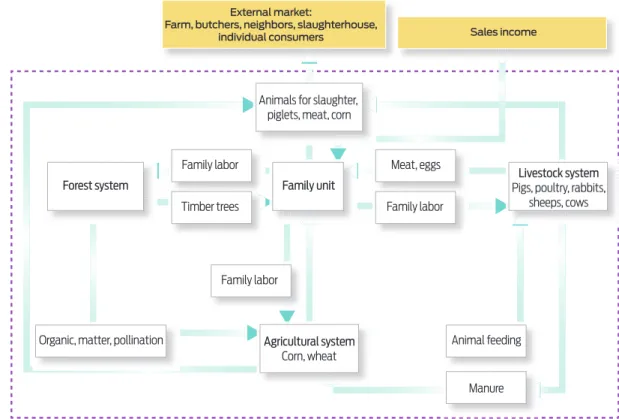
I. Rustic production units.All the farms had a person in charge of the unit and included a range of between 10 to 50 breeding sows, with 100 to 500 animals in production. The main objective of keeping pigs in this type of production was commercial; however, some breeders said they also used the animals to complement the family diet as well as a resource in case of financial emergencies. It was common for production units to be inhab-ited by families (the owner or employees) and contain other associated species such as poultry, rabbits, sheep, and cows. Production units were in charge of wom-en and mwom-en that took care of the animals and only occasionally hired workers. The production systems in most of the farms were diversified (Figure 2). Very few of the producers used commercial balanced feed as the only source of nutrients; the great majority used forage and oilseeds typical of their regions as well as leftovers. There were large differences in the types of shelter with respect to installation design and the materials used. In the service and gestation areas, as well as in the maternity area, all the sows were kept in pens.
Figure 1. States where rustic and technified production units were evaluated in the Central Region of Mexico (Elaborated
II. Technified production units.
All the farms had a person in charge of the unit and included a herd of 100 to 500 breeding sows, resulting in approximately 1000 and 5000 animals in produc-tion. The main objective of keeping pigs was a commercial venture and only one producer said that they used the animals as part of the family diet. Most of the production units were not in the same place as the households of the producers and/or workers, and only one producer kept sheep as an associated species. Except for one producer, all farms hired workers who were in charge of animal care. The lands close to the pig rearing systems were intended for the production of maize, sorghum, and aromatic herbs which were sold locally and/or exported (Figure 3). The feeding system in this type of production was based on balanced feed ac-quired commercially or which the producers prepared themselves. The installations in which the animals were housed had nearly identical designs, including materials and additional features. In the service and gestation areas as well as the maternity areas, all the sows were housed in commercial pens designed especially for the corresponding area.
Procedure for data collection
Welfare assessment systemAnimal welfare indicators were measured according to the Welfare Quality proto-cols,9 which were validated by the research group that developed them. In the case of pig livestock, because of the differences in location and type of animal, Welfare Quality designed three different protocols, one for sows and piglets on farms
(ma-External market:
Farm, butchers, neighbors, slaughterhouse,
individual consumers Sales income
Animals for slaughter, piglets, meat, corn
Meat, eggs
Family labor Family labor
Organic, matter, pollination
Family labor Timber trees
Family unit
Forest system Pigs, poultry, rabbits,Livestock system
sheeps, cows
Agricultural system Corn, wheat
Animal feeding
Manure
Figure 2. Scheme of the rustic production system, which shows the three systems that comprise it (livestock, agriculture
External market:
Farm, butchers, neighbors, slaughterhouse Sales income
External labor force
E
xt
ernal l
abor f
or
ce
Animals for slaughter, piglets, corn, wheat,
aromatic herbs
Meat
Family unit Livestock systemPigs, sheep
Agricultural system Corn, wheat, aromatic herbs
Manure
Figure 3. Scheme of the technified production system, which shows the two systems, livestock and agriculture, and the
interactions that exist between them.
ternity), one for farm pigs (fattening), and finally, one for pigs in slaughterhouses. In this project, the criteria for maternity and fattening were evaluated. The Welfare Quality evaluation system consists of four principles of animal welfare: good feed-ing, good housfeed-ing, good health, and appropriate behaviour. The four principles in turn include 12 independent criteria, which reflect what is meaningful to animals from a scientific point of view.
Statistic analysis
from 10 different pens/groups (15 pigs per pen/group) were evaluated. If there were less than 10 pens/groups, the number of pigs inspected inside each pen/ group had to increase until reaching a total of 150 animals (or the total number of animals in fattening, in the case of smaller farms). The method was applied at three different stages of the growing/fattening period.9 The Mann-Whitney test was used to establish whether there were significant differences between the criteria evaluated in the animals in the rustic and technified production units. A difference was considered statistically significant when its P value was less than 0.05.11
Integration of results
Once all the measurements were carried out in the production units, a bottom-up approach was followed to produce an overall assessment of animal welfare on the particular production unit: first the data collected was combined to calculate criterion-scores through decision trees, proportions, alarm thresholds, and nonlin-ear functions (I-spline); then criterion-scores were combined to calculate princi-ple-scores, using Choquet integrals; and finally the production unit was assigned to one welfare category according to the principle-scores obtained.9
Each welfare category was defined through “aspiration values”. They repre-sented the goal that the farm should try to achieve to be assigned to a given cat-egory. It was important that the final classification reflects what can realistically be achieved in practice. Therefore, a farm is considered “excellent” if it scores more than 55 on all principles and more than 80 on two of them, while it was considered “enhanced” if it scores more than 20 on all principles and more than 55 on two of them. Farms with “acceptable” levels of animal welfare score more than 10 on all principles and more than 20 on three of them. Farms that do not reach these minimum standards were not classified.9
Results and discussion
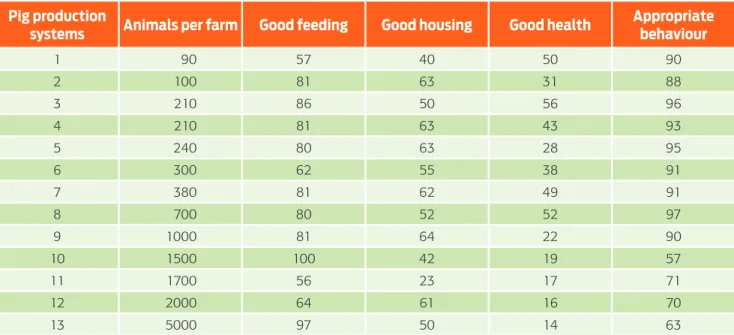
Once the Welfare Quality protocol was applied, the results indicated an “enhanced” classification for both rustic and technified production systems, since, according to the protocol, farms that obtain more than 20 points in all principles and more than 55 in two of them will be qualified in this way. The results are presented in
Figure 4 and Table 1.
The qualifications that rustic and technified production units obtained in the evaluated criteria are presented in Table 2.
Comparison of animal welfare indicators between rustic
and technified production units
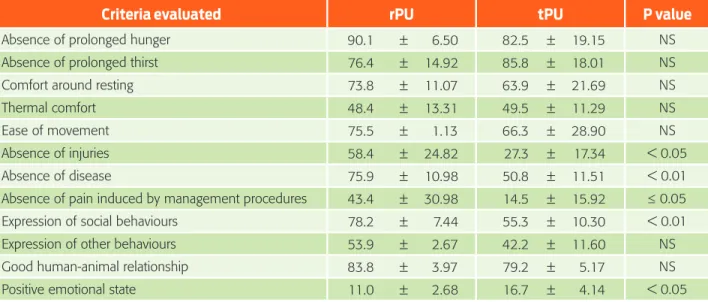
Table 3 shows the frequencies of the means of the criteria evaluated during the
B
D
100
80
60
40
20
0
Sc
or
e
Feeding Housing Health Behaviour
RS
TS
E
xc
ell
ent
Enhanc
ed
A
cc
ept
abl
e
Not cl
assifie
d
Figure 4. Classification of rustic (RS) and technified (TS) production units within the welfare categories proposed by the
Welfare Quality protocol.
Table 1. Qualifications of the principles of the Welfare Quality protocol
in rustic and technified production units
Pig production
systems Animals per farm Good feeding Good housing Good health Appropriate behaviour
1 90 57 40 50 90
2 100 81 63 31 88
3 210 86 50 56 96
4 210 81 63 43 93
5 240 80 63 28 95
6 300 62 55 38 91
7 380 81 62 49 91
8 700 80 52 52 97
9 1000 81 64 22 90
10 1500 100 42 19 57
11 1700 56 23 17 71
12 2000 64 61 16 70
Table 2. Qualifications of the criteria evaluated during the application of the Welfare Quality protocol in the animals assessed in rustic (rPU) and technified (tPU) production units
Welfare Quality Criteria
UPP 1a 2b 3c 4d 5e 6f 7g 8h 9i 10j 11k 12l
1 100 55 74.75 24 73 67.71 56.38 47 77.63 51.06 76.09 15.94 2 92.87 80 80.44 56 76 86.63 83.97 8 79.53 51.06 85.53 11.54 3 80.1 100 84.7 35 76 66.05 83.97 47 74.54 58.76 88.33 7.8 4 86.21 80 77.61 56 76 32.89 83.97 47 71.47 55.67 84.15 10.47 5 86.21 80 77.6 56 76 86.61 69.46 8 93.19 53.75 85.53 12.03 6 92.87 60 50.67 56 75 25.28 83.97 100 79.53 53.75 85.53 8.4 7 92.87 80 71 56 76 43.86 69.46 47 71.47 53.75 81.42 11.08 8 86.21 80 89.14 35 86 57.23 64.81 47 71.47 58.76 84.15 9.83 9 92.87 80 84.7 56 73 38.28 60.08 8 64.61 53.75 80.07 13.5 10 100 100 35.71 35 80 18.95 56.38 8 51.06 29.28 72.22 19.27 11 69.41 55 71 56 8 21.97 44.66 8 45.56 39.06 78.73 20 12 50.23 100 59.71 59 73 11.25 44.66 8 49.39 39.06 85.53 17.76 13 96.41 100 43.33 56 77 15.87 34.23 8 49.39 33.32 74.79 19.81 a Absence of prolonged hunger; b Absence of prolonged thirst; c Comfort around resting; d Thermal comfort; e Ease of movement; f Absence of
injuries; g Absence of disease; h Absence of pain induced by management procedures; i Expression of social behaviours; j Expression of other
behaviours; k Good human-animal relationship; l Positive emotional state
Table 3. Mean occurrences and SE of the criteria evaluated during the application of the Welfare Quality protocol
in the animals assessed in rustic (rPU) and technified (tPU) production units
Criteria evaluated rPU tPU P value
Absence of prolonged hunger 90.1 ± 6.50 82.5 ± 19.15 NS Absence of prolonged thirst 76.4 ± 14.92 85.8 ± 18.01 NS Comfort around resting 73.8 ± 11.07 63.9 ± 21.69 NS
Thermal comfort 48.4 ± 13.31 49.5 ± 11.29 NS
Ease of movement 75.5 ± 1.13 66.3 ± 28.90 NS
units (U = 5, P < 0.05; U = 2.5, P < 0.01; U = 9, P ≤ 0.05, and U = 1, P < 0.01, re-spectively), whereas the frequency corresponding to the positive emotional states criterion, belonging to the appropriate behaviour principle, was significantly higher in the animals of the technified production units (U = 6, P < 0.05). On the other hand, there were no significant differences between the animals of the rustic and technified production units in the criteria included in the principles Good feeding and Good housing, nor in the criteria Expression of other behaviours and Good human-animal relationship in the principle of Appropriate behaviour.
One of the first interesting results was related to the health of the animals (absence of wounds, absence of diseases and pain induced by management pro-cedures), where the frequency of these criteria was significantly higher in animals housed in rustic production units. In general, when questioning the producers about which diseases were the most common on their farms, most responded with digestive and respiratory problems, which coincide with findings described in the work of Losada.12 However, it should be noted that the incidence of other productive diseases (Circovirosis, Mycoplasmosis, PRRS, Parvovirosis, Leptospiro-sis, Erisipelosis) was higher in technified systems. The relationship between the density of animals in confinement and their health has been examined by several researchers.13-16 With the industrialization of agriculture, people began to use “tech-nological sanders” –such as antibiotics, vaccines, bacterins, hormones, air-handling systems, and other technological innovations- that allowed for intensive produc-tion. In a traditional husbandry system, these practices could have reduced farm productivity, but in the technified system, they increased farm productivity from an economic standpoint.17
In relation to the presence of wounds in the animals, one of the main causes was related to the movement of piglets after weaning –and social regrouping. It is common to move the animals out of the group where they were raised, either for productive or breeding reasons, which leads to social instability within the group.14 The exposure to new and unstable social situations can induce fear, which, when combined with no possibilities of escape, may result in intense fighting.14,18,19 Studies demonstrate that pigs can discriminate between familiar and unfamiliar in-dividuals through olfactory, visual, and probably auditory cues and that environmen-tal pollutants (e.g., high levels of ammonia) may alter preferences for approaching familiar or unfamiliar individuals.19-22 In established groups, one important way of ensuring that individuals do not constrain the behaviour of fellow group members or adversely affect their welfare in other ways is to provide animals with opportu-nities to avoid each other.14Some researchers suggest the use of visual barriers to reduce aggression, and for pigs specifically, pop-holes in which the head can be hidden appear to be effective in terminating or avoiding aggressive attacks.19,23,24
by making changes in housing, changes in the animals’ diet (mainly protein and mineral balance), and providing substrates (straw, compost, newspaper, ties), as well as eliminating atmospherically uncomfortable factors (high levels of ammonia, CO2, humidity, or low barometric pressure).24,25,27-31Boredom is also a relevant factor in these circumstances. In rustic systems, where animal density is lower, sometimes rims, chains, or alfalfa branches are placed within enclosures as sourc-es of entertainment for the animals, a situation which technified systems “cannot afford”. The concept of “modernity” in pig production becomes intolerant in this re-gard, since the presence of distractors for animals is rarely considered by producers.
With reference to the expression of social behaviour, the animals in the tech-nified systems obtained a lower rating in this indicator because they exhibited a greater amount of socio-negative behaviours, including aggression to conspecifics. Limited access to resources along with high animal densities gives rise to such competitive situations.14,16,24In the farm environment, group size and density are predetermined to maximize economic returns (exogenous control of group size),14 which implies that social behaviour of animals has to adapt to the density estab-lished by the producer.19 In both evaluated systems the groups were exogenous, formed by the needs established by the producer, who in the majority of the cases sought homogeneity in the size of the animals. In the restricted farm environment, group size cannot be self-regulated because animals have no opportunities to leave if attacked by a group member. The impossibility of leaving the group creates a sit-uation that increases the potential for costly aggressive interactions and may favour despotic behaviour by some individuals.19,32 Provision of opportunities to hide and retreat from aggressive conspecifics may be a wise management strategy to reduce the negative consequences of aggressive interactions.14Finally, it should be remembered that Vanhonacker et al.33 mention that social concern about animal density as well as pen size is imperative within the overall picture of animal welfare on farms.
Clearly, the most difficult challenge for the livestock sector is to satisfy the behavioural needs (psychological/biological) of animals in technified systems. However, it should be noted that this process is not starting from zero. Many coun-tries have been conducting research on alternative production systems in recent years.2,40 In addition, the need for rustic systems to stop considering technified pro-duction as the “model to follow” should be re-examined. The increase in consumer demand for animal products derived from an “environmentally-friendly” production system (including animal welfare) has put pressure on production chains in order to certify or improve the welfare status of animals.41-43 Thus, recent concepts of sustainability in livestock production have paid great attention to animal welfare issues.15,33,42,44-47 Animal welfare problems have become a compelling reason for the public to perceive some systems as unacceptable and therefore unsustainable unless some modification is made. In this context, it is clear that animal welfare is becoming a strong motivating factor for members of the public who demand a change on the part of producers, companies, and governments.
Conclusions
Funding
We would like to thank the support by the project Papiit-UNAM RV 200715.
Acknowledgements
We would like to thank the comments made feedback given by Dr. María Elena Trujillo when designing the field work of this. Many thanks to the Mexican Council for Science and Technology (CONACyT) and the Support Program for Postgraduate Studies (PAEP), for Scholarship MSc Program for Natyieli Losada-Espinosa.
Conflicts of interest
All authors declare that there are no present or potential conflicts of interest among the authors and other people or organizations that could inappropriately bias their work.
Author contributions
Natyieli Losada-Espinosa: conducted the experiments, analysed the data, and wrote the manuscript.
María Elena Trujillo-Ortega: designed the research and analysed the data.
Francisco Galindo: designed the research, analysed the data, and revised and edited the manuscript.
References
1. Galindo F, Manteca X. Evaluación científica del bienestar animal. In: Galindo F, Orihuela A, editores. Etología aplicada. DF (MX): UNAM; 2001.
2. Fraser D. Toward a global perspective on farm animal welfare. Appl Anim Behav Sci. 2008;113(4):330-9. doi:10.1016/j.applanim.2008.01.011.
3. Galindo F, Huertas S, Gallo C. ‘One Welfare’: towards sustainable livestock pro-duction systems. In: Éloit M, editor-in-chief. Animal welfare: an asset for live-stock production. OIE Bulletin. 2017;2017(1):8-13. doi: doi.org/10.20506/bull. issue.2017.1.2586.
4. Botreau R, Veissier I, Butterworth A, Bracke MBM, Keeling LJ. Definition of criteria for overall assessment of animal welfare. Anim. Welfare. 2007;16(May):225-8. 5. Unión Ganadera Regional de Porcicultores de Guanajuato. Panorama Agroal-imentario. Carne de cerdo 2017. México: FIRA. 2017. [Available from: http:// www.fira.gob.mx/InfEspDtoXML/TemasUsuario.jsp].
6. Losada-Espinosa N, Mercadillo-Sierra A, Martínez-Gamba R. Costo de produc-ción e impacto de diversos insumos sobre la rentabilidad en granjas porcinas a pequeña escala en la zona metropolitana de la Ciudad de México. LRRD. 2014;26(11):1-10. Article no. 205. [Retrieved Nov 24, 2017 from http://www. lrrd.org/orrd26/11/losa26205.html].
7. Stern S, Sonesson U, Gunnarsson S, Oborn I, Kumm KI, Nybrant T. Sustainable development of food production: a case study on scenarios for pig production. Ambio. 2005 Jun;34:402-7. doi: doi.org/10.1579/0044-7447-34.4.402. 8. Cardoso M, García E. Vegetation and climate in the basin of Mexico
9. Welfare Quality®. Welfare Quality® assessment protocol for pigs. Lelystad (NL): Welfare Quality® consortium; 2009 Oct 1. [Available from: http://www.wel-farequalitynetwork.net/network/45848/7/0/40].
10. IBM Corp. IBM SPSS Statistics for Windows, Version 21.0. Armonk, NY (US): IBM Corp; [update] 2012.
11. Siegel S, Castellan JNJr. Nonparametric statistics for the behavioral sciences. Singapore (SG): McGraw-Hill; c1988.
12. Losada-Espinosa N. Costos de producción y evaluación del impacto de diversos insumos sobre la rentabilidad de unidades productoras porcícolas artesanales en la zona metropolitana de la Ciudad de México [tesis de licenciatura] México: UNAM; 2012.
13. Turner S, Ewen M, Rooke J, Edwards S. The effect of space allowance on perfor-mance, aggression and immune competence of growing pigs housed on straw deep litter at different group sizes. Livest Prod Sci. 2000 Sep;66(1):47-55. doi: 10.1016/S0301-6226(00)00159-7.
14. Estevez I, Andersen IL, Nævdal E. Group size, density and social dynamics in farm animals. Appl Anim Behav Sci. 2007 Mar 20;103(Issues 3-4):185–204. doi:10.1016/j.applanim.2006.05.025.
15. Broom D. Defining agricultural animal welfare. Second viewpoint: from a sus-tainability and product quality perspective. In: Pond W, Bazer F, Rollin B, editors. Animal welfare in animal agriculture: husbandry, stewardship, and sustainability in animal production. Boca Raton, FL (US): Taylor & Francis Group; 2012. p. 84-90.
16. Fu L, Li H, Liang T, Zhou B, Chu Q, Schinckel A, et al. Stocking density affects wel-fare indicators of growing pigs of different group sizes after regrouping. Appl Anim Behav Sci. 2016 Jan;174:42-50. doi: doi.org/10.1016/j.applanim.2015.10.002. 17. Rollin B, Thompson P. Perspectives on emergence of contemporary animal ag-riculture in the mid-twentieth century. The decline of husbandry and the rise of the industrial model. In: Pond W, Bazer F, Rollin B, editors. Animal welfare in ani-mal agriculture: husbandry, stewardship, and sustainability in aniani-mal production. Boca Raton, FL (US): Taylor & Francis Group; 2012. p. 3-12.
18. Merlot E, Meunier-Salaün MC, Prunier A. Behavioural, endocrine and immune consequences of mixing in weaned piglets. Appl Anim Behav Sci. 2004;85 (3-4):247–57. doi:10.1016/j.applanim.2003.11.002.
19. Galindo F, Newberry R, Mendl M. Social conditions. In: Appleby M, Hughes B, Mench J, Olsson A, editors. Animal welfare. 2nd ed. Oxfordshire (UK): CABI; 2011. p. 228-245.
20. Kristensen HH, Jones RB, Schofield CP, White RP, Wathes CM. The use of olfac-tory and other cues for social recognition by juvenil pigs. Appl Anim Behav Sci. 2001 Jun 1;72(4):321-33.
21. McLeman MA, Mendl M, Jones RB, White R, Wathes CM. Discrimination of con-specifics by juvenile domestic pigs, Sus Scrofa. Anim Behav. 2005 Aug 1;70(Is-sue 2):451-61. doi: 10.1016/j.anbehav.2004.11.013.
23. McGlone JJ, Curtis SE. Behavior and performance of weanling pigs in pens equipped with hide areas. J Anim Sci. 1985 Jan;60(1):20-4.
24. Rodenburg TB, Koene P. The impact of group size on damaging behaviours, aggresion, fear and stress in farm animals. Appl Anim Behav Sci. 2007 Mar 20;103(Issues 3-4):205-14. doi:10.1016/j.applanim.2006.05.024.
25. Rollin BE. Farm animal welfare: social, bioethical, and research issues. 1st ed.
Denver, CO (US): Wiley-Blackwell; 1995. Reimp. 2003.
26. Moinard C, Mendl M, Nicol CJ, Green LE. A case control study of on-farm risk factors for tail biting in pigs. Appl Anim Behav Sci. 2003 May 21;81(4):333-55. doi: 10.1016/S0168-1591(02)00276-9.
27. Boyle L, Lemos DT. Caudofagia y bienestar en cerdos. Suis. 2014 Dec;113:14-8. 28. Balcombe JP. Laboratory environments and rodents’ behavioural needs: a re-view. Lab Anim. 2006 Jul;40(3):217-35. doi: 10.1258/002367706777611488. 29. Algers B, Blokhuis HJ, Broom DM, et al. The risks associated with tail biting in
pigs and possible means to reduce the need for tail docking considering the different housing and husbandry systems: Scientific opinion of the panel on an-imal health and welfare. EFSA Journal. 2007 Dec 06;5(12):1-13. [last updated 2017 Dec 09]. doi: 10.2903/j.efsa.2007.611.
30. Douglas C, Bateson M, Walsh C, Bédué A, Edwards SA. Environmental enrich-ment induces optimistic cognitive biases in pigs. Appl Anim Behav Sci. 2012 Jun;139(1-2):65-73. doi:10.1016/j.applanim.2012.02.018.
31. Telkänranta H, Swan K, Hirvonen H, Valros A. Chewable materials before wean-ing reduce tail bitwean-ing in growwean-ing pigs. Appl Anim Behav Sci. 2014 Aug;157:14-22. doi: doi.org/10.1016/j.applanim.2014.01.004.
32. Temple D, Velarde A, Manteca X, Dalmau A. Evaluación de bienestar animal mediante el protocolo Welfare Quality® en el cerdo ibérico en extensivo: resultados preliminares. SCI. 2009 Oct;22:55-64.
33. Vanhonacker F, Verbeke W, Van Poucke E, Buijs S, Tuyttens F. Societal concern related to stocking density, pen size and group size in farm animal production. Livest Sci. 2009 Jul;123(1):16–22. doi:10.1016/j.livsci.2008.09.023.
34. Fraser D. Animal behaviour, animal welfare and the scientific study of af-fect. Appl Anim Behav Sci. 2009 May;118(3-4):108-17. doi: 10.1016/j. applanim.2009.02.020.
35. Balcombe J. Animal pleasure and its moral significance. Appl Anim Behav Sci. 2009 May;118(3-4):208-16. doi: 10.1016/j.applanim.2009.02.012.
36. Duncan IJ. The changing concept of animal sentience. Appl Anim Behav Sci. 2006 Oct;100(1-2):11-9. doi: 10.1016/j.applanim.2006.04.011.
37. Watanabe S. How animal psychology contributes to animal welfare. Appl Anim Behav Sci. 2007 Sep;106(4):193-202. doi: 10.1016/j.applanim.2007.01.003. 38. Mench JA. Thirty years after Brambell: whither animal welfare science? J Appl
Anim Welf Sci. 1998;1(2):91-102. doi: 10.1207/s15327604jaws0102_1. 39. Regan T. The case for animal rights. Berkeley (US): University of California
Press; 1983.
40. Spinka M. How important is natural behaviour in animal farming sys-tems? Appl Anim Behav Sci. 2006 Oct;100(1-2):117-28. doi:10.1016/j. applanim.2006.04.006.
42. Krystallis A, de Barcellos M, Kügler J, Verbeke W, Gruner K. Attitudes of european citizens towards pig production systems. Livest Sci. 2009 Dec;126(1-3):46-56. doi:10.1016/j.livsci.2009.05.016.
43. Miranda-de la Lama GC, Sepúlveda WS, Villarroel M, María GA. Attitudes of meat retailers to animal welfare in Spain. Meat Sci. 2013 Nov;95(3):569-75. doi: doi. org/10.1016/j.meatsci.2013.05.046.
44. Cozzi G, Brscic M, Gottardo F. Animal welfare as a pilar of sustainable farm ani-mal production. Acta Agric Slov. 2008 Sep;91(2):23-31. [Invited lecture]. 45. McGlone JJ. Farm animal welfare in the context of other society issues: toward
sustainable systems. Livest Prod Sci. 2001 Nov;72(1-2):75-81.
46. Bonney RJ. Farm animal welfare at work. Appl Anim Behav Sci. 2006 Oct; 100(1-2):140-47. doi:10.1016/j.applanim.2006.04.007.