Hepatocellular Carcinoma and Associated
Clinical Features in Latino and Caucasian
Patients from a Single Center
Gabriela N. Kuftinec,* Robert Levy,** Dorothy A. Kieffer,** Valentina Medici** * Department of Internal Medicine, University of California Davis, Sacramento, California, USA. ** Department of Internal Medicine, Division of Gastroenterology and Hepatology, University of California Davis, Sacramento, California, USA.
January-February, Vol. 18 No. 1, 2019: 177-186 The Official Journal of the Mexican Association of Hepatology,
the Latin-American Association for Study of the Liver and the Canadian Association for the Study of the Liver
Manuscript received: Manuscript received:Manuscript received:
Manuscript received:Manuscript received: April 17, 2018. Manuscript accepted:Manuscript accepted:Manuscript accepted:Manuscript accepted:Manuscript accepted: July 01, 2018. DOI:10.5604/01.3001.0012.7910
A B S T R A C T A B S T R A C T A B S T R A C T A B S T R A C T A B S T R A C T
Introduction and aim. Introduction and aim.Introduction and aim. Introduction and aim.
Introduction and aim. Hepatocellular carcinoma (HCC) is the most common type of liver cancer in adults and has seen a rapid increase in incidence in the United States. Racial and ethnic differences in HCC incidence have been observed, with Latinos showing the greatest increase over the past four decades, highlighting a concerning health disparity. The goal of the present study was to compare the clinical features at the time of diagnosis of HCC in Latino and Caucasian patients. Material and methods.Material and methods.Material and methods.Material and methods.Material and methods. We ret-rospectively screened a total of 556 charts of Latino and Caucasian patients with HCC. Results.Results.Results.Results.Results. The mean age of HCC diagnosis was not significantly different between Latinos and Caucasians, but Latinos presented with higher body mass index (BMI). Rates of hypertension, diabetes, and hyperlipidemia were similar in the two groups. The most common etiology of liver disease was alcohol drinking in Latinos, and chronic hepatitis C in Caucasian patients. Non-Alcoholic Steatohepatitis (NASH) was the associated diagno-sis in 8.6% of Latinos and 4.7% of Caucasians. Interestingly, alpha-fetoprotein (AFP) levels at time of diagnodiagno-sis were higher in Lati-no patients compared to Caucasians, but this difference was evident only in male patients. Multifocal HCC was slightly more frequent in Latinos, but the two groups had similar cancerous vascular invasion. Latino patients also presented with higher rates of both ascites and hepatic encephalopathy. Conclusion.Conclusion.Conclusion.Conclusion.Conclusion. Latino and Caucasian patients with HCC present with a different pro-file of etiologies, but cancer features appear to be more severe in Latinos.
Key words. Key words.Key words. Key words.
Key words. Cirrhosis. Alcoholic cirrhosis. Hepatitis C virus (HCV). Ethnicity.
INTRODUCTION
Hepatocellular carcinoma (HCC) is the fifth most common cancer in men and seventh most common cancer in women, and the second leading cause of cancer related deaths.1,2 While the high prevalence observed in Asia and
Africa is due to the high incidence of hepatitis viruses, the rising incidence of HCC in the United States is likely due to non-alcoholic fatty liver disease (NAFLD) and non-al-coholic steatohepatitis (NASH)3 as well as the high
preva-lence of chronic hepatitis C virus (HCV) infection. The incidence of HCC has more than tripled in the United States since the early 1980s4 and, of all types of cancers, has
shown the greatest increase in mortality.4
Ethnic differences in the incidence of HCC have been described, with higher rates noted in Asians, Latinos and African Americans.5-8 In the United States, Latinos have
experienced the largest increase in HCC incidence over the past 40 years.2,9 Recent analysis of the Surveillance,
Ep-idemiology End Result (SEER) found the incidence rates in Latinos to be 2.5 times higher as compared to White Caucasians.6 These rates are expected to further increase,
as Latino Americans are the most rapidly growing ethnic minority in the United States. Recent immigration pat-terns indicate Latinos will comprise up to 30% of the total US population by the year 2050.10,11 Furthermore, recent
studies describe Latinos developing HCC at younger ages and having a greater prevalence of metabolic risk factors when compared to non-Latino Whites.7,12 The incidence
of HCC in Latino men has doubled over the past 15 years making the overall rate double that of non-Latino men.13
the presentation and features of HCC in Latinos com-pared to non-Latinos despite the staggeringly high rates and mortality due to HCC in the Latino population.
Diabetes mellitus (DM), which is thought to be one risk factor leading to development of HCC, has a high prevalence rate in the Latino population.15 Setiawan, et al.
studied a multiethnic cohort and identified Latinos as the ethnic group at highest risk for developing HCC and DM was identified as a risk factor.16 The differences in
inci-dence as well as overall survival rate may be secondary to the underlying etiology of HCC. Asians typically have higher rates of hepatitis B virus (HBV), while Latinos and Blacks have higher rates of HCV, NAFLD, and alcoholic liver disease.17 Venepalli, et al. found Latino patients with
HCC have a higher incidence of modifiable risk factors, high rates of NASH, and shorter overall survival than Cau-casian and African American patients.11 Latinos have the
greatest prevalence of NAFLD18 and higher rates of
obesi-ty.19,20 It is likely other ethnic-specific differences and
ge-netic factors contribute to the progression of HCC even when the etiology of the disease is the same.16
Therefore, identifying the reversible or modifiable risk factors associated with HCC in Latinos is critical to begin to bridge the racial disparity gap of HCC. The goal of our study was to determine clinical features of HCC at the time of diagnosis in Latino patients as compared to non-Latino Whites. A better understanding of ethnic-specific risk factors will improve screening and surveillance ef-forts in this population, as well as possibly identify ethnic-specific treatments which will assist in decreasing the incidence of this deadly cancer in a vulnerable population.
MATERIAL AND METHODS
Study population
We performed a retrospective chart review of Latino and non-Latino White patients. All patients were identi-fied using electronic medical records from the University of California Davis Medical Center in Sacramento, Cali-fornia between 01/01/2008-12/31/2014 using the ICD-9 code of HCC. The study was approved by the Institution-al Review Board at the University of CInstitution-alifornia, Davis Medical Center in Sacramento, CA (IRB # 391877). Of note, it has been estimated that 83% of Latinos living in the Sacramento area are Mexican Americans.20 We initially
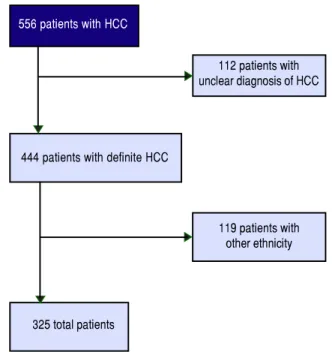
identified a total of 556 Caucasian and Latino subjects with a diagnosis of HCC. Subjects were excluded from data analysis for the following reasons: HCC diagnosis was uncertain or not confirmed (n = 103), HCC diagnosis was, upon further review, not entered into the electronic medical record (n = 9), ethnicity was not properly
de-scribed or was other than Latino or White (n = 119) (Fig-ure 1). The final analysis included a total of 325 patients with a diagnosis of HCC that were either Latino (n = 70) or Caucasian (n = 255).
Data Collection
We used the demographic section of the electronic medical record to identify our research population. We collected demographic information on all of our patients: ethnicity (quantified as Latino or Not Latino), race (cate-gories included American Indian/Alaska Native, Asian, Black/African American, White, more than 1 race, Un-known, Other), confirmed diagnosis of HCC (yes or no), age at diagnosis, and Body Mass Index (BMI) at diagnosis. We collected clinical and laboratory data at time of HCC diagnosis, including: presence and etiology of cirrhosis as determined by imaging via ultrasound, CT scan or MRI scan, history of hypertension, diabetes, alpha-fetoprotein (AFP) level, high-density Lipoprotein (HDL), triglycer-ides, creatinine, albumin, alanine transaminase (ALT), total bilirubin, presence of ascites and/or hepatic encephalopa-thy, International Normalized Ratio (INR), and from that, calculated Child-Pugh and Model for End-Stage Liver Disease (MELD) scores. We also collected data related to HCC features, including which imaging modality was used to identify the HCC lesion, if multifocal involve-ment was present, and Milan Criteria and Barcelona Clinic Liver Cancer (BCLC) Score.
Figure 1. Figure 1.Figure 1.
Figure 1.Figure 1. Selection criteria.
112 patients with unclear diagnosis of HCC
556 patients with HCC
444 patients with definite HCC
119 patients with other ethnicity
Statistical Analyses
Statistical analyses were performed using SPSS Statis-tics, version 24 (USA) and R statistical software, version 3.3.3 (Austria). For continuous data, differences between groups were assessed by two-tailed Student’s T-test. For categorical data, differences were assessed by Fisher’s exact test. Spearman’s correlation was used to determine corre-lations among continuous variables. Data are presented as mean ± SD. A p-value < 0.05 was considered significant.
RESULTS
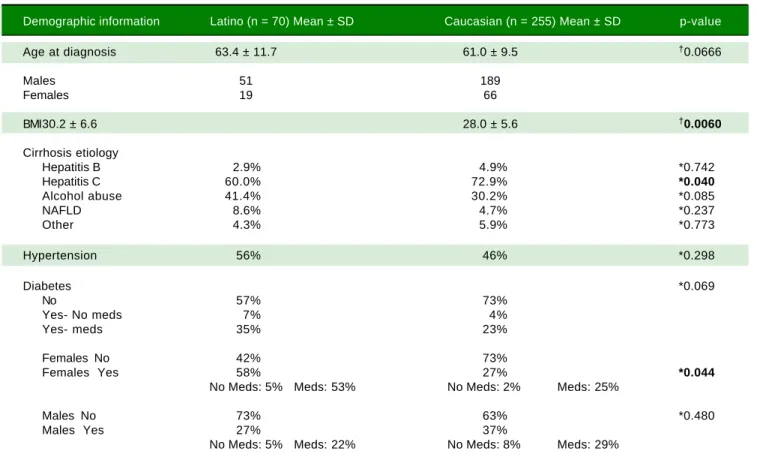
The mean age at diagnosis of HCC for Latino patients was 63.4 ± 11.7 years and 61 ± 9.5 years for Caucasian pa-tients (NS). BMI at presentation was significantly higher in Latino patients than Caucasian patients, 30.2 ± 6.6 vs. 28.0 ± 5.6 respectively. In both ethnicities, hepatitis C was the most frequent condition associated with cirrhosis, with a higher prevalence in Caucasians compared to Lati-nos. The second most common etiology of liver cirrhosis was alcohol abuse in both ethnicities (Table 1).
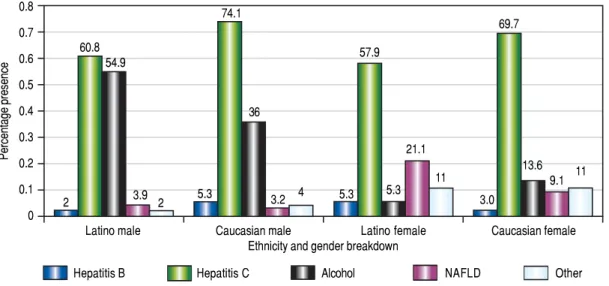
Among Latino men, alcohol consumption caused a sig-nificantly higher proportion of cirrhosis (54.9% in Latinos vs. 36.0% in Caucasians, p = 0.021), whereas hepatitis C was the most frequent etiology of cirrhosis among Cauca-sian males, (60.8% in Latino males vs. 74.1% in Caucasian males, p = 0.048). Comparing Latino males and females, men had a significantly higher proportion of cirrhosis from alcohol (54.9% in Latino males vs. 5.3% in Latino fe-males, p ≤ 0.001), whereas in Latino women, cirrhosis was due largely to NAFLD (3.9% in Latino males vs. 21.1% in Latino females, p = 0.042). Similarly, when comparing Caucasian males and females, men had a significantly high-er proportion of cirrhosis from alcohol as compared to fe-males (36% in Caucasian fe-males and 13.6% in Caucasian females, p < 0.001) (Figure 2).
Latinos had higher rates of hypertension and diabetes compared to Caucasians, but the difference was not statis-tically significant. However, Latino females had signifi-cantly higher rates of diabetes compared to Caucasian females (58% vs. 27% respectively, p = 0.044) (Table 1).
Hemoglobin A1c, triglycerides and creatinine were not significantly different between ethnicities or sexes.
Cauca-Table 1. Demographic information.
Demographic information Latino (n = 70) Mean ± SD Caucasian (n = 255) Mean ± SD p-value
Age at diagnosis 63.4 ± 11.7 61.0 ± 9.5 †0.0666
Males 51 189
Females 19 66
BMI30.2 ± 6.6 28.0 ± 5.6 †0.0060
Cirrhosis etiology
Hepatitis B 2.9% 4.9% *0.742
Hepatitis C 60.0% 72.9% *0.040
Alcohol abuse 41.4% 30.2% *0.085
NAFLD 8.6% 4.7% *0.237
Other 4.3% 5.9% *0.773
Hypertension 56% 46% *0.298
Diabetes *0.069
No 57% 73%
Yes- No meds 7% 4%
Yes- meds 35% 23%
Females No 42% 73%
Females Yes 58% 27% *0.044
No Meds: 5% Meds: 53% No Meds: 2% Meds: 25%
Males No 73% 63% *0.480
Males Yes 27% 37%
No Meds: 5% Meds: 22% No Meds: 8% Meds: 29%
p-value: † Student’s T-test; *Fisher’s exact. Of note, it was possible patients had more than one etiology of liver disease and they were counted in both
sian females did have significantly higher HDL than their male counterparts, (55.1 ± 16.0 vs. 40.2 ± 16.4, p = 0.0076). Albumin, ALT, total bilirubin and INR were not signifi-cantly different between ethnic groups. Most patients had
an INR < 1.7, an albumin of between 2.8-2.5 and a total bilirubin < 2.0 (Table 2).
When evaluating features of liver disease, cirrhosis was present in the majority of patients, both Latinos and
Cau-Table 2. Various serum test values, with standard deviations and p-values.
Laboratory values Latino (n = 70) Mean ± SD Caucasian (n = 255) Mean ± SD p-value
Hemoglobin A1C 7.1 ± 1.9 7.0 ± 1.4 †0.8300
HDL Cholesterol 45.5 ± 17.1 42.8 ± 17.1 †0.5137
M: 46.2 ± 14.9 F: 44.1 ± 21.7 M: 40.2 ± 16.4 F: 55.1 ± 16.0 †0.242 (L)
†0.0076 (C)
Triglyceride 92.0 ± 43.3 103.6 ± 47.5 †0.3056
Creatinine 1.04 ± 0.64 0.96 ± 0.86 †0.4860
Albumin 3.16 ± 0.63 3.28 ± 0.60 †0.1406
< 2.8 25% 18%
2.8-3.5 47% 45%
> 3.5 28% 36%
Alanine transaminase 55.2 ± 56.8 71.5 ± 61.6 †0.0534
Total Bilirubin 1.7 ± 1.5 1.5 ± 1.4 †0.5902
< 2.0 74% 79%
2.0-3.0 18% 14%
> 3.0 9% 8%
INR 1.19 ± 0.20 1.21 ± 0.33 †0.5611
< 1.7 96% 96%
1.7-2.2 4% 3%
2.3+ 0% 1%
p-value: † Student’s T-test. * Fisher’s exact. L: Latino. C: Caucasian.
Figure 2. Figure 2. Figure 2. Figure 2.
Figure 2. Cirrhosis etiology by ethnicity and sex. Cirrhosis etiology due to alcohol consumption is significantly higher in Latino males than in either Caucasian males or Latino females; a significantly higher proportion of Latino females had cirrhosis from NAFLD, compared to Latino males; significantly more Caucasian males had HCV as the etiology of their cirrhosis compared to Latino males; significantly more Caucasian males had alcoholic cirrhosis compared to Caucasian females.
Latino male Caucasian male Latino female Caucasian female Ethnicity and gender breakdown
Percentage presence
0.8 0.7 0.6 0.5 0.4 0.3 0.2 0.1
0 2
60.8 54.9
3.9
2 5.3
74.1
36
3.2 4 5.3
57.9
5.3 21.1
11 3.0
69.7
13.6 9.1 11
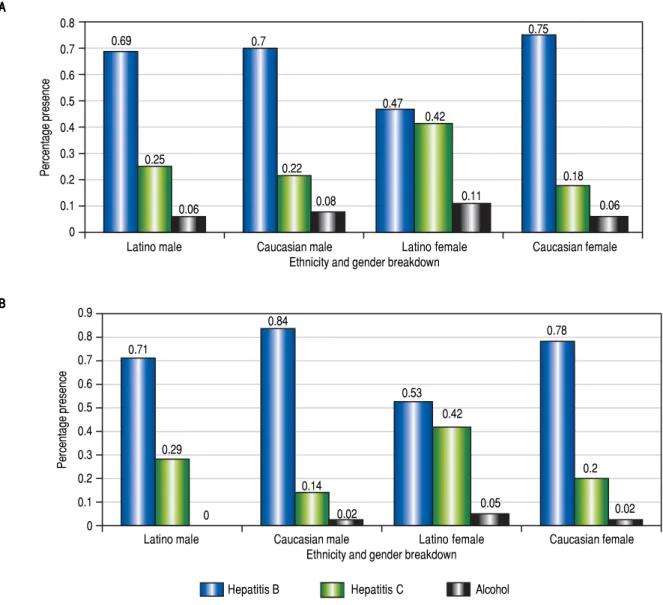
casians. Fatty liver was noted in few patients in our popu-lation via imaging studies (ultrasound, CT scan, MRI). For ascites and hepatic encephalopathy, it was first deter-mined if each manifestation of cirrhosis was present, and if so, if the symptoms were controlled with medical thera-py or not. The majority of patients did not have ascites, and of those that did have ascites, it was largely controlled by the use of diuretics. Only a small portion of patients, both Latinos and Caucasians, had uncontrolled ascites when on diuretics and Latino females had medication-controlled ascites more frequently than Caucasian females (Figure 3). Most patients did not have hepatic encepha-lopathy, but a significantly higher proportion of Latinos had medication-controlled hepatic encephalopathy
(Fig-ure 3). Most Caucasian patients had a Child-Pugh Class score of A, while most Latinos had a score of B (Table 3). MELD scores were not statistically different between sex-es or ethnicitisex-es, although the largsex-est differencsex-es were ob-served between Latino and Caucasian females (Table 3).
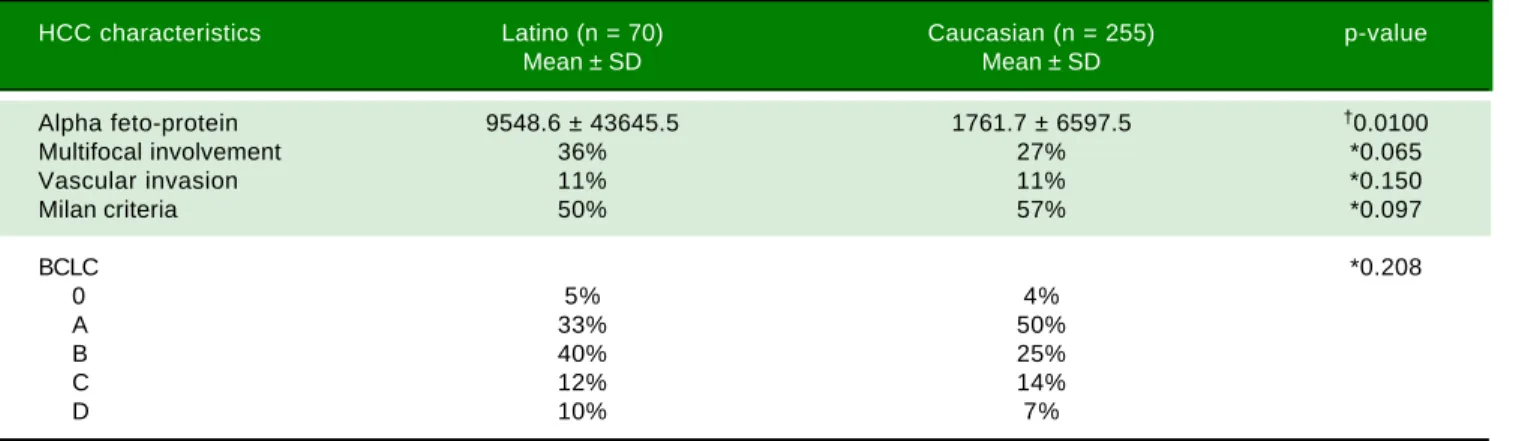
When studying the features of HCC lesions, Latino pa-tients had a significantly higher mean AFP value, but the result was evident only when comparing Latino and Cau-casian men. In Latino men, AFP was on average 7 times higher compared to their Caucasian counterpart (p = 0.0073). Multifocal involvement was more frequent in Latinos, but the difference was not statistically significant. Both ethnic groups had similar rates of cancerous vascular invasion. The BCLC scores between the two ethnicities
Figure 3. Figure 3.Figure 3.
Figure 3.Figure 3. Complications of cirrhosis: absence or presence of ascites and hepatic encephalopathy. A.A.A.A.A. Proportion of patients with ascites. Rates of ascites were not statistically different between the two ethnic groups. B. B. B. B. B. Proportion of patients with hepatic encephalopathy. A significantly higher proportion of Latino males had hepatic encephalopathy compared to Caucasian males; comparing females, rates of hepatic encephalopathy were not different.
A AA AA
B BB BB
Percentage presence
0.8 0.7 0.6 0.5 0.4 0.3 0.2 0.1 0
Latino male Caucasian male Latino female Caucasian female Ethnicity and gender breakdown
0.69
0.25
0.06
0.7
0.22
0.08
0.47 0.42
0.11
0.75
0.18 0.06
Hepatitis B Hepatitis C Alcohol
Percentage presence
0.9 0.8 0.7 0.6 0.5 0.4 0.3 0.2 0.1 0
Latino male Caucasian male Latino female Caucasian female Ethnicity and gender breakdown
0.71
0.29
0
0.84
0.14 0.02
0.53 0.42
0.05
0.78
0.2
were not statistically different, although Latinos were most commonly in the B category, while Caucasian pa-tients were most often in the A category (Table 4).
DISCUSSION
HCC is the most common type of liver cancer and has an 84% mortality rate 5 years after diagnosis. Ethnic dispari-ties related to HCC presentation and severity have attracted much attention in recent years.21 Mortality rates from liver
disease and its complications are almost 50% higher in
Lati-no patients compared to their Lati-non-LatiLati-no counterparts, and HCC is the sixth most common cause of death in Latinos, whereas it is not in the top ten causes of death in Black or Caucasian populations.22,23 More research is being
conduct-ed in an effort to clarify the factors contributing to this phe-nomenon and to reduce ethnic-driven health disparities. Growing evidence indicates both obesity and diabetes are associated with higher rates of developing HCC. While non-Latino diabetics were at higher risk for development of HCC than non-diabetics, Latinos had the strongest associa-tion between diabetes and development of HCC.16
Table 3. Table 3. Table 3. Table 3.
Table 3. Cirrhosis Features.
Cirrhosis Features Latino (n = 70) Caucasian (n = 255) p-value
Mean ± SD Mean ± SD
Cirrhosis noted 89% 86% *0.156
Fatty liver noted on imaging 4% 2% *0.060
Ascites *0.115
Yes-controlled 30% 21%
Yes-uncontrolled 7% 7%
No 63% 72%
Hepatic encephalopathy *0.002
Yes-controlled 33% 16%
Yes-uncontrolled 1% 2%
No 66% 83%
Child Pugh
Average score 7.2 ± 1.8 6.7 ± 1.8 †0.0654
A 42% 70% *0.028
B 46% 37%
C 12% 11%
MELD score 11.52 ± 3.68 10.3 ± 3.68 0.17
Male 10.79 ± 3.96 10.46 ± 3.83 0.611
Female 11.5 ± 3.63 9.85 ± 3.22 0.051
p-value: † Student’s T-test. * Fisher’s exact.
Table 4. HCC characteristics.
HCC characteristics Latino (n = 70) Caucasian (n = 255) p-value
Mean ± SD Mean ± SD
Alpha feto-protein 9548.6 ± 43645.5 1761.7 ± 6597.5 †0.0100
Multifocal involvement 36% 27% *0.065
Vascular invasion 11% 11% *0.150
Milan criteria 50% 57% *0.097
BCLC *0.208
0 5% 4%
A 33% 50%
B 40% 25%
C 12% 14%
D 10% 7%
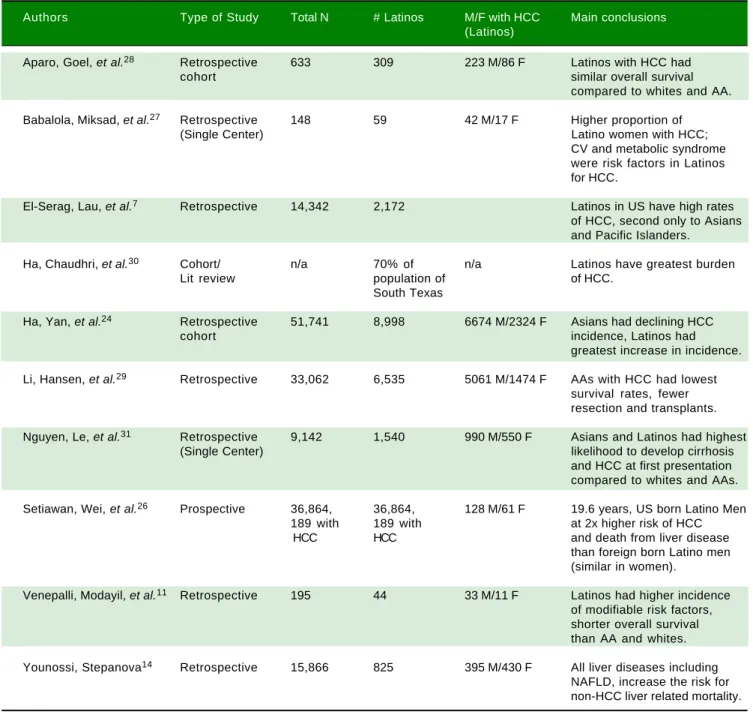
Findings from this single-center retrospective cohort study build on the current literature (summerized in table 5) showing that Latinos present with HCC at more ad-vanced stages than their Caucasian counterparts. It is cur-rently unclear as to why this is, with a vast variation of hypotheses, from socioeconomic factors prohibiting med-ical care to increased risk of metabolic syndrome and as-sociated diseases leading to higher risk of development of HCC to cultural factors of waiting longer to visit a health
care provider. We found Latinos had higher rates of de-compensated liver disease, ascites, and hepatic encepha-lopathy, as well as higher Child-Pugh scores. Additionally, Latino patients had higher rates of symptoms of decompensated liver disease that were controlled with medical therapy vs. their Caucasian counterparts. Ha, et al. demonstrated that although Asians had the highest inci-dence of HCC, they experienced a decrease in overall in-cidence over recent years, while Latinos experienced the
Table 5. Literature review.
Authors Type of Study Total N # Latinos M/F with HCC Main conclusions (Latinos)
Aparo, Goel, et al.28 Retrospective 633 309 223 M/86 F Latinos with HCC had
cohort similar overall survival
compared to whites and AA.
Babalola, Miksad, et al.27 Retrospective 148 59 42 M/17 F Higher proportion of
(Single Center) Latino women with HCC;
CV and metabolic syndrome were risk factors in Latinos for HCC.
El-Serag, Lau, et al.7 Retrospective 14,342 2,172 Latinos in US have high rates
of HCC, second only to Asians and Pacific Islanders.
Ha, Chaudhri, et al.30 Cohort/ n/a 70% of n/a Latinos have greatest burden
Lit review population of of HCC.
South Texas
Ha, Yan, et al.24 Retrospective 51,741 8,998 6674 M/2324 F Asians had declining HCC
cohort incidence, Latinos had
greatest increase in incidence.
Li, Hansen, et al.29 Retrospective 33,062 6,535 5061 M/1474 F AAs with HCC had lowest
survival rates, fewer resection and transplants.
Nguyen, Le, et al.31 Retrospective 9,142 1,540 990 M/550 F Asians and Latinos had highest
(Single Center) likelihood to develop cirrhosis
and HCC at first presentation compared to whites and AAs.
Setiawan, Wei, et al.26 Prospective 36,864, 36,864, 128 M/61 F 19.6 years, US born Latino Men
189 with 189 with at 2x higher risk of HCC
HCC HCC and death from liver disease
than foreign born Latino men (similar in women).
Venepalli, Modayil, et al.11 Retrospective 195 44 33 M/11 F Latinos had higher incidence
of modifiable risk factors, shorter overall survival than AA and whites.
Younossi, Stepanova14 Retrospective 15,866 825 395 M/430 F All liver diseases including
NAFLD, increase the risk for non-HCC liver related mortality.
greatest increase in HCC incidence.24 AFP levels were
also higher in Latinos, particularly in Latino men. This is consistent with previous studies showing Latino ethnicity was an independent risk factor for HCC-related death, with a worse 5-year survival rate when compared to White and Asian counterparts.5,14 Additionally, national data
indi-cate a higher prevalence, more advanced features of chron-ic liver disease, and higher liver related mortality in Latino patients.11,23 Unfortunately, there are scant data on the
fea-tures that contribute to or predict different outcomes based on ethnicity.
One of the studies found in the literature review col-lected similar data to ours, including the features of Latino patients at time of presentation of HCC diagnosis. Venepalli, et al. demonstrated that Latinos had significantly higher rates of modifiable risk factors of liver disease, higher prevalence of NASH and End Stage Renal Disease (ESRD), as well as more advanced liver disease, with higher rates of portal hypertension, ascites, hepatic en-cephalopathy and higher MELD scores.11 Our study
con-firms many of these findings. Latino women were at significantly higher risk of having diabetes. Latinos, and particularly women, had almost twice the rates of NASH related liver disease compared to patients of other races. Younossi, et al. also showed that Latino ethnicity was an in-dependent risk factor for HCC-related mortality, demon-strating a 5-fold higher risk of HCC mortality.14 Prior
studies have suggested there may be a higher rate of in-flammation and aminotransferase derangements in Latino patients with NASH than in other ethnic groups, given differing metabolic and socioeconomic factors between Latino vs. non-Latino whites.25 Increasing evidence
dem-onstrates that diabetes and obesity are independetly associ-ated with increased risk of development of HCC. Latino patients have a strong association between these diseases and HCC development as compared to non-Hispanics.26
Babalola, et al. confirmed that Latino patients had higher rates of metabolic syndrome, but unlike our study, showed that they also had higher rates of hepatitis C and were more likely to be female than their non-Latino cohort.27
These differences may have been due to the fact that their cohort was taken from a teaching hospital in Boston, where the majority of their Latino population is Puerto Rican, whereas in our study the majority of our Latino pa-tients are Mexican. Setiawan’s longitudinal study also sup-ported the association between metabolic syndrome and HCC development, showing diabetic Latino patients had a 3.3x higher risk of HCC development as compared to non-diabetic Latinos, with a 2.2x higher risk of HCC in diabetic non-Latinos as compared to non-diabetic coun-terparts.16 Association of metabolic syndrome and its
relat-ed diseases with progression to chronic liver disease in Latinos is of great importance, as interventions leading to
decreasing these risk factors could possibly significantly decrease the incidence of HCC in Latinos, if not all ethnic groups. Furthermore, targeted screening of Latinos with these risk factors could lead to earlier diagnosis and in-creased survival rates. While some of the studies that have been performed to date confirm several of our results, our study is unique, looking particularly at Latino patients and their characteristics at presentation, which has largely not been reported thus far.
One of the major limitations of our study is the rela-tively small sample size, in particular the small number of Latino patients. Additionally, our retrospective cohort de-sign causes biases that are associated with this type of study, for example such as the inability to contact patients to obtain socio-economic data. Lack of social support and access of needed care may influence the time to diagnosis of some of our patients. Furthermore, a single-center study in Northern California may not be applicable to all Latino populations. Nevertheless, we believe our study provides a comprehensive analysis of disparities that exist between Latinos and Caucasians with HCC, particularly alcohol comsumption as well as various features of HCC that are more prevalant in Latino patients, such as NAFLD in women, as well as Hepatic encephalopathy.
In conclusion, our study provides important data on clinical features of presentation of Latinos with HCC. Lat-ino patients present with higher rates of comorbidities and more advanced liver disease as compared to their White counterparts, often leading to increased mortality from HCC in this ethnic group. This is likely explained by a combination of metabolic risk factors, higher rates of NASH cirrhosis and alcoholic cirrhosis as well as more aggressive progression of cirrhosis leading to malignancy and death. We further identified that, at least in men, AFP levels are higher in Latino patients, although the signifi-cance of this is unclear at this time, given the level is more elevated in advanced disease, regardless of ethicity. Fur-ther prospective studies are needed to collect clinical, so-cio-economic and genetic information on these patients to determine their link to HCC severity and reduce the health disparity. It is the hope that with more advanced and directed screening of these various risk factors, and determination of which individuals might be at higher risk of development of HCC, we can target these patients more carefully and prevent development of this deadly cancer.
ABBREVIATIONS
• ALT: alanine transaminase. • AFP: alpha-fetoprotein.
• DM: diabetes mellitus. • ESRD: end stage renal disease. • HBV: hepatitis B virus. • HCV: hepatitis C virus.
• HCC: hepatocellular carcinoma. • HDL: high-density lipoprotein. • INR: international normalized ratio. • MELD: model for end-stage liver disease. • NAFLD: non-alcoholic fatty liver disease. • NASH: non-alcoholic steatohepatitis. • SEER: surveillance, epidemiology end result.
CONFLICT OF INTEREST
The authors declare that there is no conflict of interest regarding the publication of this article.
DISCLOSURES
The project described was supported by the National Center for Advancing Translational Sciences, National In-stitutes of Health, through grant number UL1 TR001860. The content is solely the responsibility of the authors and does not necessarily represent the official views of the NIH.
REFERENCES
1. Ferlay J, Soerjomataram I, Dikshit R, Eser S, Mathers C,
Re-belo M, Parkin DM, et al. Cancer incidence and mortality worldwide: sources, methods and major patterns in GLOB-OCAN 2012. Int J Cancer 2015; 136: E359-E386.
2. Mittal S, El-Serag HB. Epidemiology of hepatocellular
carcino-ma: consider the population. J Clin Gastroenterol 2013; 47(Suppl.): S2-S6.
3. Singal AG, El-Serag HB. Hepatocellular Carcinoma From
Epi-demiology to Prevention: Translating Knowledge into Prac-tice. Clin Gastroenterol Hepatol 2015; 13: 2140-51.
4. El-Serag HB. Hepatocellular carcinoma. New Engl J Med
2011; 365: 1118-27.
5. Altekruse SF, Mcglynn KA, Dickie LA, Kleiner DE.
Hepatocel-lular carcinoma confirmation, treatment, and survival in sur-veillance, epidemiology, and end results registries, 1992-2008. Hepatology 2012; 55: 476-82.
6. Ahmed F, Perz JF, Kwong S, Jamison PM, Friedman C, Bell
BP. National trends and disparities in the incidence of hepa-tocellular carcinoma, 1998-2003. Prev Chronic Dis 2008; 5: A74.
7. El-Serag HB, Lau M, Eschbach K, Davila J, Goodwin J.
Epi-demiology of hepatocellular carcinoma in Hispanics in the United States. Arch Intern Med 2007; 167: 1983-9.
8. Wong R, Corley DA. Racial and ethnic variations in
hepato-cellular carcinoma incidence within the United States. Am J Med 2008; 121: 525-31.
9. El-Serag HB. Epidemiology of hepatocellular carcinoma in
USA. Hepatol Res 2007; 37(Suppl. 2): S88-S94. 10. Census Brief 2010: The Hispanic Population. 2010.
11. Venepalli NK, Modayil MV, Berg SA, Nair TD, Parepally M, Rajaraman P, Gaba RC, et al. Features of hepatocellular
car-cinoma in Hispanics differ from African Americans and non-Hispanic Whites. World J Hepatol 2017; 9: 391-400. 12. Ramirez AG, Weiss NS, Holden AE, Suarez L, Cooper SP,
Munoz E, Naylor SL. Incidence and risk factors for hepato-cellular carcinoma in Texas Latinos: implications for preven-tion research. PloS One 2012; 7: e35573.
13. Siegel RL, Fedewa SA, Miller KD, Goding-Sauer A, Pinheiro PS, Martinez-Tyson D, Jemal A. Cancer statistics for Hispan-ics/Latinos, 2015. CA Cancer J Clin 2015; 65: 457-80. 14. Younossi ZM, Stepanova M. Hepatitis C virus infection, age,
and Hispanic ethnicity increase mortality from liver cancer in the United States. Clin Gastroenterol Hepatol 2010; 8: 718-23.
15. Diabetes Report Card 2012: National and State Profile of Dia-betes and Its Complications. 2012.
16. Setiawan VW, Hernandez BY, Lu SC, Stram DO, Wilkens LR, Le marchand L, Henderson BE. Diabetes and racial/ethnic differences in hepatocellular carcinoma risk: the multiethnic cohort. J Natl Cancer Inst 2014; 106.
17. Wong RJ, Aguilar M, Cheung R, Perumpail RB, Harrison SA, Younossi ZM, Ahmed A. Nonalcoholic steatohepatitis is the second leading etiology of liver disease among adults await-ing liver transplantation in the United States. Gastroenterolo-gy 2015; 148; 547-55.
18. Ruhl CE, Everhart JE. Determinants of the association of overweight with elevated serum alanine aminotransferase
activity in the United States. Gastroenterology 2003; 124:
71-9.
19. Ogden CL, Carroll MD, Kit BK, Flegal KM. Prevalence of child-hood and adult obesity in the United States, 2011-2012. JAMA 2014; 311: 806-14.
20. Hispanic Population and Origin in Select U.S. Metropolitan Ar-eas, 2014. Accessed on 05/22/2018, (2016). URL: http:// www.pewhispanic.org/interactives/hispanic-population-in-select-u-s-metropolitan-areas/.
21. Altekruse SF, Henley SJ, Cucinelli JE, Mcglynn KA. Changing hepatocellular carcinoma incidence and liver cancer mortality rates in the United States. Am J Gastroenterol 2014; 109; 542-53.
22. Asrani SK, Larson JJ, Yawn B, Therneau TM, Kim WR. Un-derestimation of liver-related mortality in the United States. Gastroenterology 2013; 145: 375-82.
23. Flores YN, Yee HF, Jr., Leng M, Escarce JJ, Bastani R, Salmeron J, Morales LS. Risk factors for chronic iver dis-ease in Blacks, Mexican Americans, and Whites in the United States: results from NHANES IV, 1999-2004. Am J Gastro-enterol 2008; 103: 2231-8.
24. Ha J, Yan M, Aguilar M, Bhuket T, Tana MM, Liu B, Gish RG, et al. Race/ethnicity-specific disparities in cancer incidence, burden of disease, and overall survival among patients with hepatocellular carcinoma in the United States. Cancer 2016; 122: 2512-23.
25. Bambha K, Belt P, Abraham M, Wilson LA, Pabst M, Ferrell L, Unalp-Arida A, et al. Ethnicity and nonalcoholic fatty liver dis-ease. Hepatology 2012; 55: 769-80.
26. Setiawan VW, Wei PC, Hernandez BY, Lu SC, Monroe KR, Le Marchand L, Yuan JM. Disparity in liver cancer incidence and chronic liver disease mortality by nativity in Hispanics: The Multiethnic Cohort. Cancer 2016; 122: 1444-52. 27. Babalola A, Miksad RA, Oladunjoye O, Nwosu U,
Castro-Webb N, Srivastava N, Burns B, et al. Comparison of Hispan-ic and non-HispanHispan-ic patients with HCC. J Clin Oncol 2014; 32(30_Suppl.): 294.
29. Li J, Hansen BE, Peppelenbosch MP, De Man RA, Pan Q, Sprengers D. Factors associated with ethnical disparity in overall survival for patients with hepatocellular carcinoma. Oncotarget 2017; 8: 15193-204.
30. Ha J, Chaudhri A, Avirineni A, Pan JJ. Burden of hepatocel-lular carcinoma among hispanics in South Texas: a system-atic review. Biomark Res 2017; 5: 15.
31. Nguyen P, Le AK, Hoang J, Yasukawa LA, Weber SC, Ste-fanick ML, Garcia G, Nguyen MH. Higher Rates of Cirrhosis, Hepatic Decompensation, and Hepatocellular Carcinoma (HCC) in Asian and Hispanic Patients with Hepatitis C (HCV) Infection Compared to White and Black Ethnicity Regardless
of Gender Differences: A Single Center Retrospective Co-hort Study. Gastroenterology 2017; 152: S1166.
Correspondence and reprint request:
Valentina Medici, M.D. Associate Professor
University of California Davis. Department of Internal Medicine. Division of Gastroenterology and Hepatology. 4150 V Street, PSSB Suite 3500. Sacramento, California 95817.