microbial native consortium isolated from Córdoba, Colombia
Raúl Mezquida, Luis E Oviedo, Cecilia Lara
Grupo de Investigación en Biotecnología, GRUBIODEQ, Facultad de Ciencias Básicas, Universidad de Córdoba Cra 6 Nº 74-103, Apartado aéreo 354. Montería, Córdoba, Colombia
[email protected]ABSTRACT The aim of this investigation was to evaluate the biodegradation of diesel bilge water using a microbial consortium native to the region of Cordoba, Colombia. Bacteria were isolated from a natural petroleum source, using mineral minimal (0.5 g/L KH2PO4; 1.4 g/L Na2HPO4; 0.6 g/L NH4NO3; 0.1 MgSO4·7H2O; 0.02 g/L CaCl2·2H2O; 0.03 g/L MnSO4·H2O; pH adjusted to 7.0) under conditions of bacterial growth (pH 7.0, 28 ± 2° C and shaking at 150 rpm). Microorganisms were tested for contaminant tolerance using different concentration of diesel bilge water: 3.0, 5.0, 7.5, 10.0, 12.5 and 15 %. Subsequently, a bioassay was performed in microcosms for 28 days to assess the biodegradation of diesel linters water to the highest concentration water tolerance found, i.e., 7.5 %. The bacterial consortium was grown up to 106 c.f.u./mL, the ratio of carbon/nitrogen adjusted to 100/5 and the biodegradation products were determined by gas chromatography, at the beginning and the end of the assay. There was found that some components were completely degraded (1-Himidazol-4-carbazamida), others around 70 % (1, 2, 3-triazol 4- carbohidrazida) and the rest at smaller rates. Among the species isolated with standard procedures and identified with the API 20 NE and API 20 E commercial kits were: Achromobacter denitrificans, Sphingomonas paucimobilis and
Pseudomonas putida. Rhizobium radiobacter was also reported, as a new contribution to the list of bacterial species displaying biorremediation capacity.
Keywords: bioremediation, biodegradation, microbial consortium, bilge diesel, oil service station
Biotecnología Aplicada 2015;32:2201-5
RESUMEN
Biodegradación in vitro de aguas borras de diesel mediante el uso de un consorcio microbiano nativo aislado en Córdoba, Colombia. El objetivo de la presente investigación fue evaluar la biodegradación de los componentes de aguas borras de diesel, utilizando un consorcio microbiano nativo de la región de Córdoba, Co-lombia . Se aislaron bacterias a partir de un pozo de petróleo natural con el uso de medio mínimo mineral (KH2PO4 0.5 g/L; Na2HPO4 1.4 g/L; NH4NO3 0.6 g/L; MgSO4·7H2O 0.1 g/L; CaCl2·2H2O 0.02 g/L; MnSO4·H2O 0.03 g/L) y bajo condiciones de crecimiento bacteriano (pH 7.0, 28 ± 2° C y agitación a 150 rpm). Los microorganismos fueron sometidos a prueba de tolerancia a diferentes concentraciones de agua de borras: 3.0; 5.0; 7.5; 10.0; 12.5 y 15 % v/v. la mayor tolerancia de los microorganismos se encontró a la concentración de 7.5 % de agua de borras. Poste-riormente se realizó un bioensayo en microcosmos durante 28 días, para evaluar la biodegradación de aguas borras a la concentración de mayor tolerancia. El consorcio bacteriano se creció hasta 106 u.f.c./mL, se ajustó la relación de carbono/nitrógeno (100/5) y se determinó la biodegradación de los compuestos por cromatografía de gases al inicio y al final del bioensayo. Algunos componentes se degradaron completamente (e.g., 1-H imidazol-4-carbazamida), otros alrededor del 70 % (e.g., 1, 2, 3-triazol- 4-carbohidrazida) y la gran mayoría en porcentajes menores. Dentro de las especies aisladas e identificadas con los kit API 20 NE y API 20 E se encontraron Achromobacter denitrificans,
Sphingomonas paucimobilis y Pseudomonas putida, y de forma novedosa Rhizobium radiobacter.
Palabras clave: bioremediación, biodegradación, consorcio microbiano, sentina de diesel, estaciones de servicios
I
ntroduction
Diesel, one of the main products derived from oil refin
-ing, is a complex mix of paraffins, olefins and aromatic
hydrocarbons, among other compounds. It also
con-tains small amounts of substances such as sulfides, ni -trogen, metals and oxygen [1]. Common maintenance operations carried out in diesel storage tanks at service
stations generate significant amounts of aqueous resi -dues named diesel linters waters or diesel bilge waters, which are dangerous wastes causing environmental pollution in terrestrial and water ecosystems [2].
Diesel bilge waters have been reported as com-posed of an aliphatic fraction of n-alkanes, from the homologous series of C9 to C27, isoprenoid pristane
and phytane; a fraction of a complex mix of
branch-al-iphatic and cyclic hydrocarbons and aromatic hydro-carbons, which are very resistant to biodegradation, and polycyclic aromatic hydrocarbons comprising
acenaphthylene, fluorene, phenanthrene, 3-methyl
phenanthrene, 2-methyl phenanthrene, 9-methyl phenanthrene, 1-methyl phenanthrene, 2,7-dimethyl
phenanthrene, and trace amounts of anthracene, flu
-oranthene and pyrene [3]. All these compounds are significant sources of severe environmental damage.
The need for eliminating these pollutants has fos-tered the emergence of bioremediation strategies for waste biodegradation, which have been regarded as effective, safe and economically affordable [1]. In this sense, bioremediation presents itself as a feasible
al-1. Vieira P, Vieira R, Franca F, Cardoso V. Biodegradation of diesel oil and gas-oline contaminated effluent employing intermittent aeration. J Hazard Mat. 2009;168:1366-72.
2. Ministerio de Ambiente, Vivienda y Desarrollo Territorial. Política Ambiental para la Gestión Integral de los Residuos o Desechos Peligrosos. Decreto 4741. Bo-gotá: Dirección de Desarrollo Sostenible, Colombia; 2005.
3. Nievas M, Commedatore M, Esteves J, Bucalá V. Effect of pH modification on bilge waste biodegradation by a native microbial community. Int Biodeter Biodegr. 2005;56:151-7.
ternative, by using certain microbial species to trans-form or degrade compounds of complex chemical structure into simpler ones, in certain cases achieving a full biodegradation cycles down to carbon and water
[5, 6]. Several bacteria genera has been identified of
having great potential for biodegradation: Pseudomo-nas spp., Alcaligenes spp., Bacillus spp., Mycobacte-rium spp., Rhodococcus spp., Corynebacterium spp.,
Moraxella spp., Micromonospora spp., Achromo-bacter spp., Cupriavidus spp., Rhodanobacter spp.,
among others [5-7]. As a rule, bacterial communities
tend to degrade the aliphatic hydrocarbons better than the aromatic ones [9].
Moreover, bioremediation research has brought positive results in the recovery of oil-contaminated soils, by accelerating the natural biodegradation pro-cesses [9, 10]. Several studies have evidenced that 26-61 % of the oil can be removed from soil by using native bacteria [9]. Similarly, 96 % of total oil hydro-carbons were successfully removed [11], as well as 89 % of polycyclic aromatic hydrocarbons [12].
Therefore, bioremediation can be considered an environmental preservation strategy, since it helps on minimizing the environmental impact of oils and its derivatives. This has led to its inclusion in the strat-egies for sustainable development, as part of action plans for environmental preservation programs, to
comply with legal requirements such as the Decree Law 3930 of 2010 in Colombia [13].
However, the adaptation of the native microbial community to the ecosystem subjected to decontami-nation, throughout its resistance to the toxic environ-ment of the oil residues, is essential to maximize its biodegradation capacity. Hence, this work was aimed to evaluate the capacity of a native microbial consor-tium isolated from the soil of an oil well in Montería city, Colombia, for the biodegradation of oil residues in diesel linters waters.
M
aterials and methods
Microbial consortiumThe microorganisms used were isolated from the soil of an oil well located in San Sebastián, at Lorica mu-nicipality in Cordoba, in the northern region of Co-lombia. Several samples were taken at a 20-cm depth
and further quartered to select a representative sam -ple. Microbial populations were isolated in 250-mL
flasks by adding 10 g of the sample and 10 mL of min -eral oil (0.5 g/L KH2PO4; 1.4 g/L Na2HPO4; 0.6 g/L
NH4NO3; 0.1 MgSO4·7H2O; 0.02 g/L CaCl2·2H2O;
0.03 g/L MnSO4·H2O; pH adjusted to 7.0). The system
was hermetically sealed to avoid the loss of volatile hydrocarbons and was incubated under constant agita-tion of 150 rpm, at 28 ± 2° C for 96 h [1]. The micro-bial consortium was multiplied up to 106 cfu/mL, and
used for subsequent tests.
Identification of the native microbial consortium
Consortium microorganisms were identified by mac -roscopic and mic-roscopic observations, the last also
using specific staining and biochemical tests as speci
-fied in the Bergey’s manual [14]. The commercial kits API 20 NE and API 20 E (Biomerieux, Lyon, France)
were also used (to identify gram-negative bacillus, ei-ther oxidase positive or negative, respectively.
Microbial tolerance test to diesel bilge waters Different concentrations of diesel bilge water were
tested: 1.0, 3.0, 5.0, 7.5, 10.0, 12.5 and 15 % v/v. Brief
-ly, 200-mL flasks were prepared, containing 100 mL
of mineral medium at each contaminant concentra-tion and 10 mL of microbial consortium inoculums (106 c.f.u./mL). Flasks were incubated under con
-stant agitation at 150 rpm, at , pH 7.0 and 28 ± 2 ºC, for 96 h [1]. The assay was run in triplicate. Microcosms preparation
Considering the highest linters water concentration tolerated by the microbial consortium, microcosms were prepared by adding bilge water and mineral me-dium as previously described. The nitrogen concen-tration was adjusted at 100:5 C:N ratio, this parameter established at the highest tolerated concentration of the contaminant, and under the abovementioned op-erational parameters. The pH, total carbon, total phos-phorous and total nitrogen contents were determined following procedures SM 4500-H+, SM 4500-P B.4,
4500-P E and SM 4500-NorgB, and 4500-NH3 C of the
Standard Methods for the Examination of Water and Wastewater [15].
Bilge water degradation assessment
Microcosms samples were collected and preserved
with hydrochloric acid at pH ≤ 2 and stored in a cold
room (4 ± 2 ºC) until use. The assay was run by ex-tracting the hydrocarbon compounds with hexane and further assessing their concentration by gas
chroma-tography coupled to mass spectrometry. For this pur
-pose, a DB-TPH column, 30 m × 0.32 mm in diame
-ter, 0.25 μm packing film thickness (Part 123-1632; Agilent) was used. The injector and the detector were kept at 250 ºC and 340 ºC, respectively. Hydrogen was used as mobile phase, at a constant flow rate of 2
mL/min. The percentage of degradation was assessed for each experimental sample at the end of the
opera-tion process (28 days, approximately). Assays were
run in triplicate. Statistical analysis
Variance and regression analyses were run to
esta-blish the statistically significant differences between
total hydrocarbon biodegradation conditions and the different concentrations of diesel bilge water.
R
esults and discussion
Properties of the native microbial consortium In this work, the isolated microorganisms corre-sponded to bacilli and cocci. Macroscopically, bacilli formed colonies of creamy consistency and beige, yellow or coffee-like in color. Cocci varied in con-sistency and were yellow-colored. Microscopically, there were Gram-positive and Gram-negative bacilli and Gram-positive cocci.
Identification of the native microbial consortium
The bacterial species were identified by procedures as described in the Bergey’s manual and with the aid of the API 20 NE and E kits for species identification (specificity percentage): Achromobacter denitrifi -cans (98.8 %), Sphingomonas paucimobilis (99.7 %),
4. Paixão J, Nascimento IA, Pereira SA, Leite MB, Carvalho GC, Silveira JS, et
al. Estimating the gasoline components and formulations toxicity to microalgae (Tetraselmis chuii) and oyster (Crassostrea
rhizophorae) embryos: an approach to minimize environ mental pollution risk. Environmental. 2007;103:365-74.
5. Barrios Y. Biorremediación: una herra-mienta para el saneamiento de ecosiste-mas marinos contaminados con petróleo. Biotecnol Apl. 2011;28:60-8.
6. Fernandez-Luqueño F, Valenzuela-Encinas C, Marsch R, Martinez-Suarez C, Vazquez-Nunez E, Dendooven L. Microbial communities to mitigate contamination of PAHs in soil – possibilities and chal-lenges: a review. Environ Sci Pollut Res. 2011;18:12-30.
7. Gojgic-Cvijovic GD, Milic JS, Solevic TM, Beskoski VP, Ilic MV, Djokic LS, et al. Biodegradation of petroleum sludge and petroleum polluted soil by a bacterial consortium: a laboratory study. Biodegra-dation. 2012;23:1-14.
8. Pactao H, Suto K, Inoue C. Bacterial community dynamics during the preferen-tial degradation of aromatic hydrocarbons by a microbial consortium. Int Biodeter Biodegr. 2012;74:109-15.
9. Yaohui X, Mang L. Bioremediation of crude oil-contaminated soil: Comparison of different biostimulation and bioaug-mentation treatments. J Hazard Mat. 2010;183:395-401.
10. Grace Liu PW, Chang TC, Whang LM, Kao CH, Pan PT, Cheng SS .Bioremediation of petroleum hydrocarbon contaminated soil: Effects of strategies and microbial community shift. Int Biodeter Biodegr. 2011;65:1119-27.
11. Taccaria M, Milanovic V, Comitini F, Ca-succi C, Ciani M. Effects of biostimulation and bioaugmentation on diesel removal and bacterial community. Int Biodeter Biodegr. 2012;66:39-46.
12. Sayara T, Borràs E, Caminal G, Sarrà M, Sánchez A. Bioremediation of PAHs-contaminated soil through composting: Influence of bioaugmentation and biostim -ulation on contaminant biodegradation. Int Biodeter Biodegr. 2011;65:859-65.
13. Ministerio de Ambiente, Vivienda y Desarrollo Territorial. Política Ambiental para la Gestión Integral de los Residuos o Desechos Peligrosos. Decreto 3930. Bo-gotá: Dirección de Desarrollo Sostenible, Colombia; 2010.
14. Holt SG, Kriey NR, Sneath PH, Staley JT, Williams ST. Bergey’s Manual of Determi-native for Bacteriology. New York: Williams and Wilkins; 1998.
Pseudomonas putida (97 %), Brevundimonas vesicu-laris (97.5 %), Acinetobacter baumanii (97.8 %),
Rhizobium radiobacter (98.5 %), Comamonas testos-teroni (98.5 %) and Chryseobacterium indologenes
(98.3 %).
As far as we know, except for Rhizobium radio-bacter, the other bacterial species found were previ-ously reported as biodegrading hydrocarbons. In fact, they were originally isolated from soils contaminated with polycyclic aromatic hydrocarbons, and its hydro-phobicity and adhesion were evaluated as measures of the adherence to n-octanes and their retention in sandy soils [5].
Among Rhizobium spp., Rhizobium tropici is a re-markable example, being used for degrading polycy-clic aromatic hydrocarbons [16]. Pseudomonas spp.
are ubiquitous gram-negative bacteria, belonging of
the gamma subclass of proteobacteria [17], which have been found in sites contaminated with oil- and oil-derivatives sites and displaying high metabolic activities for hydrocarbons. Moreover, they produce biosurfactants such as rhamnolipids, which are effec-tively involved in the removal of oils and their related products [18, 19]
Another species identified belong to the Acineto-bacter genus of gram-negative bacilli, including en-vironmentally relevant species, such as: A. baumanii,
A. calcoaceticus and A. baumanii, which efficiently
remove alkanes fractions [20].
In the case of the Sphingomonas genus, they are bacilliform gram-negative bacteria, some of them used for bioremediation, as the case of S. yanoikuyae
and S. paucimobilis which efficiently degrade polycy -clic aromatic hydrocarbons as sole carbon and energy
source, and display catechol 2,3-dioxygenase, phen -anthrene and anthracene metabolic activity [21].
And lastly, C. testoteroni was isolated and
identi-fied, a soil bacterium metabolizing 3,4-benzopyrene as
sole carbon and energy source, but not salicylate [19]. In summary, it is evident that bacteria comprise a
significant microbial group for bioremediation, with a
wide spectrum of genera and species of versatile
met-abolic capacities [5]. Bioremediation processes per -formed under controlled conditions effectively reduce contaminants loads. It is necessary to consider other environmental and soil-related parameters, such as the amount and availability of nutrients, the composition of the native microbiota, temperature and pH, among
others [22, 23]
Contaminants tolerance test
Data obtained from tolerance tests at different conta-minant concentrations are shown in table 1, as mean values of the microbial population resistant to bilge water. The highest microbial population with the hig-hest tolerance was found at 7.5 % v/v contaminant concentration, in spite of similar microorganisms
growth values in the 3-10 % v/v concentration range.
Tolerance testing is relevant to identify which mi-croorganisms are able to adapt to the toxic contami-nant environment, enough to exert their biodegrading activity. Previous research indicates that optimal deg-radation rates are determined by the type of microor-ganism used, its enzymatic factors as well as its intrin-sic degradation capacity [5].
Assessment of biodegradation of diesel bilge waters
The highest degradation of diesel bilge waters was obtained at 7.5 % v/v as shown in table 2, thus, co-rroborating the selection criterion used based on crobial tolerance. Previous research showed that mi-crobial tolerance to the contaminant is determinant
for the efficiency of the biodegradation process [17].
The variance analysis of our results from total hy-drocarbon degradation in diesel bilge water
demons-trated that contaminant concentration significantly
affected that process (p < 0.05). The lowest biode-gradation percentage was achieved at 10 and 12 % v/v of bilge water, suggesting that total hydrocarbons content at those levels of the contaminant could be
toxic for the microbial consortium. These findings
are in agreement with other research indicating that the degradation capacity of the bacterial community is affected by high levels of contaminants. Toxicity factors and type of compounds present were associa-ted to the suppression of genes responsible for the enzymatic activity mediating the metabolic proces-sing of contaminants and their intermediary
metabo-lites [1, 13, 24].
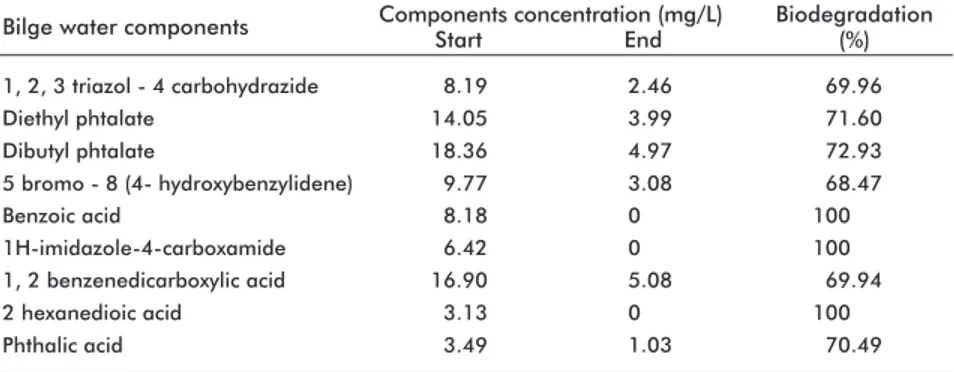
Table 3 shows the hydrocarbon compounds being
highly degraded by the microbial consortium for 28 days, presented as the area under the curve in gas chro-matography experiments. The native microbial popu-lation differentially degraded some compounds, with complete removal of 1H-imidazole-4-carboxamide, 2 hexanedioic acid and benzoic acid and the rest of compounds being degraded at approximately 70 %. Total hydrocarbons gas chromatograms are shown
in the figure, showing showing the components that
16. González PY, Alarcón A, Ferrera-Cerrato R, Almaraz JJ, Martínez-Romero E, Cruz-Sánchez J, et al. Tolerance, growth and degradation of phenanthrene and benzo[a]pyrene by Rhizobium tropici CIAT 899 in liquid culture medium. Appl Soil Ecol. 2013;63:105-11.
17. Choi HJ, Seo JY, Hwang SM, Lee YI, Jeong YK, Moon JY, et al. Isolation and characterization of BTEX tolerant and degrading Pseudomonas putida
BCNU 106. Biotechnol Bioprocess Eng. 2013;18:1000-7.
18. Cerqueira V, Hollenbach E, Maboni F, Vainstein M, Camargo F, Peralba M, et al. Biodegradation potential of oily sludge by pure and mixed bacterial. Bioresour Technol. 2011;102:1003-10.
19. Benavides J, Quintero G, Guevara A, Jaimes D, Gutiérrez S, Miranda J. Biorre-mediación de suelos contaminados con hi-drocarburos derivados del petróleo. NOVA
– Publicaciones Científicas. 2006;4:1-116.
20. Purohit H, Thangaraj K, Kapley A. Characterization of diverse Acinetobacter
isolates for utilization of multiple aro-matic compounds. Bioresour Technol. 2008;99:2488-94.
21. Zhang X, Cheng S, Zhu C, Sun S. Microbial PAH-degradation in soil: Degra-dation pathways and contributing factors. Pedosphere. 2006;16:555-65.
22. Yaohui X, Mang L. Bioremediation of crude oil-contaminated soil: Comparison of different biostimulation and bioaug-mentation treatments. J Hazard Mat. 2010;183:395-401.
23. García E, Roldán F, Garzón L. Evalua-ción de la bioestimulaEvalua-ción (nutrientes) en suelos contaminados con hidrocarburos utilizando respirometría. Acta Biol Colomb. 2011;16:195-208.
Table 1. Tolerance to diesel bilge water contaminants of bacterial populations isolated from contaminated soils of an oil well in Colombia*
Bilge water concentration (% v/v)
1.0 3.0
12.5 5.0
15.0 7.5 10.0
1.4 × 10⁷
1.8 × 10⁸
3.0 × 10⁶
2.5 × 10⁸
6.0 × 10⁵
9.7 × 10⁸
3.9 × 10⁸
* Values are reported as the mean tolerance to diesel bilge water contaminants concentrations (% v/v) in mineral oil. See text for composition details. Tests were run in triplicates.
a Major bacterial population.
Microbial population (c.f.u./mL)
a
Table 2. Degradation of diesel bilge water contaminants by bacterial populations isola-ted from contaminaisola-ted soils of an oil well in Colombia*
Start (CS) End (CE) Biodegradation (%)
1889 1337 29.22
3150 2140 32.06
4956 1898 61.70
7710 610 92.09
10185 4258 58.19
Experiment
1 2 3 4 5
Bilge water concentration (% v/v)
1.0 3.0 5.0 7.5 10.0
* Highest degradation percentage. Biodegradation was calculated by the formula: Biodegradation (%) = (CS- CE)/CS × 100.
13011 9223 29.11
6 12.5
change by the biodegradation activity of the microbial consortium at ths start and the end of the assay.
The bilge water components are varied and
de-graded at differential rates. Furthermore, hydrocar
-bons removal could be also influenced and improved
by the synergic interaction among the microbial spe-cies found in the native microbial consortium. Such interactions has been reported, either by one species removing the toxic metabolites that activates the bio-degradation process by the decontamination-relevant
microbial species or by the sequential cooperative
degradation of contaminants and its intermediaries by two distinct bacterial populations [24].
Experiments for diesel removal by using a min -eral medium at 1 % (v/v) and processing for 50 days achieved 64.1 % of maximum degradation values for an Acromobacter anthropi isolate and 90 % for a mi-crobial consortium [25]. Minimal values of 20 % total hydrocarbons removal were attained after 50 days for
Pseudomonas fluorescens. Similarly, 57 to 65 % total hydrocarbon biodegradation of 1 % v/v diesel bilges and linters water was reported [26], and in a batch-operated reactor in four successive cycles (72 h/cycle)
for bilge water at 10 % v/v achieving 53.3, 96.2, 76.2
and 75 % degradation, respectively [27].
Other studies have focused on the capacity of a bacterial consortium formed by Stenotrophomonas acidaminiphila, Bacillus megaterium, Bacillis cibi,
Bacillus cereus and Pseudomonas aeruginosa to bio-degrade aliphatic and aromatic hydrocarbons gener-ated by the petrochemical industry. This bacterial consortium demonstrated an excelent degradation ca-pacity for 40 days, reducing in 90.7 and 51.8 % the aliphatic and aromatic hydrocarbons fractions, respec-tively [18].
The pH in diesel linters or bilge waters treated with autochthonous microorganisms have seen to decrease throughout the biodegradation process, also accompa-nied by the increase in turbidity and the dispersion of the oily phase. Such changes are normally attributed
to the production of biosurfactants, bioemulsifiers, or
both by the microorganisms implicated. Some
biosur-factants display specific performances, mostly influ -ence by pH [5]. Moreover, total hydrocarbons in bilge waters were biodegraded up to 57-65 % after six-day incubation by using a microbial consortium secreting
a bioemulsifier [26].
Particularly, microorganisms isolated from soils contaminated with oil for long periods could be used to treat the diesel bilge waters generated in service
stations’ storage tanks. The efficiency for biodegrad -ing the total hydrocarbons fraction in this type of contaminant depends mostly on the bioaugmenta-tion processes (with native microbial consortia which have been previously tolerated such contaminant concentrations), and biostimulation (with nutrients
to support the microbial metabolic requirements
for biodegradation). Moreover, studies indicate that microorganisms adapt to and degrade contaminants based on two main mechanisms: cometabolism and cooperation [5, 28].
The native microbiota isolated from oil well soils dis-play distinct degradation activity on diesel bilge water.
The number of compounds normally found, together with their complexity and heterogeneity, are
fac-tors undermining the efficiency of the biodegrada -tion process. High weight hydrocarbons, highly branched or carrying numerous aromatic rings are
very difficult to degrade, by interfering with the
successful start of the enzymatic degradation process by the microbial community.
Among oil derivatives, polycyclic aromatic hydro -carbons are the most toxic and resistant to traditional bioremediation processes. Conversely, the
structur-ally simpler ones are easy to degrade. Either the case,
those oil derivatives actually degraded by native bac-teria comprise some molecules carrying a benzene ring. Those compounds can be further decomposed down to benzene, which is largely recognized as a potent carcinogen and harmful for human and animal health. This makes of bioremediation bacteria a re-markable tool to face such a threat, particularly native bacterial strains with biodegradation potential for en-vironmental preservation and restoration approaches.
Table 3. Gas chromatography determination of total hydrocarbons in diesel bilge waters by a microbial consortium isolated from an oil well soil in Cordoba, Colombia*
Start End Biodegradation (%) Bilge water components
* Results from a biodegradation at start and end of assay. The experiment was run by incubating for 28 days the microbial consortium (106 c.f.u./mL) in flasks containing mineral minimal medium plus diesel bilge water at 7.5 % v/v under constant agitation of 150 rpm, at 28 ± 2 ºC, pH 7.0. The carbon/nitrogen ratio was adjusted to 100/5, as determined for the optimal activity of the consortium at the contaminant concentration used. Results are presented as the area under the curve (cm2) from gas chromatograms.
Components concentration (mg/L)
Figure. Comparative analysis of diesel bilge water components before and after the biodegradation process with a native bacterial consortium isolated from Cordoba, Colombia. The assay was run by extracting the hydrocarbon compounds with hexane and further assessing their concentration by gas chromatography coupled to mass spectrometry for compound characterization. Chromatograms of a representative sample are shown, as determined at the start (gray) and the end (black) of the assay. Compounds 5, 6 and 8 were completely biodegraded.
6 8 10 12 14 16 18 20 22 24 26 28 30 32 34 36 38 0
10 20 30 40 50 60 70 80
Time (min)
Abundance (× 10
3)
24. Janbandhu A, Fulekar MH. Biodegra-dation of phenanthrene using adapted microbial consortium isolated from pe-trochemical contaminated environment. J Hazard Mat. 2011;187:333-40.
25. Richard J, Vogel T. Characterization of a soil bacterial consortium capable of degrading diesel fuel. Int Biodeter Biodegr, 1999;44:93-100.
1, 2, 3 triazol - 4 carbohydrazide
1H-imidazole-4-carboxamide 5 bromo - 8 (4- hydroxybenzylidene)
1, 2 benzenedicarboxylic acid 2 hexanedioic acid Benzoic acid
Phthalic acid Dibutyl phtalate Diethyl phtalate
1
6 4
7 8 5
9 3 2
1 2
3
4
5 6
7
8 9
6.42 0.00 100.00
9.77 3.08 68.47
16.90 5.08 69.94
3.13 0.00 100.00
1H-imidazole-4-carboxamide 5 bromo - 8 (4- hydroxybenzylidene)
1, 2 benzenedicarboxylic acid 2 hexanedioic acid
8.18 0.00 100.00
Benzoic acid
3.49 1.03 70.49
Phthalic acid
18.36 4.97 72.93
Dibutyl phtalate
14.05 3.99 71.60
Diethyl phtalate
8.19 2.46 69.96
1, 2, 3 triazol - 4 carbohydrazide
1 2 34
7
26. Nievas M, Commedatore M, Esteves J, Bucalá V. Biodegradation pattern of hydrocar-bons from a fuel oil type complex residue by
an emulsifier-producing microbial consortium.
J Hazard Mat. 2008;154:96-104.
C
onclusions
The isolated microbial consortium was able to degra-de the diesel bilge waters components found in the soil of an oil well of a service station from Córdoba, Colombia. It comprised bacterial species reported with biodegrading activity for oil and its derivatives,
except for Rhizobium radiobacter. This last is a new contribution to the list of bacterial species displaying biorremediation capacity for diesel bilge water de-contamination. The bacterial consortium completely removed the 1H-imidazole-4-carboxamide, 2 hexa-nedioic acid and benzoic acid present in the bilge water.
Received in January, 2015. Accepted in July, 2015.
27. Lakha S, Miller M, Campbell RG,Schneider K, Elahimanesh P, et al. Trevors JT. Microbial gene expression in soil: methods, applications and challenges. J Microbiol Methods. 2002;63(1):1-19.