Promoting aspects of intercultural awareness when incorporating elements of dance
Katerine Maribel Quiñones Quiñones
Universidad Distrital Francisco José de Caldas Master program in Applied Linguistic
Promoting aspects of intercultural awareness when incorporating elements of dance
Katerine Maribel Quiñones Quiñones 20131062009
Tutor:
Deyanira Sindy Moya
Universidad Distrital Francisco José de Caldas Master program in Applied Linguistic
Bogotá, 2017
_____________________________
Alvaro Quintero Polo
Tutor
_____________________________
Yeraldine Aldana
Juror
_____________________________
Mauro Baquero
“La Universidad Distrital Francisco José de Caldas no será responsable
por las ideas expuestas en este trabajo”
Acknowledgments
During the research experience that is presented in this document, there are many people who contributed and who I am thankful with. The first one is God, who has giving me the opportunity to fulfill many goals in my life. There is also my brothers and some special friends who have been the support and reason for many important events.
In addition, I want to dedicate this work to my mom Esilda Quiñones. She has taught me that I always need to continue persevering in spite of difficulties and she has been my inspiration, support and reason for overcoming many challenges in my life. I admire her courage and strengths to overcome.
I am heartily thankful to my tutor, Sindy Moya, whose encouragement, guidance and support from the initial to the final level enabled me develop a wider understanding of what intercultural education means.
Table of Content
Abstract………..10
Chapter I: Introduction……….………...11
1.1.Rationale ……….……11
1.2.Problem statement………...12
1.3.Research questions...………....21
1.4.Research objectives……….21
1.5. Art State.……….22
Chapter II: Literature Review………....30
2.1. Culture………...30
2.2. Interculturality and acquiring language...………..………36
2.3. Intercultural awareness in learning English………..39
2.4. Dance in the development of acquiring English………....46
Chapter III: Research Design………51
3.1. Research approach and paradigm.………..…….51
3.2. Research type………...…….53
3.4. Participants……….57
3.6. Instruments to collect data………..58
Chapter IV: Instructional design………..60
4.1. Vision of curriculum………62
4.2. Vision of language………...63
4.3. Vision of learning………65
4.4. Vision of classroom……….66
4.5. Curricular platform………..67
Chapter V: Data analysis………...74
5.1. Category one: Socializing in L1 and L2 ………...77
5.2. Category two: Learning about cultures ………80
5.3. Category three: Promoting selfness and otherness ………..84
Chapter VI: Conclusions and limitations………..………89
6.1. Conclusions….………..…..…….90
6.2. Limitations………...91
References………..103
Figure 1: School setting………..16
Figure 2: Student´s presentation………17
Figure 3: Student´s presentation……….18
Figure 4: The cultural knowing’s framework by Moran (2001)……….42
Figure 5. Dance´s dimensions……… ………..………..46
Figure 6. Lewin´s model of action research………..………..59
Figure7. List of codes………..75
Figure 8. Family Intercultural awareness in English/dance classes………86
Figure 9. Category socializing in L1 and L2……….…….86
Figure10.Field note 2. May 16, 2015……….…………88
Figure 11. Student´s artifact (Alzate, 2015)……….90
Figure 12. Category learning about cultures………92
Figure 13: Student´s artifact (Chala, 2015)………..93
Figure 14. Category promoting selfness and otherness………..96
Figure 15. Student´s artifact. (Gomez, 2015)……….100
fi Indice de tablas Table 1. Objectives for each action Research phase……….68
Table 2. Action plan………..77
Appendices
Abbreviators
EFL: English as a Foreign Language
L1: First language
L2: Second Language
DANE: National Statistic Administrative Department
PEI: Institutional Educative Project
Abstract
This project is a qualitative type of study that aims to determine some aspects of Intercultural awareness promoted in an EFL classroom when using elements of dance and to identify the kind of transformation students go through in an EFL classroom when incorporating basis of dance. Therefore, this action research study focuses on designing and applying a pedagogical implementation for fourth primary students to promote aspects of intercultural awareness when working Colombian folk dances. This pedagogical project was carried out with 23 fourth grade students at a public school at Bogotá, the main instruments to collect data were student´s artifacts, student´s interviews and field notes. Through the data analysis three categories describe some intercultural awareness´s aspects that encourage a better relationship among the participants of this investigation and surely make people more sensitive and aware of the worthy cultural diversity we have in our society.
KEY WORDS: Culture, Interculturality, Intercultural awareness, Dance elements.
Resumen
Este proyecto es un estudio de tipo cualitativo que tiene como propósitos determinar los aspectos de la conciencia intercultural promovidos en un aula de aprendizaje de inglés como lengua extranjera, cuando incorporan elementos de la danza. Este estudio de investigación acción está enfocado en el diseño y aplicación de una implementación pedagógica para promover aspectos de conciencia intercultural que trabaja con danzas folclóricas colombianas. Este proyecto pedagógico fue llevado a cabo con 23 estudiantes de un colegio público de Bogotá. Los instrumentos de recolección de información fueron trabajos de las estudiantes, entrevistas a estudiantes y diarios de campo. A través del análisis de datos se crean tres categorías que describen algunos aspectos de la conciencia intercultural que promueven una mejor relación entre los participantes de esta investigación y seguramente hacer personas más sensibles y consientes del valor de la diversidad cultural que hay en nuestra sociedad.
Chapter I
Introduction
1.1.Rationale
Colombia has always been a multicultural and a pluriethnic country. Since the 1991 Political Constitution, the Colombian State has recognized cultural diversity as part of its nationality. One of the main objectives of this regulation is promotes respect toward different ethnic groups that are part of our country and to protect their diverse customs.
The general law of education presented in Article 21 which refers to the specific objectives of basic education. This study hopes to respond to some of those specific objectives as the artistic training through body language, representation, music, visual arts and literature; the acquisition of elements of conversation and reading at least one foreign language and; the development of civic, ethical and moral values, social organization and human coexistence.
Since one the missions of education is to encourages a general and objective understanding of the world without leaving out the subjective perspectives, customs, beliefs and ways of life of each ethnic group as part of its social and integration program, the Ministry of Education has regulated the some basic standards of citizenship skills which encourages cognitive, emotional, and inclusive skills to foster coexistence and peace, participation and democratic responsibility, plurality, identity and appreciation of differences.
collaborative groups, values, and skills amongst students that meet in dance/ English classes, to break stereotypes, and to understand the diversity as a cultural wealth. This research fosters knowledge about Colombian´ cultures while learning some elements of dance and developing English communication skills. Implementing this research is helping some students to become citizens with a wide vision of coexistence, interaction and socialization amongst other people. People are capable of transforming some negative attitudes in strengths such as teamwork, collaboration, and respect to the benefit of cultural diversity. If it is possible to develop and reinforce those tenets, the social impact would benefit society. This research is carried out in a public school that is focus in the development of interactive skills to form a more harmonious environment that shows tolerance, respect, solidarity and collaboration.
1.2.Problem Statement
Education is considered key for the development of human beings and citizenship competences (Meredyth & Tyler, 2003). According to Sanchez (2006), factors such as ethnicity determine the academic performance of students in Colombia. He clearly explains that there is a performance gap between students from ethnic groups and non-ethnic groups in Colombia.
Another factor that affects academic performance is migration. Many people from different ethnic groups make the decision to move to big cities looking for better educational and working opportunities. However, Sánchez (2011) states that although those people change their home from rural areas and small cities to urban areas, their academic performance is still low in comparison to students who are considered non-ethnic and have always lived in big cities such as Bogotá, Cali and Medellin.
In Colombia, one of the main goals of Education is to promote citizenship competences along academic ones because knowledge is learned in socialization and interaction with others. For that reason, there are three competences that support citizens to have a holistic education in communication, cognition, and emotion (Sanchez, 2006).
Communicative competences can be explained as strategies that support students to express, understand and discuss topics of interest among themselves. Cognitive competences could be understood as strategies that assistance people to identify, recognize and to reflect about realities and situations from themselves and from others. Emotional competences, on the other hand, are abilities that people develop to integrate knowledge and other competences to act well in their daily lives. Emotional competences are the skills to express communicate and manifest feelings, thinking emotions and ideas that allow progress in the growth of personality that provide the development of social skills such as language, communication and interaction (Sanchez, 2006).
of using students´ free time to develop citizenship competences, skills, and knowledge to improve the quality of education. Thus, Compensar (which is a private institution in charge of promoting social and health services) was hired to administer different kinds of programs for students in state schools. This institution for the majority of public schools in Bogotá offers programs such as technology, sports and arts.
Compensar and Secretaría de Educación Distrital have made an agreement to create art, technology and sports programs for public schools in Bogotá. The main purpose of these courses is to improve the quality of education through articulation of dance classes, painting, chess, sports, music, and theater with subjects in which students perform poorly.
This study takes place at a public school in El Rincon, a neighborhood in Bogotá, Colombia, which operates during the morning and afternoon shifts. It offers three levels of education: Pre-school, Elementary and Secondary. There are approximately 3,000 students enrolled in the school. The socio-economic conditions of this neighborhood are poor (labeled as strata I and II in the Colombian characterization), and they do not have access to ideal living conditions such as utilities, parks, transportation, among others. The neighborhood where the school is located belongs to an area called Suba, which concentrates people from different regions of Colombia.
Olympiads, and other events to reinforce skills and knowledge in their students. However, teachers in charge of subjects like English do not develop specific projects or implement explicit strategies applied to work on the development of their students’ English proficiency. .
Figure 1. Students` Presentation. Picture taken by Katerine Quiñones (2014)
The dancing and English sessions also aim to improve the interaction among students, to reinforce values such as respect and teamwork. Moreover, the strategies implemented in these sessions have to be articulated with the Institutional Educative Project.
Bringing the situation expressed above to the public school in which this study is taking place, there are students who are members of indigenous and Afro ethnic groups, but the majority of them are not identified in any Colombian ethnic group. This means that in the classrooms there are both ethnic and non-ethnic students. Since these students come from different backgrounds, they would have different cultural features and can possibly perform differently during their academic development. Some issues such as discrimination, bullying, and low self-esteem are presented in the classroom. These issues are emotionally and academically affecting some of the students.
In this public school in Bogota, there is an art school of dance as part of the agreement from the Secretaria de Educacion Distrital and Compensar. Thus, there are three groups of dance classes which are integrated by students of third and fourth grades whose ages range between eight and ten years old. As mentioned before, some teachers from this school are working on projects to help students improve their academic performance. Nevertheless, English was not included in any of the projects and the majority of students are failing it.
characters of the future with a wide vision of coexistence, interaction and socialization among people, human beings able to transform some weaknesses in strengths such as teamwork, collaboration, respect to the difference and to the cultural diversity. If it is possible to develop and reinforce those tenets, the social impact would benefit to the current society that needs human beings with principles mentioned before. This research is carried out in a public school focused on the development of citizenship skills to form whole human beings displaying tolerance, respect, solidarity and collaboration in the coexistence.
One of the three dance groups has presented negative behavior during the sessions. This is evident when students fight and say disrespectful expressions to one another. This type of behavior has resulted in constant dropouts. The negative behavior and disrespect toward other classmates might be due to a lack of self-confidence and self-esteem or it might, be related to the students’ cultural background. From observations conducted during some dance sessions it is possible to identify some ways of racism among the students. For instance,
“At the beginning of the class a pair of students used the expression: look at the hair of the black girl, it looks like a sponge. Field note. September 17, 2014.
such as Afro-Colombian people. The student felt upset for what her classmates said, she attacked verbally their classmates by saying:
“If my hair looks like a sponge, your bottom is like a board. The student is controlled through a call of attention. Field note. July 8 2015
In that moment, the student insulted, reacted with other aggressive expression that also shows disrespect for the other students that look different from her. Some students make complaints because other attack verbally with words such as:
“Get out of here, black”. Field note. Agosto 30, 2014.
Some students have difficulty recognizing the differences between people, use derogatory expressions such as
“That black is ugly and smelly" field note. Agosto 30, 2014
. Taking into account that Colombia is a pluriethnic and multicultural country, what occurred in the last two entries were manifestations of disrespect and ignorance about cultures, ethnics, and race.
Other situations that helped create this research project and interests on developing intercultural awareness are some interviews conducted with a pair of students who most of times had been isolated by some of their classmates’ attitudes. In the interview the students answer the following questions:
“Researcher: how do you feel with your classmates?
Sofia: fine, but with some of them no because sometimes they treat me bad, and they make feel as ugly. They say that my color is ugly, that I am black and, I feel offended and rejected”. Interview. Karol Sofia, July 3 2015
This interview shows the unawareness and emptiness some students presented and their need for knowing more about themselves. Through the answers given by interviewees is understandable, the necessity of being aware of diversity, multiculturality and pluriethnicity in Colombia is present. All these students require the chance to interact more amongst themselves and to learn and accept the differences of people around them for developing intercultural awareness and taking a better relationship.
In the following piece of interview, there is presented another situation that some students live during classes:
“Researcher: where are you from?
Mauricio: From San Andres.
Researcher: Do you like San Andre’s people?
Mauricio: fine, but I have a few friends, the majority of my classmates call me black, ugly, bald black” Interview. Mauricio, July 3 2015
In this interview, the student shows a lack of acceptance of himself as an Afro. He mentions that he does not like black people due to the stereotypes that the society has given to the African race. If the student learns about his identity, then it will be possible for him to develop intercultural awareness (Artunduaga, 1997).
The problematic situation mentioned above shows the need for students to work on their intercultural competences. Intercultural competences, which consist of cognition, communication, and emotion, are skills that permit individuals with diverse cultural backgrounds to interact effectively in a determined context accepting similarities and differences among themselves (Granada, 2013). Moreover, authors such as Byram & Fleming (1998) define intercultural competences and diversity as the inter-relationship established intentionally among people from different backgrounds, culture, genres, and social groups. Interculturality happens within a community that advocates dialogue and interactions starting from the recognition of values, ways of living, and beliefs to enrich and reinforce their identity and by using a central part that is the language they have in common. The language in common is the vehicle to carry out communication among people who are interacting and sharing practices, perspectives and cultural products to have a better understanding of one another.
1.3.Research Question
What aspects of Intercultural awareness emerge in the interaction between ethnic and non-ethnic students when using dancing techniques in EFL activities?
How do fourth ethnic and non-ethnic graders interact classroom when incorporating elements of dance in EFL activities?
1.4. Research Objective
To determine the aspects of Intercultural awareness that emerge from the interaction between ethnic and non-ethnic students when using dancing techniques in EFL activities.
To describe the kind of interaction students go through when incorporating elements of dance in EFL activities
1.5. State of the Art
is relatively new and has presented considerable growth in recent years (Kawalec, 2006). Often families of immigrant origin bring their children in school age and they have the right to receive an equal education to receive other pupils. The school as a social institution and agent of socialization, cannot remain indifferent to the diversity of cultures in the classroom, a phenomenon that has led to the emergence of intercultural education.
Multiculturalism is a subject that arouses a great social debate, as is frequently associated with conflict between different cultures. Cultural differences and distances between immigrant minorities and societies with a majority culture tend to become more pronounced and seen as a problem to be solved rather than as a source of mutual enrichment.
According to the main trends that characterize current migration they are: globalization, diversification and feminization. According to Castles (2010) the OIM (International Organization for Migration) one of every 35 people is an international migrant. From 209 existing states, 43 countries are immigrants, 32 only send and receive and send 23, this figure means that nearly half of the world's countries are developing or live migration.
Around the world, some academics have dedicated their studies to the development of intercultural awareness to English teaching and learning. For instance,
Velasquez (2002) in her research Intercultural understanding through the use of e-mails projects seeks to explore the nature of exchanging e-mails and how they promote the intercultural understanding among students. Through this action research is showed how a student`s group give sense to foreign cultures through experiencing the use of e-mail; how they interpret differences and similarities among cultures and how they perceive the contact with other people and also recognizing how the use of e-mail help in the development of reading and written skills.
In a similar sense, Calderon (2004) in their research integration aspect culture in English class, presents a drive to incorporate culture in class English as a foreign language in Costa Rica. It considers that the cultural component is cannot be put aside the teaching of language and culture and language are closely linked. Further states that learning the culture involves more than the exposure to cultural information; it includes critical evaluation of that information and compared with culture. One of the objectives is to state the Calderon behavioral differences in relation to time; believing that many misunderstandings are due to people from different cultures have a concept different about time and its meaning for what may be acceptable in one culture determined may be offensive to another.
Geng & Bada (2005) in their research “Culture in Language Learning and Teaching” seek to give an account of what students last semester from a university learn in a class just dedicated to language culture to promote cultural awareness. Geng and Bada consider that a class intended only to the cultural part is an important component in language teaching. Besides, they affirm that according to conclusions obtained in this study, culture class can offer the communicative competence development as other skills. For other side, Real (2009), in his research Developing students` intercultural competence through literature circles is centered in the importance of promoting in his students the foreign language opportunities to develop intercultural competences implementing an action research carried out in a public school at Bogotá. This research has as objective to implement literature circles as a technique to offer intercultural competence opportunities. As a result, Real finds that students express feelings toward the foreign language. Also they establish variety of connections while participating in discussions. Some of the feelings and values reflected are respect, admiration, acceptance, tolerance, among others.
that the fact show students other cultures, makes that they think and reflect on their own culture.
To Ritlyová culture is known as the different customs, behaviors, values and way of life of the people reflected through art, music, literature, etc. But besides all these aspects, it believes that culture is also seen reflected in daily use of language, such as the recognition of idiomatic expressions, proverbs or phrases in one way or another characterize a society. What leads the conclusion that culture and language are interrelated and Language is the primary means through which culture is expressed.
Castañeda (2004) in his investigation Adolescent Students' Intercultural Awareness When Using Culture-Based Materials in the English Class makes a case study qualitative and interpretative that took place in a public school in the southeastern of Bogotá, a student group that had little contact with the English language. The objectives of this research were as a first step to explore how these students understood the cultural content materials used in English classes and second, to describe their perceptions of foreign cultures presented in the materials; for that, it collected information through video and audio recordings, surveys, field notes and materials prepared by students.
At the end of its investigation, Castaneda found that his students were reading culture foreign considering their own reality using their prior knowledge. When students interacting with something new that had no connection with their own culture, they tried to look at a relative benchmark to make sense of what they were looking at or what they were interacting, which considers this process was influenced by knowledge and previous experience of students.
aspects from Intercultural communicative competence that are evidence in the group and, to identify the impact of Pen Pal to promote the intercultural communicative competence. When analyzing the experience and the date obtained one of the most important findings is that Pen Pal permits to know from other, come near evidencing a communicative competence since an intercultural perspective. There was interchanging of knowledge among students that come from other cities different to Bogotá. Was demonstrated the power of acceptance from students to other cultures. The other cultures incise directly en the treatment among participants reflecting new fashion styles, new slangs and behaviors accepted between each other.
The studies presented above present similar characteristics: their aim are to raise, to promote, to enhance, to improve and to develop cultural and intercultural competences and awareness while providing opportunities of language learning; many of these researches have been developed through the use of ICT`s, other have been developed in the classroom, but all of these researches have been established with adolescent and adults. One important aspect on cultural and intercultural awareness is evolving the process of education since the early childhood to initiate the values strengthen during the early age. (Campo, 2006).
Consultation of the previous researches and proposals, as well as the other tools, cemented the directions of this project that arose before the study and reflection of the following concerns:
2) How to take advantage of the different context of the capital's schools to build knowledge and promote Multiculturalism?
3) What do the educators and the cultural riches of Colombia?
4) The dances are not exploited within the school as sources of knowledge building and forming values if not fill in activities such hoisted flags and closing ceremony
5) Intercultural must be articulated in many areas of being, know and deserves support from school.
6) To implement a project needed to come to the dance to the game, to orality and literacy practices, rounds, as recognition tools. Therefore it is a project: Aspects of intercultural awareness promoted in a EFL classroom when incorporating elements of dance, is a contribution to the pedagogy of recognition from the dance group at a public school from Bogotá that arises as a contribution through dances Colombian folk and English. Children know cultural aspects of their country, enrich their language skills, based on dialogue relations, equity and active respect for difference.
Chapter II
2. Theoretical framework
when using dancing techniques in EFL activities and to describe the kind of interaction students go through when incorporating elements of dance in EFL activities
To fulfill the objectives mentioned, it is necessary to establish a theoretical framework that explains and defines the main concepts concerning to this research. Some of these main concepts are culture, intercultural education, intercultural awareness, learning English, and dance.
Before explaining what intercultural awareness is, it is necessary to describe culture, intercultural education, to explain and define intercultural awareness. After considerate what intercultural awareness is, dance is going to be explained as the way performing this art language can help children to develop intercultural awareness while providing opportunities to enhance English skills.
2.1. Culture
Definitions of culture are numerous. This research have taken some relevant and important clarifications that explain the understanding of culture from different authors.
states that “culture is composed by those ideas, values and habits which people share in common. A universal culture would simply mean a broader base than the word culture ordinarily implies, so broad a base in fact that it would include all men”. (P 14).
Being agree to what Lippmann (1934) and Walsh (1973) refer about culture, providing an extent definition of the term, describing culture as the complex whole which includes knowledge, beliefs, art, morals, law, customs, and any other capabilities and habits acquired by men as members of a society. When discussing culture, some people just simply relate it with folklore, myths, legends, music and food. But this author remarks that these considerations are just reductions of what culture really means. Culture contains every single aspect involved in human being lives. It means what they are, what they do, their individual and collective personality, the costumes they learn from their family, friends, neighborhood, school, church and society.
To complement Lippmann (1934) and Walsh (1973) definitions, Moran (2001), illustrates clearly what culture is and how it should be taught in a Foreign Language class. He also highlights the importance of making students cultural competitive. The same Moran (2001), describes the five inter-related dimensions of culture
Moran (2001) shapes an accurate definition of culture. He states that culture is the evolving way of life of a group of people. It consists of a shared set of practices that are associated with a shared set of products. They are based upon a shared set of perspectives in the world and a set within specific social contexts. Also, Moran states that language is a product of a culture, as any other, but it also plays a distinct role. Members of the culture have created their own language to carry out all of their cultural practices. Also, language was created to identify with and organize all their cultural products. Language names the underlying cultural perspectives in all of the various communities that comprise their culture. The words of the language, its expressions, structures, sounds, and script reflect the culture just as the cultural products and practices reflect the language. Therefore, language is a window to culture.
According to Moran (2001), the cultural experience consists of the cultural content, the activities in which students engage this content, the outcomes that are intended or achieved, the learning context, and the nature of the relationship the teacher develops with students. The cultural experience consists of context and process. Students encounter another way of life. The way of life is content and the students’ encounters, the kinds of activities they undertake, and the outcomes they achieve is the process.
declares that foreign language teachers need to be aware of how important it is to teach culture in the foreign language classroom.
In general, education is the process by which a culture introduces its members to the skills, attitudes, information, knowledge, and values that will make it possible to preserve and enhance that culture (Walsh, 1973). Education is the principal means by which one learns a culture and becomes a member of it. Education starts at home. The family is the first group of people in conveying its knowledge.
To continue the exploration of culture, appear Rogers & Steinfatt (1999) to supplement the understanding of culture. According to these authors, culture is the total way of living from a determined group of people. This way of living is composed by the acquired and shared behaviors, patterns, values, norms and material objects. Culture is a very general concept. Nevertheless, culture has very powerful effects on individual behavior including communication. Not only do nationalities and ethnic groups have cultures, communities, organizations and other systems also have distinct cultures.
nations and cultures. It is also possible that members of an ethnic group are a part of many different cultures and or nations. For instance, Jewish people share a common ethnic identification, even though they belong to various cultures and are citizens of many different nations.
In a community, some codes and rules which have been established for a long time are part of its culture. A person who is part of this culture follow what has been traditionally recognized. It means behaviors, habits, values, fashion, dialects, politics, economy, and religious practices are followed. Culture plays a role in each person in terms of age, gender, abilities, talent, knowledge, likes, family background, etc. Kluckhohn (1991), states that culture consists of distinct ways of thinking, feeling and reacting. Culture is acquired and transmitted mainly by symbols, constituting the distinctive achievement of human groups, including their embodiments in artifacts. The essential sense of culture consists of traditional (i.e., historically derived and selected) ideas and attached values. In this regard, culture has many definitions, because it is complex, and also because theorists and experts bring their own perspectives to their definitions. According to what it is mentioned below and comparing some authors, this research defines culture as a way of life human beings have but that contribution make an encounter with another way of life.
2.2. Interculturality and Acquiring Language
authors such as Walsh (1973) who states, “Intercultural education is the process by which one looks beyond his/her own culture and attempts to understand and appreciate how persons of other cultures interpret the life of man and the things of nature and why they view them as they do.” (P. 13). The same Walsh (2005) clarifies that Interculturality
means the relationship amongst cultures that live in a determined society. Interculturality tends to be confused with multiculturality and pluriculturality because they refer to cultural diversity. Multiculturality is a descriptive term that specifies the multi-cultures that live in a determined space. Pluriculturality suggests the coexistence, rules, rights of those cultures in a determined society have. Although multiculturality and pluriculturality are closely
similar, the first one is descriptive and the second one is interactional. Walsh (2005).
cultures, other value systems, beliefs and behaviors that organize the transcultural communication. (1998).
necessary to describe some phenomena that happens when people from different cultures interact.
Intercultural relationships are unique in several ways because of its present particular challenges. Starting to the point that Interculturality move from cultural differences in communication style, values and perceptions to establish better relationships among each other. Intercultural relationships help break stereotypes, help to enhance the friendship and improve the communication. (Martin & Nakayama, 2003)
Important research in Colombia such as Artunduaga`s research (1997) shows how etnoeducation has Interculturality as a principle indicating that it purpose is to foster values like cultural respect, tolerance respect, cultural dialogue and mutual enrichment. Artunduaga defines etnoeducation as a system of constructing knowledge and values for developing identity and skills according to their own features, interests, cultural needs. Then, people can project with identity to other human groups. In his research called “Etnoeducation: a working dimension for education in indigenous communities in Colombia,” Artunduaga shows how his experience in education has been with minorities. Education, redefining education and cultural diversity says that Colombia recognizes its own constitution as a pluriethnic and multicultural country. A concrete pedagogical implication is a need of intercultural education towards the town’s cultural difference by enriching its own culture with learning about other cultures with dialogues and exchange of knowledge. (1997).
on communication and interaction. It means that intercultural awareness must be developed to involve all the cultures in the process of learning a foreign language (Coperìas, 2011)
Bringing those interpretations from the authors presented above, this research believe that intercultural education is the relationship of different backgrounds and cultures in an encounter that permit the interaction, the socialization, the contact, the communication and the exchanging with other people. Besides, this study is totally agree that to foster intercultural education in a context in which people is culturally different, they have to share and provide cultural experiences with the intention of learning from all the cultures immerse in the community in interaction. Furthermore, with the intention of socialize, learn from others and tech to others the diversity of having different cultures, ways, of living, different Cosmo visions in a determined place interacting together, intercultural education go beyond knowing the dimension of each culture. In this moment is when have to be develop the intercultural awareness that is going to be explained in the next point of this investigation.
2.3. Intercultural awareness in English-learning
not the only way and starts looking at and evaluating other perspectives differently. For them, intercultural awareness is a process of heightened facts and knowledge of other cultures by observing the environment, identifying elements, comparing and contrasting norms, negotiating meaning, and tolerating ambiguity. It also means accepting difference, defending other points of view, acknowledging the legitimacy of others and interpreting the skills and attitudes of others. It is in that moment models of intercultural competence can be applied. As proposed by Byram (1997), these following five factor models are possible to develop intercultural competence. These five models are:
1. The attitude factor which refers to the ability to see oneself in relation to other.
2. Knowledge about one`s own and other cultures and in addition knowledge about the process of social interaction.
3. The skill of interpreting and relating.
4. The skill of discovery and interaction
5. Cultural awareness which describes the ability to use perspectives, practices and products in one`s own culture in other culture to make evaluations.
Intercultural competence involves raising the learner`s awareness of their own culture as well as raising awareness of the other culture for helping them to clarify what is deepest and most relevant to their identity. Students gradually develop an awareness of themselves and how they relate to individuals of other cultures. Byram (1997).
communication, acceptance, respect and a social construction among groups in a determined society. When a student is learning a new language, he or she becomes more sensitive towards other cultures different from their own. At that moment, teachers should take advantage of that open-minded-time process and teach students the characteristics of other cultures, especially the characteristics that they can relate to. During the open-minded-time process, students become more culturally competent due to the fact that one of the aims of the foreign language classroom is the development of the students’ awareness of intercultural issues and their ability to communicate effectively and appropriately in a variety of situations and contexts, given the increasingly international nature of contemporary life. Moran (2001)
culture in which the participants live, including the use of authentic cultural products. Understanding interculturality requires that language students to: A) reflect on their reaction to the other speakers; B) identify and to understand their own culture; C) accept the others’ right to be different or similar and, D) negotiate a common ground (Burton, 2005).
Burton (2005) and Batstone (2010 also argues that teachers can guide students to develop intercultural awareness by describing and reflecting upon specific cultural experiences. Students can identify the aspects of cultural diversity encountered. Once interculturality has become an integral part of lesson planning and they have had practice testing their intercultural skills, they should document their progress.
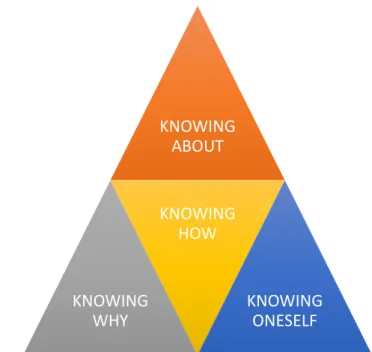
Figure 4: The cultural knowing’s framework by Moran (2001).
6. Knowing About: It involves gathering information and acquiring knowledge about the products, practices, and perspectives of a culture.
7. Knowing How: It refers to cultural practices in the everyday life of the people and having the ability to behave in a manner that is appropriate for any culture.
8. Knowing Why: It includes developing an understanding of the perceptions, beliefs, values and attitudes that underlie all aspects of a culture. This process involves analyzing one’s cultural experiences and comparing them with the perspectives of their own culture.
9. Knowing Oneself: It concerns the individual learners´ self-awareness. In other words, it refers to the ability to understand how one’s own culture affects their values, views, beliefs, and reactions towards their experiences in a new culture. Understanding oneself as a cultural being helps learners comprehend, adapt, and integrate into another culture.
KNOWING ABOUT
KNOWING WHY
KNOWING HOW
In Colombia, it is not necessary to travel to the Pacific and Caribbean coast to learn about Afro-Colombian culture. Also, it’s not necessary to go to the Amazon region or the Cauca, Guajira, and Magdalena departments to read or learn about the Indigenous culture; or to go to San Andres, Providence and Saint Cathleen islands to learn about Raizal culture. There is no need to visit any Gitano’s communities to find out about the ROM culture. Sadly, due to different factors, these communities are displaced from their ancestral territories and forced to migrate to other cities every day. As such, people from the four ethnic groups (Afrocolombian, Indigenous, ROM and Raizal) recognized by the Colombian government, live in all of the Colombian departments. Consequently, from their own fields and roles everybody should contribute to transform our society to make it a truly intercultural one.
General intercultural education should start early in the educational process and should persist into adult and continuing educational programs. Not only it is an essential part of the educational process required by the exigencies of life in the modern world, but also it is one of the best means for insuring that a student will better understand and appreciate his own culture (Walsh, 2005)
interaction takes place, how social identities are part of interaction and how their perceptions are part of communication and interaction. Artunduaga (1997)
Lustig & Koester (1999) proposes four approaches to research intercultural competence: 1) the trait approach, 2) the perceptual approach, 3) the behavioral approach and 4) the culture-specific approach. Each of them adds to our understanding of intercultural competence. The trait approach attempts to identify the kink of personality characteristics and individual traits that allow a person to avoid failure and achieve success in intercultural encounters. Those who have explored this approach have examined such characteristics as flexibility in thinking (world mindedness) (which is a positive attitude toward people of other cultures) the perceptual approach attempts to identify clusters of cognition or perceptions that are related to intercultural competence: the ability to deal with psychological stress, to communicate effectively and to establish interpersonal relationships.
The behavioral approach suggests that it is necessary to go beyond what people think they will do in intercultural interactions and observe what they actually do. Intercultural competence, from this perspective, is best studied by looking at specific communication behaviors during intercultural interactions.
specific rules of interactions of a particular culture. Triandis (1995) is among those who favor a culture–specific approach. Triandis`s approach emphasizes a person`s knowledge of particular cultures and what behaviors are considered appropriate within them. The four approaches to intercultural competence together suggest that intercultural communication is a complex phenomenon. More importantly, they also suggest that to achieve interpersonal competence in interactions with people from different cultures, a variety of personal and interpersonal components must be considered. (1995)
Byram, suggests that a useful tool for assessing the proficiency level of learning a language and assessing the intercultural competence of learning cultures is the use of portfolios because it instrument tests acquisition of information, knowledge and understanding, record students` competences in which seem to change the students attitudes have may have had during the implementation of activities. (2002)
2.4. Dance in the development of Acquiring English
Dance is a discipline that incorporates different dimensions and also provides opportunities to learn other things. For instance, Caceres & Vera (2011) emit that dance is the oldest expression of art in humanity. Dance is a discipline that involves history, beliefs, emotions, feelings, traditions, and lifestyles. In the educational aspect, dance goes beyond being a playful activity that strengthens motor development. Dance is unlimited because it also contributes to integral formation. Dance is the body expression that matures other skills such as motor functions, social, affective and cognitive behavior. Moreover, dance focuses on four dimensions:
Figure 5. Cáceres & Vera´s Dance dimensions.
With the explanation of Caceres &Vera (2011), it is understood that dance as an interdisciplinary strategy integrates various dimensions and permits communication by using language. It permits students to experience interaction with other people, build and enhance cultural identity, help recognize other cultures, helps promote bodily health, and develops motor and cognitive skills.
English will have an important place in this study. It is necessary to bear in mind that the age the participants of this research study have to display the kind of activities and strategies useful for the students. Cook & Littlefield (2005), explain the Piaget`s stages of cognitive development. The first stage is known as sensory-motor stage which starts from the moment of birth until the second year of life. In this stage, infants develop the skill of coordinating physical and pre-verbal actions. The second stage is the pre-operatory phase which starts approximately in the 2nd year of life to the 7th year of life. In this stage, children develop abilities to represent actions, to flourish logical representation, and create
Dance Artistic dimension: referring to the
development of creativity; the dance elements that apply to the choreographies that actually require discipline, dedication and training.
Therapeutic dimension: the orientation of personal
welfare and health
symbols in language, art and play. The third stage is known as the concrete operational thought stage. This stage starts approximately at the age of 7 to the 12th year of life. In this stage, children fulfill the following achievements: Logical thought, which is more objective, allows for skills to develop like class inclusion and transitivity; Developing of schemes which can be reversible or operational and, children pass conservation problems due to decentration and focus on dynamic transformations and reversibility.
The final stage is known as the formal operational thought stage. This stage starts at the age of 12 year and up. In this stage, the hypothetic-deductive reasoning emerges and the abstract thought emerges too.
The participants of this study are between 9 and 11 years old. It means that this development permits them to think about the world using objective rules of logic, comparing objects, making logical conclusions and giving examples to support their ideas. (Cook & Littlefield, 2005).
knowledge: the terms people use to explain themselves and the world around them; Empathy as the capacity to behave as though you understand the world as others do; Task role behavior: behaviors that involve the initiation of ideas related to group problem-solving activities; Relational role behavior: behaviors associated with interpersonal harmony and mediation: Interaction management: skill in regulating conversations; Tolerance for ambiguity: the ability to react to new and ambiguous situations with the little visible discomfort and, Interaction posture: the ability to respond to others in descriptive, non-evaluative, and nonjudgmental ways.
Authors such as Campo (2006) Giguere (2005) describe dance is a language of art that raises the potential skill in people to understand the world and express themselves with movements. Dance is the bodily expression with rhythm. There are many kinds of dance. There is classical dance, modern dance, belly dancing, contemporary dance, traditional dance, folkloric dance, popular dance, etc.
manners. Some styles of dance represent ways living, and use of medicine to cure illness. In other words, dance represents culture, (2006).
Sandino (1997), in his research called Introducción al Folclore Colombiano, he displays briefly the way people from different regions in Colombia show folklore through dance. Sandino defines folklore as popular knowledge, manners and traditions. According to his research, Sandino interprets that dance in Colombia is different due to the demographic reality stating that people according to the region have the characteristics influenced by strong environmental factors such as landscape, climate, occupations, human relationship, and racial atavism. He states that Colombian dance are closely related to human features. People from the Atlantic and Caribbean coast are more open and vibrant. People from the Pacific coast are cheerful and sometime shy because they have lived in isolated areas. People from the flat areas are circumspect and bold. People from the ridged areas are circumspect and shy which may appear to be suspicious. According previous characteristics stated, the author relates the way people dance in every region is the product of their lifestyle, their beliefs, their occupations, the material objects they use, and the features that characterize them.
For Polack, participation in dance experiences can have beneficial effect on children on multiple levels. Those levels can be neurophysiological, emotional, motor, cognitive, perceptual, social, aesthetic, metacognitive, or integrative. When students are preparing a dance, it involves different elements such as teamwork, interaction, integration, practice, organization, concentration, listening, establishing rules, promoting successful learning and social development. For Pollack, dancing makes a dynamic triangle between culture, successful learning, and interaction. This dynamic triangle makes possible to support learning and education. (2009)
The four constructs explained are the description of intercultural awareness promoted in an EFL classroom where students learn dance and English as languages of communication.
3. Chapter III
Research Design
The research design deals with the type of research used to carry out this study, the setting, the participants, instruments used to collect data, the data collection procedures implemented, and some ethical aspects taken into account in this study. All of those elements have been designed to give answers to the following research questions:
2) How are students’ mentality and thought process transformed in an EFL classroom when incorporating elements of dance during their English-learning experience?
3. 1. Research Approach and Paradigm
The approach aims to explore and to describe phenomena that occurs in a natural setting where this project participants go through. It also focuses on cases of students in which the researcher describes a systematic procedure to interpret, collect data, to discover patterns of behavior, to discover ways thinking, and to fulfill the research objectives (Heigham y Croker, 2009).
Ereaut (2007) states that qualitative research is about exploring issues,
understanding phenomena, and answering questions. In this case, this investigation is a qualitative research that has multiple focal points: what students say, what learners mean, the needs and desires of participants, what they do, and culture. It aims to search for intercultural awareness of the participants of this research which they develop during the pedagogical implementation.
the natural setting where the participants of this study interact and act. (Creswell Et al, 2008).
Qualitative research seeks to explore, to understand, and to learn about the participants´ perspectives involved. It uses some instruments for collecting data and information which are applied to figure out the situation participants have and live (Hatch, 2004). Some of the data collection instruments which were carried are: In-depth and qualitative interviews, field notes based on teacher-researcher observations, and students´ artifacts. By using those instruments mentioned, the research question is solved taking into account the representation of intercultural awareness through the students´ works, the field notes and the answers given by students in the in-depth and qualitative interviews.
The paradigm of this study is to construct meaning by interacting with other people in a specific context in which students live and study. Moreover, constructivism provides interpretation of the world by the socialization and interaction with a human community (Creswell, 2003). In other words, author states that actors of this study construct
significance of intercultural awareness by experiencing situations and interacting with people to build their own knowledge, ideas and ways of thinking.
3.2. Research Type
change. Action research is a systematic and a self-reflective approach to collect and analyze information to help teachers explore issues that they face in their classrooms in order to change or improve their current practice (Heigham y Croker, 2009). Burns (1999), states that action research employs a range of data-collecting methods that are flexible and open-ended. Action research is a type of research usually associated with identifying and exploring issues, questions, dilemmas, gaps or puzzles in a context of work, classroom, school, or institution. The action involves deliberating practical changes or interventions.
According to Burns (1999) in action research there are four broad areas of interest which commonly provide a focus in teaching and making changes in the practice of teaching (for example, how do my students respond to my teaching of pronunciation); The students and how they learn (What kind of activities motivate my students most effectively in writing class?); action with the current curriculum and with curriculum innovation (What can I do to make the school`s curriculum more appealing to the learners?); teaching
philosophies and its connections with daily practice (I`m interested in the concept of teacher expertise and, what should be the balance between student-centeredness and teacher-centeredness in the classroom?)
For Heigham and Croker (2009) and Elliot (1991) action research involves a systematic approach to collecting information or data, which usually uses methods
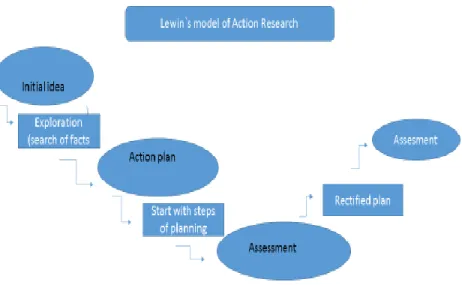
administrators, other teachers, students or students’ family members. Besides, Burns (1999) presents the series of interrelated experiences to undertake action research in a cycle of stages involving the following phases:
Figure 6. Lewin´s model of Action Research. (Author source)
Murillo (2010) describes Lewin`s model of action research remarking that Lewin´s model isd used as reflexive action cycles. Each cycle consists of a series of steps: planning, action, and evaluation. The general plan is reviewed in the light of the information and the second step of action is planned on the basis of the first.
practice, while seek a better understanding of the practice. Also, it articulates research, action and training. Besides approaching reality by linking the change and knowledge and if possible, make practical to researchers. Wanted to apply an action plan, some activities were intended for collecting data by using instruments such as in-depth and qualitative interviews, field notes based on observations, and reflections to reflect upon what occurs within a group of students.
After some speculation and hypothesis, a pedagogical intervention is implemented with some activities and strategies that help students develop intercultural awareness with the aim of seeing it develop in students. In the intervening cycle, instruments that are used to collect data are the students’ artifacts and field notes. Afterwards, the data is going to be collected by field notes, students’ artifacts and, interviews which will answer the research questions.
3.3. Setting
This research study takes place at a public school in Suba, Bogotá - Colombia. The school Virginia Gutierrez de Pineda is located on the UPZ Rincon which is located south of the neighborhood of Suba. It is a mega-school 1 that has wide classrooms for students to attend. There is also furniture for all students, a library, a computer lab, a music classroom, and an audio-visual classroom. It consists of morning and afternoon shifts. For each shift,
1
there are approximately one thousand two hundred students. The school offers three levels of education which are pre-school, primary school, and high school. The participant group consists of fourth-grade students that attend school during the morning. The students are members of the Art School of Integral Formation. The specific focus of this school is the human development that guarantee and integral formation (cognitive, praxical and affective) and the quality.
The institutional project from this school emphasizes on the academic excellence and development of values for the coexistence amongst the educational community2. To fulfill the academic excellence of students, many teachers have to work intensively with subjects such as mathematics, social studies, and Spanish. However, in subjects like English, there is not a project or program to improve the academic performance.
3.4. Participants
The participants of this study are 23 fourth graders. The age of the participants of this research study range from 9 to 11 years old. The small–scale of samples is selected through the convenient sampling method, taking into account the ease of access to students and parents. (Ritchie, 2003).
The participants of this study were selected through the convenient sampling that Ritchie (2003) proposes. This sampling presents particular features that make them
heterogeneous. For instance, some of the sampling participants are Afro students that come
2
from Pacific and Insular regions. The other students are from Andean region and they differ in cultural background. This sample is composed of seven students that represent the 30% of the students.
As the aim of this study is to develop intercultural awareness in the participants, they are observed and followed in their dance and English classes during the pedagogical intervention that aims to develop intercultural awareness. The other participant of this research is the teacher who at the same time plays the role of the researcher. The
teacher/researcher is the only person who teaches dance, who creates an environment for enhancing English proficiency, who takes notes, who interviews students, and who uses the information given by students to analyze it for accomplishment of the main goals of this study. The teacher/ researcher of this study guarantees the confidentiality of the data gathered and also asks for permission to take different types of information, (Creswell, 2004). To request permission was necessary to create consent forms for the principal of the school in which this study takes place for parents and students. They accepted cordially to participate in the study (See Appendix 1, 2 and 3).
3.5. Instruments to Collect Data
respondent and give reasons for his or her individual point of views without being influenced by the opinions of other respondents. (Boyce & Neale, 2006). This kind of interview is used in different stages of this action research methodology.
In all of the stages of the pedagogical implementation, field notes take an important role for gathering data. Field notes, according to Wolfinger, (2003) and Kawulich (2005) are strategies of taking notes during observational studies that generally consist of two parts: A) Descriptive information, in which the researcher takes accurate data such as settings, actions, behaviors, and conversations which the investigator observes; and, B) Reflective information, in which researcher´s records thoughts, ideas, questions, and concerns as she/he makes while observing. The author suggests that field notes should be written as soon as possible after an observation is completed. The field notes used for collecting data in this study are divided into observations and reflections. Also, these field notes have special focuses. These focuses are intercultural awareness, the use of the language (English), and lastly the attitudes and behaviors that students present during the sessions. (See appendix 4)
By using these data collection instruments mentioned, this study intends to focus in some aspects of intercultural awareness when incorporating some elements of dance and to to identify the kind of transformation students go through in an EFL classroom when incorporating elements of dance.
4. Chapter IV Instructional Design
The pedagogical objectives proposed in this research are:
1) To enhance intercultural awareness in fourth grade students of a public school in Bogotá by learning and reflecting about differences and similarities of cultures in
Colombia.
2) To establish better relationships with others by developing intercultural awareness.
3) To analyze students’ artifacts that represent intercultural awareness developed during the dance/English sessions.
In order to fulfill these aims, a pedagogical intervention is proposed to contribute to the development and representation of intercultural awareness by learning how to dance specific Colombian dances following English instructions and identifying cultural aspects from Colombian regions in both English and Spanish.
This pedagogical intervention was carried out in 4 hours weekly during 10 weeks with a group of 25 fourth grade students in the study setting. It was implemented in different cycles because it is an action research study that is developed in three different phases: Identifying, Intervening and Reporting.
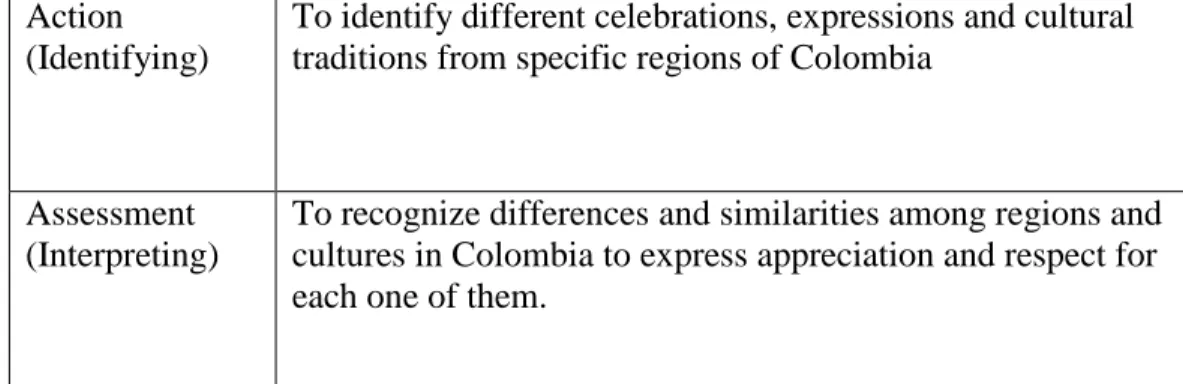
Phases Objectives Initial idea
(Exploratory)
Action (Identifying)
To identify different celebrations, expressions and cultural traditions from specific regions of Colombia
Assessment (Interpreting)
To recognize differences and similarities among regions and cultures in Colombia to express appreciation and respect for each one of them.
Table 1. Objectives for each action Research phase
In the first part of this research as is shown in the table, the need was identified, the necessity of developing intercultural awareness was evidenced through gathering some pieces of data. During the phase of acting, students identify general cultural aspects from Colombian cultures. They explore and recognize general dances from the six Colombian regions. They learn some dance elements and instructions in English language. They also identify different cultures that are implicit in the dance group. The researcher in this first phase is collecting data through field notes and the students` first set of artifacts.
In the phase of acting, students work specifically on the six different Colombian regions one by one. In this cycle, students learn one dance for region. They learn cultural aspects such as important places, celebrations, and typical food. In the third cycle students compare and contrast information. They learn differences, similarities and reflect upon some attitudes that have had and must change in order to develop the intercultural awareness and to improve the relationship among them.