Analytical methodologies for the determination of pharmaceuticals and personal care products (PPCPs) in sewage sludge: a critical review
N. Pérez-Lemus, R. López-Serna, S.I. Pérez-Elvira, E. Barrado
PII: S0003-2670(19)30769-X
DOI: https://doi.org/10.1016/j.aca.2019.06.044
Reference: ACA 236886
To appear in: Analytica Chimica Acta
Received Date: 4 December 2018 Revised Date: 21 June 2019 Accepted Date: 22 June 2019
Please cite this article as: N. Pérez-Lemus, R. López-Serna, S.I. Pérez-Elvira, E. Barrado, Analytical methodologies for the determination of pharmaceuticals and personal care products (PPCPs) in sewage sludge: a critical review, Analytica Chimica Acta, https://doi.org/10.1016/j.aca.2019.06.044.
M
AN
US
CR
IP
T
AC
CE
M
AN
US
CR
IP
T
AC
CE
PT
ED
Analytical methodologies for the determination of pharmaceuticals
1
and personal care products (PPCPs) in sewage sludge: a critical review
2
N. Pérez-Lemusa,b,c, R. López-Sernaa,c, S.I. Pérez-Elviraa,c, E. Barradob,c 3
a
Department of Chemical Engineering and Environmental Technology, School of Industrial 4
Engineering, University of Valladolid, Dr. Mergelina, s/n, 47011 Valladolid, Spain 5
b
Department of Analytical Chemistry, Faculty of Sciences, University of Valladolid, Campus 6
Miguel Delibes, Paseo de Belén 7, 47011 Valladolid, Spain 7
c
Institute of Sustainable Processes (IPS), University of Valladolid, Dr. Mergelina s/n, 47011 8
Valladolid, Spain 9
Keywords: PPCPs, Sewage Sludge, Sample pretreatment, Gas Chromatography, Liquid 10
Chromatography, Mass spectrometry 11
12
ABSTRACT
13
Several analytical approaches have been developed for the determination of emerging 14
pollutants (EPs), including pharmaceuticals and personal care products (PPCPs) in 15
environmental matrices. This paper reviews the sample preparation and instrumental methods 16
proposed in the last few years (2012-2018) to assess PPCPs in sewage sludge. Three main 17
steps are examined: extraction, clean-up and analysis. Sample preparation is critical as target 18
compounds are normally found at low concentrations in complex matrices. Most procedures 19
include sewage sludge pretreatment mostly through ultrasound-assisted extraction (UAE) 20
although other novel techniques such as QuEChERS (Quick, Easy, Cheap, Effective, Rugged 21
and Safe) or MSPD (matrix solid-phase dispersion) have been also employed. In one report, 22
no differences in extraction efficiency were detected among the most commonly used 23
extraction techniques such as ultrasound, microwave and pressurized liquid. Clean-up usually 24
involves a conventional method such as solid phase extraction (SPE). This step is needed to 25
appreciably reduce matrix suppression, and is followed by an instrumental analysis using 26
techniques of preference such as gas chromatography (GC) or liquid chromatography (LC), 27
mostly coupled to mass spectrometry (MS). A fully automated on-line system that includes 28
extraction, chromatographic separation, and mass spectrometry in one-stage is here presented 29
as a novel way of determining PPCPs in sewage sludge. This review also discusses the 30
M
AN
US
CR
IP
T
AC
CE
PT
ED
techniques and the use of novel solid and liquid phase materials are emerging as efficient 1
options that fulfill the principles of so-called "green chemistry". 2
3
1. Introduction
4
Emerging pollutants (EPs) are a great concern because of their detrimental effects on the 5
health of human beings as well as aquatic and terrestrial life [1]. EPs include pharmaceuticals 6
and personal care products (PPCPs) whose presence in the environment has not been yet 7
regulated as stated in Directive 2013/39/EU on priority substances in the field of water policy 8
[2]. 9
PPCPs represent a large number of chemicals used in daily life including medicines, cosmetic 10
and personal hygiene products. The active ingredients of PPCPs are products such as non-11
steroidal drugs like analgesics, antibiotics, antiepileptics, β-blockers, blood-lipid regulators, 12
antiretroviral drugs and steroid drugs (hormones). As an example, non-steroidal anti-13
inflammatory drugs (NSAIDs) are among the most commonly prescribed pain medications. 14
NSAIDs are used for the treatment of osteoarthritis, rheumatoid arthritis, inflammation, fever 15
and sever and chronic pain and therefore improve quality of daily life [3]. Personal care 16
products include cosmetic and personal hygiene products such as antimicrobials, fragrances, 17
UV filters, and surfactants, among others. For instance, endocrine disrupting compounds such 18
as parabens, are widely used as preservatives in PPCPs because their toxicity levels are 19
theoretically low [4]. These drugs (active ingredients and preservatives), excreted in the 20
environment via urine, feces, wastewater, sewage sludge and manure [5–6], are known to be 21
persistent, bio-active and bio-accumulative as they are cleared at a faster rate than that of their 22
natural degradation. These agents can pose a threat to drinking water supplies [7] and may be 23
a health risk due to their estrogen activity and effects on the endocrine system [1,4,8,9]. 24
PPCPs have been detected in water bodies throughout the world, even in Antarctic waters 25
[10]. Moreover, in Europe, the rate of increase in the consumption and production of PPCPs 26
has grown markedly in the last 20 years. Several studies examining the impacts of a 27
wastewater treatment plant (WWTP) in Spain have shown that PPCPs contribute to water 28
toxicity in a greater measure than traditional priority pollutants [11]. Conventional WWTPs 29
are not designed to remove organic micropollutants. In fact, effluents from such plants are 30
M
AN
US
CR
IP
T
AC
CE
PT
ED
the receiving environment. For this same reason, PPCPs are commonly found in sewage 1
sludge, as the residue left behind after the treatment of wastewater from various sources, 2
including homes, industrial plants, and medical facilities [12]. The sewage sludge generated is 3
often employed in agricultural and forestry activities, mainly due to its capacity to fertilize 4
soils and the low economic impact of this practice [13], which leads to their spread in the 5
environment. 6
In the past few years, numerous procedures for the determination of these emerging 7
contaminants have been developed for use on the sewage sludge solid matrix. From an 8
analytical perspective, sewage sludge (i.e., primary, secondary, digested sludge, compost) is 9
challenging because of the complex nature of its matrix. In addition, its characteristics vary 10
depending on the inputs to the WWTP. 11
In this study, the latest trends in methodology for the determination of PPCPs in sewage 12
sludge are reviewed in detail. Focusing on the past six years after the last review published in 13
2012 (used as a reference for the present review) [14], 273 papers were identified, 67 of 14
which deal explicitly with the determination of PPCPs in sewage sludge samples. A couple of 15
recent general reviews have considered emerging contaminants in sludge samples [15] and 16
aquatic ecosystems [16]. Martín-Pozo et al. recently provided a general overview of 17
methodologies used to determine emerging contaminants in sewage sludge [15]. Here we 18
present a holistic collection and critical review of all methodologies described to date that 19
have been used for the determination of PPCPs throughout in sewage sludge. In effect, 85% 20
of the literature gathered in this compilation has never been analyzed or discussed before. 21
The present article focuses on both current sample preparation procedures and instrumental 22
analysis techniques including an assessment of the impact and efficiency of each stage and 23
technique on several validation parameters. In addition, we discuss possible analytical 24
perspectives for the future and provide novel information on the use of miniaturized and 25
automated techniques as well as green chemistry approaches. 26
27
2. Analysis of sewage sludge samples
28
Studies worldwide have observed the presence of PPCPs in several environmental matrices. 29
M
AN
US
CR
IP
T
AC
CE
PT
ED
agent), triclosan (broad-spectrum antibacterial agent), triclocarban (antibacterial agent), and 1
miconazole (azole antifungal agent) are commonly observed in the sewage sludge of most 2
WWTPs. For instance, in Brazil, diclofenac has been found at concentrations of 25 to 60 ng/g, 3
propranolol at 61.2 to 94.3 ng/g, triclosanat 2086 to 5466 ng/g and miconazole at 313 to 515 4
ng/g [93]. In India, propranolol has been detected in samples at concentrations of 46 to 54 5
ng/g, triclocarban at a mean concentration of 11.125 ng/g and miconazole averaged a 6
concentration of 250 ng/g [59]. In France, diclofenac, triclosan and miconazole have been 7
found at concentrations around 24 ng/g, 824 and 63 ng/g, respectively, and propranolol was 8
observed at levels between 82 and 849 ng/g [100]. 9
Sewage sludge is a complex matrix. It is not uniform in composition and concentrations of 10
organic contaminants depend on the nature of inputs to the WWTP. Further, sludge contains 11
substances that could interfere when trying to determine analytes of interest. Such interference 12
may impact the whole analytical process, from sample preparation to instrumental detection. 13
Thus, it is necessary to first remove these from samples using clean-up procedures. 14
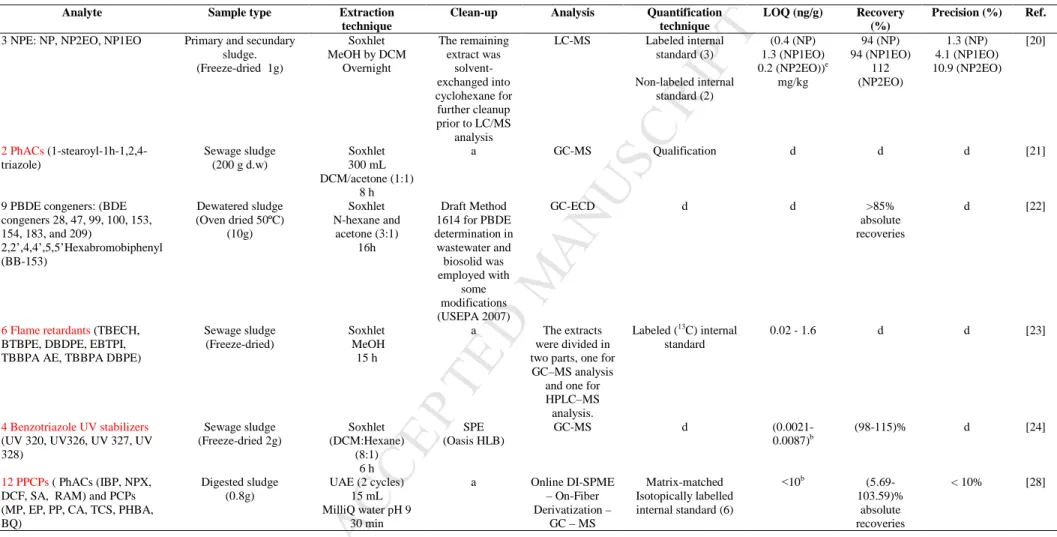
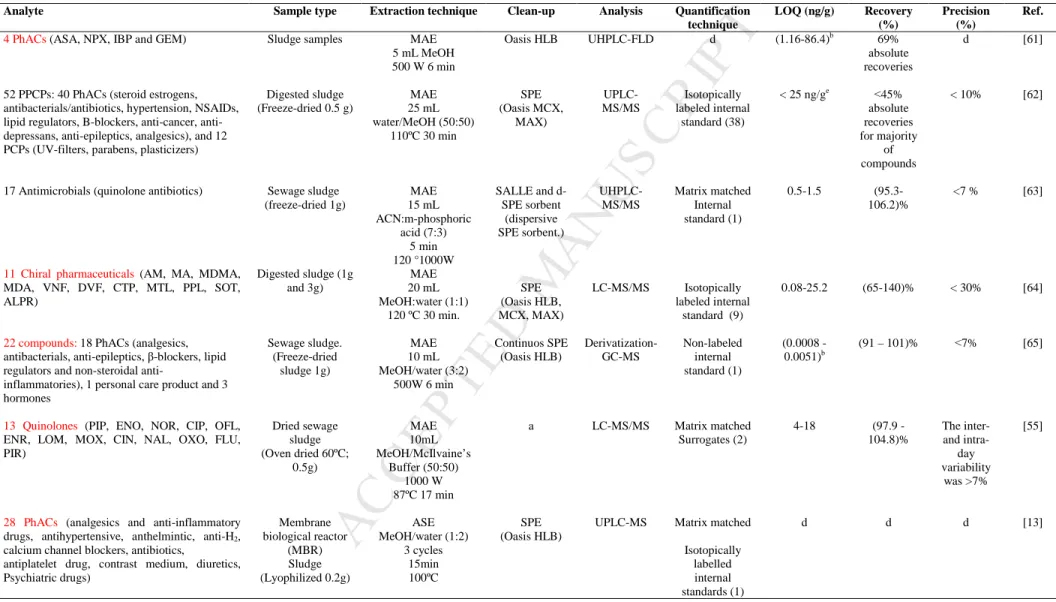
Table 1 and 2 present a summary of the references reviewed here. All types of sludge (i.e., 15
primary, secondary, digested, and compost) were subjected to similar analytical approaches 16
which roughly consisted of a sample pretreatment followed by an instrumental analysis. The 17
different methods used are described in the following sections. 18
Despite similar analytical protocols (extraction, clean-up and analysis), differences did exist 19
in terms of the quantity of sample treated or the amount of solvent in each matrix. Some of the 20
studies reviewed used different amounts of sample and extraction solvent for different types 21
of sludge with ultrasound as the extraction technique: Kopperi et al. [37] used 0.05 g of 22
sample and 6 mL of solvent (acetonitrile) in composted sludge samples; Abril et al. [58] used 23
1 g of sample and 3 mL of solvent (methanol: acetic acid (1:1)) in digested sludge samples; 24
Shafrir [49] used 2 g of sample and 10 mL of solvent (methanol: water (1:1) in secondary 25
sludge samples; Lonappan et al. [31] used 0.5 g of sample and 20 mL of solvent (methanol) in 26
primary sludge samples; and Yan et al. [40] used 2 g of sample and 10 mL of solvent 27
(methanol/citric acid/Na2EDTA (2:1:1)) in dewatered sludge samples.
28
Further, sample quantities and solvents also varied for different extraction techniques on the 29
same type of sludge. Examples for digested sludge are 0.1 g [43], 1.5 g [76] or 3g [64] and 6 30
M
AN
US
CR
IP
T
AC
CE
PT
ED
methanol:water (1:1)) [64] used in ultrasound [43], pressurized liquid [76], or microwave [64] 1
extraction procedures, respectively. 2
The matrices associated with each type of sludge differ because their characteristics vary as 3
the sludge goes through several treatment stages. For instance, major changes are produced by 4
thickening, dewatering and digestion. In thickening and dewatering treatments, total solid (dry 5
solids) concentrations increase and the volume of sludge is reduced. Following digestion 6
treatment, the load of total solids is reduced (via the reduction of volatile suspended solids). 7
Several sludge matrices should be, therefore, treated separately and their analysis should be 8
viewed as a challenge to be addressed in future work. 9
10
2.1. Sample pretreatment
11
The sampling of different types of sludge is particularly important to assess the distribution of 12
PPCPs along the sludge line. According to Tables 1 and 2, sampling sludge locations within 13
WWTPs depends on the type of sewage sludge sample required for the subsequent analysis. 14
In the literature reviewed, a large number of studies preferred sampling sewage sludge 15
[92,100](suspension with a dry solids content of 3 to 4 % weight arising from the purification 16
of wastewaters). Some authors sample the sludge after the final dewatering step to obtain a 17
representative bulk product [22,78]. Other researchers carry out their sampling after the 18
anaerobic digestion step in which some of the organic matter is removed [43,64]. However, 19
few publications considered sampling in primary and secondary tanks [42,77]. 20
Representative sludge samples can be collected from the WWTP sludge line. Sample volumes 21
in the studies reviewed differed, e.g.: 1 L samples were collected weekly over a period of four 22
weeks by Schoeman et al. [53]; random grab samples were pooled to provide a sample 23
weighing about 500 g by Gago-Ferrero et al. [34]; and five grab samples collected daily were 24
pooled to give a single sample (approximately 2 L) of sludge per day over three consecutive 25
days by Jelic et at. [74]. 26
The materials used for sample collection also differed. Thus, one report describes the 27
collection of solid pasty sludge using a metal bucket and the collection of liquid sludge using 28
a sample probe. Thereafter, the samples were packed in glass bottles with a wide-mouth 29
M
AN
US
CR
IP
T
AC
CE
PT
ED
plastic bags after sewage sludge dewatering [34] were also utilized for sample collection. 1
These samples were then transported to the laboratory where they were frozen and lyophilized 2
[53, 59, 88] or dried in air to room temperature [50], and passed through a 2 mm ∅ sieve and 3
homogenized [50] or were macerated in a glass mortar for some minutes [93]. Finally, the 4
lyophilized samples were stored at −20 °C [65] until their analysis. 5
Sample preparation takes up most of the analysis time. It usually includes a process of 6
extraction followed by a clean-up step. A variety of techniques have been used to extract 7
PPCPs from sewage sludge samples in the last 6 years. Besides traditional approaches such as 8
Soxhlet [20,21] and ultrasound [28,34], other methods based on microwave [62,65] or 9
pressurized liquid [72,74] are gaining popularity. Most extraction techniques are not 10
sufficiently selective and clean-up procedures are also needed after extraction. 11
Figures 1 and 2 show each of the extraction and clean-up techniques used, respectively, over
12
the last 6 years (reviewed here) compared with the previous five-year period. 13
14
2.1.1. Extraction
15
Solvent extraction of solid samples, commonly known as solid–liquid extraction, is one of the 16
oldest techniques of solid sample preparation. This technique serves to remove and separate 17
compounds of interest from insoluble high-molecular-weight fractions and other compounds 18
that could interfere with subsequent steps of the analytical process [17]. Soxhlet is a reference 19
extraction technique that belongs to that group. Some authors prefer this extraction procedure 20
because of some advantages. For example, samples are repeatedly brought into contact with 21
fresh portions of extractant, which facilitates displacement of the transfer equilibrium. In 22
addition, filtration is not necessary after leaching, which increases sample yield. Further, 23
several simultaneous extractions can be performed in parallel because of the low cost of basic 24
equipment [18]. However, Soxhlet also has some shortcomings: it is time consuming, labor 25
intensive and requires the use of large volumes of organic solvents (300-500 mL) and large 26
samples (10-30 g). These features go against some of the main objectives of so-called “green 27
chemistry” such as sustainable development and being environmentally friendly. Recent 28
modifications have tried to bring the Soxhlet technique closer to these objectives. Hence, a 29
M
AN
US
CR
IP
T
AC
CE
PT
ED
competitive extraction technique. This was initially implemented with the commercial 1
equipment Soxtec® System HT, which provided fundamental savings in time and extractant 2
volume [19]. Automated Soxhlet extraction (Soxtec) uses a combination of reflux boiling and 3
Soxhlet extraction in two extraction steps boiling and rinsing, followed by solvent recovery. 4
Despite such developments, Soxtec does not improve on the scarce versatility of the 5
conventional Soxhlet device. Only 7% of the reports reviewed here have employed the 6
Soxhlet technique [20,21,22,23,24] (Table 1) as also observed in the previous review 7
published in 2012 [14]. Despite the development of Soxtec, the publications mentioned above 8
used Soxhlet as the extraction technique. Figure 1 summarizes all the information analyzed. 9
Ultrasound-assisted extraction (UAE) is an alternative to Soxhlet extraction for solid matrices 10
and has been widely used in PPCP procedures. Some of the latest examples are described in 11
three of the reports reviewed here [28,53,54]. The cavitation of UAE reduces the extraction 12
time in comparison with Soxhlet but, in contrast, it is less reproducible. This cavitation 13
process consists of bubble formation, growth and implosion occurring during the propagation 14
of an ultrasound wave in a liquid medium [25]. The principle of ultrasound cavitation is 15
described in a diagram included in the publication [142]. 16
The solvent is chosen based on physical criteria such as viscosity, surface tension and vapor 17
pressure. All these parameters will affect the acoustic cavitation phenomenon [26]. 18
Sonication extraction is faster than Soxhlet extraction (30–60 min per sample) but filtration is 19
required after extraction. UAE is an environment-friendly technique in that it is energy- and 20
time saving. Compared to Soxhlet, less solvent is required and the extraction time is shorter. 21
Hence, using ultrasound, extractions can be completed in minutes, simplifying manipulation 22
and work-up, and employing just a fraction of the energy usually required for a traditional 23
extraction method such as Soxhlet [27]. As mentioned earlier, many studies in the last six 24
years have examined this extraction technique (Figure 1). 25
A more modern technique used to determine PPCPs in sewage sludge is microwave-assisted 26
extraction (MAE). This approach uses microwave energy to directly heat the solvent to 27
extract compounds of interest, thus accelerating the speed of extraction. The benefit of MAE 28
is the use of small amounts of solvent compared to Soxhlet and sonication extraction (30 mL 29
in MAE versus 300–500 mL for Soxhlet extraction) which enables the control of extraction 30
parameters such as time, power or temperature [60]. In addition, this green technique offers 31
M
AN
US
CR
IP
T
AC
CE
PT
ED
a filtration step is required after extraction, and organic solvents and a subsequent extract 1
cleaning-up step are needed. Further, the equipment for MAE is relatively expensive. Thus, 2
probably because of all these downfalls, only a small number of studies addressing MAE have 3
been reported in the literature reviewed [55, 61-65] over the last 6 years (Table 2). However, 4
the number of studies reviewed is still higher compared to the previous review [14], which 5
only mentioned four references [66-69]. 6
Another extraction method is pressurized liquid extraction (PLE), also known as accelerated 7
solvent extraction (ASE). This is a fully automatic technology which uses low volumes of 8
liquid extractants such as hexane, ethanol and acetone at high pressure (usually up to 200 bar) 9
and temperature (usually up to 200 ºC) without reaching the critical point to recover those 10
target analytes with short extraction times [70]. PLE has proven very effective for extracting 11
target analytes. However, extracts usually contain a complex matrix as well. Thus, a clean-up 12
procedure is often needed after extraction to remove interferences. Solid phase extraction 13
(SPE) with a great variety of sorbents has been the most common clean-up technique when 14
PPCPs are the target analytes [13,71-81]. However, gel permeation chromatography (GPC) 15
has also been used to purify organic pollutants [35]. PLE has many advantages over 16
traditional extraction techniques as efficient ways of increasing automation, shortening the 17
extraction time and reducing the amount of organic solvents. PLE usually entails extraction 18
times of around 15 minutes per sample and uses between 15-40 mL of solvent. In addition, 19
the instrumentation allows for extraction in an unattended operation. It is regarded as 20
reasonably easy and exhaustive, offering quantitative recoveries with little spare time spent on 21
method development [70]. All these attractive features have meant that many of the works 22
reviewed used PLE to extract PPCPs from sewage sludge. Some of the most relevant 23
examples are [13,55,71,80,81]. The number of recent publications is comparable to those 24
reported [82-84] (Table 2) in the previous review published in 2012 [14] (Figure 1). 25
An even more environmentally-friendly technique is pressurized hot water extraction 26
(PHWE). This technique uses pressurized water as an extraction fluid at elevated temperature. 27
Water has several positive features such as easy access, safety and can be recovery or 28
disposed of with minimal environmental concerns [85]. Temperature is the most important 29
parameter to optimize in this technique as it affects extraction efficiency and selectivity. 30
Elevated temperatures provide certain advantages such as high diffusion, low viscosity and 31
M
AN
US
CR
IP
T
AC
CE
PT
ED
solvents [86] and its low cost. In the future, this green extraction technique is expected to help 1
manipulate large sample sizes for industrial applications. Despite these commented 2
advantages, only two references of the use of PHWE as the extraction technique was found in 3
the last 6-years reviewed [87,144] along with one more [88] in the previous five-year period 4
[14]. 5
Recently some authors have replaced the more traditional extraction techniques such as UAE 6
or Soxhlet and also MAE or PLE with novel methodologies including MSPD (matrix solid-7
phase dispersion) or QuEChERS (Quick, Easy, Cheap, Effective, Rugged and Safe). These 8
approaches have as their main goal to improve the method's sensitivity and selectivity as 9
isolation and purification are combined in a single step. The main sources of error of most 10
analytical methodologies are avoided. Main benefits are the short time required for sample 11
preparation and their efficiency in cleaning-up the extract [93, 101]. 12
MSPD for the extraction of PPCPs in sewage sludge was introduced in 1989 and applied to 13
the extraction of solid, semisolid or viscous samples. It consists of homogenizing the sample 14
with a dispersing agent (abrasive solid) onto a solid support, allowing the disruption of the 15
sample and the extraction of target analytes by means of a suitable elution solvent [89]. The 16
great interest in MSPD may be attributed to the advantages it offers and its simplicity and 17
flexibility which have contributed to its choice over more classical sample preparation 18
methods [90]. MSPDE is rapid, scarcely manual-intensive and eco-compatible. After 19
extraction, depending on the nature of target analytes and the instrumentation used for their 20
detection, a clean-up procedure may or not be needed. This technique and PLE have 21
sometimes been employed together as the solvents used at high pressures and temperatures 22
increase analyte recoveries when interactions of the analytes with the solid matrix are really 23
strong. The method's selectivity is related to the elution solvent utilized and the nature of the 24
sorbent materials. Lipophilic sorbent materials such as C18-bonded silica or C8-bonded silica
25
are employed in numerous applications, although the latter is used less frequently [90]. The 26
solvents chosen for elution depend on the nature of the solid material. Organic solvent 27
mixtures are mainly used, however, hot water offers excellent results in certain applications 28
(mostly in PLE procedures). MSPD extraction has several benefits such as reduced amounts 29
of solvents and sample, short extraction times, low cost and good performance at room 30
temperature and atmospheric pressure with acceptable yields and selectivity. The technique is 31
M
AN
US
CR
IP
T
AC
CE
PT
ED
versatility. Some reports exist in the literature [91-95] (Table 2) for the last 6 years. In 1
contrast, only one study was found in the previous period from 2008 to 2012 [94]. This 2
indicates a large increase in the use of this technique. 3
Finally, one of the most novel techniques employed to determine PPCPs in environmental 4
matrices is QuEChERS. This procedure offers benefits such as the use of a small content of 5
organic solvents, scarcely time consuming, good recoveries and high selectivity. It mainly 6
consists of two steps, salting-out liquid-liquid extraction (SALLE) and dispersive solid-phase 7
extraction (DSPE) for extract clean-up [97]. 8
QuEChERS encompasses both extraction and clean-up steps for complex environmental 9
matrices. This reduces sample preparation to approximately 20 minutes. The technique uses 10
less solvent than ASE (usually up to 10 mL), and entails minimal times and costs. Some 11
reports of QuEChERS applications exist in the literature reviewed here [98-102] (Table 2) but 12
no studies addressed this issue in the five-year period before 2012 [14]. 13
Overall, as depicted in Figure 1, UAE emerges as the most popular extraction technique 14
(49%), followed by PLE (19%) and MAE (9%). Thus, the trend observed until 2012 reviewed 15
by [14] has been maintained in the last six years. Nonetheless, UAE seems to have lately 16
experienced a boost, most probably because of its simplicity and high performance as well as 17
affordability and availability at most of laboratories around the world. 18
19
2.1.2. Clean-up
20
Most extraction techniques for PPCPs in sewage sludge are not sufficiently selective and a 21
clean-up step is usually subsequently necessary. Some of the most common interfering 22
constituents of sludge are compounds such as lipids and substances added to sewage sludge 23
during processing such as surfactants and polymer colloids, among others. Although 24
interference can occur at any stage of the analytical process, instrumental analysis based on 25
liquid chromatography interphase to mass spectrometry by electrospray ionization is 26
especially sensitive to matrix effects [55]. 27
C18 is a clean-up agent commonly used to remove interfering lipids and lipophilic compounds
28
M
AN
US
CR
IP
T
AC
CE
PT
ED
effective for the removal of acidic interferences such as humic and fulvic acids (main 1
components of compost) among others [55]. C18 and PSA (primary and secondary amine) are
2
examples of some clean-up agents commonly used in dispersive solid-phase extraction (d-3
SPE) [102]. Thus, the choice of sorbent must be adequate to retain interferences present in 4
each particulate sludge matrix. Deficiencies in the extraction process have been also attributed 5
to the presence of co-extracted matrix components [34]. 6
Solid-phase extraction (SPE) is the most popular technique for the clean-up of PPCPs after 7
extraction from sewage sludge, and from environmental samples in general [28,30,54,78]. 8
This procedure is quick and simple to operate and can be easily automated and coupled to 9
instrumental techniques such as liquid chromatography (LC) [103]. 10
There are three general extraction mechanisms used in SPE: polar, non-polar and ion 11
exchange. More than half of the works found in the literature during the last 6 years have 12
employed reverse-phase SPE (63%). The retention mechanism is the interaction of non-polar 13
groups of the analytes of interest and the non-polar functional groups on the sorbent (Van der 14
Waals forces) [104]. In many cases, extraction was performed in a polar solvent [13,24,39-15
43,45-48,50,52,56,59,62,64,74,75,77,80,81]. Mixed-mode SPE is an extraction approach 16
involving sorbents which are designed to exhibit two or more primary interactions for analyte 17
retention. Most mixed-mode sorbents include hydrophobic functional groups in combination 18
with ion-exchange functional groups. In some cases, Oasis MCX (Mixed-Mode Cation-19
eXchange) has been used for the clean-up of extracts containing acidic pharmaceuticals 20
[39,62,64]. Oasis MAX (Mixed-Mode Anion-eXchange) has been also used in other cases 21
[62,64]. However, the reverse phase sorbent patented in Oasis HLB (Hydrophilic-Lipophilic 22
Balanced) has been the preferred option over the last six years [13,24,29,30,32,39,40,42,48-23
50,56,59,64,74,75,77,80,81]. It is a universal polymer reversed-phase sorbent that was 24
developed for the extraction of a wide range of acidic, basic and neutral compounds from 25
various matrices. Another type of adsorbent is based on C18-silica and used to adsorb analytes
26
of even weak hydrophobicity from aqueous solutions [43,52]. In the 1990s, a miniaturized 27
variation of SPE emerged as a solid-phase microextraction technique (SPME). This method 28
involves an alternative preconcentration technique to LLE or SPE. It consists of a silica fiber 29
coated with a thin layer of an extractant polymer, which can be placed in the head space (HS-30
SPME) or subjected to direct immersion (DI-SPME) in solid, liquid or gaseous samples. As 31
M
AN
US
CR
IP
T
AC
CE
PT
ED
is eliminated and possible losses of analytes and contamination of the samples are reduced. 1
[28,57] are examples found in the literature reviewed here. 2
Gel permeation chromatography (GPC), also known as size-exclusion chromatography 3
(SEC), is a method in which component separation is based on differences in molecular 4
weight or size. It requires short analysis times and small volumes of mobile phases. It has 5
been widely employed to isolate and analyze biomacromolecular substances such as sugar, 6
peptides, proteins, rubbers, and others, on the basis of their size. GPS has been also applied to 7
PPCPs, usually in combination with other clean-up techniques. In particular, [35] made use of 8
GPC along with a silica gel column to clean up 153 pharmaceuticals, herbicides, antioxidants, 9
intermediates, organic solvents and chemical raw materials. Three studies reviewed by [14] 10
for the period 2008 to 2012 included GPC and normal-phase SPE used together as the clean-11
up procedure [106-108]. 12
Liquid–liquid extraction (LLE) is an effective separation method for compounds having 13
different solubility in two immiscible liquids. These two liquids are generally water, with or 14
without additives, and a nonpolar organic solvent. Polar compounds prefer the aqueous layer 15
while nonpolar compounds are extracted into the organic layer. In salting-out systems, water-16
miscible solvents have been investigated for the extraction or concentration of analytes that 17
cannot be extracted by conventional LLE methods. This salting-out often occurs at high salt 18
concentrations [109]. However, LLE extracts are not particularly clean in comparison with 19
other more intensive sample preparation procedures. The first applications of this technique to 20
PPCPs in sludge were reported by [54,63]. 21
Overall, the vast majority of publications, 60% of the reports reviewed here, chose SPE as the 22
clean-up approach, as shown in Figure 2. Only isolated examples of other techniques have 23
been found such as florisil [51], silica [90] or MgSO4 [98].
24
25
2.2. Instrumental analysis
26
Instrumental analysis for PPCPs in sewage sludge is basically based on chromatographic 27
separation coupled to mass spectrometry. PPCPs are mostly polar compounds with limitations 28
of volatility and/or thermal stability for their analysis by gas chromatography (GC) [28]. 29
M
AN
US
CR
IP
T
AC
CE
PT
ED
acylation (acetylation), alkylation [33] and silylation [28,37,50,65]. GC is a relatively 1
inexpensive instrumental technology which enables this kind of analysis to be carried out by a 2
wide range of laboratories around the world, including those in developing countries [20,53]. 3
Overall, 25% of the reports reviewed chose GC-based on instrumental techniques. In 4
comparison to the period reviewed by [14], there seems to have been a decline in the 5
popularity of GC (Figure 3). Most GC approaches are coupled to mass spectrometry (MS) 6
detection in both a single and tandem (MS/MS) modality. Other detection approaches were 7
found coupled to GC such as electron capture detector (ECD) [22]. Triple quadrupole (QqQ) 8
is the most common analyzer mainly used in selected reaction monitoring (SRM) mode for 9
quantitative analysis [51,76]. However, some examples of target analysis in high resolution 10
by quadrupole to time-of flight (Q-TOF) couplings have been also found in the literature 11
[37,53,79]. As pointed out in the previous section, SPME is a pretreatment technique which 12
allows automation when coupled to GC and was employed by [28] and [129] for the analysis 13
of 12 PPCPs and 8 macrocyclic musk fragrances in sewage sludge respectively. This 14
constitutes the only examples of pretreatment coupling to instrumental analysis in our realm. 15
However, despite the above, LC-based on instrumental analysis has become the most popular 16
technique (Figure 3) in the determination of PPCPs in environmental matrices including 17
sewage sludge. This is probably because of its higher versatility as a larger spectrum of 18
compounds can be readily analyzed with no prior derivatization or alike. Again, mass 19
spectrometry is the preferred detection option, but some examples (2) of coupling to 20
fluorescence detection have been also found [61,99]. This repeats the scenario as in the period 21
reviewed by [14] where a single example of this coupling was cited [110]. In contrast, 22
ultraviolet (UV) detection cited years ago [111] is no longer an interesting option. Within MS 23
modalities, MS/MS was found to have the greatest applicability, in particular using QqQ in 24
SRM mode for target analysis. Hence, 63% of the LC works reviewed fit this classification. 25
Nevertheless, interest in the use of other tandem combinations such as Q-TOF has been 26
recently sparked due to improvements in the dynamic range and sensitivity of TOF. In 27
addition, TOF analyzers offer a high resolution capacity. This ensures high selectivity and 28
reduces the probability of false positive results. In addition, they open the possibility of 29
qualitative analysis of un-known compounds, which is not readily available in QqQ. 30
Electrospray ionization (ESI) is the most commonly used ionization approach as it allows 31
mild ionization of the target analyte and molecular ions usually remain un-fragmented 32
M
AN
US
CR
IP
T
AC
CE
PT
ED
atmospheric pressure chemical ionization (APCI) is then recommended as in [31,49]. Weak 1
acids and bases such as formic acid and ammonium acetate are usually used as mobile phase 2
modifiers when working at +ESI and –ESI respectively. Moderate acidic (~3) and basic pHs 3
(~8) are provided by formic acid and ammonium acetate respectively. In this regard, a larger 4
number of PPCPs contain basic functional groups (such as amines) with pKa values above pH 5
3 rather than acidic functional groups (such as alcohols) with pKa values below pH 8. 6
Therefore, PPCPs are more prone to be positively ionized and are more efficiently analyzed 7
by +ESI rather than -ESI. 8
Within LC, fast chromatography has emerged as an improved modality over high 9
performance liquid chromatography (HPLC). The ultra-high version (UHPLC) was 10
introduced under the trade mark UPLCTM in 2004 and triggered many advances in 11
instrumentation and column technology, which have led to a significant increase in resolution, 12
speed and sensitivity. Column efficiency increases with reduction of stationary phase particle 13
size (usually <1.7µm) and mobile phase delivery is done at ˂15,000 psi (about 1000 bar) 14
[112]. Separations are mostly completed in less than 10 min and some even in under 2 min 15
[32,62,72]. UHPLC often provides narrow peaks (in few seconds or even less) offering a 16
high-speed detection response (> 100Hz) [112]. 17
Over these past 6 years, out of 47 of the applications using LC, 14 were fast chromatography. 18
This in comparison to the previous 5-year period reviewed by [14], in which only 8% of 19
studies examined this kind of liquid chromatography, reveals a clear upward trend in the use 20
of UHPLC likely attributable to its many benefits mentioned. Overall, as depicted in Figure 21
3, LC has been the most popular instrumental technique (73%) for the determination of
22
PPCPs in environmental matrices including sewage sludge. Hence, the trend observed up until 23
2012 and reviewed by [14] has been maintained over the last six years. 24
25
2.3. Current trends and future perspectives in the determination of PPCPs in sewage
26
sludge
27
The concept of "green chemistry", otherwise known as sustainable chemistry, was introduced 28
20 years ago and refers to the design of chemicals and processes that reduce and eliminate the 29
use or generation of hazardous substances. When applying and proposing new methods and 30
M
AN
US
CR
IP
T
AC
CE
PT
ED
automatizing a technique, the use of resources, including time, usually becomes more 1
efficient. In addition, human error and analyst exposure to hazards are minimized [113]. 2
Besides automation, miniaturization in analytical chemistry has also become a dominant trend 3
recently replacing traditional sample preparation. The goal is to provide high extraction 4
efficiencies in short times and minimize the amount of sample and so reduce the consumption 5
of reagents and solvents. In addition, after automation and miniaturization, many sample 6
preparation methodologies are susceptible to being incorporated into instrumental analysis 7
systems such as GC or LC [113]. Hence, in the early 2000s, a research group developed 8
simple procedures based on SPME or USAEME (ultrasound-assisted emulsification-9
microextraction) for the analysis of allergenic fragrances, synthetic musks, phthalates and 10
preservatives in water samples [114-116]. While the use of miniaturized and automatized 11
methodologies for the determination of PPCPs in water matrices is a reality [117,118], the 12
reports reviewed here barely show the use of miniaturization techniques for the determination 13
of the contaminants of interest in sewage sludge. Only two studies found in the literature offer 14
an analytical method for the determination PPCPs and PCPs in sewage sludge by DI-SPME-15
On-fiber derivatization-GC-MS [28] and HS-SPME-GC-MS [129] respectively. Interest in 16
microextraction processes has been renewed due to the incorporation of new materials, either 17
as suitable substitutes for conventional halogenated organic solvents or other types of toxic 18
reagents [113]. At present sufficient technology already exists for research groups to develop 19
miniaturized and automatized analytical methods for the determination of PPCPs in sewage 20
sludge. 21
Additionally, there are concerns in the scientific community over the presence of 22
transformation products (TPs). Many of these TPs have shown to be as pernicious as the 23
parent PPCPs they come from. Clear efforts are currently focusing on the identification in 24
environmental water samples of metabolites and other TPs generated over the PPCP life 25
cycle, such as during treatment processes in WWTPs [28,36]. However, there is no evidence 26
in the literature yet of this trend in relation to sewage sludge. 27
Many PPCPs consist of chiral molecules and each enantiomer usually exerts different toxicity 28
according to its biological properties [119]. Hence, reports exist of the determination of chiral 29
pharmaceuticals by chiral LC-MS/MS [64,120] in sewage sludge samples. Nonetheless, much 30
M
AN
US
CR
IP
T
AC
CE
PT
ED
Future perspectives related to the development of new sample preparation methods differ 1
depending on the type of the pollutant. There is increasing interest in nanotechnology in 2
important sectors of science and technology such as engineering, medicine or agriculture, 3
among others. Nanotechnology is making progress in technologies for protecting the 4
environment too. However, nanotechnology's unique characteristics can lead to unforeseen 5
environmental problems [121]. In parallel, the use of novel solid and liquid phase materials 6
has increased in the last years including nanomaterials (NMs), ionic liquids (ILs) or 7
supramolecular solvents (SUPRAS) used in the analysis of environmental samples. 8
Engineered nanomaterials (ENMs) are materials or chemical substances with particle sizes 9
between 1 to 100 nanometers in at least one dimension [122]. There is great interest in 10
innovations produced in the industrial, commercial and medical sectors due to the physical 11
and chemical properties of these materials. However, some of their properties (chemical 12
reactivity, surface area and particle size) pose a risk to health and the environment [123]. 13
Some works have described applications of nanoadsorbents in environmental water samples 14
[124,125]. In the near future, NMs could be applied to sewage sludge samples. SUPRAS are 15
nanostructured liquids generated from compounds with both hydrophilic and lipophilic 16
properties (amphiphiles) [126]. SUPRAS have been employed for the extraction and 17
preconcentration of emerging pollutants in environmental water samples [127]. However, 18
there are still no reports of applications of SUPRAS to sewage sludge. ILs are salts whose 19
ions are poorly coordinated, which makes these solvents liquid at temperatures below 100°C, 20
or even at room temperature (room temperature ionic liquids) [128]. One publication reports 21
on the determination of musk fragrances in sewage sludge based on IL-HS-SPME followed 22
by GC-MS/MS [129]. 23
24
3. Data processing
25
Environmental sample matrices are complex and their analysis and subsequent data 26
processing are extremely difficult. For many years, a traditional approach offering reliable 27
rapid identification and quantification of target compounds has been used [130]. In total, 98% 28
of the reports reviewed employed target analysis to determine PPCPs in sewage sludge 29
samples. However, target analysis has the drawback that only a limited number of compounds 30
M
AN
US
CR
IP
T
AC
CE
PT
ED
A comprehensive picture can be obtained by non-target analysis which does not require "a 1
priori" selection of contaminants. This approach is able to detect any analyte present above 2
the MDL. In addition, retrospective analysis is possible [131]. Anthropogenic compounds 3
such as pharmaceuticals and personal care products, flame retardants, plasticizers, polymer 4
additives and other well-known persistent organic pollutants can be identified using this 5
approach. Suspect screening is a non-target analysis. Both suspect and non-target analysis are 6
based on the power and development of high-resolution mass spectrometric instruments. 7
These techniques serve to acquire full scan spectra and allow a retrospective analysis of 8
emerging contaminants after the data has been acquired, while providing two essential factors 9
for non-target analysis: accurate-mass and high-resolution [131]. The most common MS 10
analyzers used for this purpose, such as Orbitrap or the Fourier transform ion cyclotron 11
resonance (FT-ICR) device, can be linked to different ionization sources (ESI, APPI and 12
APCI) and different separation techniques (GC, LC and GCxGC) depending on the class of 13
compounds to be examined [128]. However, in the past 6 years, only one study has used this 14
method to determine emerging contaminants in sewage sludge. This study [37] described a 15
non-targeted approach based on GCxGC-TOFMS. In contrast, numerous reports exist of a 16
non-target approach for the determination of these contaminants in wastewater; some 17
examples being [132,133]. 18
Target methods are usually quantitatively more powerful as they show a greater sensitivity 19
and dynamic range than untargeted methods. Regardless, analyte quantification is usually 20
performed through the use of authentic chemical standards and the construction of calibration 21
curves. Calibration curves are used to understand the instrumental response to an analyte and 22
to predict its concentration in a sample. Over the past six years, the calibration methods 23
reported in the literature to determine PPCPs have been based on approaches including an 24
internal standard, standard additions, matrix matched or external standard. The choice of a 25
specific calibration method depends on a number of factors such as affordability, matrix 26
complexity, and number of samples, among others.External standard calibration has been one 27
of the most commonly used calibration approaches among the reports reviewed here. This 28
approach is inexpensive as well as quick and easy to set up. On the downside, it is greatly 29
affected by the stability of the chromatographic detector system and the presence of 30
chromatographic interferences in the sample. Some of the publications reviewed make use of 31
this quantification approach [53,75,77,95] (Table 1 and 2). When matrix problems are 32
M
AN
US
CR
IP
T
AC
CE
PT
ED
may make up for matrix effects although it does not eliminate the underlying cause because 1
the effect intensity may differ from one matrix or sample to another, and can be also affected 2
by the matrix concentration. In fact, matrix-matched calibration is a particular type of external 3
calibration in which the calibration standards are prepared using a simulated sample that 4
initially does not contain the analyte. Of the reports reviewed, 22% chose matrix-matched as 5
calibration method (Tables 1 and 2), which represents an increase in comparison with the 6
period reviewed by [14], in which only 6% of the publications selected the matrix-matched 7
method [134-136]. Another calibration alternative is based on standard addition. This method 8
is more accurate and precise and overcomes more matrix effects than external and matrix-9
matched calibration approaches, as it uses the sample itself to build the calibration curve. 10
However, it entails the preparation of a different calibration curve per sample. It is therefore 11
labor intensive, time-consuming, and requires large sample amounts, which is usually in 12
disagreement with green chemistry principles. Overall, 14% of the publications reviewed here 13
used this calibration method (Tables 1 and 2). In contrast, previous publications reviewed by 14
[14] reported this calibration approach less frequently (9%). Finally, an internal standard (IS) 15
is a reference species with similar physicochemical properties and similar analytical behavior 16
to the compounds of interest not expected to be found in the samples. This calibration method 17
is not as useful for GC and HPLC methods involving non-MS detectors unless the internal 18
standards can be separated from target compounds chromatographically. The advantage of 19
this calibration method is that fluctuations are monitored in every sample. It assumes that the 20
behavior of the IS is identical to that of the analyte. Thus, the selection of a suitable IS is 21
mandatory. The use of internal standard calibration approaches has experienced a boom in the 22
last few years. In effect, 47% of the reports reviewed selected this procedure (Tables 1 and 2) 23
versus 4% reported in the prior review [14]. In particular, the use of stable-isotope-labeled 24
analogues of the analytes has become popular because of its efficiency and reliability to 25
compensate for any alteration in the signal due to casualties across the whole analytical 26
process. However, for highly multi-component applications, it requires a significant economic 27
investment, unaffordable for many laboratories. 28
Figure 4 depicts the frequency of each calibration method used in the reports reviewed. The
29
use of isotopically labeled analogues in internal standard calibrations has been the most 30
popular choice. 31
M
AN
US
CR
IP
T
AC
CE
PT
ED
4. Validation
1
The purpose of validation of an analytical procedure is to confirm that the analytical method 2
used for experimental tests is suitable for that purpose. Method validation was established in 3
analytical laboratories in the late 1970s, recognizing its importance in obtaining standard 4
methods. The United States Food and Drug Administration (FDA) [137] and Eurachem [138] 5
have published guidelines for methods validation. 6
To a large extent, the reliability and capacity of analytical methods have improved to a large 7
extent as a result of recent technical advances [139]. The main validation parameters provided 8
in the publications are (Tables 1 and 2): 9
a. Accuracy is the closeness of agreement between test results across the specified range 10
and an accepted reference value. In our particular case, it is expressed as the 11
percentage recovery of each analyte after the whole analytical protocol (absolute 12
recovery). Some authors also provide improved recovery rates after adjusting for 13
method deficiencies when applying an internal standard calibration approach (relative 14
recovery). The reports reviewed showed considerably high analyte relative recoveries. 15
Thus, 35 out of 67 publications showed percentages higher than 70% and 22 out of 67 16
publications obtained values below 70%. In contrast, 17 out of 47 publications were 17
found for the five years before 2012 with percentages higher than 70% and 13 studies 18
with values below 70%. 19
b. Precision is the closeness in agreement between individual results obtained for a 20
repeatedly applied procedure on a homogeneous sample, comprising repeatability and 21
intermediate precision. In our particular case, method repeatability is usually 22
expressed as the standard deviation, relative standard deviation or coefficient of 23
variation. Overall, 72% of the reports reviewed cited values below 20%. In 24
comparison, for the period reviewed by [14], 23 out of 47 publications reported values 25
below 20%. 26
c. Sensitivity expressed as both limits of detection (LOD) and limits of quantification 27
(LOQ) can be directly obtained from the linearity test in the validation protocol. 28
Hence, the lowest amount of analyte that can be detected under the stated 29
experimental conditions is the LOD, while LOQ is the lowest amount of analyte that 30
can be quantitatively determined with precision and accuracy under the stated 31
M
AN
US
CR
IP
T
AC
CE
PT
ED
obtained LOQs below 100 ng/g. Additionally, 16 and 22 out of 67 publications 1
obtained LOQs below 50 and 10 ng/g, respectively. These figures reflect the 2
improvement in sensitivity of current analytical methodologies produced over the last 3
few years. Effectively, LOQs levels were commonly reported as LODs in studies 4
conducted before 2012. 5
d. The matrix effect is attributable to components of the sample matrix that co-elute with 6
the compound(s) of interest and interfere with the ionization process in the mass 7
spectrometer. This may cause ionization suppression or enhancement and negatively 8
affect method accuracy. It is usually expressed as the percentage of signal suppression, 9
and consequently negative values are interpreted as signal enhancement. In most 10
cases, signal suppressions were measured. Some reports cite moderate signal 11
suppression values such as means of 44% [47] or 46% [98]. In contrast to that 12
observed in the review of 2012 [14], strong effects of signal suppression were 13
described including values from 14 to 100% [140] or higher than 30% [141]. 14
In one study [34], 148 pharmaceuticals and illicit drugs were analyzed in sewage 15
sludge and the matrix effect assessed. For 12 out of the 148 target compounds, a signal 16
enhancement in the range 11-90% was reported, and for 136 target compounds, signal 17
suppression was reported in the range −92 to −3%. 18
e. The dynamic range is closely related to the response of the instrumental detector, and 19
describes the concentration span, in orders of magnitude, over which the method 20
provides a response proportional to the concentration of a given compound. 21
Accordingly, linearity ranges of 3 orders of magnitude are usually reported for single 22
quadrupole [28] and TOF [100] MS detectors, and of 5 orders of magnitude for triple 23
quadrupole [102] MS detectors. 24
Tables 1 and 2 summarize the validation values cited in the 67 reports reviewed for the
25
determination of PPCPs in sewage sludge samples from 2012 to the present. 26
27
5. Impacts of sewage sludge analytical procedures on validation parameters
28
Each stage in the analytical procedure (extraction, clean-up, instrumental analysis, etc.) may 29
M
AN
US
CR
IP
T
AC
CE
PT
ED
Extraction and clean-up steps are thought to be the main contributors to absolute recovery 1
[55]. In the literature reviewed, various studies have addressed the determination of PPCPs 2
both in sewage sludge and sewage. In many of those cases, methodology was common for 3
both matrices but an extraction step was added at the beginning of the protocol for the sludge 4
samples. For instance, Křesinová et al. [72] used PLE followed by SPE with ENVI C18-DSK 5
SPE disk and LC-ToFMS for the determination of PPCPs in sludge. The same methodology 6
was employed when these PPCPs were determined in water samples, but a PLE extraction 7
step did not precede the protocol. This extra step for the solid samples led to lower absolute 8
recoveries for most of the compounds, indicating how extraction influences method accuracy. 9
Accordingly, amitriptyline, 2-chloroprothioxanthen-9-one and melitracene carbinol rendered 10
recoveries of 97.6%, 96.7%, 88.1%, respectively. These percentages decreased to 92.8%, 89.5 11
% and 86.8%, for the same compounds in solid samples [72]. Additionally, López-Serna et al. 12
[28] showed how dramatic the impact of the extraction step can be on the accuracy. These 13
authors employed a fully automated method based on online extraction by DI-SPME followed 14
by on-fiber derivatization coupled to GC-MS for sewage samples. In sewage sludge samples, 15
UAE preceded the sewage methodology. The absolute recoveries reported in this paper for 16
compounds such as ibuprofen, salicylic acid and diclofenac were 77.77%, 21.43%, and 17
83.07%, respectively, in sewage samples. However, in sludge, these recoveries dropped to 18
18.18% for ibuprofen, 17.92% for salicylic acid, and 65.89% for diclofenac. Among the 19
different extraction techniques discussed in the present paper, UAE, MAE and PLE seem the 20
most popular. PLE is considered to be much more effective at extracting analytes from solid 21
samples than UAE or MAE, leading to higher real recoveries. However, PLE is also described 22
to extract more components of the matrix along with the analytes of interest. This means the 23
associated matrix effect diminishes the given absolute recovery rate [70]. Nonetheless, PLE 24
and MAE are usually shown to be slightly more efficient than UAE for extracting PPCPs 25
from sludge as observed by Dorival-García et al. [55]. For instance, Gao et al. [77] tested a 26
method based on PLE-SPE-LC-MS/MS and the absolute recoveries reported for compounds 27
such assulfamethoxazole, tetracycline and oxytetracycline in sludge samples were 78%, 54%, 28
and 52%, respectively. Similarly, Shafrir et al. [49] used a method based on UAE-SPE-LC-29
MS/MS and reported absolute recoveries such as 17%, 22%, and 17% for sulfamethoxazole, 30
tetracycline and oxytetracycline, respectively. Gago-Ferrero et al. [34] developed a method 31
that combined UAE and LC-MS/MS, and absolute recoveries reported in this paper for 32
M
AN
US
CR
IP
T
AC
CE
PT
ED
were 53%, 27%, and 63%, respectively. In contrast, Eyser et al. [73] made use of a method 1
based on PLE followed by LC-MS/MS and reported recoveries of up to 96% for propranolol, 2
85% for diclofenac, and 33% for sulfamethoxazole in sewage sludge samples. 3
The presence of the analytes of interest along with matrix components in the sample 4
influences every step of the analysis. GC combined with EI ionization MS operating in SIM 5
mode did not cause any apparent matrix effect during the determination of PPCPs in sewage 6
sludge [50]. In LC, the matrix effect differs when it is interphased with MS by ESI or APCI. 7
Lonappan et al. [31] compared the use of LC-ESI-MS/MS and LDTD-APCI-MS/MS to 8
quantify diclofenac in wastewater sludge samples. These authors reported that matrix effects 9
due to interactions between diclofenac and co-extracted compounds could cause signal 10
suppression in the ESI source. In fact, competition for ionization could exert signal 11
enhancement or suppression phenomena [50] [73]. However, they reported that matrix 12
interferences in LDTD-APCI-MS/MS did not significantly affect the signal [31]. 13
Additionally, Luque-Muñoz et al. [54] used UHPLC-MS/MS in their instrumental analysis 14
and reported matrix effect values such as -25% for propylparaben or -37% for benzophenone-15
6. However, Abril et al. [58] reported matrix effects of -79% for propylparaben and -81% for 16
benzophenone-6 for HPLC-MS/MS. This lesser matrix effect might be attributed to the better 17
resolution capacity of UHPLC. While in conventional HPLC, analytes could co-elute with the 18
matrix compounds, in UHPLC they may reach the detector at different retention times. 19
Sample preparation usually includes a clean-up step that partially removes interferences from 20
the matrix [73]. SPE has been the preferred method among those examined here due to its 21
simplicity and the use of small volume of organic solvents. However, these clean-up 22
procedures might have marked performance deficiencies in multi-residue-methods [73]. Oasis 23
HLB SPE cartridges are based on a co-polymer which is very efficient at recovering a wide 24
range of compounds in environmental matrices. Nonetheless, it is not highly selective and 25
matrix interferences may not be successfully reduced [62]. Petrie et al. [62] observed that 26
Oasis MCX and MAX reduced matrix suppression more satisfactorily. These authors reported 27
matrix suppression values of 59.2% for diclofenac, 88.6% for naproxen and 80.0% for 28
ibuprofen using MCX SPE [62]. Other authors such as Gago- Ferrero et al. [33] reported 29
matrix enhancement values for the same pollutants: -18% for diclofenac, -36% for naproxen 30
and -43% for ibuprofenwithout the use of any clean-up step. After comparing examples from 31
the literature for sewage samples, we found that Klančar et al. [143] employed Strata X 32
M
AN
US
CR
IP
T
AC
CE
PT
ED
naproxen, 79% for propranolol and 96% for tramadol. These matrix effect rates are 1
substantially higher than those observed by Petrie at al. [62] who used Oasis HLB-based SPE 2
followed by LC-MS/MS and reported percentages of around 30%, 57% and 62% respectively 3
for the same compounds. 4
Precision (expressed as repeatability) is usually affected by the number of stages included in 5
the analytical procedure. A strategy to achieve good precision has been to automatize some of 6
the method stages (e.g., PLE, SMPE) to minimize the human error impact. In the literature, 7
two fully automated methods DI-SPME – on fiber derivatization-GC-MS [28] and HS-SPME-8
GC-MS [129] have been used to determine PPCPs and PCPs in sewage sludge, respectively. 9
López-Serna et al. [28] reported satisfactory intra-day repeatability (expressed as %RSD) 10
values such as 0.87% for propylparaben, 1.59% for naproxen and 2.99% for triclosan, among 11
others. Vallecillos et al. [129] also reported goodintra-day repeatability results such as 1% for 12
exaltone, 8% for muscone, and 9% for exaltolide, among others. However, SPME fibers used 13
for a large number of samples might lead to significant carry over effects. López-Serna et al. 14
[28] reported carry over rates of up to 10% and 13% for diclofenac and triclosan, respectively. 15
Sensitivity is mainly affected by the instrumental analysis technique employed [28]. In the 16
revised literature, different groups have examined the use of similar methods with different 17
detectors such as FL [61], Q-MS [13], QqQ-MS [62], or QToF-MS [72] for the determination 18
of PPCPs in sludge samples. For instance, Morales-Toledo et al. [61] developed a method 19
based on MAE and SPE combined with UHPLC-FLD for the determination of 20
pharmaceuticals in sludge samples, and reported method LODs for naproxen and ibuprofen 21
below 86.5 ng/g. Much lower LODs were observed by Petrie et al. [62] for a similar method 22
based on MAE and SPE followed by UHPLC-MS/MS. In particular, they reported method 23
LODs of 0.07 ng/g for ibuprofen and 0.60 ng/g for naproxen. Among the analyzers used in 24
mass spectrometry, QqQ has usually provided lower LODs than QToF. Hence, Peysson et al. 25
[100] made use of a method based on QuEChERs followed by UPLC-QToF and reported 26
LODs as low as 17 ng/g for sulfamethoxazole and 3 ng/g for propranolol, among others. Even 27
lower limits of 0.6 ng/g and 0.3 ng/g respectively for the same compounds were reported by 28
Cerqueira et al. [101] for a similar pretreatment method followed by UHPLC-QqQ-MS. The 29
use of GC usually leads to higher LODs in comparison to LC, even when the detection 30
method is MS. This is usually attributed to incomplete derivatization of the non-volatile 31