UNIVERSIDAD TÉCNICA PARTICULAR DE LOJA
La Universidad Católica de Loja
ÁREA SOCIO HUMANÍSTICA
T
Í
TUL
O
DE LICENCIADO EN CIENCIAS DE LA EDUCACIÓN
MENCIÓN INGLÉS
Teachers and students´ perceptions of teaching English in small classes
in Ecuador
TRABAJO DE TITULACIÓN.
AUTOR: Baño Sánchez, Ángel Gabriel.
DIRECTOR: Camacho Minuche, Gina Karina, Mgs
CENTRO UNIVERSITARIO GUAYAQUIL
ii
APROBACION DEL DIRECTOR DE TRABAJO DE TITULACIÓN
Magister.
Gina Karina Camacho Minuche.
DOCENTE DE LA TITULACION
De mi consideración:
El presente trabajo de titulación: “Teachers and students´ perceptions of
teaching English in small classes in Ecuador” realizado por Baño Sánchez Ángel
Gabriel, ha sido orientado y revisado durante su ejecución, por cuanto se aprueba la
presentación del mismo.
Loja, Abril de 2016.
iii
DECLARACION DE AUTORIA Y CESION DE DERECHOS
“ Yo Baño Sánchez Ángel Gabriel declaro ser autor del presente trabajo de
titulación : Teachers and students´ perceptions of teaching English in small classes in
Ecuador, de la Titulación de Ciencias de la Educación mención Ingles, siendo Gina
Karina Camacho Minuche directora del presente trabajo; y eximo expresamente a la
Universidad Técnica Particular de Loja y a sus representantes legales de posibles
reclamos o acciones. Además certifico que las ideas, conceptos, procedimientos y
resultados vertidos en el presente trabajo investigativo, son de mi exclusiva
responsabilidad.
Adicionalmente, declaro conocer y aceptar la disposición del Art. 88 del
Estatuto Orgánico de la Universidad Técnica Particular de Loja que en su parte
pertinente textualmente dice: “ Forman parte del patrimonio de la Universidad la
propiedad intelectual de investigaciones, trabajos científicos o técnicos y tesis de grado
que se realicen a través, o con el apoyo financiero, académico o institucional(operativo)
de la Universidad ”
f.………..
Autor: Baño Sánchez Ángel Gabriel
iv
DEDICATION
This work is dedicated to God; to my parents Estuardo and Olimpia, who have been my
guidance and example; to my wife Lourdes and my son Elias, who are my motivation to
continue in spite of difficult times.
With all my love, I thank God for all the support from my family.
v
ACKNOWLEDGEMENT
This acknowledgement is first for the “Universidad Técnica Particular de Loja”, an
institution which helps the country by giving formative instruction to students in order
to be better professionals, citizens and active members of their communities.
This study could not have been developed without the great cooperation of the
bi-national institute administrators who gave the authorization to develop this research in
their institution, and without the teachers and students collaboration in this investigation
vi
CONTENTS
I
II
III
IV
V
VI
1
2
3-5
6-7 COVER
APROBACION DEL DIRECTOR DEL TRABAJO DE TITULACION
DECLARACION DE AUTORIA Y CESION DE DERECHOS
DEDICATION
ACKNOWLEDGEMENT
CONTENTS
ABSTRACT
RESUMEN
INTRODUCTION
METHOD
DISCUSSION
Literature review 8-21
Description, Analysis and Interpretation of Results 22-49
Conclusions 50
Recommendations 51
REFERENCES 52-53
ABSTRACT
The title of the study is “Teachers and Students perceptions about teaching
English in small classes in Ecuador”. The purpose of the study is to discover if there are
effects of teaching in small classes. Also, the results of this research are important to
make decisions about future studies. The research was conducted at Centro Ecuatoriano
Norteamericano in Guayaquil. This binational center has students from beginners to
high intermediate levels. All the classes at this institution have less than 20 students.
The population was all students in high intermediate levels. The sample was 5 courses
which makes up a total of 50 students. The study was oriented to see if there are
benefits of teaching and learning in small classes. Also, the strategies that teachers
implement in their classes and students’ feelings in small classes. Finally, the study
objectives were to find out if there are limitations in the teaching and learning process in
small classes. To conclude, one of the benefits of learning English in small classes is
that more participation is encouraged as a result of having fewer students.
Key words : small classes, teachers, students, benefits, feelings, perceptions.
2 RESUMEN
El título de la investigación es: “Percepciones de estudiantes y profesores sobre
enseñar y aprender en clases pequeñas en Ecuador”. El propósito del estudio es descubrir si
hay consecuencias de la enseñanza del inglés en clases pequeñas. Adicionalmente, los
resultados de la investigación son importantes para tomar decisiones sobre estudios futuros.
La investigación se la efectuó en el Centro Ecuatoriano Norteamericano en Guayaquil.
Este centro binacional tiene varios niveles, desde básico hasta avanzados. Todas las clases
en esta institución tienen menos de 20 estudiantes. La población para este estudio fueron
los estudiantes de niveles alto intermedio. La muestra consistió en 5 cursos que en total
contabilizaron 50 estudiantes. El estudio estuvo orientado a la búsqueda de beneficios de
enseñar y aprender inglés en clases pequeñas. Adicionalmente, se investigó sobre las
estrategias que los profesores aplican en sus clases, lo que los estudiantes sienten al estudiar
en clases pequeñas. Finalmente, se analizó acerca del proceso de enseñanza- aprendizaje
del idioma Inglés en clases pequeñas. Para concluir, uno de los beneficios de aprender
Inglés en clases pequeñas es que se maximiza la participación de los estudiantes.
Palabras clave: clases pequeñas, profesores, estudiantes, beneficios, sentimientos,
3
INTRODUCTION
It is well known that most English students who finish their studies at High school
or University do not have a good English level. One of the reasons that students have for
their failure is that their teachers are not good.
To improve the English levels of teachers, many strategies have been adopted.
The Ministry of Education started evaluating teachers to know the level of all English
teachers in the educational system. Based on the information from these evaluations, the
government started training teachers in the public system by creating some programs such
as “Go Teacher” to improve their level and enhance teaching standards in comparison to
other countries.
Training teachers might be the solution; however, there are many other factors
that influence English teaching and learning. One of these factors is class size. For this
reason, the title of this study is “Teacher’s and Students perceptions about teaching English
in small classes”. This study is aimed at searching on teachers and students’ perceptions of
teaching and learning English in small classes. It is important to investigate and analyze
how this factor affects English education in the country. In addition, it is vital to determine
the benefits of teaching and learning in small classes, identify the strategies and resources
that benefit students in small classes, recognize students’ feelings in small classes, and
determine the limitations when teaching in small classes. The results will let the community
of teachers make the right decisions after working in small classes.
Previous related literature has focused on the effects of teaching and learning in
small classes from different points of view. Konstantopoulos (2013) in his study about
4
class can change the way they success. The results show some relationship with the idea
that teacher instruction changes more in small classes than in regular size classes. The
differences between teacher instruction in small and large classes also affect students
achievement and performance. There is the possibility that teachers change and modify the
activities to reinforce or improve because they have fewer students in the classroom and
there is probably more space for practicing.
Another research about the effects in small classes was done by Nye (2004), who
found that policies of simplifying class size will reach the objectives of increasing success
in students from big and small classes at the same time. The model used in the research
showed student success as a dependent factor of: students’ characteristics, the size of
classes, the way students interact in tasks, the way students interact in different classes with
different students. The results showed that there is no proof of the benefits for a long time
in small classes.
In Konstantopoulos (2012) the attention was focused on the importance to examine
the increasing effects of students’ success in early grades. Konstantopoulos analyzed the
advantages in one grade, and then associated it with the previous grade. The results
suggested that the benefits in small classes continue in different courses and the extra
benefits in small classes for many years are considered small in general. To conclude, the
findings did not give specific evidence about the not dependent benefits of extra years in
small classes in early courses. The class benefits lose effectiveness when these benefits and
success are limited.
This research is a source of important information to school directors, teachers,
parents and students to help them overcome the possible consequences and to make
5
addition, this study can help government authorities to create programs to improve the
quality of education in public schools, as long as to create a model that other institutions
can adapt to their reality.
Some limitations found in the present study are the limited population sample (5
teachers in five classes less than 20 students); a few classes observed ( 5 classes in total);
the small amount of time some students took in order to answer the questionnaires; the
institution chosen (private institution); a few teachers who were told about the observation.
In future investigations, authors should consider a comparison between public and private
institutions to get a clearer picture of this issue. In addition, more information should be
taken from teachers. Finally, increasing the number of teachers as the population sample
6
METHOD
Setting and participants.
This study was conducted at Centro Ecuatoriano Norteamericano de Guayaquil, a
Binational center in Guayaquil, capital of the province of Guayas. The institute was located
downtown the city and it belongs to an urban area. The population sample consisted of 5
teachers; all of them were teaching high intermediate courses in the institution during the
morning. Also the 5 teachers have more than 10 years experience in the teaching field.
There were 3 male and 2 female teachers. 60% of the teachers participating in this study
have a university degree, the other 40% are studying Education at university.
Moreover, 50 students were taken as the sample population from the institution.
All of the students have more than one year studying in this institution. The age of students
is from 16 to 45 years old. All the students belong to the Adult program from the
institution. There were 20 male and 30 female students in the sample population.
Procedure
The first procedure for this study was the literature review related to its theme
(Teachers’ and students perceptions of teaching English in small classes) as well as five
previous journal studies on similar and related topics in order to get the correct information
that would be the basis of this study.
The instruments used to collect data were 2 questionnaires, and an observation
sheet. The teacher’s questionnaire consists of 21 questions which inquired teachers about 4
different areas: benefits of learning English in small classes(7 questions), strategies and
7
learning in a small class(4 questions), and limitations of teaching English in a small class(2
questions). The student’s questionnaire contains 22 items asking the learners about their
perception about the benefits, strategies and resources, feelings, and limitations when
learning English in small classes. The observation form is made up 22 items interrelated
with the teacher’s questionnaire.
Once obtained the permission from the Academic Director of the institution to
continue with the research, the collection of the information began. The 5 teachers were
first administered the questionnaire. One class per teacher was observed, and the relevant
aspects were recorded in the observation sheet; and finally each teacher’s group responded
the student’s questionnaire. All the participants received the right information about the
purpose of the test, and the confidentiality of the information provided. The approach used
in this study is mainly quantitative, and the instrument to gather all information was the
survey. In order to present the results; the 5 teacher’s responses for each question of the
Teacher’s questionnaire, and the 50 student’s responses were tabulated and placed in a
chart. The information on the charts was described and analyzed, and complemented with
the observation sheet information. In addition, information from the literature review
8 DISCUSSION
Literature Review
The necessity of studying a foreign language is an issue that all learners have to
face. Due to globalization, there is more emphasis in the use of English because it is the
language of News, Media, Culture, and the Internet. Teaching is also affected by this
tendency. There are many different factors inside the classroom that can become really a
big problem if teachers do not pay attention to them. There are several studies that can help
us understand the importance and the impact of different external and internal factors that
affect teaching and learning. There are some textbooks that provide insight and
understanding on what had been done in the past and what needs to be done to improve the
quality of teaching in classrooms. In this section, there are the supporting concepts and
definitions used in this research .
Managing Learning
Harmer (2007) states that the way we give instructions is vital in terms of
learning. If students are lost during a set of instructions such as the ones for Activate
sections of the Engage, Study and Activate model, the output activities will not be
meaningful neither correct. Therefore, the goals will not be reached. There exist two special
needs when stating instructions. First, instructions need to be easy to understand. Second,
instructions must make students think rationally and come to a conclusion based on facts.
To start stating instructions, it is necessary to think about different factors. For example,
what kind of information I want to communicate, what students should do to reach the goal
of the activity, what kind of data students need to start with, what will happen later.
9
is to check understanding of given instructions to different students by making questions
.Another way is to tell one student to demonstrate what he or she is going to do to complete
the task .
Moreover, Harmer suggests not cutting fluency by correcting immediately after
they listen to a mistake in production tasks such as conversations or role-plays. This
constant interference can discourage students from expressing their ideas naturally and it
can also affect student’s attitude in a future task. One idea he suggests is to identify
common mistakes and errors during practice activities because students must correct their
mistakes in the target language during those specific moments in the class. When correcting
students mistakes, we should respect students’ dignity. Offending students might bring
serious problems with students and it can also affect the quality of instruction. Students are
not the same, and they can also react differently to correction. The teachers’ duty is to make
students conscious of their errors and provide opportunities for self-correction.
In addition, Gower (2005) claims that providing feedback is part of a teacher’s
duty. By doing this, teachers make sure that students are going in the right way. Feedback
is not only a synonym of correction, it can also include to reflect and congratulate students’
achievement and the constant pursuit of goals.The kind of feedback should be established
on the following rationale: The first factor to consider is that learners have different ways
of thinking about feedback. Some students like to be corrected because they will probably
have to take a standardized test soon. As a result, they are usually attentive to more
opportunities to receive correction. However, other group of students do not see feedback
as beneficial as the other group. The second factor to analyze is the place or country where
a person is teaching and the obligations acquired according to that specific area. The next
10
whose principal focus is structure, feedback tends to be different than guided activities. The
purpose of feedback is also to consider students’ achievement and to be optimistic about
their progress.
Teacher – student interaction .
Harmer (2001) states that a teacher’s duty is to arrange learners to work in class.
The process starts when students receive the input. Then, students receive information
about the process of the activity. Finally, students are arranged and grouped to perform the
activity. It is essential that teachers know exactly when they must be that way. If teachers
do not invest their time by encouraging their students to be actively involved in their
classes, the activity will not be meaningful. To ensure good organization, students must
participate, be interested and prepared. Mentioning the benefits of the upcoming activity is
a good way to keep the interest. Teachers should also mention the reasons to show the
advantages of doing a certain activity. As a result, students will know the positive points
and the advantages of doing an activity rather than doing it for obligation.
Gower (2005) claims that the teacher is one of the most useful tools in terms of
exchanging language. In countries where English is not the mother tongue, the principal
focus is to discourage students from using it. Exchanging information in the classroom is to
communicate.Students act naturally as the teacher talks to them, some other students copy
the way you speak, your formal and informal way of expressing ideas. Teacher
communication is essential for classroom interaction. Teachers can give real world material
to their students. There can be many exercises for listening comprehension, but if a teacher
makes the activities on his own by telling something realistic, there will be more benefits to
do so. Teachers usually are good patterns of language. There are more advantages of clarify
11
beneficial to correct how students pronounce because the teacher can measure the correct
use of language in a realistic way.
Student – Student Interaction
Harmer (2001) states that when students work in pairs they use the language
together, analyze a reading exercise, investigate some terms, or are part of exchanging
information activities. Students can also create conversations, think about what is coming in
a text or they can discriminate about what they have experienced before. There are many
different positive points about working in pairs. First, it raises up the communicational time
inside the class. Second, it helps students to be independent and not so unnecessarily
attached to the teacher. Third, it increases the opportunities to share opinions and ideas in
class. Therefore, the class environment turns into a helpful place to everybody. Finally,
pair work allows students to be more reliable and trust each other when making decisions.
In addition, Lynch (1996) argues that working in pairs or groups is not a recent
invention. Group work allows students to feel confident and it increases the opportunities
for communication. It also helps to avoid the usual embarrassment of speaking in front of a
large group of people. Based on Lynch research, in group work, students do not pay
specific attention to individual mistakes, the use of the structures is varied and extensive.
Learners also give more complete responses. There are also disadvantages of working in
groups. One of them is that negotiation can bring trouble in the way students communicate
because it can cause dissatisfaction for not communicating ideas completely and correctly.
Class size
Harmer (2007) states that it is hard to keep contact with students sit at the back of
a big class. It is also hard for students to make questions and for the teacher to give
12
movement sharing new and original ideas. Teachers who are new in the teaching field can
also feel desperate when they think about managing such big classes. On the other hand,
there are some positive aspects of working in big classes. One of the positive aspects is that
a big class is usually more friendly than a small class in terms of the different people you
can meet. Teachers who have been in these groups consider the size an advantage to
prepare meaningful classes. It is hard to think that we can select only small classes, our
duty is to be prepared, no matter what circumstances we find in a class we receive.
Scrivener (2005) argues that class size is a term that varies from teacher to
teacher. For teachers who work with large classes, the idea of a larger class means
something bigger than they actually can handle. On the other hand, for the ones who work
with a small group of people the idea of larger classes can be a few more students than they
actually have. There are some disadvantages of having a large class. One of them is that
students and teacher have difficulties in changing their positions to perform different
activities. Seating arrangement is also affected when the class is really large. Another
disadvantage is that class size influences in a reduction of interaction between students and
the teacher because the students are too far from the teacher and the teacher is not making
all of them to participate. Another factor teachers can find in large classes is that students
have different levels of proficiency. As a result, students who do not have a good level of
English do not participate or keep the interest in the content. Controlling the way rules are
followed in the class is also affected because of lack of participation and it can become a
problem because of students who do not want to do it.
Teaching techniques, strategies or activities.
Herrell (2012) states that predictable routines and signals is one of the tasks that
13
are not 100 % attentive in class, this strategy allows students to feel less anxious about
following all the process of learning in a really strict way. If students are sure about what
comes, they will give their best on understanding the content rather than being worried
about the end of an activity. The routines technique includes the explanation of the process,
areas where students show their assignments, an everyday routine schedule for students.
This technique can help teachers distribute their time better because learners are waiting for
the next step of the process. As a result, there is more communication, which is one of the
ultimate goals of the learning process.
Edge (2009) suggests a sample exercise that involves playing with Grammar. First,
learners brainstorm a list of actions. Then, all students one by one, approach to their
classmates and they have to visualize the action brainstormed. Later, students use gestures
to represent the action. As a result, learners participate in correction and predict the correct
response. This strategy can be turned into a contest by splitting the class in two groups. The
winner group will be the one that predicts as many actions as possible. The teacher should
select a helper who checks that everyone is following the instructions.
Learning Environment.
Harmer (2001) suggests that teachers can be creative and sensitive to make the
classes more interesting and attractive. Considering the different factors to keep students
interested can increase their enthusiasm about the upcoming classes. The first impression is
important when students come in the first day of classes. Arranging a class in an attractive
way that involves to add all the possible elements to make the class attractive and friendly.
Sometimes, the place is not our permanent place. However, we can make it more attractive
by adding more other elements as music, a different seating arrangement. The most
14
Gower (2005) claims that the place where students prefer to be in the class is
associated to many factors. Some of them can be associated to their relationship with their
teacher and classmates, the tasks they are about to perform, and the way they participate.
The way a teacher places the students in the class can be associated to different variables.
For example, age, level of students, learning styles. In occasions, it feels like the best
decision to place a quiet one with a more extroverted and social one. It is the teacher’s job
to do so, but respectfully. Some students feel that an area of the class is their property.
Therefore, there will be less opportunities to make some of them move from their positions.
A good idea to overcome this potential problem is to encourage students to see the reasons
for a certain move in their positions. Also, it is important to comprehend any apparent
reason for their attitude.
There are also some other studies about the effects of class size in instruction that
are associated . These studies provide information and they give us more insight about the
different factors that affect classrooms around the world . The researchers in all these
studies (Konstantopoulos ,Nye, Hedges, Harfit) provide different techniques and strategies
in order to demonstrate their theory and to support it .
Konstantopoulos (2013) in his study about larger teacher effects in small classes
states that the reduction of the number of students in class can change the way they success.
Also, the researchers purpose is to find out if the instruction changes when class size is
different . First, to recognize the structural information, they calculated the number of
classes in all schools for each classroom apart. Then, they calculated the number of classes
in each school and grade apart. Finally, they calculated the number of different small, large
size classes for every school and grade. The researchers wanted to find out if teaching
15
started the analysis in separate grades. The results were the Stanford Achievement Test
(SAT) for Reading and Mathematics. SAT is a common way to evaluate students
academically. They calculated classroom effects as results obtained through theoretical
calculation and observation. The difference of these aspects show the significant changes in
teachers instruction.
To start the investigation, the researchers calculated the effects of teachers for all
classes and schools in 2 aspects. In the first aspect, students were grouped according to
their sex, and ethnical group. In the second aspect, the researchers added school arranged
results to clarify fluctuation in success because of school differences. To evaluate teachers’
effects, the researchers used the same descriptors on mathematics and reading in each grade
apart. Then, the researchers calculated the results in small and regular size classes to
analyze the different results in each classroom. The marked difference included the
estimates of teacher effects in all classrooms. The evidence is that teacher effects in first
grades in school are really meaningful.
According to the results, the effects were more stressed in small than in regular
size classrooms. There was such a big difference in kindergarten and first grade small
classes in comparison to the others. The results show some relationship with the idea that
teacher instruction changes more in small classes than in regular size classes. The
differences between teacher’s instruction also affect students achievement. There is the
possibility that teachers change and modify the activities to reinforce or improve because
they have fewer students in the classroom and there is probably more space for practicing.
On the other hand, there are some teachers who do not do anything about it. The
inconsistence about instruction in small classes agree with the idea of taking advantage of
16
Nye (2004) in her research about how minorities experience larger lasting benefits
in small classes states that policies of simplifying class size will reach the objectives of
increasing success in students from big and small classes at the same time. It is important to
know if the different class size effect will continue or decrease. The purpose for this
objective is to find the results by using information from Project STAR. The way Project
STAR is done, consists on the selection of students and teachers in schools.
The research is based on experiments that follow the same steps variables such as
students’ characteristics, class size, interaction of assignment with minority groups, and
interaction of class size. Students’ achievement is different inside schools and among
schools. As a result, the way the research is done includes an organized structure that is
important to remember in the analysis. One of these ways to analyze is the use or organized
linear models. This model allows the close examination of some effects in a way that it
includes a subset of a sample in a school. The researchers have to collect different analyses
for each grade level. There are some repeated standards that can be used. The researchers
faced the problem of different results by using the same tests for everybody before mixing
the information. Having the same tests scores led to difficulties in analyzing the
information.
The model used in the research showed student success as a dependent factor of:
students characteristics, the size of classes, the way students interact in tasks, the way
students interact in different classes with different students. The results showed that there is
no proof of the benefits for a long time in small classes. On the other hand, it showed
benefits for teachers. The analysis showed that students who were 4 years in small classes
17
that the effects could last for 5 years after the investigation. In addition, class size as a norm
can increase success and it also reduces differences because of different status.
Harfitt (2013) in his study about the relationships between class size and
pedagogical practices claims that teaching reports about the instruction is small classes is
not adequate to reality. This research focused on the record of teachers in small and large
classes in the same grade level. The idea is to find useful strategies that can be used to
ensure instruction.The research is based on some studies which emphasis was on large
classes and one small class in a school in a Hong Kong high school. In each study, both
large and small classes had the same teacher. This is an innovation from previous research
because of having the same teacher in both classes.
Even though this study seemed to be naturalistic, the focus of this study was on
control the variables that can influence in participation and instruction, teachers, subject
matter, and the capacities of students in class. This research was during 2 years. The
information from the study is taken from 29 records with teachers in the different schools,
and it included 60 observations. There were some interviews to teachers that provided ideas
and anecdotes in their small and large classes. Interviews covered many range of topics
such as lesson objectives, ideas about different problems, analysis of teacher instruction,
the way teachers provide instructions, the teachers objectives in all classes, the opinions
about students in classes, and the opinions about interaction in classes. The researchers
recorded information from observations to check participation models. The researcher
recorded all information by analyzing it. Reliability was confirmed by commitment of each
record in addition to constant observation. In addition , there was no feedback on teachers
18
In the interviews, teachers stated that they never change their techniques while
working in different classes. However, the observations showed somewhat different. One
example of this was when the teacher did not give a challenging task. But, students
received gifts for their participation. A common finding was that the way teachers interact
varied from large to small classes. Also, classroom observations showed the use of
techniques in seating arrangement while working in small and large classes. For example,
teachers use less pair work and group work in small classes. Another finding is that
teachers change the way they teach when moving from large to small classes. However, the
interviews do not mention changes in the way teachers change their pedagogy. Finally,
teachers in their interviews claimed that working in small classes helped them be more
familiarized with students. This was according to what they demonstrated in their classes,
there was more familiar treatment.
Nye ( 2001 ) in her research about the cumulative effects of class size claims that
researchers in the past did not demonstrate what happens after the first year of instruction
of working in small classes . The study is based on information from Project STAR to
confirm or refuse if there are visible results in small classes after instruction. In the analyses
of students success, the researchers worked with the SAT test that involves testing Math
and Reading.
The start analysis included a regression pattern that showed links between sex,
minority group status, and small class tasks that control the final tests scores at the end of
the last year. The researchers controlled the final scores when classes at kindergarten
finished. Also, the scores at the end of grades 1, 2, 3 based on the performance from the
19
The investigation is focused on many scientific tests with the same steps and
variables. Because of the differences in the results between and inside schools, the sample
model includes the used of an organized structure that is considered in the analysis. The
model used inside schools used in the first analysis discussed student success as part of a
student behavior. The researchers calculated different patterns by selecting a mixture of
sex, status, and the collaboration of variables. The investigators checked variations by
checking different models that have various elements of the location of school, the medium
term of proportion about teacher experience, the socio economical level, and the percentage
of African American students attending school. Due to the school level predictors, the
researchers chose the socio economical effect and the small class effect randomly.
In the analysis for grades, only students who were in small classes on that specific
grade participated. The researchers did not include students who were not part of the group
neither in the past nor in the future. Students who did not have scores on their tests were not
included on the analysis of a particular grade. As a result, the sample size fluctuated year
after year. The investigators modeled effects in an absolute way rather than approximate
because the random way they chose was on values of the absolute variable, not on the
numerical ones. Randomizing also prevents from preferences in choosing incorrect
approximations of the effects linked with the absolute values.
The research suggests that there are increasing effects on students’ success in small
classes from early stages. There was a major effect of another year of small classes.
However, there is not clear if the benefits are accumulated in all school years from
kindergarten to Grade 3. The conclusion is that the results of the benefits of being in small
classes were much more beneficial in terms of school regulations. The effects were even
20
Konstantopoulos (2012) states that it is important to examine the increasing
effects of students success in early grades. Konstantopoulos analyzed the advantages in one
grade, and then associated it with the previous grade. The idea is to discover if there are
increasing benefits in years from kindergarten to 3rd grade. The objective was to check the
additional effects of small classes in students success. Students were put together inside
schools, there were 2 patterns to check the information.
First, the researchers calculated small class results in every grade and researchers
did not take into account the reasons for students to success in grades studied before. Then,
the researchers calculated small class results in the first, second and third grades related to
success in years studied before. At the end, there were analyses over a period of time to
decide the benefits through all years.
In total, there were three techniques to analyze the benefits and success. There was
also treated analysis. First, the researchers calculated the small class benefits as they were
used. The investigators calculated the effects on the treatment on success as the treatment
that students get. Those calculations should be a result of a distortion of results. The
changing between classrooms and additional changes in class size that cannot be considered
randomly.
The intention to treat analysis is to calculate small class advantages as they were
planned. The method provided distorted calculations. With this method, the advantages of
class size are following a pattern according to the first assignment. In other words, the
model was given to a learnerat the beginning of the year, no matter if the student
continued in the following grades. This method involves the potential problem of changing
learners in classrooms. The third method is called instrumental variables. There was a
21
However, there was a variation in each small and regular classes. The changes in
each class size was not random. It may be the result of mixing some factors not observed.
The class size was assigned without a special order. However, the current size can be the
result of some elements which are not observed. There were also some other longitudinal
analyses from all levels to check the dependent effects of small classes on student success
from kindergarten to third grade at the same time. The researchers analyzed many students
for 4 years. The conditional variable was third grade success. The goal was to decide if the
student who was in kindergarten or first grade, will be affected in third grade. This pattern
will show if belonging to a small class will be affected independently later.
The reports suggested that the last grade success and the belonging to a small class
are together, does not really affect performance. People would hope to see no differences at
all. However, the differences decrease over time. In addition, the effects do not spread from
course to course. Moreover, the results suggested that the benefits in small classes continue
in different courses and the extra benefits in small classes for many years are considered
small in general.
To conclude, the actual findings did not give specific evidence about the not
dependent benefits of extra years in small classes in early courses. The class benefits lose
effectiveness when these benefits and success are limited. In addition, when the effects are
limited after the 4th year , the benefits of being in a small class is not so evident . The only
coherent finding is that being a small class after kindergarten and only for one year is an
22
Description, Analysis and Interpretation of Results.
In this section of the study, the information collected during the investigation will
be presented and analyzed by following a quantitative approach. In order to do this, the
responses to each question on the Teacher’s questionnaire will be displayed in charts, then
the responses for each question on the student’s questionnaire. Finally, there will be the
corresponding analysis supported by the information from the observation sheet and the
literature review.
Qualitative and Quantitative Analysis.
[image:28.612.78.580.401.697.2]What are the benefits of teaching and learning English in small classes ?
Table 1 .
Teachers Perceptions
No.
In classes with a small number of students :
Totally agree
Agree Partially agree
Disagree total
F % f % F % F % F %
1. It is easier to design activities that help students to apply what they have learned.
5 100 5 100
2. The students are attentive and participate in class activities.
5 100 5 100
3. Classroom space allows students to
properly do the activities designed . 5 100 5 100
4. Appropriate feedback can be given . 5 100 5 100
5. Activities that allow more interaction among students are performed
5 100 5 100
6. There is more interaction between
23 7. It is easier to remember students’
names
5 100 5 100
Author : Angel Baño Sanchez . Source : Teacher’s questionnaire .
Table 2 .
Student’s perceptions
No.
In classes with a small number of students:
Totally agree
Agree Partially agree
Disagree total
f % f % F % F % F %
1. The activities done in class help
to apply what students learned. 36 72 14 28 50 100
2. Students are attentive and participate in class activities .
34 68 15 30 1 2 50 100
3. The students can better
concentrate because there is less noise in the classroom.
42 84 7 14 1 2 50 100
4. The classroom space allows students to carry out the activities assigned by the teacher.
39 78 11 22 50 100
5. Students receive proper feedback from the teacher.
38 76 11 22 1 2 50 100
6. There is interaction between
students. 26 52 20 40 4 8 50 100
7. There is interaction between the
teacher and students . 37 74 12 24 1 2 50 100
8. The teacher remembers the
students’ names. 40 80 9 18 1 2 50 100
Author : Angel Baño Sanchez . Source : Students’ questionnaire .
According to the 5 teachers’ perceptions about teaching in small classes, in
statement one, the perceptions show that all teachers who answered the questionnaire,
24
activities. On the other hand, in statement one from the 50 students who answered the
question, 36 said that they totally agreed with the fact that in small classes the activities
practiced in class allows students apply what they learnt, which corresponds to the 72% of
the total population, 14 students, which correspond to the 28 % of the total population,
agree that activities in class help them to practice in class.
In the class observation, it could be seen that students practiced the activities
planned by the teacher. Teachers can adapt the information according to the need of the
group which is clearly seen from the fact that it is easier to observe a small group of
students performing an activity. It also helps the teacher decide how long the activity
should be and how much is considered enough for teachers and students.Konstantopoulos
(2013) in his study about larger teacher effects in small classes states that the reduction of
the number of students in class can change the way they succeed. In addition, Harmer
(2007) states that it is hard to keep contact with students sit at the back of a big class. It is
also hard for students to make questions and for the teacher to give immediate responses.
Therefore, it looks really unbelievable that students are constantly in movement sharing
new and original ideas.
In the second statement about students attitude from the 5 teachers observed, all
of them agreed that students are more attentive and participate in the activities planned for
the class . In statement two for student’s questionnaire, 34 students, which make up 68% of
the sample population totally agreed that they are attentive and participate more in a small
class. 15 students, which means 30% of the sample, agreed that they pay more attention and
also participate more in class; 1 student, corresponding to 2% of the total population,
partially agreed that students are more attentive and practice. The class observation shows
25
on the activities given by the teacher due to the reality that the group is small and the
teacher can call any student at any moment. It also increases the opportunities for students
to be actively involved in the activities planned for the class. Moreover, it could be seen
that in a small class students are more encouraged to participate. As a result, they are more
attentive because they can practice at any moment or when the teachers require to do so.
Harmer (2007) suggests identifying common mistakes and errors during practice
activities because students must correct their mistakes in the target language during those
specific moments in the class. As a result, teachers can assess effectively and successfully
because they have enough evidence to compare and make decisions about students
learning. In addition, Harmer (2007) states that one of the positive aspects is that a small
class usually is more friendly than a big class in terms of the different people you can meet.
In the third statement about the physical space, all 5 teachers surveyed, it means
100 % of the total population, agreed that physical space in small classes allows students to
practice the activities adequately and in order. In statement four from students
questionnaire, 39 students, which correspond to 78 % of the total of students, totally agreed
that in a small class there is more space and the activities planned were practiced according
to plan. 11 students, which make up 22% of the total population, agreed that there is more
space to practice in small classes.
From the class observation, space plays an important role because students feel a
sense of independence and they can work by themselves. Gower (2005) claims that the
place where students prefer to be in the class is associated to many factors. Some of them
can be associated to their relationship with their teacher and classmates, the tasks they are
about to perform, and the way they participate. The way a teacher places the students in the
26
styles. In occasions, it feels like the best decision to place a quiet one with a more
extroverted and social one. It is the teacher’s job to do so, but respectfully.
Moreover, the common rule for students was the seating arrangement in
semicircles to increase the participation and avoid isolation in different corners of the
classrooms. As a result, teachers can monitor students all the time and the environment for
the class becomes more friendly because students are near and they can see each other.
In statement three from student’s questionnaire, 42 students, which make up 84%
of the total of students, totally agreed that in a small class there is less noise and it helps
students concentrate more. A number of 7 students, which means 14 % of the total
population of students agreed that there is less noise and more concentration in a small
class. One student, corresponding to 2% of the total population partially agreed about this
issue. During the observation, students were concentrated during long periods of the class.
There were no distractions. As a result, students could relate information quickly and it
enhances students learning.
According to Harmer (2007) it increases the opportunities to share opinions and
ideas in class. Therefore, the class environment turns into a helpful place to everybody. In
addition, Scrivener (2005) argues that class size is a term that varies from teacher to teacher
. For teachers who work with large classes, the idea of a larger class means something
bigger than they actually can handle. On the other hand, for the ones who work with a small
group of people the idea of larger classes can be a few more students than they actually
have in their classrooms.
In statement four, all teachers, 100 % of the total reported that they can give
feedback adequately when a class is small. In statement five from student´s questionnaire,
27
classes there is the correct kind of feedback. A number of 11 students , which corresponds
to 22% of the total of students agreed that teachers provide adequate feedback in small
classes. 1 student, which means 2% of the school population disagreed on this issue. From
the class observation, there were students waiting for their feedback at the end of the class.
As a result, teachers organized a practice session so they could reinforce and answer any
questions they had. The way students received feedback was on time and focusing on
relevant mistakes. Harmer (2007) suggests not cutting fluency by correcting immediately
after they listen to a mistake in production tasks such as conversations or role-plays. This
constant interference can discourage students from expressing their ideas naturally and it
can also affect student’s attitude in a future task.
In addition, it could be seen that every student was corrected on time, precisely,
and in order. Teachers spent their time on feedback sessions by reinforcing material that
was not understood or which needed some improvement. The time spent on the activity was
connected to the time spent on the previous activities. As a result, there is more control of
the time for activities and feedback in the same hour of class which results in constant
improvement. In addition, Gower (2005) claims that providing feedback is part of a
teacher’s duty. By doing this, teachers make sure that students are going in the right way.
Feedback is not only a synonym of correction, it can also include to reflect and congratulate
students’ achievement and the constant pursuit of goals.
In statement five, all teachers surveyed, 100% of the total population, agreed that
in small classes there are more activities that allow interaction among students. In statement
six from the students questionnaire, 26 students, which mean 52 percent of the total
population, totally agreed that there is more interaction between students. A total of 20
28
more in small classes. 4 students , which make up 8% of the total of students partially
agreed on this issue. From the observation in class, it was seen that students in small classes
tend to participate more because they see other classmates participating. Some students
become good at this by participating in discussions. According to Harmer (2001) if teachers
do not invest their time by encouraging their students to be actively involved in their
classes, the activity will not be meaningful. To ensure good organization, students must
participate, be interested and prepared. Mentioning the benefits of the upcoming activity is
a good way to keep the interest.
In addition, there were some activities that involved and engaged students better
than in other activities. The teachers mentioned that students can also take more time in the
activities planned and it benefits students’ fluency. In addition, students are more prepared
to academic and real life tasks because they overcome shyness. Gower (2005) claims that
the teacher is one of the most useful tools in terms of exchanging language. In countries
where English is not the mother tongue, the principal focus is to discourage students from
using it. Exchanging information in the classroom is to communicate.
In statement six, 100 % of teachers surveyed reported that there is more interaction
with students in small classes. In statement seven, 37 students, which mean 74% of the total
students’ population, totally agreed that there is more interaction between students and
teachers. A number of 12 students, which makes up 24% of the total of students, agreed
that students interact more with their teachers. 1 student, which corresponds to 2% of the
total population, partially agreed on this issue. From the observation, there was more
interaction with the teacher. Students had more opportunities to make questions because of
the physical space. Students also felt free to interact with different students because there is
29
information in the classroom is to communicate.Students act naturally as the teacher talks
to them, some other students copy the way you speak, your formal and informal way of
expressing ideas. Teacher communication is essential for classroom interaction.
Moreover, teachers mentioned that one of the effects of students in small classes is
that learners are closer to teachers which results in more communication to the teacher.
Teachers feel that students who are near have more opportunities for interaction which
improves a friendly atmosphere in class. In addition, Gower (2007) claims that students act
naturally as the teacher talks to them, some other students copy the way you speak, your
formal and informal way of expressing ideas. Teacher communication is essential for
classroom interaction.
In statement seven, all teachers surveyed, it means 100 % of all teachers, said that
they could remember their students names easily in small classes. In statement eight from
student’s questionnaire, 40 students, which correspond to 80% of the total population
totally agreed that the teachers remember more students’ names. A number of 9 students,
which makes up 18% of the total of students, agreed that teachers remember more their
names. 1 student, corresponding to 2% of the total of students, partially agreed on this
issue. From the class observation, teachers in small classes try to make a more friendly
environment. As a result, students feel more engaged, participate more and teachers due to
their participation remember their names better.
The observation also showed that the number of students influences in the way
teachers treat their students. In small classes, there is more familiar treatment. In addition,
teachers can call students at any time without making mistakes in the use of their names. In
addition, Gower (2005) claims that the place where students prefer to be in the class is
30
teacher and classmates. Also, students feel identified with their teachers because the time
teachers spend learning their names shows there is more interest in knowing them better.
There are many benefits of teaching English is small classes. First, students feel
free to participate and provide their contributions to the whole class. As a result, there is
more active participation and the class does no become boring and passive .Second, it is
beneficial for students to be in small groups because they can receive feedback more
frequently and they can receive it in a short period of time and in some cases feedback
comes in the same class period, which is really important considering that structures and
knowledge is corrected during the learning process in class. Third, teachers can benefit
from this issue because there is more time to prepare activities and learning is personalized.
Students feel that they and the teachers are important elements in the learning process
because there is more interest on what and how students do the activities. Therefore,
31
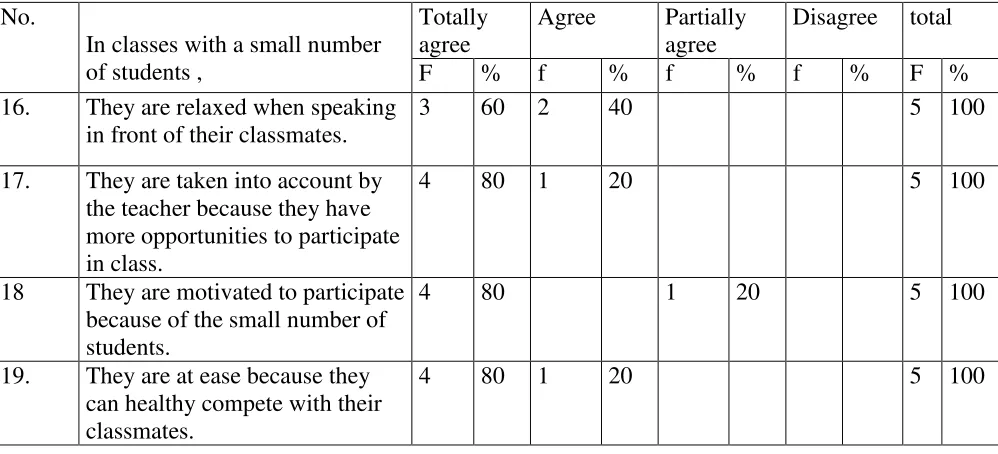
[image:37.612.78.582.139.461.2]What teaching strategies and resources benefit the teaching of English in small classes ?
Table 3 . Teachers Perceptions
No.
In small classes it is easier to :
Totally agree
Agree Partially agree
Disagree total
f % f % f % f % F %
8. Design and apply activities that allow students to practice listening skills.
4 80 1 20 5 100
9. Design and apply activities that allow students to practice speaking skills.
5 100 5 100
10. Design and apply activities that allow students to practice reading skills.
4 80 1 20 5 100
11. Design and apply activities that allow students to practice writing skills.
5 100 5 100
12. Design and apply group work activities.
2 40 3 60 5 100
13. Design and apply individual activities
5 100 5 100
14. Use technological tools. 4 80 1 20 5 100
15. Use didactic materials. 4 80 1 20 5 100
Author : Angel Baño Sanchez . Source : Teacher’s questionnaire .
Table 4 .
Students’ perceptions
No.
In classes with a small number of students:
Totally agree
Agree Partially agree
Disagree total
f % f % f % f % F %
9. The activities done allow students to practice listening skills.
33 66 14 28 3 6 50 100
10. The activities done allow students to practice speaking skills.
35 70 14 28 1 2 50 100
11. The activities done allow students to practice reading skills.
32 12. The activities done allow
students to practice writing skills
35 70 13 26 2 4 50 100
13. Group work activities are used. 26 52 18 36 6 12 50 100 14. Individual activities are used. 34 68 14 28 1 2 1 2 50 100 15. Technological tools are used. 27 54 17 34 5 10 1 2 50 100 16. Didactic materials are used. 32 64 12 24 6 12 50 100
Author : Angel Baño Sanchez . Source : Students’ questionnaire .
According to the 5 surveyed teachers’ perceptions about teaching in small
classes. In statement eight, the perceptions show that 4 teachers, who make up 80% of the
total population, totally agreed that it is easy to design and practice listening activities. 1
teacher, which corresponds to 20% of the total of teachers, agreed on this issue. In
statement nine in student’s questionnaire from the 50 students who answered the question,
33 said that they totally agreed with the fact that in small classes there is listening practice,
which correspond to the 72% of the total population. A number of 14 students, which
corresponds to the 28 % of the total population, agreed that listening is practiced in small
classes. A total of 3 students, which makes up 3 % of the total population, partially agreed
on this issue. The class observation showed that teachers could elaborate activities and
spend enough time doing them. Teachers adapted the information according to the needs of
the group. It also helped the teacher to decide which activities could improve their
comprehension.
Herrell (2012) states that predictable routines and signals is one of the tasks that
lowers the way students feel when communicating their ideas in English. Because students
are not 100 % attentive in class, this strategy allows students to feel less anxious about
33
students practiced the activities planned by the teacher. There was more time to practice the
activities and give personal feedback to each of the listening activities.
In statement 9 from the 5 teachers observed, all of them totally agreed that in small
classes there are more opportunities to design and practice speaking activities. In statement
ten from student’s questionnaire, 35 students, which make up 70% of the sample population
totally agreed that there are more speaking activities in a small class. A number of 14
students, which means 28% of the sample, agreed that they participate more in speaking
activities in class. 1 student, corresponding to 2% of the total population, partially agreed
that students practice more speaking in class. Furthermore, it could be seen that because of
the number of students was small, the teacher was able to encourage students to participate
more when talking about any topic. Consequently, students were more attentive to
contribute with their ideas and opinions.
Harmer (2001) states that to ensure good organization, students must participate, be
interested and prepared. Mentioning the benefits of the upcoming activity is a good way to
keep the interest. Teachers should also mention the reasons to show the advantages of
doing a certain activity. As a result, students will know the positive points and the
advantages of doing an activity rather than doing it for obligation.
Moreover, the class observation shows that it becomes a must for everybody, even
for the most introverted students, to participate on the activities given by the teacher due to
the reality that the group is small and there are more opportunities for interaction. It also
increases the need for students to be actively involved in the activities planned for the class.
As a result, teachers can assess effectively and successfully because they can collect
34
when students are part of exchanging information activities, they can use the language
together. For example, students can also create conversations, think about what is coming
in a text or they can discriminate about what they have experienced before.
In the statement ten, 4 teachers surveyed, it means 80 % of the total population,
totally agreed that in small classes, teachers can design and practice more reading activities.
1 teacher, which makes up 20% of the total of students agreed on this issue. In statement
eleven from student’s questionnaire, 35 students, which make up 70% of the total of
students, totally agreed that in a small class there are more opportunities to practice reading.
A total of 14 students, which means 28 % of the total population of students agreed that
there are reading activities in a small class. One student, corresponding to 2 % of the total
population partially agreed about this issue.
During the observation, students were concentrated in reading during long periods
in class. The activities in class such as skimming, scanning, meaning from context were
timed. As a result, students could finish the activities on time. From the observation, the
most common reading techniques that teachers encouraged their students to do was
skimming and scanning texts. Also, the way they practice inferences was more
personalized. Each student had the opportunity to argument his or her reasons.
In statement eleven, all teachers, 100 % of the total reported that they totally
agreed on the issue that there are more opportunities to create and practice writing
activities. In statement twelve from student’s questionnaire, 35 students, which correspond
to 70% of students, totally agreed that in a small class there are more opportunities to
practice writing activities. A total of 13 students, which makes up 26% of the total
population, agreed that students can practice more writing activities.1 student which makes
35
From the observation in class, students can have more writing activities because
the time distribution in a small class is smooth. As a result, there is more time to practice
other activities that are important to reinforce skills. Writing is one activity that is usually
neglected and it should be reinforced as much as possible. In addition, it could be seen that
teachers have more time to check each student piece of writing. The correction of papers
did not take so much time and the teachers could continue with their programmed activities
on time. Teachers also spent their time on feedback in writing by making students be
aware of the most common errors students have in their paragraphs. As a result, there is
more control of the time for activities and feedback in the same hour of class which results
in constant improvement.
Harmer (2007) suggests identifying common mistakes and errors during practice
activities because students must correct their mistakes in the target language during those
specific moments in the class. The teachers’ duty is to make students conscious of their
errors and provide opportunities for self-correction.
In statement twelve, 2 teachers which make up 40 % of the total population, totally
agreed that in small classes there are more opportunities to design and implement group
activities. 3 teachers which constitute 60 % of the total of teachers agreed that in small
classes there are more opportunities to work in groups. In statement thirteen, 26 students,
which make up 52 % of the school population, totally agreed that in small classes students
practice in groups. A number of 18 students, which corresponds to 36% of the total of
students, agreed that in small classes there is group work. A total of 6 students, which
means 2% of the school population partially agreed on this issue. From the class
observation, there were students who prefer not to work in groups because there was space
36 classes.
Lynch (1996) argues that working in pairs or groups is not a recent invention.
Group work allows students to feel confident and it increases the opportunities for
communication. It also helps to avoid the usual embarrassment of speaking in front of a
large group of people. Based on Lynch research, in group work, students do not pay
specific attention to individual mistakes, the use of the structures is varied and extensive.
Learners also give more complete responses. Furthermore, I checked some student’s
worked independently during the whole class. There were no group activities, some of the
teachers said that the number of students was reduced and there is no interest in practicing
in groups because the class size in groups looks almost empty and that makes the class look
less interesting .
In statement thirteen, 100 % of teachers surveyed reported that there are more
opportunities to design and practice with individual activities. In statement fourteen from
student’s questionnaire, 34 students, which mean 68 percent of the total population, totally
agreed that there is more individual work in small classes. A total of 14 students, which
corresponds to 28 % of the students surveyed, agreed that they work individually in small
classes. 1 student, which makes up 2% of the total of students partially agreed on this issue.
Finally, 1 student, which makes up 2% of the total of students disagreed on this issue. From
the class observation, it was seen that students prefer to work individually in small classes
more because they can personalize their learning and create their own knowledge and
receive support from the teacher. Students agreed on the fact that there is less dependence
on a person who has better skills and it can enhance participation.
Gower (2005) states that the way a teacher places the students in the class can be