INSTITUTO TECNOLÓGICO Y DE ESTUDIOS SUPERIORES DE MONTERREY
PRESENTE.-Por medio de la presente hago constar que soy autor y titular de la obra denominada"
, en los sucesivo LA OBRA, en virtud de lo cual autorizo a el Instituto Tecnológico y de Estudios Superiores de Monterrey (EL INSTITUTO) para que efectúe la divulgación, publicación, comunicación pública, distribución, distribución pública y reproducción, así como la digitalización de la misma, con fines académicos o propios al objeto de EL INSTITUTO, dentro del círculo de la comunidad del Tecnológico de Monterrey.
El Instituto se compromete a respetar en todo momento mi autoría y a otorgarme el crédito correspondiente en todas las actividades mencionadas anteriormente de la obra.
De la misma manera, manifiesto que el contenido académico, literario, la edición y en general cualquier parte de LA OBRA son de mi entera responsabilidad, por lo que deslindo a EL INSTITUTO por cualquier violación a los derechos de autor y/o propiedad intelectual y/o cualquier responsabilidad relacionada con la OBRA que cometa el suscrito frente a terceros.
Interval and Fuzzy Regressions to Enhance DRASTIC Aquifer
Vulnerability Assessments-Edición Única
Title Interval and Fuzzy Regressions to Enhance DRASTIC Aquifer Vulnerability Assessments-Edición Única
Authors Lizeth Guadalupe Oliva Soto
Affiliation ITESM-Campus Monterrey
Issue Date 2008-05-01
Item type Tesis
Rights Open Access
Downloaded 19-Jan-2017 05:35:24
CAMPUS MONTERREY
DIVISIÓN DE INGENIERÍA Y ARQUITECTURA PROGRAMA DE GRADUADOS EN INGENIERÍA
Interval and fuzzy regressions to enhance DRASTIC aquifer vulnerability assessments
TESIS
PRESENTADA COMO REQUISITO PARCIAL PARA OBTENER EL GRADO ACADÉMICO DE:
MAESTRO EN CIENCIAS
ESPECIALIDAD EN SISTEMAS AMBIENTALES
POR:
LIZETH GUADALUPE OLIVA SOTO
CAMPUS MONTERREY
DIVISIÓN DE INGENIERÍA Y ARQUITECTURA PROGRAMA DE GRADUADOS EN INGENIERÍA
Los miembros del comité de tesis recomendamos que la presente tesis de la Ing. Lizeth Guadalupe Oliva Soto sea aceptada como requisito parcial para obtener el grado académico de Maestro en Ciencias especialidad en:
SISTEMAS AMBIENTALES
Comité de Tesis:
___________________________ _________________________________ Dr. Venkatesh Uddameri Dr. Jürgen Mahlknecht
Co-asesor Co-asesor
_________________________________ Dr. Kim D. Jones
Sinodal
Aprobado:
______________________________ Dr. Joaquín Acevedo Mascarúa
Director de Investigación y Posgrado de la Escuela de Ingeniería
iii RESUMEN
Interval and Fuzzy Regressions to Enhance DRASTIC Aquifer Vulnerability
Assessments
(Mayo 2008)
Lizeth Guadalupe Oliva Soto, Ingeniera Química, ITESM-Monterrey.
Co-asesores: Dr. Jürgen Mahlknecht y Dr. Venkatesh Uddameri
La técnica de toma de decisiones llamada DRASTIC es ampliamente utilizada en los
Estados Unidos y en otros lugares para evaluar la vulnerabilidad de acuíferos a la
contaminación. Esta técnica incluye una cantidad considerable de incertidumbre en el
proceso. El uso de regresiones con intervalos y “fuzzy” ha sido propuesta en este estudio
para obtener los pesos relativos de los criterios en DRASTIC. La vulnerabilidad del
acuífero se relacionó con la concentración de contaminante observada usando una
función exponencial de riesgo-utilidad. Seis diferentes regresiones de intervalo y “fuzzy”
fueron evaluadas en la rápidamente creciente región de México central delimitada por el
subsistema del acuífero de Silao-Romita. Los resultados de este estudio indicaron que la
técnica convencionalmente usada en DRASTIC generalmente subestima la vulnerabilidad
en áreas urbanas y en ciertas áreas agrícolas, mientras que las regresiones con intervalos
y “fuzzy” reflejaron resultados más acordes a la situación real del área. Índices de
semejanza fueron desarrollados para evaluar las capacidades de predicción de los
modelos. Los modelos de regresión “fuzzy” que fueron desarrollados utilizando la técnica
iv
Pedrycz mejoró la capacidad de predicción de la regresión con intervalos y de la técnica
clásica de Tanaka. En general, fue notado que el uso de los modelos de regresiones
“fuzzy” en conjunto con la función exponencial de utilidad resultó más útil para captar la
incertidumbre que surge de las diferencias entre las personas que realizan la toma de
v
ACKNOWLEDGMENTS
This journey has brought me a lot of learning: professional, personal, even within some
sports! I could not have achieved this degree if it was not because of the resources from
different people and institutions. I am grateful to all of them:
• My family, which were always there to help me. Thank you all for believing in
me!
• Part of this research was funded by the Consejo de Ciencia y Tecnología de
Guanajuato (CONCyTEG) under the treaty 04-12-A-044 of the Fondo Mixto
Guanajuato and the Cátedra Uso Sustentable del Agua from the ITESM-Campus
Monterrey.
• Scholarships were provided by the College of Engineering (Dr. W. Heenan and
Mr. T. Hinojosa) of Texas A&M University-Kingsville and the Departamento de
Becas de Posgrado from the ITESM-Campus Monterrey.
• All of the committee members (Dr. Venkatesh Uddameri, Dr. Jürgen Mahlknecht
and Dr. Kim D. Jones) because of trusting in my capabilities, teaching me far
beyond school knowledge, letting me grow and gain experience by working with
them, and always guiding and helping me out.
• A third scholarship was provided by my friend Annette Hernandez (Definitely not
everybody lets you stay in their home for months!).
vi
• Ing. Ignacio Luján, Ing. Xavier Pérez and all of their laboratory staff at the
ITESM-Campus Monterrey, because of letting me analyze some samples in their
laboratories.
• My group mates both in Monterrey and in Texas, for sharing their experience and
knowledge with me.
• Last but not least, I am grateful to all the friends who were with me all along the
way: I do not want to list names… I am surely going to miss a lot of people who
vii
TABLE OF CONTENTS
ABSTRACT... iii
ACKNOWLEDGMENTS ...v
TABLE OF CONTENTS... vii
LIST OF FIGURES ...ix
LIST OF TABLES ...xi
1.0 INTRODUCTION ...1
2.0 RESEARCH GOALS AND OBJECTIVES ...6
3.0 BACKGROUND ...8
3.1. DRASTIC vulnerability index methodology...8
3.2. Introduction to interval and fuzzy numbers...9
3.2.1. Interval numbers...9
3.2.2. Fuzzy numbers ...9
3.3. Interval and fuzzy regressions ...12
3.3.1. Interval regression approach ...12
3.3.2. Fuzzy regression based approaches...13
3.3.3. Savic and Pedrycz approach ...18
3.3.4. Similarity index concept ...19
3.3.5. Construction of the defuzzified maps...21
4.0 STUDY AREA DESCRIPTION AND DATA GATHERING...22
4.1. Study area description ...22
4.2. Data compilation and pre-processing ...26
4.2.1. Sampling for the Silao-Romita aquifer subsystem...27
5.0 DEVELOPMENT OF THE DRASTIC MAPS...31
6.0 RESULTS AND DISCUSSION...35
6.1. Final DRASTIC Maps...35
viii
6.2.1. Ordinary least squares regression results...37
6.2.2. Interval and fuzzy regression results ...38
6.3. Defuzzified maps ...48
7.0 SUMMARY AND CONCLUSSIONS ...56
8.0 REFERENCES ...58
APPENDIX A. RATINGS AND WEIGHTS FOR THE CONVENTIONAL DRASTIC .. APPROACH...63
APPENDIX B. ADAPTED RATINGS FOR SELECTED DRASTIC PARAMETERS .66 APPENDIX C. OBSERVED NITRATE CONCENTRATIONS ...67
APPENDIX D. INPUT DATA FOR REGRESSION ANALYSYS FOR DEPTH,... RECHARGE, IMPACT AND HYDRAULIC CONDUCTIVITY. ...68
APPENDIX E. BASE MAPS FOR AQUIFER MEDIA, SOIL MEDIA, AND ... TOPOGRAPHY ...72
APPENDIX F. PARAMETER VALUES OBTAINED FROM THE INTERPOLATED... MAPS INCLUDED IN INTERVAL AND FUZZY REGRESSIONS ...74
APPENDIX G. RECLASSIFIED DRASTIC MAPS FOR EACH PARAMETER...75
APPENDIX H. VBA SUBROUTINES FOR THE CALCULATION OF SIMILARITY .. INDICES ...79
ix
LIST OF FIGURES
Figure 1. A triangular symmetric membership function [adapted from Hojati et al.
(2005)]. ...11
Figure 2. Membership functions and a α-cut [adapted from Tanaka (1996)]...12
Figure 3. A fuzzy linear relationship [from Hojati et al. (2005)]...14
Figure 4. A certain observed interval [from Hojati et. al (2005)]. ...15
Figure 5. Illustration of deviational variables ...17
Figure 6. Illustration of deviational variables (2)...18
Figure 7. Similarity between two fuzzy numbers [from Hojati et al. (2005)]. ...20
Figure 8. Similarity between observed and predicted interval numbers ...20
Figure 9. Location of Silao-Romita aquifer (Instituto Nacional de Estadística, Geografía e Informática, 2005a; Comisión Estatal de Aguas de Guanajuato, 2005)...22
Figure 10. Extraction permits and major cities in Silao-Romita aquifer (Comisión Estatal de Aguas de Guanajuato, 2005) ...24
Figure 11. Land Use-Land Cover and Nitrate concentrations for Silao-Romita aquifer (Comisión Estatal de Aguas de Guanajuato, 2005)...24
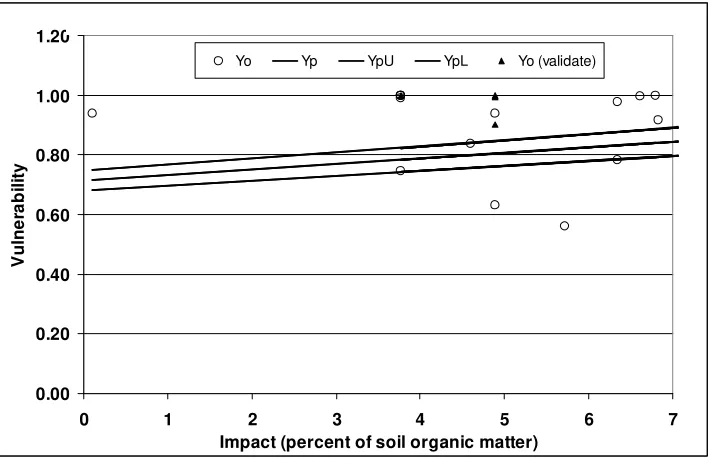
Figure 12. Estimated vulnerability vs. Nitrate concentrations...29
Figure 13. Sampled sites within Silao-Romita aquifer. Aquifer boundary from Comisión Estatal de Aguas de Guanajuato (2005)...29
Figure 14. Flow chart for the integration of the DRASTIC parameters map. ...32
Figure 15. Depth IDW-interpolation for Silao-Romita aquifer ...33
Figure 16. Depth Thiessen Polygons map for Silao-Romita aquifer ...33
Figure 17. Depth composite map for Silao-Romita aquifer...34
Figure 18. Nitrate interpolated map...36
Figure 19. DRASTIC indices vulnerability map...37
Figure 20. Nitrate concentrations vs. Depth from Land Surface and well-depth ...41
Figure 21. Maximum, minimum and average for the similarity index for different methods. ...44
Figure 22. Interval regression (S&P) observed and predicted nitrate concentrations. ...45
Figure 23. Interval regression observed and predicted nitrate concentrations...45
Figure 24. Classical Tanaka (S&P) observed and predicted nitrate concentrations ...46
Figure 25. Classical Tanaka observed and predicted nitrate concentrations ...46
Figure 26. Observed and predicted nitrate concentrations using HSB1 (S&P). ...47
Figure 27. Observed and predicted nitrate concentrations using HSB1...47
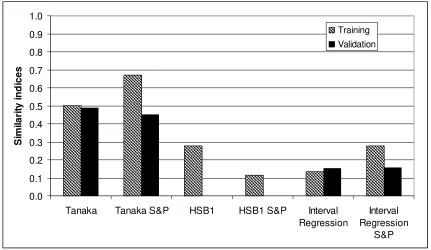
Figure 28. Similarity indices for training and validation sets. ...48
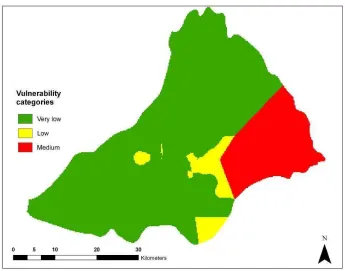
Figure 29. Defuzzified map based on interval regression (S&P), classical Tanaka (S&P) and HSB1(S&P) weights for DRASTIC. ...49
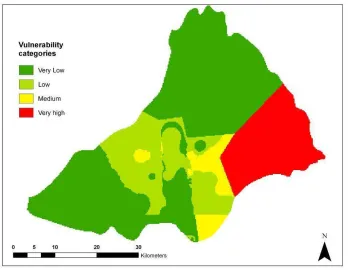
Figure 30. Defuzzified map based on interval regression weights for DRASTIC...50
Figure 31. Defuzzified map based on classical Tanaka weights for DRASTIC...50
Figure 32. Defuzzified map based on HSB1 weights for DRASTIC...51
x
Figure 34. Comparison of categories of vulnerability between DRASTIC conventional
approach and the interval regresión...52
Figure 35. Comparison of categories of vulnerability between DRASTIC conventional approach and the classical Tanaka approach ...53
Figure 36. Comparison of categories of vulnerability between DRASTIC conventional approach and the HSB1 regression...53
Figure 37. Aquifer media map (Comisión Estatal de Aguas de Guanajuato (2005)...72
Figure 38. Soil texture map (Instituto Nacional de Estadística, Geografía e Informática, 2005a) ...73
Figure 39. Elevation map (Instituto Nacional de Estadística, Geografía e Informática, 2005a) ...73
Figure 40. Depth reclassified map...75
Figure 41. Recharge reclassified map...75
Figure 42. Aquifer media reclassified map...76
Figure 43. Soil media reclassified map...76
Figure 44. Topography reclassified map ...77
Figure 45. Impact of the vadose zone (percent of soil organic matter) map ...77
xi
LIST OF TABLES
Table 1. Parameters in DRASTIC vulnerability index [from Aller et al. (1987)]. ...8
Table 2. Description of the data collected ...27
Table 3. Root Mean Square Error for the IDW interpolated maps for depth, recharge and impact ...34
Table 4. Ordinary least squares regression for Silao-Romita Aquifer ...38
Table 5. Mid-points and Half-widths for regular interval and fuzzy regressions ...39
Table 6. Mid-points and Half-widths for interval and fuzzy regressions when combined with S&P approach...39
Table 7. Regression coefficients and confidence intervals for well-depth and depth to groundwater table against nitrate concentrations ...41
Table 8. Classical Tanaka and HSB1 coefficients without conductivity outliers ...42
Table 9. Average influence of each parameter in vulnerability predictions ...43
Table 10. Vulnerability categories tags and intervals...49
Table 11. Matrix of the inter-comparison between the vulnerability categories of the DRASTIC conventional approach, interval and fuzzy regressions. Under-estimated percentages...54
Table 12. Matrix of the inter-comparison between the vulnerability categories of the DRASTIC conventional approach, interval and fuzzy regressions. Correctly-estimated percentages...54
Table 13. Matrix of the inter-comparison between the vulnerability categories of the DRASTIC conventional approach, interval and fuzzy regressions. Over-estimated percentages...55
Table 14. Ratings and weights for the conventional DRASTIC approach (Canter, 1997)63 Table 15. Aquifer media adapted ratings for permeability of the hydro-geologic units for Silao-Romita aquifer...66
Table 16. Soil texture adapted ratings for Silao-Romita aquifer...66
Table 17. Percent of Soil organic matter adapted ratings for Silao-Romita aquifer ...66
Table 18. Observed nitrate concentrations...67
Table 19. Location of sampled sites ...68
Table 20. Tabular data gathered for depth, recharge and impact ...69
Table 21. Results of Pumping tests for Silao-Romita aquifer (Ibarra, 2004) ...70
Table 22. Observations regarding the data used to build the DRASTIC maps...71
Table 23. Hydrogeologic units, based on permeability of the materials [taken from Comisión Estatal de Aguas de Guanajuato, 2005]. ...72
1
1.0INTRODUCTION
World population rose from two and half billion in 1950, to around six billion in 2000,
and continues to increase in many countries (UNESCO, 2006), causing an increase on the
demand for water resources. Currently, safe drinking water is not an available asset for
one fifth of the world population (Zaporozec, 2002). The increasing demand creates a
stress on this scarce resource. Therefore, research should focus on conserving water and
maintaining its quality.
In several regions of the world, groundwater accounts for a high proportion of the total
water supply. Groundwater is that defined as being below the water table in geologic
formations that are completely water saturated (Freeze and Cherry., 1994). The term
aquifer refers to any material that is able to store and transmit water (Stone, 1999), and
can provide water in sufficient quantity and quality for human consumption. Aquifers are
a very important source of water because: a) they have a very large storage capacity,
often greater than any built reservoir; b) they can be accessed drought periods; and c)
their water quality without pre-treatment, is usually better than untreated surface waters
(Morris et al., 2003), because due to natural filtration. In addition, the water is relatively
cheaper and easier to obtain compared to other drinking water sources, because it can be
extracted at the site where it will be consumed (Morris et al., 2003). Negative
consequences on the environment and human health can be expected if the quality of
these resources is lowered due to pollution. Industrial and urban activities, agriculture and
other point and non point sources can contribute to their pollution.
The vulnerability of an aquifer represents its sensitivity to be adversely affected by a
pollutant load (Foster and Hirata, 1991) and is determined by different factors. These
parameters include the hydraulic conductivity which is the resistance to water flow in the
strata within the vadose zone (above the water table), the chemical reactivity of the
____________
strata, the mobility and persistence of a pollutant as well as loading characteristics such
as the quantity, the concentration, and the manner and location (Zaporozec, 2002; Foster
and Hirata, 1991). The type of aquifer vulnerability that is only related to the
characteristics of the aquifer itself is called the “intrinsic vulnerability” (Antonakos and
Lambrakis, 2007; Zaporozec, 2002). Another type of vulnerability called specific
vulnerability, which includes both the intrinsic vulnerability and the characteristics of the
discharge of the pollutant (Antonakos and Lambrakis, 2007).
Apart from the type of pollutant involved, the scale at which aquifer vulnerability is
evaluated plays an important role in the characterization of groundwater vulnerability.
The scale may be regional, as in the Sole Source Aquifer Demonstration Program or local
like in the Protection of Wellheads Program. Both Sole Source Aquifer Demonstration
and Protection of Wellheads programs are carried out to comply with the Safe Drinking
Water Act amendments. The Sole Source Aquifer Demonstration Program focuses on
identifying “critical aquifer areas” (US Environmental Protection Agency, 2007). Thus,
regional scale mapping is utilized as a first step to delineate and recognize most
vulnerable areas within a region.
Currently, several methods exist to characterize aquifer vulnerability. These methods can
be divided into four categories (Focazio et al., 2002; Canter, 1997). The first category
includes the subjective rating or index methods. These are more policy and management
oriented, because results are given tags such as low, medium or high vulnerability
(Focazio et al., 2002). The statistical based methods are those that specify correlations
between contamination and aquifer properties (Canter, 1997). The process based methods
are those that simulate the fate and transport of contaminants to characterize vulnerability
(Comitte on techniques for assessing ground water vulnerability, 1993). Hybrid methods
are those that combine index based methods with statistical or process based methods
(Focazio et al., 2002).
In the index methods, the parameters are paired with ratings, which are site specific
index (Aller et al., 1987). A major limitation of index methods is that they usually do not
incorporate the pollutant characteristics (Focazio et al., 2002) and they only measure
intrinsic vulnerability. Some of the index based approaches are DRASTIC (Aller et al.,
1987), SINTACS (Civita and De Maio, 1997) and AVI (Ministry of Water, Land and Air
Protection, 2005). One critical short-coming of these methods is the subjectivity (Focazio
et al., 2002) imposed by the assignment of the weights by various decision makers
(Scanlon et al., 2003). To address the subject of specific vulnerability, some studies have
included observed pollutant concentrations, such as nitrates, for identification or
validation of vulnerability characterization (Antonakos and Lambrakis, 2007; Dixon,
2005b). Groundwater pollution due to nitrates is a major issue currently and agriculture is
considered one of the major sources of this compound (UNESCO, 2006). It is also “the
most pervasive contaminant in groundwater” (Scanlon et al., 2003) in the United States
and in Texas. Nitrates are usually salts that are highly soluble in water, under normal pH
conditions they do not easily sorb onto negatively charged particles (such as clay), ion
exchange is not a process in which they typically participate and do not usually volatilize
(Scanlon et al., 2003). Therefore, a great part of the surface generated nitrates percolate
through the vadose zone, and into the saturated zone. There are several sources of
nitrates. According to Canter (1997) they are classified as: natural, such as geologic
nitrogen and forests disturbances; waste materials, such as animal manures, sludge
applied to the ground, septic tanks wastes, and leachates from landfills; and those from
agriculture associated practices.
Some studies have combined index methods with statistical, information theoretic or
process based methods, such as descriptive statistics, logarithmic regressions and fuzzy
set theory, in order to decrease the subjectivity associated with index methods and to deal
with the uncertainty (Bailey et al., 2003) in the data. Antonakos and Lambrakis (2007)
combined the DRASTIC index methodology with descriptive statistics, logistic
regression and weight of evidence. These approaches were used to correlate the presence
of nitrates with the vulnerability of the study areas. Thirumalaivasan et al. (2003)
developed software where both ratings and weights of the DRASTIC parameters are
achieved using nitrate as nitrogen (NO3-N) concentrations. Fuzzy set theory (Zadeh,
1965), has also been combined with index methods in several studies. Dixon (2005a)
incorporated a fuzzy-rule based model into a geographic information system to derive a
DRASTIC vulnerability indices map. Some modifications to the conventional DRASTIC
approach were included, such as the generation of modified DRASTIC and Vulnerability
Index (VI) maps. Uricchio et al. (2004) characterized the vulnerability of an aquifer using
the SINTACS methodology, but also determined its risk as the product of this
vulnerability times a degree of hazard. The weights these authors gave for hazard were
based on fuzzy sets. Dixon (2005b) developed a neuro-fuzzy model for aquifer
vulnerability and carried out a sensitivity analysis of its application using GIS. The
parameters included in this vulnerability assessment were soil hydrologic group, depth of
the soil profile, soil structure and land-use. The validation of the results was carried out
by comparing vulnerability categories found using NO3-N concentrations against
categories predicted with the models. Chen and Fu (2003), and Zhou et al. (1999)
incorporated the fuzzy set theory into the DRASTIC methodology because many times
two sites reporting different values for certain parameters end up with the same rating.
The fuzzy set theory was combined with SINTACS vulnerability method to obtain
vulnerability indices (Di Martino et al., 2005).
Ordinary least squares regression (OLSR) is a statistically based approach that can be
applied to determine the weights for use with index method. For OLS, the estimators for
the coefficients of the regression are unbiased (Hamilton, 1991) under the assumption
that all errors have same mean and variance. Also, there are several conditions under
which the estimators of the coefficients and/or the statistics (such as F or t statistics) are
biased. Some of these conditions are that there is a non-linear relationship between
variables, an important factor is not included, and there are measurement errors
associated with the independent variables (Hamilton, 1991). Therefore, these situations
are limitations for the use of OLRS.
Fuzzy regressions are another method to calculate the weights. These regressions are
inputs to an output, which is treated as a fuzzy number. Fuzzy regressions do not require
complying with the assumptions mentioned for the OLSR (Uddameri and Honnungar,
2007). Therefore, the latter can be used more broadly. Fuzzy regressions are useful when
there is lack of sufficient data, no “assumptions about the statistical distribution” of the
real system can be made, the manner in which the variables are related is not clear,
“human judgment” is involved or when the output is fuzzy (Tran et al., 2002). In recent
times, fuzzy regressions have been used in many different environmental applications.
Tran et al. (2002) integrated a multi-objective fuzzy regression with the Revised
Universal Soil Loss Equation to determine how some factors affect soil erosion. Özelkan
and Duckstein (2001) incorporated the fuzzy regression and fuzzy least squares
regression into a conceptual rainfall-runoff model. Uddameri and Kuchanur (2004)
estimated the log Koc-log Kow relationship via a fuzzy regression. Uddameri and
Honnungar (2007) estimated groundwater budget parameters using fuzzy linear
regression. Fuzzy regression is an alternative approach that has not yet been used to
6
2.0RESEARCH GOALS AND OBJECTIVES
2.1.Overall goal
The main purpose of this study is to demonstrate the utility of the application of interval
and fuzzy regression approaches for characterizing aquifer vulnerability.
2.2.Specific objectives
The following objectives were identified and carried out in order to achieve the main
purpose of this study:
• The development of DRASTIC indices maps following the approach proposed by
Aller et al. (1987) to characterize the vulnerability of the Silao-Romita aquifer
subsystem in Guanajuato, Central Mexico.
• Application of interval regression (Chang and Ayyub, 2001) and different fuzzy
regressions (Hojati et al, 2005) as alternatives to determine the weights for the
DRASTIC methodology
o The fuzzy regression methods included are based on the minimization of
fuzziness criterion (classical Tanaka) (Chang and Ayyub, 2001; Hojati et al.,
2005) and Goal programming with inclusion of deviational variables (HSB1)
(Hojati et al., 2005)
o Assess whether the use of OLSR in combination with fuzzy regressions by using
Savic & Pedrycz approach (Chang and Ayyub, 2001) improves the performance
of the interval and fuzzy regressions to characterize aquifer vulnerability.
• Measure the performance of interval and fuzzy regressions predictions against field
observations.
• Develop aquifer vulnerability maps for the Silao-Romita aquifer using interval and fuzzy regressions and compare the resulting vulnerability categories against the
conventional DRASTIC vulnerability categories map.
• Intercompare the characterization of vulnerability maps derived from the application
The background for DRASTIC vulnerability indices methodology, fuzzy and interval
8
3.0BACKGROUND
3.1.DRASTIC vulnerability index methodology
The methodology chosen to characterize vulnerability in this study was the DRASTIC
index methodology. This methodology has been widely used for aquifer vulnerability
assessments in the US and other parts of the world (Hamza et al, 2006; Antonakos and
Lambrakis, 2007). The initials of the parameters used in this method comprise the word
DRASTIC. Each one of them is mentioned in Table 1(Aller et al., 1987):
Table 1. Parameters in DRASTIC vulnerability index [from Aller et al. (1987)]. Letter or initial Parameter
D Depth to groundwater
R Net recharge rate
A Aquifer media
S Soil media
T Topography (slope)
I Impact of the vadose zone
C Conductivity (hydraulic) of the aquifer
For vulnerability assessments this approach becomes a Multicriteria Decision Making
problem (Malczewski, 1999) as shown on Equation 1 (Aller et al., 1987). It is a weighted
linear combination of seven parameters.
W R W R W R W R W R W R W
RD R R A A S S T T I I C C
D + + + + + +
=
DVI (1)
Where the subscript R indicates the Rating obtained from field measurements, and the
subscript W indicates the Weight for each parameter that is assigned by the decision
maker. As mentioned previously, the assignment of the weights is a subjective process
and depends upon the risk preferences of the decision maker. As such, these weights are
3.2.Introduction to interval and fuzzy numbers
3.2.1. Interval numbers
An interval number is defined as “an ordered pair of real numbers,
[ ]
a,b , with a≤b” (Moore, 1966). These numbers a and bare contained within a set,x,of real numbers(Moore, 1966) as in Equation 2:
[ ]
a,b ={
x|a≤x≤b}
(2)An advantage of using interval numbers is that they can describe “approximate values
and an error bound, or an upper and a lower bound to the exact result” (Moore, 1966).
Interval numbers “will contain the entire set of possible values of the solution” for when
the input data or the coefficients vary within two values or to account for calculation
round-off errors (Moore, 1979). Therefore, interval numbers can be used to describe the
weights in the DRASTIC conventional approach because these weights vary within a
range due to the difference in opinions between the stakeholders regarding the relative
importance of each parameter. Fuzzy numbers explained next, can also be used to address
this issue.
3.2.2. Fuzzy numbers
The fuzzy set theory was first introduced by Zadeh (1965). A fuzzy set is defined as a
“class of objects with a continuum of grades of membership” (Zadeh, 1965). The
membership function, which can take any value from zero to one, defines how much the
parameter in the fuzzy set belongs to that set (Mukaidono, 2001). An illustration of these
functions is found in Figure 1, where it can be observed that the minimum value is zero
and the maximum value is one. An element belongs more to the set when the membership
function approaches one. Fuzzy numbers are special cases of fuzzy sets, which have the
characteristics of being normalized, i.e., at least one value in the set has a membership
value of one; and convex (Mavrotas et al, 2003), i.e.,“the membership value of any given
than the membership value of either end points”(Yen and Langari, 1998). Fuzzy numbers
“can be expressed as interval numbers with membership values” (Chang and Ayyub,
2001). These numbers are very useful “to deal with fuzzy data originated from a fuzzy
phenomenon” (Tanaka et al., 1989). The main purpose of fuzzy set theory is “to establish
a mathematical theory to deal with subjectivity” (Mukaidono, 2001) introduced either by
the model itself or by fuzzy data (Chang and Ayyub, 2001). An advantage of fuzzy
numbers over interval numbers is that fuzzy numbers provide more information on the
preference of a value. Therefore, fuzzy numbers are used to deal with the subjectivity
surrounding the weights of the DRASTIC vulnerability methodology.
Membership functions of fuzzy numbers can have different shapes (Dixon, 2005b),
trapezoidal, bell and triangular are some examples of them (Dixon, 2005). Triangular
symmetric membership functions are the most commonly used (Mavrotas et al., 2003)
and there are two elements that are used to describe them, a mid-point and a half-width
(Hojati et al., 2005). Being symmetric, the half-width extends from the mid-points
towards both sides. The graphical representation of these elements is shown in Figure 1,
Figure 1. A triangular symmetric membership function [adapted from Hojati et al. (2005)].
A triangular membership function can be decomposed into an infinite number of
triangular membership functions (Tanaka, 1996). An α cut creates a subset of elements
contained in one of these membership functions, which have membership values greater
or equal than a specific value. Thus, a total membership function can be built by
performing operations on several α cuts. An illustration of an α cut is shown in Figure 2,
resulting in a smaller set as denoted by the hatched area. The following section contains
the formulation of the regression approaches using both interval and fuzzy numbers . αj -cj αj αj + cj Aj
1.0
Figure 2. Membership functions and a α-cut [adapted from Tanaka (1996)].
3.3.Interval and fuzzy regressions
A regression model is developed to “describe how the dependent variable is related to the
independent variables” (Bardossy, 1990). This model gives a “prediction equation for the
entire population” based on “collected data with uncertainties” (Chang and Ayyub,
2001). The DRASTIC vulnerability index methodology is combined in this study along
with regression models to predict vulnerability and to gain insight from the model to
interpret what happens in reality. Based on the formulation is shown in Equation 1, the
independent variables are the ratings of the parameters and the DRASTIC vulnerability
index is the dependent variable.
3.3.1. Interval regression approach
This type of regression defines both the response variable and the coefficients of the
regression as interval numbers (Chang and Ayyub, 2001). The independent variables
remain crisp numbers. The approach followed is based on the one proposed by Chang
and Ayyub (2001). The interval regression applied in this study is of the form shown in
Equation 3.
ki k i
i
i A X A X A X
X A
The interval number that describes the predicted response variable is called Yˆ . The
independent variables data are denoted by Xij. The interval regression coefficients, Aj
~ ,
are defined by a mid point called mjand a half-width cj:
(
m c)
j kA~j = j, j , ∀ =1,..., (4)
The objective function seeks to minimize the fuzziness of the model that is characterized
by the half-widths of the interval numbers. The number of parameters is denoted by k,
and the total amount of data points is n.
∑∑
= = n i k j ij jX c Min 1 1 (5) . ,..., 1 , 0, c j k
free
mj = j ≥ ∀ = (6)
The purpose of the following constraints is that the observed data should be contained
within all the predicted values for the response variable obtained with the model.
(
m c)
X YiL i n kj
ij j
j , , 1,...
1 = ∀ ≤ −
∑
= (7)(
m c)
X YiU i n kj
ij j
j , 1,...
1 = ∀ ≥ +
∑
= (8)3.3.2. Fuzzy regression based approaches
Fuzzy regressions are based on the concept of fuzzy numbers. There are two major
classes of fuzzy regressions, the ones that try to minimize the vagueness and those that
utilize the least squares of the errors (Chang and Ayyub, 2001). For both of these types of
(Hojati et al., 2005). An illustration of a fuzzy regression is shown in Figure 3, with a
centerline and lower and upper boundaries to the sides.
Figure 3. A fuzzy linear relationship [from Hojati et al. (2005)].
By using fuzzy regressions the predictions of the model can be obtained at different
levels of trust called “minimum degree[s] of acceptable certainty” (Hojati et al., 2005).
The minimum degree of certainty possible for a model is a specific membership degree of
the response variable (Hojati et al., 2005) called H. The subset that contains all the
elements in the response variable that have at least an H degree of membership value is a
“certain observed interval” (Hojati et al., 2005) and is shown in Figure 4. A lower level
of H indicates greater compatibility between the observed data and the fuzzy regression
Figure 4. A certain observed interval [from Hojati et. al (2005)].
3.3.2.1.Classical Tanaka approach and the vagueness approach criterion
The first fuzzy regression implemented is the one proposed by Tanaka (Hojati et al,
2005). This regression follows the form shown in Equation 9.
k j
x A x
A x A
Yˆ= 1 1n + 2 2n +...+ j jn, ∀ =1,..., (9)
In Equation 9, Yˆ is the predicted response variable and is assumed to be a fuzzy number
with a symmetrical triangular shape. The termAj is the coefficient of the fuzzy
regression. The coefficients are treated as fuzzy numbers with membership functions of a
symmetric triangular shape. A graphical representation of these fuzzy numbers is shown
in Figure 1. The center and half widths for the regression coefficient function are αi and
j
c . For the fuzzy number yithat describes the observed response variable the mid-point
and half-width are denoted by yi andei, respectively, and are known. The required
mid-point and half-width for the regression coefficients are obtained using the following
∑∑
= = n i k j ij jx c Minimize 1 1 (10)This function minimizes the total “sum of the half widths of the predicted intervals”
(Hojati et al., 2005). The number of parameters is denoted by k, and the total number of
data points is n. The following constraints ensure the model generated certain intervals
encompass entire set of certain observed intervals.
(
)
(
)
(
)
∑
= = ∀ − + ≥ ⋅ ⋅ − + k j i i j jj H c x y H e i n
1 , ,..., 1 , 1 1
α (11)
(
)
(
)
(
)
∑
= = ∀ − − ≤ ⋅ ⋅ − − k j i i j jj H c x y H e i n
1 , ,..., 1 , 1 1
α (12)
. ,..., 1 ,
0
, c j k
free j
j = ≥ ∀ =
α (13)
As it is required that the certain predicted intervals contain the certain observed intervals,
the half-widths of the coefficient membership functions often tend to be large due to the
influence of outliers (Hojati et al., 2005).
3.3.2.2.Goal-programming HSB1 approach and the use of deviational variables
Another approach to fuzzy regression was proposed by Hojati, Bector and Smimou and is
called HSB1 in this thesis (Hojati et al., 2005). In this approach the independent variable
is crisp and the response variable and the coefficients of the regressions are treated as
fuzzy numbers. The membership functions for these fuzzy numbers are assumed to be
triangular and symmetric. Similarly, the mid-points and half-widths are named as
previously and denoted by αi and cj for the regression coefficient function, and yi
andei for the observed response fuzzy number, respectively. The form of the fuzzy
regression is of the same manner as the previous approach, and is shown in Equation 9.
objective function (Equation 14), deviational variables are included in order to overcome
larger widths due to outliers (Hojati et al., 2005). Equations 15 and 16 describe the
constraints required to encompass the observed fuzzy number within the predicted fuzzy
number. However, unlike the classical Tanaka approach these constraints are treated as
soft goals through the use of deviational variables. In other words, it is desired that the
predicted intervals intersect or contain the observed intervals, but is not mandatory. Due
to this flexibility, the half-widths of the coefficients may be smaller than the ones found
using methods such as classical Tanaka which require a crisp intersection of H-certain
intervals.
(
)
∑
=
− + −
+ + + +
n
i
iL iL iU
iU d d d
d Minimize
1
(14)
Figure 5. Illustration of deviational variables
x
y
-x
y
d
U+d
L-x
y
x
y
d
U+d
L-Figure 6. Illustration of deviational variables (2)
Figures 5 and 6 depict the role of deviational variables in this formulation. As can be seen
from these figures, four variables are required to fully account for deviations between the
upper and lower observed and predicted values. Thus, the main purpose of this objective
function is to minimize these deviations (Hojati et al., 2005).
(
)
(
)
(
)
∑
= − + − = + − ∀ = + ⋅ ⋅ − + k j i i iU iU j jj H c x d d y H e i n
1 , ,..., 1 , 1 1
α (15)
(
)
(
)
(
)
∑
= − + − = − − ∀ = + ⋅ ⋅ − − k j i i iL iL j jj H c x d d y H e i n
1 , ,..., 1 , 1 1
α (16)
, ,..., 1 , 0 , ,
,d d d i n
diU+ iU− iL+ iL− ≥ ∀ = (17)
. ,..., 0 ,
0
, c j k
free j
j = ≥ ∀ =
α (19)
3.3.3. Savic and Pedrycz approach
Savic and Pedrycz (from now on referred to as Savic and Pedrycz or S&P) (Chang and
Ayyub, 2001; Hojati et al., 2005) integrated the results of an Ordinary Least Squares
formulate their objective functions. The coefficients of the OLSR are used as the
mid-points of the membership functions for the fuzzy coefficients. The minimization of the
fuzziness relies only on the half-widths of these membership functions. In this study it is
combined with both the interval and fuzzy regression approaches.
3.3.4. Similarity index concept
An assessment of how well models are able to match observed values is important. A
new evaluation measure called the similarity index was developed. For fuzzy numbers it
is the formulated as shown in Equation 19. It measures the proportion of overlapping
within the observed and predicted response fuzzy numbers as a fraction of the total areas
of the two fuzzy numbers.
P o OV P o OV P o A A A A A A A A index Similarity + = + − + −
=1 2 2 (19)
In the formula for the similarity index, AOis the area under the observed fuzzy response,
P
A is the area under the predicted fuzzy response and AOV is the area where both fuzzy
numbers overlap. In Figure 7, yˆ is the predicted response fuzzy number and i yiis the
observed response fuzzy number. The similarity index is zero when the observed and
Figure 7. Similarity between two fuzzy numbers [from Hojati et al. (2005)].
An analogous approach was followed to calculate the similarity index for the interval
regression predictions vs. observed data. The similarity index was estimated as the degree
to which the observed interval number yi and the predicted interval number yˆ i
overlapped as shown in Figure 8. As with the fuzzy number case, the similarity index is
zero when the observed and predicted interval numbers do not overlap. In Equation 20,
which was used to calculate the similarity index for interval numbers, LOis the observed
fuzzy response, LPis the predicted fuzzy response and LOV is the interval where both
numbers overlap.
Figure 8. Similarity between observed and predicted interval numbers
P o
OV
P o
OV P
o
L L
L L
L
L L L index
Similarity
+ = +
− + −
=1 2 2 (20)
Lp
y
ˆ
i,
3.3.5. Construction of the defuzzified maps
Once the interval or fuzzy regressions equations have been established using a set of
input/output data it can be used to make predictions where only input data are available.
In particular, if the maps for DRASTIC ratings are available for a region, they can be
used in conjunction with the developed regression models to characterize regional aquifer
vulnerability. However, the predictions obtained from the interval and fuzzy regressions
have lower and upper limits and a most likely value. Therefore, the outputs (weights) of
the DRASTIC index, will also have these three values resulting in DRASTIC indices
composed of three maps: low, medium and high. The single final DRASTIC map can be
obtained via defuzzification. The centroid of the fuzzy number is used here for
defuzzification and given as (Kaufmann and Gupta, 1989):
4 *
2 M U
L Y Y
Y function membership
fuzzy of
Centroid = + + (21)
In Equation 21, the term YL refers to the lower value, YM to the medium value, and YU to
the higher value at a given location. The methodologies discussed in this chapter were
applied to the Silao-Romita aquifer in México for illustrative purposes and are described
22
4.0STUDY AREA DESCRIPTION AND DATA GATHERING
4.1.Study area description
The aquifer subsystem of Silao-Romita is located in the state of Guanajuato, Central
Mexico (20.69º and 21.21º N and 101.07º and 101.76º W) with an area of 1979 km2. Its limits to the North and East are the Sierra de Guanajuato mountain range, and the
mountains in the Sierra de Pénjamo and El Veinte to the South and South West. The
study area is located in the zone 14 North Universal Transverse Mercator (UTM)
coordinate system (Instituto Nacional de Estadística, Geografía e Informática, 2005a).
The aquifer limits are shown in Figure 9. The neighboring aquifers include the cuenca
alta del río Laja, valle de Irapuato, Pénjamo-Abasolo, río Turbio, La Muralla and valle of
León. The most important cities in the area are Guanajuato, Silao, and Romita (Instituto
Nacional de Estadística, Geografía e Informática, 2005b).
A total of 1,984 extraction permits have been issued in the aquifer. The geographical
distribution of the wells is shown in Figure 10. Of these, 1697 are wells, 281 are
waterwheels and 6 are springs. Of the total number of permits, only 1,592 are active of
these, 1,390 are used for irrigation purposes, 176 for drinking water extraction, 15 for
industries and 11 for rangeland activities (Ibarra, 2004). As seen in Figure 10, the wells
tend to be clustered around the valleys, mainly within the cities and along the roads that
connect them with only a few wells located in the mountains.
The greatest precipitation occurs in the zones with higher elevations and can be 800 mm
annually. Lower altitude zones experience between 500 and 600 mm annually (Salas,
2004). The average annual precipitation over the entire study area was calculated to be
635 mm with a monthly potential evaporation of 158 mm (Ibarra, 2004).
Agriculture comprises the greatest amount of land area, as shown in Figure 11. The
forests are mainly located in the mountains of the Sierra de Guanajuato, which are the
mountains located in the North East section of the aquifer zone.
Several creeks are located in the Sierra de Guanajuato; however, the most important
waterways are the Silao and Guanajuato rivers, which flow in a southerly direction. The
north zone of the Sierra de Guanajuato tends to have sub-dendritic drainage and S and SE
radial drainage due to volcanic fingerprints. In the zone there are two springs that are
known their temperature, these are Comanjilla with 96°C, and Aguas Buenas with 46°C
(Salas, 2004).
The geomorphologic zones present in the area are the Sierra de Guanajuato, Bajío
Guanajuatense and the Sierra de Pénjamo (Mahlknecht and Oliva, 2005). The
physiographic provinces within this study area are the Mesa del Centro (Central Plateau),
with sub-provinces of Sierras and Llanuras del Norte de Guanajuato or Altos (Highlands)
of Guanajuato; and the province of Eje neovolcánico (Mexican Neo-volcanic belt), with
the subprovince of the Bajío (Lowlands) Guanajuatense (Salas, 2004; Consejo de
Figure 10. Extraction permits and major cities in Silao-Romita aquifer (Comisión Estatal de Aguas de Guanajuato, 2005)
The Bajío Guanajuatense is from tectonic origins in which medium consolidated material
(tertiary undifferentiated granular) and consolidated (alluvial) material deposits, and it is
characterized by valleys and hills (Mahlknecht and Oliva, 2005). Two areas are clearly
identified: the transition zone or pie-de-monte, which is where the runoff from the
mountains usually infiltrates and was formed out of erosion, and the cumulative plateau
at base level, which is where the wells and agricultural lands are typically located (Salas,
2004). The Mesa del Centro elevations are approximately 3000 meters above sea level,
with different levels of erosion (Salas, 2004). These mountains coincide with faults with
NW-SE orientation that are intersected by faults having a NE-SW orientation (Ibarra,
2004). There are two groups of rock formations, 1) those found in the valleys and hills
from the Tertiary period to now(Salas, 2004), and 2) those found in the Sierra de
Guanajuato from the Mesozoic period (Consejo de Recursos Minerales, 2004).
Localized intensive extraction has created a pronounced drawdown behavior in the
vicinities of the cities of Silao and Trejo. This moved the flow lines from the surrounding
mountains towards these depressed zones (Mahlknecht and Oliva, 2005). A great
proportion of the water that infiltrates near the mountains, do not reach the valleys, but
circulates in the fractured zones (Ibarra, 2004). This behavior around Silao has been
documented in other studies (Consejo de Recursos Minerales, 2004). It has also been
observed that west of Silao is a zone in which the water table levels have been rising, this
zone is recharged continuously and may be influenced by the Silao River. Another
recovery zone has been identified east of Silao, which may be influenced by the runoff
from the Sierra de Guanajuato. The characteristics of these mountains indicate that this
may cause storm-water peaks to be incorporated to groundwater through intermediate
flows (Cortés, 2001).
The existence of three different aquifers within several horizons in this study area has
been proposed by Cruz (1998). Meanwhile, other studies (Ibarra, 2004; Consejo de
Recursos Minerales, 2004) identify only two. The deeper aquifer is semi-confined (Cruz,
There may be transmisitions between shallower and deep water (Cruz, 1998; Ibarra,
2004), because their border is constituted of detached clay lenses (Consejo de Recursos
Minerales, 2004).
The Silao-Romita aquifer subsystem surroundings are classified as areas with medium
and scarce groundwater availability (AQUASTAT-FAO, 2000). One of the main
economic activities is agriculture that takes up to 80% of the water resources in the
watershed, of which groundwater accounts for almost 50% of the resources (Ibarra,
2004). The aquifer has been classified as overexploited by the Comisión Nacional del
Agua (Comisión Nacional del Agua, 2005), thus is prohibited from increasing extraction
permits and volumes. An increase in the total population is, however, expected; therefore,
the demand for water is also expected to increase (Comisión Nacional del Agua, 2004).
In recent years, there have been conflicts about the water resources between authorities in
the Silao-Romita watershed and in the adjacent areas (i.e. the city of León). This conflict
occurs because the latter one has already stressed its hydraulic resources to the limit and
its demand for water continues to rise (Escalante 2002).
4.2.Data compilation and pre-processing
The data necessary to generate the maps for the different parameters was obtained from
Table 2. Description of the data collected
Parameter Source Format
Depth to groundwater
2005 Sampling campaign Tabular
Net recharge rate Horst (2006) Tabular Aquifer media Comisión Estatal de Aguas de
Guanajuato (2005)
Vector (polygon) file.
Soil media Instituto Nacional de Estadística, Geografía e Informática (2005a)
Vector (polygon) file.
Topography (slope) Instituto Nacional de Estadística, Geografía e Informática (2005a)
Altitude level curves (vector file)
Impact of the vadose zone (% of soil organic matter)
2005 sampling campaign Tabular
Conductivity (hydraulic) of the aquifer
Ibarra (2004) Tabular
4.2.1. Sampling for the Silao-Romita aquifer subsystem
During October 2005, 30 samples were taken in and around the Silao-Romita aquifer, as
part of the project “Estudios isotópicos para el desarrollo de un modelo conceptual del
funcionamiento hidrodinamico del subsistema acuífero Silao-Romita, Estado de
Guanajuato” (Isotopic studies for the development of a conceptual model of the
hydrodynamic functioning of the Silao-Romita aquifer subsystem, Guanajuato State).
The funding for this project was provided by the Consejo de Ciencia y Tecnología de
Guanajuato (CONCyTEG) and the Catedra Andrés Marcelo Sada from the
ITESM-Campus Monterrey.
The distribution of these samples was not uniform due to the fact that many wells were
either no longer operating, temporarily out of service or not found within the vicinity of a
pre-determined sampling site. Those that were not in use but still functional, were started
and the sample was taken after at least 15 min of pumping. Of the 30 wells, four were
located outside of the study area. Filtration was achieved with a portable Nalgene® Filter
Holder with receiver, and using Millipore® 0.45 μm nitrocellulose filters for nitrate
samples and several other major ions and compounds. The analysis for nitrates was
Mexico using the method 300.1/1999 of the US Environmental Protection Agency.
Duplicates were sent to Germany to the Technische Universität Bergakademie Freiberg,
Germany to be analyzed. For the nitrates, the Eppendorf Biotronik IC2001 was used
(Horst, 2006). The results of the concentrations from both determinations were combined,
and the average was used to as the final set of NO3-N concentrations.
The response variable chosen for this study was at first the nitrate concentration for some
sites within the aquifer. This pollutant has been used before to correlate nitrates with
vulnerability (Antonakos and Lambrakis, 2007) and to validate results from vulnerability
assessments (Dixon, 2005b). A low nitrate concentration does not necessarily indicate
low vulnerability. The case might be that a low concentration, caused by a low pollutant
loading, could be masking a higher degree of vulnerability. Therefore, a linear function is
not the best option for estimating the relationship between nitrates and vulnerability
because it would assume that low concentrations indicate low vulnerability when in fact,
according to Canter (1997), nitrate concentrations are affected by “fertilizer use and
agronomic activity”. Based on this, the nitrate concentrations were transformed using the
exponential function shown in Equation 22 (Kirkwood, 1991) that gives a more
conservative estimate regarding vulnerability levels. This function lets the
decision-maker decide the degree of risk tolerance.
(
)
(
)
otherwisey y m and y EXP y EXP m H v H
V − − ∀ ≠∞ =
− − = ρ ρ ρ \ / 1 / 1 (22)
Where ρ is risk-index and is related to the risk-tolerance of the decision-maker, y is the
pollutant concentration, which in this case is nitrate, and yH is the maximum observed
pollutant concentration. A low positive value for the risk-index indicates that the decision
maker is accepting more vulnerability towards the indicator pollutant and therefore is
being risk accepting. The risk-index for Equation 22 was given the value of 5, because at
this level, concentrations of 10 mg/L or higher are assumed to have at least 90%
0 0.1 0.2 0.3 0.4 0.5 0.6 0.7 0.8 0.9 1
0 10 20 30 40 50
Nitrate concentration
Vul
n
er
a
biltiy
Rho=1 Rho=5 Rho=10 Linear
Figure 12. Estimated vulnerability vs. Nitrate concentrations
Soil samples were obtained in the vicinity of 24 wells out of the 26 available. The
location of the sampled sites is shown in Figure 13. The percentage of organic matter was
determined in the Soil laboratories of the Centro de Diseño y Construcción at ITESM in
Monterrey, Mexico following the D2974-00 standard method of the American Society for
Testing and Materials (2000) for the Moisture, Ash and Organic Matter of Peat and other
organic soils. During this sampling period, the depth to groundwater table from land
surface was also measured. The collected data is presented in Appendix D. With this
observed data in combination with databases for other parameters, the DRASTIC index
31
5.0DEVELOPMENT OF THE DRASTIC MAPS
The platform used to process all the maps in this study was ArcGIS/Arc-Info version 9.0
(ESRI Inc., Redlands, CA) geographic information system. The extensions used were the
spatial analyst and the geostatistical analyst. The aquifer media map was the only one that
was re-projected into UTM NAD 27 zone 14N in order to be consistent with the data for
the other parameters. The Inverse Distance Weighting (IDW) scheme and the Thiessen
polygons interpolation methods were used to contour the tabular data that was gathered.
From the total amount of tabular data available for the depth, recharge and impact
parameters, only 80% was used to build maps. The other 20% was used to validate the
results. The sites chosen for validation were picked after shuffling the data. All the vector
maps were transformed into raster format, with a cell size of 200 × 200 m. A flow chart
showing the processes followed to obtain the final maps for each one of the parameters is
shown in Figure 14, following the ideas from Dixon (2005a).
The resultant maps from the IDW and Thiessen polygon methods were combined into a
composite map because the map created by IDW interpolation left part of the study area
without contoured data. Thus, to overcome this limitation interpolation was carried out
using the Thiessen polygon method. From the Thiessen polygon map, the area that was
not covered by the IDW interpolated map, as well as some polygons adjacent to this area,
were retained. The GIS operations involved in the construction of the composite maps
were symmetrical differences and union geoprocessing tools. The intermediate maps that
were built for the depth to groundwater table parameter are shown in Figures 15 and 16
as examples of the process that was also applied to the recharge, impact and conductivity
32 A
R
D S T I C
Depth to Groundwater Table Recharge Rates of hydro geologic units Soil media texture Altitude level curves
% of Soil organic matter Conductivity from pumping test Composite
maps Compositemaps Compositemaps Compositemaps
Reclassification
(adapted) Reclassification(adapted)
Reclassification % of slope determination Input data GIS operation Intermediate Data Processing Output Layer Composite map Coding for each symbol
Reclassification Reclassification Reclassification(adapted) Reclassification
A R
D S T I C
Depth to Groundwater Table Recharge Rates of hydro geologic units Soil media texture Altitude level curves
% of Soil organic matter Conductivity from pumping test Composite
maps Compositemaps Compositemaps Compositemaps
Reclassification
(adapted) Reclassification(adapted)
Reclassification % of slope determination Input data GIS operation Intermediate Data Processing Output Layer Composite map Coding for each symbol
Reclassification Reclassification Reclassification(adapted) Reclassification
Figure 15. Depth IDW-interpolation for Silao-Romita aquifer
Figure 17. Depth composite map for Silao-Romita aquifer
The accuracy of the IDW interpolated maps for the depth, recharge and impact
parameters is assessed through the root mean square error (RMSE), as shown in Table 3.
As an example, for the map in Figure 15, the average expected difference between
interpolated and observed values is 56.46 m while the average water table was 94.14 m.
Table 3. Root Mean Square Error for the IDW interpolated maps for depth, recharge and impact
Depth (m) Recharge (cm/yr) Impact (%Org Mat)
RMSE 56.46 5.43 1.922
35
6.0RESULTS AND DISCUSSION
6.1.Final DRASTIC Maps
The final reclassified maps for each DRASTIC parameter are shown in Appendix G.
Because of the use of interpolation methods, there are some differences when comparing
against real conditions. This inconsistency with observed data is analyzed for depth,
recharge, and impact and shown in Table 3.
• Depth to groundwater. The depth at which water is extracted is very deep within
this aquifer subsystem, as mentioned before (Cruz, 1998); therefore, scoring is very
low in vulnerability ratings as shown in Figure 40, Appendix G. Part of the aquifer
shows a very high rating for this parameter; the sampling point was a spring within
the mountainous zone, thus its depth to groundwater was zero.
• Recharge rate. The Chloride-mass-balance (CMB) method Horst (2006) used to
calculate the recharge had some limitations such as the levels of chloride for the
wells could have been influenced by fertilizers with chloride bases, although no
evidence of chloride-based fertilizers were found during field work; furthermore,
certain soils may have intrinsic chloride due to their geologic origin. Nevertheless,
the highest recharge occurred as expected within mountainous zones to the extreme
east on the Sierra de Guanajuato, and in the extreme west in La Muralla zone
(Cortés, 2001).
• Impact of vadose zone. The mountainous areas are denoted as zones with high
organic matter. Nevertheless, there is a zone in the extreme east of the aquifer that
showed a lower organic matter content with respect to other mountainous areas
As the sampled points provided limited information no further checking was performed
on the mountainous areas that showed very inconsistent patterns with respect to the rest
Another interpolated map that was generated was the nitrate concentrations map. This
map shows that very few zones are complying with the limits for this pollutant which is
set at 10 mg/L of NO3-N (Secretaría de Salud, 1994). The agricultural valleys have the
highest nitrate concentrations as shown in Figure 18.
Figure 18. Nitrate interpolated map
The DRASTIC indices map built following the conventional approach proposed by Aller
et al. (1987), is shown in Figure 19. The highest DRASTIC index determined had a value
of 145, and the lowest was 40. This range was divided into five intervals of equal
magnitude. The zones with greater indices were located within the extreme eastern
mountains and the transition zones between the mountains and the valleys. A great
amount of the total infiltration circulates in this transition zone as mentioned by Ibarra
(2004). This occurred in conjunction with a hydrogeologic zone of higher permeability,
higher recharge rates, less steep slopes, and a lower organic matter content when
vulnerability were located within the valleys of the study area, although these zones
presented the higher nitrate concentrations within the aquifer.
Figure 19. DRASTIC indices vulnerability map.
6.2.Regression results
6.2.1. Ordinary least squares regression results
The ratings used as the input data for all the regressions for the different parameters were
extracted from the corresponding parameter map by using the extract values operation in
ArcGIS/ArcInfo. Sampled sites in which the nitrate concentration exceeded the average
value by two standard deviations were discarded, and thus not included in any of the
regressions. The aquifer media and soil media parameters were not included in the