PROGRAMA DE DOCTORADO EN INGENIERÍA QUÍMICA Y
AMBIENTAL
TESIS DOCTORAL:
Innovative approaches for enhancing the
cost-efficiency of biological methane
abatement
Presentada por Sara Cantera Ruiz de Pellón para optar
al grado de
Doctor/a por la Universidad de Valladolid
Dirigida por:
Dr. Raúl Muñoz Torre
PROGRAMA DE DOCTORADO EN INGENIERÍA QUÍMICA Y
AMBIENTAL
TESIS DOCTORAL:
Innovative approaches for enhancing the
cost-efficiency of biological methane
abatement
Presentada por Sara Cantera Ruiz de Pellón para optar
al grado de
Doctor/a por la Universidad de Valladolid
Dirigida por:
Dr. Raúl Muñoz Torre
Memoria para optar al grado de Doctor,
con Mención Doctor Internacional,
presentada por la Microbióloga:
Sara Cantera Ruiz de Pellón
Siendo el tutor en la Universidad de Valladolid:
Dr. Raúl Muñoz Torre
Dr. Pedro A. García Encina
Y en Microbiology Lab, University of Wageningen
(The Netherlands):
Dr. Irene Sánchez-Andrea
UNIVERSIDAD DE VALLADOLID
ESCUELA DE INGENIERÍAS INDUSTRIALES
Secretaría
La presente tesis doctoral queda registrada en el
folio número _______ del correspondiente libro de
registro número _____________________
Valladolid, a ______ de_______________ de 2018
Raúl Muñoz Torre
Profesor Contratado Doctor permanente
Departamento de Ingeniería Química y Tecnología del Medio Ambiente
Universidad de Valladolid
y
Pedro A. García Encina
Profesor Catedrático
Departamento de Ingeniería Química y Tecnología del Medio Ambiente
Universidad de Valladolid
Certifican que:
SARA CANTERA RUIZ DE PELLÓN ha realizado bajo su dirección el
trabajo “
Innovative approaches for enhancing the cost-efficiency
of biological methane abatement
”, en el Departamento de
Ingeniería Química y Tecnología del Medio Ambiente de la
Escuela de Ingenierías Industriales de la Universidad de
Valladolid. Considerando que dicho trabajo reúne los requisitos
para ser presentado como Tesis Doctoral expresan su
conformidad con dicha presentación.
Valladolid, a ______ de_______________ de 2018
Reunido el tribunal que ha juzgado la Tesis Doctoral titulada
“Innovative approaches for enhancing the cost-efficiency of biological
methane abatement”
presentada por Sara Cantera Ruiz de Pellón y en
cumplimiento con lo establecido por el Real Decreto 99/2011 de 28
de enero de 2011 acuerda conceder por_______________ la
calificación de ________________________.
Valladolid, a ______ de_______________ de 2018
Contenido
Resumen ... I
Abstract ... VI
List of publications ... XI
Contribution to the papers included in the thesis ... XII
Chapter 1.Introduction ... 1
1.1 Methane emissions: origin and environmental concerns ... 2
1.1.1 Methane sources and sinks: CH4 budget ... 3
1.1.2 International initiatives for the reduction of methane emissions ... 4
1.2 End of the pipe solutions for methane abatement ... 5
1.2.1 Methane-oxidizing bacteria as the core of methane abatement biotechnologies ... 6
1.2.2 Biological technologies for CH4 abatement ... 11
1.3 Current limitations in biological CH4 treatment ... 12
1.3.1 Methane mass transfer in bioreactors ... 12
1.3.2 CH4 biodegradation based on a waste-to-value approach ... 18
1.3.3 The need for a better understanding of methane-oxidizing bacteria ... 23
1.4 References ... 25
Chapter 2: Aims and Scope of the Thesis ... 34
2.1 Justification of the thesis ... 35
2.2 Main objectives ... 35
2.3 Development of the thesis ... 36
Chapter 4: Valorization of CH4 emissions into high-added-value products: Assessing the
production of ectoine coupled with CH4 abatement. ... 61
Chapter 5: Continuous abatement of methane coupled with ectoine production by Methylomicrobium alcaliphilum 20Z in stirred tank reactors: a step further towards
greenhouse gas biorefineries. ... 81
Chapter 6: Ectoine bio-milking in methanotrophs: A step further towards methane-based bio-refineries into high added-value products. ... 106
Chapter 7: Multi-production of high added market value metabolites from methane emissions by an halotolerant methanotrophic consortia. ... 122
Chapter 8: Novel Alkalophilic and halophilic methanotrophic bacteria: An attempt for enhancing methane bio-refinery . ... 141
Chapter 9: Evaluation of the influence of methane and copper concentration and methane mass transport on the community structure and biodegradation kinetics of
methanotrophic cultures. ... 165
Chapter 10: Conclusions and future work ... 186
Resumen
El metano (CH4), con un potencial de calentamiento global 25 veces mayor que el del CO2
(en un horizonte temporal de 100 años) y unas emisiones a la atmósfera que representan el 18 % de las emisiones totales de gases de efecto invernadero en la UE-28, es el segundo gas de efecto invernadero más importante. La combustión de metano es energéticamente favorable a concentraciones superiores al 20 %, lo que posibilita que se pueda usar para la producción de energía en forma de calor. Sin embargo, más del 56 % de las emisiones antropogénicas contienen concentraciones de este gas inferiores al 5 %, por lo que no pueden ser destinadas a la producción de energía.
A pesar de la relevancia medioambiental del metano y de las cada vez más estrictas legislaciones para el control de sus emisiones, el desarrollo de tecnologías de tratamiento de CH4 eficaces, económicas y respetuosas con el medio ambiente ha sido muy limitado. De
hecho, incluso las tecnologías fisico/químicas más avanzadas son, a día de hoy, costosas e ineficaces para tratar las emisiones de las fuentes mayoritarias de CH4 (gestión de residuos,
La principal limitación del tratamiento biológico de metano reside en la baja solubilidad de este gas en el medio acuoso donde se encuentra la biomasa encargada de degradarlo (constante de Henry (H) = 30 a 25 ºC), lo que supone mayores tiempos de residencia del gas y por ende mayores inversiones y costes de operación. Por ello, la implementación de un nuevo concepto de tratamiento biológico de emisiones gaseosas basado en un transporte directo gas-célula es indispensable tanto para optimizar el transporte como para mejorar el balance económico del proceso. El desarrollo de tecnologías innovadoras para el tratamiento biológico de metano centradas en la intensificación del transporte ha experimentado un fuerte crecimiento en los últimos diez años. Dentro de estas biotecnologías destacan los reactores bifásicos, los reactores de membrana, los biofiltros fúngicos y los reactores de flujo Taylor. Sin embargo, los estudios sobre el potencial de estas configuraciones para el tratamiento de metano son a día de hoy escasos y poco concluyentes.
En este contexto, una parte de la investigación planteada en esta tesis se centró en evaluar el potencial de una nueva generación de biorreactores bifásicos basados en el transporte directo de CH4 gas-célula. Para ello se llevó a cabo el enriquecimiento y posterior
En base a los resultados obtenidos en los biorreactores de partición de dos fases, se descartó esta alternativa, y la investigación posterior se centró en aumentar la rentabilidad del proceso de tratamiento de emisiones de metano en biorreactores de alto rendimiento mediante la producción de bioproductos de alto valor añadido. En este caso concreto, se evaluó la eliminación de metano acoplada a la producción de ectoína. La ectoína es un imino-ácido que producen distintos microorganismos para sobrevivir bajo altas concentraciones de sal, y es probablemente uno de los productos microbianos más valorados en la industria farmacéutica (US$1000 kg-1), ya que es un importante estabilizador de enzimas, complejos ADN-proteína y ácidos nucleicos. A pesar de su potencial y alto valor, actualmente sólo se sintetiza comercialmente usando el microorganismo halófilo Halomonas elongata a través de un proceso industrial llamado
bio-milking, el cual consiste en una fermentación en lote basada en choques hipo e híper osmóticos que promueven la producción de ectoína en el interior celular y su excreción al medio de cultivo. Sin embargo, este proceso está aún limitado por el alto coste del sustrato empleado en los fermentadores para el crecimiento de H. Elongata (habitualmente glucosa). En 1999, el equipo de Khmelenina y col. aislaron un nuevo metanótrofo alcalófilo y halotolerante (Methylomicrobium alcaliphilum 20Z) capaz de expresar los genes implicados en la producción de ectoína. Este estudio probó por primera vez la posibilidad de producir ectoína acoplada a la eliminación de metano. Sin embargo, no existía hasta la fecha ningún estudio de bioconversión en continuo de CH4 a ectoína, además de haber una
falta de conocimiento acerca de la influencia de los parámetros de operación tanto en el crecimiento de M. alcaliphilum 20Z como en la síntesis de este compuesto. Por ello, en la siguiente etapa de esta tesis doctoral se llevaron a cabo una serie de investigaciones destinadas a estudiar la transformación de metano en la sustancia de alto valor en el mercado, ectoína. En este contexto, se desarrolló un primer estudio para identificar aquellas condiciones de cultivo que proporcionaran máximas producciones de ectoína acopladas a la eliminación de metano. Los ensayos determinaron que concentraciones de 20 % CH4, 6 %
ecotína intra-celular modificando simplemente las condiciones de cultivo, reduciendo así los costes del proceso y mejorando notablemente el balance económico global. Un segundo estudio en la misma temática llevado a cabo en biorreactores de tanque agitado usando M. alcaliphilum 20Z demostró que esta cepa era capaz de producir de manera continua concentraciones de ectoína de 37 ± 4 mg g biomasa-1 operando el proceso de biodegradación de CH4 con una concentración de NaCl del 6 %. Sin embargo, este estudio
también demostró que el uso de altas velocidades de agitación en el proceso (600 rpm) dañaba la estructura celular de M. alcaliphilum 20Z, con la consiguiente diminución de la concentración de ectoína y de la capacidad del cultivo para eliminar CH4.
Esta línea de investigación de la tesis se completó con un estudio de producción de ectoína mediante el proceso denominado bio-milking, con una fermentación por lotes inicial y una evaluación posterior del proceso en reactores en continuo. Los resultados obtenidos mostraron que, independientemente del proceso, M. alcaliphilum 20Z exhibía una respuesta rápida durante los choques osmóticos con la consiguiente acumulación de ectoína a altas salinidades y su excreción al inducir choques hiposmóticos. De hecho, concentraciones intra-celulares medias de ectoína de 70 ± 14 mg g biomasa-1 fueron registradas en este estudio, demostrándose así por primera vez que era factible el uso de M. alcaliphilum 20Z
para producir ectoína a través del proceso bio-milking, lo que sugiere la posibilidad de implementar el tratamiento de este gas de efecto invernadero a mayor escala.
Sin embargo, a pesar de la producción en continuo de altas concentraciones de ectoína, M. alcaliphilum 20Z mostraba bajas tasas de crecimiento y fue muy sensible al esfuerzo cortante, lo que obligaba a operar los biorreactores a bajas velocidades de agitación y conllevaba bajas productividades de biomasa en comparación con sus homólogos heterótrofos en sustratos solubles. De acuerdo a estos resultados se reorientó la investigación doctoral con el objetivo de conseguir: i) una producción simultánea de múltiples bioproductos de alto valor usando metano como única fuente de carbono y energía; ii) el aislamiento de nuevos microorganismos metanótrofos capaces de producir ectoína a partir de la degradación de metano, lo que permitiría encontrar cepas más eficientes en la producción de ectoína y degradación de metano; iii) la determinación de las condiciones de cultivo óptimas para mejorar las tasas de degradación de CH4 de
Para ello se diseñó, implementó y evaluó un biorreactor de columna por burbujeo para el tratamiento de CH4 que permitiera la producción simultánea de varios bioproductos de alto
valor agregado usando un consorcio metanótrofo haloalcalófilo enriquecido, conformado principalmente por los géneros Halomonas, Marinobacter, Methylophaga y
Methylomicrobium. Este consorcio fue capaz de acumular en continuo la misma concentración de ectoína que M. alcaliphilum (80 mg ectoína g biomasa-1) y co-producir además hidroxiectoína (13 mg hidroxiectoina g biomasa-1)y exopolisacáridos (hasta 2.6 g EPS g biomasa-1). Desafortunadamente, este consorcio no fue capaza de sintetizar bioplásticos bajo estas condiciones de operación, ya que su síntesis requiere de la limitación de nutrientes lo que conllevaría una diminución de la producción del resto de bioproductos. Este trabajo constituyó el primer estudio de viabilidad de la co-producción de bioproductos comerciales a partir de metano, lo que permitiría mejorar el balance económico de los tratamientos biológicos actuales gracias a la comercialización de los bioproductos obtenidos.
Por otro lado, el enriquecimiento de nuevos microorganismos metanótrofos halotolerantes permitió el aislamiento de dos nuevas especies capaces de oxidar metano a alta salinidad:
Alishewanella sp. strainRM y Halomonas sp. strain PGE (géneros no identificados hasta el momento como degradadores de metano). Halomonas sp. strain PGE fue capaz de sintetizar ectoína (70-92 mg ectoína g biomasa-1) a mayores concentraciones que los metanótrofos productores de ectoína identificados hasta el momento (entre 37.4 y 70.0 mg ectoína g biomasa-1). Sin embargo, su crecimiento se veía probablemente inhibido por la producción de un metabolito tóxico en el proceso de degradación de metano, lo que obligaba a aumentar la tasa de dilución del medio mineral para mantener la capacidad de degradación de CH4.
Finalmente, se evaluó el efecto del cobre, de la concentración de CH4 y de la velocidad de
transferencia durante el enriquecimiento de microorganisms metanótrofos en sistemas en lote. Los resultados obtenidos demostraron que un incremento en la concentración de cobre de 0.05 a 25 μM aumentaba la qmax y Ks de las comunidades enriquecidas en un factor de 3.
degradación de CH4 a las dos concentraciones estudiadas (4 y 8%), este estudio constituyó
una prueba empírica sólida de la importancia de las condiciones de enriquecimiento en las características de las comunidades metanótrofas, identificándose el cobre como un factor crucial para mantener una alta eficiencia y resiliencia en la degradación de metano.
Abstract
Methane (CH4), which is considered the second most important greenhouse gas (GHG),
represents nowadays 18 % of the total EU-28 GHG emissions and possesses a global warming potential 25 times higher than that of CO2 (in a 100 yr horizon). The methane
produced during the anaerobic digestion of organic waste (wastewater and organic solid waste) can be collected and combusted for the generation of electricity and/or heat, thus replacing fossil fuels. However, methane can be only used for energy generation when its concentration in the emission is higher than 20 %. Unfortunately, more than 56 % of the anthropogenic CH4 emissions contain CH4 concentrations below 5 %, which significantly
limits the implementation of energy recovery-based treatment technologies. Therefore, cost-efficient abatement methods to mitigate the pernicious environmental effects of residual CH4 emissions are required.
In this regard, despite the environmental relevance of CH4 and forthcoming stricter
regulations, the development of cost-efficient and environmentally friendly GHG treatment technologies is nowadays very limited. Hence, even state-of-the-art physical/chemical technologies are either costly or inefficient when treating the emissions of the largest sources of CH4 (waste treatment, livestock farming, mining, fuel combustion). In this
context, despite biological technologies have been consistently proven as a low-cost, efficient, and environmentally friendly method for the treatment of gas emissions containing malodours or industrial volatile organic compounds, the application of conventional biotechnologies for the abatement of this GHG is nowadays severely limited by: 1) its poor mass transport from the gas to the microbial community as a result of its poor aqueous solubility 2) the lack of cost-competitive abatement methods for the treatment of diluted CH4 emissions 3) the limited knowledge of the microbial
communities and biodegradation kinetics of methane at the trace level concentrations typically encountered during the treatment of diluted CH4 emissions.
biotechnologies. In this regard, the implementation of a new concept of biological gas treatment based on the direct gas-cell transport of CH4 could enhance the mass transport of
this hydrophobic GHG. Multiple innovative and high-performance technologies for biological gas treatment have emerged in the last 10 years: two-phase partitioning bioreactors (TPPB), membrane bioreactors, fungal-based biofilters and Taylor flow bioreactors. Unfortunately, the number of studies assessing the potential of these bioreactors for the treatment of CH4 is still scarce.
In this regard, a part of the research carried out on the present thesis focused on the comparative performance evaluation of conventional and two-phase partitioning stirred tank reactors for methane abatement. This research demonstrated for the first time the capability of methanotrophs to grow inside the non-aqueous phase (NAP) and identified the optimum cultivation conditions for enrichment of hydrophobic methanotrophs (high dilution rates and low agitation rates). The potential of the hydrophobic methanotrophs enriched was assessed in a single-phase stirred tank reactor and in a two-phase stirred tank reactor containing 60 % of silicone oil. Contrary to what it was expected, the results showed that the single-phase stirred tank reactor achieved higher elimination capacities (EC up to ≈3 times) than the TPPB. This might be due to the low affinity of silicone oil for methane, which is only 10 times higher than that of CH4 for water, as well as to the
limitation in nutrients or water activity inside the NAP, which can cause limitations in biological activity.
Based on the above results, alternative biotechnologies were developed, implemented and evaluated along this thesis, with a focus on biological methods that could make this process more environmentally friendly and cost-competitive. More specifically, the present thesis focused on the valorization of dilute methane emissions via CH4 bio-conversion into
haloalkalophilic bacterium, Methylomicrobium alcaliphilum 20Z, capable of synthesizing ectoine from methane. However, little was known about the influence of environmental conditions on the bioproduction of this secondary metabolite when combined with the abatement of diluted CH4 emissions. In addition, no study addressing the continuous
production of ectoine by M. alcaliphilum 20Z has been carried out to date using methane as the sole carbon and energy source.
In this context, a first attempt assessing the influence of operational conditions on the bio-conversion of CH4 into ectoine by the methanotrophic ectoine-producing strain M.
alcaliphilum 20 Z was carried out in this thesis. The results obtained demonstrated that a proper selection of the environmental parameters (temperature, CH4, Cu2+ and NaCl
concentration) during M. alcaliphilum 20Z cultivation was crucial to simultaneously maximize both, the intra-cellular production and excretion of ectoine and CH4 abatement.
Hence, concentrations of 20 % CH4, 6 % NaCl, 25 µM Cu2 and a temperature of 25 ºC
supported a maximum intra-cellular ectoine production yield of 67 ± 4 mg g biomass-1. On the other hand, extra-cellular ectoine concentrations were detected at high Cu2+ concentrations despite this methanotroph has not been previously classified as an ectoine-excreting strain. These promising results supported further research in order to implement the bio-conversion of CH4 into ectoine in a continuous system capable of creating value out
of GHG mitigation. In this regard, a study of ectoine production during the continuous abatement of diluted emissions of CH4 by M. alcaliphilum 20Z in stirred tank reactors
under non-sterile conditions was carried out during the development of this thesis. In this research, NaCl concentration was identified as the main factor influencing the accumulation of intra-cellular ectoine in continuous mode, with high salt concentrations of 6% NaCl inducing average intra-cellular ectoine yields of 37 ± 4 mg g biomass-1. Moreover, it was observed that process operation at high agitation rates (600 rpm) damaged cell integrity, with a subsequent decrease in both CH4 removals and ectoine yields. Thus, this study
demonstrated the feasibility of producing ectoine in continuous bioreactors during methane treatment and identified the best operational conditions of the process. These results encouraged further research in order to implement CH4 biorefineries for the production of
continuous mode, which resulted in the release of the accumulated ectoine under hyposmotic shocks and the immediate uptake of the previously excreted ectoine during hyperosmotic shocks. The intra-cellular ectoine yield obtained in this study under optimal operational conditions accounted for 70 ± 14 mg g biomass-1 under steady state, and constituted the first proof of concept of ectoine bio-milking coupled to CH4 abatement from
diluted emissions.
Although at this point, the perspective of a future methane-based biorefinery was promising, the implementation of these CH4 bio-conversion processes was still limited by
physical and biological limitations. Thus, the low growth rate of M. alcaliphilum 20Z and
its fragility against mechanical stress hampered the process productivities obtained. These findings lead to explore the enhancement of the cost-effectiveness of the bio-conversion of methane into ectoine by i) co-producing multiple metabolites using methane as the sole carbon and energy source, ii) isolating new haloalkaliphilic methanotrophs able to produce ectoine and iii) determining the best culture conditions to obtain high bio-conversion rates of methane.
In this context, a bubble column bioreactor configuration was used to assess the co-production of multiple metabolites of high-added market value during CH4 mitigation using
an enriched methanotrophic consortium (consisted mainly of the genera Halomonas, Marinobacter, Methylophaga and Methylomicrobium). This consortium was capable of accumulating the same concentration of ectoine than M. alcaliphilum (80 mg ectoine g biomass-1) with the concomitant synthesis of hydroxyectoine (up to 13 mg hydroxyectoine g biomass-1) and exopolysaccharides (up to 2.6 g EPS g biomass-1). Unfortunately, bioplastics were not accumulated inside the methanotrophic consortium based on the absence of a fasting period that allowed the bacterial synthesis of PHAs. This research represented the first proof of concept of a methane biorefinery based on the multi-production of high profit margin substances using methane as the sole carbon and energy source. Additionally, this thesis also focused on the enrichment and isolation of novel haloalcaliphilic methanotrophic strains able to support high productivities of ectoine during CH4 abatement, which resulted in the discovery of two novel methane oxidizing bacterial
species that were not previously identified as methanotrophic bacteria (Alishewanella and
closest relatives, these bacteria were described as two novel strains (representing novel species): Alishewanella sp. strain RM1 and Halomonas sp. strain PGE1. Halomonas sp.
strain PGE1 presented higher ectoine yields (70-92 mg ectoine g biomass-1) than those generally obtained in M. alcaliphilum 20Z (37.4 to 70.0 mg ectoine g biomass-1), although the growth of Halomonas sp. strain PGE1 was likely inhibited by the production of a toxic metabolite.
Finally, the influence of Cu2+ and CH4 concentrations and CH4 mass transfer rate during
culture enrichment on the community structure and the CH4 biodegradation kinetics was
studied in this thesis in order to standardize the enrichment conditions for highly efficient methanotrophs. The results obtained demonstrated that an increase in Cu2+ concentration from 0.05 to 25 μM increased the qmax and Ks of the communities enrichedby a factor of ≈
3. In addition, high Cu2+ concentrations supported the growth of more adapted methanotrophs and less diverse bacterial communities. However, no clear effect of CH4
concentration on the population structure or on the biodegradation kinetics of the communities enrichedwas recordedat the two CH4 concentrations studied (4 and 8%). This
study showed the key role of enrichment conditions to develop microbial communities capable of maintaining a high efficiency and robustness, overcoming some of the current limitations of biotechnologies and improving methane abatement performance.
List of publications
The following publications are presented as part of the present thesis. Five of them are published in international journals indexed in ISI web of knowledge (Papers I to V). Paper VI has been submitted for publication and Paper VII remains to date as an unpublished manuscript.
Paper I. Cantera S, Estrada J.M, Lebrero R, García-Encina P, Muñoz R (2015)
Comparative performance evaluation of conventional and two-phase hydrophobic stirred tank reactors for methane abatement: Mass Transfer and Biological Considerations. Biotechnology and Bioengineering 113(6): 1203-1212.
Paper II. Cantera S, Lebrero R, García-Encina P.A, Muñoz R. (2016) Evaluation of the influence of methane and copper concentration and methane mass transport on the community structure and biodegradation kinetics of methanotrophic cultures. Journal of Environmental Management 171 (15): 11-20.
Paper III. Cantera S, Sadornil L, Lebrero R, García-Encina P, Muñoz R. (2016). Valorization of CH4 emissions into high-added-value products: Assessing the production of ectoine
coupled with CH4 abatement. Journal of Environmental Management 182: 160-165.
Paper IV. Cantera S, Lebrero R, Rodríguez E, García-Encina P, Muñoz R (2017).
Continuous abatement of methane coupled with ectoine production by Methylomicrobium alcaliphilum 20Z in stirred tank reactors: a step further towards greenhouse gas biorefineries. Journal of Cleaner Production 152:134-151.
Paper V. Cantera S, Lebrero R, Rodríguez S, García-Encina P, Muñoz R (2017).Ectoine bio-milking in methanotrophs: A step further towards methane-based bio-refineries into high added-value products. Chemical Engineering Journal 328: 44-48.
Paper VI. CanteraS, Sánchez-AndreaI, García-Encina P.A, StamsS.J.M, Muñoz R.Novel halo-alkalophilic methanotrophic bacteria: An attempt for enhancing methane bio-refinery
Waste Management submitted for publication.
Contribution to the papers included in the thesis
Paper I. In this work, I was responsible for the design, start-up and operation of the experimental set-up in collaboration with Dr. José Estrada and under the supervision of Dr. Raúl Muñoz and Dr. Pedro A. García-Encina. Moreover, I was responsible for the microbiological characterization, data analysis and phylogenetical tree construction. I was in charge also of the manuscript writing under the supervision of Dr. Raquel Lebrero and Dr. Raúl Muñoz.
Paper II. During the execution of this work, I was responsible for the design, start-up and operation of the experimental set-up, results evaluation and manuscript writing with the collaboration of Dr. Raquel Lebrero and under the supervision of Dr. Raúl Muñoz. and Dr. Pedro A. García-Encina. Moreover, I was responsible of the microbiological characterization, data analysis and discussion.
Paper III. In this work, I was responsible for the design, start-up and operation of the experimental set-up and results evaluation in collaboration with Miss. Lidia J. Sadornil. I prepared the manuscript with the collaboration of Dr. Raquel Lebrero under the supervision of Dr. Raúl Muñoz and Dr. Pedro A. García-Encina
Paper IV. In this work, I was responsible for the design, start-up and operation of the experimental set-up and results evaluation with the collaboration of MEng. Suní Rodríguez and under the supervision of Dr. Raquel Lebrero and Dr. Raúl Muñoz. I prepared the manuscript under the supervision of Dr. Pedro A. García-Encina and Dr. Raúl Muñoz.Dr. Elisa Rodríguez was responsible of the microbiological characterization, where I contributed in the data analysis and discussion.
Paper V. During this research, I was in charge for the design, start-up and operation of the experimental set-up and results evaluation in collaboration with MEng. Suní Rodríguez and under the supervision of Dr. Raquel Lebrero and Dr. Raúl Muñoz. I prepared the manuscript under the supervision of Dr. Pedro A. García-Encina and Dr. Raúl Muñoz.
A. García-Encina and Dr. Raúl Muñoz. Dr. Irene Sánchez-Andrea was responsible of the phylogenetical analysis, where I contributed in the discussion section. Part of this work was carried out in the Laboratory of Microbiology of Wageningen University (The Netherlands).
Introduction
1. Introduction
1.1 Methane emissions: origin and environmental concerns
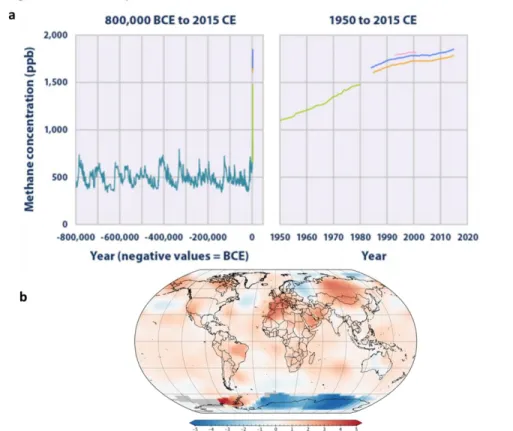
The steady rise in the average temperature of the Earth within the last decades and its associated detrimental impacts on the environment have resulted in an increasing concern about global warming and greenhouse gas (GHG) emissions [1–3]. Methane, which is considered the second most important GHG, represents 18 % of the total EU-28 GHG emissions and possesses a global warming potential 25 times higher than that of CO2 (in a
100 yr horizon) [4,5]. CH4 atmospheric concentration has increased yearly at 0.2-1 % since
1950, which together with the increase in CO2 concentration have caused a rise in the
global average temperature of 0.85 ± 0.2 ºC in the past 70years. This temperature increase
is severely damaging the environment and compromising human health and industrial
development[3,6,7] (Figure 1.1).
1.1.1 Methane sources and sinks: CH4 budget
Methane has been naturally generated during millions of years from a wide range of natural sources and it is considered the most abundant organic molecule in the atmosphere [4,5]. In this context, CH4 natural emissions have been broadly grouped into three categories:
biogenic, thermogenic and pyrogenic. Biogenic sources involve CH4-generating organisms
(methanogens), and comprise anaerobic environments such as natural wetlands and rice paddies (60.1 %), oxygen-depleted freshwater reservoirs (such as dams) (12.3 %) and digestive systems of ruminants and termites (8.0 %). Thermogenic CH4, formed over
millions of years through geological processes, is a fossil fuel that is vented from the subsurface into the atmosphere through natural mechanisms (such as terrestrial seeps, marine seeps and mud volcanoes) (18.7 %). On the other hand, pyrogenic CH4 is produced
from the incomplete combustion of biomass and soil carbon mainly during wildfires (0.9 %). Before the industrial revolution, the methane released from the above mentioned sources was destroyed or captured by different natural sinks such as the oxidation by hydroxyl radicals (OH) in the troposphere or by methanotrophic bacteria in aerated soils, the reaction with chlorine radicals and atomic oxygen radicals in the stratosphere and the reactions with chlorine radicals from sea salt in the marine boundary layer, thus balancing the methane cycle[6,9,10].
However, over the past 150 years, CH4 concentration in the atmosphere has increased at a
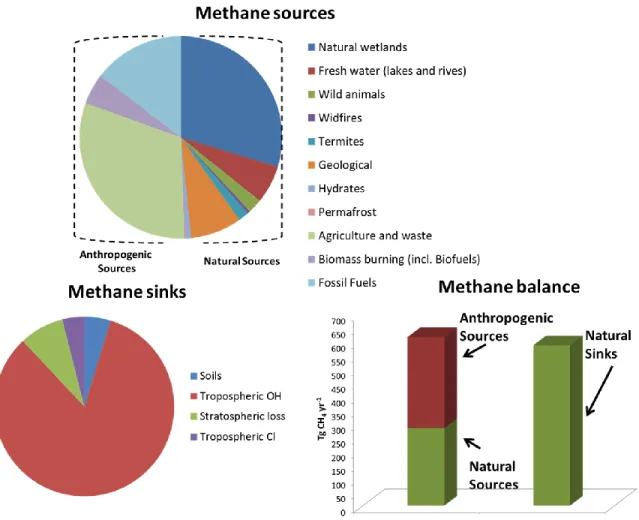
rate of 0.2-1% yr-1 due to human activities. Anthropogenic activities currently account for 50 % of all methane emissions at a global scale (Figure 1.2). The main anthropogenic sources are waste management (i.e manure, sewage and urban solid waste), livestock enteric fermentation (61.5 %), coal, oil and natural gas mining (28.8 %) and the incomplete combustion of biofuels and fossil fuels (9.7 %). This new scenario has created an imbalance between the emission (616 Tg CH4 yr-1) and removal (586 Tg CH4 yr-1) of CH4 (Figure
1.2). Thus, although methane natural sinks are still able to remove higher amounts of methane than those emitted from natural sources, there is still a net emission of 30 Tg CH4
yr-1 that accumulates in the atmosphere. It is therefore important to reduce the global CH4
emissions below the natural CH4 abatement capacity of the planet in order to decrease the
Figure 1.2 Methane sources, sinks and methane imbalance (sources-sinks). The numeric data were obtained from the methane budgets compilations carried out from 2000 to 2009 and 2012 [9,10].
In this context, an annual reduction in the global CH4 emissions of 30 Mt would result in
the stabilization of methane concentrations in the atmosphere. Such a reduction represents just 9.0 % of the total methane emissions and could be achieved via cost-effective end of the pipe abatement technologies [9].
1.1.2 International initiatives for the reduction of methane emissions
the 2014 Conference of the Parties held in Paris to work on limiting the global temperature rise to well below 2 degrees Celsius above pre-industrial levels throughout boosting the ability to adapt to the adverse impacts of climate change, fostering climate resilience and low greenhouse gas emissions development policies and making finance flows consistent with a roadmap towards low greenhouse gas emissions and climate-resilient economy [7]. On the other hand, the Global Methane Initiative (GMI), which involves mainly the private and social sectors, represents also one of the most important initiatives for methane abatement. This initiative consists of a voluntary, international partnership that brings together national governments, private sector entities, development banks, non-governmental organizations and other interested stakeholders in a collaborative effort to reduce methane gasemissions and advance methane recovery. GMI Partner Countries account for approximately 70 % of the total anthropogenic methane emissions. Furthermore, the GMI established in 2016 new alliances with two key partners: the United Nations Economic Commission for Europe (UNECE) and the Climate and Clean Air Coalition (CCAC)[5].
In order to comply with the Paris agreement and GMI recommendations, an active abatement of the GHG emissions is mandatory and expected to become a general trend worldwide in the next decades.
1.2 End of the pipe solutions for methane abatement
Anthropogenic methane emissions from waste management have been typically controlled via traditional physical-chemical methods such as flaring or adsorption. However, these technologies are environmentally unfriendly (entail a large CO2 footprint as a result of their
anthropogenic CH4 emissions contain CH4 concentrations below 4 %. For instance, dilute
CH4 emissions are typically found in old landfills (0–20%), ventilated coal mines (0.1–1%),
covered liquid manure storage tanks (0–3%) or in confined cattle operations (<1%) [11,12]. Therefore, these methane sources result in emissions with low CH4 concentrations, which
significantly limits the implementation of energy recovery-based treatment technologies and require the application of cost-efficient abatement methods to mitigate the pernicious environmental effects of CH4.
Biological technologies can become, if properly tailored, a low-cost and environmentally friendly alternative for the control of dilute CH4 emissions. Off-gas treatment
biotechnologies are based on the biocatalytic oxidation of pollutants following their transfer from the gas emission to an aqueous phase. The microbial oxidation of these gas pollutants occur at ambient temperature and pressure, and in the absence of an external supply of chemicals (only water and nutrients). The absence of extreme operating conditions and hazardous chemicals constitutes an additional advantage from an occupational safety viewpoint for on‐site staff and operators. Biotechnologies have been successfully proven as robust and efficient abatement methods for the treatment of industrial volatile organic compounds (VOCs) and malodours, exhibiting a comparable abatement efficiency to their physical/chemical counterparts [13,14]. Additionally, dilute CH4 emissions could be also
used by microorganisms as raw materials to synthesize high added-value products such as biopolymers, exopolysaccharides or ectoine under specific environmental conditions. The valorization of residual CH4 through its bioconversion into bioproducts with a high market
price could turn their abatement into a sustainable process.
1.2.1 Methane-oxidizing bacteria as the core of methane abatement biotechnologies
Biotechnologies devoted to CH4 treatment are based on the biocatalytic action of
have demonstrated that some methanotrophs are also able to utilize multicarbon compounds as their carbon and energy source in some environments [16].
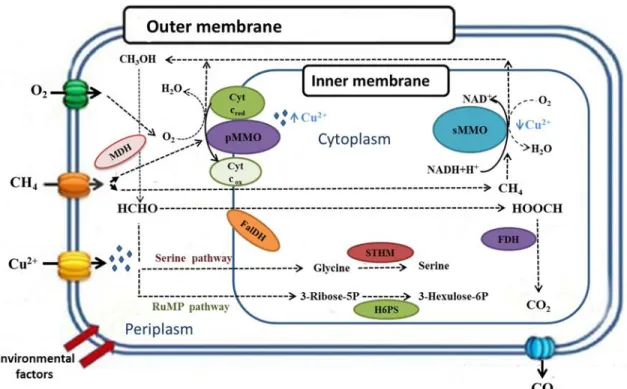
Traditionally, MOB have been classified into three different groups according to their physiological and morphological characteristics: type I, type II and type X methanotrophs. Type I includes those MOBs that a) present intracytoplasmatic membranes as bundles of vesicular discs, b) use the ribulose monophosphate (RuMP) pathway for carbon assimilation and c) contain phospholipid fatty acids of 14 and 16 carbons length. Type II MOBs are characterized by a) an intracytoplasmatic membrane aligned along the periphery of the cell, b) the use of the serine pathway for carbon assimilation and c) phospholipid fatty acids of 18 carbons length. On the other hand, type X MOBs share characteristics of both type I and II, including the RuMP pathway to assimilate formaldehyde and the synthesis of the enzyme ribulose biphosphate carboxylase from the serine pathway to fix CO2 [15,17]. A brief summary of the biochemical methane assimilation pathways of MOBs
is shown in figure 1.3. The current classification of known aerobic methanotrophic genera based on 16S rRNA comprises a wide phylogenetic distribution within the three general groups: Alphaproteobacteria, Gammaproteobacteria and Verrucomicrobia [18,19]. The alphaproteobacterial methanotrophs can be further divided into the Beijerinckiaceae and
Methylocystaceae families, while the Methylococcaceae and the Methylacidiphilacecae
Figure 1.3 Methane oxidation pathways in methanotrophic bacteria, where: sMMO: soluble methane monooxygenase; pMMO: particulate methane monooxygenase; MDH: methanol dehydrogenase; FDH: formate dehydrogenase; FaIDH: formaldehyde dehydrogenase; Cyt red/ox: cytochrome reduced/oxidized; STHM: serine hydroxymethyltransferase; H6PS: hexulose-6-phosphate synthase. Adapted from Cantera et al. (2017)[25].
Aerobic methanotrophs are widely distributed in the environment and they can be found in the different ecosystems, such as wetlands, bogs, forests, rice paddies, groundwater, landfill cover soils, etc. [19]. The optimum temperature for methane oxidation has been established at 25 °C, with an optimum pH range of 7.0 to 7.6, even though these values can change depending on the species [23–25] (Table 1). Methane concentrations ranging from 4 to 23% do not significantly influence the microbial growth or CH4 oxidation rates [26–28].
However, an increase in the concentration of methane over 20% leads to higher methanotrophic activity according to Hanson and Hanson (1996) [15]. The influence of the O2 concentration on the methanotorphic growth and CH4 biodegradation cultivation
efficiency is quite ambiguous and depends on the source of the inoculum. For instance, Bussman et al. (2004) reported O2 concentrations of 17% as the optimum values for
methane oxidation in lakes, while O2 concentrations of 0.1–11% resulted in a decrease in
concentrations lower than 1% [29,30]. Similarly, the ratio CH4/O2 constitutes an important
parameter due to its influence on the type of MMO expressed. At low CH4:O2 ratios,
methanotrophic communities preferentially express pMMO (low Ks, which entails a higher affinity for the substrate), while sMMO is preferentially expressed at high CH4:O2 ratios
(high Ks, lower affinity for CH4) [19,31,32]. High ammonium concentrations in the
cultivation broth have a negative influence on the cultivation of methanotrophs. Indeed, NH4+ is a competitive inhibitor of methane, binding on the active site of pMMO [33].
Likewise, magnesium and sulfate can inhibit microbial growth at high concentrations (>1 mM) [26], the optimal reported magnesium concentration being 50 μM [34]. However, the most important nutrient governing methane degradation is copper, due to its key role on the relative expression of the enzymes sMMO and pMMO. Cu2+ increases the expression of pMMO at levels higher than 0.86 µmol Cu2+ g biomass-1, thus enhancing CH4
biodegradation [19,28].
Even if aerobic oxidation represents the main process implemented in biotechnologies treating methane, recent findings have demonstrated that some anaerobic archaea and bacteria are responsible for 7-25% of the total methane oxidation worldwide. The anaerobic oxidation of methane (AOM) is carried out by bacteria belonging to the NC10 phylum (Candidatus ‘Methylomirabilis oxyfera’), which couples methane oxidation to
denitrification, and three groups of archaea: ANME-1 (distantly related to the Methanosarcinales and Methanomicrobiales spp.), ANME-2 (within the Methanosarcinales sp.), and ANME-3 (closely related to the Methanococcoides sp.) [35,36]. ANME-1 and ANME-2a, 2b and 2c oxidize methane using sulfate as electron acceptor (forming consortia with sulfate reducing bacteria), while some ANME-2 (ANME-2d) belong to a cluster that couples AOM to nitrate reduction in archaea of the order Methanosarcinales (related to ‘Ca. Methanoperedens nitroreducens’). Moreover,
SD:specie-dependent
Table 1. Main characteristics of methanotrophic bacteria
Phylum Gammaproteobacteria Alphaproteobacteria Alphaproteobacteria Verrucomicrobia
Family Methylococcaceae, Methylocystaceae Beijerinckaceae Methylacidiphilaceae
Genera
Methylococcus, Methylobacter, Methylocaldum, Methylohalobius, Methylomicrobium, Methylomonas, Methylosarcina, Methylosphaera, Methylothermus, Crenothrix, Clonothrix
Methylosinus, Methylocystis
Methylocapsa,
Methylocella Methylacidiphilum
RuMP pathway + - - -
Serine pathway - + + +
Nitrogen fixation SD SD + SD
pH growth range 4-9 6-7.5 4.2-7.5 0.8-6
Temperature growth range
(°C) 0-72 (SD) 23-31 6-32 (SD) 37-65 (SD)
Salt concentration range
(%NaCl) 0.1-12 (SD) 0.5 NR 0.8-6.0
sMMO SD SD SD -
1.2.2 Biological technologies for CH4 abatement
Biotechnologies for the treatment of methane have been widely studied over the past 30 years. Several bioreactor configurations have been applied at laboratory and/or full scale, which are classified into two different groups: (i) packed bed bioreactors and (ii) suspended growth bioreactors.
Among these conventional biotechnologies, biofiltration and biotrickling filtration are by far the most commonly implemented packed bed technologies for methane abatement, while the most representative suspended growth reactors are stirred tanks and airlift bioreactors [32] (Figure 1.4).
Figure 1.4 Main bioreactor configurations applied for CH4 treatment. (A) Stirred Tank, (B) Airlift Bioreactor,
(C) Biotrickling filter, (D) Biofilter.
implemented under indoors and outdoors conditions to reduce CH4 emissions [11,39], the
CH4 removal efficiencies (REs) reported during the treatment of dilute CH4 emissions at
gas residence times similar to those used during VOC/odour treatment (30-120 s) have been low. Hence, REs of 60-90% at EBRTs of 1-14 h were reported in passively vented biofilters, while actively vented bioreactors required EBRTs of 8-70 min to achieve an effective CH4 abatement performance [39,40]). This results in bioreactor volumes 16-1600
higher than those typically used in VOC/odour applications [41].
1.3 Current limitations in biological CH4 treatment
Despite the effectiveness and environmentally friendliness of biotechnologies devoted to the abatement of diluted emissions of methane, this platform technology is still restricted by three main limitations:
a) The poor mass transport of CH4 from the gas phase to the microbial community due to
its low aqueous solubility.
b)The lack of cost-competitive abatement methods for the treatment of diluted CH4
emissions.
c) A limited knowledge of the microbial communities and biodegradation kinetics of methane at the trace level concentrations typically encountered during the treatment of diluted CH4 emissions.
1.3.1 Methane mass transfer in bioreactors
The most important limitation of biological methane abatement is caused by the low aqueous solubility of this GHG (Henry’s law constants (H) = 30). Thus, the high H of CH4
results in low concentration gradients (low driving forces) for mass transport from the gas to the aqueous phase surrounding the biofilm and therefore, in a reduced GHG biodegradation performance[42]. Hence, this low mass transport entails process operation at high empty bed gas residence times (EBRT), which significantly increases both the investment and operating costs of methane treatment biotechnologies. In this regard, the implementation of a new concept of biological gas treatment based on the direct gas-cell
transport of CH4 could enhance the mass transport of this hydrophobic GHG[41,43].
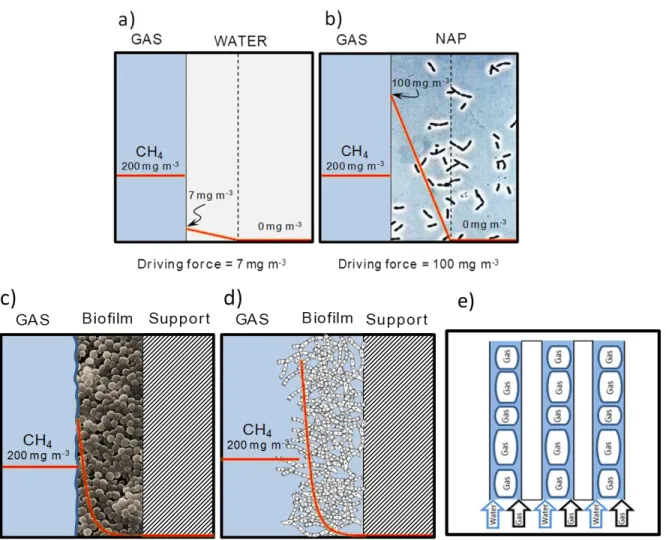
emerged in the last 10 years: two-phase partitioning bioreactors, membrane bioreactors, fungal-based biofilters and Taylor bioreactors (Figure 1.5). Unfortunately, the number of studies assessing the performance of these bioreactors during the treatment of CH4 is still
scarce.
Figure 1.5 Typical concentration profiles and driving forces of CH4 in a conventional mass-transfer limited
bioreactor (a), in a two-phase partitioning bioreactor (b), in a bacterial biofilm (c) in a fungal biofilm (d) and in a segmented flow regime (Taylor flow) bioreactor (e).
Fungal biofilters support an increase in methane mass transfer as a result of the large surface area of the fungal aerial mycelia and their high hydrophobicity (one order of magnitude larger than that of bacteria and higher at low moisture contents). In addition, fungi are often more resistant to drying out, acidification and nutrient limitations than bacteria. However, there is only one study in literature assessing the performance of a fungal-bacterial biofilter using the fungus Graphium sp., which was capable of co-metabolically biodegrading methane and methanol [47]. Although the results of this pioneer study did not support higher ECs (ECs ~ 40 g m−3 h−1 at an EBRT of 20 min) than other innovative bioreactor configurations (table 2), this fungal-bacterial biofilter exhibited a more stable performance compared to conventional bacterial biofilters [47].
Taylor Flow bioreactors are capillary multi-channel units where the gas-liquid hydrodynamics consist of an alternating sequence of gas bubbles and liquid slugs [48]. This segmented flow regime supports a high gas-liquid interfacial area along with a reduced liquid thickness and a high turbulence at the liquid side. In this regard, Rocha-Rios et al. (2013)[49] operated a capillary Taylor flow bioreactor for methane treatment, where the capillarity supported an increase in both the mass transfer coefficient and the bioconversion rate of methane compared to conventional bioreactors (EC ranging from 36.7 to 77.3 g m-3 h-1). However, this bioreactor configuration entails nowadays high investment costs [49,50].
TPPBs are based on the addition to a conventional bioreactor of a non-toxic, non-volatile and non-biodegradable, non-aqueous phase (NAP) with a high affinity for the target gas pollutant [42]. Hence, the NAP supports an increase in both CH4 and O2 mass transfer from
the gas phase to the microorganisms, while buffering the process against inlet pollutant surges or high metabolite concentrations potentially toxic to the microbial community. Different NAPs have been tested to enhance CH4 mass transfer, although silicone oil (with
an affinity for CH4 15 times higher than water) was the most popular transfer vector
[14,48,51,52]. The performance of two-phase partitioning bioreactors (TPPB) has been repeatedly evaluated using diluted CH4 emissions, although the results seem to be
biofilter packed with stones and operated with a non-ionic surfactant at an EBRT of 4.25 min [54], while an enhanced EC of 51 g m−3 h−1 was recorded by Rocha-Ríos et al. (2009)[55] in a two-liquid phase biotrickling filter (BTF) (10% v/v silicone oil) packed with polyurethane foam (PUF) and operated at an EBRT of 4.8 min. Similarly, the use of silicone oil (25 % v/v) by Lebrero et al. (2015) in a BTF packed with PUF supported CH4
ECs of 45 g m−3 h−1 at EBRTs of 4 min, while a BTF operated under identical conditions without silicone oil reached a maximum EC of 35 g m−3 h−1 [52,54,55]. Thus, the addition of the NAP consistently supported a remarkable improvement in BTF performance compared to conventional aqueous phase systems. Rocha-Ríos et al. (2009) [55] also tested the potential of TPPB in stirred tank reactors, achieving a maximum EC of 106 g m-3 h-1 at an EBRT of 4.8 min under an IL of 187 g m−3 h−1, 10% (v/v) of silicone oil and an agitation rate of 800 rpm [55]. However, Rocha-Rios et al. (2011) did not observe a significant improvement in the performance of a two-phase partitioning airlift bioreactor constructed with 10% (v/v) of silicone oil under a CH4 IL of 170 g m−3h−1 and an internal gas
recirculation of 1-2 mair3 mreactor-3 min-1, mainly due to the poor dispersion of silicone oil
[56] (table 2).
Table 2: Conventional and innovative bioreactors for the treatment of methane
Ref. Reactor type System
Characteristics Inoculum
EBRT (h)
CH4 load
(g m-3 h-1)
Maximum EC (g m-3 h-1)
Nikiema and Heitz (2009)[57]
Biofilter
Biofilter packed with inorganic gravel and
stones
Microorganisms from a biofilter treating CH4 for 7
months
0.05-0.3 13-130 65
Park et al.
(2009)[58] Biofilter
Biofilter packed with landfill cover soil mixed with earthworm
(60:40, w/w)
Microorganisms from the
packing material 0.07-1.2 31-560 280
Girard et al.
(2011)[59] Biofilter
Biofilter with packing gravel (void space
40%)
Girard et al.
(2011)[59] Biofilter
Biofilter with packing gravel (void space
40%)
Not specified 0.07 5-28 14.5
Ganendra et al. (2015)[60]
Biofilter
Biofilter setup using autoclaved aerated concrete (AAC) as a highly porous carrier
material
MOB enriched from circum-neutral agricultural soil
0.013 39.3 28.7
Brandt et al.
(2016)[61] Biofilter
Mixtures of organic composted leaves and expanded vermiculite
MOB enriched from activated sludge and composted leaves
0.12 148.8 18.8
Rocha-Ríos et al. (2009)[55] Two- phase partitioning stirred tank reactor
Stirred tank reactor operated at 800 rpm with 10 % SO200
Enriched methanotrophic consortium from a wastewater treatment
plant
0.08 187 106
Rocha-Ríos et al. (2009)[55] Two- phase partitioning biotrickling filter Biotrickling filter packed with polyurethane foam, recycling rate 4-8 m h-1,
operated with 10 % silicone oil
Enriched methanotrophic consortium from a wastewater treatment
plant
0.08 131 51
Rocha-Ríos et al. (2011)[56] Two- phase partitioning airlift reactor
Concentric tube airlift reactor with internal gas recycling (1-2 mair 3
mreactor -3
min-1)and operated with 10 % (v/v) silicone oil
Enriched methanotrophic consortium from a wastewater treatment
plant
0.12 170 22
Avalos-Ramírez et al. (2012)[54] Two-phase partitioning biotrickling filter Biotrickling filter operated in the presence of a non-ionic
surfactant and packed with stones (0.73 cm, specific surface 470 m2
m-3).
Microorganisms from the lixiviate of a biofilter treating CH4 for 1 year
0.07 62 34
Rocha-Ríos et al. (2013)[49] Two-phase partitioning capillary bioreactor-taylor flow Capillary bioreactor operated under Taylor flow with silicone oil at
10% (v/v)
Enriched methanotrophic consortium from a wastewater treatment
plant
Not specified
Not
Lebrero et al. (2015)[52] Two-partitioning phase biotrickling filter Biotrickling filter operated with 25 % SO200 impregnated in
the packing material, polyurethane foam
(PUF).
M. sporium culture 0.065 420-450 45
Kennelly et al. (2014)[50] Horizontal flow biofilm reactor (HFBR)
Horizontal flow biofilm reactor constructed with terram inorganic
polymer sheets
A nitrifying activated sludge from a wastewater
treatment plant
0.8 8.6 8
Estrada et al. (2014)[11] Internal gas recycling biotrickling filter Biotrickling filter packed with polyurethane foam (PUF)using internal
gas recycling (0.50 m3
g m−3 r min−1)
M. sporium culture 0.065 420-450 35
García-Pérez et al (2017)[62]
Internal gas recycling bubble column
reactor
PVC bubble column reactor with internal
gas-recycling (0.50 m3g m−3
r min−1)
M. hirsuta culture 0.5 48 35.2
Lebrero et al. (2016)[47] Fungal bacterial biofilter
Biofilter packed with compost
Pure strain of the fungus
Graphium 0.3 40 37
Although, TPPBs have achieved promising results for the treatment of hydrophobic volatile organic compounds, controversial results in terms of CH4 biodegradation enhancement
have been repeatedly reported [48,52,54,55]. In this context, the enrichment of hydrophobic methanotrophs capable of growing immerse inside the NAP, where much higher concentrations of methane are available for the growth of methanotrophs, could support a direct pollutant uptake and improve both, the overall CH4 mass transfer capacity and the
robustness of the bioreactor [41,53] (Figure 1.6).
methanotrophic bacteria to grow inside the NAP, as well as the impact of the NAP on their biocatalytic activity, remains unknown [52,55]. In this context, it is of major importance to elucidate the operational conditions and selective enrichment strategies that could enable methanotrophs to be viable inside NAPs.
Figure 1.6 A) Gas pollutant biodegradation in two-phase partitioning biofilters operated with hydrophobic biomass [53], B) Photograph of silicone oil droplets used as the NAP for the treatment of Hexane [65], C) Photograph of Mycobacterium PYR-1 cells (black) grown in the presence of a sebacate(gray) and aqueous medium (white) in a reactor treating polycyclic aromatic hydrocarbons [43].
1.3.2 CH4 biodegradation based on a waste-to-value approach
The lack of cost-competitive methods for the abatement of diluted CH4 emissions could be
overcome by the implementation of a new concept of biological gas treatment (using a methane bio-refinery approach) based on the bioconversion of GHG-laden emissions into multiple bioproducts with a high market value [66–70]. Although optimization from a micro and macroscopic perspective is still required to enhance microbial CH4
bioconversion, this innovative CH4 biorefinery can turn GHG abatement into a sustainable,
profitable and competitive process (Figure 1.7).
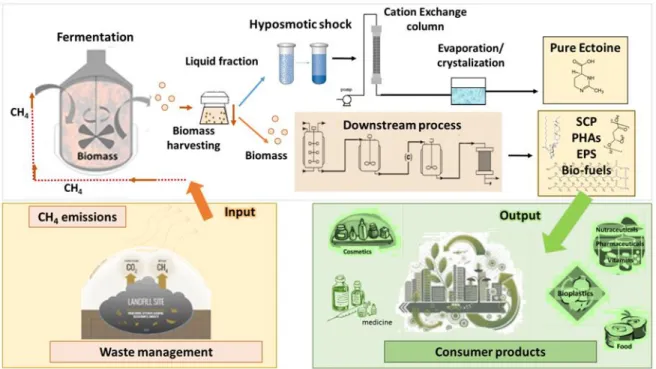
their market relevance and price being ectoine, bioplastics (polyhydroxyalkanoates or PHAs) and extracellular polysaccharides (EPS).
Figure 1.7 Process diagram for a methane bio-refinery producing ectoine, single cell protein, Polyhydroxyalkanoate, exopolysaccharides and biofuels from a landfill emission.
Ectoine
Ectoine is a cyclic imino acid that provides osmotic balance to a wide number of halotolerant bacteria [69,71,72]. Due to its high effectiveness as stabilizer of enzymes, DNA-protein complexes and nucleic acids, ectoine is used in medicine, cosmetology, dermatology and nutrition [73]. This osmolyte is probably one of the most valuable products synthesized by microorganisms, retailing in the pharmaceutical industry at approximately US$1000 kg-1 and representing a global consumption of 15000 tones yr-1 [69]. Despite its potential, ectoine is only currently produced biotechnologically by
Since 1997, new species of halotolerant CH4 MOB capable of synthesizing ectoine have
been identified. Most of them belong to the genera Methylomicrobium (i.e.M. alcaliphilum,
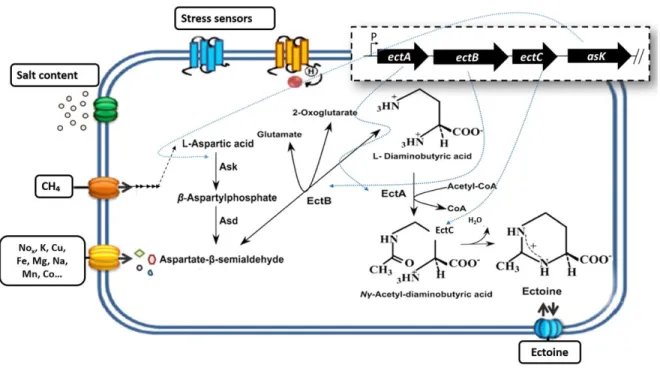
M. buryatense, M. kenyense or M. japanense), although other methanotrophic bacteria such as Methylobacter marinus and Methylohalobius cremeensis are also ectoine producers [76– 78]. In the majority of these methanotrophs, ectoine synthesis relies on the sequential reactions of three enzymes (encoded by the conserved gene cluster, ectABC) that catalyze the conversion of the precursor aspartate into ectoine. However, an ectABC–ask cluster containing an additional gene of aspartokinase (ask) has been discovered in M. alcaliphilum
(Figure 1.8). The Ask isoenzyme provides independent ectoine synthesis that results in the presence of a basal activity of ectoine biosynthesis and a relatively high salt tolerance. This versatile metabolism makes M. alcaliphilum a valuable platform for CH4 mitigation
combined with ectoine production [70,79]. In this regard, M. alcaliphilum has been proven to reach intracellular ectoine concentrations of up to 230 ± 20 mg ectoine g biomass–1 using CH4 as the sole carbon and energy source, which largely exceeded the amounts synthesized
by M. marinus and M. kenyense (60 and 70 mg g biomass–1) [70].
These studies, conducted at high CH4 concentrations, represented the first proof of the
ability of MOB to produce ectoine. However, little is known about the influence of environmental conditions on the bioproduction of this secondary metabolite when combined with the abatement of diluted CH4 emissions. Furthermore, no studies addressing
the continuous production of ectoine by M. alcaliphilum 20Z or evaluating the technical feasibility of bio-milking have been carried out to date using methane as the sole carbon source.
Bioplastics (PHAs)
Figure 1.8 Accumulation of ectoine in M. alcaliphilum 20Z, pathway for the synthesis of ectoine and transcriptional control. Adapted from Pastor et al. (2010)[72].
PHAs are manufactured nowadays by nearly 30 companies, with Meredian Inc. (annual production of 300 kt) and Bio-On (annual production ~10 kt) as the leading manufacturers in U.S. and Europe, respectively[81]. Ralstonia eutropha, Bacillus megaterium and
Alcaligenes latus are the main industrial PHA-producing heterotrophic organisms, while glucose and fructose represent the most common feedstocks. Nevertheless, the high cost of these carbon sources, which accounts for 30-40% of the total production costs, still hinders PHAs commercialization due to their uncompetitive market price (4-20 € kgPHA-1)[83,84].
In this context, the methane contained in industrial diluted emissions (≤ 5 % v/v) has recently emerged as a potential feedstock for PHA production. The use of residual methane as a carbon source will significantly decrease PHAs production costs, while reducing the environmental impacts of GHG emissions [82,85]. Under nutrient-limiting conditions (i.e N-, P- or Mg-limitation), Methylocystis, Methylosinus and Methylocella are considered the main methanotrophic PHA producer genera (Figure 1.9). These methanotrophs can achieve PHBVs contents ranging from 20 to 51 % (wt) under batch [86,87] and continuous operation in suspended growth reactors [62,88–90]. In this regard, Mango Materials and Newlight Technologies (U.S.) are the pioneering companies in the development of
Figure 1.9. PHA production pathway in α-proteobacter methanotrophs, linked with the serine cycle. Adapted from Cantera et al. (2017).
Extracellular polysaccharides (EPS)
EPS consists of a wide variety of proteins, glycoproteins, glycolipids and polysaccharides [91]. In biofilms, EPSs provide microorganisms an effective protection against high or low temperature, salinity and predators [2, 37]. These bioproducts are of interest due to their colloidal and adhesive properties, and their effects on liquid rheology in the food, pharmaceutical, textile and oil industries [92]. CPKelco, Merck, Pfizer and Prasinotech Ltd. are companies currently focused on producing polysaccharides such as xanthan (4-13 € kg
-1
) using Xanthomonas campestris, and dextran (30-50 € kg-1) using Leuconostoc mesenteroides and Streptococcus mutans. However, the productivities and costs derived from the supplementation of the carbon source and EPS downstream still hamper their industrial production [93]. In this sense, CH4 (capable of supporting EPS productivities of
use of extreme conditions of salinity is one of the most effective strategies to promote EPS synthesis in methanotrophs [95].
Although the perspective of a near future methane based bio-refinery is promising, the implementation of these CH4 bioconversion processes is still scarce due to the above
mentioned limited mass transport of CH4, which entails low CH4 conversion rates and low
biomass concentrations in the bioreactors. Suspended-growth bioreactors are the most suitable configurations for CH4 fermentations, fed-batch cultivationin mechanically stirred
fermenters with controlled nutrient feeding being the most popular approach [74,96]. However, this approach typically entails high operating costs during CH4 bioconversion as
a result of the intensive stirring required. Therefore, novel bioreactor configurations supporting high CH4 mass transfer rates at lower energy inputs or the simultaneous
production of multiple commercial metabolites from methane might support a cost-competitive CH4 bio-refinery.
1.3.3 The need for a better understanding of methane-oxidizing bacteria
Besides the development of innovative high-performance methane mass transfer strategies, there is also a critical need to better understand the microbiology of CH4 biodegradation in
order to cope with the enhance CH4 flow rates to cultivation broth and support a versatile
CH4 biconversion.
In this regard, the slow kinetics of methane uptake have been traditionally pointed out as one of the main limitations of methanotrophic bacteria. The enzyme MMO oxidizes methane to methanol in the first step of methane assimilation, but requires a high-energy electron donor (i.e NADPH) as an energy input to functionalize the otherwise inert methane molecule [97]. This phenomenon results on low biomass concentrations, which decreases the efficiency of the process and the cost-effectiveness of any potential CH4 bioconversion.
For instance, while sugar-based cultivation broths can achieved biomass concentrations up to 30 g L-1, pure methanotrophic strains typically achieved average biomass concentrations of 1.0 g L-1. This represents bioproduct productivities 10 to 100 times lower in CH4 based